You help make Hymnary.org possible. More than 10 million people from 200+ countries found hymns, liturgical resources and encouragement on Hymnary.org in 2025, including you. Every visit affirms the global impact of this ministry.

If Hymnary has been meaningful to you this year, would you take a moment today to help sustain it? A gift of any size—paired with a note of encouragement if you wish—directly supports the server costs, research work and curation that keep this resource freely available to the world.

Give securely online today, or mail a check to:
Hymnary.org
Calvin University
3201 Burton Street SE
Grand Rapids, MI 49546

Thank you for your partnership, and may the hope of Advent fill your heart.

Person Results

Tune Identifier:"^upton_cressett_hinton$"
In:person

Planning worship? Check out our sister site, ZeteoSearch.org, for 20+ additional resources related to your search.
Showing 1 - 4 of 4Results Per Page: 102050

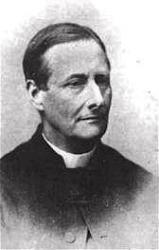
S. Baring-Gould

1834 - 1924 Person Name: S. Baring Gould Author of "Now the Day Is Over" in The Calvary Hymnal Baring-Gould, Sabine, M.A., eldest son of Mr. Edward Baring-Gould, of Lew Trenchard, Devon, b. at Exeter, Jan. 28, 1834, and educated at Clare College, Cambridge, B.A. 1857, M.A. 1860. Taking Holy Orders in 1864, he held the curacy of Horbury, near Wakefield, until 1867, when he was preferred to the incumbency of Dalton, Yorks. In 1871 he became rector of East Mersea, Essex, and in 1881 rector of Lew Trenchard, Devon. His works are numerous, the most important of which are, Lives of the Saints, 15 vols., 1872-77; Curious Myths of the Middle Ages, 2 series, 1866-68; The Origin and Development of Religious Belief, 2 vols., 1869-1870; and various volumes of sermons. His hymns, original and translated, appeared in the Church Times; Hymns Ancient & Modern, 1868 and 1875; The People's Hymnal, 1867, and other collections, the most popular being "Onward, Christian soldiers," "Daily, daily sing the praises," the translation "Through the night of doubt and sorrow," and the exquisite Easter hymn, "On the Resurrection Morning." His latest effort in hymnology is the publication of original Church Songs, 1884, of which two series have been already issued. In the Sacristy for Nov. 1871, he also contributed nine carols to an article on "The Noels and Carols of French Flanders.” These have been partially transferred to Chope's and Staniforth's Carol Books, and also to his Church Songs. --John Julian, Dictionary of Hymnology (1907) ================== Baring-Gould, S., p. 114, i. Other hymns in common use are:— 1. Forward! said the Prophet. Processional. Appeared in the New Mitre Hymnal, 1874. 2. My Lord, in glory reigning. Christ in Glory. In Mrs. Brock's Children's Hymn Book, 1881. 3. Now severed is Jordan. Processional. Appeared in the S. Mary, Aberdeen, Hymnal, 1866, the People's Hymnal, 1867, &c. --John Julian, Dictionary of Hymnology, Appendix, Part II (1907)

Anonymous

Person Name: Unknown Author of "Father, Holy Father" in Laudes Domini In some hymnals, the editors noted that a hymn's author is unknown to them, and so this artificial "person" entry is used to reflect that fact. Obviously, the hymns attributed to "Author Unknown" "Unknown" or "Anonymous" could have been written by many people over a span of many centuries.

G. Hinton

Composer of "UPTON CRESSETT" in The Children's Hymn Book

Paul Frederick Tidman

1836 - 1889 Person Name: Paul F. Tidman Author of "Father, Holy Father" in The Cyber Hymnal Tidman, Paul Frederick, was born 1836, and lived in the East from 1852 to 1864, some time with Rajah Brooke in Sarawak. From 1865 to his death he was partner in an East India firm in Leadenhall St., London. In 1888 he was made C.M.G. in recognition of his services to the Straits Settlements. He died Jan 27, 1889, at Chiselhurst, Kent. Under the name of Mark Evans he published a number of religious books for children, charmingly written from an "undogmatic" standpoint. His hymn: Father, dearest Father, Now the sun his come. [Morning] is in his Story of our Father's love, 1873, p. 160. It is repeated in the Sunday School Hymnary, 1905, and others, sometimes as "Father, Holy Father." [Rev. James Mearns, M.A.] --John Julian, Dictionary of Hymnology, New Supplement (1907)

Export as CSV
It looks like you are using an ad-blocker. Ad revenue helps keep us running. Please consider white-listing Hymnary.org or getting Hymnary Pro to eliminate ads entirely and help support Hymnary.org.





