1 Come, Desire of nations, come!
Hasten, Lord, the general doom!
With thy holy train descend;
Then our earthly trials end.
2 Mindful of thy chosen race,
Shorten these vindictive days;
We for full redemption groan;
Hear us now, and save thine own.
3 Now destroy the man of sin;
Now thine ancient flock bring in!
Filled with righteousness divine,
Claim a ransomed world for thine.
4 Plant thy heavenly kingdom here;
Glorious in thy saints appear;
Speak the sacred number sealed;
Speak the mystery revealed.
5 Take to thee thy royal power;
Reign, when sin shall be no more;
Reign, when death no more shall be;
Reign to all eternity.
Source: The Seventh-Day Adventist Hymn and Tune Book: for use in divine worship #826
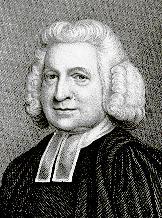
Charles Wesley, M.A. was the great hymn-writer of the Wesley family, perhaps, taking quantity and quality into consideration, the great hymn-writer of all ages. Charles Wesley was the youngest son and 18th child of Samuel and Susanna Wesley, and was born at Epworth Rectory, Dec. 18, 1707. In 1716 he went to Westminster School, being provided with a home and board by his elder brother Samuel, then usher at the school, until 1721, when he was elected King's Scholar, and as such received his board and education free. In 1726 Charles Wesley was elected to a Westminster studentship at Christ Church, Oxford, where he took his degree in 1729, and became a college tutor. In the early part of the same year his religious impressions were much deepene… Go to person page >| First Line: | Come, Desire of nations, come |
| Author: | Charles Wesley |
| Language: | English |
| Copyright: | Public Domain |
Come, desire of nations, come; Hasten, Lord, &c. C. Wesley. [Second Advent.] Written as one of the Hymns Occasioned by the Earthquake, March 8, 1750, and first published in a tract bearing that title during the same year. The unusual visitation of the earthquake created a great sensation in London and the neighbourhood, and the excitement of the people did much to set forth the calm faith, and to bring out the sterling worth of the Wesleys. The feelings of both were embodied in the hymns which C. Wesley wrote on the occasion. This particular hymn was included in J. Wesley's Select Hymns with Tunes annext, 1761, and other works, and in the Wesleyan Hymn Book as one of the "Additional Hymns," circ. 1800. It is retained in the new edition, 1875, and is found in several collections in Great Britain and America. Original text in Poetical Works, 1868-72, vol. vi p. 48.
--John Julian, Dictionary of Hymnology (1907)

My Starred Hymns