1 Come, let us use the grace divine,
and all with one accord,
in a perpetual cov'nant join
ourselves to Christ the Lord;
give up ourselves, through Jesus' pow'r,
His name to glorify;
and promise, in this sacred hour,
for God to live and die.
2 The cov'nant we this moment make
be ever kept in mind;
we will no more our God forsake,
or cast these words behind.
We never will throw off the fear
of God who hears our vow;
and if Thou art well pleased to hear,
come down and meet us now.
3 Thee, Father, Son, and Holy Ghost,
let all our hearts receive;
present with Thy celestial host
the peaceful answer give;
to each covenant the blood apply
which takes our sins away,
and register our names on high
and keep us to that day!
Source: Our Great Redeemer's Praise #413
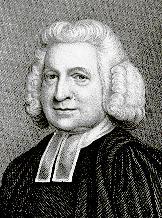
Charles Wesley, M.A. was the great hymn-writer of the Wesley family, perhaps, taking quantity and quality into consideration, the great hymn-writer of all ages. Charles Wesley was the youngest son and 18th child of Samuel and Susanna Wesley, and was born at Epworth Rectory, Dec. 18, 1707. In 1716 he went to Westminster School, being provided with a home and board by his elder brother Samuel, then usher at the school, until 1721, when he was elected King's Scholar, and as such received his board and education free. In 1726 Charles Wesley was elected to a Westminster studentship at Christ Church, Oxford, where he took his degree in 1729, and became a college tutor. In the early part of the same year his religious impressions were much deepene… Go to person page >| First Line: | Come, let us use the grace divine |
| Title: | Come, Let Us Use the Grace Divine |
| Author: | Charles Wesley (1762) |
| Meter: | 8.6.8.6 |
| Language: | English |
| Copyright: | Public Domain |
Come, let us use the grace divine. C. Wesley. [Confirmation.] First published in his Short Hymns, &c, 1762, vol. ii., No. 1242, in 3 stanzas of 8 lines, and based upon Jer. 1. 5 (Poetical Works, 1868-72, vol. x. p. 40). In 1780 it was included in the Wesleyan Hymn Book, No. 518, from whence it has passed into other collections of the Methodist bodies. It was also given by Montgomery in his Christian Psalmist, 1825, and is found in some Nonconformist collections. The form in which it is usually given in the Church of England hymnals appeared in Bickersteth's Christian Psalmody, 1833, as, “Come, let us seek the grace of God," as in Snepp's Songs of Grace & Glory, 1872
--John Julian, Dictionary of Hymnology (1907)
My Starred Hymns