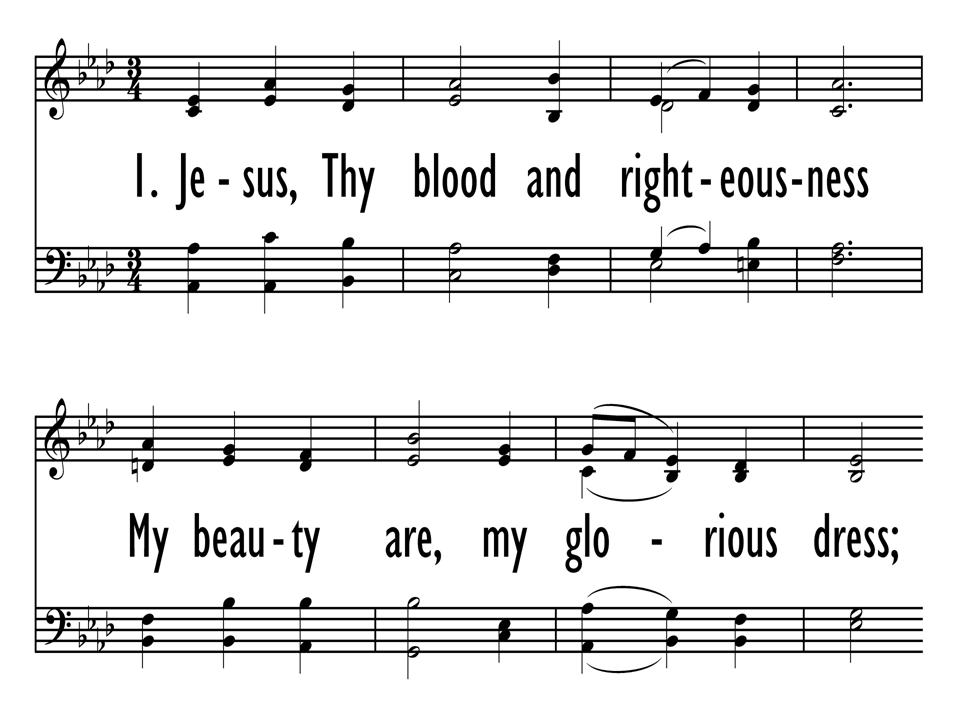
1. Jesus, thy blood and righteousness,
My beauty are, my glorious dress;
Midst flaming worlds, in these arrayed,
With joy shall I lift up my head.
2. The holy, meek, unspotted Lamb,
Who from the Father's bosom came,
Who died for me, e'en me t' atone,
Now for my Lord and God I own.
3. Lord, I believe thy precious blood,
Which at the mercy seat of God,
Forever doth for sinners plead,
For me, e'en for my soul was shed.
4. When from the dust of death I rise
To claim my mansion in the skies,
E’en then this shall be all my plea,
Jesus hath lived, hath died for me.
5. Jesus, be endless praise to thee,
Whose boundless mercy hath for me
And all who trust thy hands hath made
An everlasting ransom paid.
6. Ah! give to all, almighty Lord,
With pow’r to speak thy gracious word,
That all who to thy wounds will flee
May find eternal life in thee.
7. Oh, let the dead now hear thy voice!
Now bid thy banished ones rejoice;
Their beauty this, their glorious dress,
Jesus, thy blood and righteousness.
Source: Hymns and Devotions for Daily Worship #143

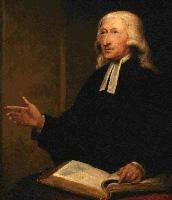
John Wesley, the son of Samuel, and brother of Charles Wesley, was born at Epworth, June 17, 1703. He was educated at the Charterhouse, London, and at Christ Church, Oxford. He became a Fellow of Lincoln College, Oxford, and graduated M.A. in 1726. At Oxford, he was one of the small band consisting of George Whitefield, Hames Hervey, Charles Wesley, and a few others, who were even then known for their piety; they were deridingly called "Methodists." After his ordination he went, in 1735, on a mission to Georgia. The mission was not successful, and he returned to England in 1738. From that time, his life was one of great labour, preaching the Gospel, and publishing his commentaries and other theological works. He died in London, in 17… Go to person page >
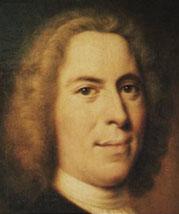
Zinzendorf, Count Nicolaus Ludwig, the founder of the religious community of Herrnhut and the apostle of the United Brethren, was born at Dresden May 26, 1700. It is not often that noble blood and worldly wealth are allied with true piety and missionary zeal. Such, however, was the case with Count Zinzendorf. In 1731 Zinzendorf resigned all public duties and devoted himself to missionary work. He traveled extensively on the Continent, in Great Britain, and in America, preaching "Christ, and him crucified," and organizing societies of Moravian brethren. John Wesley is said to have been under obligation to Zinzendorf for some ideas on singing, organization of classes, and Church government. Zinzendorf was the author of some two thousand hymn… Go to person page >| First Line: | Jesus, Thy blood and righteousness |
| Title: | The Lord our Righteousness |
| German Title: | Christi Blut und Gerechtigkeit |
| Translator: | John Wesley |
| Author: | Nicolaus Ludwig, Graf von Zinzendorf (1739) |
| Meter: | 8.8.8.8 |
| Language: | English |
| Notes: | Spanish translation: See "Vestido en tu justicia, Jesús" by Wayne Andersen |
| Copyright: | Public Domain |
My Starred Hymns