You help make Hymnary.org possible. More than 10 million people from 200+ countries found hymns, liturgical resources and encouragement on Hymnary.org in 2025, including you. Every visit affirms the global impact of this ministry.

If Hymnary has been meaningful to you this year, would you take a moment today to help sustain it? A gift of any size—paired with a note of encouragement if you wish—directly supports the server costs, research work and curation that keep this resource freely available to the world.

Give securely online today, or mail a check to:
Hymnary.org
Calvin University
3201 Burton Street SE
Grand Rapids, MI 49546

Thank you for your partnership, and may the hope of Advent fill your heart.

That was a wonder-working word

That was a wonder-working word

Author: John Newton
Published in 7 hymnals


Representative Text

1 That was a wonder-working word,
Which could the vast creation raise!
Angels attendant on their Lord;
Admired the plan, and sung his praise.

2 From what a dark and shapeless mass,
All nature sprang at his command1
"Let there be light, and light there was,"
And sun, and stars, and sea, and land.

3 Thus the new forming of the soul,
Does all the power of God display,
As when he formed the mighty whole,
And kindled darkness into day.

4 Though self-destroyed, O Lord, we are,
Yet let us feel what thou canst do;
Thy word the ruin can repair,
And all our hearts create anew.

The Hartford Selection of Hymns from the most approved authors, 1799

Author: John Newton

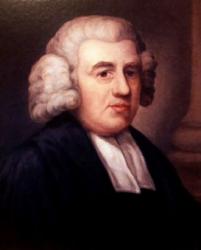
John Newton (b. London, England, 1725; d. London, 1807) was born into a Christian home, but his godly mother died when he was seven, and he joined his father at sea when he was eleven. His licentious and tumul­tuous sailing life included a flogging for attempted desertion from the Royal Navy and captivity by a slave trader in West Africa. After his escape he himself became the captain of a slave ship. Several factors contributed to Newton's conversion: a near-drowning in 1748, the piety of his friend Mary Catlett, (whom he married in 1750), and his reading of Thomas à Kempis' Imitation of Christ. In 1754 he gave up the slave trade and, in association with William Wilberforce, eventually became an ardent abolitionist. After becoming a tide… Go to person page >

Text Information

First Line: That was a wonder-working word
Author: John Newton
Meter: 8.8.8.8
Language: English
Copyright: Public Domain

Timeline

Instances

Instances (1 - 7 of 7)

Old School Sonnets, or a Selection of Choice Hymns #d223

Page Scan

The Baptist Hymn Book #247

TextPage Scan

The Hartford Selection of Hymns from the Most Approved Authors #CCXXI

TextPage Scan

The Hartford Selection of Hymns #CCXXI

Suggestions or corrections? Contact us
It looks like you are using an ad-blocker. Ad revenue helps keep us running. Please consider white-listing Hymnary.org or getting Hymnary Pro to eliminate ads entirely and help support Hymnary.org.