You help make Hymnary.org possible. More than 10 million people from 200+ countries found hymns, liturgical resources and encouragement on Hymnary.org in 2025, including you. Every visit affirms the global impact of this ministry.

If Hymnary has been meaningful to you this year, would you take a moment today to help sustain it? A gift of any size—paired with a note of encouragement if you wish—directly supports the server costs, research work and curation that keep this resource freely available to the world.

Give securely online today, or mail a check to:
Hymnary.org
Calvin University
3201 Burton Street SE
Grand Rapids, MI 49546

Thank you for your partnership, and may the hope of Advent fill your heart.

The Jubilee

Representative Text

1 Blow ye the trumpet, blow!
The gladly solemn sound
let all the nations know,
to earth's remotest bound:

Refrain:
The year of jubilee is come!
Return, ye ransomed sinners, home.

2 Jesus, our great high priest,
hath full atonement made;
ye weary spirits, rest;
ye mournful souls, be glad: [Refrain]

3 Extol the Lamb of God,
the all-atoning Lamb;
redemption in His blood
throughout the world proclaim: [Refrain]

4 Ye slaves of sin and hell,
your liberty receive,
and safe in Jesus dwell,
and blest in Jesus live: [Refrain]

5 Ye who have sold for nought
your heritage above
shall have it back unbought,
the gift of Jesus' love: [Refrain]

6 The gospel trumpet hear,
the news of heav'nly grace;
and saved from earth, appear
before your Savior's face: [Refrain]

Source: Our Great Redeemer's Praise #470

Author: Charles Wesley

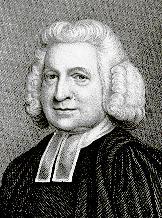
Charles Wesley, M.A. was the great hymn-writer of the Wesley family, perhaps, taking quantity and quality into consideration, the great hymn-writer of all ages. Charles Wesley was the youngest son and 18th child of Samuel and Susanna Wesley, and was born at Epworth Rectory, Dec. 18, 1707. In 1716 he went to Westminster School, being provided with a home and board by his elder brother Samuel, then usher at the school, until 1721, when he was elected King's Scholar, and as such received his board and education free. In 1726 Charles Wesley was elected to a Westminster studentship at Christ Church, Oxford, where he took his degree in 1729, and became a college tutor. In the early part of the same year his religious impressions were much deepene… Go to person page >

Notes

Blow ye the trumpet, blow. C. Wesley. [Year of Jubilee, or the New Year.]This is No. iii. of his seven Hymns for New Year's Day, 1750, in 6 stanzas of 6 lines. It is based upon Lev. xxv. In 1772, and again in 1774, R. Conyers included stanza vi., iii., iv. and vi. in his Collection. This arrangement, however, gave way to one by A. M. Toplady which appeared in his Psalms & Hymns, 1776, No. 318, where stanza ii. is given as vi., stanza iv. as v., and a slight but significant alteration is introduced in stanza iii. Originally lines 1-2 read:—

Extol the Lamb of God,
The all-atoning Lamb.

This was changed to:—

Extol the Lamb of God,
The sin atoning Lamb.

The heated controversy between the Wesleys and Toplady on the questions, vital to them, of Arminianism and Calvinism gave point and meaning to this change. From Toplady's Psalms & Hymns, the text and arrangement of stanzas were taken by other compilers until the hymn acquired universal reputation as his composition. In 1830, it was included with three alterations in the Supplement to the Wesleyan Hymn Book, No. 645, and the error of authorship was rectified. In the revised edition of the Wesleyan Hymn Book, 1875. two of the alterations are repeated: stanza iv., lines 3, "blest," for "bless'd"; and stanza v., "Receive if," for "Shall have it," &c. In varying forms, sometimes, as in Toplady, then as in the Wesleyan Hymn Book, and again in some other shape, this hymn is in very extensive use in all English-speaking countries. Original text in Poetical Works, 1868-72, vol. vi. p. 12.

-- John Julian, Dictionary of Hymnology (1907)

Timeline

Media

You have access to this FlexScore.
Download:
Are parts of this score outside of your desired range? Try transposing this FlexScore.
General Settings
Stanza Selection
Voice Selection
Text size:
Music size:
Transpose (Half Steps):
Capo:
Contacting server...
Questions? Check out the FAQ

A separate copy of this score must be purchased for each choir member. If this score will be projected or included in a bulletin, usage must be reported to a licensing agent (e.g. CCLI, OneLicense, etc).

This is a preview of your FlexScore.
The Cyber Hymnal #590
  • Adobe Acrobat image (PDF)
  • Noteworthy Composer score (NWC)
  • XML score (XML)
The United Methodist Hymnal #379
  • Full Score (PDF)
  • Bulletin Score (melody only) (PDF)
  • Bulletin Score (PDF)

Instances

Instances (1 - 16 of 16)
Page Scan

A New Hymnal for Colleges and Schools #371

Hymns of Dawn #24

Original Sacred Harp Denson Revision 1987 Standard Melodies #40

TextAudioPage Scan

Our Great Redeemer's Praise #470

Praise y Adoración #104a

TextPage Scan

The A.M.E. Zion Hymnal #401

The Baptist Hymnal #235

TextScoreAudio

The Cyber Hymnal #590

The Sacred Harp #40

Text

The Sacred Harp #40

TextFlexScoreAudioPage Scan

The United Methodist Hymnal #379

The United Methodist Hymnal Music Supplement II #110

The United Methodist Hymnal Music Supplement II #111

TextPage Scan

Trinity Hymnal (Rev. ed.) #474

TextPage Scan

Trinity Psalter Hymnal #442

Wesley Hymns #3

Include 940 pre-1979 instances
Suggestions or corrections? Contact us
It looks like you are using an ad-blocker. Ad revenue helps keep us running. Please consider white-listing Hymnary.org or getting Hymnary Pro to eliminate ads entirely and help support Hymnary.org.