Jesus lives! no longer now

Full Text

1 Jesus lives! no longer now
Can thy terrors, Death, appall us;
Jesus lives! by this we know
Thou, O Grave, canst not enthrall us.
Alleluia!

2 Jesus lives! henceforth is death
But the gate of life immortal;
This shall calm our trembling breath,
When we pass its gloomy portal.
Alleluia!

3 Jesus lives! for us He died;
Then, alone to Jesus living,
Pure in heart may we abide,
Glory to our Saviour giving.
Alleluia!

4 Jesus lives! our hearts know well
Naught from us His love shall sever;
Life, nor death, nor powers of hell
Tear us from His keeping ever.
Alleluia!

5 Jesus lives! to Him the Throne
Over all the world is given:
May we go where He is gone,
Rest and reign with Him in Heaven.
Alleluia!

Hymnal: according to the use of the Protestant Episcopal Church in the United States of America, 1871

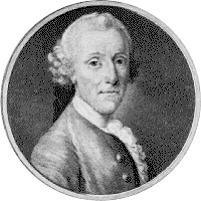
Author: Christian F. Gellert

Gellert, Christian Fürchtegott, son of Christian Gellert, pastor at Hainichen in the Saxon Harz, near Freiberg, was born at Hainichen, July 4, 1715. In 1734 he entered the University of Leipzig as a student of theology, and after completing his course acted for some time as assistant to his father. But then, as now, sermons preached from manuscript were not tolerated in the Lutheran Church, and as his memory was treacherous, he found himself compelled to try some other profession. In 1739 he became domestic tutor to the sons of Herr von Lüttichau, near Dresden, and in 1741 returned to Leipzig to superintend the studies of a nephew at the University. He also resumed his own studies. He graduated M.A. 1744; became in 1745 private tutor or l… Go to person page >

Translator: Frances Elizabeth Cox

Cox, Frances Elizabeth, daughter of Mr. George V. Cox, born at Oxford, is well known as a successful translator of hymns from the German. Her translations were published as Sacred Hymns from the German, London, Pickering. The 1st edition, pub. 1841, contained 49 translations printed with the original text, together with biographical notes on the German authors. In the 2nd edition, 1864, Hymns from the German, London, Rivingtons, the translations were increased to 56, those of 1841 being revised, and with additional notes. The 56 translations were composed of 27 from the 1st ed. (22 being omitted) and 29 which were new. The best known of her translations are "Jesus lives! no longer [thy terrors] now" ; and ”Who are these like stars appeari… Go to person page >

Notes

Scripture References:
st. 1 = John 14:19, 1 Cor. 15:55
st. 4 = Rom. 8:38-39
st. 5 = 1 Cor. 15:54, John 16:33

Christian F. Gellert (b. Hainichen, Saxony, Germany, 1715; d. Leipzig, Germany, 1769) wrote the original German text (“Jesus lebt, mit ihm auch ich”) in six stanzas. Published in Gellert's Geistliche Oden und Lieder (1757), the text is similar to “Jesus, meine Zuversicht,” a chorale text often attributed to Dutch writer Luise Henriette of Brandenburg.

Gellert studied theology at the University of Leipzig and planned to become a pastor. Due to "congenital timidity" and poor memory, which made preaching impossible for him (the Lutheran Church in that era did not encourage pastors to read their sermons but to preach them from memory), he became a tutor. He went on to study philosophy at the University of Leipzig, where he was later appointed to the philosophy faculty. He became a popular lecturer and included among his students Goethe and Lessing. Gellert published various literary works, including the classic Tales and Fables (1746, 1748).

Calvin Seerveld (PHH 22) translated the text in 1985 in Toronto, Ontario; he borrowed the last line of each stanza from the translation by Australian John D. Lang, published in Lang's Aurora Australis (1826). It was first published in the 1987 Psalter Hymnal.

A strong text of comfort in Christ's resurrection, “Jesus Lives and So Do We” was inspired by John 14: 19b, "Because I live, you also will live." Each stanza begins with the Easter faith: Jesus lives! We sing of Christ conquering death (st. 1), of his rule as king over all (st. 2), of his forgiveness of sin (st. 3), and of our security in his love (st. 4-5).

Liturgical Use:
Easter season; to comfort the sick and dying; funerals.

Tune

ST. ALBINUS


JESUS, MEINE ZUVERSICHT

First published in Johann Crüger's Praxis Pietatis Melica (1653) without attribution, JESUS, MEINE ZUVERSICHT was credited to Crüger (PHH 42) in the 1668 edition of that hymnal. (The later isorhythmic RATISBON is related to this tune; see 34.) JESUS, MEINE ZUVERSICHT is named for its association w…

Go to tune page >


CHRIST IST ERSTANDEN

CHRIST IST ERSTANDEN is derived from the twelfth-century chant melody for "Victimae Paschali laudes" (which also produced CHRIST LAG IN TODESBANDEN, 398). The tune was first published in Joseph Klug's (PHH 126) Geistliche Lieder (1533). This ancient tune, originally in Dorian mode, consists of sever…

Go to tune page >


Timeline

Instances

Instances (16)TextImageAudioScore
A New Hymnal for Colleges and School #561
Church Family Worship #262
Church Hymnal, Fifth Edition #272
Common Praise #239Text
Complete Anglican Hymns Old & New #361
Complete Mission Praise #373
Evangelical Lutheran Hymnary #353Text
Hymnal 1982: according to the use of the Episcopal Church #194TextImage
Hymnal 1982: according to the use of the Episcopal Church #195TextImage
Hymns Ancient & Modern, New Standard Edition #82
Hymns Old and New: New Anglican #272
Lutheran Service Book #490Text
Rejoice in the Lord #320Text
Rejoice in the Lord #322Text
Sing Glory: Hymns, Psalms and Songs for a New Century #409
Together in Song: Australian Hymn Book II #372