MACH'S MIT MIR, GOTT

Adapter: Johann Hermann Schein

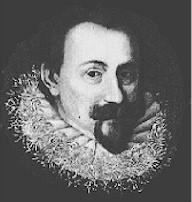
Schein, Johann Hermann, son of Hieronymus Schein, pastor at Griinhain, near Annaberg, in Saxony, was born at Grünhain, Jan. 20,1586. He matriculated at the University of Leipzig in 1607, and studied there for four years. Thereafter he acted for some time as a private tutor, including two years with a family at Weissenfels. On May 21, 1615, he was appointed Capellmeister, at the court of Duke Johann Ernst, of Sachse-Weimar; and in 1616 he became cantor of I3t. Thomas's Church, and music director at Leipzig, in succession to Seth Calvisius (d. Nov. 24, 1615). This post he held till his death, at Leipzig, Nov. 19, 1630. Schein was one of the most distinguished musicians of his time, both as an original composer, and as a harmoniser of the… Go to person page >

Adapter: J. S. Bach

Born at Eisenach into a musical family and in a town steeped in Reformation history, he received early musical training from his father and older brother, and elementary education in the classical school Luther had earlier attended. Throughout his life he made extraordinary efforts to learn from other musicians. At 15 he walked to Lüneburg to work as a chorister and study at the convent school of St. Michael. From there he walked 30 miles to Hamburg to hear Johann Reinken, and 60 miles to Celle to become familiar with French composition and performance traditions. Once he obtained a month's leave from his job to hear Buxtehude, but stayed nearly four months. He arranged compositions from Vivaldi and other Italian masters. His own co… Go to person page >

Composer: Bartholomäus Gesius

(no biographical information available about Bartholomäus Gesius.) Go to person page >

Tune Information

Composer: Bartholomäus Gesius (1605)
Adapter: Johann Hermann Schein
Adapter: J. S. Bach
Meter: 8.7.8.7.8.8
Incipit: 13455 43256 7U1D7 665
Key: D Major

Texts

"Come, Follow Me," the Savior Spake

Lord God of morning and of night

Thou Hallowed Chosen Morn of Praise

Thou hallowed chosen morn of praise,
That best and greatest shinest!
Lady and Queen and Day of days,
Of things divine, divinest!
On thee our praises CHRIST adore
For ever and for evermore.
Go to text page >

Notes

MACHS MIT MIR was first published in the collection of music Das ander Theil des andern newen Operis Geistlicher Deutscher Lieder (1605) by Bartholomäus Gesius (b. Münchenberg, near Frankfurt, Germany, c. 1555; d. Frankfurt, 1613). A prolific composer, Gesius wrote almost exclusively for the church. Gesius studied theology at the University of Frankfurt and pursued his musical studies privately. He was a cantor in Münchenberg, a private tutor for a poet's family in Muskau, and a cantor at the Marienkirche in Frankfurt from 1593 until his death. He composed numerous settings for pre-Reformation Latin songs and for Reformation hymns (with Luther's hymns well represented) and published them in ten volumes, including his Psalmodia Choralis and Geistliche deutsche Lieder (1601). He also wrote a St. John Passion (1588), a St. Matthew Passion (1613), important settings of the Magnificat (1607), and a theoretical work, Synopsis musicae practicae (1609).

Johann H. Schein later adapted Gesius's tune for his own hymn text "Machs mit mir, Gott" (1628)–from which the tune got its name–and published it in the second edition of his famous Cantional (1645). [Hymnary ed. note: Schein died in 1630, so someone else published the second edition] Johann S. Bach (PsH 7) used the tune in his St. John Passion (1724) and in his Cantatas 139 and 156. An isorhythmic version of the tune was published in the 1959 Psalter Hymnal under the name EISENACH. Dale Grotenhuis (PsH 4) prepared the harmonization in 1985 for the 1987 Psalter Hymnal.

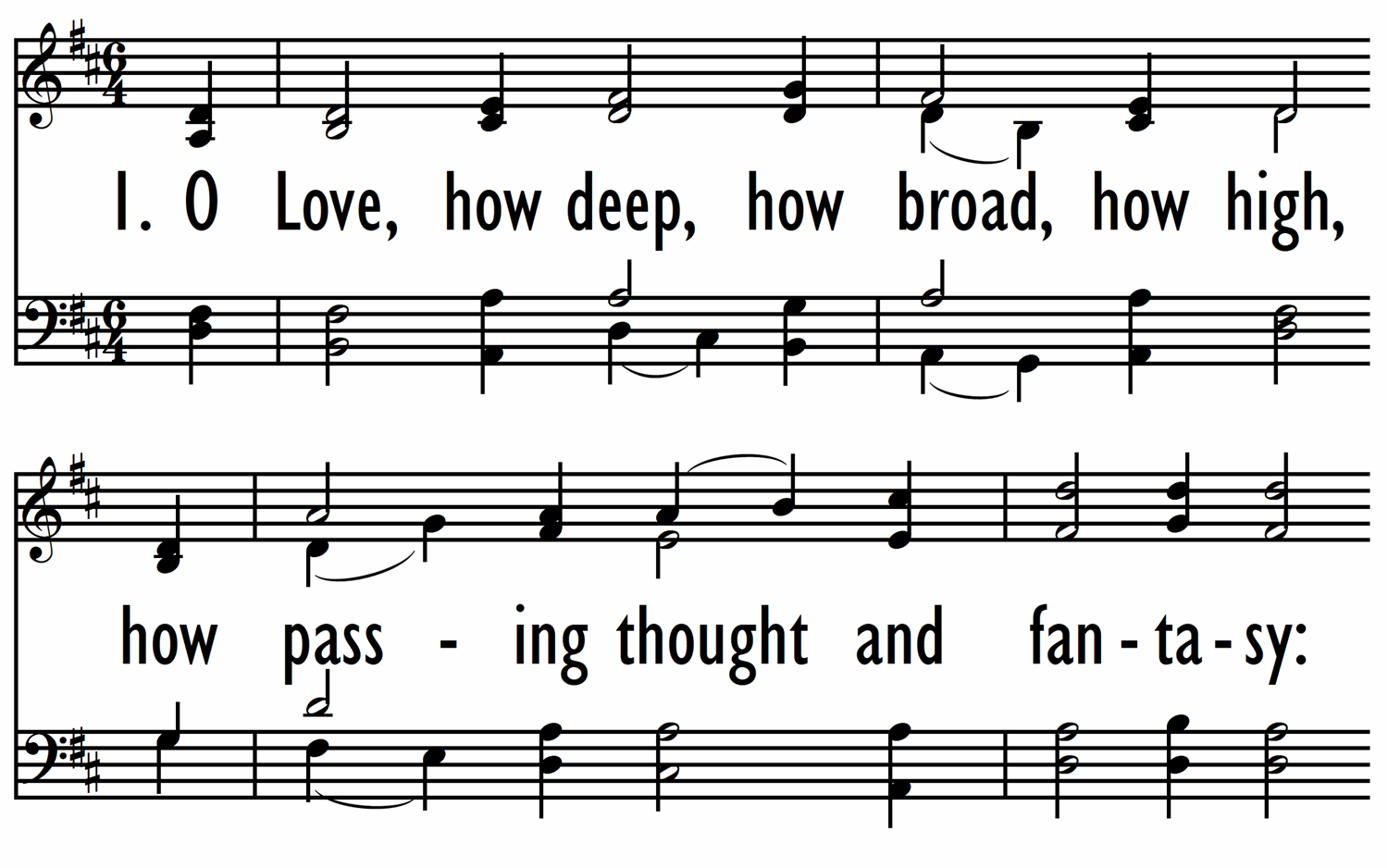
Like so many chorales, MACHS MIT MIR is in bar form (AAB); its rhythms alternate between duple and triple–in this case the use of the two main forms of musical rhythm is a nice way of suggesting that God's providence covers all! Unison singing may be best on the stanzas, with harmonizing optional on the refrain. Sing this tune with much energy to an animating tempo.

--Psalter Hymnal Handbook

Media

Christian Classics Ethereal Hymnary #658
  • Four-part harmony, full-score (PDF, NWC)
Psalter Hymnal (Gray) #190
Text: God's Gift It Is to Eat and Drink

Instances

Instances (8)TextImageAudioScore
Christian Classics Ethereal Hymnary #658AudioScore
Christian Worship: a Lutheran hymnal #453Text
Common Praise #208Text
Evangelical Lutheran Hymnary #422Text
Evangelical Lutheran Worship #799Image
Hymnal 1982: according to the use of the Episcopal Church #198TextImage
Lutheran Service Book #688Text
Psalter Hymnal (Gray) #190TextImageAudioScore