You help make Hymnary.org possible. More than 10 million people from 200+ countries found hymns, liturgical resources and encouragement on Hymnary.org in 2025, including you. Every visit affirms the global impact of this ministry.

If Hymnary has been meaningful to you this year, would you take a moment today to help sustain it? A gift of any size—paired with a note of encouragement if you wish—directly supports the server costs, research work and curation that keep this resource freely available to the world.

Give securely online today, or mail a check to:
Hymnary.org
Calvin University
3201 Burton Street SE
Grand Rapids, MI 49546

Thank you for your partnership, and may the hope of Advent fill your heart.

Person Results

Topics:consecration+of+churches
In:people

Planning worship? Check out our sister site, ZeteoSearch.org, for 20+ additional resources related to your search.
Showing 11 - 20 of 306Results Per Page: 102050

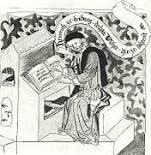
Heinrich von Laufenberg

1390 - 1460 Topics: The Church Consecration of Children and Parents Author of "O Jesus Christ, our Lord most dear" in The Mennonite Hymnal Heinrich of Laufenburg was a native of Laufenburg, Aargau, Switzerland, The earliest notice of him is that in 1434 he was decan of the Collegiate Church of St. Maurice at Zofingen in Aargau. He afterwards held a similar post at Freiburg, in Baden; but in 1445 became a monk in the monastery of the Knights of St. John at Strassburg ("Zum grunen Werde"). He was living there in 1458, but probably died in that year or soon after (Koch, i. 213-214; Allgemine Deutsche Biographie, xix. 810-813, &c). He was the most important and most prolific hymn-writer of the 15th century, and a number of his productions are of sweetness and abiding worth. Most of them are in honour of the Blessed Virgin Mary. Many are in intricate metres, while others are written to song tunes, or are recasts of songs, or translations from the Latin. A large number are included by Wackernagel in his second volume, principally taken from a paper manuscript of the 15th century, which he found in the town library at Strassburg. Two of the best of his original hymns are:— i. Ach lieber Herre Jesu Christ. Cradle Hymn. This beautiful prayer of a mother for her infant child is given by Wackernagel, ii. p. 534, in 5 stanza of 6 lines, from the Strassburg MS., where it is entitled "Benedictio puerily." In his Kleines Gesang-Buch, 1860, Wackernagel gives it as No. 114 (omitting stanza ii.) with the original melody, dating both 1429. The text is also in Hoffmann von Fallersleben, edition 1861, No. 125. Translated as:— Ah ! Jesu Christ, my Lord most dear. A full and very good translation by Miss Winkworth in her ChristianSingers, &c, 1869, p. 93. The address to the B. V. M. in stanza ii., "Maria, müter Jesu Christ, Sit du dins Kints gewaltig bist," is translated as:— “Since in Thy heavenly kingdom, Lord, All things obey Thy lightest word." Her translation was adopted with alterations by the Rev. H. White in the Savoy Hymnary (Chapel Royal, Savoy), 1870, No. 35, beginning, "Lord Jesu Christ, our Lord most dear." Instead of taking the very good original melody, Mr. White altered the hymn to 6-8 metre, and omitted stanzas iv., v. This form has been repeated in the S. P. C. K. Church Hymns, 1871; Mrs. Brock's Children's Hymn Book, 1881, and others. ii. Ich wollt dass ich daheime war. Eternal Life. A beautiful hymn of spiritual Home¬sickness. Wackernagel, ii. p. 540, includes a version in 13 stanzas of 2 lines from the Strassburg MS.; and another in 9 stanzas of 2 lines from a 15th century MS. at Berlin. Hoffmann von Fallersleben, 1861, gives the Strassburg text as No. 54; and a form in 9 stanzas from a MS. at Inzkofen, near Sigmaringen, dating 1470-1480, as No. 55. In his Kleines Gesang-Buch,1860, Wackernagel gives as No. 74 a slightly altered form of the Strassburg text, along with the original melody. Translated as "I would I were at last at home," by Miss Winkworth, 1869, p. 92. [Rev. James Mearns, M.A.] -- John Julian, Dictionary of Hymnology

Robert Lowry

1826 - 1899 Topics: Admonition; Admonition; Admonition; Admonition; Adoration; Adoration; Adoration; Adoration; Adoration; Adoration; Adoration; Adoration; Adoration; Adoration; Adoration; Adoration; Adoration; Adoration; Adoration; Adoration; Adoration; Church Faith of; Church Fellowship and Unity; Church Fellowship and Unity; Church Fellowship and Unity; Church Fellowship and Unity; Church Fellowship and Unity; Church Fellowship and Unity; Church Fellowship and Unity; Church Militant & Trumphant; Church Militant & Trumphant; Church Militant & Trumphant; Church Militant & Trumphant; Church Militant & Trumphant; Church Militant & Trumphant; Church Militant & Trumphant; Church Militant & Trumphant; Choir; Choir; Cross of Believer; Cross of Believer; Cross of Believer; Cross of Believer; Cross of Believer; Cross of Believer; Cross of Believer; Cross of Believer; Cross of Believer; Cross of Believer; Cross of Believer; Cross of Believer; Cross of Christ; Cross of Christ; Cross of Christ; Cross of Christ; Cross of Christ; Devotional; Devotional; Devotional; Doxologies; Evening hymns; Faithfulness of the believer; Faithfulness of the believer; Faithfulness Of God; Fellowship of Believers; Fellowship with God; Fellowship with God; Fellowship with God; Funeral; God Holiness; God Holiness; God Love and Mercy; God Love and Mercy; God Majesty and Power; God Majesty and Power; God Trinity; God Trinity; Invitation for Consecration; Invitation for Consecration; Jesus Christ Deity; Jesus Christ Guide; Jesus Christ Guide; Jesus Christ Guide; Jesus Christ Guide; Jesus Christ Life and Ministry; Jesus Christ Life and Ministry; Jesus Christ Life and Ministry; Jesus Christ Light of the World; Jesus Christ Light of the World; Jesus Christ Teacher; Jesus Christ Teacher; Jesus Christ Triumphal Entry; Meditation; Meditation; Meditation; National Hymns; National Hymns; National Hymns; National Hymns; National Hymns; National Hymns; National Hymns; Hymns about Prayer; Hymns of Prayer; Hymns of Prayer; Hymns of Prayer; Hymns of Prayer; Hymns of Prayer; Hymns of Prayer; Praise of Christ; Praise of Christ; Praise of Christ; Praise of Christ; Praise of Christ; Praise of Christ; Praise of Christ; Repentance; Repentance; Scripture Songs; Scripture Songs; Scripture Songs; Scripture Songs; Scripture Songs; Scripture Songs; Scripture Songs; Scripture Songs; Scripture Songs; Scripture Songs; Scripture Songs; Scripture Songs; Scripture Songs; Scripture Songs; Thankfulness, Thanksgiving; Thankfulness, Thanksgiving; Thankfulness, Thanksgiving; Thankfulness, Thanksgiving; Thankfulness, Thanksgiving; Thankfulness, Thanksgiving; Warfare, Spiritual; Warfare, Spiritual; Warfare, Spiritual; Warfare, Spiritual; Warfare, Spiritual; Warfare, Spiritual; Warfare, Spiritual; Wedding; Worship; Worship; Worship; Worship; Worship; Worship; Worship; Worship; Worship; Worship; Worship; Worship; Worship; Worship Composer of "AND SHE ROCK THE BABY" Robert Lowry was born in Philadelphia, March 12, 1826. His fondness for music was exhibited in his earliest years. As a child he amused himself with the various musical instruments that came into his hands. At the age of seventeen he joined the First Baptist Church of Philadelphia, and soon became an active worker in the Sunday-school as teacher and chorister. At the age of twenty-two he gave himself to the work of the ministry, and entered upon a course of study at the University of Lewisburg, Pa. At the age of twenty-eight he was graduated with the highest honors of his class. In the same year of his graduation, he entered upon the work of the ministry. He served as pastor at West Chester, Pa., 1851-1858; in New York City, 1859-1861; in Brooklyn, 1861-1869; in Lewisburg, Pa., 1869-1875. While pastor at Lewisburg, he was also professor of belles lettres in the University, and received the honorary degree of D. D. in 1875. He then went to Plainfield, N. J., where he became pastor of Park Avenue Church. In each of these fields his work was crowned with marked success. Dr. Lowry was a man of rare administrative ability, a most excellent preacher, a thorough Bible student, and whether in the pulpit or upon the platform, always a brilliant and interesting speaker. He was of a genial and pleasing disposition, and a high sense of humor was one of his most striking characteristics. Very few men had greater ability in painting pictures from the imagination. He could thrill an audience with his vivid descriptions, inspiring others with the same thoughts that inspired him. His melodies are sung in every civilized land, and many of his hymns have been translated into foreign tongues. While preaching the Gospel, in which he found great joy, was his life-work, music and hymnology were favorite studies, but were always a side issue, a recreation. In the year 1880, he took a rest of four years, visiting Europe. In 1885 he felt that he needed more rest, and resigned his pastorate at Plainfield, and visited in the South and West, also spending some time in Mexico. He returned, much improved in health, and again took up his work in Plainfield. On the death of Wm. B. Bradbury, Messrs. Biglow & Main, successors to Mr. Bradbury in the publishing business, selected Dr. Lowry for editor of their Sunday-school book, Bright Jewels, which was a great success. Subsequently Dr. W. Doane was associated with him in the issue of the Sunday-school song book, Pure Gold, the sales of which exceeded a million copies. Then came Royal Diadem, Welcome Tidings, Brightest and Best, Glad Refrain, Good as Gold, Joyful Lays, Fountain of Song, Bright Array, Temple Anthems, and numerous other volumes. The good quality of their books did much to stimulate the cause of sacred song in this country. When he saw that the obligations of musical editorship were laid upon him, he began the study of music in earnest, and sought the best musical text-books and works on the highest forms of musical composition. He possessed one of the finest musical libraries in the country. It abounded in works on the philosophy and science of musical sounds. He also had some musical works in his possession that were over one hundred and fifty years old. One of his labors of love some years ago was an attempt to reduce music to a mathematical basis. On the established fact that Middle C has two hundred and fifty-six vibrations per second, he prepared a scale and went to work on the rule of three. After infinite calculation and repeated experiments, he carried it far enough to discover that it would not work. A reporter once asked him what was his method of composition — "Do you write the words to fit the music, or the music to fit the words?" His reply was, "I have no method. Sometimes the music comes and the words follow, fitted insensibly to the melody. I watch my moods, and when anything good strikes me, whether words or music, and no matter where I am, at home or on the street, I jot it down. Often the margin of a newspaper or the back of an envelope serves as a notebook. My brain is a sort of spinning machine, I think, for there is music running through it all the time. I do not pick out my music on the keys of an instrument. The tunes of nearly all the hymns I have written have been completed on paper before I tried them on the organ. Frequently the words of the hymn and the music have been written at the same time." The Doctor frequently said that he regarded "Weeping Will Not Save Me" as the best and most evangelistic hymn he ever wrote. The following are some of his most popular and sweetest gospel melodies: "Shall We Gather at the River?," "One More Day's Work for Jesus," "Where is My Wandering Boy To-night?," "I Need Thee Every Hour," "The Mistakes of My Life," "How Can I Keep from Singing?," "All the Way My Saviour Leads Me," "Saviour, Thy Dying Love," "We're Marching to Zion," etc. "Shall We Gather at the River?" is perhaps, without question, the most widely popular of all his songs. Of this Mr. Lowry said: "It is brass band music, has a march movement, and for that reason has become popular, though for myself I do not think much of it." Yet he tells us how, on several occasions, he had been deeply moved by the singing of that hymn, "Going from Harrisburg to Lewisburg once I got into a car filled with half-drunken lumbermen. Suddenly one of them struck up, "Shall We Gather at the River?" and they sang it over and over again, repeating the chorus in a wild, boisterous way. I did not think so much of the music then as I listened to those singers, but I did think that perhaps the spirit of the hymn, the words so flippantly uttered, might somehow survive and be carried forward into the lives of those careless men, and ultimately lift them upward to the realization of the hope expressed in my hymn." "A different appreciation of it was evinced during the Robert Raikes' Centennial. I was in London, and had gone to meeting in the Old Bailey to see some of the most famous Sunday-school workers in the world. They were present from Europe, Asia, and America. I sat in a rear seat alone. After there had been a number of addresses delivered in various languages, I was preparing to leave, when the chairman of the meeting announced that the author of "Shall We Gather at the River?" was present, and I was requested by name to come forward. Men applauded and women waved their handkerchiefs as I went to the platform. It was a tribute to the hymn; but I felt, when it was over, that, after all, I had perhaps done some little good in the world, and I felt more than ever content to die when God called." On Children's Day in Brooklyn, in 1865, this song was sung by over forty thousand voices. While Dr. Lowry said, "I would rather preach a gospel sermon to an appreciative, receptive congregation than write a hymn," yet in spite of his preferences, his hymns have gone on and on, translated into many languages, preaching and comforting thousands upon thousands of souls, furnishing them expression for their deepest feelings of praise and gratitude to God for His goodness to the children of men. What he had thought in his inmost soul has become a part of the emotions of the whole Christian world. We are all his debtors. Rev. Robert Lowry, D. D., died at his residence in Plainfield, K J., November 25, 1899. Dead, yet he lives and his sermons in gospel song are still heard and are doing good. Dr. Lowry was a great and good man, and his life, well spent, is highly worthy of a place among the world's greatest gospel song and hymn writers. -- Biography of Gospel Song and Hymn Writers ------- Lowry, Robert, D.D., son of Crozier Lowry, was born at Philadelphia, Pennsylvania, March 12, 1826, and educated at Lewisburg University. Having received ordination as a Baptist Minister, his first charge was at West Chester, Pennsylvania. From thence he passed to New York City, and then to Brooklyn, N. Y. In 1876 he was appointed Professor of Rhetoric in his University. On resigning his Professorship he undertook the charge of the 2nd Baptist Church, New Jersey. Dr. Lowry has been associated with some of the most popular Sunday School hymn-books published in the States, including Happy Voices, 1865; Chapel Melodies, 1868; Bright Jewels, 1869; Pure Gold, 1871; Royal Diadem, 1873; Tidal Wave, 1874; Fountain of Song1877; Welcome Tidings, 1877, &c. Of Dr. Lowry's hymns those which have attained the widest circulation are:— 1. Jerusalem, for ever bright. Heaven. Appeared in the American Tract Society's Happy Voices, 1865, with music by the author. 2. Low in the grave He lay. Resurrection of Christ. Written in 1874 and published in Brightest and Best, 1875. 3. Marching on, marching on. Sunday School Battle Song. Appeared, with music by the author, in Happy Voices, 1865. 4. My home is in heaven, my rest is not here. In Happy Voices, 1865, with music by the author. 5. My life flows on in endless song. Joy in God. In Bright Jewels, 1869; the Royal Diadem, 1873, and others in America and Great Britain, with music by the author. 6. One more day's work for Jesus. Work for Christ. Published, with music by the author, in Bright Jewels, 1869. 7. Shall we gather at the river? Mutual recognition in the Hereafter. The origin of this hymn is thus set forth in E. W. Long's Illustrated History of Hymns and their Authors, Philadelphia, 1876, p. 64:— ”On a very hot summer day, in 1864, a pastor was seated in his parlour in Brooklyn, N. Y. It was a time when an epidemic was sweeping through the city, and draping many persons and dwellings in mourning. All around friends and acquaintances were passing away to the spirit land in large numbers. The question began to arise in the heart, with unusual emphasis, ‘Shall we meet again? We are parting at the river of death, shall we meet at the river of life?' ‘Seating myself at the organ,’ says he, ‘simply to give vent to the pent up emotions of the heart, the words and music of the hymn began to flow out, as if by inspiration:— ‘Shall we gather at the river, Where bright angel feet have trod?’" In 1865 the hymn and music were given in Happy Voices, No. 220, in 5 stanzas of 4 lines and a chorus. The hymn has since passed into a great number of hymnals in Great Britain and America. 8. Take the wings of the morning; speed quickly thy flight. Exhortation to Repentance. Written for, and published with music by the author in, the Royal Diadem, 1873. 9. Weeping will not save me. Salvation through Faith. Published in the Chapel Melodies, 1868. 10. What can wash away my stain? Precious Blood of Jesus. Given in the Welcome Tidings, 1877, with music by the author. 11. Where is my wandering boy tonight! The absent Child. In the Fountain of Song, 1877, together with music by the author. Most of these hymns are given in Mr. I. D. Sankey's Sacred Songs & Solos, Pts. i., ii. --John Julian, Dictionary of Hymnology (1907)

Johann Rudolf Ahle

1625 - 1673 Person Name: Johann R. Ahle Topics: Brotherhoods and Men's Guilds; Church Work; Cross Banner of the; Ministry, The Consecration and Duties of; Missions General; Missions At Home; Rescue Word; Soldiers of Christ; Temperance Composer (alt.) of "NUREMBERG" in The Hymnal Johann Rudolph Ahle, b. Mühlhausen, 1625; Ahle studied theology at Erfurt University. Little is known about his musical education, but be became well known as an organist while he was in Erfurt. He returned to Mühlhausen and became an organist at St. Blasius Church, he composed organ music but is know for his sacred choral music. He was the father of Johann Georg, who was also a composer and succeeded his father as organist at St. Blasius Church. Johann Rudolf became mayor of Mühlhausen late in his life and died there in 1673. Dianne Shapiro (from Bach Cantatas Website www.bach-cantatas.com/Lib/Ahle-Johann-Rudolf.htm)

Federico J. Pagura

1923 - 2016 Topics: Church Year Christ the King; Church Year Passion/Palm Sunday; Daily Prayer Morning Prayer; Disciples / Calling; Earth; Elements of Worship Baptism; Elements of Worship Call to Worship; Elements of Worship Gathering; Elements of Worship Praise and Adoration; God Changelessness of; God as Shepherd; God as Creator; God as King; God's Triumph; God's Word; God's Faithfulness; God's Generosity; God's Goodness; God's Greatness; God's Love; God's Name; God's People (flock, sheep); God's Presence; Grace; Gratitude; Hymns of Praise; Joy; Life Stages Generations; Mercy; Mission; Occasional Services Christian Marriage; Occasional Services Civic / National Occasions; Occasional Services Dedication / Consecration / Anniversary; Occasional Services New Year; Occasional Services Thanksgving Day / Harvest Festival; People of God / Church Family of God; People of God / Church Witnessing; Processions; Rejoicing; Remembering; Temple; Unity and Fellowship; Witness; Worship; Year A, Ordinary Time after Pentecost, June 12-18 (if ater Trinity Sunday); Year A, Reign of Christ, November 20-26; Year C, Thanksgiving Day, Canada, 2nd Monday in October; Year C, Thanksgiving Day, USA, 4th Thursday in November; Texts in Languages Other than English Chinese; Texts in Languages Other than English Dutch; Texts in Languages Other than English French; Texts in Languages Other than English German; Texts in Languages Other than English Hungarian; Texts in Languages Other than English Indonesian; Texts in Languages Other than English Japanese; Texts in Languages Other than English Korean; Texts in Languages Other than English Spanish; Texts in Languages Other than English Swahili Translator (into Spanish) of "All People That on Earth Do Dwell" in Psalms for All Seasons Federico José Pagura was an Argentine Methodist bishop and author and translator of hymns. Leland Bryant Ross

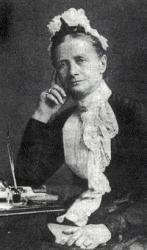
Cecil Frances Alexander

1818 - 1895 Person Name: C. F. Alexander Topics: Consecration of Churches Author of "Thy Temple is not made with hands" in The Church Hymnal As a small girl, Cecil Frances Humphries (b. Redcross, County Wicklow, Ireland, 1818; Londonderry, Ireland, 1895) wrote poetry in her school's journal. In 1850 she married Rev. William Alexander, who later became the Anglican primate (chief bishop) of Ireland. She showed her concern for disadvantaged people by traveling many miles each day to visit the sick and the poor, providing food, warm clothes, and medical supplies. She and her sister also founded a school for the deaf. Alexander was strongly influenced by the Oxford Movement and by John Keble's Christian Year. Her first book of poetry, Verses for Seasons, was a "Christian Year" for children. She wrote hymns based on the Apostles' Creed, baptism, the Lord's Supper, the Ten Commandments, and prayer, writing in simple language for children. Her more than four hundred hymn texts were published in Verses from the Holy Scripture (1846), Hymns for Little Children (1848), and Hymns Descriptive and Devotional ( 1858). Bert Polman ================== Alexander, Cecil Frances, née Humphreys, second daughter of the late Major John Humphreys, Miltown House, co. Tyrone, Ireland, b. 1823, and married in 1850 to the Rt. Rev. W. Alexander, D.D., Bishop of Derry and Raphoe. Mrs. Alexander's hymns and poems number nearly 400. They are mostly for children, and were published in her Verses for Holy Seasons, with Preface by Dr. Hook, 1846; Poems on Subjects in the Old Testament, pt. i. 1854, pt. ii. 1857; Narrative Hymns for Village Schools, 1853; Hymns for Little Children, 1848; Hymns Descriptive and Devotional, 1858; The Legend of the Golden Prayers 1859; Moral Songs, N.B.; The Lord of the Forest and his Vassals, an Allegory, &c.; or contributed to the Lyra Anglicana, the S.P.C.K. Psalms and Hymns, Hymns Ancient & Modern, and other collections. Some of the narrative hymns are rather heavy, and not a few of the descriptive are dull, but a large number remain which have won their way to the hearts of the young, and found a home there. Such hymns as "In Nazareth in olden time," "All things bright and beautiful," "Once in Royal David's city," "There is a green hill far away," "Jesus calls us o'er the tumult," "The roseate hues of early dawn," and others that might be named, are deservedly popular and are in most extensive use. Mrs. Alexander has also written hymns of a more elaborate character; but it is as a writer for children that she has excelled. - John Julian, Dictionary of Hymnology (1907) =============== Alexander, Cecil F., née Humphreys, p. 38, ii. Additional hymns to those already noted in this Dictionary are in common use:— 1. Christ has ascended up again. (1853.) Ascension. 2. His are the thousand sparkling rills. (1875.) Seven Words on the Cross (Fifth Word). 3. How good is the Almighty God. (1S48.) God, the Father. 4. In [a] the rich man's garden. (1853.) Easter Eve. 5. It was early in the morning. (1853.) Easter Day. 6. So be it, Lord; the prayers are prayed. (1848.) Trust in God. 7. Saw you never in the twilight? (1853.) Epiphany. 8. Still bright and blue doth Jordan flow. (1853.) Baptism of Our Lord. 9. The angels stand around Thy throne. (1848.) Submission to the Will of God. 10. The saints of God are holy men. (1848.) Communion of Saints. 11. There is one Way and only one. (1875.) SS. Philip and James. 12. Up in heaven, up in heaven. (1848.) Ascension. 13. We are little Christian children. (1848.) Holy Trinity. 14. We were washed in holy water. (1848.) Holy Baptism. 15. When of old the Jewish mothers. (1853.) Christ's Invitation to Children. 16. Within the Churchyard side by side. (1848.) Burial. Of the above hymns those dated 1848 are from Mrs. Alexander's Hymns for Little Children; those dated 1853, from Narrative Hymns, and those dated 1875 from the 1875 edition of Hymns Ancient & Modern. Several new hymns by Mrs. Alexander are included in the 1891 Draft Appendix to the Irish Church Hymnal. --John Julian, Dictionary of Hymnology, Appendix, Part II (1907) ============= Alexander, Cecil F. , p. 38, ii. Mrs. Alexander died at Londonderry, Oct. 12, 1895. A number of her later hymns are in her Poems, 1896, which were edited by Archbishop Alexander. --John Julian, Dictionary of Hymnology, New Supplement (1907) See also in:Hymn Writers of the Church

John Stainer

1840 - 1901 Person Name: Sir J. Stainer, 1840-1901 Topics: Consecration Of Life; Consecration Of Powers; Consecration Of Self; Consecration Entire; Consecration Of Goods; The Church and the Kingdom of God Evangelism; Self-Dedication Composer of "ALL FOR JESUS" in Methodist Hymn and Tune Book

George C. Stebbins

1846 - 1945 Topics: The Church on Earth; Consecration; Decrees of God; Divine Election; House of God ; Idolatry; Image Worship; Israel in Canaan; Name Of God; God in Nature; Omnipotence of God; Praise for Blessings; Praise for God's Perfections; Praise for God's Works; Praise in Worship; Service; Works of God Composer of "JANET" in Psalter Hymnal (Red) Stebbins studied music in Buffalo and Rochester, New York, then became a singing teacher. Around 1869, he moved to Chicago, Illinois, to join the Lyon and Healy Music Company. He also became the music director at the First Baptist Church in Chicago. It was in Chicago that he met the leaders in the Gospel music field, such as George Root, Philip Bliss, & Ira Sankey. At age 28, Stebbins moved to Boston, Massachusetts, where he became music director at the Claredon Street Baptist Church; the pastor there was Adoniram Gordon. Two years later, Stebbins became music director at Tremont Temple in Boston. Shortly thereafter, he became involved in evangelism campaigns with Moody and others. Around 1900, Stebbins spent a year as an evangelist in India, Egypt, Italy, Palestine, France and England. (www.hymntime.com/tch)

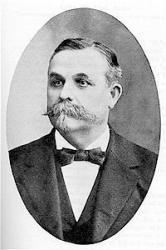
James McGranahan

1840 - 1907 Topics: Afflictions Comfort under; Afflictions Many and sore; Afflictions Purpose of; Aspirations For Church Privileges; Assurance Enjoyed; Character Value of Good; Christ Power of; Christ Resurrection of; Christ The Savior; Christians Christ the Life of; Christians Conflicts of; Christians Conquerors; Christians Persecuted and Sorrowing; Consecration and Dedication; Deliverance from trouble; Doxology; Enemies Many and Mighty; Faith Act of; Faith Blessedness of; Faith Walking by; Families; Fearlessness; God Hearer of Prayer; Gospel Privileges of; Mercy of God Everlasting; Praise Calls to; Prayer Answers to; Prayer confidence in; Prayer God Hears; Royalty of Christ For the Salvation of His People; Royalty of Christ Mediatorial; Sacrifice Spiritual; Salvation Prayers for; Salvation Thanksgiving for; Trust in God Blessed; Worship Family; Worship Only as God Appoints; Zeal False Composer of "[O praise the Lord, for He is good]" in Bible Songs James McGranahan USA 1840-1907. Born at West Fallowfield, PA, uncle of Hugh McGranahan, and son of a farmer, he farmed during boyhood. Due to his love of music his father let him attend singing school, where he learned to play the bass viol. At age 19 he organized his first singing class and soon became a popular teacher in his area of the state. He became a noted musician and hymns composer. His father was reluctant to let him pursue this career, but he soon made enough money doing it that he was able to hire a replacement farmhand to help his father while he studied music. His father, a wise man, soon realized how his son was being used by God to win souls through his music. He entered the Normal Music School at Genesco, NY, under William B Bradbury in 1861-62. He met Miss Addie Vickery there. They married in 1863, and were very close to each other their whole marriage, but had no children. She was also a musician and hymnwriter in her own right. For a time he held a postmaster’s job in Rome, PA. In 1875 he worked for three years as a teacher and director at Dr. Root’s Normal Music Institute. He because well-known and successful as a result, and his work attracted much attention. He had a rare tenor voice, and was told he should train for the operatic stage. It was a dazzling prospect, but his friend, Philip Bliss, who had given his wondrous voice to the service of song for Christ for more than a decade, urged him to do the same. Preparing to go on a Christmas vacation with his wife, Bliss wrote McGranahan a letter about it, which McGranahan discussed with his friend Major Whittle. Those two met in person for the first time at Ashtubula, OH, both trying to retrieve the bodies of the Bliss’s, who died in a bridge-failed train wreck. Whittle thought upon meeting McGranahan, that here is the man Bliss has chosen to replace him in evangelism. The men returned to Chicago together and prayed about the matter. McGranahan gave up his post office job and the world gained a sweet gospel singer/composer as a result. McGranahan and his wife, and Major Whittle worked together for 11 years evangelizing in the U.S., Great Britain, and Ireland. They made two visits to the United Kingdom, in 1880 and 1883, the latter associated with Dwight Moody and Ira Sankey evangelistic work. McGranahan pioneered use of the male choir in gospel song. While holding meetings in Worcester, MA, he found himself with a choir of only male voices. Resourcefully, he quickly adapted the music to those voices and continued with the meetings. The music was powerful and started what is known as male choir and quartet music. Music he published included: “The choice”, “Harvest of song”, “Gospel Choir”,, “Gospel hymns #3,#4, #5, #6” (with Sankey and Stebbins), “Songs of the gospel”, and “Male chorus book”. The latter three were issued in England. In 1887 McGranahan’s health compelled him to give up active work in evangelism. He then built a beautiful home, Maplehurst, among friends at Kinsman, OH, and settled down to the composition of music, which would become an extension of his evangelistic work. Though his health limited his hours, of productivity, some of his best hymns were written during these days. McGranahan was a most lovable, gentle, modest, unassuming, gentleman, and a refined and cultured Christian. He loved good fellowship, and often treated guests to the most delightful social feast. He died of diabetes at Kinsman, OH, and went home to be with his Savior. John Perry

Charles Westphal

Topics: Church and Christian Unity; Kirche und Wiederverinigung; L’Eglise et l’unité; Evangelism and Missions; Evangelisation und Mission; Evangélisation et Missions; Day Of Prayer; Gebetstag; Jour de prière; Dedication; Heiligung und christlicher Dienst; Consecration Translator (French, v. 4) of "Herz und Herz vereint zusammen" in Cantate Domino

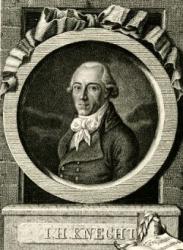
Justin Heinrich Knecht

1752 - 1817 Person Name: Justin H. Krecht Topics: Biblical Names and Places Jacob; Biblical Names and Places Zion; Blessing; Church Year Lent; Church Year Transfiguration; Desiring God; Discipleship; Doubt; Elements of Worship Baptism; Elements of Worship Gathering; Elements of Worship Lord's Supper; Elements of Worship Praise and Adoration; Fear; God Desire for; God Trust in; God as Refuge; God as Shield; God's Armor; God's Deeds; God's Face; God's House; God's Love; God's Name; God's People (flock, sheep); God's Promise of Redemption; God's Strength; God's Way; Grace; Hymns of Praise; Jesus Christ Incarnation; Joy; Longing for God; Occasional Services Christian Marriage; Occasional Services Dedication / Consecration / Anniversary; Occasional Services Funerals; Occasional Services Ordination and/or Installation; Pain; Peace; People of God / Church Citizens of Heaven; Prayer; Rest; Songs of Zion; Sorrow; Suffering; Temple; Temptation And Trial; The Fall; The Incarnation; Trust; Unity and Fellowship; Year A, B, C, Presentation of the Lord, February 2; Year B, Ordinary Time after Pentecost, August 21-27; Year C, Ordinary Time after Pentecost, October 23-29 Composer of "ST. EDITH" in Psalms for All Seasons Justin Heinrich Knecht Germany 1752-1817. Born at Biberach Baden-Wurttemberg, Germany, he attended a Lutheran college in Esslingen am Neckar from 1768-1771. Having learned the organ, keyboard, violin and oratory, he became a Lutheran preceptor (professor of literature) and music director in Biberach. It was a free imperial city until 1803 and had a rich cultural life. He became organist of St. Martin’s Church in 1792, used by both Lutherans and Catholics, and was there for many years. He led an energetic, busy musical life, composing for both the theatre and church, organizing subscription concerts, teaching music theory, acoustics, aesthetics, composition, and instruments at the Gymnasium, affiliated to the Musikschule in 1806. He went to Stuttgart in 1806 in hopes of a post there as Kapellmeister, serving two years as Konzertmeister, but he was appointed Direktor Beim Orchester by the King of Wurttemberg in 1807. However, he returned to his former life in 1808 and remained there the rest of his life. He died at Biberach. He wrote 10 vocals, 11 opera and stage works, one symphony, 3 chamber music instrumentals, 7 organ works, 4 piano works, and 6 music theories. He was an author composer, editor, contributor, musician, compiler, and lyricist. John Perry

Pages


Export as CSV
It looks like you are using an ad-blocker. Ad revenue helps keep us running. Please consider white-listing Hymnary.org or getting Hymnary Pro to eliminate ads entirely and help support Hymnary.org.