You help make Hymnary.org possible. More than 10 million people from 200+ countries found hymns, liturgical resources and encouragement on Hymnary.org in 2025, including you. Every visit affirms the global impact of this ministry.

If Hymnary has been meaningful to you this year, would you take a moment today to help sustain it? A gift of any size—paired with a note of encouragement if you wish—directly supports the server costs, research work and curation that keep this resource freely available to the world.

Give securely online today, or mail a check to:
Hymnary.org
Calvin University
3201 Burton Street SE
Grand Rapids, MI 49546

Thank you for your partnership, and may the hope of Advent fill your heart.

Person Results

Topics:advent+of+jesus
In:person

Planning worship? Check out our sister site, ZeteoSearch.org, for 20+ additional resources related to your search.
Showing 11 - 20 of 507Results Per Page: 102050

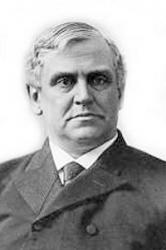
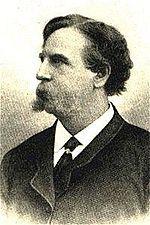
Phillips Brooks

1835 - 1893 Topics: Advent of Jesus Author of "O Little Town of Bethlehem" in The Sing! Hymnal Brooks, Phillips, D.D., was born at Boston, Dec. 13, 1835, graduated at Harvard College 1855, and was ordained in 1859. Successively Rector of the Church of the Advent, Philadelphia, and Trinity Church, Boston, he became Bishop of Mass. in 1891, and died at Boston in Jan., 1893. His Carol, "O little town of Bethlehem," was written for his Sunday School in 1868, the author having spent Christmas, 1866, at Bethlehem. His hymn, "God hath sent His angels to the earth again," is dated 1877. --John Julian, Dictionary of Hymnology, New Supplement (1907)

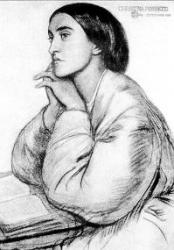
Christina Georgina Rossetti

1830 - 1894 Person Name: Christina Rossetti Topics: Advent of Jesus Author of "In the Bleak Midwinter" in The Sing! Hymnal Rossetti, Christina Georgina, daughter of Gabriel, and sister of Dante Gabriel and William Michael Rossetti, was born in London, Dec. 5, 1830, and received her education at home. Her published works include:— (1) Goblin Market, and Other Poems, 1862; (2) The Prince's Progress, and Other Poems, 1866 ; (3) Poems, mainly a reprint of Nos. 1 and 2, 1875; (4) A Pageant, and Other Poems, 1881, &c. In addition, Miss Rossetti has published several prose works, as:— Annus Domini (a book of prayers for every day in the year), 1874; Letter and Spirit of the Decalogue, 1883, and others. She has written very few hymns avowedly for church worship, but several centos have been compiled from her poems, and have passed into several hymn-books. These include:— 1. Dead is thy daughter, trouble not the Master. The raising of Jairus's daughter. From her Goblin Market, &c, 1862, into Lyra Mystica, 1865. 2. God the Father, give us grace. Invocation of the Holy Trinity. From Lyra Mystica into the Savoy Hymnary, for use in the Chapel Koyai, Savoy (see No. 8 below). 3. I bore with thee long weary days and nights. The Love of Christ. From her Goblin Market, &c, 1862, into Lyra Messianica, 1864. 4. I would have gone, God bade me stay. Resignation. From her Poems, Hymns, 1884, &c. 1875, into Horder's Congregational Hymns. 5. Once I thought to sit so high. A Body hast Thou prepared Me, or Passiontide. Contributed to Lyra Eucharistica, 1863. 6. The Advent moon shines cold and clear. Advent. From her Goblin Market, &c, 1862. 7 The flowers that bloom in sun and shade. The Eternity of God. In Mrs. C. Brock's Children's Hymn Book, 1881. 8. What are these that glow from afar? Martyrs. Part of the poem "We meet in joy though we part in sorrow," which appeared in Lyra Mystica, 1865, and then in Miss Rossetti's Prince's Progress, &c, 1866. It is the most widely used of her hymns. No. 2 above is also from the same poem. Miss Rossetti's verses are profoundly suggestive and lyrical, and deserve a larger place than they occupy in the hymnody of the church. Her sonnets are amongst the finest in the English language. [Rev.W. Garrett Horder] --John Julian, Dictionary of Hymnology (1907) ============== Rossetti, Christina G., p. 978, i. The following hymns by Miss Rossetti have recently come into common use:— 1. A burdened heart that bleeds and bears. [Lent.] In her Time Flies: A Reading Diary, ed. 1897, p. 59, for March 26; and her Verses, &c., ed. 1898, p. 113. Included in Church Hymns, 1903. 2. Give me the lowest place, not that I dare. [Humility.] From her Prince's Progress, 1866, p. 216. 3. In the bleak midwinter. [Christmas.] In her Poetical Works, 1904, p. 246, as "Before 1872"; repeated in The English Hymnal, 1906. 4. None other Lamb, none other Name. [Jesus, All, and in All] From her The Face of the Deep, &c, 1892 (3rd ed. 1895, p. 176); and her Verses, &c, 1898, p. 36. It is the second of two poetical meditations on Rev. v. 6. In Church Hymns, 1903. 5. The shepherds had an angel. [Christmas.] In her Poetical Works, 1904, p. 187, this is entitled "A Christmas Carol. For my Godchildren," and dated 6 October, 1856. Repeated in the Sunday School Hymnary, 1905. 6. We know not a voice of that River. [The River of the Eternal City.] In The Face of the Deep, &c, 1892 (3rd ed. 1895, p. 523), as a poetical meditation on Rev, xxii. Also in her Verses, &c., 1898, p. 81. Additional works by Miss Rossetti to those named on p. 978, i., include Time Flies A Reading Diary, 1885; Called to be Saints, 1881; Seek and Find, 1879; The Face of the Deep, A Devotional Commentary on the Apocalypse, 1892; and Verses ... reprinted fromCalled to be Saints, Time Flies, The Face of the Deep, 1893. It must be noted that (1) the hymn attributed to her, "Dead is thy daughter; trouble not the Master," is not by her, but by Mrs. C. F. Alexander, with whose name it appeared in Lyra Mystica, 1865; and (2) her “I would be gone; God bade me stay," is from her Prince's Progress, 1866, p. 204. Miss Rossetti d. Dec. 29, 1891. --John Julian, Dictionary of Hymnology, New Supplement (1907)

Keith Getty

b. 1974 Topics: Advent of Jesus Alterer of "In the Bleak Midwinter" in The Sing! Hymnal Keith Getty (b. December 16, 1974) is a world-renowned modern hymn writer. Keith developed a passion for writing good songs for the church in his twenties, and began writing for his small Baptist church. He writes and performs with his wife, Kristyn and they regularly tour the United States and the United Kingdom. (Also known as Julian Keith Getty) Laura de Jong

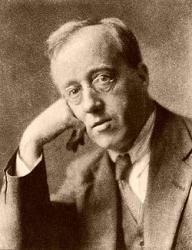
Gustav Holst

1874 - 1934 Topics: Advent of Jesus Composer of "CRANHAM" in The Sing! Hymnal Gustav Holst (b. Chelteham, Gloucestershire, England, September 21, 1874, d. London, England, May 25, 1934) was a renowned British composer and musician. Having studied at Cheltenham Grammar School, he soon obtained a professional position as an organist, and later as choirmaster. In 1892, Holst composed a two-act operetta, which so impressed his father that he borrowed the money to send Holst to the Royal College of Music. Severe neuritis in his right hand later caused him to give up the keyboard, and Holst turned to the trombone and composing. In 1895 Holst met Ralph Vaughan Williams, and the two became lifelong friends. Vaughan Williams helped Holst land his first job as a singing teacher. Holst became very interested in Indian and Hindu culture, and composed a number of operas translated from Sanksrit myths. These were not received well in England, however. Holst is best known for his composition, The Planets, as well as

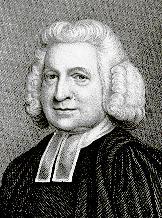
Charles Wesley

1707 - 1788 Topics: Advent of Jesus Author (sts. 1, 3) of "Come, Thou Long-Expected Jesus" in The Sing! Hymnal Charles Wesley, M.A. was the great hymn-writer of the Wesley family, perhaps, taking quantity and quality into consideration, the great hymn-writer of all ages. Charles Wesley was the youngest son and 18th child of Samuel and Susanna Wesley, and was born at Epworth Rectory, Dec. 18, 1707. In 1716 he went to Westminster School, being provided with a home and board by his elder brother Samuel, then usher at the school, until 1721, when he was elected King's Scholar, and as such received his board and education free. In 1726 Charles Wesley was elected to a Westminster studentship at Christ Church, Oxford, where he took his degree in 1729, and became a college tutor. In the early part of the same year his religious impressions were much deepened, and he became one of the first band of "Oxford Methodists." In 1735 he went with his brother John to Georgia, as secretary to General Oglethorpe, having before he set out received Deacon's and Priest's Orders on two successive Sundays. His stay in Georgia was very short; he returned to England in 1736, and in 1737 came under the influence of Count Zinzendorf and the Moravians, especially of that remarkable man who had so large a share in moulding John Wesley's career, Peter Bonier, and also of a Mr. Bray, a brazier in Little Britain. On Whitsunday, 1737, [sic. 1738] he "found rest to his soul," and in 1738 he became curate to his friend, Mr. Stonehouse, Vicar of Islington, but the opposition of the churchwardens was so great that the Vicar consented that he "should preach in his church no more." Henceforth his work was identified with that of his brother John, and he became an indefatigable itinerant and field preacher. On April 8, 1749, he married Miss Sarah Gwynne. His marriage, unlike that of his brother John, was a most happy one; his wife was accustomed to accompany him on his evangelistic journeys, which were as frequent as ever until the year 1756," when he ceased to itinerate, and mainly devoted himself to the care of the Societies in London and Bristol. Bristol was his headquarters until 1771, when he removed with his family to London, and, besides attending to the Societies, devoted himself much, as he had done in his youth, to the spiritual care of prisoners in Newgate. He had long been troubled about the relations of Methodism to the Church of England, and strongly disapproved of his brother John's "ordinations." Wesley-like, he expressed his disapproval in the most outspoken fashion, but, as in the case of Samuel at an earlier period, the differences between the brothers never led to a breach of friendship. He died in London, March 29, 1788, and was buried in Marylebone churchyard. His brother John was deeply grieved because he would not consent to be interred in the burial-ground of the City Road Chapel, where he had prepared a grave for himself, but Charles said, "I have lived, and I die, in the Communion of the Church of England, and I will be buried in the yard of my parish church." Eight clergymen of the Church of England bore his pall. He had a large family, four of whom survived him; three sons, who all became distinguished in the musical world, and one daughter, who inherited some of her father's poetical genius. The widow and orphans were treated with the greatest kindness and generosity by John Wesley. As a hymn-writer Charles Wesley was unique. He is said to have written no less than 6500 hymns, and though, of course, in so vast a number some are of unequal merit, it is perfectly marvellous how many there are which rise to the highest degree of excellence. His feelings on every occasion of importance, whether private or public, found their best expression in a hymn. His own conversion, his own marriage, the earthquake panic, the rumours of an invasion from France, the defeat of Prince Charles Edward at Culloden, the Gordon riots, every Festival of the Christian Church, every doctrine of the Christian Faith, striking scenes in Scripture history, striking scenes which came within his own view, the deaths of friends as they passed away, one by one, before him, all furnished occasions for the exercise of his divine gift. Nor must we forget his hymns for little children, a branch of sacred poetry in which the mantle of Dr. Watts seems to have fallen upon him. It would be simply impossible within our space to enumerate even those of the hymns which have become really classical. The saying that a really good hymn is as rare an appearance as that of a comet is falsified by the work of Charles Wesley; for hymns, which are really good in every respect, flowed from his pen in quick succession, and death alone stopped the course of the perennial stream. It has been the common practice, however for a hundred years or more to ascribe all translations from the German to John Wesley, as he only of the two brothers knew that language; and to assign to Charles Wesley all the original hymns except such as are traceable to John Wesley through his Journals and other works. The list of 482 original hymns by John and Charles Wesley listed in this Dictionary of Hymnology have formed an important part of Methodist hymnody and show the enormous influence of the Wesleys on the English hymnody of the nineteenth century. -- Excerpts from John Julian, Dictionary of Hymnology (1907) ================== Charles Wesley, the son of Samuel Wesley, was born at Epworth, Dec. 18, 1707. He was educated at Westminster School and afterwards at Christ Church, Oxford, where he graduated M.A. In 1735, he took Orders and immediately proceeded with his brother John to Georgia, both being employed as missionaries of the S.P.G. He returned to England in 1736. For many years he engaged with his brother in preaching the Gospel. He died March 29, 1788. To Charles Wesley has been justly assigned the appellation of the "Bard of Methodism." His prominence in hymn writing may be judged from the fact that in the "Wesleyan Hymn Book," 623 of the 770 hymns were written by him; and he published more than thirty poetical works, written either by himself alone, or in conjunction with his brother. The number of his separate hymns is at least five thousand. --Annotations of the Hymnal, Charles Hutchins, M.A., 1872.

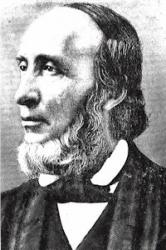
Edmund H. Sears

1810 - 1876 Topics: Jesus Christ Advent of Author of "It Came upon a Midnight Clear" in Voices Together Edmund Hamilton Sears was born in Berkshire [County], Massachusetts, in 1810; graduated at Union College, Schenectady, in 1834, and at the Theological School of Harvard University, in 1837. He became pastor of the Unitarian Society in Wayland, Mass., in 1838; removed to Lancaster in 1840; but on account of ill health was obliged to retire from the active duties of the ministry in 1847; since then, residing in Wayland, he devoted himself to literature. He has published several works. --Annotations of the Hymnal, Charles Hutchins, M.A., 1872 ======================= Sears, Edmund Hamilton, D.D., son of Joseph Sears, was born at Sandisfield, Berkshire County, Massachusetts, April 6, 1810, and educated at Union College, Schenectady, N.Y., where he graduated in 1834; and at the Theological School at Cambridge. In 1838 he became pastor of the First Church (Unitarian) at Wayland, Massachusetts; then at Lancaster in the same State, in 1840; again at Wayland, in 1847; and finally at Weston, Massachusetts, in 1865. He died at Weston, Jan. 14, 1876. He published:— (1) Regeneration, 1854; (2) Pictures of the Olden Time, 1857; (3) Athanasia, or Foregleams of Immortality, 1858, enlarged ed., 1872; (4) The Fourth Gospel the Heart of Christ; (5) Sermons and Songs of the Christian Life, 1875, in which his hymns are collected. Also co-editor of the Monthly Religious Magazine. Of his hymns the following are in common use:— 1. Calm on the listening ear of night. Christmas. This hymn was first published in its original form, in the Boston Observer, 1834; afterwards, in the Christian Register, in 1835; subsequently it was emended by the author, and, as thus emended, was reprinted entire in the Monthly Magazine, vol. xxxv. Its use is extensive. 2. It came upon the midnight clear. Christmas. "Rev. Dr. Morison writes to us, Sears's second Christmas hymn was sent to me as editor of the Christian Register, I think, in December, 1849. I was very much delighted with it, and before it came out in the Register, read it at a Christmas celebration of Dr. Lunt's Sunday School in Quincy. I always feel that, however poor my Christmas sermon may be, the reading and singing of this hymn are enough to make up for all deficiences.'" 3. Ho, ye that rest beneath the rock. Charitable Meetings on behalf of Children. Appeared in Longfellow and Johnson's Hymns of the Spirit, Boston, 1864, in 2 stanzas of 8 lines. Dr. Sears's two Christmas hymns rank with the best on that holy season in the English language. Although a member of the Unitarian body, his views were rather Swedenborgian than Unitarian. He held always to the absolute Divinity of Christ. [Rev. F. M. Bird, M.A.] --Excerpts from John Julian, Dictionary of Hymnology (1907)

Richard Storrs Willis

1819 - 1900 Person Name: Richard S. Willis Topics: Jesus Christ Advent of Composer of "CAROL" in Voices Together Richard Storrs Willis (February 10, 1819 – May 10, 1900) was an American composer, notably of hymn music. One of his hymns is "It Came Upon the Midnight Clear" (1850), with lyrics by Edmund Sears. He was also a music critic and journal editor. Willis, whose siblings included Nathaniel Parker Willis and Fanny Fern, was born on February 10, 1819, in Boston, Massachusetts. He attended Chauncey Hall, the Boston Latin School, and Yale College where he was a member of Skull and Bones in 1841. Willis then went to Germany, where he studied six years under Xavier Schnyder and Moritz Hauptmann. While there, he became a personal friend of Felix Mendelssohn. After returning to America, Willis served as music critic for the New York Tribune, The Albion, and The Musical Times, for which he served as editor for a time. He joined the New-York American-Music Association, an organization which promoted the work native of naturalized American composers. He reviewed the organization's first concert for their second season, held December 30, 1856, in the Musical World, as a "creditable affair, all things considered". Willis began his own journal, Once a Month: A Paper of Society, Belles-Lettres and Art, and published its first issue in January 1862. Willis died on May 7, 1900. His interment was located at Woodlawn Cemetery. His works and music compilations include: Church Chorals and Choir Studies (1850) Our Church Music (1856) Waif of Song (1876) Pen and Lute (1883) --en.wikipedia.org

George Ratcliffe Woodward

1848 - 1934 Person Name: G. R. Woodward Topics: Advent of Jesus Harmonizer of "PUER NOBIS" in The Sing! Hymnal Educated at Caius College in Cambridge, England, George R. Woodward (b. Birkenhead, Cheshire, England, 1848; d. Highgate, London, England, 1934) was ordained in the Church of England in 1874. He served in six parishes in London, Norfolk, and Suffolk. He was a gifted linguist and translator of a large number of hymns from Greek, Latin, and German. But Woodward's theory of translation was a rigid one–he held that the translation ought to reproduce the meter and rhyme scheme of the original as well as its contents. This practice did not always produce singable hymns; his translations are therefore used more often today as valuable resources than as congregational hymns. With Charles Wood he published three series of The Cowley Carol Book (1901, 1902, 1919), two editions of Songs of Syon (1904, 1910), An Italian Carol Book (1920), and the Cambridge Carol Book

Theodore Baker

1851 - 1934 Topics: Advent of Jesus Translator (sts. 1-2) of "Lo, How a Rose E'er Blooming" in The Sing! Hymnal Theodore Baker (b. New York, NY, 1851; d. Dresden, Germany, 1934). Baker is well known as the compiler of Baker's Biographical Dictionary of Musicians (first ed. 1900), the first major music reference work that included American composers. Baker studied music in Leipzig, Germany, and wrote a dissertation on the music of the Seneca people of New York State–one of the first studies of the music of American Indians. From 1892 until his retirement in 1926, Baker was a literary editor and translator for G. Schirmer, Inc., in New York City. In 1926, he returned to Germany. Psalter Hymnal Handbook, 1987

Michael Praetorius

1571 - 1621 Topics: Advent of Jesus Harmonizer of "EST IST EIN' ROSE" in The Sing! Hymnal Born into a staunchly Lutheran family, Michael Praetorius (b. Creuzburg, Germany, February 15, 1571; d. Wolfenbüttel, Germany, February 15, 1621) was educated at the University of Frankfort-an-der-Oder. In 1595 he began a long association with Duke Heinrich Julius of Brunswick, when he was appoint­ed court organist and later music director and secretary. The duke resided in Wolfenbüttel, and Praetorius spent much of his time at the court there, eventually establishing his own residence in Wolfenbüttel as well. When the duke died, Praetorius officially retained his position, but he spent long periods of time engaged in various musical appointments in Dresden, Magdeburg, and Halle. Praetorius produced a prodigious amount of music and music theory. His church music consists of over one thousand titles, including the sixteen-volume Musae Sionae (1605-1612), which contains Lutheran hymns in settings ranging from two voices to multiple choirs. His Syntagma Musicum (1614-1619) is a veritable encyclopedia of music and includes valuable information about the musical instruments of his time. Bert Polman

Pages


Export as CSV
It looks like you are using an ad-blocker. Ad revenue helps keep us running. Please consider white-listing Hymnary.org or getting Hymnary Pro to eliminate ads entirely and help support Hymnary.org.