You help make Hymnary.org possible. More than 10 million people from 200+ countries found hymns, liturgical resources and encouragement on Hymnary.org in 2025, including you. Every visit affirms the global impact of this ministry.

If Hymnary has been meaningful to you this year, would you take a moment today to help sustain it? A gift of any size—paired with a note of encouragement if you wish—directly supports the server costs, research work and curation that keep this resource freely available to the world.

Give securely online today, or mail a check to:
Hymnary.org
Calvin University
3201 Burton Street SE
Grand Rapids, MI 49546

Thank you for your partnership, and may the hope of Advent fill your heart.

Person Results

Topics:proper+18
In:people

Planning worship? Check out our sister site, ZeteoSearch.org, for 20+ additional resources related to your search.
Showing 11 - 20 of 236Results Per Page: 102050

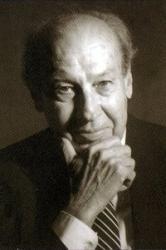
Jaroslav J. Vajda

1919 - 2008 Topics: Proper 18 Year B Translator, v. 2 of "If You Will Trust in God to Guide You" in Voices United Jaroslav J. Vajda (b. Lorain, Ohio, 1919; d. 2008) Born of Czechoslovakian parents, Vajda was educated at Concordia College in Fort Wayne, Indiana, and Concordia Theological Seminary in St. Louis, Missouri. Ordained as a Lutheran pastor in 1944, he served congregations in Pennsylvania and Indiana until 1963. He was editor of the periodicals The Lutheran Beacon (1959-1963) and This Day (1963-1971) and book editor and developer for Concordia Publishing House in St. Louis from 1971 until his retirement in 1986. Working mainly with hymn texts, Vajda served on several Lutheran commissions of worship. A writer of original poetry since his teens, he was the author of They Followed the King (1965) and Follow the King (1977). His translations from Slovak include Bloody Sonnets (1950), Slovak Christmas (1960), An Anthology of Slovak Literature (1977), and contributions to the Lutheran Worship Supplement (1969) and the Lutheran Book of Worship (1978). A collection of his hymn texts, carols, and hymn translations was issued as Now the Joyful Celebration (1987); its sequel is So Much to Sing About (1991). Vajda's hymns are included in many modern hymnals, and he was honored as a Fellow of the Hymn Society in the United States and Canada in 1988. Bert Polman

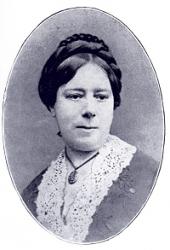
Catherine Winkworth

1827 - 1878 Topics: Proper 18 Year B Translator (into Englsih) of "Praise to the Lord, the Almighty (Peuples, criez de joie et bondissez d'allégresse)" in Voices United Catherine Winkworth (b. Holborn, London, England, 1827; d. Monnetier, Savoy, France, 1878) is well known for her English translations of German hymns; her translations were polished and yet remained close to the original. Educated initially by her mother, she lived with relatives in Dresden, Germany, in 1845, where she acquired her knowledge of German and interest in German hymnody. After residing near Manchester until 1862, she moved to Clifton, near Bristol. A pioneer in promoting women's rights, Winkworth put much of her energy into the encouragement of higher education for women. She translated a large number of German hymn texts from hymnals owned by a friend, Baron Bunsen. Though often altered, these translations continue to be used in many modern hymnals. Her work was published in two series of Lyra Germanica (1855, 1858) and in The Chorale Book for England (1863), which included the appropriate German tune with each text as provided by Sterndale Bennett and Otto Goldschmidt. Winkworth also translated biographies of German Christians who promoted ministries to the poor and sick and compiled a handbook of biographies of German hymn authors, Christian Singers of Germany (1869). Bert Polman ======================== Winkworth, Catherine, daughter of Henry Winkworth, of Alderley Edge, Cheshire, was born in London, Sep. 13, 1829. Most of her early life was spent in the neighbourhood of Manchester. Subsequently she removed with the family to Clifton, near Bristol. She died suddenly of heart disease, at Monnetier, in Savoy, in July, 1878. Miss Winkworth published:— Translations from the German of the Life of Pastor Fliedner, the Founder of the Sisterhood of Protestant Deaconesses at Kaiserworth, 1861; and of the Life of Amelia Sieveking, 1863. Her sympathy with practical efforts for the benefit of women, and with a pure devotional life, as seen in these translations, received from her the most practical illustration possible in the deep and active interest which she took in educational work in connection with the Clifton Association for the Higher Education of Women, and kindred societies there and elsewhere. Our interest, however, is mainly centred in her hymnological work as embodied in her:— (1) Lyra Germanica, 1st Ser., 1855. (2) Lyra Germanica, 2nd Ser., 1858. (3) The Chorale Book for England (containing translations from the German, together with music), 1863; and (4) her charming biographical work, the Christian Singers of Germany, 1869. In a sympathetic article on Miss Winkworth in the Inquirer of July 20, 1878, Dr. Martineau says:— "The translations contained in these volumes are invariably faithful, and for the most part both terse and delicate; and an admirable art is applied to the management of complex and difficult versification. They have not quite the fire of John Wesley's versions of Moravian hymns, or the wonderful fusion and reproduction of thought which may be found in Coleridge. But if less flowing they are more conscientious than either, and attain a result as poetical as severe exactitude admits, being only a little short of ‘native music'" Dr. Percival, then Principal of Clifton College, also wrote concerning her (in the Bristol Times and Mirror), in July, 1878:— "She was a person of remarkable intellectual and social gifts, and very unusual attainments; but what specially distinguished her was her combination of rare ability and great knowledge with a certain tender and sympathetic refinement which constitutes the special charm of the true womanly character." Dr. Martineau (as above) says her religious life afforded "a happy example of the piety which the Church of England discipline may implant.....The fast hold she retained of her discipleship of Christ was no example of ‘feminine simplicity,' carrying on the childish mind into maturer years, but the clear allegiance of a firm mind, familiar with the pretensions of non-Christian schools, well able to test them, and undiverted by them from her first love." Miss Winkworth, although not the earliest of modern translators from the German into English, is certainly the foremost in rank and popularity. Her translations are the most widely used of any from that language, and have had more to do with the modern revival of the English use of German hymns than the versions of any other writer. -- John Julian, Dictionary of Hymnology (1907) ============================ See also in: Hymn Writers of the Church

Leonard Blake

1907 - 1989 Person Name: Leonard James Blake (1906-1989) Topics: Proper 18 Year B Composer (descant) of "PRAISE MY SOUL" in Ancient and Modern

C. G. Gläser

1784 - 1829 Person Name: Carl Gotthelf Gläser Topics: Proper 18 Year B Composer of "AZMON" in Voices United Carl Gotthelf Gläser Germany 1781-1829. Born at Weissenfels, Burgenlandkreis, Sachsen-Anhalt, Germany, he received musical training from his father, after which he attended St. Thomas school in Leipzig. He became an author and composer. At Barmen he taught voice, piano, and violin. He also wrote and conducted chorale music. He died at Barmen. John Perry

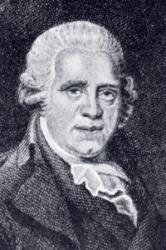
Edward Miller

1735 - 1807 Topics: Proper 18 Year C Adapter of "COMMUNION (ROCKINGHAM)" in Voices United Edward Miller, Born in the United Kingdom. The son of a pavior (stone paver), Miller left home to study music at King's Lynn. He was a flautist in Handel's orchestra. In 1752 he published “Six Solos for the German Flute”. In 1756 he was appointed organist of St. George Minster Doncaster, continuing in that post for 50 years. He also gave pianoforte lessons. He published hymns and sonatas for harpsichord, 16 editions of “The Institues of Music”, “Elegies for Voice & Pianoforte”, and Psalms of David set to music, arranged for each Sunday of the year. That work had over 5000 subscribers. He published his thoughts on performance of Psalmody in the Church of England, addressed to clergy. In 1801 he published the Psalms of Watts and Wesley for use by Methodists, and in 1804 the history and antiques of Doncaster with a map. John Perry

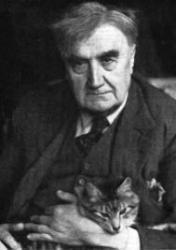
Ralph Vaughan Williams

1872 - 1958 Topics: Proper 18 Year B Arranger of "KINGSFOLD" in Voices United Through his composing, conducting, collecting, editing, and teaching, Ralph Vaughan Williams (b. Down Ampney, Gloucestershire, England, October 12, 1872; d. Westminster, London, England, August 26, 1958) became the chief figure in the realm of English music and church music in the first half of the twentieth century. His education included instruction at the Royal College of Music in London and Trinity College, Cambridge, as well as additional studies in Berlin and Paris. During World War I he served in the army medical corps in France. Vaughan Williams taught music at the Royal College of Music (1920-1940), conducted the Bach Choir in London (1920-1927), and directed the Leith Hill Music Festival in Dorking (1905-1953). A major influence in his life was the English folk song. A knowledgeable collector of folk songs, he was also a member of the Folksong Society and a supporter of the English Folk Dance Society. Vaughan Williams wrote various articles and books, including National Music (1935), and composed numerous arrange­ments of folk songs; many of his compositions show the impact of folk rhythms and melodic modes. His original compositions cover nearly all musical genres, from orchestral symphonies and concertos to choral works, from songs to operas, and from chamber music to music for films. Vaughan Williams's church music includes anthems; choral-orchestral works, such as Magnificat (1932), Dona Nobis Pacem (1936), and Hodie (1953); and hymn tune settings for organ. But most important to the history of hymnody, he was music editor of the most influential British hymnal at the beginning of the twentieth century, The English Hymnal (1906), and coeditor (with Martin Shaw) of Songs of Praise (1925, 1931) and the Oxford Book of Carols (1928). Bert Polman

John Milton

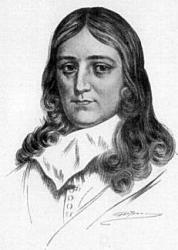
1608 - 1674 Topics: Proper 18 Year A Author of "Let Us with a Gladsome Mind" in Voices United Milton, John, was born in London, Dec. 9, 1608, and died there Nov. 8, 1674. His poetical excellences and his literary fame are matters apart from hymnology, and are fully dealt with in numerous memoirs. His influence on English hymn-writing has been very slight, his 19 versions of various Psalms having lain for the most part unused by hymnal compilers. The dates of his paraphrases are:— Ps. cxiv. and cxxxvi., 1623, when he was 15 years of ago. These were given in his Poems in English and Latin 1645. Ps. lxxx.-lxxxviii., written in 1648, and published as Nine Psalmes done into Metre, 1645. Ps. i., 1653; ii., “Done August 8, 1653;" iii., Aug. 9, 1653; iv. Aug. 10, 1653; v., Aug. 12, 1653; vi., Aug. 13, 1653; vii.Aug. 14, 1653; viii., Aug. 14, 1653. These 19 versions were all included in the 2nd ed. of his Poems in English and Latin, 1673. From these, mainly in the form of centos, the following have come into common use:— 1. Cause us to see Thy goodness, Lord. Ps. lxxxv. 2. Defend the poor and desolate. Ps. lxxxii. 3. God in the great assembly stands. Ps. lxxxii. 4. How lovely are Thy dwellings fair. Ps. lxxxiv. From this, "They pass refreshed the thirsty vale," is taken. 5. Let us with a gladsome [joyful] mind. Ps. cxxxvi. 6. O let us with a joyful mind. Ps. cxxxvi. 7. The Lord will come and not be slow. Ps. lxxxv. Of these centos Nos. 4 and 5 are in extensive use. The rest are mostly in Unitarian collections. There are also centos from his hymn on the Nativity, "This is the month, and this the happy morn" (q.v.). --John Julian, Dictionary of Hymnology (1907)

Henry Purcell

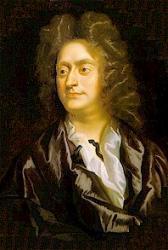
1659 - 1695 Topics: Proper 18 Year A Composer of "WESTMINSTER ABBEY" in Voices United Henry Purcell (b. Westminster, London, England, 1659; d. Westminster, 1695), was perhaps the greatest English composer who ever lived, though he only lived to the age of thirty-six. Purcell's first piece was published at age eight when he was also a chorister in the Chapel Royal. When his voice changed in 1673, he was appointed assistant to John Hingston, who built chamber organs and maintained the king's instruments. In 1674 Purcell began tuning the Westminster Abbey organ and was paid to copy organ music. Given the position of composer for the violins in 1677, he also became organist at Westminster Abbey in 1679 (at age twenty) and succeeded Hingston as maintainer of the king's instruments (1683). Purcell composed music for the theater (Dido and Aeneas, c. 1689) and for keyboards, provided music for royal coronations and other ceremonies, and wrote a substantial body of church music, including eighteen full anthems and fifty-six verse anthems. Bert Polman

David Evans

1874 - 1948 Topics: Year C Proper 18 Harmonizer of "SLANE" in The New Century Hymnal David Evans (b. Resolven, Glamorganshire, Wales, 1874; d. Rosllannerchrugog, Denbighshire, Wales, 1948) was an important leader in Welsh church music. Educated at Arnold College, Swansea, and at University College, Cardiff, he received a doctorate in music from Oxford University. His longest professional post was as professor of music at University College in Cardiff (1903-1939), where he organized a large music department. He was also a well-known and respected judge at Welsh hymn-singing festivals and a composer of many orchestral and choral works, anthems, service music, and hymn tunes. Bert Polman

John S. B. Monsell

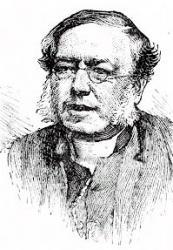
1811 - 1875 Person Name: John Samuel Bewley Monsell Topics: Proper 18 Year A Author of "Fight the Good Fight" in Voices United John Samuel Bewley Monsell (b. St. Colomb's, Londonderry, Ireland, 1811; d. Guilford, Surrey, England, 1875) was educated at Trinity College in Dublin and served as a chaplain and rector of several churches in Ireland after his ordination in 1835. Transferred to England in 1853, he became rector of Egham in Surrey and was rector of St. Nicholas Church in Guilford from 1870 until his death (caused by a construction accident at his church). A prolific poet, Monsell published his verse in eleven volumes. His three hundred hymns, many celebrating the seasons of the church year, were issued in collections such as Hymns and Miscellaneous Poems (1837), Spiritual Songs (1857), Hymns of Love and Praise (1863), and The Parish Hymnal (1873). Bert Polman =============================== Monsell, John Samuel Bewley, L.L.D., son of Thomas Bewley Monsell, Archdeacon of Londonderry, was born at St. Columb's, Londonderry, March 2,1811, and educated at Trinity College, Dublin (B.A. 1832, LL.D. 1856). Taking Holy Orders in 1834, "he was successively Chaplain to Bishop Mant, Chancellor of the diocese of Connor, Rector of Ramoan, Vicar of Egham, diocese Worcester, and Rector of St. Nicholas's, Guildford. He died in consequence of a fall from the roof of his church, which was in the course of rebuilding, April 9, 1875. His prose works include Our New Vicar, 1867; The Winton Church Catechist, &c. His poetical works are:— (1) Hymns and Miscellaneous Poems, Dublin, W. Curry, Jun., & Co., 1837; (2) Parish Musings, or Devotional Poems, 1850; (3) Spiritual Songs for the Sundays and Holy Days throughout the Year. 1857 (People's Ed., 1875); (4) His Presence, not His Memory, 1855, 1858; (5) Hymns of Love and Praise for the Church's Year, 1863 (2nd ed. 1866); (6) The Passing Bell; Ode to The Nightingales, and Other Poems, 1867; (7) Litany Hymns, 1869; (8) The Parish Hymnal after the Order of The Book of Common Prayer, 1873; (9)Watches by the Cross, 1874; (10) Simon the Cyrenian; and Other Poems; (11) Nursery Carols. In these works several hymns which appeared in the earlier books are repeated in the later, and thus at first sight his compositions seem to be more in number than they really are. The total amounts to nearly 300, and of these about one-fourth are in common use. The most popular of these are, "God is love; that anthem olden"; "God of that glorious gift of grace"; "Holy offerings, rich and rare"; “Lord of the living harvest"; "Mighty Father, Blessed Son"; and "Sing to the Lord a joyful song." In addition to those which are annotated under their respective first lines, the following are in common use:— i. Appeared in his Hymns and Miscellaneous Poems, Dublin, 1837. 1. Birds have their quiet nests. Humility of Christ. 2. Dark and dim the day-light rose. Good Friday. 3. Friend of the friendless and the lone. Jesus, the Friend. 4. My God, what wondrous love was Thine. Whitsuntide. 5. O for a heart more fervent. Holiness desired. 6. O for the time when on the world. Missions. 7. The springtide hour brings leaf and flower. Spring. 8. This day the Lord is risen. Easter. 9. When cold our hearts and far from Thee. Teach us to Pray. 10. Why restless, why so weary? Providence. 11. Yes, I do feel, my God, that I am Thine. Assurance. ii. Appeared in his Parish Musings, 1850. 12. In Thee, my [O] God, will we rejoice. Trust in God. 13. Lord, dependent on Thy promise. Holy Baptism. 14. Members of Christ, Children of God. Confirmation. 15. So teach me, Lord, to number. The Old and New Year. 16. Soon [soon] and for ever. Death anticipated. 17. The broken, contrite heart oppress'd. Promises of God. 18. Thou art near, yes, Lord, I feel it. Divine Support. 19. Would'st thou learn the depths of sin? Passiontide. iii. Appeared in his Spiritual Songs, 1857. 20. A few bright leaders of her host. All Saints. 21. A happy, happy [merry, merry] Christmas. New Year's Day. 22. Blessed hope, that we the fallen [sinful]. Hope. 23. Heart in heart, and hand in hand. SS. Simon and Jude. 24. Jesus, my loving Lord! I know. Resignation. 25. Last Sunday of the work-day year. Sunday after Christmas Day. 26. Loved by God the Father. Holy Baptism. 27. Mercy, mercy, God the Father. Lent. 28. My head is low, my heart is sad. Confirmation. (Penitential.) 29. Oft doth the Christian's heart inquire. Christian Duty. 30. 0 God, most mighty, listen now. Charities. From "When languid frame or throbbing pulse." 31. 0 holy Sabbath day. Sunday. 32. 0 Lord, what records of Thy love. St. Barnabas. Sometimes, “Lord God, what records of Thy love." 33. 0 love, divine and golden. Holy Matrimony. From this, "Love divine and tender" is taken. 34. One lesson more the Church must learn. Waiting on God. From this, “One lesson Christ His own would teach" is taken. 35. Proudly in his [the] hall of judgment. Tuesday before Easter. 36. Sinful, sighing to be blest. Lent. 37. The Church of God, with equal care. St. James. 38. The journey done; The rest begun. Burial. 39. The simple trust that can confide. Trust. 40. Weary and sad, a wanderer from Thee. Lent. iv. Appeared, in his Hymns of Love and Praise, 1863, and 2nd ed., 1866. 41. Bounteous blesser of the seedtime. Sexagesima. Seed Time. 42. Brightly hopeful for the future. God's mercy through life. 43. Christ is risen! Alleluia! Easter. 44. Come and deck the grave with flowers. Easter Eve. 45. Fight the good fight with all thy might. Fight of Faith. 46. Holy Spirit, long expected. Whitsuntide. 47. Hours and days and months and years. The Circumcision. 48. I have no comfort but Thy love. The Comfort of Love. 49. I knew Thee in the land of drought. A Song of Love. 60. I think of Thee, my God by night. Evening. 61. Jesu, gentle Sufferer, say. Good Friday. 52. Labouring and heavy-laden. Lent. 53. Light of the world, we hail Thee. Missions. 54. Lord, to whom except to Thee? Holy Communion. 55. My sins, my sins, my Saviour. Ash Wednesday. 56. O'er the distant mountains breaking. Second Advent. 57. Other Name than our dear Lord's. Jesus All and in All. 58. Pity on us, heavenly Father. Litany Hymn for Lent. 59. Praise the Lord, rejoice, ye Gentiles. Advent, or Missions. 60. Rest of the weary, joy of the sad. Jesus, the Saviour and Friend. 61. Shadow of a mighty Rock. Jesus, the Rock of Ages. 62. Sing, 0 heaven; 0 earth rejoice. Ascension. 63. Sweet is the gentle voice of spring. Seed Time. 64. Sweet is Thy mercy, Lord. Divine Mercy. 65. Teach me to do the thing that pleaseth Thee. Divine Teaching. 66. The good old times, how glorious. Advent. 67. The world may in its wealth delight. Rejoicing in the Lord. An altered form of "Let others in their wealth delight." 68. Though Thou slay me, I will trust. Faith. 69. To Christ the Lord! The Incarnate Word. Christmas. 70. When I had wandered from His fold. The Love of God. v. Appeared in his Litany Hymns, 1869. 71. Lay the precious body, In the quiet grave. Burial. 72. My sins have taken such a hold on me. Litany of Repentance. vi. Appeared in his Parish Hymnal, 1873. 73. I hunger and I thirst. Septuagesima. Dr. Monsell’s hymns are as a whole bright, joyous, and musical; but they lack massiveness, concentration of thought, and strong emotion. A few only are of enduring excellence. --John Julian, Dictionary of Hymnology 1907 ===================== Monsell, J, S. B., p. 762, ii. Additional hymns in common use include:— 1. Blessed Lord, Who, till the morning. Holy Scriptures. From his Spiritual Songs, 1857. 2. Christ incarnate in His poor. Christ in His Poor. From his Hymns of Love and Praise, 1863. 3. We ask for life, and mean thereby. Life and Work. From his Hymns of Love and Praise, 1863. --John Julian, Dictionary of Hymnology, Appendix, Part II (1907) ==================== Monsell, J. S. B. Since the article on pp. 762-3 was written, copies of the original editions of Dr. Monsell's works have come into our hands, and from them we have to make the following corrections, the numbers following being those given to the first lines of the hymns on pp. 762-3:— 15. So teach me, &c. Hymns and Misc. Poems, 1837, p. 30. 17. The broken, &c. Hymns and Misc. Poems, 1837, p. 49. 18. Thou art near, &c. Hymns and Misc. Poems, 1837, p. 21. 19. Would'st thou, &c. Hymns and Misc. Poems, 1837, p. 14. 26. Loved by God, &c. Parish Hymnal, 1873, No. 181. 27. Mercy, mercy, &c. Prayers and Litanies, 1861, p. 119. 28. My head is low, &c. Hymns of Love and Praise, 1866, p. 125. 33. O Love divine, &c. Hymns of Love and Praise, p. 131. 38. The journey done, &c. Hymns of Love and Praise, p. 134. 40. Weary and sad, &c. Parish Hymnal, 1873, No. 209. 41-50. Hymns of Love and Praise, 1863. 51. See "Day of loss," &c, p. 282, i. 52. Labouring, &c. Prayers and Litanies, 1861, p. 116. 53-57. Hymns of Love and Praise, 1863. 58. Pity on us, &c. Prayers and Litanies, 1861, p. 125. 59. Praise the Lord, &c. Hymns of Love and Praise, 1863, p. 13. 60. 61, 62, 64, 65. Prayers and Litanies, 1861. 63, 66-70. Hymns of Love and Praise, 1863. 72. My sins, &c. Hymns of Love and Praise, 1866, p. 34. 73. I hunger, &c. Hymns of Love and Praise, 1866, p. 128. It will be seen from this list of additions and corrections that Dr. Monsell multiplied his works by giving much the same material under new titles, and that his Prayers and Litanies of 1861 were unknown to us when the original article was written. "We can sincerely add that few hymn writers are so perplexing to the annotator as Dr. Monsell. [Rev. James Mearns, M.A.] --John Julian, Dictionary of Hymnology, New Supplement (1907)

Pages


Export as CSV
It looks like you are using an ad-blocker. Ad revenue helps keep us running. Please consider white-listing Hymnary.org or getting Hymnary Pro to eliminate ads entirely and help support Hymnary.org.