You help make Hymnary.org possible. More than 10 million people from 200+ countries found hymns, liturgical resources and encouragement on Hymnary.org in 2025, including you. Every visit affirms the global impact of this ministry.

If Hymnary has been meaningful to you this year, would you take a moment today to help sustain it? A gift of any size—paired with a note of encouragement if you wish—directly supports the server costs, research work and curation that keep this resource freely available to the world.

Give securely online today, or mail a check to:
Hymnary.org
Calvin University
3201 Burton Street SE
Grand Rapids, MI 49546

Thank you for your partnership, and may the hope of Advent fill your heart.

Person Results

Tune Identifier:"^innsbruck_isaac$"
In:person

Planning worship? Check out our sister site, ZeteoSearch.org, for 20+ additional resources related to your search.
Showing 11 - 20 of 101Results Per Page: 102050

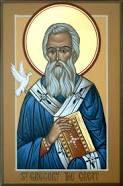
Pope Gregory I

540 - 604 Person Name: Gregory I Author (attributed to) of "O Thou Who Dost to Man Accord" in The Cyber Hymnal Gregory I., St., Pope. Surnamed The Great. Was born at Rome about A.D. 540. His family was distinguished not only for its rank and social consideration, but for its piety and good works. His father, Gordianus, said to have been the grandson of Pope Felix II. or III., was a man of senatorial rank and great wealth; whilst his mother, Silvia, and her sisters-in-law, Tarsilla and Aemiliana, attained the distinction of canonization. Gregory made the best use of his advantages in circumstances and surroundings, so far as his education went. "A saint among saints," he was considered second to none in Rome in grammar, rhetoric, and logic. In early life, before his father's death, he became a member of the Senate; and soon after he was thirty and accordingly, when his father died, he devoted the whole of the large fortune that he inherited to religious uses. He founded no less than six monasteries in Sicily, as well as one on the site of his own house at Rome, to which latter he retired himself in the capacity of a Benedictine monk, in 575. In 577 the then Pope, Benedict I, made him one of the seven Cardinal Deacons who presided over the seven principal divisions of Rome. The following year Benedict's successor, Pelagius II, sent him on an embassy of congratulation to the new emperor Tiberius, at Constantinople. After six years' residence at Constantinople he returned to Rome. It was during this residence at Rome, before he was called upon to succeed Pelagius in the Papal chair, that his interest was excited in the evangelization of Britain by seeing some beautiful children, natives of that country, exposed for sale in the slave-market there ("non Angli, sed Angeli"). He volunteered to head a mission to convert the British, and, having obtained the Pope's sanction for the enterprise, had got three days' journey on his way to Britain when he was peremptorily recalled by Pelagius, at the earnest demand of the Roman people. In 590 he became Pope himself, and, as is well known, carried out his benevolent purpose towards Britain by the mission of St. Augustine, 596. His Papacy, upon which he entered with genuine reluctance, and only after he had taken every step in his power to be relieved from the office, lasted until 604, when he died at the early age of fifty-five. His Pontificate was distinguished by his zeal, ability, and address in the administration of his temporal and spiritual kingdom alike, and his missionaries found their way into all parts of the known world. In Lombardy he destroyed Arianism; in Africa he greatly weakened the Donatists; in Spain he converted the monarch, Reccared: while he made his influence felt even in the remote region of Ireland, where, till his day, the native Church had not acknowledged any allegiance to the See of Rome. He advised rather than dictated to other bishops, and strongly opposed the assumption of the title of "Universal Patriarch" by John the Faster of Constantinople, on the ground that the title had been declined by the Pope himself at the Council of Chalcedon, and declared his pride in being called the “Servant of God's Servants." He exhibited entire toleration for Jews and heretics, and his disapproval of slavery by manumitting all his own slaves. The one grave blot upon his otherwise upright and virtuous character was his gross flattery in congratulating Phocas on his accession to the throne as emperor in 601, a position the latter had secured with the assistance of the imperial army in which he was a centurion, by the murder of his predecessor Mauricius (whose six sons had been slaughtered before their father's eyes), and that of the empress Constantina and her three daughters. Gregory's great learning won for him the distinction of being ranked as one of the four Latin doctors, and exhibited itself in many works of value, the most important of which are his Moralium Libri xxxv., and his two books of homilies on Ezekiel and the Gospels. His influence was also great as a preacher and many of his sermons are still extant, and form indeed no inconsiderable portion of his works that have come down to us. But he is most famous, perhaps, for the services he rendered to the liturgy and music of the Church, whereby he gained for himself the title of Magister Caeremoniarum. His Sacramentary, in which he gave its definite form to the Sacrifice of the Mass, and his Antiphonary, a collection which he made of chants old and new, as well as a school called Orplianotrophium, which he established at Rome for the cultivation of church singing, prove his interest in such subjects, and his success in his efforts to render the public worship of his day worthy of Him to Whom it was addressed. The Gregorian Tones, or chants, with which we are still familiar after a lapse of twelve centuries, we owe to his anxiety to supersede the more melodious and flowing style of church music which is popularly attributed to St. Ambrose, by the severer and more solemn monotone which is their characteristic. The contributions of St. Gregory to our stores of Latin hymns are not numerous, nor are the few generally attributed to him quite certainly proved to be his. But few as they are, and by whomsoever written, they are most of them still used in the services of the Church. In character they are well wedded to the grave and solemn music which St. Gregory himself is supposed to have written for them. The Benedictine editors credit St. Gregory with 8 hymns, viz. (1) “Primo dierum omnium;" (2) "Nocte surgentes vigilemus;" (3) "Ecce jam noctis tenuatur tunbra;" (4) “Clarum decus jejunii;" (5) "Audi benigne conditor;" (6) "Magno salutis gaudio;" (7) “Rex Christe factor omnium;" (8) "Lucis Creator Optime." Daniel in his vol. i. assigns him three others. (9) “Ecce tempus idoneum;" (10) "Summi largitor praemii;" (11) "Noctis tempus jam praeterit." For translations of these hymns see under their respective first lines. (For an elaborate account of St. Gregory, see Smith and Wace's Dictionary of Christian Biography.) [Rev. Digby S. Wrangham, M.A.] -- John Julian, Dictionary of Hymnology (1907) =================== Gregory I., St., Pope, p. 469, i. We have been unable to discover any grounds which justified the Benedictine editors and Daniel in printing certain hymns (see p. 470, i.) as by St. Gregory. Modern scholars agree in denying him a place among hymnwriters; e.g., Mr. F. H. Dudden, in his Gregory the Great (London, 1905, vol. i.,p. 276), says "The Gregorian authorship of these compositions [the hymns printed by the Benedictine editors] however cannot be maintained... Gregory contributed ... nothing at all to the sacred music and poetry of the Roman Church." [Rev. James Mearns, M.A.] --John Julian, Dictionary of Hymnology, New Supplement (1907)

Frances Elizabeth Cox

1812 - 1897 Translator (stanza 1) of "Now rest beneath night's shadow" in Common Service Book of the Lutheran Church Cox, Frances Elizabeth, daughter of Mr. George V. Cox, born at Oxford, is well known as a successful translator of hymns from the German. Her translations were published as Sacred Hymns from the German, London, Pickering. The 1st edition, pub. 1841, contained 49 translations printed with the original text, together with biographical notes on the German authors. In the 2nd edition, 1864, Hymns from the German, London, Rivingtons, the translations were increased to 56, those of 1841 being revised, and with additional notes. The 56 translations were composed of 27 from the 1st ed. (22 being omitted) and 29 which were new. The best known of her translations are "Jesus lives! no longer [thy terrors] now" ; and ”Who are these like stars appearing ?" A few other translations and original hymns have been contributed by Miss Cox to the magazines; but they have not been gathered together into a volume. -- John Julian, Dictionary of Hymnology (1907)

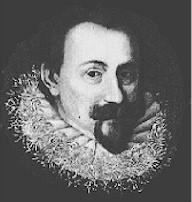
Johann Hermann Schein

1586 - 1630 Person Name: H. Schein Composer of "[In allen meinen Thaten]" in Jugendharfe Schein, Johann Hermann, son of Hieronymus Schein, pastor at Griinhain, near Annaberg, in Saxony, was born at Grünhain, Jan. 20,1586. He matriculated at the University of Leipzig in 1607, and studied there for four years. Thereafter he acted for some time as a private tutor, including two years with a family at Weissenfels. On May 21, 1615, he was appointed Capellmeister, at the court of Duke Johann Ernst, of Sachse-Weimar; and in 1616 he became cantor of I3t. Thomas's Church, and music director at Leipzig, in succession to Seth Calvisius (d. Nov. 24, 1615). This post he held till his death, at Leipzig, Nov. 19, 1630. Schein was one of the most distinguished musicians of his time, both as an original composer, and as a harmoniser of the works of others. As a hymnwriter he was not so prolific, or so noteworthy. Most of his hymns were written on the deaths of his children or friends, e.g. on seven of his children, and on his first wife. They appeared mostly in broadsheet form, and were included, along with his original melodies, in his Cantional oder Gesang-Buch Augspurgischer Confession, Leipzig, 1627; 2nd ed., 1645. [Both in Wernigerode Library.] Those of Schein's hymns which have passed into English are:— i. Machs mit mir, Gott, nach deiner Güt. For the Dying. First published, as a broadsheet, at Leipzig, 1628, as a Trost-Liedlein á 5 (i.e. for 5 voices), &c. [Berlin Library.] The words, the melody, and the five-part setting, are all by Schein. It was written for, and first used at, the funeral, on Dec. 15, 1628, of Margarita, wife of Caspar Werner, a builder and town councillor at Leipzig, and a churchwarden of St. Thomas's. It is in 6 stanzas of 6 lines; the initial letters of 11. 1, 3, in st. i.-iv., forming the name Margarita; and the W of st. v. 1. 1 standing for Werner. In Schein's Cantional, 1645, No. 303 (marked as Trost-Liedlein, Joh. Herm. Scheins, á 5), and later hymn-books, as e.g. the Unverfäschter Liedersegen, 1851, No. 830, st. vi. was omitted. It is Schein's finest production, and one of the best German hymns for the sick and dying. Translated as:— Deal with me, God, in mercy now. This is a good and full translation by Miss Winkworth, in her Chorale Book for England, 1863, No. 191, set to Schein's melody of 1628. ii. Mein Gott und Herr, ach sei nicht fern. For the Dying. First published, with his name, in his Cantional, 1627, No. 262, in 9 stanzas of 6 lines. The initial letters of the stanzas give the name Margarita, probably one of the daughters who predeceased him. It is included, in 5 st., in the 164-8, and later eds., of Crüger's Praxis. The translation in common use is:— My Lord and God, go not away. A good tr. of st. i., ii., iv., v., vii., by A. T. Russell, as No. 254, in his Psalms & Hymns, 1851. [Rev. James Mearns, M.A.] --Excerpts from John Julian, Dictionary of Hymnology (1907)

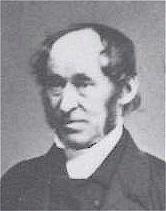
Edward Osler

1798 - 1863 Author of "Lord of the Church, we humbly pray" in The Westminster Abbey Hymn-Book Osler, Edward, was born at Falmouth in January, 1798, and was educated for the medical profession, first by Dr. Carvosso, at Falmouth, and then at Guy's Hospital, London. From 1819 to 1836 he was house surgeon at the Swansea Infirmary. He then removed to London, and devoted himself to literary pursuits. For some time he was associated with the Society for Promoting Christian Knowledge, both in London and at Bath. In 1841 he became the Editor of the Royal Cornwall Gazette, and took up his residence at Truro. He retained that appointment till his death, at Truro, March 7, 1863. For the Linnaean Society he wrote Burrowing and Boring Marine Animals. He also published Church and Bible; The Voyage: a Poem written at Sea, and in the West Indies, and Illustrated by papers on Natural History, 1830; The Life of Lord Exmouth, 1837, &c. His hymnological work is mainly connected with the Mitre Hymn Book. During 1835-36 he was associated with Prebendary W. J. Hall, the editor, in producing that collection, which was published in 1836 as Psalms and Hymns adapted to The Services of the Church of England. He resided in Mr. Hall's house during the time. From the "hall manuscript" we gather that he contributed 15 versions of the Psalms (5 being rewritten from others), and 50 hymns (a few rewritten). Most of these hymns and Psalm versions, together with others not in the Mitre Hymn Book, were afterwards given in the monthly numbers of his Church and King, from Nov. 1836 to Aug. 1837. The best known of these hymns are, “O God, unseen, yet ever near," and “Worship, honour, glory, blessing." Several of his hymns in common use are:— 1. Father, Whose love and truth fulfil. Holy Baptism. 2. Glory to God! with joyful adoration. Praise to the Father. 3. Great God, o'er earth and heaven supreme. Men the Stewards of God's Bounties. 4. Great God of hosts, our ears have heard. Ps. xliv. Based on the N. Version. 5. Great God, Whose awful mystery. Holy Trinity. 6. I hold the sacred book of God. Martyrs. 7. Jehovah hath spoken, the nations shall hear. Second Advent. 8. Lord, may the inward grace abound. Holy Baptism. 9. May we Thy precepts, Lord, fulfil. Love. 10. Mighty Saviour, gracious King. Advent. 11. 0 God, the help of all Thy Saints. Ps. x. 12. O Thou, the Lord and Life of those. Christ the Life of Men. 13. O Saviour, Who didst come. Easter. 14. Saviour, Whose love could stoop to death. Easter. 15. See, Lord, before Thy mercy seat. For Schools. 16. Set in a high and favoured place. Advent. 17. Wake frem the dead, new life begin. Lent. 18. With trembling awe we come. Lent. Several of these hymns are not in Osier's Church and King. We have ascribed them and others to him on the authority of the "hall MSS." It must be noted also that the text in the Church and King often differs from that in the Mitre. --John Julian, Dictionary of Hymnology (1907) Though not mentioned by Julian, perhaps his most enduring contribution to hymnody is the third stanza of "Praise the Lord! Ye Heavens, Adore Him", whose first two stanzas are of anonymous authorship. --Leland Bryant Ross (2019)

Johann Andreas Rothe

1688 - 1758 Person Name: Joh. And. Rothe Author of "Wenn kleine Himmelserben" in Gesangbuch mit Noten Rothe, Johann Andreas, son of Aegidius Rother, pastor at Lissa, near Görlitz, in Silesia, was born at Lissa, May 12, 1688. He entered the University of Leipzig in 1708, as a student of Theology, graduated M.A., and was then, in 1712, licensed at Gorlitz as a general preacher. In 1718 he became tutor in the family of Herr von Schweinitz at Leube, a few miles south of Gorlitz, and while there frequently preached in neighbouring churches. During 1722 Count N. L. von Zinzendorf, happening to hear him preach at Gross-Hennersdorf, was greatly pleased with him, and when the pastorate at Berthelsdorf became vacant shortly thereafter, gave him the presentation. He entered on his duties at Berthelsdorf Aug. 30, 1722. There he took a great interest in the Moravian community at Herrnhut, which formed part of his parish. But when, in 1737, he had to report to the higher ecclesiastical authorities regarding the doctrinal views of the Moravians, Zinzendorf showed his resentment in various ways, so that Kothe was glad to accept a call to Hermsdorf, near Gorlitz. Finally, in 1739, Count von Promnitz appointed him assistant pastor at Thommendorf, near Bunzlau, where he became chief pastor in 1742, and died there July 6, 1758. (Koch, v. 240; Wetzel’s Analecta Hymnica, ii. 756, &c.) Rothe was a man of considerable gifts and of unbending integrity, a good theologian, and an earnest, fearless, and impressive preacher. His hymns, about 40 in number, though they can hardly be said to rank high as poetry, are yet often characterised by glow and tenderness of feeling, and by depth of Christian experience. They are somewhat akin to Zinzendorf s better productions, but this resemblance may arise from the alterations which Zinzendorf seems to have made in them. The be6t known of them first appeared in Zinzendorf's hymn-books, and were for a time looked upon with suspicion, because as Zinzendorf did not affix authors' names, the new hymns were at first all ascribed to himself. Those of Rothe's hymns which have passed into English are:— i. Ich habe nun den Grand gefunde. Joy in Believing. …At first the Lutherans suspected it, thinking that it was by Zinzendorf, but on discovering that it was by Rothe, soon adopted it. It is a powerful and beautiful hymn, is found in many recent German collections (e.g. the Berlin Geistliche Lieder, ed. 1863, No. 78), and in its English forms has found a very wide acceptance, and proved a comfort and blessing to many. It was doubtless suggested by Heb. vi. 19. Rothe's hymn under consideration ("Ich habe nun ") has been translated as:— 1. Now I have found the ground wherein. A fine but somewhat free translation of st. i., ii., iv., v., vi., x., by J. Wesley. It has also appeared in full, or abridged, under the following first lines:— (1) Now I have found the blessed ground (st. i ). Lady Huntingdon's Selections, 1780. (2) Now have I found the ground wherein (st. i.). W. F. Stevenson's Hymns for Church & Home, 1873. (3) 0 Lord I Thy everlasting grace (st. ii.). Horder's Congregational Hymns, 1884. (4) Father, Thine everlasting grace (st. ii.). J. Bickersteth's Psalms & Hymns1832. (5) 0 Love, thou bottomless abyss (st. iii.). Evangelical Union Hymnal, 1878. (6) Jesus, I know hath died for me (st. iv.). Pennsylvanian Lutheran Church Book, 1868. (7) Though waves and storms go o'er my head (st. v.). Andover Sabbath Hymn Book, 1858. 2. I now have found, for hope of heaven. In full, by Dr. H. Mills, in theEvang. Review, Gettys¬burg, Jan. 1850, and in his Horae Germanica, 1850, p. 68. 3. My soul hath now the ground attained. A good tr. of st. i., iii., v., x., by A. T. Russell, as No. 167 in his Psalms & Hymns, 1851. 4. My soul hath found the steadfast ground. A good tr, (omitting st. v.-ix., and with a st. iv. not by Rothe), by Mrs. Bevan, in her Songs of Eternal Life, 1858, p. 55. 5. Now I have found the firm foundation. By G. F. Krotel, as No. 251 in the OhioLutheran Hymnal, 1880, omitting st. vi.-viii. 6. Now I have found the ground to hold. By J. Sheppard, in his Foreign Sacred Lyre, 1857, p. 91. ii. Vor wahrer Herzensanderung. The Forgiveness of Sin. first pub. as No. 448 in the 3rd ed., 1731, of Zinzendorf's Sammlung as above, and in 7 stanzas of 4 lines. In the Brüder Gesang-Buch , 1778, it is No. 392. The translations are:— (1) "Thanks be to Thee, Thou slaughtered Lamb!" (st. vii.). This is No. 345 in pt. ii., 1746, of the Moravian Hymn Book, (2) "Before conversion of the heart." A tr. of st. i., iv., by B. Latrobe, as No. 255 in the Moravian Hymn Book,1789, with the above tr. of st. vii. added. In the 1801 and later eds. (1886, No. 426) the tr. of st. vii. was alone retained. iii. Wenn kleine Himmelserben. Death of a Child. Written on the death of one of his daughters. The trs. are:— (1) "When children, bless'd by Jesus." This is No. 1196 in the Supplement of 1808 to the Moravian Hymn Book, 1801 (1886, No. 1258). (2) "When summons hence by Death is given." By E. Massie, 1867, p. 105. [Rev. James Mearns, M.A.] --excerpts from John Julian, Dictionary of Hymnology (1907)

George Ratcliffe Woodward

1848 - 1934 Person Name: George R. Woodward Translator (from German) of "Now Woods and Wolds Are Sleeping" in The Cyber Hymnal Educated at Caius College in Cambridge, England, George R. Woodward (b. Birkenhead, Cheshire, England, 1848; d. Highgate, London, England, 1934) was ordained in the Church of England in 1874. He served in six parishes in London, Norfolk, and Suffolk. He was a gifted linguist and translator of a large number of hymns from Greek, Latin, and German. But Woodward's theory of translation was a rigid one–he held that the translation ought to reproduce the meter and rhyme scheme of the original as well as its contents. This practice did not always produce singable hymns; his translations are therefore used more often today as valuable resources than as congregational hymns. With Charles Wood he published three series of The Cowley Carol Book (1901, 1902, 1919), two editions of Songs of Syon (1904, 1910), An Italian Carol Book (1920), and the Cambridge Carol Book

Athelstan Riley

1858 - 1945 Person Name: Athelstan Riley, 1858-1945 Translator (St. 3) of "O Bread of life from heaven" in Service Book and Hymnal of the Lutheran Church in America Riley, John Athelstan Laurie, M.A., s. of John Riley, Mytholmroyd, Yorks, was born in London, Aug. 10, 1858, and educated at Eton and at Pembroke College, Oxford (B.A. 1881, M.A. 1883). He has been since 1892 a member of the House of Laymen of the Province of Canterbury. He was one of the compilers of The English Hymnal, 1906, and contributed to it seven translations from the Latin (34, 185, 193, 195, 213, 242, 321, with No. 97 previously published), and one from the Greek, beginning, "What sweet of life endureth," from Iiola rod fiiov, p. 899, i., and the following originals:— 1. Come, let us join the Church above. Martyrs. 2. Saints of God! Lo, Jesu’s people. St. Bartholomew. The initials of the lines form the acrostic Saint Bartholomew; it is really a general hymn for Apostles. 3. Ye watchers and ye holy ones. Universal Praise to God. [Rev. James Mearns, M.A.] --John Julian, Dictionary of Hymnology, New Supplement (1907)

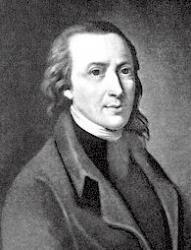
Matthias Claudius

1740 - 1815 Author of "The silent moon is risen" in Evangelical Lutheran hymnal Claudius, Matthias, son of Matthias Claudius, Lutheran pastor at Reinfeld in Holstein (near Lübeck), was born at Reinfeld, Aug. 15, 1740. An ancestor, who died as a Lutheran pastor in 1586, had Latinized his name, Claus Paulsen, to Claudius Pauli, and his descendants had adopted Claudius as their surname. Claudius entered the University of Jena, in 1759, as a student of theology, but being troubled with an affection of the chest, and finding little attraction in the Rationalism of Jena, he turned his attention to law and languages. After a short visit to Copenhagen, as private secretary to a Danish count, he joined in 1768 the staff of the Hamburg News Agency (Adress-Comptoirnachrichten). Removing to Wandsbeck, near Hamburg, he undertook in 1771 the editing of the literary portion of the Wandsbecker Bote, and contributed a number of his poems to the Göttingen Musen-Almanach. In 1776 he was appointed one of the Commissioners of Agriculture and Manufactures of Hesse-Darmstadt, and in 1777 editor of the official Hesse-Darmstadt newspaper, which he conducted in the same spirit as his Wandsbeck Bote. At Darmstadt he became acquainted with Goethe (then living near by at Frankfurt), and with a circle of freethinking philosophers. During a severe illness in 1777, he realised, however, the spiritual emptiness of the life at Darmstadt; the buried seeds sown in his youth sprang up; and he once more became in faith as a little child. Renouncing position and income, he returned to Wandsbeck to re-edit the Bote, which he conducted in a distinctively Christian spirit. In 1788 he was appointed by the Crown Prince of Denmark auditor of the Scheswig-Holstein Bank at Altona, but continued to reside at Wandsbeck till 1813, when he was forced by the war to flee, and was unable to return till May, 1814. The next year he removed to the house of his eldest daughter in Hamburg, and died there Jan. 21, 1815 (Koch, vi. 417-429; Allg. Deutsche Biographie, iv. 279-281). His fugitive pieces appeared in two parts as Asmus omnia sua secum portans; oder sammtliche Werke des Wandsbecker Bothen, Wandsbeck and Hamburg, 1774 (pt. iii. 1777, iv. 1782, v. 1789, vi. 1797, vii. 1802, viii. 1812). While much of his poetry was distinctively Christian in its spirit, and many of his pieces might rank as popular sacred songs, yet he wrote no hymns designed for use in Church. Three pieces have, however, passed into the German hymn-books, all of which have been translated into English, viz.:— i. Das Grab ist leer, das Grab ist leer. [Easter.] First published in pt. viii., 1812, as above, p. 121, in 10 stanzas. Translated as "The grave is empty now, its prey," by Dr. H. Mills, 1859, printed in Schaff’s Christ in Song, 1870. ii. Der Mond ist aufgegangen. [Evening.] His finest hymn, conceived in a child-like, popular spirit—a companion to the more famous hymn, "Nun ruhen alle Walder " (q. v.). According to tradition it was composed during his residence at Darmstadt, 1762, while walking on the so-called Schnempelweg, a footpath leading by the river-side up to the Odenwald. First published in J. H. Voss's Musen-Almanach, Hamburg, 1770, p. 184, and then in pt. iv., 1782, as above, p. 57, in 7 stanzas of 6 lines. Included as No. 452 in the Oldenburg Gesang-Buch, 1791, as No. 570 in the Württemberg Gesang-Buch, 1842, and No. 509 in the Unverfälschter Liedersegen, 1851. The only translation in common use is:— The silent moon is risen, good and full, as No. 322, in the Ohio Lutheran Hymnal, 1880. Other translations are:— (1) "The fair moon hath ascended," in the British Magazine, Nov. 1837, p. 518. (2) "The moon on high Is beaming,",by H. J. Buckoll, 1842, p. 105. (3) "The moon hath risen on high," by Miss Winkworth, 1855, p. 229 (1876, p. 231). (4) "The moon up heaven is going," by J. D. Bums, in Family Treasury, 1860, p. 92, repeated in his Memoir, 1869, p. 269. (5) “The moon is upwards climbing," by Miss Manington, 1863, p. 124. (6) "The moon is up in splendour," by E. Massie, 1866, E. 115. (7) "The moon hath risen clear," in Alice Lucas's Trs.from German Poets, 1876, p. 12. (8) "The moon is up and beaming," in Mrs. A. W. Johns's Original Poems and Translations, 1882, p. 61. iii. Im Anfang war's auf Erden. [Harvest.] First published in pt. iv., 1782, as above, p. 42, in 17 stanzas of 4 lines, and chorus (see also G. W. Fink's Musikalischer Hausschatz der Deutschen, Altona, 1860, No. 77). It occurs in a sketch entitled, Paid Erdmann's Fest. The neighbours are represented as coming to Paul's house and there singing this so-called “Peasants' Song," the last four stanzas of which specially relate to the occasion; the stanzas being sung as a solo, and all joining in the chorus. It can hardly be called a hymn, though it has passed into a few German hymnals principally for use in school. Beginning, "Auf! Lasset Gott uns loben," 10 stanzas were included as No. 482 in the Oldenburg G. B., 1791. In T. Fliedner's Liederbuch, Kaiserswerth, 1842, No. 95 begins with stanza vii., "Was nah ist und was feme." The form most popular is that beginning with stanza iii., "Wir pflügen und wir streuen," as in Dr. Wichern's Unsere Lieder, Hamburg, 1844, No. 55, and other collections. Translations in common use:— 1. We plough the fields and scatter, by Miss J. M. Campbell, contributed to the Rev. C. S. Bere's Garland of Songs, Lond., 1861, p. 61 (later eds. p. 27). A free rendering in 3 stanzas of 8 lines, with chorus, entitled, "Thanksgiving for the Harvest." Since its reception into the Appendix to Hymns Ancient & Modern, 1868 (No. 360, ed. 1875, No. 383), it has passed into numerous hymnals in Great Britain, and America. In Thring's Collection, 1882, No. 609, st. iv., "Our souls, Blest Saviour, gather," is an original stanza by Rev. H. Downton, added to supply some distinctly Christian expressions to the hymn, and first published in the Record newspaper in 1875. 2. We plough the fertile meadows. Of this translation there are two forms greatly differing, both ascribed to Dr. S. F. Smith, but whether either form is really by him we have failed to ascertain. What seems to be the original form, in 6 stanzas of 4 lines and chorus, is found in the Methodist Free Church Sunday School Hymns; Curwen's New Child's Own Hymn Book &c. The other form, in 3 stanzas of 8 lines and chorus, is in Allon's Supplemental Hymns; New Congregational Hymn Book, &c. 3. We plough the ground, we sow the seed, in 4 stanzas of 8 lines with chorus, without name of translation, is No. 215 in G. S. Jellicoe's Collection, 1867. [Rev. James Mearns, M.A.] --Excerpts from John Julian, Dictionary of Hymnology (1907)

Timothy Dudley-Smith

1926 - 2024 Author of "Our God Eternal, Reigning" in Moravian Book of Worship Timothy Dudley-Smith (b. 1926) Educated at Pembroke College and Ridley Hall, Cambridge, Dudley-Smith has served the Church of England since his ordination in 1950. He has occupied a number of church posi­tions, including parish priest in the diocese of Southwark (1953-1962), archdeacon of Norwich (1973-1981), and bishop of Thetford, Norfolk, from 1981 until his retirement in 1992. He also edited a Christian magazine, Crusade, which was founded after Billy Graham's 1955 London crusade. Dudley-Smith began writing comic verse while a student at Cambridge; he did not begin to write hymns until the 1960s. Many of his several hundred hymn texts have been collected in Lift Every Heart: Collected Hymns 1961-1983 (1984), Songs of Deliverance: Thirty-six New Hymns (1988), and A Voice of Singing (1993). The writer of Christian Literature and the Church (1963), Someone Who Beckons (1978), and Praying with the English Hymn Writers (1989), Dudley-Smith has also served on various editorial committees, including the committee that published Psalm Praise (1973). Bert Polman

Michael Forster

b. 1946 Person Name: Michael Forster, b. 1946 Author of "O Lord of our salvation" in Complete Anglican Hymns Old and New

Pages


Export as CSV
It looks like you are using an ad-blocker. Ad revenue helps keep us running. Please consider white-listing Hymnary.org or getting Hymnary Pro to eliminate ads entirely and help support Hymnary.org.