You help make Hymnary.org possible. More than 10 million people from 200+ countries found hymns, liturgical resources and encouragement on Hymnary.org in 2025, including you. Every visit affirms the global impact of this ministry.

If Hymnary has been meaningful to you this year, would you take a moment today to help sustain it? A gift of any size—paired with a note of encouragement if you wish—directly supports the server costs, research work and curation that keep this resource freely available to the world.

Give securely online today, or mail a check to:
Hymnary.org
Calvin University
3201 Burton Street SE
Grand Rapids, MI 49546

Thank you for your partnership, and may the hope of Advent fill your heart.

Person Results

Topics:consecration+of+churches
In:people

Planning worship? Check out our sister site, ZeteoSearch.org, for 20+ additional resources related to your search.
Showing 111 - 120 of 306Results Per Page: 102050

Washington Gladden

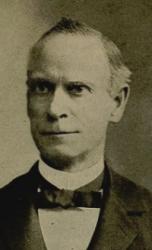
1836 - 1918 Topics: Consecration of Churches Author of "Wakantanka wacinyan po (O Master, let me walk with thee)" in Wakan Cekiye Odowan Washington Gladden (1836-1918) was called to the First Congregational Church in Columbus, OH in 1882 and remained there for 32 years. In 1883-84 he was known for his success in fighting the corrupt Tweed Ring, for arbitrating the Telegraphers' Strike and the Hocking Valley Coal Strike. He attacked John D. Rockefeller, Sr. for giving $100,000 of "tainted money" to the Congregational Church's Foreign Missions program. Throughout his ministry he emphasized applying the gospel to life in America. He wrote "O Master, let me walk with thee" in 1879. Mary Louise VanDyke =================== Gladden, Washington, was born at Pottsgrove, Pennsylvania, Feb. 11, 1836; was educated at Williams College: and entered the Congregational Ministry. He was for some time editor of the New York Independent, and of the Sunday Afternoon. In the Sunday Afternoon, his hymn, "O Master, let me walk with Thee" (Walking with God), appeared in 3 stanzas of 8 lines, in March 1879. Of these stanzas i. and iii. are in Laudes Domini, 1884, and others. --John Julian, Dictionary of Hymnology, Appendix, Part II (1907) ================== Gladden, W., p. 1565, ii. Dr. Gladden has been Pastor of the First Congregational Church, Columbus, Ohio, since 1882. His hymn-writing has not been extensive. The most popular of his hymns is "0 Master, let me walk with Thee," noted on p. 1565, ii. It has come into somewhat extensive use during the last ten years. Additional hymns in common use include:— 1. Behold a Sower from afar. [The Kingdom of God.] In the Boston Pilgrim Hymnal, 1904, this is dated 1897. 2. Forgive, 0 Lord, the doubts that break Thy promises to me. [Doubting repented of.] Dated 1879, in The Pilgrim Hymnal, 1904. --John Julian, Dictionary of Hymnology, New Supplement (1907)

Charles William Everest

1814 - 1877 Person Name: Charles William Everest, 1814-1877 Topics: God The Lord Jesus Christ - His Life Among Men; The Church of God The Sacraments - Baptism; The Church of God The Sacraments - The Lord's Supper; The Life in Christ Consecration and Discipleship; The Gospel Call Author of "'Take up thy cross,' the Saviour said" in The Hymnary of the United Church of Canada Everest, Charles William, M.A., born at East Windsor, Connecticut, May 27, 1814, graduated at Trinity College, Hartford, 1838, and took Holy Orders in 1842. He was rector at Hamden, Connecticut, from 1842 to 1873, and also agent for the Society for the Increase of the Ministry. He died at Waterbury, Connecticut, Jan. 11, 1877 (See Poets of Connecticut, 1843). In 1833 he published Visions of Death, and Other Poems; from this work his popular hymn is taken:— Take up thy cross, the Saviour said. Following Jesus. The original text of this hymn differs very materially from that which is usually found in the hymn-books. The most widely known form of the text is that in Hymns Ancient & Modern, where it appeared in 1861. It was copied by the Compilers from another collection, but by whom the alterations were made is unknown. The nearest approach to the original is in Horder's Congregational Hymn Book, 1884. Original text in Biggs's English Hymnology, 1873, p. 24. [Rev. F. M. Bird, M.A.] -- John Julian, Dictionary of Hymnology (1907)

Thomas Augustine Arne

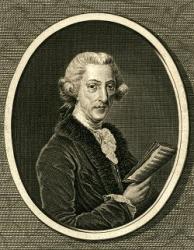
1710 - 1778 Person Name: Thomas Augustine Arne, 1710 - 1778 Topics: The Church of God Baptism; The Church of God The Lord's Supper; The Life in Christ Consecration and Discipleship; The Life in Christ Trust and Submission; The Gospel Call Composer of "ARLINGTON" in The Hymnary Dr. Thomas Augustine Arne was born March 12, 1710, in London; became early celebrated as a composer, and established his reputation by settling Milton's "Comus" to music - light, airy, and original; he composed many songs, and nearly all his attempts were successful; died March 5, 1778, aged 68. A Dictionary of Musical Information by John W. Moore, Boston: Oliver, Ditson & Company, 1876

Ignaz Pleyel

1757 - 1831 Person Name: I. J. Pleyel Topics: Special Occasions Consecration of Churches Composer of "GRACE CHURCH" in The Church Service Book Ignaz Joseph Pleyel; b. Ruppertstahl, near Vienna, 1757; d. Parice France, 1831 Evangelical Lutheran Hymnal, 1908

John Chandler

1806 - 1876 Person Name: John Chandler, 1806 - 76 Topics: The Church Year Circumcision and Name of Jesus; The Church Year Epiphany; The Life In Christ Consecration Translator of "Conquering kings their titles take" in Service Book and Hymnal of the Lutheran Church in America John Chandler, one of the most successful translators of hymns, was born at Witley in Surrey, June 16, 1806. He was educated at Corpus Christi College, Oxford, B.A. 1827, M.A. 1830. Ordained deacon in 1831 and priest in 1832, he succeeded his father as the patron and vicar of Whitley, in 1837. His first volume, entitled The Hymns of the Primitive Church, now first Collected, Translated and Arranged, 1837, contained 100 hymns, for the most part ancient, with a few additions from the Paris Breviary of 1736. Four years later, he republished this volume under the title of hymns of the Church, mostly primitive, collected, translated and arranged for public use, 1841. Other publications include a Life of William of Wykeham, 1842, and Horae sacrae: prayers and meditations from the writings of the divines of the Anglican Church, 1854, as well as numerous sermons and tracts. Chandler died at Putney on July 1, 1876. --The Hymnal 1940 Companion =============== Chandler, John, M.A.,one of the earliest and most successful of modern translators of Latin hymns, son of the Rev. John F. Chandler, was born at Witley, Godalming, Surrey, June 16, 1806, and educated at Corpus Christi College, Oxford, where he graduated in 1827. He took Holy Orders in 1831, and became Vicar of Witley in 1837. He died at Putney, July 1, 1876. Besides numerous Sermons and Tracts, his prose works include Life of William of Wykeham, 1842; and Horae Sacrae; Prayers and Meditations from the writings of the Divines of the Anglican Church, with an Introduction, 1844. His translations, he says, arose out of his desire to see the ancient prayers of the Anglican Liturgy accompanied by hymns of a corresponding date of composition, and his inability to find these hymns until he says, "My attention was a short time ago directed to some translations [by Isaac Williams] which appeared from time to time in the British Magazine, very beautifully executed, of some hymns extracted from the Parisian Breviary,with originals annexed. Some, indeed, of the Sapphic and Alcaic and other Horatian metres, seem to be of little value; but the rest, of the peculiar hymn-metre, Dimeter Iambics, appear ancient, simple, striking, and devotional—in a word in every way likely to answer our purpose. So I got a copy of the Parisian Breviary [1736], and one or two other old books of Latin Hymns, especially one compiled by Georgius Cassander, printed at Cologne, in the year 1556, and regularly applied myself to the work of selection and translation. The result is the collection I now lay before the public." Preface, Hymns of the Primitive Church, viii., ix. This collection is:— (1) The Hymns of the Primitive Church, now first Collected, Translated, and Arranged, by the Rev. J. Chandler. London, John W. Parker, 1837. These translations were accompanied by the Latin texts. The trsanslations rearranged, with additional translations, original hymns by Chandler and a few taken from other sources, were republished as (2) The Hymns of the Church, mostly Primitive, Collected, Translated, and Arranged/or Public Use, by the Rev. J. Chandler, M.A. London, John W. Parker, 1841. From these works from 30 to 40 translations have come gradually into common use, some of which hold a foremost place in modern hymnals, "Alleluia, best and sweetest;" "Christ is our Corner Stone;" "On Jordan's bank the Baptist's cry;" "Jesus, our Hope, our hearts' Desire;" "Now, my soul, thy voice upraising;" "Once more the solemn season calls;" and, "O Jesu, Lord of heavenly grace;" being those which are most widely used. Although Chandler's translations are somewhat free, and, in a few instances, doctrinal difficulties are either evaded or softened down, yet their popularity is unquestionably greater than the translations of several others whose renderings are more massive in style and more literal in execution. --John Julian, Dictionary of Hymnology (1907)

Ernest Warburton Shurtleff

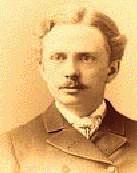
1862 - 1917 Person Name: Ernest Warburton Shurtleff, 1862 - 1917 Topics: The Church The People of God; The Church Worship - The Close of Service; Confirmation; The Ministry; The Life in Christ Aspiration; The Life In Christ Consecration; The Life In Christ Conflict and Victory Author of "Lead on, O King eternal" in Service Book and Hymnal of the Lutheran Church in America Before studying at Andover, Ernest W. Shurtleff (Boston, MA, 1862; d. Paris, France, 1917) attended Harvard University. He served Congregational churches in Ventura, California; Old Plymouth, Massachusetts; and Minneapolis, Minnesota, before moving to Europe. In 1905 he established the American Church in Frankfurt, and in 1906 he moved to Paris, where he was involved in student ministry at the Academy Vitti. During World War I he and his wife were active in refugee relief work in Paris. Shurtleff wrote a number of books, including Poems (1883), Easter Gleams (1885), Song of Hope (1886), and Song on the Waters (1913). Bert Polman =============== Shurtleff, Ernest Warburton, b. at Boston, Mass., April 4, 1862, and educated at Boston Latin School, Harvard University, and Andover Theo. Seminary (1887). Entering the Congregational Ministry, he was Pastor at Palmer and Plymouth, Mass., and is now (1905) Minister of First Church, Minneapolis, Minn. His works include Poems, 1883, Easter Gleams, 1883, and others. His hymn, "Lead on, O King Eternal" (Christian Warfare), was written as a parting hymn to his class of fellow students at Andover, and was included in Hymns of the Faith, Boston, 1887. It has since appeared in several collections. [M. C. Hazard, Ph.D]. --John Julian, Dictionary of Hymnology, New Supplement (1907)

Eleanor Hull

1860 - 1935 Person Name: Eleanor H. Hull Topics: The Church in the World Commitment: Pilgrimage; Commitment; Conflict and Struggle; Consecration; Empowerment; Funerals and Memorial Services; God Image (Father); God Kingdom, Majesty, Realm; God Law; God Presence; God Wisdom; Guidance; Heaven(s)/Paradise; Inspiration; Integrity; Jesus Christ Images of; Jesus Christ Lord of Life; Jesus Christ Presence; Pilgrimage and Conflict; Reward; Surrender; Treasure; Union With God/Christ; Victory; Vision/Dream; Vocation; Youth; Epiphany 4 Year A; Epiphany 4 Year A; Proper 8 Year A; Proper 13 Year A; Lent 2 Year B; Easter 2 Year B; Easter 3 Year B; Proper 15 Year B; Proper 18 Year B; Proper 19 Year B; Proper 20 Year B; Proper 21 Year B; Proper 25 Year B; Lent 5 Year C; Lent 5 Year C; Easter 2 Year C; Trinity Sunday Year C; Proper 8 Year C; Proper 11 Year C; Proper 14 Year C; Proper 15 Year C; Proper 16 Year C; Proper 18 Year C; Proper 26 Year C; Ash Wednesday Year ABC Versifier of "Be Thou My Vision" in Voices United

Asa Hull

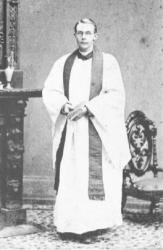
1828 - 1907 Topics: Christ Cross of; Christ Crucified; Christ Died for me; The Church and the Kingdom of God Evangelism; Consecration To Christ; Crucifixion; Penitence; Jesus (See also Christ) Crucified Composer of "REMEMBER ME" in Methodist Hymn and Tune Book Asa Hull USA 1828-1907. Born in Keene, NY, he became a music publisher in New York City. He married Emma F Atherton, and they had a daughter, Harriett. He wrote many tunes and authored temperance rallying songs. He published 33 works, of which 21 were songbooks, between 1863-1895. He died in Philadelphia, PA. John Perry

Isaac Watts

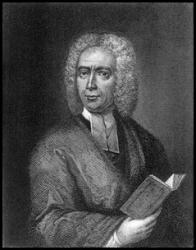
1674 - 1748 Person Name: Dr. Isaac Watts, 1674-1748 Topics: Christ Cross of; Christ Crucified; Christ Died for me; The Church and the Kingdom of God Evangelism; Consecration To Christ; Crucifixion; Penitence; Jesus (See also Christ) Crucified Alterer of "Alas! and did my Savior bleed? " in Methodist Hymn and Tune Book Isaac Watts was the son of a schoolmaster, and was born in Southampton, July 17, 1674. He is said to have shown remarkable precocity in childhood, beginning the study of Latin, in his fourth year, and writing respectable verses at the age of seven. At the age of sixteen, he went to London to study in the Academy of the Rev. Thomas Rowe, an Independent minister. In 1698, he became assistant minister of the Independent Church, Berry St., London. In 1702, he became pastor. In 1712, he accepted an invitation to visit Sir Thomas Abney, at his residence of Abney Park, and at Sir Thomas' pressing request, made it his home for the remainder of his life. It was a residence most favourable for his health, and for the prosecution of his literary labours. He did not retire from ministerial duties, but preached as often as his delicate health would permit. The number of Watts' publications is very large. His collected works, first published in 1720, embrace sermons, treatises, poems and hymns. His "Horae Lyricae" was published in December, 1705. His "Hymns" appeared in July, 1707. The first hymn he is said to have composed for religious worship, is "Behold the glories of the Lamb," written at the age of twenty. It is as a writer of psalms and hymns that he is everywhere known. Some of his hymns were written to be sung after his sermons, giving expression to the meaning of the text upon which he had preached. Montgomery calls Watts "the greatest name among hymn-writers," and the honour can hardly be disputed. His published hymns number more than eight hundred. Watts died November 25, 1748, and was buried at Bunhill Fields. A monumental statue was erected in Southampton, his native place, and there is also a monument to his memory in the South Choir of Westminster Abbey. "Happy," says the great contemporary champion of Anglican orthodoxy, "will be that reader whose mind is disposed, by his verses or his prose, to imitate him in all but his non-conformity, to copy his benevolence to men, and his reverence to God." ("Memorials of Westminster Abbey," p. 325.) --Annotations of the Hymnal, Charles Hutchins, M.A., 1872. ================================= Watts, Isaac, D.D. The father of Dr. Watts was a respected Nonconformist, and at the birth of the child, and during its infancy, twice suffered imprisonment for his religious convictions. In his later years he kept a flourishing boarding school at Southampton. Isaac, the eldest of his nine children, was born in that town July 17, 1674. His taste for verse showed itself in early childhood. He was taught Greek, Latin, and Hebrew by Mr. Pinhorn, rector of All Saints, and headmaster of the Grammar School, in Southampton. The splendid promise of the boy induced a physician of the town and other friends to offer him an education at one of the Universities for eventual ordination in the Church of England: but this he refused; and entered a Nonconformist Academy at Stoke Newington in 1690, under the care of Mr. Thomas Rowe, the pastor of the Independent congregation at Girdlers' Hall. Of this congregation he became a member in 1693. Leaving the Academy at the age of twenty, he spent two years at home; and it was then that the bulk of the Hymns and Spiritual Songs (published 1707-9) were written, and sung from manuscripts in the Southampton Chapel. The hymn "Behold the glories of the Lamb" is said to have been the first he composed, and written as an attempt to raise the standard of praise. In answer to requests, others succeeded. The hymn "There is a land of pure delight" is said to have been suggested by the view across Southampton Water. The next six years of Watts's life were again spent at Stoke Newington, in the post of tutor to the son of an eminent Puritan, Sir John Hartopp; and to the intense study of these years must be traced the accumulation of the theological and philosophical materials which he published subsequently, and also the life-long enfeeblement of his constitution. Watts preached his first sermon when he was twenty-four years old. In the next three years he preached frequently; and in 1702 was ordained pastor of the eminent Independent congregation in Mark Lane, over which Caryl and Dr. John Owen had presided, and which numbered Mrs. Bendish, Cromwell's granddaughter, Charles Fleetwood, Charles Desborough, Sir John Hartopp, Lady Haversham, and other distinguished Independents among its members. In this year he removed to the house of Mr. Hollis in the Minories. His health began to fail in the following year, and Mr. Samuel Price was appointed as his assistant in the ministry. In 1712 a fever shattered his constitution, and Mr. Price was then appointed co-pastor of the congregation which had in the meantime removed to a new chapel in Bury Street. It was at this period that he became the guest of Sir Thomas Abney, under whose roof, and after his death (1722) that of his widow, he remained for the rest of his suffering life; residing for the longer portion of these thirty-six years principally at the beautiful country seat of Theobalds in Herts, and for the last thirteen years at Stoke Newington. His degree of D.D. was bestowed on him in 1728, unsolicited, by the University of Edinburgh. His infirmities increased on him up to the peaceful close of his sufferings, Nov. 25, 1748. He was buried in the Puritan restingplace at Bunhill Fields, but a monument was erected to him in Westminster Abbey. His learning and piety, gentleness and largeness of heart have earned him the title of the Melanchthon of his day. Among his friends, churchmen like Bishop Gibson are ranked with Nonconformists such as Doddridge. His theological as well as philosophical fame was considerable. His Speculations on the Human Nature of the Logos, as a contribution to the great controversy on the Holy Trinity, brought on him a charge of Arian opinions. His work on The Improvement of the Mind, published in 1741, is eulogised by Johnson. His Logic was still a valued textbook at Oxford within living memory. The World to Come, published in 1745, was once a favourite devotional work, parts of it being translated into several languages. His Catechisms, Scripture History (1732), as well as The Divine and Moral Songs (1715), were the most popular text-books for religious education fifty years ago. The Hymns and Spiritual Songs were published in 1707-9, though written earlier. The Horae Lyricae, which contains hymns interspersed among the poems, appeared in 1706-9. Some hymns were also appended at the close of the several Sermons preached in London, published in 1721-24. The Psalms were published in 1719. The earliest life of Watts is that by his friend Dr. Gibbons. Johnson has included him in his Lives of the Poets; and Southey has echoed Johnson's warm eulogy. The most interesting modern life is Isaac Watts: his Life and Writings, by E. Paxton Hood. [Rev. H. Leigh Bennett, M.A.] A large mass of Dr. Watts's hymns and paraphrases of the Psalms have no personal history beyond the date of their publication. These we have grouped together here and shall preface the list with the books from which they are taken. (l) Horae Lyricae. Poems chiefly of the Lyric kind. In Three Books Sacred: i.To Devotion and Piety; ii. To Virtue, Honour, and Friendship; iii. To the Memory of the Dead. By I. Watts, 1706. Second edition, 1709. (2) Hymns and Spiritual Songs. In Three Books: i. Collected from the Scriptures; ii. Composed on Divine Subjects; iii. Prepared for the Lord's Supper. By I. Watts, 1707. This contained in Bk i. 78 hymns; Bk. ii. 110; Bk. iii. 22, and 12 doxologies. In the 2nd edition published in 1709, Bk. i. was increased to 150; Bk. ii. to 170; Bk. iii. to 25 and 15 doxologies. (3) Divine and Moral Songs for the Use of Children. By I. Watts, London, 1715. (4) The Psalms of David Imitated in the Language of the New Testament, And apply'd to the Christian State and Worship. By I. Watts. London: Printed by J. Clark, at the Bible and Crown in the Poultry, &c, 1719. (5) Sermons with hymns appended thereto, vol. i., 1721; ii., 1723; iii. 1727. In the 5th ed. of the Sermons the three volumes, in duodecimo, were reduced to two, in octavo. (6) Reliquiae Juveniles: Miscellaneous Thoughts in Prose and Verse, on Natural, Moral, and Divine Subjects; Written chiefly in Younger Years. By I. Watts, D.D., London, 1734. (7) Remnants of Time. London, 1736. 454 Hymns and Versions of the Psalms, in addition to the centos are all in common use at the present time. --Excerpts from John Julian, Dictionary of Hymnology (1907) ================================== Watts, I. , p. 1241, ii. Nearly 100 hymns, additional to those already annotated, are given in some minor hymn-books. --John Julian, Dictionary of Hymnology, Appendix, Part II (1907) ================= Watts, I. , p. 1236, i. At the time of the publication of this Dictionary in 1892, every copy of the 1707 edition of Watts's Hymns and Spiritual Songs was supposed to have perished, and all notes thereon were based upon references which were found in magazines and old collections of hymns and versions of the Psalms. Recently three copies have been recovered, and by a careful examination of one of these we have been able to give some of the results in the revision of pp. 1-1597, and the rest we now subjoin. i. Hymns in the 1709 ed. of Hymns and Spiritual Songs which previously appeared in the 1707 edition of the same book, but are not so noted in the 1st ed. of this Dictionary:— On pp. 1237, L-1239, ii., Nos. 18, 33, 42, 43, 47, 48, 60, 56, 58, 59, 63, 75, 82, 83, 84, 85, 93, 96, 99, 102, 104, 105, 113, 115, 116, 123, 124, 134, 137, 139, 146, 147, 148, 149, 162, 166, 174, 180, 181, 182, 188, 190, 192, 193, 194, 195, 197, 200, 202. ii. Versions of the Psalms in his Psalms of David, 1719, which previously appeared in his Hymns and Spiritual Songs, 1707:— On pp. 1239, U.-1241, i., Nos. 241, 288, 304, 313, 314, 317, 410, 441. iii. Additional not noted in the revision:— 1. My soul, how lovely is the place; p. 1240, ii. 332. This version of Ps. lxiv. first appeared in the 1707 edition of Hymns & Spiritual Songs, as "Ye saints, how lovely is the place." 2. Shine, mighty God, on Britain shine; p. 1055, ii. In the 1707 edition of Hymns & Spiritual Songs, Bk. i., No. 35, and again in his Psalms of David, 1719. 3. Sing to the Lord with [cheerful] joyful voice, p. 1059, ii. This version of Ps. c. is No. 43 in the Hymns & Spiritual Songs, 1707, Bk. i., from which it passed into the Ps. of David, 1719. A careful collation of the earliest editions of Watts's Horae Lyricae shows that Nos. 1, 7, 9, 10, 11, 12, 14, 16, p. 1237, i., are in the 1706 ed., and that the rest were added in 1709. Of the remaining hymns, Nos. 91 appeared in his Sermons, vol. ii., 1723, and No. 196 in Sermons, vol. i., 1721. No. 199 was added after Watts's death. It must be noted also that the original title of what is usually known as Divine and Moral Songs was Divine Songs only. --John Julian, Dictionary of Hymnology, New Supplement (1907) =========== See also in: Hymn Writers of the Church

Mary Ann Thomson

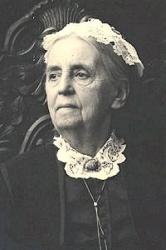
1834 - 1923 Person Name: Mrs. Mary A. Thomson, 1834 Topics: The Church and the Kingdom of God Missions; Consecration To Ministry; Ministry Consecration to ; Missions (See also Kingdom of Christ) Author of "Publish glad tidings, tidings of peace" in Methodist Hymn and Tune Book Thomson, Mary Ann, wife of Mr. John Thomson, Librarian of the Free Library, Philadelphia, was born in London, England, December 5, 1834. She has written about forty hymns, which have appeared mostly in the Churchman, New York, and in the Living Church, Chicago. Four of her hymns are found in the Protestant Episcopal Hymnal, 1892. Of the origin of the missionary hymn by Mrs. Thomson which is found in our Hymnal she writes as follows: I wrote the greater part of the hymn, "O Zion, haste," in the year 1868. I had written many hymns before, and one night, while I was sitting up with one of my children who was ill of typhoid fever, I thought I should like to write a missionary hymn to the tune of the hymn beginning "Hark, hark, my soul, angelic songs are swelling," as I was fond of that tune; but as I could not then get a refrain I liked, I left the hymn unfinished, and about three years later I finished it by writing the refrain which now forms part of it. By some mistake 1891 is given instead of 1871 as the date of the hymn in the (Episcopal) Hymnal. I do not think it is ever sung to the tune for which I wrote it. Rev. John Anketell told me, and I am sure he is right, that it is better for a hymn to have a tune of its own, and I feel much indebted to the composer of the tune "Tidings" for writing so inspiring a tune to my words. Hymn Writers of the Church by Wilber F. Tillett and Charles S. Nutter, 1915 ================== Thomson, Mary Ann, wife of John Thomson, Librarian of the Free Library, Phila., was born in London, England, Dec. 5, 1834. She has written several hymns and poems. To 1895, eight of these appeared in The Churchman (New York); and thirty-four in The Living Church (Chicago). Of her hymns the following were included in The Hymnal, Revised and Enlarged .. . The P. E. Church, U.S.A., 1892 :— 1. Now the blessed Dayspring. [Annunciation B. V. M.] Begins with stanza ii. of "Through the sins and sorrows," which appeared in The Living Church, March 29, 1890. 2. O King of saints, we give Thee praise and glory. [All Saints.] First published in The Living Church, Nov. 8, 1890. In the first ed. of The Book of Praise, N.Y., 1894, it was attributed to Bp. W. W. How in error. 3. O Sion, haste, thy mission high fulfilling. [Missions.] No. 249 in The Hymnal, &c., 1892. 4. Saviour, for the little one. [Burial of a Child.] The Hymnal, &c., 1892, No. 247. Mrs. Thomson's Christmas Carol, "Lo! amid the shades of night," appeared, with music by B. Cecil Klein, in The Churchman, N.Y., Dec. 19, 1891, and separately at Phila. in 1892. --John Julian, Dictionary of Hymnology, New Supplement (1907)

Pages


Export as CSV
It looks like you are using an ad-blocker. Ad revenue helps keep us running. Please consider white-listing Hymnary.org or getting Hymnary Pro to eliminate ads entirely and help support Hymnary.org.