You help make Hymnary.org possible. More than 10 million people from 200+ countries found hymns, liturgical resources and encouragement on Hymnary.org in 2025, including you. Every visit affirms the global impact of this ministry.

If Hymnary has been meaningful to you this year, would you take a moment today to help sustain it? A gift of any size—paired with a note of encouragement if you wish—directly supports the server costs, research work and curation that keep this resource freely available to the world.

Give securely online today, or mail a check to:
Hymnary.org
Calvin University
3201 Burton Street SE
Grand Rapids, MI 49546

Thank you for your partnership, and may the hope of Advent fill your heart.

Person Results

Topics:god+as+king+of+kings
In:people

Planning worship? Check out our sister site, ZeteoSearch.org, for 20+ additional resources related to your search.
Showing 21 - 30 of 307Results Per Page: 102050

A. Williams

1731 - 1776 Person Name: Aaron Williams Topics: God as King of Kings Composer of "ST. THOMAS" in Christian Worship Aaron Williams (b. London, England, 1731; d. London, 1776) was a singing teacher, music engraver, and clerk at the Scottish Church, London Wall. He published various church music collections, some intended for rural church choirs. Representative of his compilations are The Universal Psalmodist (1763)— published in the United States as The American Harmony (1769)—The Royal Harmony (1766), The New Universal Psalmodist (1770), and Psalmody in Miniature (1778). His Harmonia Coelestis (1775) included anthems by noted composers. Bert Polman

Conrad Kocher

1786 - 1872 Topics: Blessing; Church Year Pentecost; Church Year Transfiguration; Daily Prayer Midday Prayer; Earth; Elements of Worship Praise and Adoration; Elements of Worship Preparation for Blessing; Elements of Worship Sending; Freedom; God Light from; God as King; God's Safety; God's Sovereignty; God's Triumph; God's Face; God's Justice; God's Name; God's People (flock, sheep); God's Power; God's Promise of Redemption; God's Way; Grace; Gratitude; Hymns of Praise; Jesus Christ Incarnation; Joy; Judgment; Mercy; Mission; Occasional Services Christian Marriage; Occasional Services Civic / National Occasions; Occasional Services Commissioning; Occasional Services New Year; Occasional Services Thanksgving Day / Harvest Festival; People of God / Church Family of God; People of God / Church Witnessing; The Incarnation; Witness; Worship; Year A, Ordinary Time after Pentecost, August 14-20; Year C, Easter, 6th Sunday Composer of "DIX" in Psalms for All Seasons Trained as a teacher, Conrad Kocher (b. Ditzingen, Wurttemberg, Germany, 1786; d. Stuttgart, Germany, 1872) moved to St. Petersburg, Russia, to work as a tutor at the age of seventeen. But his love for the music of Haydn and Mozart impelled him to a career in music. He moved back to Germany in 1811, settled in Stuttgart, and remained there for most of his life. The prestigious Cotta music firm published some of his early compositions and sent him to study music in Italy, where he came under the influence of Palestrina's music. In 1821 Kocher founded the School for Sacred Song in Stuttgart, which popularized four-part singing in the churches of that region. He was organist and choir director at the Stiftskirche in Stuttgart from 1827 to 1865. Kocher wrote a treatise on church music, Die Tonkunst in der Kirche (1823), collected a large number of chorales in Zions Harfe (1855), and composed an oratorio, two operas, and some sonatas. William H. Monk created the current form of DIX by revising and shortening Conrad Kocher's chorale melody for “Treuer Heiland, wir sind hier,” found in Kocher's Stimmen aus dem Reiche Gottes (1838). Bert Polman

George Ratcliffe Woodward

1848 - 1934 Topics: Atonement; Biblical Names and Places David; Biblical Names and Places Israel; Biblical Names and Places Jesse; Biblical Names and Places Seba; Biblical Names and Places Sheba; Biblical Names and Places Tarshish; Church Year Advent; Church Year Ascension of the Lord; Church Year Christ the King; Church Year Epiphany; Doxologies; Earth; Elements of Worship Gathering; Elements of Worship Lord's Supper; Elements of Worship Praise and Adoration; Elements of Worship Sending; God as King; God's Armor; God's Glory; God's law; Mission; New Creation; Occasional Services Civic / National Occasions; Peace; Poverty; Royal Psalms; Rulers; Salvation; Social Justice; The Needy; Truth; Year A, Advent, 2nd Sunday; Year A, B, C, Epiphany, Epiphany of our Lord (January 6 or Sunday before Epiphany) Harmonizer of "ES FLOG EIN KLEINS WALDVÖGELEIN" in Psalms for All Seasons Educated at Caius College in Cambridge, England, George R. Woodward (b. Birkenhead, Cheshire, England, 1848; d. Highgate, London, England, 1934) was ordained in the Church of England in 1874. He served in six parishes in London, Norfolk, and Suffolk. He was a gifted linguist and translator of a large number of hymns from Greek, Latin, and German. But Woodward's theory of translation was a rigid one–he held that the translation ought to reproduce the meter and rhyme scheme of the original as well as its contents. This practice did not always produce singable hymns; his translations are therefore used more often today as valuable resources than as congregational hymns. With Charles Wood he published three series of The Cowley Carol Book (1901, 1902, 1919), two editions of Songs of Syon (1904, 1910), An Italian Carol Book (1920), and the Cambridge Carol Book

H. S. Cutler

1825 - 1902 Person Name: Henry S. Cutler Topics: God as King of Kings Composer of "ALL SAINTS NEW" in Christian Worship Henry Stephen Cutler (b. Boston, MA, 1824; d. Boston, 1902) studied music in Frankfurt, Germany, in 1844. He moved to England, where he listened with interest to the cathedral choirs and came under the influence of the Oxford Movement. Returning to Boston in 1846, Cutler became organist of the Episcopal Church of the Advent and formed a choir of men and boys, to whom he introduced the wearing of liturgical robes. When he took a position at Trinity Church in New York City, he removed women from the choir and used the occasion of a visit by the Prince of Wales to the church to introduce his newly vested men and boys' choir. He also moved the choir from the gallery to the chancel and initiated the chanting of the psalms and the singing of part of the worship service. Cutler compiled The Psalter, with Chants (1858) and published The Trinity Psalter (1864) and Trinity Anthems (1865). Bert Polman

I-to Loh

b. 1936 Topics: God as King of Kings Arranger of "SWEINDIA" in Christian Worship

Robert Grant

1779 - 1838 Topics: Church Year Christ the King; Creation; God As Ancient of Days; God's Faithfulness; God as King; God's Mercy; God's Providence; Peacemakers; Trust in God; Hymns About Worship Author of "O Worship the King (Psalm 104)" in Lift Up Your Hearts Robert Grant (b. Bengal, India, 1779; d. Dalpoorie, India, 1838) was influenced in writing this text by William Kethe’s paraphrase of Psalm 104 in the Anglo-Genevan Psalter (1561). Grant’s text was first published in Edward Bickersteth’s Christian Psalmody (1833) with several unauthorized alterations. In 1835 his original six-stanza text was published in Henry Elliott’s Psalm and Hymns (The original stanza 3 was omitted in Lift Up Your Hearts). Of Scottish ancestry, Grant was born in India, where his father was a director of the East India Company. He attended Magdalen College, Cambridge, and was called to the bar in 1807. He had a distinguished public career a Governor of Bombay and as a member of the British Parliament, where he sponsored a bill to remove civil restrictions on Jews. Grant was knighted in 1834. His hymn texts were published in the Christian Observer (1806-1815), in Elliot’s Psalms and Hymns (1835), and posthumously by his brother as Sacred Poems (1839). Bert Polman ======================== Grant, Sir Robert, second son of Mr. Charles Grant, sometime Member of Parliament for Inverness, and a Director of the East India Company, was born in 1785, and educated at Cambridge, where he graduated in 1806. Called to the English Bar in 1807, he became Member of Parliament for Inverness in 1826; a Privy Councillor in 1831; and Governor of Bombay, 1834. He died at Dapoorie, in Western India, July 9, 1838. As a hymnwriter of great merit he is well and favourably known. His hymns, "O worship the King"; "Saviour, when in dust to Thee"; and "When gathering clouds around I view," are widely used in all English-speaking countries. Some of those which are less known are marked by the same graceful versification and deep and tender feeling. The best of his hymns were contributed to the Christian Observer, 1806-1815, under the signature of "E—y, D. R."; and to Elliott's Psalms & Hymns, Brighton, 1835. In the Psalms & Hymns those which were taken from the Christian Observer were rewritten by the author. The year following his death his brother, Lord Glenelg, gathered 12 of his hymns and poems together, and published them as:— Sacred Poems. By the late Eight Hon. Sir Robert Grant. London, Saunders & Otley, Conduit Street, 1839. It was reprinted in 1844 and in 1868. This volume is accompanied by a short "Notice," dated "London, Juno 18, 1839." ===================== Grant, Sir R., p. 450, i. Other hymns are:— 1. From Olivet's sequester'd scats. Palm Sunday. 2. How deep the joy, Almighty Lord. Ps. lxxxiv. 3. Wherefore do the nations wage. Ps. ii. These are all from his posthumous sacred Poems, 1839. --John Julian, Dictionary of Hymnology, Appendix, Part II (1907)

Michael Haydn

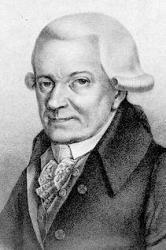
1737 - 1806 Person Name: Johann Michael Haydn Topics: Church Year Christ the King; Creation; God As Ancient of Days; God's Faithfulness; God as King; God's Mercy; God's Providence; Peacemakers; Trust in God; Hymns About Worship Composer (attributed to) of "LYONS" in Lift Up Your Hearts Johann Michael Haydn Austria 1737-1806. Born at Rohrau, Austria, the son of a wheelwright and town mayor (a very religious man who also played the harp and was a great influence on his sons' religious thinking), and the younger brother of Franz Joseph Haydn, he became a choirboy in his youth at the Cathedral of St. Stephen in Vienna, as did his brother, Joseph, an exceptional singer. For that reason boys both were taken into the church choir. Michael was a brighter student than Joseph, but was expelled from music school when his voice broke at age 17. The brothers remained close all their lives, and Joseph regarded Michael's religious works superior to his own. Michael played harpsichord, violin, and organ, earning a precarious living as a freelance musician in his early years. In 1757 he became kapellmeister to Archbishop, Sigismund of Grosswardein, in Hungary, and in 1762 concertmaster to Archbishop, Hieronymous of Salzburg, where he remained the rest of his life (over 40 years), also assuming the duties of organist at the Church of St. Peter in Salzburg, presided over by the Benedictines. He also taught violin at the court. He married the court singer, Maria Magdalena Lipp in 1768, daughter of the cathedral choir-master, who was a very pious women, and had such an affect on her husband, trending his inertia and slothfulness into wonderful activity. They had one daughter, Aloysia Josepha, in 1770, but she died within a year. He succeeded Wolfgang Amadeus Mozart, an intimate friend, as cathedral organist in 1781. He also taught music to Carl Maria von Weber. His musical reputation was not recognized fully until after World War II. He was a prolific composer of music, considered better than his well-known brother at composing religious works. He produced some 43 symphonies,12 concertos, 21 serenades, 6 quintets, 19 quartets, 10 trio sonatas, 4 due sonatas, 2 solo sonatas, 19 keyboard compositions, 3 ballets, 15 collections of minuets (English and German dances), 15 marches and miscellaneous secular music. He is best known for his religious works (well over 400 pieces), which include 47 antiphons, 5 cantatas, 65 canticles, 130 graduals, 16 hymns, 47 masses, 7 motets, 65 offertories, 7 oratorios, 19 Psalms settings, 2 requiems, and 42 other compositions. He also composed 253 secular vocals of various types. He did not like seeing his works in print, and kept most in manuscript form. He never compiled or cataloged his works, but others did it later, after his death. Lothar Perger catalogued his orchestral works in 1807 and Nikolaus Lang did a biographical sketch in 1808. In 1815 Anton Maria Klafsky cataloged his sacred music. More complete cataloging has been done in the 1980s and 1990s by Charles H Sherman and T Donley Thomas. Several of Michael Haydn's works influenced Mozart. Haydn died at Salzburg, Austria. John Perry

John Bacchus Dykes

1823 - 1876 Person Name: Rev. John B. Dykes Topics: Angels; Chastisements; Glory And Majesty Of God; Holiness Of God; Justice of God; God as King; Kingdom of God; Omnipotence of God; Praise for Blessings; Praise for God's Perfections; Praise for God's Works; Reverence Composer of "NICEA" in Psalter Hymnal (Red) As a young child John Bacchus Dykes (b. Kingston-upon-Hull' England, 1823; d. Ticehurst, Sussex, England, 1876) took violin and piano lessons. At the age of ten he became the organist of St. John's in Hull, where his grandfather was vicar. After receiving a classics degree from St. Catherine College, Cambridge, England, he was ordained in the Church of England in 1847. In 1849 he became the precentor and choir director at Durham Cathedral, where he introduced reforms in the choir by insisting on consistent attendance, increasing rehearsals, and initiating music festivals. He served the parish of St. Oswald in Durham from 1862 until the year of his death. To the chagrin of his bishop, Dykes favored the high church practices associated with the Oxford Movement (choir robes, incense, and the like). A number of his three hundred hymn tunes are still respected as durable examples of Victorian hymnody. Most of his tunes were first published in Chope's Congregational Hymn and Tune Book (1857) and in early editions of the famous British hymnal, Hymns Ancient and Modern. Bert Polman

John Warrington Hatton

1710 - 1793 Person Name: John Hatton, died 1793 Topics: Common Grace; Communion with God; Compassion of God; Forbearance of God; Glory And Majesty Of God; Goodness of God; Grace of God; God as King; Kingdom of God; Love Of God; Praise for Blessings; Praise for God's Perfections; Praise for God's Works; Works of God Composer of "DUKE STREET" in Psalter Hymnal (Red) John Warrington Hatton (b. Warrington, England, c. 1710; d, St. Helen's, Lancaster, England, 1793) was christened in Warrington, Lancashire, England. He supposedly lived on Duke Street in Lancashire, from where his famous tune name comes. Very little is known about Hatton, but he was most likely a Presbyterian, and the story goes that he was killed in a stagecoach accident. Bert Polman

Joseph Haydn

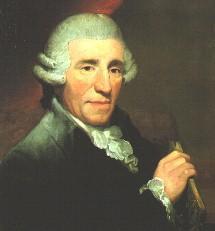
1732 - 1809 Person Name: Franz Joseph Haydn, 1732-1809 Topics: Alleluias; Angels; Biblical Names and Places Israel; Church Year Christmas; Earth; Elements of Worship Gathering; Elements of Worship Praise and Adoration; God Light from; God as King; God's Sovereignty; God's Will; God's Word; God's Greatness; God's Name; God's People (flock, sheep); Hymns of Praise; Life Stages Family; Life Stages Old Age; Life Stages Youth; Mercy; New Creation; Occasional Services Christian Marriage; Occasional Services Thanksgving Day / Harvest Festival; People of God / Church Citizens of Heaven; Rulers; The Creation; Year A, B, C, Christmas, 1st Sunday; Year C, Easter, 5th Sunday Composer of "AUSTRIAN HYMN" in Psalms for All Seasons Franz Joseph Haydn (b. Rohrau, Austria, 1732; d. Vienna, Austria, 1809) Haydn's life was relatively uneventful, but his artistic legacy was truly astounding. He began his musical career as a choirboy in St. Stephen's Cathedral, Vienna, spent some years in that city making a precarious living as a music teacher and composer, and then served as music director for the Esterhazy family from 1761 to 1790. Haydn became a most productive and widely respected composer of symphonies, chamber music, and piano sonatas. In his retirement years he took two extended tours to England, which resulted in his "London" symphonies and (because of G. F. Handel's influence) in oratorios. Haydn's church music includes six great Masses and a few original hymn tunes. Hymnal editors have also arranged hymn tunes from various themes in Haydn's music. Bert Polman

Pages


Export as CSV
It looks like you are using an ad-blocker. Ad revenue helps keep us running. Please consider white-listing Hymnary.org or getting Hymnary Pro to eliminate ads entirely and help support Hymnary.org.