You help make Hymnary.org possible. More than 10 million people from 200+ countries found hymns, liturgical resources and encouragement on Hymnary.org in 2025, including you. Every visit affirms the global impact of this ministry.

If Hymnary has been meaningful to you this year, would you take a moment today to help sustain it? A gift of any size—paired with a note of encouragement if you wish—directly supports the server costs, research work and curation that keep this resource freely available to the world.

Give securely online today, or mail a check to:
Hymnary.org
Calvin University
3201 Burton Street SE
Grand Rapids, MI 49546

Thank you for your partnership, and may the hope of Advent fill your heart.

Person Results

Topics:twelfth+sunday+after+trinity
In:person

Planning worship? Check out our sister site, ZeteoSearch.org, for 20+ additional resources related to your search.
Showing 21 - 30 of 69Results Per Page: 102050

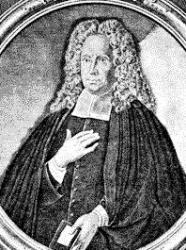
Johann Anastasius Freylinghausen

1670 - 1739 Person Name: Johan Freylinghausen Topics: Twelfth Sunday after Trinity Sunday Author of "Op, thi Dagen nu frembryder" in Salmebog for Lutherske Kristne i Amerika Freylinghausen, Johann Anastasius, son of Dietrich Freylinghausen, merchant and burgomaster at Gandersheim, Brunswick, was born at Gandersheim, Dec. 2, 1670. He entered the University of Jena at Easter, 1689. Attracted by the preaching of A. H. Francke and J. J. Breithaupt, he removed to Erfurt in 1691, and at Easter, 1692, followed them to Halle. About the end of 1693 he returned to Gandersheim, and employed himself as a private tutor. In 1695 he went to Glaucha as assistant to Francke; and when Francke became pastor of St. Ulrich's, in Halle,1715, Freylinghausen became his colleague, and in the same year married his only daughter. In 1723 he became also sub-director of the Paedagogium and the Orphanage; and after Francke's death in 1727, succeeded him as pastor of St. Ulrich's and director of the Francke Institutions. Under his fostering care these Institutions attained their highest development. From a stroke of paralysis in 1728, and a second in 1730, he recovered in great measure, but a third in 1737 crippled his right side, while the last, in Nov., 1738, left him almost helpless. He died on Feb. 12, 1739, and was buried beside Francke (Koch, vi. 322-334; Allgemine Deutsche Biographie, vii. 370-71; Bode, pp. 69-70; Grote's Introduction, &c.) Almost all Freylinghausen's hymns appeared in his own hymnbook, which was the standard collection of the Halle school, uniting the best productions of Pietism with a good representation of the older "classical" hymns. This work, which greatly influenced later collections, and was the source from which many editors drew not only the hymns of Pietism, but also the current forms of the earlier hymns (as well as the new "Halle" melodies, a number of which are ascribed to Freylinghausen himself) appeared in two parts, viz.:— i. Geistreiches Gesang-Buch, den Kern alter und neuer Lieder...in sich haltend &c, Halle. Gedrucktund verlegt im Waysen-Hause, 1704 [Hamburg], with 683 hymns and 173 melodies. To the second edition, 1705 [Rostock University], an Appendix was added with Hymns 684-758, and 21 melodies. Editions 3-18 are practically the same so far as the hymns are concerned, save that in ed. 11, 1719 [Berlin], and later issues, four hymns, written by J. J. Rambach at Freylinghausen's request, replaced four of those in eds. 1-10. ii. Neues Geistreiches Gesangbuch,&c, Halle . . . 1714 [Berlin], with 815 hymns and 154 melodies. In the 2nd edition, 1719 [Rostock University], Hymns 816-818, with one melody, were added. In 1741 these two parts were combined by G. A. Francke, seven hymns being added, all but one taken from the first edition, 1718, of the so-called Auszug, which was compiled for congregational use mainly from the original two parts: and this reached a second, and last, edition in 1771. So far as the melodies are concerned, the edition of 1771 is the most complete, containing some 600 to 1582 hymns. (Further details of these editions in the Blätter für Hymnologie, 1883, pp. 44-46, 106-109; 1885, pp. 13-14.) A little volume of notes on the hymns and hymnwriters of the 1771 edition, compiled by J. H. Grischow and completed by J. G. Kirchner, and occasionally referred to in these pages, appeared as Kurzgefasste Nachricht von ältern und ncuern Liederverfassern at Halle, 1771. As a hymnwriter Freylinghausen ranks not only as the best of the Pietistic school, but as the first among his contemporaries. His finest productions are distinguished by a sound and robust piety, warmth of feeling depth of Christian experience, scripturalness, clearness and variety of style, which gained for them wide acceptance, and have kept them still in popular use. A complete edition of his 44 hymns, with a biographical introduction by Ludwig Grote, appeared as his Geistliche Lieder, at Halle, 1855. A number of them, including No. v., are said to have been written during severe attacks of toothache. Two (“Auf, auf, weil der Tag erschienen"; "Der Tag ist hin") are noted under their own first lines. i. Hymns in English common use: -- i. Monarche aller Ding. God's Majesty. 1714, as above, No. 139, in 11 stanzas of 6 lines, repeated in Grote, 1855, p. 88, and as No. 38 in the Berlin Geistliche Lieder, ed. 1863. A fine hymn of Praise, on the majesty and love of God. Translated as:— Monarch of all, with lowly fear, by J. Wesley, in Hymns & Sacred Poems, 1739 (P. Works, 1868-1872, vol. i. p. 104), in 8 stanzas of 4 lines, from st. i., ii., v.-vii., ix.-xi. Repeated in full in the Moravian Hymnbook, 1754, pt. i., No. 456 (1886, No. 176); and in J. A. Latrobe's Collection, 1841. The following forms of this translation are also in common use:-- (1) To Thee, 0 Lord, with humble fear, being Wesley's st. i., iii.-v., vii., viii. altered as No. 156 in Dr. Martineau's Hymns for Christian Church & Home, 1840, and repeated in Miss Courtauld's Psalms, Hymns & Anthems, 1860, and in America in the Cheshire Association Unitarian Collection, 1844. (2) Thou, Lord, of all the parent art, Wesley's, st. iii.-v., vii. altered in the College Hymnal, N. Y., 1876. (3) Thou, Lord, art Light; Thy native ray, Wesley's st. iv., v., vii., in Hymns of the Spirit, 1864. ii. 0 reines Wesen, lautre Quelle. Penitence. Founded on Psalm li. 12, 1714, as above, No. 321, in 7 stanzas of 8 lines, repeated in Grote, 1855, p. 41, and in Bunsen's Versuch, 1833, No. 777 (ed. 1881, No. 435). The only translation in common use is:— Pure Essence: Spotless Fount of Light. A good and full translation by Miss Winkworth in the first series of her Lyra Germanica, 1855, p. 43, and in her Chorale Book for England, 1863, No. 113. iii. Wer ist wohl wie du. Names and offices of Christ. One of his noblest and most beautiful hymns, a mirror of his inner life, and one of the finest of the German "Jesus Hymns." 1704, as above, No. 66, in 14 st. of 6 l., repeated in Grote, 1855, p. 33, and is No. 96 in the Berlin Geistliche Lieder, ed. 1863. The translations in common use are: 1. 0 Jesu, source of calm repose, by J. Wesley, being a free translation of st. i., iii., v., viii., xiii. First published in his Psalms & Hymns, Charlestown, 1737 (Poetical Works, 1868-1872, vol. i. p. 161). Repeated in full as No. 462 in pt. i. of the Moravian Hymnbook, 1754. In the 1826 and later editions (1886, No. 233) it begins, "Jesus, Thou source." The original form was included as No. 49 in the Wesley Hymns & Spiritual Songs , 1753, and, as No. 343, in the Wesley Hymnbook, 1780 (1875, No. 353). Varying centos under the original first line are found in Mercer's Church Psalter & Hymn Book, 1855-1864; Kennedy , 1863; Irish Church Hymnal, 1869-1873; J. L. Porter's Collection, 1876, &c. It has also furnished the following centos:— (1) Messiah! Lord! rejoicing still, being Wesley's st. iv.-vi. altered in Dr. Martineau's Collection of Hymns for Christian Worship, 1840. (2) Lord over all, sent to fulfil, Wesley's st. iv., iii., v., vi. in the American Methodist Episcopal Hymnbook, 1849. 2. Who is like Thee, Who? a translation of st. i., ii., v., vii., x., xiii., as No. 687, in pt. i. of the Moravian Hymnbook, 1754. Translations of st. xi., xiv. were added in 1789, and the first line altered in 1801(1886, No. 234), to "Jesus, who with Thee." The translations of st. i., ii., x., xiv., from the 1801, altered and beginning, "Jesus, who can be," are included in America in the Dutch Reformed Hymns of the Church, 1869; Hymns & Songs of Praise, N. Y., 1874; and Richards's Collection, N.Y., 1881. 3. Who is there like Thee, a good translation of st. i., ii., viii., xiv., by J. S. Stallybrass, as No. 234 in Curwen's Sabbath Hymnbook, 1859, repeated in the Irish Church Hymnal, 1873, and in W. F. Stevenson's Hymns for Church & Home, 1873. 4. Who is, Jesus blest, a translation of stanzas i., ii., v., vi., xii., xiv., by M. Loy, in the Ohio Lutheran Hymnal, 1880. 5. Who, as Thou, makes blest, a good translation, omitting st. vii., ix., x., contributed by Dr. F. W Gotch to the Baptist Magazine, 1857. Repeated in the 1880 Supplement to the Baptist Psalms & Hymns, 1858. The translations not in common use are: — (1) "Whither shall we flee," by Miss Dunn, 1857, p. 55. (2) "Who has worth like Thine," in the U. P. Juvenile Miss. Magazine, 1857, p. 217. (3) "Thou art First and Best," by Miss Winkworth, 1869, p. 267. ii. Hymns translated into English but not in common use:— iv. Herr und Gott der Tag und Nächte. Evening. 1705, as above, No. 755, in 6 stanzas, Grote, p. 105. Translated by H. J. Buckoll, 1842, p. 106, beginning with stanza. ii. v. Mein Herz, gieb dioh rufrieden. Cross and Consolation. First in the Halle Stadt Gesangbuch, 1711, No. 503, in 11 stanzas; repeated 1714, No. 450, and in Grote, p. 71. Translated by Dr. G. Walker, 1860, p. 86. vi. 0 Lamm, das keine Sünde je beflecket. Passiontide. 1714, No. 85, in 19 stanzas, Grote, p. 14. Translated as, (1) "Lamb, for Thy boundless love I praises offer," of st. xii. as stanza i. of No. 1023 in the Supplement of 1808 to the Moravian Hymn Book, 1801 (1849, No. 121). (2) "O Lamb, whom never spot of sin defiled," in the British Magazine, June, 1838, p. 625. vii. 0 Lamm, das meine Sündenlast getragen. Easter Eve. 1714, No. 95, in 8 stanzas; Grote, p. 23. Translated as "Christ Jesus is that precious grain," a translation of st. v. by F. W. Foster, as No. 71 in the Moravian Hymnbook, 1789 (1886, No. 921). viii. Zu dir, Herr Jesu, komme ich. Penitence. Founded on St. Matthew xi. 28-30. 1714, as above, No. 306, in 4 stanzas; Grote, p. 39. Translated by Dr. H. Mills, 1845 (1856, p. 80). [Rev. James Mearns, M.A.] --John Julian, Dictionary of Hymnology (1907)

Johann Mentzer

1658 - 1734 Person Name: J. Mentzer Topics: The Church Year Twelfth Sunday after Trinity; The Church Year Twelfth Sunday after Trinity Author of "O would, my God, that I could praise Thee" in The Lutheran Hymnary Mentzer, Johann, was born July 27, 1658, at Jahmen, near Rothenburg, in Silesia, and became a student of theology at Wittenberg, In 1691 he was appointed pastor at Merzdorf; in 1693 at Hauswalde, near Bischofswerda; and in 1696 at Kemnitz, near Bernstadt, Saxony. He died at Kemnitz, Feb. 24, 1734 (G. F. Otto's Lexicon . . . Oberlausizischer Schriftsteller, ii., 581; ms. from Pastor Richter of Kemnitz, &c). He was a great friend of J. C. Schwedler, of Henrietta Catherine von Gersdorf, and of N. L. von Zinzendorf, all hymnwriters, and all his near neighbours. He was himself greatly tried in the furnace of affliction. He wrote a large number of hymns, over 30 of which appeared in the various hymnbooks of his time. Many of them, especially those of Praise and Thanksgiving, and those of Cross and Consolation, are of high merit, though sometimes exaggerated and not very refined in their imagery, and are full of ardent love to Christ, Scriptural, poetical, and also popular in style. The only one in English common use is:— 0 dass ich tausend Zungen hatte. Praise and Thanksgiving. His best hymn. First published as No. 496, in Freylinghausen's Gesang-Buch, 1704, in 15 st. of 6 1., and repeated in many later collections as the Unverfälschter Liedersegen, 1851, No. 719. Lauxmann, in Koch viii. 350, says this hymn was written in 1704 after his house was burned down. In reply to enquiries addressed to Kemnitz, pastor Richter informs me that the parsonage house there was built in the years 1696 and 1697, and has never been burned down. In 1697 a farmhouse near was destroyed by lightning, and possibly Mentzer may have been living there at the time; or at any rate this may have suggested the hymn and the story. Lauxmann speaks of the hymn as having been a great favourite of Caroline Perthes of Hamburg, and of J. C. Schlipalius of Dresden, and relates various incidents regarding its blessed and comforting effects. The translations in common use are:— 1. Oh that I had a thousand voices! A mouth. A full translation by Dr. H. Mills, in his Horae Germanica, 1845 (1856, p. 189); repeated, abridged, in the American Lutheran General Synod's Collection, 1850-52, the Ohio Lutheran Hymnal, 1880, &c. 2. Oh be unceasing praise ascending. A good translation of st. i., vii., viii., by A. T. Russell, as No. 203, in his Psalms & Hymns, 1851. 3. Oh would I had a thousand tongues. A good translation, omitting stanzas ix., x., xiii., by Miss Winkworth, in her Lyra Germanica, 1st Ser., 1855, p. 170; and repeated, abridged, in the Methodist New Congregational Hymn Book, 1863. 4. 0 would, my God, that I could praise Thee. A good translation, in the original metre, by Miss Winkworth, in her Chorale Book for England, 1863, No. 5, being of stanzas i., iii.—v, xiv., xv. This was repeated in the Evangelical Hymnal, N. Y., 1830. A filtered form, beginning with st. iii., "0 all ye powers that God implanted” is in Dr. Knight's Collection, Dundee, 1871 and 1874. 5. I praise Thee, 0 my God and Father. By Miss Winkworth, in her Chorale Book for England, 1863, No. 6. This is of st. vi.-viii., xi., xii., and fol¬lows the text of Bunsen's Versuch, 1833, No. 846, this stanza beginning there, "Lob sei dir, treuer Gott und Vater." Her translation is repeated in Dr. Thomas's Augustine Hymn Book, 1866. Other translations are:— (1) "0 that a thousand tongues were granted," by N. L. Frothingham, 1810, p. 155. (2) "0 that a thousand tongues were mine, And each," by Dr. Alexander Mair in the Family Treasury, 1872, p. 462. Other hymns by Mentzer, translated into English but not in common use are:— ii. Du gehest in den Garten beten. Passiontide. First published in the Löbau Gesang-Buch, 1725, as No. 370, in 12 stanzas of 6 lines, marked as by Mentzer and entitled "The true school of prayer of Jesus, praying on the Mount of Olives, Matt. xxvi. 36-46." In the Berlin Geistliche Lieder, ed. 1863, No. 223, beginning "Du gehst zum Garten urn zu beten," and wrongly ascribed to B. Schmolck. Translated as "Into the garden shade to pray," by J. Kelly, in the Family Treasury, 1868, p. 691. iii. Wer das Kleinod will erlangen. Christian Warfare. A call to spiritual energy, founded on 1 Cor. ix. 24, 25. Included as No. 783 in the Neuvermehrtes Geistreiches Gesang-Buch Berlin, 1711, in 6 stanzas of 8 lines; and previously in Schlechtiger's Gesang-Buch, Berlin, 1704. In the Berlin Geistliche Lieder, ed. 1863, No. 679. Translated as "Who would make the prize his own." By Miss Winkworth, 1858, p. 167. [Rev. James Mearns, M.A.] -- John Julian, Dictionary of Hymnology (1907)

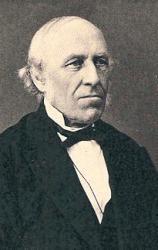
Ludvig Mathias Lindeman

1812 - 1887 Person Name: Ludv. M. Lindeman Topics: Twelfth Sunday after Trinity Sunday High Mass; Twelfth Sunday after Trinity Sunday High Mass Composer of "[Bryd frem, mit Hjertes Trang at lindre]" in M. B. Landstads Kirkesalmebog og "Nokre Salmar" ved Professor Dr. E. Blix, samt følgende tillæg Ludvig M. Lindeman (b. 1812; d. 1887) was a Norwegian composer and organist. Born in Trondheim, he studied theology in Oslo where he remained the rest of his life. In 1839 he succeeded his brother as the organist and cantor of Oslo Cathedral, a position he held for 48 years up until his death. Lindeman was appointed Knight of the Royal Norwegian Order of St. Olav, and was invited to both help christen the new organ in Royal Albert Hall in London, as well as compose for the coronation of King Oscar II and Queen Sophie of Sweden. In 1883, he and his son started the Organist School in Oslo. Lindeman is perhaps best known for his arrangements of Norwegiam folk tales; over the course of his life he collected over 3000 folk melodies and tunes. Laura de Jong

John H. Spielman

Topics: Twelfth Sunday after Trinity Adapter of "RATHBUN" in Evangelical Lutheran hymnal John Henry Spielman, b. 1840, Lancaster, Ohio. Professor at Capital University, 1864-72. Editor of "Sunday-School Hymnal," "Psalterlust," and "Cantica Sacra." Public School Librarian, Columbus, Ohio; d. Columbus, Ohio, 1896

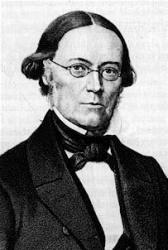
M. B. Landstad

1802 - 1880 Person Name: Landstad Topics: Twelfth Sunday after Trinity Sunday Translator of "Salig er den Mand, som ikke" in Salmebog for Lutherske Kristne i Amerika Magnus Brostrup Landstad (born 7 October 1802 in Måsøy, Norway and died 8 October 1880 in Kristiania) was a Norwegian minister, psalmist and poet who published the first collection of authentic Norwegian traditional ballads in 1853. This work was criticized for unscientific methods, but today it is commonly accepted that he contributed significantly to the preservation of the traditional ballads. Landstad lived with his father Hans Landstad (1771–1838) who was also a minister, first in 1806 to Øksnes, to Vinje in 1811 and to Seljord in 1819. He took a theological degree (cand. theol) in 1827, and worked after that as the resident chaplain in Gausdal for six years. After that he worked in different parishes in Telemark, Østfold before he became minister of Sandar in Vestfold in 1859. He married Wilhelmine Margrete Marie Lassen, in 1828. He is well known for introducing popular, contemporary Norwegian language into the hymns he wrote, contributing significantly to the spirit of Norwegian romantic nationalism which grew in Norway in this period. His greatest single achievement was the Landstad Hymnbook (Kirkepsalmebog), which with later revisions was used in Norwegian (bokmål) parishes from 1869 until 1985. The current official church hymnbook contains a lot of his hymns and his translations of foreign hymns. He was the cousin of Hans Peter Schnitler Krag. The Landstad-institute, which lies in Seljord, is named after him. He was a great grandfather of Magny Landstad, also a famous writer. Publications-- 1852: Norske Folkeviser. 3 vols. Christiania: C. Tönsberg, [1852-]1853. 1869: Kirkesalmebok: efter offentlig Foranstaltning. Kristiania: J. W. Cappelens Forlag, 1871 --http://en.wikipedia.org/wiki/ See also in: Wikipedia

J. J. Rambach

1693 - 1735 Person Name: Johann Ramback Topics: Twelfth Sunday after Trinity Sunday Author of "Min Jesus, Grund til al vor Lyst" in Salmebog for Lutherske Kristne i Amerika Rambach, Johann Jakob, D.D., son of Hans Jakob Rambach, cabinet maker at Halle on the Saale, was born at Halle, Feb. 24, 1693. In 1706 he left school and entered his father's workshop, but, in the autumn of 1707, he dislocated his ankle. During his illness he turned again to his schoolbooks; the desire for learning reawoke; and on his recovery, early in 1708, he entered the Latin school of the Orphanage at Halle (Glaucha). On Oct. 27, 1712, he matriculated at the University of Halle as a student of medicine, but soon turned his attention to theology. He became specially interested in the study of the Old Testament under J. H. Michaelis. In May 1715 he became one of Michaelis's assistants in preparing his edition of the Hebrew Bible, for which he wrote the commentary on Ruth, Esther, Nehemiah, &c. His health began to suffer in the spring of 1719, and he gladly accepted the invitation of Count von Heukel to stay at Polzig, near Ronneburg, where he spent several months. By August he had quite recovered, and went to pay a visit to Jena, where a number of the students asked him to lecture to them. For this purpose he settled at Jena in Oct., 1719, and lived in the house of Professor Buddeus (J. F. Budde). He graduated M.A. in March 1720. In 1723 he was appointed adjunct of the Theological Faculty at Halle, as also inspector of the Orphanage; in 1726 extraordinary professor of theology; and in 1727, after A. H. Francke's death, ordinary professor as well as preacher at the Schulkirche. Here he was very popular, both as preacher and professor, but the jealousy of his colleagues induced him to accept an offer from the Landgrave Ernst Ludwig of Hesse, who, in 1731, invited him to Giessen as superintendent and first professor of theology (before leaving Halle he graduated D.D., June 28, 1731), and in Aug., 1732, appointed him also director of the Paedagogium at Giessen. In 1734 he was, for various reasons, greatly inclined to accept the offer of the first professorship of theology in the newly-founded University of Göttingen, but eventually, at the earnest request of the Landgrave, remained in Giessen, where he died of fever, April 19, 1735 (Die Familie Rambach. By Dr. T. Hansen, Gotha, 1875: Allgemeine Deutsche Biographie, xxvii. 196; Blätter fur Hymnologie, 1883, pp. 113, 129, 145, 163, 186; 1884, p. 20; 1885, p. 13, &c.) Rambach was a voluminous author in various departments of practical theology, e.g. his Institutiones hermeneuticae sacrae, Jena, 1724, which passed through four editions in his lifetime; hisErbauliches Handbüchlein fur Kinder, 1734 (see below), which reached an eighth edition in 1736, and a 14th in 1766; his various volumes of sermons, &c. He justly earned his popularity by the thoroughness of his researches, and the clear and concise way in which he set forth the results of his investigations. It is however as a hymnwriter that his name is likely to be best known. While not entitled to rank with the best hymn-writers of the 16th and 17th centuries, he yet takes a high place among his contemporaries, and deserves to be remembered as much as almost any of the 18th cent, hymnwriters. His style is good and dignified; his thought is profound yet clearly expressed. While his hymns are often sufficiently didactic, they are generally scriptural and churchly in tone, and are characterised by lyric force, lively imagination, and earnest, sober piety. Of hymns, in the strict sense, he wrote over 180, a large number of which passed into the German hymn-books of the 18th cent. (e.g. the Hannover Gesang-Buch, 1740, and Lüneburg Gesang-Buch, 1767, contains 52 by him), and a good many are still found in modern hymn-books. Of these Dr. J. L. Pasig gives 165 in his edition of Rambach's Geistliche Lieder, Leipzig, 1844, and the rest are printed by Hansen as above, while the first lines of the whole are given in the Blätter as above. Four are recasts (practically originals), made for the 11th edition, 1719, of Freylinghausen's Gesang-Buch, to replace similar hymns in the ed. of 1705. The rest principally appeared in the following works by Rambach, viz.: (1) Geistliche Poesien, Halle. 1720 [British Museum] The first part contains 72 cantatas on the Gospels for Sundays and festivals; the second part includes 20 hymns, mostly written at Polzig in 1719. (2) Poetische Fest-Gedancken. Jena and Leipzig, 1723 [Royal Library, Berlin]. Included are 15 pieces which may be called hymns. The second edition of 1727 [Brit. Mus.] has 28 new hymns; and the 3rd ed., 1729 [Gottingen Library], has 22 more. (3) Erbauliches Handbuchlein für Kinder, Giessen, 1734 [Hamburg Library]. The 3rd part contains 8 new hymns. (4) Geistreiches Haus-Gesang-Buch, Frankfurt and Leipzig, 1735 [Hamburg Library], with a preface dated April 10, 1735. This contains 112 hymns by Rambach, of which 58 are practically new, 11 of these, however, being recasts of his own earlier hymns. (5) Wander der bis zum Tode des Kreutzes erniedrigten Liebe, Giessen, 1750 [Berlin Library]. This includes 27 new hymns. Rambach's hymns …which have passed into English are:— i. Auf! Seele, schicke dich. Holy Communion. Written, by request for the eleventh edition, 1719, of Freylinghausen's Gesang-Buch, 1704, as No. 229, in 16 stanzas of 6 lines in order to replace the hymn "Auf, Seele, sey gerüst." This hymn, by George Heine, was included in the Geistreiches Gesang-Buch, Halle, 1697, p. 433. In the second ed., 1771, of the complete book formed by the fusion of pt. i., 1704, and its supplement of 1705 with pt. ii., 1714, of Freylinghausen's Gesang-Buch, both hymns are given, Heine's as No. 524, and Rambach's as No. 522, both marked as being No. 229 in pt. i., 1704. Rambach's hymn is in his Haus Gesang-Buch, 1735, No. 369; the Berlin Geistliche Lieder, ed. 1863, No. 471, &c. In Pasig's edition of his Geistliche Lieder, 1844, p. 112, entitled "Before the reception of Holy Communion." It has been translated as:— My soul prepare to meet. Omitting st. i., 11. 4-6 ; ii., 11. 4-6; vii., xiv., as No. 570 in the Moravian Hymn Book, 1789 (1849, No. 966). In the edition of 1886, No. 979 begins with st. iv., "How should I, slaughtered Lamb"; and No. 1012 with st. xi., "Lord, of Thy wondrous love." ii. Mein Jesu, der du vor dem Scheiden. Holy Communion. Appeared in Freylinghausen's Gesang-Buch, 11th ed., 1719, as No. 238, in 9 st. of 6 1. It was written to replace the hymn "Mein Jesn, hier sind deine Brüder" (Geistreiches Gesang-Buch, Halle, 1697, p. 363), in the first edition of Freylinghausen's Gesang-Buch. It is in his Haus Gesang-Buch, 1735, No. 365; the Berlin Geistliche Lieder, ed. 1863, No. 1601; and in Pasig, 1844, p. 110, entitled, "On the treasures of Grace in Holy Communion." The translations are:— 1. Lord Jesus, Who before Thy passion. Omitting st. ix., this is No. 1181 in the Supplement of 1808 to the Moravian Hymn Book, 1801 (1886, No. 963). 2. 0 Lord, Who on that last sad eve. A good translation omitting st. ix., by Miss Cox, contributed to Lyra Eucharistica, 1863, p. 15, and repeated in her Hymns from the German, 1864, p. 75. Included, omitting st. iii., in G. S. Jellicoe's Collection, 1867. iii. 0 Lehrer, dem kein Andrer gleich. Christ our Prophet. In his Haus Gesang-Buch1735, No. 107, in 8 st. of 6 1., entitled, "On the prophetical office of Jesus Christ." Repeated in the Berlin Geistliche Lieder, ed. 1863, No. 118, and in Pasig, 1844, p. 51. Translated as:— Surely none like Thee can teach. By Miss Fry, in 102 lines, in her Hymns of the Reformation,1845, p. 126. A recast in 3 st. of 8 1., beginning, "Saviour, none like Thee can teach," was included in J. Whittemore's Supplement to all Hymn Books, 1860, No. 263, and repeated in the Methodist New Congregational Hymn Book, 1863, No. 62. iv. Wie herrlich ists ein Schäflein Christi werden. Joy in Believing. In his Poetiche Fest-Gedancken, 2nd ed. 1727, p. 131, in 6 st. of 6 l., entitled, "The Blessedness of the Sheep of Christ. John x. 28, ‘I give my sheep eternal life.'" In his Haus Gesang-Buch 1735, No. 325; the Berlin Geistliche Lieder, ed. 1863, No. 645; and Pasig, 1844, p. 139. Translated as:— How great the bliss to be a sheep of Jesus. A translation of st. i., ii., v., by C. J. Latrobe, as No. 293, in the Moravian Hymn Book, 1789 (1886, No. 385). Hymns not in English common use:— v. Allwissender, vollkommner Geist. The Omniscient One. In his Haus Gesang-Buch, 1735, No. 12, in 6 stanzas; the Berlin Geistliche Lieder, ed. 1863; and in Pasig, p. 8. Translated as, "Thou Spirit, perfect and allwise." By Dr. H. Mills, 1856, p. 11. vi. Frommes Lamm, von was für Hunden. Passiontide. In his Poetische Fest-Gedancken, 2nd ed., 1727, p. 49, in 8 st. In his Haus Gesang-Buch, 1735, No. 151, it begins, "Frommes Lamm, durch dessen Wunden." Also in Pasig, p. 67. Translated as, "Great Thy sorrows, injur'd Jesus." By Dr. H. Mills, 1845 (1856, p. 297). vii. Gesetz und Evangelium, Law and Gospel. In his Haus Gesang-Buch, 1735, No. 356, in 10 st.; the Berlin Geistliche Lieder, ed. 1863; and Pasig, p. 105. Translated as, "The holy law and gospel, both." By Dr. II. Mills, 1845 (1856, p. 27.) viii. Herr, du hast nach dem Fall. Before Work. In his Haus Gesang-Buch, 1735, No. 565, in 4 st.; and Pasig, p. 150. In the Berlin Gesang-Buch, 1765, No. 206, it is altered (probably by J. S. Diterich), and begins "Du hast uns, Heir die Pflicht." This is translated as, “Lord, Thou hast bid us labour, bid us toil." By Miss Warner, 1858, p. 230. ix. Hier bin ich Herr, du rufest mir. Christian Work. In his Haus Gesang-Buch, 1735, No. 269, in 6 st.; the Württemberg Gesang-Buch, 1842, No. 306; and Pasig, p. 119. The translations are (1) "Here am I, Lord, Thou callest me, Thou drawest me." By Miss Warner, 1858, p. 209. (2) "Here am I, Lord, Thou callest me, Thou drawest and." By Mrs. Findlater, in Hymns from the Land of Luther, 4th series, 1862. x. Höchste Vollkommenheit, reineste Sonne. God's Majesty . Written for the 11th ed., 1719, of Freylinghausen's Gesang-Buch, No. 170 (in 20 st.), to replace an anonymous hymn in the first edition, 1704, which began "Höchste Vollkommenheit, alles in Einem." In his Haus Gesang-Buch 1735, No. 8, Rambach reduced it to 12 st., and rewrote it to an easier metre, so as to begin "Höchstes Wesen, reinste Sonne." Both forms are in Pasig, pp. 3-6. Translated as "If Heav'ns and Earths there were innumerable," a tr. of st. iii., viii., xi., xv., xvii., xix., xx., as No. 672, in pt. i. of the Moravian Hymn Book, 1754. xi. O grosser Geist, dess Wesen Alles füllet. The Omnipresent One. In his Geistliche Poesien, 1720, p. 330, in 9 st.; his Haus Gesang-Buch, 1735, No. 13; the Württemberg Gesang-Buch, 1842, No. 44 ; and Pasig, p. 7. Translated as, “Eternal God, Thy dwelling-place." By Dr. G. Walker, 1860, p. 73. xii. 0 grosser Geist! O Ursprung aller Dinge. God's Holiness. In his Geistliche Poesien, 1729, p. 327, in 9 st.; his Haus Gesang-Buch, 1735, No. 19; and Pasig, p. 15. Translated as, "O mighty Spirit! Source whence all things sprung." By Miss Winkworth, 1858, p. 153. xiii. Verklärte Majestät, anbetungs-würdigst Wesen. God's Majesty. Founded on 1 Tim. vi. 15, 16. In his Geistliche Poesien, 1720, p. 303, in 11 st.; his Haus Gesang-Buch, 1735, No. 7; and Pasig, p. 2. The form translation is "Anbetungswürdger Gott," a recast (probablv by J. S. Diterich), which is No. l in the Berlin Gesang-Buch 1765, and No. 5 in the Berlin Geistliche Lieder, ed. 1863. Translated as, "Dread Majesty above." By Dr. H. Mills, 1845 (1856, p. 8). xiv. Wirf, blöder Sinn, den Kummer hin. Christmas. In his Haus Gesang-Buch, 1735, No. 129, in 6 st. (founded on Rom. viii. 31, 32). In Pasig, p. 6, and the Unverfälschter Liedersegen 1851, No. 60. Translated as, "Throw, soul, I say, thy fears away." By Miss Manington, 1864, p. 28. [Rev. James Mearns, M.A.] --John Julian, Dictionary of Hymnology (1907

Johann Scheffler

1624 - 1677 Person Name: J. Scheffler Topics: The Church Year Twelfth Sunday after Trinity; The Church Year Twelfth Sunday after Trinity Author of "Begone! vain world, with all thy pleasures" in The Lutheran Hymnary Used Angelus Silesius as a pen name. See also Angelus Silesius, 1624-1677

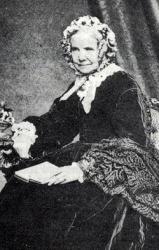
Charlotte Elliott

1789 - 1871 Topics: The Church Year Twelfth Sunday after Trinity Author of "Just as I am, without one plea" in The Lutheran Hymnary Elliott, Charlotte, daughter of Charles Elliott, of Clapham and Brighton, and granddaughter of the Rev. H. Venn, of Huddersfield, was born March 18, 1789. The first 32 years of her life were spent mostly at Clapham. In 1823 she removed to Brighton, and died there Sept. 22, 1871. To her acquaintance with Dr. C. Malan, of Geneva, is attributed much of the deep spiritual-mindedness which is so prominent in her hymns. Though weak and feeble in body, she possessed a strong imagination, and a well-cultured and intellectual mind. Her love of poetry and music was great, and is reflected in her verse. Her hymns number about 150, a large percentage of which are in common use. The finest and most widely known of these are, "Just as I am” and "My God, my Father, while I stray." Her verse is characterized by tenderness of feeling, plaintive simplicity, deep devotion, and perfect rhythm. For those in sickness and sorrow she has sung as few others have done. Her hymns appeared in her brother's Psalms & Hymns and elsewhere as follows:— (1) Psalms and Hymns for Public, Private, and Social Worship; selected by the Rev. H. V. Elliott, &c., 1835-48. In this Selection her signature is "C. E." (2) The Christian Remembrancer Pocket Book. This was originally edited by Miss Kiernan, of Dublin. Miss Elliott undertook the editorship in 1834. (3) The Invalid's Hymn Book. This was originally compiled by Miss Kiernan, but before publication was re-arranged by Miss Elliott, who also added 23 hymns in the first edition., 1834. These were increased in the following edition to the sixth in 1854, when her contributions amounted to 112. From that date no change was made in the work. (4) Hours of Sorrow Cheered and Comforted; or, Thoughts in Verse, 1836. (5) Morning and Evening Hymns for a Week, printed privately in 1839 for sale for a benevolent institution in Brighton, and published in 1842. (6) Thoughts in Verse on Sacred Subjects, 1869. Miss Elliott's Poems were published, with a Memoir by her sister, Mrs. Babington, in 1873, and an additional volume of Leaves from her unpublished Journals and Poems, also appeared in 1870. In addition to her more important hymns, which are annotated under their respective first lines, there are in common use:— i. From The Invalid's Hymn-book, 1834-1841:— 1. Clouds and darkness round about thee. (1841.) Resignation. 2. Not willingly dost Thou afflict [reject]. (1841.) Divine Chastisement. 3. O God, may I look up to Thee. (1841.) Teach us to Pray. 4. This is enough; although 'twere sweet. (1834.) On being debarred from Divine Worship. 5. With tearful eyes I look around. (1841.) The Invitation "Come Unto Me." ii. From H. V. Elliott's Psalms & Hymns, 1835-1839:— 6. Glorious was that primal light. Christmas. 7. Hail, holy day, most blest, most dear. Easter. 8. My only Saviour, when I feel. Jesus His people's Rest. 9. Now let our heavenly plants and flowers. Monday Morning. 10. The Sabbath-day has reached its close. Sunday Evening. iii. From Miss Elliott's Hours of Sorrow, 1836:— 11. Father, when Thy child is dying. Prayer for a Departing Spirit. 12. Leaning on Thee, my Guide, my Friend. Death Anticipated. 13. My God, is any hour so sweet? The Hour of Prayer. 14. O faint and feeble-hearted. Resignation enforced. 15. There is a holy sacrifice. The Contrite Heart. iv. From her Hymns for a Week, 1839:— 16. Guard well thy lips; none, none can know. Thursday Morning. 17. There is a spot of consecrated ground. Pt. i. 18. This is the mount where Christ's disciples see. Pt. ii. Monday Evening. 19. This is the day to tune with care. Saturday Morning. v. From Thoughts in Verse on Sacred Subjects, 1869:— 20. As the new moons of old were given. On a Birthday. 21. I need no other plea. Pt. i. 22. I need no prayers to saints. Pt. ii. Christ, All in All. 23. Jesus, my Saviour, look on me. Christ, All in All. Several of the earlier of these hymns were repeated in the later works, and are thus sometimes attributed to the wrong work. [Rev. James Davidson, B.A.] -- John Julian, Dictionary of Hymnology (1907) ================ Elliott, Charlotte, p. 328, i. Other hymns are:— 1. O how I long to reach my home. Heaven desired. From the Invalid's Hymn Book, 1834. 2. The dawn approaches, golden streaks. Second Advent. From Thoughts in Verse, &c, 1869. Of her hymns noted on p. 328, Nos. 6, 7, 8, 9, 10,11, and 13, all appeared in the 1st edition of Elliott's Psalms & Hymns, 1835. --John Julian, Dictionary of Hymnology, Appendix, Part II (1907) ======================== Elliott, Charlotte, pp. 328, i.; 1561, ii. Further research enables us to give amended dates to some of her hymns as follows:— 1. With tearful eyes I look around (No. 5). This is in the 1835 Appendix to The Invalid's Hymn Book. 2. My only Saviour, when I feel (No. 8). Also in the 1835 Appendix. 3. Father, when Thy child is dying (No. 11). In the 1833 Appendix. 4. I want that adorning divine, p. 559, i. In the Christian Remembrancer 1848, p. 22. --John Julian, Dictionary of Hymnology, New Supplement (1907)

William B. Bradbury

1816 - 1868 Person Name: W. B. Bradbury Topics: The Church Year Twelfth Sunday after Trinity Composer of "[Just as I am, without one plea]" in The Lutheran Hymnary William Batchelder Bradbury USA 1816-1868. Born at York, ME, he was raised on his father's farm, with rainy days spent in a shoe-shop, the custom in those days. He loved music and spent spare hours practicing any music he could find. In 1830 the family moved to Boston, where he first saw and heard an organ and piano, and other instruments. He became an organist at 15. He attended Dr. Lowell Mason's singing classes, and later sang in the Bowdoin Street church choir. Dr. Mason became a good friend. He made $100/yr playing the organ, and was still in Dr. Mason's choir. Dr. Mason gave him a chance to teach singing in Machias, ME, which he accepted. He returned to Boston the following year to marry Adra Esther Fessenden in 1838, then relocated to Saint John, New Brunswick. Where his efforts were not much appreciated, so he returned to Boston. He was offered charge of music and organ at the First Baptist Church of Brooklyn. That led to similar work at the Baptist Tabernacle, New York City, where he also started a singing class. That started singing schools in various parts of the city, and eventually resulted in music festivals, held at the Broadway Tabernacle, a prominent city event. He conducted a 1000 children choir there, which resulted in music being taught as regular study in public schools of the city. He began writing music and publishing it. In 1847 he went with his wife to Europe to study with some of the music masters in London and also Germany. He attended Mendelssohn funeral while there. He went to Switzerland before returning to the states, and upon returning, commenced teaching, conducting conventions, composing, and editing music books. In 1851, with his brother, Edward, he began manufacturring Bradbury pianos, which became popular. Also, he had a small office in one of his warehouses in New York and often went there to spend time in private devotions. As a professor, he edited 59 books of sacred and secular music, much of which he wrote. He attended the Presbyterian church in Bloomfield, NJ, for many years later in life. He contracted tuberculosis the last two years of his life. John Perry

Nicolaus Ludwig, Graf von Zinzendorf

1700 - 1760 Person Name: Nicolaus Ludwig, Count von Zinzendorf Topics: Twelfth Sunday after Trinity Author of "Jesus, Thy blood and righteousness" in Evangelical Lutheran hymnal Zinzendorf, Count Nicolaus Ludwig, the founder of the religious community of Herrnhut and the apostle of the United Brethren, was born at Dresden May 26, 1700. It is not often that noble blood and worldly wealth are allied with true piety and missionary zeal. Such, however, was the case with Count Zinzendorf. In 1731 Zinzendorf resigned all public duties and devoted himself to missionary work. He traveled extensively on the Continent, in Great Britain, and in America, preaching "Christ, and him crucified," and organizing societies of Moravian brethren. John Wesley is said to have been under obligation to Zinzendorf for some ideas on singing, organization of classes, and Church government. Zinzendorf was the author of some two thousand hymns. Many of them are of little worth, but a few are very valuable, full of gospel sweetness and holy fervor. He died at Herrnhut May 6, 1760. —Hymn Writers of the Church by Charles Nutter ================ Zinzendorf, Nicolaus Ludwig, Count von, was born at Dresden, May 26, 1700; was educated at the Paedagogium at Halle (1710-1716), and at the University of Wittenberg (1716-1719); became Hof-und Justizrath at the Saxon court at Dresden in the autumn of 1721; received a license to preach from the Theological Faculty of the University of Tubingen in 1734; was consecrated Bishop of the Moravian Brethren's Unity at Berlin, May 10, 1737; and died at Herrnhut, May 9, 1760. An adequate sketch of the life and labours of this remarkable man would far exceed the limits of our space. The details of his life are fully given in his Leben, by A. G. Spangenberg, 8 vols., Barby, 1772-75 (English version, abridged, by Samuel Jackson, London, 1838); and good sketches, with references to the fuller biographies, will be found in Koch, v. 248, Herzog's Real-Encyklopädie, xvii. 513, &c. The English reader may also consult T. Kübler's Historical Notes to the Lyra Germanica, 1865, p. 107; Josiah Miller's Singers and Songs, 1869, p. 160; Miss Winkworth's Christian Singers of Germany, 1869, p. 305, &c. It is impossible to speak of Zinzendorf apart from the religious Communion of which he was the Second Founder. Zinzendorf's first hymn was written at Halle in 1712, and his last at Herrnhut, May 4, 1760. Between these dates he wrote more than 2000 hymns. He himself published an edition of his poems as his Teutsche Gedichte at Herrnhut, 1735 (2nd ed., Barby, 1766), but this only contains 128 hymns. The fullest representation of them is in Albert Knapp's Geistliche Gedichte des Graf en von Zinzendorf, published at Stuttgart in 1845 (hereafter, in this article, referred to as Knapp, 1845). This contains 770 pieces, arranged in three books, with an introduction and a biographical sketch by Knapp. In preparing this edition Knapp had access to much unpublished material in the archives at Herrnhut, and found there many of the hymns in Zinzendorf's autograph. But too much of the labour he bestowed thereon was spent in endeavouring, not so much to reconstruct the text from the original sources, as to modernise it. In various instances the hymns are altogether rewritten, so that the form in which they appear is not that in which, as a matter of fact, Zinzendorf did write them, but that in which he might have written them had he been Albert Knapp, and lived in the year of grace 1845. So much is this the case, that comparatively few of the hymns are given in Knapp's edition in their original form. If not altered they are often either abridged or else combined with others. The keynote of Zinzendorf's hymns, and of his religious character, was a deep and earnest personal devotion to and fellowship with the crucified Saviour. This is seen even in his worst pieces, where it is his perverted fervour that leads him into objectionable familiarity with sacred things both in thought and in expression. If his self-restraint had been equal to his imaginative and productive powers, he would have ranked as one of the greatest German hymnwriters. As it is, most even of his best pieces err in some way or other, for if they are reverent and in good taste, they are apt to lack concentration and to be far too diffuse. His best hymns, and those which have been most popular in German and English beyond the Moravian connection, are those of the period prior to 1734. Among the characteristically Moravian hymns of the period 1734 to 1742 there are also, various noble pieces. The later productions, especially from 1743 to 1750, are as a rule one-sided, unreal, and exaggerated in sentiment, and debased in style; exemplifying a tendency inherited from Scheffler, and suffered to run to riot. Without doubt he wrote too much (especially considering the limited range of subjects treated of in his hymns), and gave too little care to revision and condensation. Yet many of his hymns are worthy of note, and are distinguished by a certain noble simplicity, true sweetness, lyric grace, unshaken faith in the reconciling grace of Christ, entire self-consecration, willingness to spend and be spent in the Master's service, and fervent brotherly love. The more important hymnbooks in which Zinzendorf’s productions mainly appeared may for convenience be briefly noted here, as follows:— (1) Sammlung geistlicher und lieblicher Lieder, Leipzig, 1725, with 889 hymns. The 2nd edition was published circa 1728, and contains anAnhäng with Nos. 890-1078 [Berlin Library, Ei. 2017]; while some copies have a Zugabe with Nos. 1079-1149 [Berlin, Ei. 2016], and others have also an Andere Zugabe, circa 1730, with hymns 1-44, bound up with them [Berlin, Ei, 2014, and British Museum]. The 3rd edition, with 1416 hymns in all, was published at Görlitz in 1731. A copy of this, now in the Hamburg Library, has bound up with Nachlese einiger geistlicher Lieder, dated 1733. (2) Herrnhut Gesang-Buch 1735 (Das Gesang-Buch der Gemeine in Herrn-Huth) with its various Anhange and Zugaben up to 1748. (3) London Gesang-Buch 1753-54 (Etwas vom Liede Mosis ... das ist: Alt- und neuer Brüder-Gesang, &c), published at London, vol. i. 1753, ii. 1754. (4) Brüder Gesang-Buch 1778 (Gesangbuch zum Gebrauch der evangelischen Brüdergemeinen), published at Barby in 1778. Zinzendorf's hymns passed into German non-Moravian use mainly through the Ebersdorf Gesang-Buch, 1742 (Evangelisches Gesangbuch in einen hinlänglichen Auszug der Alten, Neuern und Neuesten Lieder, &c), and in recent times through Knapp's Evangelischer Lieder-Schatz, 1837-1865. Comparatively few are found in non-Moravian English hymnbooks prior to 1840, save in the versions made by John Wesley. The translations made by the English Moravians have been very little used by others, except by those who were connected by birth with the Moravians, such as James Montgomery (through whose influence several were included in Mercer's Church Psalter & Hymn Book, 1855 and 1857), J. A. Latrobe and C. H. Bateman. The versions made by English non-Moravians since 1840 have been mostly of hymns which the Moravians themselves had not thought good to translate. In the larger edition of the English Moravian Hymn Book of 1886, hymns which are by Zinzendorf may easily be traced, his name being added to them, and the first line of the original German prefixed. The others which have passed into use outside the Moravian connection, or have been translated by non-Moravians, are here noted as follows:— i. Ach Bein von meinen Beinen. Longing for Heaven. Written circa 1750 (Knapp, 1845, p. 176). Included in the Kleine Brüder Gesang-Buch, 2nd ed. Barby, 1761, No. 2110, in 2 stanzas of 8 lines; repeated, altered, in the Brüder Gesang-Buch,1778. No. 1681. Translated as:— 1. The seasons, Lord! are Thine—how soon. A free version as No. 479 in J. A. Latrobe's Psalms & Hymns, 1841. 2. How soon, exalted Jesus. This is No. 838 in the Moravian Hymn Book, 1789 (1886, No. 1233). ii. Ach! mein verwundter Fürste. Union with Christ. Written Aug. 1737 (Knapp, 1845, p. 125). First published in Appendix viii., circa 1738, to the Herrnhut Gesang-Buch as No. 1197, and in 4 stanzas of 6 lines. In the Brüder Gesang-Buch, 1778, No. 774, stanza iv. was omitted. The translation in common use is of stanzas i., ii. Another translation is, "My wounded Prince enthron'd on high," by C. Kinchen, as No. 85 in the Moravian Hymn Book, 1742. In the 1808 and later editions(1886, No. 352), stanza iii. altered to "Lord, take my sinful, worthless heart "is continued. iii. Der Gott von unserm Bunde. Supplication. Written in 1737 ( Knap , 1845, p. 231). First published in Appendix vii., circa 1738, to the Herrnhut Gesang-Buch, as No. 1201, in 5 stanzas of 6 lines, entitled, "Hymn for the Hours of Prayer." In the Brüder Gesang-Buch, 1778, No. 1474. The translation in common use is based on stanza i., ii. Other translations are (1) "The God to whom we homage pay." This is No. 97 in pt. iii. 1748 of the Moravian Hymn Book. (2) "O may the God of mercies." This is No. 592 in the Moravian Hymn Book, 1801. In the ed. of 1886, No. 706, it begins with stanza iii., "Lord, our High Priest and Saviour." iv. Die Bäume blühen ab. Autumn . In the Teutsche Gedichte, 1735, No. 12, dated Autumn, 1721, and entitled "Comforting thoughts on Death." It is in Knapp, 1845, p. 17. Further noted under "Wie wird mir einst doch sein". v. Du Vater aller Kreatur. Work for Christ. Written 1722 (Knapp, 1845, p. 26). First published in Appendix. vi., circa 1737, to the Herrnhut Gesang-Buch, as No. 1159, and in 13 stanzas of 4 lines. In the Brüder Gesang-Buch, 1778, No. 1717 consists of stanza viii.-xiii. beginning, "Des Lebens abgestecktes Ziel." Translated as:— Whether the period of this life. This is a translation of stanza viii.-x. as No. 847 in the Moravian Hymn Book, 1789. To this in later eds. (1886, No. 1235) No. 848 was added. This is "Lord may 1 live to Thee by faith," and is a translation of an anonymous 17th century stanza, "Herr Jesu! dir leb ich," which is No. 1686 in the Brüder Gesang-Buch, 1778. The full form is in J. A. Latrobe's Psalms & Hymns, 1841. vi. Geschwister! wir geben uns Herzen und Hände. Christian Work. Written 1737 (Knap p, 1845, p. 234). First published in Appendix vii., circa 1738, to the Herrnhut Gesang-Buch as No. 1217, and in 8 stanzas of 4 lines. In the Brüder Gesang-Buch, 1778, No. 1391, it is united, as in Knapp, with "Gesinde des Heilands". Translated as:— Grace! how good, how cheap, how free. This is a translation, by C. Kinchen, of stanza v., as No. 28 in the Moravian Hymn Book, 1742. Included in Spurgeon's Our Own Hymn Book, 1866. vii. Glanz der Ewigkeit. Morning. In the Teutsche Gedichte, 1735, p. 13, dated Berlin, May, 1721. First published as No. 470 in the Sammlung, 1725, in 15 stanzas of 6 lines. In Knapp, 1845, p. 16. The only stanza translated into English is stanza xi. as part of "Jesu, geh' voran”. viii. Grosser Bundes-Engel. Ascensiontide. Written for Ascension Day (his birthday), 1740 (Knapp, 1845, p. 144, dated May 26, 1740). First published in Appendix xi., circa 1741, to the Herrnhut Gesang-Buch as No. 1426, in 27 stanzas of 8 lines. In the Brüder Gesang-Buch, 1778, No. 603. Translated as:— Lord, when Thou saidst, So let it be. This is a translation, by C. G. Clemens, of stanza iii., as No. 156 in the Moravian Hymn Book , 1789 (1849, No. 190). Included in the Congregational Hymn Book, 1836, and in Dr. Martineau's Hymns, 1840 and 1873. ix. Heiliger, heiliger, heiliger Herr Zebaoth. Eternal Life. Heaven Anticipated. The Rev. J. T. Müller, of Herrnhut, informs me that this was written in 1723 on the occasion of the birthday (Oct.6) of Zinzendorf s grandmother, H. C. von Gersdorf. Knapp, 1845, p. 193, dates it Oct. 18, 1723. First published as No. 1078 (2) in the 2nd ed., circa 1728, of the Sammlung in 7 stanzas of 7 lines, entitled, Closing Hymn. In the Brüder Gesang-Buch, 1778, stanza ii., iii., beginning "Hatten wir," are included as stanzas i., ii., of No. 1739. Translated as:— Had we nought, had we nought. This is a translation of stanzas ii., iii., by W. O. Keley, as No. 1189 in the 1808 Supplement to the Moravian Hymn Book, 1801 (1849, No. 1186), and repeated in J. A. Latrobe's Psalms & Hymns, 1841, No. 475. x. Ich bin ein kleines Kindelein. Children. This is No. 1022 in the 3rd ed., 1731, of the Sammlung, in 13 stanzas of 4 lines. In the Brüder Gesang-Buch, 1778, No. 1214, and in the Hist. Nachricht thereto (1835, p. 188) marked as a catechetical hymn for children, and dated 1723. Knapp, 1845, p. 40, dates it June, 1723, and alters it to "Ich bin ein Kindlein, arm und klein." It is a simple and beautiful hymn, and is contained in a number of recent German non-Moravian collections, e.g. in the Berlin Geistliche Lieder, ed. 1863, No. 1408. Translated as:— 1. Saviour, who didst from Heaven come down. This is a free translation of stanzas ii.,iii., v., made by James Bullivant Tomalin in 1860, and contributed to Lord Selborne's Book of Praise, ed. 1866, Appendix, No. 27, with the note at p. 500, "I am indebted for this to the kindness of the translator." Repeated in S. D. Major's Book of Praise for Home & School, 1869, and in America in the Baptist Service of Song, 1871, &c. In M. W. Stryker's Christian Chorals, 1885, and Church Song, 1889, it is altered, beginning, "O Saviour, Who from Heav'n came down." 2. I am a little child you see. By C. Kinchen, as No. 49 in the Moravian Hymn Book 1742. This form is followed in the edition of 1886, No. 1038, and in the Bible Hymn Book, 1845. In the Moravian Hymn Book, 1789, it begins with stanza ii., "Thou, gracious Saviour, for my good;" and this form altered to, "My Saviour dear, Thou for my good," is in Montgomery's Christian Psalmist, 1825. xi. Kommt, Sünder, und blicket dem ewigen Sohne. Repentance or Lent. Mr. Müller informs me that this was written in Aug. 1736, at , 1845, p. 130, dates it Nov. 22,1738. First published in Appendix viii., circa 1739, to the Herrnhut Gesang-Buch as No. 1308, in 9 stanzas of 4 lines. In the Brüder Gesang-Buch 1778, No. 321. Translated as:— Sinners! come; the Saviour see. This a good and full translation by C. Kinchen, as No. 120, in the Moravian Hymn Book, 1742. Of this stanzas i., ii. are included in Spurgeon's Our Own Hymn Book, 1866. Other forms are (1) "Are you formed a creature new" (stanza vi.). In the Moravian Hymn Book, 1769 (1886, No. 1280), Montgomery's Christian Psalmist, 1825, &c. (2) "Rise, go forth to meet the Lamb" (stanza viii. alt.). In J. A. Latrobe's Psalms & Hymns, 1852, No. 457. xii. Kron' und Lohn behertzter Ringer. The Beatitudes. Founded on St. Matt. v. 3-12. In his Teutsche Gedichte, 1735. p. 41, dated, Sept. 7, 1722 (his marriage day), and entitled, "Thoughts on my own marriage." First published as No. 700 in the Sammlung, 1725, in 16 stanzas of 12 lines. In Knapp, 1845, p. 30. In the Brüder Gesang-Buch, 1778, No. 513, beginning, "Jesu, der du uns erworben." Translated as:— Jesu! Lord so great and glorious. This, omitting stanzas xiv., xv., is No. 226 in pt. ii. of the Moravian Hymn Book, 1754, as "Jesus, Lord most great and glorious"). The versions of stanzas i., ix., xvi., from the Moravian Hymn Book, 1789, were included in the Dalston Hospital Hymn Book, 1848. xiii. Naht heran, ihr lieben Glieder. Holy Communion. Written in 1731 (Knapp, 1845, p. 212). 1st published in the 3rd ed., 1731, of the Sammlung as No. 1416 in 16 stanzas of 4 lines. Also in the Brüder Gesang-Buch 1778, No. 1148. Translated as:— 1. Friends in Jesus, now draw near. This is a free translation, omitting stanza v., vi., viii.-x.,xiv., by Miss Borthwick in Hymns from the Land of Luther, 4th ser., 1862, p. 57, the German being quoted as "Kommt herein, ihr lieben Glieder." This translation is repeated in full in Lyra Eucharistica, 1863, p. 34, and abridged in G. S. Jellicoe's Collection 1867, Windle, No. 480, and Harland, 1876, No. 451. 2. Come, approach to Jesu's table. This is No. 556 in the Moravian Hymn Book, 1789 (1849, No. 965), xiv. 0 du Hüter Ephraim. Supplication for Grace. In his Teutsche Gedichte, 1735,p. 158, dated 1728,entitled, "On his wife's 28th birthday " (she was born Nov. 7, 1700), and with the note, "This poem was written for the birthday festival of the Countess, was sung by a company or coterie of friends, each member of which was indicated according to their circumstances at the time." It had previously appeared, without the first stanza, and this form, which begins, "Herz der göttlichen Natur". xv. Rath, Kraft, und Held, und Wunderbar. Christmas. Founded on Is. ix. 6. In his Teutsche Gedichte, 1735, p. 25, in 9 stanzas of 6 lines, entitled, "Christmas Thoughts," and dated 1721; and in the Herrnhut Gesang-Buch,1735, No. 827. In Knapp, 1845, p. 21. In the Brüder Gesang-Buch, 1778, No. 488, it begins with stanza vi., "Mein alles! mehr als alle Welt." Translated as:— My all things more than earth and sky. This is a translation of stanza vi., by C. G. Clemens, as No. 306 in the Moravian Hymn Book, 1789. In 1801 altered to "My all in all, my faithful Friend;" and to this in 1826, trs. of stanzas ii., vii.-ix.,by P. Latrobe, were added (1886.No. 399). From this form a cento in 5 stanzas of L. M., beginning, "O Lord! Thou art my rock, my guide," was included in Dr. Martineau's Hymns, 1840. xvi. Ruht aus von eurer Mühe. Christian Church. Written in 1737 (Knapp 1845, p. 232, as Du gestern und auch heute). First published in Appendix vi., circa 1737, to the Herrnhut Gesang-Buch, as No. 1183, in 8 stanzas of 8 lines, entitled, "Hymn of the witnesses." In the Brüder Gesang-Buch, 1778, stanza iv. is given as No. 1042. Translated as:— 0 Jesus Christ, most holy. This is a translation of stanza iv. by C. G. Clemens, as No. 487 in the Moravian Hymn Book, 1789 (1849, No. 807 ; 1886, No. 795, beginning, "Lord Jesus Christ") Included in Spurgeon's Our Own Hymn Book, 1866. xvii. Seligs Volk der Zeugenwolk. Holy Communion. Written in 1739 (Knapp, 1845, p. 138, beginning, "Christi Blut, Die Segensfluth," and p. 256, "Selig Volk.") First published in Appendix viii., circa 1739, to the Herrnhut Gesang-Buch, as No. 1340, in 14 stanzas of 8 lines, entitled, "Hymn at the Feast of Love." In the Brüder Gesang-Buch, 1778, as Nos. 1127 and 1422, the latter beginning, "Werther Tod und Wunden roth; " and including stanza xi. ("Wisst ihr was? So heisst der Pass"), xiii., xiv. Translated as:— 1. Would the world our passport see. This is a translation of stanza xi., xiii. as No. 1152 in the 1808 Supplement to the Moravian Hymn Book of 1801 (1886, No. 895). Included as No. 212 in J. A. Latrobe's Psalms & Hymns, 1841. 2. Flock of Grace, ye Witnesses. This is No. 40 in pt. iii. 1748 of the Moravian Hymn Book. 3. Happy race of witnesses. By C. Kinchen as No. 551 in the Moravian Hymn Book, 1789. In 1886 four stanzas are given as No. 951, and the other two beginning, "Eat and rest at this great feast" (stanza viii.) as No. 1022. xviii. Was hatten wir für Freude oder Ehre . Repentance. Written in 1739 (Knapp, 1845, p. 139). First published in Appendix viii., circa 1739, to the Herrnhut Gesang-Buch as No. 1349, and in 48 stanza of 2 lines. In the Brüder Gesang-Buch, 1778, No. 396, reduced to 19 stanzas. Translated as:— What Joy or Honour could we have. In full as No. 161 in the Moravian Hymn Book, 1742; abridged in 1789 to 12, and in 1801 to 7 stanzas. The 1801 version, which represents stanzas i.-iv., viii., ix., xi. was included in Montgomery's Christian Psalmist, 1825; and with the trs. of stanzas iii., xi. omitted, and a hortatory stanza added, as No. 268 in J. A. Latrobe's Psalms & Hymns, 1841. In the Moravian Hymn Book, 1886, No. 322, it begins with the translation of stanza iii., "None is so holy, pure, and just." xix. Wenn sich die Kinder freuen. Christian Work. Written about 1752 (Knapp, 1845, p. 179, as "Wenn wir uns kindlich freuen"). Included as No. 2101 in the London Gesang-Buch (Etwas vom Liede Mosis, &c), 1753, in 15 stanzas of 4 lines. In the Brüder Gesang-Buch, 1778, No. 490 consists of stanzas i.—iii., vi., ix., xiii.-xv. beginning, "Wenu wir uns kindlich freuen." Translated as:— 1. When we seek with loving heart. By Miss Borthwick, in full from the 1778 (with an original stanza as stanza ix.) in the Family Treasury, 1861, pt. ii., p. 112, and in Hymns from the Land of Luther, 1862, p. 89 (1884, p. 250). Repeated, abridged, in E. T. Prust's Supplemental Hymn Book, 1869. 2. When the children joyful are. This is No. 312 in pt. ii. of the Moravian Hymn Book, 1754. 3. When children are rejoicing . This is at p. 373 of pt. ii. in the Moravian Hymn Book, 1754. xx. Wir sind nur dazu. Christian Warfare. Written in 1734 (Knapp, 1845, p. 113). First published in Appendix iii., circa 1737, to the Herrnhut Gesang-Buch, as No. 1073, and in 21 stanzas of 6 lines. In the Brüder Gesang-Buch, 1778, No. 1330 has 13 stanzas; while stanza xvii. ("Die Streitertreue") is given as stanza v. of No. 1394. Translated as:— Warrior, on thy station stand. This is a translation of stanza xvii. as No. 1161 in the 1808 Supplement to the Moravian Hymn Book, 1801 (1886, No. 896). Adopted by Dr. Martineau in his Hymns, 1840 and 1873, altered to "Warrior! to thy duty stand." Hymns not in English common use:— xxi. Auf, auf, es ist geschehe. Holy Communion. This is No. 166 in the Sammlung, 1725, in 12 stanzas of 4 lines, and in the Teutsche Gedichte, 1735, p. 2. In the Brüder Gesang-Buch, 1778, No. 1188 it begins, "Ich eil in Jesu Armen" (5 stanzas being added, and stanzas viii., xi. omitted), and in the Hist. Nachricht thereto (ed. 1851, p. 188) is marked as written on the occasion of his first communion in 1714. In Knapp, 1845, p. 6, it begins, "Ist's ja, es ist geschehen," Translated as "Happy, thrice happy hour of grace." By L. T. Nyberg, of stanzas i., xii., as No. 693 in the Moravian Hymn Book, 1789 (1886, No. 1021) ; repeated in C. H. Bateman's Congregational Psalmist, 1846. xxii. Christen sind ein göttlich Volk. Christian Life. In the Teutsche Gedichte, 1735, p. 231, dated 1731, and entitled, "Hymn for a Royal Princess-apparent," viz. for Charlotte Amelia, daughter of King Christian VI. of Denmark. It had appeared in the Nachlese of 1733 to Knapp, 1845, p. 97, and in the Brüder Gesang-Buch, 1778, No. 491. Translated as “Christians are a holy band, Gathered by the Saviour's hand." This is by Dr. J. F. Hurst in his translation of K. R. Hagenbach's History of the Church in the 18th and 19th Centuries, N. Y., 1869, vol. i., p. 434. xxiii. Das äussre Schifflein wälgert sich. For those at Sea. First published in the Zugabe, circa 1744, to Appendix xi. to the Herrnhut Gesang-Buch as No. 1855, in 16 stanzas of 4 lines entitled, "Hymn for the ship's company, February, 1743." Written during a stormy passage from America to Germany. In Knapp, 1845, p. 164. The translations are: (1) "Our ship upon the surging sea." In the British Herald, Aug. 1866, p. 313, repeated in Reid's Praise Book, 1872. (2) "Our little bark, it rocks itself." In L. Rehfuess's Church at Sea, 1868, p. 18. xxiv. Die Christen gehn von Ort zu Ort. Burial of the Dead. In the Teutsche Gedichte, 1735, p. 113, as part of No. 45, which is entitled "Over the grave of the grandmother" (Henriette Catharine von Gersdorf. She died March 6, 1726), and dated March, 1726. The hymn itself is entitled, "Air after the funeral rites." It had appeared in the Andere Zugabe, circa 1730, to the Sammlung as No. 6 (ed. 1731, No. 1246), in 3 stanzas of 8 lines entitled, “Funeral Hymn." In Knapp, 1845, p. 72, and in the Brüder Gesang-Buch, 1778, No. 1701. The translations are : 1) "Believers go from place to place." By Dr. J. Hunt in his Spiritual Songs of Martin Luther, 1853, p. 146. (2) "Through scenes of woe, from place to place." By Dr. G. Walker, 1860, p. 50. (3) "From place to place the Christian goes." By J. D. Burns in his Memoir & Remains, 1869, p. 263. (4) “From land to land the Christian goes." This is No. 1251 in the Moravian Hymn Book, 1886. xxv. Du innig geliebter Erloser der Sünder. Readiness to serve Christ. Written in 1735 (Knapp, 1845, p. 222). First published in Appendix iv., circa 1737, to the Herrnhut Gesang-Buch, as No. 1080, and in 6 stanzas of 4 lines. In the Brüder Gesang-Buch, 1778, No. 1335. Translated as "Sinners' Redeemer whom we only love." This is a translation of stanzas i., iv., v., by C. Kinchen, as No. 121 in the Moravian Hymn Book, 1742. In the 1789 and later editions (1886, No. 861), it begins, "Sinners' Redeemer, gracious Lamb of God." The text of 1742, slightly altered, is No. 206 in Lady Huntingdon's Selection, 1780. xxvi. Du Vater aller Geister. Evening. In the Teutsche Gedichte, 1735, p. 15, entitled, "Evening Thoughts," and dated Oct. 1721. It is No. 497 in the Sammlung, 1725, in 6 stanzas of 8 lines. In Knapp, 1845, p. 16, and in the Brüder Gesang-Buch, 1778, No. 235. Translated as “Father of living Nature." By H. J. Buckoll, 1842, p. 102. xxvii. Gesinde des Heilands des seligen Gottes. Christian Work. Written in 1737 (Knapp, 1845, p. 234), first published in Appendix vii., circa 1738, to the Herrnhut Gesang-Buch as No. 1216, and in 10 stanzas of 4 lines. In the Brüder Gesang-Buch, 1778, No. 1391. Translated as "Ye blest Domestics of the slaughter'd Lamb." In full as No. 178 in the Moravian Hymn Book, 1742 (1754, pt. ii., No. 250). Repeated, abridged, in the Bible Hymn Book, 1845, No. 286. xxviii. Ich bitt dich, herzliches Gottes-Lamm! Love to Christ. Written in Oct. 1741 (Knapp, 1845, p. 152, as "Ein selig Herze führt diese Sprach"). First published in Appendix xi., circa 1743, to the Herrnhut Gesang-Buch, as No. 1724, and in 12 stanzas of 5 lines, In the Brüder Gesang-Buch, 1778, No. 704, it begins, with stanza ii., altered to "Ein selges Herze führt diese Sprach." Translated as "When heavenwards my best affections move." By Miss Borthwick (from the 1778), dated April, 1861, in the Family Treasury , 1861, p. 328. In Hymns from the Land of Luther, 4th ser., 1862, p. 60 (1884, p. 223), altered to "When towards heaven." xxix. 0 du Hüter Ephraim. Burial of the Dead. This is included at p. 10 in the Nachlese of 1733 to the 3rd ed. 1731 of the Sammlung, and is in 8 stanzas of 8 lines, entitled, "Of departure to the Father;" and in the Teutsche Gedichte, 1735, p. 256, entitled, "In the name of the community." Included as No. 695 in the Herrnhut Gesang-Buch, 1735, beginning with stanza ii. altered to "Tödten ist dem Herrn erlaubt." In the Brüder Gesang-Buch, 1778, No. 1715, it begins with stanza iii., "Ehmals sollts gestorben sein," and in the Hist. Nachricht thereto (1835, p. 190) is marked as written on the death of Matthaus Linner in 1732. In Knapp, 1845, p. 101. Translated as "Once the sentence justly sounded." By Miss Borthwick in Hymns from the Land of Luther, 1862, p. 92 (1884, p. 252). xxx. 0 Liebe, die in fremde Noth. On Unity. In the Teutsche Gedichte, 1735, p. 94, dated 1725, and entitled, "On the Saviour's faithfulness." First published as No. 198 (b) in the 1725 Sammlung, in 18 stanzas of 4 lines. In the London Gesang-Buch, 1753, No. 1764, stanzas ix., x., beginning, " Der du noch in der letzten Nacht," were given as a separate hymn; and this form is repeated in the Brüder Gesang-Buch, 1778, No. 714, the Berlin Geistliches Lieder, ed. 1863, No. 1037, &c. In Knapp, 1845, p. 70. The translations, all of stanza ix., x., are: (1) "Lord Jesus, who that very night." By P. H. Molther, as stanzas ii., iii. of No. 387 in the Moravian Hymn Book, 1789 (1886, No. 477, beginning, "Lord Jesus, in that"). (2) "Thou Who didst die for all and each." By Miss Cox, 1841, p. 147. (3) "O Thou, Who with Thy latest breath." By Lady E. Fortescue, 1843, p. 66. (4) "Thou who in that bitter night." By Miss Warner, 1858, p. 436. (5) "Thou who in that last sad night." By Miss Fry, 1859, p. 151. (6) "Thou who upon that last sad night." In the Family Treasury, 1859, p. 200. (7) "O Thou who didst on that last night." By R. Massie in the British Herald, Feb. 1865, p. 28. (8) "O Thou, who on that last sad eve." By E. Massie, 1866, p. 69. xxxi. O wie so gliicklich waren wir. Love to Christ. On the blessedness of union with Christ. First published in Appendix vii., circa 1738, to the Herrnhut Gesang-Buch as No. 1237, and in 8 stanzas of 8 lines. In the Brüder Gesang-Buch, 1778, No. 829, and in the Hist. Nachricht thereto (1835, p. 186) marked as written for J. A. Rothe (p. 978, i.), and dated 1737. In Knapp, 1845, p. 236. Translated as "How full our cup of joy would be." By Miss Burlingham in the British Herald, Sept. 1865, p. 131, and in Reid's Praise Book, 1872. xxxii. Reiner Bräutgam meiner Seelen. Desire for Holiness. Written in 1721 (Knapp, 1845, p. 21). Included in the 2nd edition, circa 1728, of the Sammlung as No. 1001, and in the Christ-Catholisches Singe- und Bet-Büchlein, 1727, p. 133, in 30 stanzas of 4 lines. In the Brüder Gesang-Buch, 1778, No. 798. Translated as "Jesu, to Thee my heart I bow." This is a free translation of stanzas i., x.-xii., xvi., xvii., by J. Wesley in Psalms & Hymns, Charlestown, 1736-7, and Hymns and Sacred Poems, 1739 (Poetical Works 1868-72, vol i., p. 109). Repeated in the Wesley Hymns & Spiritual Songs, 1753, Moravian Hymn Book, 1754, Bayley's Selection, Manchester, 1789, Bateman's Congregational Psalmist, 1846. xxxiii. Schau von deinem Thron. Supplication. Written in 1720 (Knapp, 1845, p. 14), and founded on the Lord's Prayer. In the Sammlung, 1725, No. 443, in 6 stanzas of 6 lines. Translated as "All glory to the Eternal Three." By J. Wesley in Hymns & Sacred Poems, 1739 (Poetical Works, 1868-72, vol. i., p. 130). xxxiv. Solche Leute will der König küssen. Humility. First published in Appendix vii., circa 1738, to the Herrnhut Gesang-Buch, as No. 1241, and in 4 stanzas of 4 lines. Mr. Müller informs me that it was written in 1738, and was dedicated to Eva Maria Immig née Ziegelbauer, who on March 5,1740, became the wife of A. G. Spangenberg. In the Brüder Gesang-Buch, 1778, No. 842, stanzas ii., iii. are stanzas i., iv. of this Knapp, 1845, p. 89 dates it 1728. The translations are:—(1) "To such the King will give a kiss of Love." This is No. 154 in the Moravian Hymn Book, 1742 (1754, pt. ii., No. 62). (2) "His loving kindness those shall richly share." This is No. 508 in the Moravian Hymn Book, 1801. (3) "Such the King will stoop to and embrace." By Miss Winkworth, 1869, p. 310. xxxv. Verliebter in die Sünderschaft. Love to Christ. First published in Appendix iii., circa 1737, to the Herrnhut Gesang-Buch, as No. 1072, in 4 stanzas of 8 lines. In the Brüder Gesang-Buch

Pages


Export as CSV
It looks like you are using an ad-blocker. Ad revenue helps keep us running. Please consider white-listing Hymnary.org or getting Hymnary Pro to eliminate ads entirely and help support Hymnary.org.