You help make Hymnary.org possible. More than 10 million people from 200+ countries found hymns, liturgical resources and encouragement on Hymnary.org in 2025, including you. Every visit affirms the global impact of this ministry.

If Hymnary has been meaningful to you this year, would you take a moment today to help sustain it? A gift of any size—paired with a note of encouragement if you wish—directly supports the server costs, research work and curation that keep this resource freely available to the world.

Give securely online today, or mail a check to:
Hymnary.org
Calvin University
3201 Burton Street SE
Grand Rapids, MI 49546

Thank you for your partnership, and may the hope of Advent fill your heart.

Person Results

Tune Identifier:"^greenland_haydn$"
In:person

Planning worship? Check out our sister site, ZeteoSearch.org, for 20+ additional resources related to your search.
Showing 21 - 30 of 42Results Per Page: 102050

Anonymous

Person Name: Anon. Author of "We Thank Thee, O Our Father" in Worship and Song. (Rev. ed.) In some hymnals, the editors noted that a hymn's author is unknown to them, and so this artificial "person" entry is used to reflect that fact. Obviously, the hymns attributed to "Author Unknown" "Unknown" or "Anonymous" could have been written by many people over a span of many centuries.

John R. Clements

1868 - 1946 Author of "He's Everything to Me" in Service Songs for Young People's Societies, Sunday Schools and Church Prayer Meetings John R. Clements was born in County Armagh, Ireland 28 November 1868 and was brought to the United States at the age of two years. He worked at the age of thirteen as a retail grocery clerk and had a successful wholesale grocery business. He began writing poetry when he was young. Dianne Shapiro, from "The Singers and Their Songs: sketches of living gospel hymn writers" by Charles Hutchinson Gabriel (Chicago: The Rodeheaver Company, 1916)

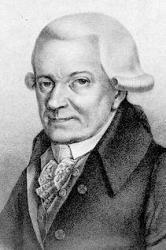
Michael Haydn

1737 - 1806 Person Name: Johann Michael Haydn Composer of "GREENLAND" in The Scottish Hymnal Johann Michael Haydn Austria 1737-1806. Born at Rohrau, Austria, the son of a wheelwright and town mayor (a very religious man who also played the harp and was a great influence on his sons' religious thinking), and the younger brother of Franz Joseph Haydn, he became a choirboy in his youth at the Cathedral of St. Stephen in Vienna, as did his brother, Joseph, an exceptional singer. For that reason boys both were taken into the church choir. Michael was a brighter student than Joseph, but was expelled from music school when his voice broke at age 17. The brothers remained close all their lives, and Joseph regarded Michael's religious works superior to his own. Michael played harpsichord, violin, and organ, earning a precarious living as a freelance musician in his early years. In 1757 he became kapellmeister to Archbishop, Sigismund of Grosswardein, in Hungary, and in 1762 concertmaster to Archbishop, Hieronymous of Salzburg, where he remained the rest of his life (over 40 years), also assuming the duties of organist at the Church of St. Peter in Salzburg, presided over by the Benedictines. He also taught violin at the court. He married the court singer, Maria Magdalena Lipp in 1768, daughter of the cathedral choir-master, who was a very pious women, and had such an affect on her husband, trending his inertia and slothfulness into wonderful activity. They had one daughter, Aloysia Josepha, in 1770, but she died within a year. He succeeded Wolfgang Amadeus Mozart, an intimate friend, as cathedral organist in 1781. He also taught music to Carl Maria von Weber. His musical reputation was not recognized fully until after World War II. He was a prolific composer of music, considered better than his well-known brother at composing religious works. He produced some 43 symphonies,12 concertos, 21 serenades, 6 quintets, 19 quartets, 10 trio sonatas, 4 due sonatas, 2 solo sonatas, 19 keyboard compositions, 3 ballets, 15 collections of minuets (English and German dances), 15 marches and miscellaneous secular music. He is best known for his religious works (well over 400 pieces), which include 47 antiphons, 5 cantatas, 65 canticles, 130 graduals, 16 hymns, 47 masses, 7 motets, 65 offertories, 7 oratorios, 19 Psalms settings, 2 requiems, and 42 other compositions. He also composed 253 secular vocals of various types. He did not like seeing his works in print, and kept most in manuscript form. He never compiled or cataloged his works, but others did it later, after his death. Lothar Perger catalogued his orchestral works in 1807 and Nikolaus Lang did a biographical sketch in 1808. In 1815 Anton Maria Klafsky cataloged his sacred music. More complete cataloging has been done in the 1980s and 1990s by Charles H Sherman and T Donley Thomas. Several of Michael Haydn's works influenced Mozart. Haydn died at Salzburg, Austria. John Perry

George Cooper

1820 - 1876 Composer of "[The day of Resurrection]" in The New Children's Hymnal Cooper (ac­tu­al­ly George Coop­er III) came from a long line of or­gan­ists who played at St. Se­pul­chre’s Church, Newgate Street, London, through­out the 19th Cen­tu­ry. One of his ear­li­est ap­point­ments was to St. Benet’s Church in Up­per Thames Street, where lat­er John Stain­er of­fi­ci­a­ted (1854-56). Coop­er was al­so one of the or­gan­ists of the Cha­pel Roy­al, was or­gan­ist and mu­sic mas­ter at Christ’s Hos­pi­tal, and in 1843, he suc­ceed­ed his fa­ther as as­sist­ant to John Goss at St. Paul’s. He was the first ed­it­or to su­per­vise the pro­duct­ion of the new Wes­ley­an Tune-Book (both he and his suc­cess­or Gaunt­lett passed away while the work was in pro­gress; it was fin­ished by Ed­ward Hop­kins). Coop­er’s works in­clude: Organ Ar­range­ments Organist’s Ass­ist­ant Organist’s Man­u­al --www.hymntime.com/tch/

Laurentius Laurenti

1660 - 1722 Author of "Rejoice, Rejoice, Believers" in Psalter Hymnal (Gray) Laurenti, Laurentius, son of Herr Lorenz, or Laurenti, a burgess of Husum, in Schleswig, was born at Husum, June 8, 1660. He entered the University of Rostock in 1681, and after a year and a half spent there, went to Kiel to study music. In 1684 he was appointed cantor and director of the music at the cathedral church at Bremen. He died at Bremen, May 29, 1722 (Koch, iv. 281; Rotermund's continuation of Jöcher's Gelehrten-Lexicon, iii. 1405, &c). Laurenti was one of the best hymn-writers of the Pietistic school. His hymns are founded on the Gospels for Sundays and Festivals, and they draw out the bearing on the Christian life of the leading thoughts therein contained. They are of noble simplicity; are Scriptural, fervent, and often of genuine poetical worth. In Freylinghausen's Gesang-Buch, 1704 and 1714, no less than 34 are included, and many of these, with others by him, are still in extensive German use. They appeared in his:— Evangelia Melodica, das ist: Geistliche Lieder,und Lobgesange, nach den Sinn der ordentlichen Sonn-und Festages Evangelien, &c. Bremen, 1700 [Royal Library, Berlin], with 148 hymns on the Gospels, and two others. Of his hymns those which have passed into English are:—— i. Du wesentliches Wort. Christmas. Founded on St. John i. 1-12. In his Evangelia Melodica, 1700, p. 30, in 8 stanzas of 8 lines, entitled, "For the Third Day of Christmas." Included in Freylinghausen's Gesang-Buch, 1704, No. 20; and, recently, as No. 83, in the Berlin Geistliche Lieder, 1863. The translations in common use are:— 1. 0 Thou essential Word, Who from. A good translation, omitting st. iii., v., by Miss Winkworth, in her Lyra Germanica, first Ser., 1855, p. 15 (2nd edition, 1856, considerably altered); and repeated, abridged, in Flett's Collection, Paisley, 1871. Varying centos, beginning with st. i., 1. 5, altered to "O Saviour of our race," are found in America, as in Boardman's Selections, Philadelphia, 1861; the Pennsylvania Lutheran Church Book, 1868; and the Dutch Ref. Hymns of the Church, 1869. 2. 0 Thou essential Word, Who wast. By Miss Winkworth, in her Chorale Book for England, 1863, No. 54. This is her 1856 version (as above) rewritten to the original metre. Repeated, in full, in Dr. Thomas's Augustine Hymn Book, 1866, and the Ohio Lutheran Hymnal, 1880; and, abridged, in the English Presbyterian Psalms & Hymns, 1867, and Laudes Domini, N. Y., 1884. ii. Ermuntert euch, ihr Frommen. Second Advent. This is his finest hymn. In his Evangelia Melodica, 1700, p. 353, in 10 stanzas of 8 lines, entitled, "For the 27th Sunday after Trinity." It is founded on St. Matt. xxv. 1-13; and unites the imagery of the parable of the Ten Virgins with that of Rev. xx., xxi. Included, as No. 578, in Freylinghausen's Gesang-Buch, 1704; and, recently, as No. 1519, in the Berlin Geistliche Lieder, ed. 1863. The translation in common use is:— Rejoice, all ye believers. By Mrs. Findlater, in Hymns from the Land of Luther, 1st Ser., 1854, p. 61 (1884, p. 62), a good translation of st. i.-iii., vii., viii., x. In full, but altered to the original metre, in Schaff’s Christ in Song, 1869 and 1870. This version is found in a large number of English and American hymnals, under the following forms:— (1) Rejoice, all ye believers (st. i.). Varying centos are found in Mercer, 1864, Hymnal Companion, 1876, &c.; and in America in Hatfield's Church Hymn Book, 1872, Evangelical Hymnal, N. Y., 1880, and others. (2)

B. Jacob

Arranged of "GREENLAND" in Christian Classics Ethereal Hymnary

R. Birch Hoyle

1875 - 1939 Translator of "My Saviour and My Lord" in The Christian Hymnary Born: March 8, 1875, Clough­fold, Lan­ca­shire, Eng­land. Died: De­cem­ber 14, 1939, Wim­ble­don, Sur­rey, Eng­land. Hoyle at­tend­ed Re­gent’s Park Coll­ege in Lon­don, then pas­tored in Sud­bu­ry, Ab­er­deen, and Lon­don (1900-17), and in Bel­ve­dere, Kent (1923-26). He ed­it­ed the YMCA’s Red Tri­an­gle mag­az­ine, and was pro­fess­or of the­ol­o­gy at West­ern The­o­lo­gic­al Sem­in­a­ry, Pitts­burgh, Penn­syl­van­ia (1934-36). He lat­er re­turned to Eng­land, pas­tor­ing at the Bap­tist church in Kings­ton-on-Thames. Some of his work ap­pears in the World Stu­dent Chris­tian Fed­er­a­tion hym­nal Can­ta­te Do­mi­no (1925). Translations: Holy God, Thy Name We Bless My Sav­ior and My Lord Thine Is the Glo­ry What Joy, to Think of That Vast Host --www.hymntime.com/tch

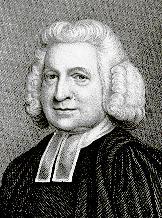
Charles Wesley

1707 - 1788 Person Name: Charles Wesley, 1707-88 Author of "From trials unexempted" in The Methodist Hymn-Book with Tunes Charles Wesley, M.A. was the great hymn-writer of the Wesley family, perhaps, taking quantity and quality into consideration, the great hymn-writer of all ages. Charles Wesley was the youngest son and 18th child of Samuel and Susanna Wesley, and was born at Epworth Rectory, Dec. 18, 1707. In 1716 he went to Westminster School, being provided with a home and board by his elder brother Samuel, then usher at the school, until 1721, when he was elected King's Scholar, and as such received his board and education free. In 1726 Charles Wesley was elected to a Westminster studentship at Christ Church, Oxford, where he took his degree in 1729, and became a college tutor. In the early part of the same year his religious impressions were much deepened, and he became one of the first band of "Oxford Methodists." In 1735 he went with his brother John to Georgia, as secretary to General Oglethorpe, having before he set out received Deacon's and Priest's Orders on two successive Sundays. His stay in Georgia was very short; he returned to England in 1736, and in 1737 came under the influence of Count Zinzendorf and the Moravians, especially of that remarkable man who had so large a share in moulding John Wesley's career, Peter Bonier, and also of a Mr. Bray, a brazier in Little Britain. On Whitsunday, 1737, [sic. 1738] he "found rest to his soul," and in 1738 he became curate to his friend, Mr. Stonehouse, Vicar of Islington, but the opposition of the churchwardens was so great that the Vicar consented that he "should preach in his church no more." Henceforth his work was identified with that of his brother John, and he became an indefatigable itinerant and field preacher. On April 8, 1749, he married Miss Sarah Gwynne. His marriage, unlike that of his brother John, was a most happy one; his wife was accustomed to accompany him on his evangelistic journeys, which were as frequent as ever until the year 1756," when he ceased to itinerate, and mainly devoted himself to the care of the Societies in London and Bristol. Bristol was his headquarters until 1771, when he removed with his family to London, and, besides attending to the Societies, devoted himself much, as he had done in his youth, to the spiritual care of prisoners in Newgate. He had long been troubled about the relations of Methodism to the Church of England, and strongly disapproved of his brother John's "ordinations." Wesley-like, he expressed his disapproval in the most outspoken fashion, but, as in the case of Samuel at an earlier period, the differences between the brothers never led to a breach of friendship. He died in London, March 29, 1788, and was buried in Marylebone churchyard. His brother John was deeply grieved because he would not consent to be interred in the burial-ground of the City Road Chapel, where he had prepared a grave for himself, but Charles said, "I have lived, and I die, in the Communion of the Church of England, and I will be buried in the yard of my parish church." Eight clergymen of the Church of England bore his pall. He had a large family, four of whom survived him; three sons, who all became distinguished in the musical world, and one daughter, who inherited some of her father's poetical genius. The widow and orphans were treated with the greatest kindness and generosity by John Wesley. As a hymn-writer Charles Wesley was unique. He is said to have written no less than 6500 hymns, and though, of course, in so vast a number some are of unequal merit, it is perfectly marvellous how many there are which rise to the highest degree of excellence. His feelings on every occasion of importance, whether private or public, found their best expression in a hymn. His own conversion, his own marriage, the earthquake panic, the rumours of an invasion from France, the defeat of Prince Charles Edward at Culloden, the Gordon riots, every Festival of the Christian Church, every doctrine of the Christian Faith, striking scenes in Scripture history, striking scenes which came within his own view, the deaths of friends as they passed away, one by one, before him, all furnished occasions for the exercise of his divine gift. Nor must we forget his hymns for little children, a branch of sacred poetry in which the mantle of Dr. Watts seems to have fallen upon him. It would be simply impossible within our space to enumerate even those of the hymns which have become really classical. The saying that a really good hymn is as rare an appearance as that of a comet is falsified by the work of Charles Wesley; for hymns, which are really good in every respect, flowed from his pen in quick succession, and death alone stopped the course of the perennial stream. It has been the common practice, however for a hundred years or more to ascribe all translations from the German to John Wesley, as he only of the two brothers knew that language; and to assign to Charles Wesley all the original hymns except such as are traceable to John Wesley through his Journals and other works. The list of 482 original hymns by John and Charles Wesley listed in this Dictionary of Hymnology have formed an important part of Methodist hymnody and show the enormous influence of the Wesleys on the English hymnody of the nineteenth century. -- Excerpts from John Julian, Dictionary of Hymnology (1907) ================== Charles Wesley, the son of Samuel Wesley, was born at Epworth, Dec. 18, 1707. He was educated at Westminster School and afterwards at Christ Church, Oxford, where he graduated M.A. In 1735, he took Orders and immediately proceeded with his brother John to Georgia, both being employed as missionaries of the S.P.G. He returned to England in 1736. For many years he engaged with his brother in preaching the Gospel. He died March 29, 1788. To Charles Wesley has been justly assigned the appellation of the "Bard of Methodism." His prominence in hymn writing may be judged from the fact that in the "Wesleyan Hymn Book," 623 of the 770 hymns were written by him; and he published more than thirty poetical works, written either by himself alone, or in conjunction with his brother. The number of his separate hymns is at least five thousand. --Annotations of the Hymnal, Charles Hutchins, M.A., 1872.

S. L. Findlater

1823 - 1907 Person Name: Sarah B. Findlater Translator of "Rejoice, Rejoice, Believers" in Psalter Hymnal (Gray) Sarah Laurie Borthwick Findlater United Kingdom 1823-1907. Born in Edinburgh, Scotland, sister of Jane Laurie Borthwick, she married Erick John Findlater, a pastor in the Free Church of Scotland at Lochearnhead, Perthshire, and they had three daughters: Sarah Jemima, Mary Williamina, and Jane Helen. Findlater and her sister Jane's translations were collected in “German hymns from the land of Luther”, appearing in four volumes (1854-1862). As an author, Sarah wrote fiction, juvenile works, music scores, anthems, and musical parts. She died at Torquay, Devon, England. John Perry

W. S. Weeden

1847 - 1908 Adapter of "[I have a loving Savior] " in Service Songs for Young People's Societies, Sunday Schools and Church Prayer Meetings Winfield S. Weeden was born in 1847 in Middleport, OH. In his early life he was active in teaching singing schools throughout that area in Ohio. As singer and associate to Judson VandeVenter in his evangelistic campaigns, Weeden assisted in meetings at East Palestine and Sebring. He compiled several collections of hymns among them The Peacemaker, Songs of the Peacemaker, and Songs of Sovereign Grace. Weeden died in 1908. (see 101 More Hymn Stories, Osbeck, Grand Rapids, MI: Kregel, 1985) Mary Louise VanDyke

Pages


Export as CSV
It looks like you are using an ad-blocker. Ad revenue helps keep us running. Please consider white-listing Hymnary.org or getting Hymnary Pro to eliminate ads entirely and help support Hymnary.org.