You help make Hymnary.org possible. More than 10 million people from 200+ countries found hymns, liturgical resources and encouragement on Hymnary.org in 2025, including you. Every visit affirms the global impact of this ministry.

If Hymnary has been meaningful to you this year, would you take a moment today to help sustain it? A gift of any size—paired with a note of encouragement if you wish—directly supports the server costs, research work and curation that keep this resource freely available to the world.

Give securely online today, or mail a check to:
Hymnary.org
Calvin University
3201 Burton Street SE
Grand Rapids, MI 49546

Thank you for your partnership, and may the hope of Advent fill your heart.

Person Results

Topics:fifteenth+sunday+after+trinity
In:people

Planning worship? Check out our sister site, ZeteoSearch.org, for 20+ additional resources related to your search.
Showing 31 - 40 of 64Results Per Page: 102050

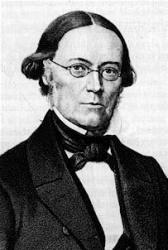
Franz Xaver Schnyder von Wartensee

1786 - 1868 Person Name: Xavier Schnyder von Wartensee, 1786-1868 Topics: Fifteenth Sunday after Trinity Composer of "HORTON" in Evangelical Lutheran hymnal

Johann Heinrich Schröder

1667 - 1699 Person Name: J. H. Schröder Topics: Fifteenth Sunday after Trinity Sunday High Mass Author of "Et er nødigt, dette Ene" in M. B. Landstads Kirkesalmebog og "Nokre Salmar" ved Professor Dr. E. Blix, samt følgende tillæg Schröder, Johann Heinrich, was born Oct. 4,1667, at Springe (Hallerspringe) near Hannover. He studied at the University of Leipzig, where he experienced the awakening effects of A. H. Francke's lectures. In 1696 he was appointed pastor at Meseberg, near Neuhaldensleben; and in the registers there records of himself (writing in the third person), " 1696, on the 17th Sunday after Trinity, viz. on Oct. 4, on which day he was born, with the beginning of his 30th year, he entered on the pastorate of this parish." He died at Meseberg, June 30, 1699 (Koch, iv., 381; Blatter für Hymnologie, 1883, p. 192, &c). Schröder is best known by the four hymns which he contributed to the Geistreiches Gesang-Buch, Halle, 1697; and which are repeated in the Geistreiches Gesang-Buch, Darmstadt, 1698; and in Freylinghausen's Gesang-Buch, 1704. They are very good examples of the early hymns of the Pietists, being genuine and earnest outpourings of Love to Christ, not unmixed with Chiliastic hopes for the victory of Zion and the overthrow of Babylon. In the same books are two hymns by his wife (Tranquilla Sophia née Wolf), who died at Meseberg, April 29, 1697. Two of Schröder's hymns have passed into English, viz.:— i. Eins ist noth, aoh Herr, dies eine. Love to Christ. This is included in the Geistreiches Gesang-Buch, Halle, 1097, p. 505, in 10 stanzas of 8 lines, entitled, "One thing is needful. Luke x. 42. Jesus, Who of God is made unto us wisdom, and righteousness, and sanctification, and redemption. 1 Cor. i. 30." Its popularity has been due, not only to its own beauty and power, but also to the taking character of the melody to which it is set. This is by J. Neander, in his Bundes Lieder, Bremen, 1680, as the melody of Grosser Prophete; and was altered in Freylinghausen to suit Schroder's hymn. The full form from Freylinghausen is in Mercer's The Church Psalter & Hymn Book, and there called Landsberg. The second part is given in the Bristol Tune Book as Ems. A greatly altered form, as Ratisbon, has passed through W. H. Havergal's Old Church Psalmody into the Irish Church Hymnal, the Scottish Presbyterian Hymnal and others. The translation in common use from Schröder is:— One thing's needful, then, Lord Jesus. This is a good and full tr., by Miss Cox, in her Sacred Hymns from the German, 1841, p. 137. Other translations are:— (1) "One thing is needful! Let me deem." By Miss Winkworth, 1855, p. 183. (2) "One thing's needful:— this rich treasure." By Dr. H. Mills, 1856, p. 92. ii. Jesu, hilf siegen, du Furste des Lebens. Christian Warfare…It is said to have been written, in 1696, as a companion to his wife's hymn, "Trautster Jesu, Ehrenkonig". It was accused of Chiliasm, by the Theological Faculty of Wittenberg, but still holds an honoured place in German collections. The translations are:—(1) "Jesus, help conquer ! Thou Prince everliving." By Dr. H. Mills, 1856, p. 126. (2) "Jesus, help conquer. Thou Prince of my being." By Miss Manington, 1863, p. 2. The hymn beginning, "Jesus, help conquer! my spirit is sinking," by Miss Warner, in 6 stanzas, in her Hymns of the Church Militant, N. Y., 1858, p. 161, borrows little more than the first line from the German. It is repeated in Boardman's Selection, Philadelphia, 1861, No. 463. [Rev. James Mearns, M.A.] --Excerpts from John Julian, Dictionary of Hymnology (1907)

Johann Balthasar König

1691 - 1758 Person Name: Johann Balthazar König Topics: Fifteenth Sunday after Trinity Composer of "HILDESHEIM (Alles ist an Gottes Segen)" in Evangelical Lutheran hymnal Johann Balthasar König; b. 1691, Waltershausen, near Gotha; d. 1758, Frankfort Evangelical Lutheran Hymnal, 1908

M. B. Landstad

1802 - 1880 Person Name: Landstad Topics: Fifteenth Sunday after Trinity Sunday Translator of "Salig er den Mand, som ikke" in Salmebog for Lutherske Kristne i Amerika Magnus Brostrup Landstad (born 7 October 1802 in Måsøy, Norway and died 8 October 1880 in Kristiania) was a Norwegian minister, psalmist and poet who published the first collection of authentic Norwegian traditional ballads in 1853. This work was criticized for unscientific methods, but today it is commonly accepted that he contributed significantly to the preservation of the traditional ballads. Landstad lived with his father Hans Landstad (1771–1838) who was also a minister, first in 1806 to Øksnes, to Vinje in 1811 and to Seljord in 1819. He took a theological degree (cand. theol) in 1827, and worked after that as the resident chaplain in Gausdal for six years. After that he worked in different parishes in Telemark, Østfold before he became minister of Sandar in Vestfold in 1859. He married Wilhelmine Margrete Marie Lassen, in 1828. He is well known for introducing popular, contemporary Norwegian language into the hymns he wrote, contributing significantly to the spirit of Norwegian romantic nationalism which grew in Norway in this period. His greatest single achievement was the Landstad Hymnbook (Kirkepsalmebog), which with later revisions was used in Norwegian (bokmål) parishes from 1869 until 1985. The current official church hymnbook contains a lot of his hymns and his translations of foreign hymns. He was the cousin of Hans Peter Schnitler Krag. The Landstad-institute, which lies in Seljord, is named after him. He was a great grandfather of Magny Landstad, also a famous writer. Publications-- 1852: Norske Folkeviser. 3 vols. Christiania: C. Tönsberg, [1852-]1853. 1869: Kirkesalmebok: efter offentlig Foranstaltning. Kristiania: J. W. Cappelens Forlag, 1871 --http://en.wikipedia.org/wiki/ See also in: Wikipedia

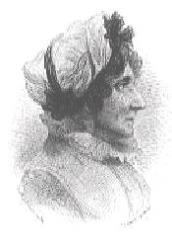
Mrs. Barbauld

1743 - 1825 Person Name: Anna Letitia Barbauld Topics: Fifteenth Sunday after Trinity Author of "Praise to God, immortal praise" in Church Book Barbauld, Anna Laetitia, née Aikin, daughter of the Rev. John Ailrin, D.D., a dissenting minister, was b. at Kibworth-Harcourt, Leicestershire, June 20, 1743. In 1753 Dr. Aikin became classical tutor at a dissenting academy at Warrington. During her residence there she contributed five hymns to Dr. W. Enfield's Hymns for Public Worship, &c, Warrington, 1772. In the following year these were included in her Poems, Lond., J. Johnson, 1773. In May, 1774, Miss Aikin was married to the Rev. Rochemont Barbauld, a descendant of a French Protestant family, and a dissenting minister. For some years Mr. Barbauld conducted, in addition to his pastoral work, a boarding school at Palgrave, Suffolk. From this he retired in 1785. In 1786 he undertook the charge of a small congregation at Hampstead, and from thence he passed to the dissenting chapel (formerly Dr. Price's) at Newington Green, in 1802. He d. Nov. 11, 1808. Mrs. Barbauld continued to reside in the neighbourhood until her death, March 9, 1825. In the latter part of the same year her niece published The Works of Anna Laetitia Barbauld, with Memoir, by Lucy Aikin, 2 vols., Lond., Longman, 1825. As a writer of hymns Mrs. Barbauld was eminently successful. Their use, however, with the exception of five contributed to Dr. W. Enfield's collection, is almost exclusively confined to the Unitarian hymnals of Great Britain and America. Including these hymnals, the whole of her hymns are still in common use. These hymns appeared thus:— i. In Dr. W. Enfield's Hymns, &c., 1772. 1. Again the Lord of life and light. Easter. 2. Awake, my soul, lift up thine eyes. Conflict. 3. Behold, where breathing love divine. Christian Charity. 4. Jehovah reigns, let every nation hear. God's Dominion. A part of this was given in Collyer's Sel., 1812, No. 586, as:— 5. This earthly globe, the creature of a day. 6. Praise to God, Immortal praise. Harvest. ii. Poems, 1773 (Preface dated Dec. 1, 1772). The whole of the above, and also:— 7. God of my life and author of my days. To God the Father. This is an “Address to the Deity," in 80 1. It is given in Martineau's Collection, 1840 and 1873. From it the following centos were given in Collyer's Selection> 1812:— 8. God, our kind Master, merciful as just. 9. If friendless in the vale of tears I stray. iii. Poems revised 1792. 10. Come, said [says] Jesus' sacred voice. Invitation. 11. How blest the sacred tie that binds. Christian Fellowship. 12. Lo where a crowd of pilgrims toil. Pilgrimage of Life. From this is taken:— 13. Our country is Immanuel's ground [land]. iv. Leisure Hour Improved (Ironbridge), 1809. 14. Sweet is the scene when virtue dies. Death. v. Supplement to the Unitarian Coll. of Kippis, Bees, and others, 1807. 15. When as returns the solemn day. Sunday. 16. Sleep, sleep to day, tormenting cares. Sunday. 17. How may earth and heaven unite. Worship. vi. Works, with Memoir, 1825. In vol. i. most of the above are reprinted, and the following are added :— 18. Joy to the followers of the Lord. Joy. (c. 1820.) 19. Pure spirit, O where art thou now. Bereavement. This is dated 1808. 20. Salt of the earth, ye virtuous few. Salt of the Earth. 21. When life as opening buds is sweet. Death. This is dated " November, 1814." The more important of these hymns are annotated in this Dictionary under their first lines. Mrs. Barbauld's Hymns in Prose for Children, originally published in 1781, were long popular and have been translated into French, Italian, Spanish, and other languages. -- John Julian, Dictionary of Hymnology (1907) =================== Barbauld, Anna L., p. 113, ii. No. 18 on p. 114, i.,should be dated circa 1820. Another hymn in common use from Mrs. Barbauld's Works, &c, 1825, is, "O Father! though the anxious fear" (E. Taylor, p. 1117, in error). --John Julian, Dictionary of Hymnology, Appendix, Part II (1907) See also in: Hymn Writers of the Church

Nicholas Brady

1659 - 1726 Topics: Fifteenth Sunday after Trinity Author of "Through all the changing scenes of life" in Church Book Nicholas Brady, the son of an officer in the Royalist army, was born in Brandon, Ireland, 1659. He studied at Westminster School, and at Christ Church College, oxford, and graduated at Trinity College, Dublin. He held several positions in the ministry, but later in life retired to Richmond Surrey, where he established a school. Here he translated some of the Psalms. Several volumes of his sermons and smaller works were published, but his chief work, like that of his co-colabourer Tate, was the "Metrical Version of Psalms." This version was authorized by King William in 1696, and has, since that time, taken the place of the earlier translation by Sternhold and Hopkins, which was published in 1562. The whole of the Psalms, with tunes, appeared in 1698, and a Supplement of Church Hymns in 1703. Of this version, which has little poetic merit, Montgomery says "It is nearly as inanimate as the former, though a little more refined." None of the "Metrical Psalms" are to be compared with the Psalms of the Prayer Book Psalter, and very few of them are worthy a place in a collection of hymns. --Annotations of the Hymnal, Charles Hutchins, 1872.

Johann Scheffler

1624 - 1677 Person Name: Joh. Scheffler Topics: Fifteenth Sunday after Trinity Sunday Author of "Bort Verden, af mit Sind og Øie" in Salmebog for Lutherske Kristne i Amerika Used Angelus Silesius as a pen name. See also Angelus Silesius, 1624-1677

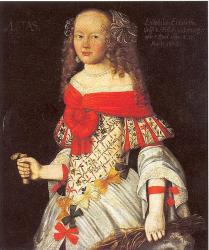
Ludämiliä Elisabeth Schwarzburg-Rudolstadt

1640 - 1672 Person Name: Ludaemillia Elisabet Topics: Hymns for the Church Year Fifteenth Sunday after Trinity Sunday; Fifteenth Sunday after Trinity Sunday High Mass Author of "Syrg, min kjære Fader, du!" in M. B. Landstads Kirkesalmebog og "Nokre Salmar" ved Professor Dr. E. Blix, samt følgende tillæg Ludämilia Elisabeth, second daughter of Count Ludwig Gunther I. of Schwarzburg-Rudolstadt, was born April 7, 1640, at the castle of Heidecksburg, near Rudolstadt, and was educated there along with her cousin Emilie Juliane (q.v.). In 1665 she went with her mother to the dowager castle of Friedensburg near Leutenberg; but after her mother's death, in 1670, she returned to Rudolstadt, where, on Dec. 20, 1671, she was formally betrothed to Count Christian Wilhelm of Schwarzburg-Sondershausen. At this time measles was raging in the district, and her eldest sister, Sophie Juliane, was seized, and died Feb. 14, 1672. By attending on her, Ludämilia and the youngest sister, Christiane Magdalene, caught the infection, and both died at Rudolstadt on March 12,1672. (Koch, iv. 50-56; Allgemeine Deutsche Biographie xix. 365-367, &c.) She received a careful and pious training, was a good Latin scholar, and well read in divinity and other branches of learning. Her hymns show her to have been of a deeply pious nature, and of intense love to Jesus. They were composed rather for her own edification than for use in public worship. Ten of them were included in the Budolstadt Gesang-Buch, 1682. They, were collected, to the number of 206, and edited by her cousin Emilie (probably assisted by A. Fritsch) as Die Stimme der Freundin, das ist: Geistliche Lieder welche, aus brünstiger und biss ans Ende beharrter Jesus Liebe verfertiget und gebraucht, &c. Rudolstadt, 1687. This was reprinted, with an introduction by W. Thilo, at Stuttgart, 1856. Three of those hymns have been translated viz.:— i. Jesus, Jesus, nichts als Jesus. [Love to Christ] 1687, No. 104, p. 312, in 5 st. of 6 1., entitled “Resignation to the Will of God." The initials of the stanzas form the word Jesus, and each stanza ends, "Herr, wie du willt." It seems to have appeared in the 2nd edition of A. Fritsch's Jesus Lieder (not in the first edition of 1668. No copy of the 2nd edition is now known), and in the 3rd edition, Jena, 1675, is No. 43, Rambach, iii. 188, gives it from the Vermehrtes Gesang-Büchlein, Halberstadt, 1673. In the Berlin Geistliche Lieder, ed. 1863. The translation in common use is :__ Jesus, Jesus, Jesus only. In full, by A. Crull, as No. 282 in the Ohio Lutheran Hymnal, 1880. Other translations are :—(1) "Jesus, Jesus, nought but Jesus, Shall my wish and," in the Supplement to German Psal., ed. 1765, p. 11. (2) "Jesus, 'tis my aim divine," by Miss Dunn, 1857, p. 107. (3) “ 'Tis Jesus that's my sole desire," by Dr. G. Walker, 1860, p. 92. (4) "Jesus, Jesus, naught but Jesus, Can my," by R. Massie, in the British Herald, July, 1865, p. 103, and in Reid's Praise Book, 1872, No. 393. (5) "Jesus, Jesus, nought but Jesus, Shall my wish be," in Cantica Sanctorum, 1880, No. 97. ii. Jesu Blut komm über mich. [Holy Communion.] A Passiontide Hymn on the Blood of Jesus. 1687, p. 45, No. 14, in 8 st. In the Blätter für Hymnologie, 1886, p. 180, it is cited as in the 2nd ed., 1679, of A. Fritsch's Himmels-Lust (1st ed., 1670, does not contain it); and as there marked "S. J. G. Z. S. V. H.," the initials of the elder sister, Sophie Juliane. Translated as:-—"Jesus' Blood come over me," as No. 448, in pt. i. of the Moravian Hymn Book, 1754. iii. Sorge, Vater! sorge du. [Morning.] 1687, No. 168, in 7 st., entitled "On Resignation to the Care of God," and founded on 1 Peter v. 7. Previously in the Rudolstadt Gesang-Buch,1682, p. 692. Translated as:—"Care, O Father, care for me," in the Monthly Packet, xiv., 1872, p. 211. [Rev. James Mearns, M.A.] --John Julian, Dictionary of Hymnology (1907)

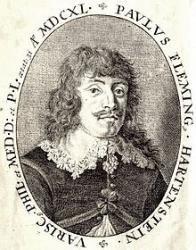
Paul Flemming

1609 - 1640 Topics: Fifteenth Sunday after Trinity Sunday Author of "I alle mine Sager" in Salmebog for Lutherske Kristne i Amerika Flemming, Paul , son of Abraham Flemming or Fleming, then schoolmaster at Hartenstein, near Zwickau, Saxony (afterwards pastor of Wechselburg, near Mittweida), was born at Hartenstein, Oct. 5 or 12, 1609. He entered the St. Thomas School, Leipzig, in 1623, and matriculated at the University of Leipzig at Michaelmas, 1626, At the University he devoted himself to the study of medicine and of poetry, being laureated as a poet in 1631, and graduating M.A. in 1632. In order to find refuge from the troubles of the Thirty Years' War he went to Holstein in 1633. In the same year he joined an embassy which Duke Friedrich of Schleswig-Holstein was about to send to his brother-in-law, the Russian Czar, as gentleman in waiting and "taster." In this expedition he was engaged from Oct. 22, 1633, to April 6, 1635. He then took part in the embassy sent by the Duke to the Shah of Persia, with the object of opening up the way for trade and Christianity into Central Asia. They set sail from Travemünde, near Lübeck, Oct. 27, 1635, and returned to Gottorf, Aug. 1, 1639. The expedition proved fruitless, and the many dangers and great hardships encountered broke Flemming's health. To qualify himself for medical practice in Hamburg he went to the University of Leyden, where he graduated M.D. in 1640; but shortly after his return to Hamburg he died there, March 25 (April 2), 1640 (Koch, iii. 73-82; Allgemeine Deutsche Biographie, vii. 115-117). Flemming was of an energetic temperament, with an ardent patriotism, and a deep love for the Evangelical Cause. He was a gifted poet, of true and deep feeling, who could write charming descriptions of the beauties of nature, and sweet and tender love songs. His secular poems, however, as a whole have the faults of the Silesian school of Martin Opitz; and it is by his hymns, and especially by his classical "In allen meinen Thaten," that his name lives. His poems were first collected by the father of his betrothed as D. P. Fleming's Teutsche Poemata, and appeared in 1642 in two editions nearly alike, one at Naumburg and Jena, the other at Lübeck. The most complete edition is that by J. M. Lappenberg, 2 vols., Stuttgart, 1865-66. Of his 41 religious poems (12 hymns, 9 odes, 20 sonnets) three have passed into English. i. In alien meinen Thaten . Trust in God. This beautiful hymn was written in November, 1633, just before he started with the embassy to Moscow (see above); and may often have cheered his own sinking spirit then and in the more trying adventures of the second embassy. It first appeared in his Teutsche Poemata , 1642 (Lübeck edition, p. 287; Lappenberg's edition, i. p. 236), as No. 4 in Book i. of the Odes, in 15 stanza of 6 1. It was included in the Stralsund Gesang-Buch, 1665, Freylinghausen's Gesang-Buch , 1704, and almost all recent collections. Sometimes, as in the Unverfalschter Liedersegen, 1851, No. 646, it is given in full, but more frequently the special stanzas appropriate for travellers (vi.-ix., xiii., xiv.) are omitted. It is characterised in Koch, viii. 379, as a "pilgrim song suited for the Christian journey which we must all in faith make through joy and sorrow to our Eternal Home." Lauxmann adds that it has often been used appropriately at weddings, was the favourite hymn of Friedrich Wilhelm III. of Prussia, and was sung at the service in the Cathedral of Berlin, July 19, 1870, on the open¬ing of the North German Diet immediately before the Franco-Prussian War. Translated as:— I leave to His good pleasure , a translation of st. i., ii., iv, by A. T. Russell, as No. 232 in his Psalms & Hymns , 1851. Other translations are : (l) “In all my plans, Thou Highest," by Dr. H. Mills, 1856, p. 167. (2) “Where'er I go, whate'er my task," by Miss Winkworth, 1858, p. 108, repeated in L. Rehfuess's Church at Sea , 1868, p. 9. (3) "In every deed and word," in Madame de Pontes's Poets & Poetry of Germany, 1858, vol. i. p. 416. His hymns not in English common use are:— ii. Ist's mőglich, dass der Haas auch kann geliebet sein. The Love of God. In the Lübeck edition, 1642, p. 555 (Lappenberg's edition, i. p. 450), as No. 16 in Book i. of the Sonnets . Translated as, "Can it then be that hate should e'er be loved," by Miss Winkworth, 1869, p. 175. iii. Lass dich nur Nights nicht tauren. Cross and Consolation. Probably written in Persia during the second embassy. In the Lübeck edition, 1642, p. 283 (Lappenberg's edition, i. p. 244), as No. 1 in Book i. of the Odes, in 3 st. of 6 l. The translations are: (1) "Only let nothing grieve thee," by Madame de Ponies, 1858, v. i. p. 415. (2) "Let nothing make thee sad or fretful," by Miss Winkworth, 1869, p. 175. [Rev. James Mearns, M.A.] - John Julian, Dictionary of Hymnology (1907)

Charles Zeuner

1795 - 1857 Person Name: Heinrich Christopher Zeuner Topics: Fifteenth Sunday after Trinity Composer of "MISSIONARY CHANT" in Evangelical Lutheran hymnal Also: Zeuner, Heinrich Christoph, 1795-1857 Zeuner, Heinrich Christopher, 1795-1857

Pages


Export as CSV
It looks like you are using an ad-blocker. Ad revenue helps keep us running. Please consider white-listing Hymnary.org or getting Hymnary Pro to eliminate ads entirely and help support Hymnary.org.