You help make Hymnary.org possible. More than 10 million people from 200+ countries found hymns, liturgical resources and encouragement on Hymnary.org in 2025, including you. Every visit affirms the global impact of this ministry.

If Hymnary has been meaningful to you this year, would you take a moment today to help sustain it? A gift of any size—paired with a note of encouragement if you wish—directly supports the server costs, research work and curation that keep this resource freely available to the world.

Give securely online today, or mail a check to:
Hymnary.org
Calvin University
3201 Burton Street SE
Grand Rapids, MI 49546

Thank you for your partnership, and may the hope of Advent fill your heart.

Person Results

Topics:proper+18
In:people

Planning worship? Check out our sister site, ZeteoSearch.org, for 20+ additional resources related to your search.
Showing 31 - 40 of 236Results Per Page: 102050

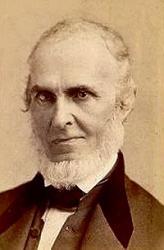
John Greenleaf Whittier

1807 - 1892 Topics: Proper 18 Year A; Proper 18 Year C Author of "O Christian, Love" in Voices United Whittier, John Greenleaf, the American Quaker poet, was born at Haverhill, Massachusetts, Dec. 17, 1807. He began life as a farm-boy and shoemaker, and subsequently became a successful journalist, editor and poet. In 1828 he became editor of the American Manufacturer (Boston), in 1830 of the New England Review, and an 1836 (on becoming Secretary to the American Anti-Slavery Society) of the Pennsylvania Freeman. He was also for some time, beginning with 1847, the corresponding editor of the National Era. In 1840 he removed to Amesbury, Massachusetts, where most of his later works have been written. At the present time [1890] he lives alternately at Amesbury and Boston. His first poetical piece was printed in the Newburyport Free Press in 1824. Since then his publications have been numerous, including:— Voices of Freedom, 1833; Songs of Labour, and other Poems, 1850; Ballads and other Poems, London, 1844; The Panorama, and other Poems, 1856; In War Time, 1863; Occasional Poems, 1865; Poetical Works, 1869; Complete Poetical Works, 1876; The Bay of the Seven Islands, and other Poems, 1883, &c. From his numerous poems the following hymns have been compiled, and have come into common use, more especially amongst the American Unitarians:— 1. All as God wills, Who wisely heeds. Trust. This begins with stanza xi. of Whittier's poem, "My Psalm." in his workThe Panorama, and other Poems, 1856 (Complete Poetical Works, Boston, 1876, p. 179), and is given in Lyra Sacra Americana , 1868; Border's Congregational Hymns, 1884, &c. 2. All things are Thine: no gift have we. Opening of a Place of Worship. Written for the Opening of Plymouth Church, Minnesota, 1872 ( Complete Poetical Works , p. 281). In Horder's Congregational Hymns, 1884. 3. Another hand is beckoning us. Bereavement. From his poem " Gone," written in 1845 (Complete Poetical Works, p. 106). In Horder's Congregational Hymns, 1884. 4. Dear Lord and Father of mankind. Calmness in God desired. From his poem “The Brewing of Soma," beginning with stanza xii. (Complete Poetical Works p. 266). In Horder's Congregational Hymns, 1884. 5. God giveth quietness at last. Death and Burial. This begins with stanza xvii. of his poem, “The Singer," written in 1871 (Author's MS.), and included in the Complete Poetical Works, 1876, p. 265. In Martineau's Hymns, 1875. 6. Hast thou, 'midst life's empty noises. The Purpose of Life. Written in 1842. It is in Longfellow and Johnson's Unitarian Book of Hymns, Boston, 1846, and several other later American collections. Also in Lyra Sacra Americana, 1864. 7. I ask not now for gold to gild. Resignation. From his poem "The Wish of To-Day." Written in 1848 (Author's MS.). In Hedge and Huntingdon's Unitarian Hymns for the Church of Christ, Boston, 1853; the Laudes Domini, 1884, and other collections. 8. Immortal love, for ever full. The Love of Jesus. This poem, entitled “Our Master," appeared in Whittier's work, The Panorama, and other Poems, 1856, in 35 stanzas of 4 lines; in Schaff’s Christ in Song, 1869-70, p. 117; and in the Complete Poetical Works, 1876, p. 231, and others. From this poem the following centos have come into common use:— (1) Immortal love for ever full. In the 1890 edition of the Hymnal Companion and others. (2) 0 Lord and Master of us all. Begins with stanza xvi. (3) 0 Love! O Life! our faith and sight. Begins with stanza xxiv. In several American hymnals, including the Unitarian Hymn [and Tune Book ], Boston, 1868, and others. (4) Our Friend, our Brother, and our Lord. Begins with stanza xxxiv. In Horder's Congregational Hymns, 1884, &c. (5) We faintly hear, we dimly see. Begins with stanza xxvi. In Barrett's Congregational Church Hymnal, 1887. (6) We may not climb the heavenly steeps. Begins with stanza v. In Laudes Domini, 1884; the Primitive Methodist Hymnal, 1887, &c. The use of these centos shows that the hymnic element in the original poem is of a high and enduring order. 9. It may not be our lot to wield. Duty and its Reward. This begins with stanza iv. of his poem "Seedtime and Harvest." Written circa 1850 (Author's MS.). Given in his Complete Poetical Works, p. 114. The hymn is in Laudes Domini, 1884, and other American collections. 10. May freedom speed onward, wherever the blood. Freedom. In the 1848 Supplement to the Boston Book of Hymns, Boston, No. 582, Hymns of the Spirit, 1864, and other collections. In Whittier's Poetical Works, Boston, 1869, p. 68, it is given as, “Right onward, O speed it! Wherever the blood”. 11. Now is the seed-time; God alone. Self-Sacrifice. In the Boston Hymns of the Spirit, 1864, No. 683. 12. 0 backward-looking son of time. New and Old. This begins with stanza xix. of his poem "The Reformer," and is given in this form in the Boston Hymns for the Church of Christ, Boston, 1853, No. 835, and again in later collections. In full in the Complete Poetical Works, p. 78. 13. 0 beauty, old yet ever new. The Law of Love. This in the Boston Hymns of the Spirit, 1864, begins with stanza xxi. of his poem on “The Shadow and the Light,” given in full in the Complete Poetical Works , p. 173. 14. 0 fairest-born of love and light. American National Hymn. This is from his poem "Democracy," which is dated "Election Day, 1843," and is in his Ballads and other Poems, London, 1844, p. 214, and his Complete Poetical Works, p. 82. 15. 0, he whom Jesus loves has truly spoken. True Worship. This in the 1848 Supplement to the Boston Book of Hymns, 1848, No. 578, begins with stanza xi. of his poem on “Worship," given in full in his Complete Poetical Works, p. 96. The poem is dated by the Author, 1848 (Author's MS.). 16. 0 holy Father, just and true. Freedom. "Lines written for the Celebration of the third Anniversary of British Emancipation at the Broadway Tabernacle, N. Y., First of August, 1837." (Complete Poetical Works, p. 47.) It was included in the Unitarian Christian Hymns, Boston, 1844, and has been repeated in later collections. 17. 0 Maker of the Fruits and Flowers. Flower Services. This begins with stanza iv. of his "Lines for the Agricultural and Horticultural Exhibition at Amesbury and Salisbury, Sep. 28, 1858," as given in his Complete Poetical Works , p. 183. It is in the Boston Hymns of the Spirit, 1864, and as "O Painter of the fruits and flowers," in Horder's Congregational Hymns, 1884. 18. O not alone with outward sign. Divine Invitation. This begins with stanza ii. of his poem, "The Call of the Christian," given in his Ballads and other Poems, London, 1844, p. 185, and his Complete Poetical Works, p. 73. The hymn appeared in the Boston Book of Hymns, 1846, and again in later collections. 19. O pure Reformers, not in vain. Freedom. This begins with stanza xii. of his poem "To the Reformers of England," as given in his Complete Poetical Works, p. 77. The hymn was included in the Boston Book of Hymns, 1846, and has been repeated in later collections. 20. O sometimes gleams upon our sight. Old and New. This is taken from his poem "The Chapel of the Hermits," 1852 (in 94 stanzas of 4 lines), and begins with stanza xi. (Comp. Poetical Works, p. 115.) The cento was given in the Boston Hymns of the Spirit, 1864, and repeated in later collections. 21. O Thou, at Whose rebuke the grave. Mercy. This was given in the Boston Book of Hymns, 1848, No. 44l. 22. O [God] Thou, Whose presence went before. National Hymn. This hymn is dated by the author 1834 (Author's MS.), and was written for the Anti-slavery Meeting at Chatham Street Chapel, New York, "on the 4th of the 7th month, 1831." It is No. 750 in the Unitarian Christian Hymns, 1844. It is sometimes given as “0 God, whose presence went before." 23. 0, what though our feet may not tread where Christ trod. Presence of Christ's Spirit. The author dates this 1837 (Author's MS.). It is No. 150 in the Boston Book of Hymns, 1846. In their Hymns of the Spirit, 1864, No. 652, it begins: "0, wherefore the dream of the earthly abode." Both centos are from his poem “Poledom." 24. Shall we grow weary in our watch? Patience, or Resignation. This begins with stanza x. of his poem "The Cypress-Tree of Ceylon." (Complete Poetical Works, p. 84.) This form of the text was given in the Boston Book of Hymns, 1846, No. 278, in 7 stanzas of 4 lines, and again in Horder's Congregational Hymns, 1884, in 3 stanzas. 25. Sport of the changeful multitude. Persecution. This begins with line 6 of stanza x. of his poem "Ezekiel," and was given in the Boston Hymns of the Spirit, 1864, No. 65lines In full in Complete Poetical Works, p. 67. 26. The green earth sends its incense up. Worship of Nature. The author dates this 1845 (Author's MS.). It is from his poem “The Worship of Nature," and was given in this form in the Boston Hymns for the Church of Christ, 1853, No. 193. The cento "The harp at Nature's advent strung," in the Unitarian Hymn [and Tune] Book, Boston, 1868, No. 195, is from the same poem. The cento No. 321 in the Boston Hymns of the Spirit, 1864, is also (altered) from this poem. 27. The path of life we walk today. The Shadowing Rock. This in the Boston Hys. of the Spirit, 1864, begins with stanza i. of his poem on "The Rock in El Gh'or," which the author dates 1859 (Author's MS.). In full in Complete Poetical Works, p. 180. 28. Thine are all the gifts, 0 God. Children's Missions, or Ragged Schools. Written for the Anniversary of the Children's Mission, Boston, 1878. It is given in Horder's Congregational Hymns, 1884. 29. Thou hast fallen in thine armour. Death. From his poem "To the memory of Charles B. Storrs, late President of Western Reserve College," published in his Ballads and other Poems, London, 1844, p. 84. Dated by the author 1835 (Author's MS.). Abridged form in the Hymns of the Spirit, 1864. 30. To-day, beneath Thy chastening eye. Seeking Rest. This begins with stanza iv. of his poem, "The Wish of To-Day," dated by the author 1847 (Author's MS.), and given in full in his Complete Poetical Works, p. 114. The cento is in Martineau's Hymns, 1873, and others. 31. We see not, know not; all our way. Resignation. "Written at the opening of the Civil War, 1861" (Author's MS.), and included in his In War Time, 1863, and his Complete Poetical Works, p. 190. In full in the Prim. Methodist Hymnal, 1887. 32. When on my day of life the night is falling. Old Age. Written in 1882 (Author's MS.), and included in his work The Bay of the Seven Islands, and other Poems, 1883. In Horder's Congregational Hymns, 1884. 33. With silence only as their benediction. Death. 1845. "Written on the death of Sophia Sturge, sister of Joseph Sturge, of Birmingham, England" (Author's MS.). It is in several collections, including Martineau's Hymns, &c, 1873; Horder's Congregational Hymns, 1884, and others. Notwithstanding this extensive use of portions of Mr. Whittier's poems as hymns for congregational use, he modestly says concerning himself: "I am really not a hymn-writer, for the good reason that I know nothing of music. Only a very few of my pieces were written for singing. A good hymn is the best use to which poetry can be devoted, but I do not claim that I have succeeded in composing one." (Author's MS.) We must add, however, that these pieces are characterized by rich poetic beauty, sweet tenderness, and deep sympathy with human kind. -- John Julian, Dictionary of Hymnology (1907) ======================== Whittier, J. G, p. 1277, i. In addition to the large number of this author's hymns already annotated from his own manuscript, the following have also come into use, mainly in the form of centos from his poems, during the past ten years:— i. From Poems, 1850:— 1. O brother man! Fold to thy heart thy brother. [Brotherly Love.] From his poem, “Worship." Written in 1848, and published in Poems, 1850. ii. From Songs of Labour, and Other Poems, 1850;— 2. Bowed down in lowliness of min. [Resignation.] From the poem “The Wish of To-day." iii. From The Chapel of the Hermits, and Other Poems, 1853:— 3. O, sometimes glimpses on our sight. [Light in Darkness.] First published in The National Era, 1851, and again as above, 1853. In The Pilgrim Hymnal, N.Y. 1904, it begins " 0 sometimes gleams upon our sight," and in Hymns of the Ages, 1904, "Yet sometimes glimpses on my sight"; see p. 1277, ii. 20. iv. From The Panorama, and Other Poems, 1856:— 4. Thou, 0 most compassionate. [Divine Compassion.] This cento is from the poem "My Dream," and is dated 1855. v. From Home Ballads and Poems, 1860:— 5. I mourn no more my vanished years. [Life's Review.] A cento from "My Psalm," dated 1859, opening with st. i. 6. No longer forward nor behind. This begins with st. iii. of "My Psalm." 7. O hearts of love, O souls that turn. [Life from, Christ.] A cento from the poem, "The Overheart." 8. O Love Divine, Whose constant beam. [Divine Love Universal.] From the poem, "The Shadow and the Light." The form in which it is given in The Pilgrim Hymnal, 1904, first appeared in The Independent, Nov. 1860. 9. Once more the liberal year laughs out. [Autumn.] From his "For an Autumn Festival," 1859. vi. From In War Time, and Other Poems, 1864:— 10. I can only urge the plea. [Cry for Mercy.] A cento from “Andrew Rykman’s Prayer,” dated 1863. 11. What Thou wilt, O Father, give. Also from “Andrew Kykman's Prayer." vii. From The Tent on the Beach, and Other Poems, 1867:— 12. I bow my forehead to [in] the dust. St. ix., &c. 13. I know not what the future hath. St. xvi., &c. 14. I long for household voices gone. St. xv., &c. 15. I see the wrong that round me lies. St. x., &c. 16. Who fathoms the Eternal Thought. St. iv., &c. 17. Yet, in the maddening maze of things. St. xi., &c. These centos are taken from the poem, "The Eternal Goodness," which is dated 1865. viii. From Among the Hills, and Other Poems, 1869:— 18. For ever round the mercy-seat. [God's Love and Man's Unfaithfulness.] From the poem, “The Answer." ix. From The Pennsylvania Pilgrim, and Other Poems, 1873:— 19. Best for the weary hands is good. [Daily Renewal.] This is from "My Birthday," which appeared in the Atlantic Monthly, 1871, and again as above, 1873. x. From Hazel Blossoms, 1875:— 20. All things [gifts] are Thine, p. 1277, i. 2. The church for which this was written, in 1873, was Plymouth Church, St. Paul, Minn. The hymn was included in Hazel Blossoms, 1875. 21. We need love's tender lessons taught. [Love.] From Child-Songs," in Hazel Blossoms, opening with st. ix. xi. From The Bay of the Seven Islands, 1883:— 22. As from the lighted hearths behind me. [Anticipation of the Future.] This begins with st. iii. of the poem, "What the Traveller said at Sunset." xii. Additional Notes:— 23. Lord, for the things we see. [Public Gatherings.] This hymn is from "Poledom," 1837. 24. Not always as the whirlwind's rush. [Call to the Ministry.] Published in The Poetical Writings, 1857, Vol. i., p. 254, and again in the Oxford edition of his Poetical Works, 1904, p. 455. It is dated 1833. 25. Sound over all waters, [The Coming Kingdom.) This, in Horder's Worship Song, 1905, is from Whittier's Complete Poetical Works, Boston, 1876, p. 280, where it is dated 1873. 26. Take courage, Temperance workers. [Temperance.] Mr. Pickard, Whittier's literary executor, cannot trace this hymn in any of the author's writings, and we also are at fault. 27. The harp at Nature's advent strung. [Nature's acknowledgement of God.] Dr. Charles L. Noyes, one of the editors of The Pilgrim Hymnal, 1904, writes us concerning this hymn: "It was first published in its present form [as in the American hymn-books] in 1867 in The Tent on the Beach." But a hymn almost identical was written when Whittier was in his teens, and published in the Haverhill Gazette, October 5, 1827. The same poem appeared in The Palladium, 1829. It was revised for The Tent on the Beach, 1867 (p. 1278, i. 26). 28. We see not, know not; all our way, p. 1278, i. 31. This hymn, written in 1861, first appeared in the Atlantic Monthly, 1862, vol. 10, p. 235. 29. Wherever through the ages rise. [Love is universal.] Opens with line 1 of a section in the poem "Miriam," in Miriam, and Other Poems, 1871, p. 13. 30. Who calls Thy glorious service hard? [Duty.] This begins with st. iii. of his poem "Seedtime and Harvest," noted on p. 1277, ii. 9. 31. O Lord and Father of mankind. This is a slightly altered form of "Dear Lord and Father of mankind." p. 1277, i. 4. The poem, “Our Master," stated on p. 1277, i., No. 8, as having appeared in The Panorama, 1856, in error, was given in The Tent on the Beach, and Other Poems, Boston, 1867, pp. 143-152. In compiling the foregoing, we have been materially assisted by Mr. Pickard, the poet's literary executor, and the Rev. Dr. Charles L. Noyes, of Somerville, Mass. Whittier died at Hampton Falls, New Hampshire, Sep. 7, 1892. --John Julian, Dictionary of Hymnology, New Supplement (1907) ======================= See also in: Hymn Writers of the Church

J. M. Neale

1818 - 1866 Person Name: John Mason Neale, 1818-1866 Topics: Year A Proper 18; Year B Proper 18 Author of "Come, ye faithful, raise the anthem" in Complete Anglican Hymns Old and New John M. Neale's life is a study in contrasts: born into an evangelical home, he had sympathies toward Rome; in perpetual ill health, he was incredibly productive; of scholarly tem­perament, he devoted much time to improving social conditions in his area; often ignored or despised by his contemporaries, he is lauded today for his contributions to the church and hymnody. Neale's gifts came to expression early–he won the Seatonian prize for religious poetry eleven times while a student at Trinity College, Cambridge, England. He was ordained in the Church of England in 1842, but ill health and his strong support of the Oxford Movement kept him from ordinary parish ministry. So Neale spent the years between 1846 and 1866 as a warden of Sackville College in East Grinstead, a retirement home for poor men. There he served the men faithfully and expanded Sackville's ministry to indigent women and orphans. He also founded the Sisterhood of St. Margaret, which became one of the finest English training orders for nurses. Laboring in relative obscurity, Neale turned out a prodigious number of books and artic1es on liturgy and church history, including A History of the So-Called Jansenist Church of Holland (1858); an account of the Roman Catholic Church of Utrecht and its break from Rome in the 1700s; and his scholarly Essays on Liturgiology and Church History (1863). Neale contributed to church music by writing original hymns, including two volumes of Hymns for Children (1842, 1846), but especially by translating Greek and Latin hymns into English. These translations appeared in Medieval Hymns and Sequences (1851, 1863, 1867), The Hymnal Noted (1852, 1854), Hymns of the Eastern Church (1862), and Hymns Chiefly Medieval (1865). Because a number of Neale's translations were judged unsingable, editors usually amended his work, as evident already in the 1861 edition of Hymns Ancient and Modern; Neale claimed no rights to his texts and was pleased that his translations could contribute to hymnody as the "common property of Christendom." Bert Polman ======================== Neale, John Mason, D.D., was born in Conduit Street, London, on Jan. 24, 1818. He inherited intellectual power on both sides: his father, the Rev. Cornelius Neale, having been Senior Wrangler, Second Chancellor's Medallist, and Fellow of St. John's College, Cambridge, and his mother being the daughter of John Mason Good, a man of considerable learning. Both father and mother are said to have been "very pronounced Evangelicals." The father died in 1823, and the boy's early training was entirely under the direction of his mother, his deep attachment for whom is shown by the fact that, not long before his death, he wrote of her as "a mother to whom I owe more than I can express." He was educated at Sherborne Grammar School, and was afterwards a private pupil, first of the Rev. William Russell, Rector of Shepperton, and then of Professor Challis. In 1836 he went up to Cambridge, where he gained a scholarship at Trinity College, and was considered the best man of his year. But he did not inherit his father's mathematical tastes, and had, in fact, the greatest antipathy to the study; and as the strange rule then prevailed that no one might aspire to Classical Honours unless his name had appeared in the Mathematical Tripos, he was forced to be content with an ordinary degree. This he took in 1840; had he been one year later, he might have taken a brilliant degree, for in 1841 the rule mentioned above was rescinded. He gained, however, what distinctions he could, winning the Members' Prize, and being elected Fellow and Tutor of Downing College; while, as a graduate, he won the Seatonian Prize no fewer than eleven times. At Cambridge he identified himself with the Church movement, which was spreading there in a quieter, but no less real, way than in the sister University. He became one of the founders of the Ecclesiological, or, as it was commonly called, the Cambridge Camden Society, in conjunction with Mr. E. J. Boyce, his future brother-in-law, and Mr. Benjamin Webb, afterwards the well-known Vicar of St. Andrew's, Wells Street, and editor of The Church Quarterly Review. In 1842 he married Miss Sarah Norman Webster, the daughter of an evangelical clergyman, and in 1843 he was presented to the small incumbency of Crawley in Sussex. Ill health, however, prevented him from being instituted to the living. His lungs were found to be badly affected; and, as the only chance of saving his life, he was obliged to go to Madeira, where he stayed until the summer of 1844. In 1846 he was presented by Lord Delaware to the Wardenship of Sackville College, East Grinstead. This can hardly be considered as an ecclesiastical preferment, for both his predecessor and his successor were laymen. In fact the only ecclesiastical preferment that ever was offered to him was the Provostship of St. Ninian's, Perth. This was an honourable office, for the Provostship is equivalent to a Deanery in England, but it was not a lucrative one, being worth only £100 a year. He was obliged to decline it, as the climate was thought too cold for his delicate health. In the quiet retreat of East Grinstead, therefore, Dr. Neale spent the remainder of his comparatively short life, dividing his time between literary work, which all tended, directly or indirectly, to the advancement of that great Church revival of which he was so able and courageous a champion, and the unremitting care of that sisterhood of which he was the founder. He commenced a sisterhood at Rotherfield on a very small scale, in conjunction with Miss S. A. Gream, daughter of the rector of the parish; but in 1856 he transferred it to East Grinstead, where, under the name of St. Margaret's, it has attained its present proportions. Various other institutions gradually arose in connection with this Sisterhood of St. Margaret's, viz., an Orphanage, a Middle Class School for girls, and a House at Aldershot for the reformation of fallen women. The blessing which the East Grinstead Sisters have been to thousands of the sick and suffering cannot here be told. But it must be mentioned that Dr. Neale met with many difficulties, and great opposition from the outside, which, on one occasion, if not more, culminated in actual violence. In 1857 he was attending the funeral of one of the Sisters at Lewes, when a report was spread that the deceased had been decoyed into St. Margaret's Home, persuaded to leave all her money to the sisterhood, and then purposely sent to a post in which she might catch the scarlet fever of which she died. To those who knew anything of the scrupulously delicate and honourable character of Dr. Neale, such a charge would seem absurd on the face of it; but mobs are not apt to reflect, and it was very easy to excite a mob against the unpopular practices and sentiments rife at East Grinstead; and Dr. Neale and some Sisters who were attending the funeral were attacked and roughly handled. He also found opponents in higher quarters; he was inhibited by the Bishop of the Diocese for fourteen years, and the Aldershot House was obliged to be abandoned, after having done useful work for some years, in consequence of the prejudice of officials against the religious system pursued. Dr. Neale's character, however, was a happy mixture of gentleness and firmness; he had in the highest degree the courage of his convictions, which were remarkably definite and strong; while at the same time he maintained the greatest charity towards, and forbearance with, others who did not agree with him. It is not surprising, therefore, that he lived all opposition down; and that, while from first to last his relations with the community at East Grinstead were of the happiest description, he was also, after a time, spared any molestation from without. The institution grew upon his hands, and he became anxious to provide it with a permanent and fitting home. His last public act was to lay the foundation of a new convent for the Sisters on St. Margaret's Day (July 20), 1865. He lived long enough to see the building progress, but not to see it completed. In the following spring his health, which had always been delicate, completely broke down, and after five months of acute suffering he passed away on the Feast of the Transfiguration (Aug. 6), 1866, to the bitter regret of the little community at East Grinstead and of numberless friends outside that circle. One trait of his singularly lovable character must not pass unnoticed. His charity, both in the popular and in the truer Christian sense of the word, was unbounded; he was liberal and almost lavish with his money, and his liberality extended to men of all creeds and opinions; while it is pleasing to record that his relations with his ecclesiastical superiors so much improved that he dedicated his volume of Seatonian Poems to the bishop of the diocese. If however success in life depended upon worldly advantages, Dr. Neale's life would have to be pronounced a failure; for, as his old friend, Dr. Littledale, justly complains, "he spent nearly half his life where he died, in the position of warden of an obscure Almshouse on a salary of £27 a year." But, measured by a different standard, his short life assumes very different proportions. Not only did he win the love and gratitude of those with whom he was immediately connected, but he acquired a world-wide reputation as a writer, and he lived to see that Church revival, to promote which was the great object of his whole career, already advancing to the position which it now occupies in the land of his birth. Dr. Neale was an industrious and voluminous writer both in prose and verse; it is of course with the latter class of his writings that this sketch is chiefly concerned; but a few words must first be said about the former. I.— Prose Writings.— His first compositions were in the form of contributions to The Ecclesiologist, and were written during his graduate career at Cambridge. Whilst he was in Madeira he began to write his Commentary on the Psalms, part of which was published in 1860. It was afterwards given to the world, partly written by him and partly by his friend, Dr. Littledale, in 4 vols., in 1874, under the title of A Commentary on the Psalms, from Primitive and Mediaeval Writers. This work has been criticised as pushing the mystical interpretation to an extravagant extent. But Dr. Neale has anticipated and disarmed such criticism by distinctly stating at the commencement that "not one single mystical interpretation throughout the present Commentary is original;" and surely such a collection has a special value as a wholesome correction of the materialistic and rationalistic tendencies of the age. His next great work, written at Sackville College, was The History of the Holy Eastern Church. The General Introduction was published in 1847; then followed part of the History itself, The Patriarchate of Alexandria, in 2 vols.; and after his death another fragment was published, The History of the Patriarchate of Antioch, to which was added, Constantius's Memoirs of the Patriarchs of Antioch, translated from the Greek, edited by the Rev. G. Williams, 1 vol. The whole fragment was published in 5 vols. (1847-1873). The work is spoken very highly of, and constantly referred to, by Dean Stanley in his Lectures on the History of the Eastern Church. Dr. Neale was naturally in strong sympathy with the struggling Episcopal Church of Scotland, and to show that sympathy he published, in 1856, The Life and Times of Patrick Torry, D.D., Bishop of St. Andrews, &c, with an Appendix on the Scottish Liturgy. In the same direction was his History of the so-called Jansenist Church in Holland, 1858. Next followed Essays on Liturgiology and Church History, with an Appendix on Liturgical Quotations from the Isapostolical Fathers by the Rev. G. Moultrie, 1863, a 2nd edition of which, with an interesting Preface by Dr. Littledale, was published in 1867. It would be foreign to the purpose of this article to dwell on his other prose works, such as his published sermons, preached in Sackville College Chapel, his admirable little devotional work, Readings for the Aged, which was a selection from these sermons; the various works he edited, such as the Tetralogia Liturgica, the Sequentiae ex Missalibus Germanicis, Anglicis, Gallicis, aliisque Medii Aevi Collectae; his edition of The Primitive Liturgies of S. Mark, S. Clement, S. James, S. Chrysostom and S. Basil, with a Preface by Dr. Littledale; his Translation of the same; his many stories from Church History, his Voices from the East, translated from the Russ, and his various articles contributed to the Ecclesiologist, The Christian Remembrance, The Morning Chronicle, and The Churchman's Companion. It is time to pass on to that with which we are directly concerned. II. —Poetical Writings.— As a sacred poet, Dr. Neale may be regarded under two aspects, as an original writer and as a translator. i. Original Writer.—Of his original poetry, the first specimen is Hymns for Children, published in 1842, which reached its 10th edition the year after his death. It consists of 33 short hymns, the first 19 for the different days of the week and different parts of the day, the last 14 for the different Church Seasons. This little volume was followed in 1844 by Hymns for the Young, which was intended to be a sequel to the former, its alternative title being A Second Series of Hymns for Children; but it is designed for an older class than the former, for young people rather than for children. The first 7 hymns are "for special occasions," as "on goiug to work," “leaving home” &c.; the next 8 on "Church Duties and Privileges," "Confirmation," "First Holy Communion," &c, the last 13 on "Church Festivals,” which, oddly enough, include the Four Ember Seasons, Rogation Days, and the Sundays in Advent. In both these works the severe and rigid style, copied, no doubt, from the old Latin hymns, is very observable. Perhaps this has prevented them from being such popular favourites as they otherwise might have been; but they are quite free from faults into which a writer of hymns for children is apt to fall. They never degenerate into mere prose in rhyme; and in every case the purity as well as the simplicity of their diction is very remarkable. In the same year (1844) he also published Songs and Ballads for Manufacturers, which were written during his sojourn in Madeira, and the aim of which (he tells us) was "to set forth good and sound principles in metaphors which might, from their familiarity, come home to the hearts of those to whom they were addressed." They are wonderfully spirited both in matter and manner, and their freedom of style is as remarkable as the rigidity of the former works. They were followed eleven years later (1855) by a similar little work entitled Songs and Ballads for the People. This is of a more aggressive and controversial character than the previous ones, dealing boldly with such burning questions as "The Teetotallers," "Why don't you go to Meeting?" &c. Passing over the Seatonian Poems, most of which were of course written before those noticed above, we next come to the Hymns for the Side, which is a fitting companion to the Readings for the Aged, and then to Sequences, Hymns, and other Ecclesiastical Verses, which was published just after the author's death (1866), and may be regarded as a sort of dying legacy to the world. In fact, the writer almost intimates as much in the preface, where he speaks of himself as "one who might soon be called to have done with earthly composition for ever." Many of the verses, indeed, were written earlier, "forty years ago," he says, which is evidently intended for twenty. The preface is dated "In the Octave of S. James, 1866," and within a fortnight, on the Feast of the Transfiguration, “the veil” (to use the touching words of his old friend, Dr. Littledale) "was withdrawn from before his eyes, and the song hushed on earth is now swelling the chorus of Paradise." Was it an accident that these verses dwell so much on death and the life beyond the grave? or did the coming event cast its shadow before? Not that there is any sadness of tone about them; quite the reverse. He contemplates death, but it is with the eye of a Christian from whom the sting of death has been removed. Most of the verses are on subjects connected with the Church Seasons, especially with what are called the "Minor Festivals:" but the first and last poems are on different subjects. The first, the "Prologue," is "in dear memory of John Keble, who departed on Maundy Thursday, 1866, "and is a most touching tribute from one sacred poet to another whom he was about to follow within a few months to the "land that is very far off." The last is a poetical version of the legend of "the Seven Sleepers of Ephesus," and is, the writer thinks, "the first attempt to apply to primitive Christianity that which is, to his mind, the noblest of our measures." That measure is the hexameter, and undoubtedly Dr. Neale employed it, as he did all his measures, with great skill and effect; but it may be doubted whether the English language, in which the quantities of syllables are not so clearly defined as in Latin and Greek, is quite adapted for that measure. Throughout this volume, Dr. Neale rises to a far higher strain than he had ever reached before. ii. Translations.— It is in this species of composition that Dr. Neale's success was pre-eminent, one might almost say unique. He had all the qualifications of a good translator. He was not only an excellent classical scholar in the ordinary sense of the term, but he was also positively steeped in mediaeval Latin. An anecdote given in an appreciative notice by "G. M." [Moultrie] happily illustrates this:— Dr. Neale "was invited by Mr. Keble and the Bishop of Salisbury to assist them with their new hymnal, and for this purpose he paid a visit to Hursley Parsonage." On one occasion Mr. Keble "having to go to another room to find some papers was detained a short time. On his return Dr. Neale said, ‘Why, Keble, I thought you told me that the "Christian Year" was entirely original.' ‘Yes,' he answered, 'it certainly is.' ‘Then how comes this?' and Dr. Neale placed before him the Latin of one of Keble's hymns. Keble professed himself utterly confounded. He protested that he had never seen this 'original,' no, not in all his life. After a few minutes Neale relieved him by owning that he had just turned it into Latin in his absence." Again, Dr. Neale's exquisite ear for melody prevented him from spoiling the rhythm by too servile an imitation of the original; while the spiritedness which is a marked feature of all his poetry preserved that spring and dash which is so often wanting in a translation. (i.) Latin.— Dr. Neale's translations from the Latin include (1.) Mediaeval Hymns and Sequences (1851). He was the, first to introduce to the English reader Sequences, that is, as he himself describes them, " hymns sung between the Epistle and Gospel in the Mass," or, as he explains more definitely, "hymns whose origin is to be looked for in the Alleluia of the Gradual sung between the Epistle and the Gospel." He was quite an enthusiast about this subject:— "It is a magnificent thing,” he says, "to pass along the far-stretching vista of hymns, from the sublime self-containedness of S. Ambrose to the more fervid inspiration of S. Gregory, the exquisite typology of Venantius Fortunatus, the lovely painting of St. Peter Damiani, the crystal-like simplicity of S. Notker, the scriptural calm of Godescalcus, the subjective loveliness of St. Bernard, till all culminate in the full blaze of glory which surrounds Adam of S. Victor, the greatest of them all." Feeling thus what a noble task he had before him, it is no wonder that he spared no pains over it, or that he felt it his duty to adopt "the exact measure and rhyme of the original, at whatever inconvenience and cramping." That he succeeded in his difficult work, the verdict of the public has sufficiently proved. Of all the translations in the English language no one has ever been so popular as that of the Hora Novissima, in this volume, afterwards (1858) published separately, under the title of the Rhythm of Bernard de Morlaix, Monk of Cluny. Some original hymns may be as well known as "Jerusalem the Golden," "For thee, O dear, dear country," or "Brief life is here our portion,” but it would be hard to find any translations which come near them for extensive use. A second edition of the Mediaeval Hymns, much improved, came out in 1863, and a third, "with very numerous additions and corrections," in 1867. (2.) We next come to the Hymnal Noted, in which 94 out of the 105 hymns are the work of Dr. Neale. These are all translations from the Latin. The first part appeared in 1852, the second in 1854. Dr. Neale has himself given us an interesting account of his connection with this work:— "Some," he writes, "of the happiest and most instructive hours of my life were spent in the Sub-Committee of the Ecclesiological Society, appointed for the purpose of bringing out the Second Part of the Hymnal Noted It was my business to lay before them the translations I had prepared, and theirs to correct. The study which this required drew out the beauties of the original in a way which nothing else could have done, and the friendly collisions of various minds elicited ideas which a single translator would in all probability have missed." Preface, Mediaeval Hymns & Sequences (3.) The last volume of translations from the Latin published by Dr. Neale appeared in 1865, under the title of Hymns, chiefly Mediaeval, on the Joys and Glories of Paradise. It was intended to be a companion volume to the Rhythm of Bernard of Cluny. In this work the writer gives the general reader an opportunity of comparing the translation with the original by printing the two together in parallel pages. Before quitting the subject of Dr. Neale's translations from the Latin, it is only fair to notice that while they have been almost universally accepted by the English Church, and some of them adopted by dissenting congregations, they called down upon the translator a storm of indignation from an opposite quarter. The Roman Catholics accused him of deliberate deception because he took no pains to point out that he had either softened down or entirely ignored the Roman doctrines in those hymns. So far, they said, as the originals were concerned, these translations were deliberate misrepresentations. As however the translations were intended for the use of the Anglican Church, it was only to be expected that Neale should omit such hymns or portions of hymns as would be at variance with her doctrines and discipline. (ii.) Greek.— Dr. Neale conferred even a greater boon upon the lovers of hymnology than by his translations from the Latin, when he published, in 1862, his Hymns of the Eastern Church. In his translations from the Latin he did what others had done before; but in his translations from the Greek he was opening entirely new ground. "It is," he says in his preface to the first edition, "a most remarkable fact, and one which shows how very little interest has been hitherto felt in the Eastern Church, that these are literally, I believe, the only English versions of any part of the treasures of Oriental Hymnology." As early as 1853 he had printed a few of his versions in The Ecclesiastic, but it was not till the appearance of the complete volume that the interest of the general public was awakened in them. Then they became wonderfully popular. His translations "Christian, dost thou see them?" "The day is past and over," "'Tis the day of Resurrection," and his Greek-inspired "Art thou weary," and "O happy band of pilgrims," are almost as great favourites as "Jerusalem the golden," and the first in his Hymns of the Eastern Church, "Fierce was the wild billow," deserves to be. Dr. Neale had a far more difficult task before him when he undertook these Greek hymns than he had with the Latin, and he appeals to the reader "not to forget the immense difficulty of an attempt so perfectly new as the present, when I have had no predecessors and therefore could have no master." That difficulty in comparison with the Latin cannot be better stated than in his own words:— "Though the superior terseness and brevity of the Latin hymns renders a translation which shall represent those qualities a work of great labour, yet still the versifier has the help of the same metre; his version may be line for line; and there is a great analogy between the collects and the hymns, most helpful to the translator. Above all, we have examples enough of former translation by which we may take pattern. But in attempting a Greek canon, from the fact of its being in prose (metrical hymns are unknown) one is all at sea. What measure shall we employ? Why this more than that? Might we attempt the rhythmical prose of the original, and design it to be chanted? Again, the great length of the canons renders them un suitable for our churches as wholes. Is it better simply to form centos of the more beautiful passages? or can separate odes, each necessarily imperfect, be employed as separate hymns? . . . My own belief is that the best way to employ Greek hymnology for the uses of the English Church would be by centos." That, in spite of these difficulties, Dr. Neale succeeded, is obvious. His Greek hymns are, indeed, adaptations rather than translations; but, besides their intrinsic beauty, they at any rate give some idea of what the Greek hymn-writers were. In this case, as in his translations from the Latin, he omitted what he held was not good from his Anglican point of view, e.g., the Doxologies to the Blessed Virgin Mary. One point strikes us as very remarkable in these hymns, and indeed in all Dr. Neale's poetry, viz., its thorough manliness of tone. Considering what his surroundings were, one might have expected a feminine tone in his writings. Dr. Littledale, in his most vivid and interesting sketch of Dr. Neale's life, to which the present writer is largely indebted, has remarked the same with regard to his teaching: "Instead of committing the grave error of feminising his sermons and counsels [at St. Margaret's] because he had only women to deal with, he aimed at showing them the masculine side of Christianity also, to teach them its strength as well as its beauty." In conclusion, it may be observed that no one had a higher opinion of the value of Dr. Neale's labours in the field of ancient and mediaeval hymnology than the one man whose competency to speak with authority on such a point Dr. Neale himself would assuredly have rated above that of all others. Over and over again Dr. Neale pays a tribute to the services rendered by Archbishop Trench in this domain; and the present sketch cannot more fitly close than with the testimony which Archbishop Trench has given of his sense of the services rendered by Dr. Neale. The last words of his preface to his Sacred Latin Poetry (ed. 1864) are:—" I will only, therefore, mention that by patient researches in almost all European lands, he [Dr. Neale] has brought to light a multitude of hymns unknown before: in a treatise on sequences, properly so-called, has for the first time explained their essential character; while to him the English reader owes versions of some of the best hymns, such as often successfully overcome the almost insuperable difficulties which many among them present to the translator." [Rev. J. H. Overton, D.D.] Dr. Neale's original hymns and translations appeared in the following works, most of which are referred to in the preceding article, and all of which are grouped together here to facilitate reference:— (1) Hymns for Children. Intended chiefly for Village Schools. London, Masters, 1842. (2) Hymns for the Sick. London, Masters, 1843, improved ed. 1849. (3) Hymns for the Young. A Second Series of Hymns for Children. London, Masters, 1844. (4) Songs and Ballads for Manufacturers. London, Masters, 1844. (5) Hymns for Children. A Third Series. London, Masters, 1846. (6) Mediaeval Hymns and Sequences. London, Masters. 1851; 2nd ed. 1861; 3rd. ed. 1863. (7) Hymnal Noted. London, Masters & Novello, 1852: enlarged 1854. Several of the translations were by other hands. Musical editions edited by the Rev. T. Helmore. It is from this work that a large number of Dr. Neale's translations from the Latin are taken. (8) Carols for Christmas and Eastertide. 1853. (9) Songs and Ballads for the People. 1855. (10) The Rhythm of Bernard de Morlaix, Monk of Cluny, on the Celestial Country. London, Hayes, 1st ed. 1858: 3rd ed., with revision of text, 1861. It contains both the Latin and the English translation. (11) Hymns of The Eastern Church, Translated with Notes and an Introduction. London, Hayes, 1862: 2nd ed. 1862: 3rd ed. 1866 : 4th ed., with Music and additional notes, edited by The Very Rev. S. G. Hatherly, Mus. B., Archpriest of the Patriarchal (Ecumenical Throne. London, Hayes, 1882. Several of these translations and notes appeared in The Ecclesiastic and Theologian, in 1853. (12) Hymns, Chiefly Mediaeval, on the Joys and Glories of Paradise. London, Hayes, 1865. This work contains notes on the hymns, and the Latin texts of the older amongst them. (13) Original Sequences, Hymns, and other Ecclesiastical Verses. London, Hayes, 1866. This collection of Original verse was published posthumously by Dr. Littledale. In addition to these works Dr. Neale published collections of Latin verse as:— 1.) Hymni Ecclesiae e Breviariis quibusdam et Missalibus Gallicanis, Germanis, Hispanis, Lusitanis, desumpti. Oxford & Lond. J. H. Parker, 1851: and (2) Sequentiae e Missalibus Germanicis, Anglicis, Gallicis, aliisque Medii Aevi collectae. Oxford & Lond. J. H. Parker, 1852. A few of his translations appeared from time to time in The Ecclesiastic; and a few of his original hymns in The Christian Remembrancer. In the collection compiled for use at St. Margaret's, East Grinstead, St. Margaret's Hymnal, Printed Privately for the use of the Community only, 1875, there are several of his hymns not traceable elsewhere. [Many of his translations and original compositions are not listed here]. Some of the original hymns in common use which remain to be noted are:— i. From Hymns for Children, 1842. 1. No more sadness now, nor fasting. Christmas. 2. 0 Thou, Who through this holy week. Passiontide. 3. The day, 0 Lord, is spent. Evening. 4. The grass so green, the trees so tall. Morning of the Third Day. 5. Thou art gone up, 0 Lord, on high. Evening. 6. Thou, Who earnest from above. Whitsuntide. 7. With Thee, 0 Lord, begins the year. Circumcision, or, the New Year. ii. From Hymns for the Sick, 1843. 8. By no new path untried before. Support in Sickness. 9. Count not, the Lord's Apostle saith. Communion of the Sick. 10. Lord, if he sleepeth, he shall sure do well. Watching. 11. 0 Thou, Who rising long before the day. In a sleepless Night. 12. The Lord hath given, the Lord hath taken away. Death and Burial. 13. There is a stream, whose waters rise. In dangerous Sickness or Fever. 14. They slumber not nor sleep. Guardian Angels. 15. Thy servants militant below. In Affliction. iii. From Hymns for the Young, 2nd series, 1844. 16. Lord Jesus, Who shalt come with power. Ember Week in Advent. 17. 0 God, in danger and distress. In time of Trouble. 18. 0 God, we raise our hearts to Thee. Ember-Week in Advent. From this, "0 Lord, we come before Thee now” is taken. 19. 0 God, Who lovest to abide. Dedication of a Church. 20. 0 our Father, hear us now. Rogation. The first of three hymns on The Lord's Prayer. 21. 0 Saviour, Who hast call'd away. Death of a Minister. 22. 0 Thou, Who lov'st to send relief. In Sickness. 23. 0 Thou, Who once didst bless the ground. Ember-Week in September. 24. 0 Thou, Who, when Thou hadst begun. On going to Work. 25. Still, 0 Lord of hosts, we share. Rogation. The Second of his hymns on The Lord's Prayer. 26. Strangers and pilgrims here below. On entering a new Dwelling to reside there. 27. They whose course on earth is o'er. Communion of Saints. From this, "Those whom many a land divides," is taken. 2S. Till its holy hours are past. Rogation. The third of his hymns on The Lord's Prayer. iv. Songs and Ballads for Manufacturers, 1844. 29. Work is over; God must speed it. Evening. v. Hymns for Children, 3rd series, 1846. 30. Before Thy Face, 0 God of old. St. John the Baptist. 31. By pain, and weariness, and doubt. St. Stephen. 32. First of the twelvefold band that trod. St. James. 33. Four streams through happy Eden flow'd. St. Mark. 34. Is there one who sets his face. St. Bartholomew. From this "He, for man who suffered woe," is taken. 35. Not a single sight we view. St. Matthias. 36. 0 Great Physician of the soul. St. Luke. 37. 0 Heavenly Wisdom, hear our cry. Christmas. “0 Sapientia." 38. 0 Key of David, hailed by those. Christmas. "0 Clavis David." 39. 0 Root of Jesse, Thou on Whom. Christmas. “O Radix Jesse." 40. 0 Thou, on Whom the nations [Gentiles] wait. Christmas. "0 Rex Gentium." 41. 0 Thou, Who earnest down of old [to call] . Christmas. "0 Adonai." 42. 0 Thou, Whose Name is God with us. Christmas. "0 Emmanuel." 43. 0 Very God of Very God. Christmas. "0 Oriens." 44. Saints of God, whom faith united. SS. Simon and Jude. 45. Since the time that first we came. St. Andrew. From this, "Every bird that upward springs," is taken. 46. That love is mighty love indeed. St. Barnabas. 47. We cannot plead, as others may. St. Matthew. 48. We have not seen, we cannot see. St. Thomas. 49. Would we go when life is o'er? St. Peter. v. Carols for Christmas and Eastertide. 1853. 50. Gabriel's message does away. Christmas. 51. Joy and gladness be to king and peasant. Christmas. 52. Joy to thee, joy to thee, Day of our victory. Easter. 53. Sing Alleluia, all ye lands. Easter. 54. The world itself keeps Easter Day. Easter. From this "There stood three Marys by the tomb," is taken. 55. With Christ we share a mystic grave. Easter or Holy Baptism. vi. From Sequences, Hymns, &c, 1866. 56. Can it, Master, can it be? Maundy Thursday. 57. Need it is we raise our eyes. All Saints. 58. Prostrate fell the Lord of all things. Maundy Thursday. 59. Rear the column, high and stately. All Saints. 60. The Paschal moonlight almost past. Easter. 61. Though the Octave-rainbow sometimes. Low Sunday. 62. When the earth was full of darkness. St. Margaret. 63. Young and old must raise the lay. Christmas Carol. vi. From the St. Margaret's Hymnal, 1875. 64. O gracious God, Who bid'st me now. On Leaving Some. 65. Thou Who came to save Thy people. For a School. 66. Thy praise the holy Infants shewed. Holy Innocents. These 66 hymns now in common use by no means represent Dr. Neale's position in modern hymnody. Many others must be added thereto. Even then, although the total is very large, it but feebly represents and emphasises the enormous influence which Di. Neale has exercised over modern hymnody. --John Julian, Dictionary of Hymnology (1907)

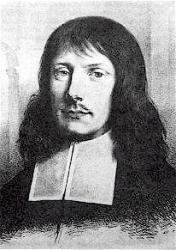
Joachim Neander

1650 - 1680 Person Name: Joachim Neander, 1640-1680 Topics: Year A Proper 18; Year B Proper 18 Composer of "NEANDER (UNSER HERRSCHER)" in Complete Anglican Hymns Old and New Neander, Joachim, was born at Bremen, in 1650, as the eldest child of the marriage of Johann Joachim Neander and Catharina Knipping, which took place on Sept. 18, 1649, the father being then master of the Third Form in the Paedagogium at Bremen. The family name was originally Neumann (Newman) or Niemann, but the grandfather of the poet had assumed the Greek form of the name, i.e. Neander. After passing through the Paedagogium he entered himself as a student at the Gymnasium illustre (Academic Gymnasium) of Bremen in Oct. 1666. German student life in the 17th century was anything but refined, and Neander seems to have been as riotous and as fond of questionable pleasures as most of his fellows. In July 1670, Theodore Under-Eyck came to Bremen as pastor of St. Martin's Church, with the reputation of a Pietist and holder of conventicles. Not long after Neander, with two like-minded comrades, went to service there one Sunday, in order to criticise and find matter of amusement. But the earnest words of Under-Eyck touched his heart; and this, with his subsequent conversations with Under-Eyck, proved the turning-point of his spiritual life. In the spring of 1671 he became tutor to five young men, mostly, if not all, sons of wealthy merchants at Frankfurt-am-Main, and accompanied them to the University of Heidelberg, where they seem to have remained till the autumn of 1673, and where Neander learned to know and love the beauties of Nature. The winter of 1673-74 he spent at Frankfurt with the friends of his pupils, and here he became acquainted with P. J. Spener (q.v.) and J. J. Schütz (q.v.) In the spring of 1674 he was appointed Rector of the Latin school at Düsseldorf (see further below). Finally, in 1679, he was invited to Bremen as unordained assistant to Under-Eyck at St. Martin's Church, and began his duties about the middle of July. The post was not inviting, and was regarded merely as a stepping stone to further preferment, the remuneration being a free house and 40 thalers a year, and the Sunday duty being a service with sermon at the extraordinary hour of 5 a.m. Had he lived, Under-Eyck would doubtless have done his best to get him appointed to St. Stephen's Church, the pastorate of which became vacant in Sept., 1680. But meantime Neander himself fell into a decline, and died at Bremen May 31, 1680 (Joachim Neander, sein Leben und seine Lieder. With a Portrait. By J. F. Iken, Bremen, 1880; Allgemeine Deutsche Biographie, xxiii. 327, &c.) Neander was the first important hymn-writer of the German Reformed Church since the times of Blaurer and Zwick. His hymns appear to have been written mostly at Düsseldorf, after his lips had been sealed to any but official work. The true history of his unfortunate conflict has now been established from the original documents, and may be summarized thus. The school at Düsseldorf was entirely under the control of the minister and elders of the Reformed Church there. The minister from about July, 1673, to about May, 1677, was Sylvester Lürsen (a native of Bremen, and only a few years older than Neander), a man of ability and earnestness, but jealous, and, in later times at least, quarrelsome. With him Neander at first worked harmoniously, frequently preaching in the church, assisting in the visitation of the sick, &c. But he soon introduced practices which inevitably brought on a conflict. He began to hold prayer meetings of his own, without informing or consulting minister or elders; he began to absent himself from Holy Communion, on the ground that he could not conscientiously communicate along with the unconverted, and also persuaded others to follow this example; and became less regular in his attendance at the ordinary services of the Church. Besides these causes of offence he drew out a new timetable for the school, made alterations on the school buildings, held examinations and appointed holidays without consulting any one. The result of all this was a Visitation of the school on Nov. 29, 1676, and then his suspension from school and pulpit on Feb. 3, 1677. On Feb. 17 he signed a full and definite declaration by which "without mental reservations" he bound himself not to repeat any of the acts complained of; and thereupon was permitted to resume his duties as rector but not as assistant minister. The suspension thus lasted only 14 days, and his salary was never actually stopped. The statements that he was banished from Düsseldorf, and that he lived for months in a cave in the Neanderthal near Mettmann are therefore without foundation. Still his having had to sign such a document was a humiliation which he must have felt keenly, and when, after Lürsen's departure, the second master of the Latin school was appointed permanent assistant pastor, this feeling would be renewed. Neander thus thrown back on himself, found consolation in communion with God and Nature, and in the composition of his hymns. Many were without doubt inspired by the scenery of the Neanderthal (a lovely valley with high rocky sides, between which flows the little river Düssel); and the tradition is probable enough that some of them were composed in a cave there. A number were circulated among his friends at Düsseldorf in MS., but they were first collected and published after his removal to Bremen, and appeared as:— A und Ώ, Joachimi Neandri Glaub-und Liebesübung: — auffgemuntert durch ein fällige Bundes Lieder und Danck-Psalmen, Bremen, Hermann Brauer, 1680; 2nd ed. Bremen, 1683 ; 3rd ed. Bremen, 1687; 4th ed. Frankfurt, 1689. These editions contain 57 hymns. In the 5th ed., Frankfurt and Leipzig, 1691, edited by G. C. Strattner, eight hymns were added as being also by Neander. [The whole of these eds. are in the Royal Library, Berlin. The so-called 3rd. ed. at Wesel, 1686, also found in Berlin, was evidently pirated.] Other editions rapidly followed till we find the complete set (i.e. 57 or 58) formally incorporated as part of a hymnbook, e.g. in the Marburg Reformed Gesang-Buch, 1722, where the first part consists of Lobwasser's Psalter, the second of Neander's Bundeslieder, and the third of other hymns. Neander's Bundeslieder also form a division of the Lemgo Reformed Gesang-Buch, 1722; and of a favourite book used in the meetings conducted by G. Tersteegen, which in the 5th ed., Solingen, 1760, has the title Gott-geheiligtes Harfen-Spiel der Kinder Zion; bestehend in Joachimi Neandri sämtlichen Bundes-Liedern, &c. In this way, especially in the district near Düsseldorf and on the Ruhr, Neander's name was honoured and beloved long after it had passed out of memory at Bremen. Many of Neander's hymns were speedily received into the Lutheran hymnbooks, and are still in universal use. The finest are the jubilant hymns of Praise and Thanksgiving, such as his "Lobe den Herren”, and those setting forth the Majesty of God in His works of beauty and wonder in Nature, such as his "Himmel, Erde", and "Unbegreiflich Gut"; while some of his hymns of Penitence, such as his "Sieh hier bin ich, Ehrenkönig" (q.v.), are also very beautiful. Many are of a decidedly subjective cast, but for this the circumstances of their origin, and the fact that the author did not expect them to be used in public worship, will sufficiently account. Here and there there are doubtless harshnesses, and occasionally imagery which is rather jarring; and naturally enough the characteristic expressions and points of view of German 17th cent. Pietism and of the "Covenant Theology" are easily enough detected. But the glow and sweetness of his better hymns, their firm faith, originality, Scripturalness, variety and mastery of rhythmical forms, and genuine lyric character fully entitled them to the high place they hold. Of the melodies in the original edition of 1680 there are 19 by Neander himself, the best known being those to Nos. viii. and xi. below. The hymns by Neander which have passed into English, and have not already been referred to, are:— Hymns in English common use: i. Meine Hoffnung stehet feste. Thanksgiving. Founded on 1 Tim. vi. 17. 1680 as above, p. 115, in 5 stanzas of 7 lines, entitled "Grace after meat." In the Unverfälschter Liedersegen, 1851, No. 712. Translated as:— All my hope is grounded surely. A full and good translation by Miss Winkworth, as No. 8 in her Chorale Book for England, 1863. Another translation is: "All my Hope is fix'd and grounded." By J. C. Jacobi, 1720, p. 17, repeated in his ed., 1732, p. 64, altered and beginning, "All my Hope is firmly grounded." ii. Unbegreiflich Gut, wahrer Gott alleine. Summer. According to tradition this was written in the summer of 1677, in a cave in the Neanderthal near Düsseldorf, while Neander was in enforced absence from his school duties (Koch, vi. 20). It is founded on Ps. civ. 24. 1680, p. 165, in 12 stanzas of 6 lines, and entitled, "The Joys of Summer and Autumn in Field and Forest." The following note shows that the "Feeling for Nature" is not entirely modern. “It is also a travelling hymn in summer or autumn for those who, on their way to Frankfurt on the Main, go up and down the river Rhine, where between Cologne and Mainz, mountains, cliffs, brooks and rocks are to be beheld with particular wonder; also in the district of Berg in the rocky region [the ‘Gestein' now called the Neanderthal], not far from Düsseldorf." The hymn is in Knapp's Evangelischer Lieder-Schatz 1850, No. 2163 (1865, No. 2231), omitting st. x. Translated as:-— 0 Thou true God alone. A very good translation, omitting st. x., by Miss Winkworth, in her Christian Singers, 1869, p. 286. Her translation of st. i., iii.-v. altered in metre, and beginning "Thou true God alone," are No. 53 in M. W. Stryker's Christian Chorals, 1885. Hymns not in English common use:—— iii. Auf, auf, mein Geist, erhebe dich zum Himmel. Holy Communion. Founded on Ps. xxiii. 6. 1860, as above, p. 27, in 5 stanzas, entitled, "The soul strengthened and refreshed. After the reception of the Holy Communion." In Porst's Gesang-Buch, ed. 1855, No. 218. In the Moravian London Gesang-Buch, 1753, No. 697, it begins, "Den Himmels-Vorschmack hab' ich auf der Erde," and in the Brüder Gesang-Buch, 1778, No. 1178, it was further recast (by C. Gregor?) and altered to "hab'ich schon hinieden." Translated as "Heav'n's foretaste I may here already have." By F W. Foster & J. Miller, as No. 596, in the Moravian Hymn Book, 1789. In the 1801 ed. (1849, No. 1003) it begins, “Since Jesus dy'd, my guilty soul to save." iv. Der Tag ist hin, mein Jesu, bei mir bleibe. Evening. Founded on St. Luke xxiv. 29. 1680, p. 15, in 6 stanzas entitled, "The Christian returning thanks at eventide." In the Unverfälschter Liedersegen, 1851, No. 512. The translations are: (1) "The Day is gone, come Jesu my Protector." In the Supplement to German Psalmody, ed. 1765, p. 72. (2) "The day is past, Thou Saviour dear, still dwell my breast within." By H. J. Buckoll, 1842, p. 82. (3) "The day is gone, abide with me tonight." By E. Massie, 1867, p. 192. (4) "The day is gone, abide with me, 0 Jesus." By R. Massie, in the Day of Rest, 1877. v. Grosser Prophete, mein Herze begehret. Love to Christ. Founded on 1 Cor. xvi. 22. 1680, p. 191, in 4 stanzas. Translated as “Heavenly Prophet, my Heart is desiring." By J. C. Jacobi, 1720, p. 40. vi. Jehovah ist mein Licht und Gnadensonne. God's Perfections. Founded on 1 John i. 7. 1680, p. 19 in 4 stanzas, entitled, "Walking in the Light." Translated as, "Jehovah is my light, salvation showing." By Dr. H. Mills, 1845 (1856, p. 6). vii. 0 allerhöchster Menschenhüter. Morning. A hymn of praise to our Almighty Preserver. 1680, p. 11, in 6 stanzas, founded on Ps. lix. 16; and entitled, "The Christian singing at Morning." Translated as, "O Thou Most Highest! Guardian of mankind." By Miss Winkworth, 1858, p. 72. viii. Unser Herrscher, unser König. Thanksgiving. Founded on Acts viii. 2. 1680, p. 147, in 6 stanzas, entitled, "The glorious Jehovah." In the Unverfälschter Liedersegen 1851, No. 344. The well-known melody (in the Society for Promoting Christian Knowledge Church Hymns called Munich) is also by Neander, and appeared along with the hymn. Translated as, "Sovereign Ruler, King victorious," in the British Herald, Dec, 1865, p. 185, and Reid's Praise Book, 1872. ix. Wie fleucht dahin der Menschenzeit. For the Dying. A powerful hymn on the vanity of the earthly, founded on Ps. xc. 12. 1680, p. 174, in 7 stanzas, entitled, "He that counts his days." In the Unverfälschter Liedersegen, 1851, No. 845. The translations are: (1) "This life is like a flying dream" (beginning with st. ii. "Das Leben ist gleich wie ein Traum"). By Mrs. Findlater, in Hymns from the Land of Luther, 1858, p. 24 (1884, p. 146). (2) "Though hastening onward to the grave." By E. Massie, 1867, p. 36. x. Wo soil ich hin? wer helfet mir? Lent. Founded on Romans vii. 24. 1680, p. 51, in 5 st. entitled “The distressed one longing for Redemption." In the Unverfälschter Liedersegen, 1851, No. 393. The translations are: (1) "For help, O whither shall I flee." By Dr. H. Mills, 1845 (1856, p. 146). (2) "How shall I get there? who will aid?" By Miss Warner, 1858, p. 52. xi. Wunderbarer König. Thanksgiving. Founded on Ps. cl. 6. 1680, p. 159, in 4 stanzas, entitled, "Inciting oneself to the Praise of God." In the Unverfälschter Liedersegen, 1851, No. 787. The melody, a very fine one (called by Mr. Mercer Groningen), is also by Neander, and appeared along with the hymn. The translations are: (1) "Wonderful Creator." By J. C. Jacobi, 1722, p. 88. (2) "Wonderful and blessed." By J. D. Burns in his Memoir and Remains, 1869, p. 230. (3) "Wondrous King Almighty." By N. L. Frothingham, 1870, p. 266. [Rev. James Mearns, M.A.] --John Julian, Dictionary of Hymnology (1907)

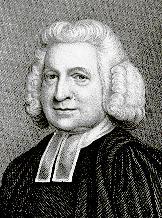
Charles Wesley

1707 - 1788 Topics: Proper 18 Year B Author of "O for a Thousand Tongues to Sing" in Voices United Charles Wesley, M.A. was the great hymn-writer of the Wesley family, perhaps, taking quantity and quality into consideration, the great hymn-writer of all ages. Charles Wesley was the youngest son and 18th child of Samuel and Susanna Wesley, and was born at Epworth Rectory, Dec. 18, 1707. In 1716 he went to Westminster School, being provided with a home and board by his elder brother Samuel, then usher at the school, until 1721, when he was elected King's Scholar, and as such received his board and education free. In 1726 Charles Wesley was elected to a Westminster studentship at Christ Church, Oxford, where he took his degree in 1729, and became a college tutor. In the early part of the same year his religious impressions were much deepened, and he became one of the first band of "Oxford Methodists." In 1735 he went with his brother John to Georgia, as secretary to General Oglethorpe, having before he set out received Deacon's and Priest's Orders on two successive Sundays. His stay in Georgia was very short; he returned to England in 1736, and in 1737 came under the influence of Count Zinzendorf and the Moravians, especially of that remarkable man who had so large a share in moulding John Wesley's career, Peter Bonier, and also of a Mr. Bray, a brazier in Little Britain. On Whitsunday, 1737, [sic. 1738] he "found rest to his soul," and in 1738 he became curate to his friend, Mr. Stonehouse, Vicar of Islington, but the opposition of the churchwardens was so great that the Vicar consented that he "should preach in his church no more." Henceforth his work was identified with that of his brother John, and he became an indefatigable itinerant and field preacher. On April 8, 1749, he married Miss Sarah Gwynne. His marriage, unlike that of his brother John, was a most happy one; his wife was accustomed to accompany him on his evangelistic journeys, which were as frequent as ever until the year 1756," when he ceased to itinerate, and mainly devoted himself to the care of the Societies in London and Bristol. Bristol was his headquarters until 1771, when he removed with his family to London, and, besides attending to the Societies, devoted himself much, as he had done in his youth, to the spiritual care of prisoners in Newgate. He had long been troubled about the relations of Methodism to the Church of England, and strongly disapproved of his brother John's "ordinations." Wesley-like, he expressed his disapproval in the most outspoken fashion, but, as in the case of Samuel at an earlier period, the differences between the brothers never led to a breach of friendship. He died in London, March 29, 1788, and was buried in Marylebone churchyard. His brother John was deeply grieved because he would not consent to be interred in the burial-ground of the City Road Chapel, where he had prepared a grave for himself, but Charles said, "I have lived, and I die, in the Communion of the Church of England, and I will be buried in the yard of my parish church." Eight clergymen of the Church of England bore his pall. He had a large family, four of whom survived him; three sons, who all became distinguished in the musical world, and one daughter, who inherited some of her father's poetical genius. The widow and orphans were treated with the greatest kindness and generosity by John Wesley. As a hymn-writer Charles Wesley was unique. He is said to have written no less than 6500 hymns, and though, of course, in so vast a number some are of unequal merit, it is perfectly marvellous how many there are which rise to the highest degree of excellence. His feelings on every occasion of importance, whether private or public, found their best expression in a hymn. His own conversion, his own marriage, the earthquake panic, the rumours of an invasion from France, the defeat of Prince Charles Edward at Culloden, the Gordon riots, every Festival of the Christian Church, every doctrine of the Christian Faith, striking scenes in Scripture history, striking scenes which came within his own view, the deaths of friends as they passed away, one by one, before him, all furnished occasions for the exercise of his divine gift. Nor must we forget his hymns for little children, a branch of sacred poetry in which the mantle of Dr. Watts seems to have fallen upon him. It would be simply impossible within our space to enumerate even those of the hymns which have become really classical. The saying that a really good hymn is as rare an appearance as that of a comet is falsified by the work of Charles Wesley; for hymns, which are really good in every respect, flowed from his pen in quick succession, and death alone stopped the course of the perennial stream. It has been the common practice, however for a hundred years or more to ascribe all translations from the German to John Wesley, as he only of the two brothers knew that language; and to assign to Charles Wesley all the original hymns except such as are traceable to John Wesley through his Journals and other works. The list of 482 original hymns by John and Charles Wesley listed in this Dictionary of Hymnology have formed an important part of Methodist hymnody and show the enormous influence of the Wesleys on the English hymnody of the nineteenth century. -- Excerpts from John Julian, Dictionary of Hymnology (1907) ================== Charles Wesley, the son of Samuel Wesley, was born at Epworth, Dec. 18, 1707. He was educated at Westminster School and afterwards at Christ Church, Oxford, where he graduated M.A. In 1735, he took Orders and immediately proceeded with his brother John to Georgia, both being employed as missionaries of the S.P.G. He returned to England in 1736. For many years he engaged with his brother in preaching the Gospel. He died March 29, 1788. To Charles Wesley has been justly assigned the appellation of the "Bard of Methodism." His prominence in hymn writing may be judged from the fact that in the "Wesleyan Hymn Book," 623 of the 770 hymns were written by him; and he published more than thirty poetical works, written either by himself alone, or in conjunction with his brother. The number of his separate hymns is at least five thousand. --Annotations of the Hymnal, Charles Hutchins, M.A., 1872.

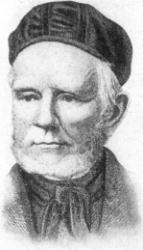
Lowell Mason

1792 - 1872 Topics: Proper 18 Year B Adapter and Harmonizer of "AZMON" in Voices United Dr. Lowell Mason (the degree was conferred by the University of New York) is justly called the father of American church music; and by his labors were founded the germinating principles of national musical intelligence and knowledge, which afforded a soil upon which all higher musical culture has been founded. To him we owe some of our best ideas in religious church music, elementary musical education, music in the schools, the popularization of classical chorus singing, and the art of teaching music upon the Inductive or Pestalozzian plan. More than that, we owe him no small share of the respect which the profession of music enjoys at the present time as contrasted with the contempt in which it was held a century or more ago. In fact, the entire art of music, as now understood and practiced in America, has derived advantage from the work of this great man. Lowell Mason was born in Medfield, Mass., January 8, 1792. From childhood he had manifested an intense love for music, and had devoted all his spare time and effort to improving himself according to such opportunities as were available to him. At the age of twenty he found himself filling a clerkship in a banking house in Savannah, Ga. Here he lost no opportunity of gratifying his passion for musical advancement, and was fortunate to meet for the first time a thoroughly qualified instructor, in the person of F. L. Abel. Applying his spare hours assiduously to the cultivation of the pursuit to which his passion inclined him, he soon acquired a proficiency that enabled him to enter the field of original composition, and his first work of this kind was embodied in the compilation of a collection of church music, which contained many of his own compositions. The manuscript was offered unavailingly to publishers in Philadelphia and in Boston. Fortunately for our musical advancement it finally secured the attention of the Boston Handel and Haydn Society, and by its committee was submitted to Dr. G. K. Jackson, the severest critic in Boston. Dr. Jackson approved most heartily of the work, and added a few of his own compositions to it. Thus enlarged, it was finally published in 1822 as The Handel and Haydn Society Collection of Church Music. Mason's name was omitted from the publication at his own request, which he thus explains, "I was then a bank officer in Savannah, and did not wish to be known as a musical man, as I had not the least thought of ever making music a profession." President Winchester, of the Handel and Haydn Society, sold the copyright for the young man. Mr. Mason went back to Savannah with probably $500 in his pocket as the preliminary result of his Boston visit. The book soon sprang into universal popularity, being at once adopted by the singing schools of New England, and through this means entering into the church choirs, to whom it opened up a higher field of harmonic beauty. Its career of success ran through some seventeen editions. On realizing this success, Mason determined to accept an invitation to come to Boston and enter upon a musical career. This was in 1826. He was made an honorary member of the Handel and Haydn Society, but declined to accept this, and entered the ranks as an active member. He had been invited to come to Boston by President Winchester and other musical friends and was guaranteed an income of $2,000 a year. He was also appointed, by the influence of these friends, director of music at the Hanover, Green, and Park Street churches, to alternate six months with each congregation. Finally he made a permanent arrangement with the Bowdoin Street Church, and gave up the guarantee, but again friendly influence stepped in and procured for him the position of teller at the American Bank. In 1827 Lowell Mason became president and conductor of the Handel and Haydn Society. It was the beginning of a career that was to win for him as has been already stated the title of "The Father of American Church Music." Although this may seem rather a bold claim it is not too much under the circumstances. Mr. Mason might have been in the average ranks of musicianship had he lived in Europe; in America he was well in advance of his surroundings. It was not too high praise (in spite of Mason's very simple style) when Dr. Jackson wrote of his song collection: "It is much the best book I have seen published in this country, and I do not hesitate to give it my most decided approbation," or that the great contrapuntist, Hauptmann, should say the harmonies of the tunes were dignified and churchlike and that the counterpoint was good, plain, singable and melodious. Charles C. Perkins gives a few of the reasons why Lowell Mason was the very man to lead American music as it then existed. He says, "First and foremost, he was not so very much superior to the members as to be unreasonably impatient at their shortcomings. Second, he was a born teacher, who, by hard work, had fitted himself to give instruction in singing. Third, he was one of themselves, a plain, self-made man, who could understand them and be understood of them." The personality of Dr. Mason was of great use to the art and appreciation of music in this country. He was of strong mind, dignified manners, sensitive, yet sweet and engaging. Prof. Horace Mann, one of the great educators of that day, said he would walk fifty miles to see and hear Mr. Mason teach if he could not otherwise have that advantage. Dr. Mason visited a number of the music schools in Europe, studied their methods, and incorporated the best things in his own work. He founded the Boston Academy of Music. The aim of this institution was to reach the masses and introduce music into the public schools. Dr. Mason resided in Boston from 1826 to 1851, when he removed to New York. Not only Boston benefited directly by this enthusiastic teacher's instruction, but he was constantly traveling to other societies in distant cities and helping their work. He had a notable class at North Reading, Mass., and he went in his later years as far as Rochester, where he trained a chorus of five hundred voices, many of them teachers, and some of them coming long distances to study under him. Before 1810 he had developed his idea of "Teachers' Conventions," and, as in these he had representatives from different states, he made musical missionaries for almost the entire country. He left behind him no less than fifty volumes of musical collections, instruction books, and manuals. As a composer of solid, enduring church music. Dr. Mason was one of the most successful this country has introduced. He was a deeply pious man, and was a communicant of the Presbyterian Church. Dr. Mason in 1817 married Miss Abigail Gregory, of Leesborough, Mass. The family consisted of four sons, Daniel Gregory, Lowell, William and Henry. The two former founded the publishing house of Mason Bros., dissolved by the death of the former in 1869. Lowell and Henry were the founders of the great organ manufacturer of Mason & Hamlin. Dr. William Mason was one of the most eminent musicians that America has yet produced. Dr. Lowell Mason died at "Silverspring," a beautiful residence on the side of Orange Mountain, New Jersey, August 11, 1872, bequeathing his great musical library, much of which had been collected abroad, to Yale College. --Hall, J. H. (c1914). Biography of Gospel Song and Hymn Writers. New York: Fleming H. Revell Company.

Johann Jakob Schütz

1640 - 1690 Person Name: Johann Jacob Schütz Topics: Proper 18 Year C Author of "Sing Praise to God, Who Reigns Above" in Voices United Schütz, Johann Jakob, was born Sept. 7, 1640, at Frankfurt am Main. After studying at Tübingen (where he became a licentiate in civil and canon law), he began to practise as an advocate in Frankfurt, and in later years with the title of Rath. He seems to have been a man of considerable legal learning as well as of deep piety. He was an intimate friend of P. J. Spener; and it was, in great measure, at his suggestion, that Spener began his famous Collegia Pietatis. After Spener left Frankfurt, in 1686, Schütz came under the influence of J. W. Petersen; and carrying out Petersen's prin¬ciples to their logical conclusion, he became a Separatist, and ceased to attend the Lutheran services or to communicate. He died at Frankfurt, May 22, 1690 (Koch, iv. 220; Blätter fur Hymnologie, Feb. 1883). Schütz is known as an author by two tractates; one being his Christliche Lebensregeln, Frankfurt, 1677; the other, that which contains his hymns, Christliches Gedenckbüchlein, zu Beforderung eines anfangenden neuen Lebens, &c, Frankfurt am Main, 1675 [Library of the Predigerministerium at Frankfurt]. This work includes 5 hymns, in a separate section, which is headed, “Hierauf folgen etliche Gesänge." These hymns are:— i. Die Wollust dieser Welt. ii. Was inich auf dieser Welt betrübt. iii. So komm, geliebte Todes-Stund. iv. Scheuet ihr, ihr matten Glieder. v. Sei Lob und Ehr dem höchsten Gut. Of these No. v. is undoubtedly by Schütz, and the other four exhibit much the same style of thought as, and frequent parallels to, the prose portions of the work. None of these have been traced earlier than 1675; and until this has been done, it is pretty safe to ascribe them all to Schütz. Three of these hymns have passed into English, viz.:— i. Sei Lob und Ehr dem höchsten Gut. Praise and Thanksgiving. First published in 1675, as above, No. v. It is founded on Deut. xxxii. 3; entitled, "Hymn of Thanksgiving ;" and is in 9 stanzas of 6 lines, and the refrain, "Gebt unserm Gott die Ehre”. Koch, iv. 220, speaks of this hymn as "outweighing many hundred others; and a classical hymn, which, from its first appearance, attracted unusual attention." And Lauxmann, in Koch, viii. 334-339, relates how delighted J. J. Moser was, when, on entering church the first Sunday after his captivity at Hohentwiel, he heard this hymn, and how heartily he joined in it; how it comforted the dying G. C. Rieger, of Stuttgart, on Tuesday, in Easter Week, 1743, and many other incidents. Translations in common use:— 1. All Glory to the Sov'reign Good. This is a full and good translation by J. OJacobi, in his Psalter Germanica, 2nd ed., 1732, p. 151, where it is entitled, "The Malabarian Hymn." 2. All glory be to God most high. A good translation by A. T. Russell, of st. i., iv., viii., for the Dalston Hospital Hymn Book, 1848, No. 59. 3. All praise and thanks to God most high. This is a good tr., omitting st. ix., by Miss Winkworth, in her Lyra Germanica, 2nd Ser., 1858, p. 146. 4. Sing praise to God Who reigns above. A good tr., omitting st. ix., contributed by Miss Cox to Lyra Eucharistica, 1864, p. 33, and included in her Hymns from the German, 1864, p. 235. 5. To God a joyful anthem raise. A good tr. of st. i., ii., iv., v., viii., by J. M. Sloan, as No. 314, in J. H. Wilson's Service of Praise, 1865. The following are also translated into English:— ii. So komm, geliebte Todes-Stund. For the Dying. First published in 1675, as above, No. iii., in 11 st. of 8 1., entitled, "The thoughts on Death of a Royal Princess, after the usual interpretation of Job xix. 25." This Princess was Sophie Elisabethe. daughter of Duke Philipp Ludwig, of Holstein-Sonderburg (b. at Homburg vor der Hohe, May 4, 1653; married, in 1676. to Duke Moritz, of Sachse-Zeitz; d. at Schleusingen, Aug. 19, 1684), who had been a regular attender at Spener's conferences at Frankfurt, and thus associated with Schütz. This hymn has often been ascribed to her; and she had already chosen Job xix. 25, as the text of her funeral sermon. But it is more probable that both hymns were written by Schütz for her use, or in her honour. The trs. are :—(1) "Come, happy hour of death, and close." By Dr. G. Walker, 1860, p. 56. (2) "O come, delightful hour of death." By Dr. G. Walker, 1860, p. 106. iii. Was mich auf dieser Welt betriibt. Earthly Vanities. This hymn, on Renunciation of the World, first appeared in 1675, as above, No. ii., in 4 st. of 10 1., and entitled "From the World to God." It has sometimes been erroneously ascribed to Michael Franck. It is tr. as "The woes that weigh my body down." By Miss Manington, 1863, p. 32. [Rev. James Mearns, M.A.] --Excerpts from John Julian, Dictionary of Hymnology (1907)

Frances Elizabeth Cox

1812 - 1897 Topics: Proper 18 Year C Translator of "Sing Praise to God, Who Reigns Above" in Voices United Cox, Frances Elizabeth, daughter of Mr. George V. Cox, born at Oxford, is well known as a successful translator of hymns from the German. Her translations were published as Sacred Hymns from the German, London, Pickering. The 1st edition, pub. 1841, contained 49 translations printed with the original text, together with biographical notes on the German authors. In the 2nd edition, 1864, Hymns from the German, London, Rivingtons, the translations were increased to 56, those of 1841 being revised, and with additional notes. The 56 translations were composed of 27 from the 1st ed. (22 being omitted) and 29 which were new. The best known of her translations are "Jesus lives! no longer [thy terrors] now" ; and ”Who are these like stars appearing ?" A few other translations and original hymns have been contributed by Miss Cox to the magazines; but they have not been gathered together into a volume. -- John Julian, Dictionary of Hymnology (1907)

Washington Gladden

1836 - 1918 Topics: Proper 18 Year C Author of "O Master, Let Me Walk with Thee" in Voices United Washington Gladden (1836-1918) was called to the First Congregational Church in Columbus, OH in 1882 and remained there for 32 years. In 1883-84 he was known for his success in fighting the corrupt Tweed Ring, for arbitrating the Telegraphers' Strike and the Hocking Valley Coal Strike. He attacked John D. Rockefeller, Sr. for giving $100,000 of "tainted money" to the Congregational Church's Foreign Missions program. Throughout his ministry he emphasized applying the gospel to life in America. He wrote "O Master, let me walk with thee" in 1879. Mary Louise VanDyke =================== Gladden, Washington, was born at Pottsgrove, Pennsylvania, Feb. 11, 1836; was educated at Williams College: and entered the Congregational Ministry. He was for some time editor of the New York Independent, and of the Sunday Afternoon. In the Sunday Afternoon, his hymn, "O Master, let me walk with Thee" (Walking with God), appeared in 3 stanzas of 8 lines, in March 1879. Of these stanzas i. and iii. are in Laudes Domini, 1884, and others. --John Julian, Dictionary of Hymnology, Appendix, Part II (1907) ================== Gladden, W., p. 1565, ii. Dr. Gladden has been Pastor of the First Congregational Church, Columbus, Ohio, since 1882. His hymn-writing has not been extensive. The most popular of his hymns is "0 Master, let me walk with Thee," noted on p. 1565, ii. It has come into somewhat extensive use during the last ten years. Additional hymns in common use include:— 1. Behold a Sower from afar. [The Kingdom of God.] In the Boston Pilgrim Hymnal, 1904, this is dated 1897. 2. Forgive, 0 Lord, the doubts that break Thy promises to me. [Doubting repented of.] Dated 1879, in The Pilgrim Hymnal, 1904. --John Julian, Dictionary of Hymnology, New Supplement (1907)

John Newton

1725 - 1807 Person Name: John Newton, 1725-1807 Topics: Proper 18 Year B Author of "Amazing Grace, How Sweet the Sound" in Voices United John Newton (b. London, England, 1725; d. London, 1807) was born into a Christian home, but his godly mother died when he was seven, and he joined his father at sea when he was eleven. His licentious and tumul­tuous sailing life included a flogging for attempted desertion from the Royal Navy and captivity by a slave trader in West Africa. After his escape he himself became the captain of a slave ship. Several factors contributed to Newton's conversion: a near-drowning in 1748, the piety of his friend Mary Catlett, (whom he married in 1750), and his reading of Thomas à Kempis' Imitation of Christ. In 1754 he gave up the slave trade and, in association with William Wilberforce, eventually became an ardent abolitionist. After becoming a tide-surveyor in Liverpool, England, Newton came under the influence of George Whitefield and John and Charles Wesley and began to study for the ministry. He was ordained in the Church of England and served in Olney (1764-1780) and St. Mary Woolnoth, London (1780-1807). His legacy to the Christian church includes his hymns as well as his collaboration with William Cowper (PHH 434) in publishing Olney Hymns (1779), to which Newton contributed 280 hymns, including “Amazing Grace.” Bert Polman ================== Newton, John, who was born in London, July 24, 1725, and died there Dec. 21, 1807, occupied an unique position among the founders of the Evangelical School, due as much to the romance of his young life and the striking history of his conversion, as to his force of character. His mother, a pious Dissenter, stored his childish mind with Scripture, but died when he was seven years old. At the age of eleven, after two years' schooling, during which he learned the rudiments of Latin, he went to sea with his father. His life at sea teems with wonderful escapes, vivid dreams, and sailor recklessness. He grew into an abandoned and godless sailor. The religious fits of his boyhood changed into settled infidelity, through the study of Shaftesbury and the instruction of one of his comrades. Disappointing repeatedly the plans of his father, he was flogged as a deserter from the navy, and for fifteen months lived, half-starved and ill-treated, in abject degradation under a slave-dealer in Africa. The one restraining influence of his life was his faithful love for his future wife, Mary Catlett, formed when he was seventeen, and she only in her fourteenth year. A chance reading of Thomas à Kempis sowed the seed of his conversion; which quickened under the awful contemplations of a night spent in steering a water-logged vessel in the face of apparent death (1748). He was then twenty-three. The six following years, during which he commanded a slave ship, matured his Christian belief. Nine years more, spent chiefly at Liverpool, in intercourse with Whitefield, Wesley, and Nonconformists, in the study of Hebrew and Greek, in exercises of devotion and occasional preaching among the Dissenters, elapsed before his ordination to the curacy of Olney, Bucks (1764). The Olney period was the most fruitful of his life. His zeal in pastoral visiting, preaching and prayer-meetings was unwearied. He formed his lifelong friendship with Cowper, and became the spiritual father of Scott the commentator. At Olney his best works—-Omicron's Letters (1774); Olney Hymns (1779); Cardiphonia, written from Olney, though published 1781—were composed. As rector of St. Mary Woolnoth, London, in the centre of the Evangelical movement (1780-1807) his zeal was as ardent as before. In 1805, when no longer able to read his text, his reply when pressed to discontinue preaching, was, "What, shall the old African blasphemer stop while he can speak!" The story of his sins and his conversion, published by himself, and the subject of lifelong allusion, was the base of his influence; but it would have been little but for the vigour of his mind (shown even in Africa by his reading Euclid drawing its figures on the sand), his warm heart, candour, tolerance, and piety. These qualities gained him the friendship of Hannah More, Cecil, Wilberforce, and others; and his renown as a guide in experimental religion made him the centre of a host of inquirers, with whom he maintained patient, loving, and generally judicious correspondence, of which a monument remains in the often beautiful letters of Cardiphonia. As a hymnwriter, Montgomery says that he was distanced by Cowper. But Lord Selborne's contrast of the "manliness" of Newton and the "tenderness" of Cowper is far juster. A comparison of the hymns of both in The Book of Praise will show no great inequality between them. Amid much that is bald, tame, and matter-of-fact, his rich acquaintance with Scripture, knowledge of the heart, directness and force, and a certain sailor imagination, tell strongly. The one splendid hymn of praise, "Glorious things of thee are spoken," in the Olney collection, is his. "One there is above all others" has a depth of realizing love, sustained excellence of expression, and ease of development. "How sweet the name of Jesus sounds" is in Scriptural richness superior, and in structure, cadence, and almost tenderness, equal to Cowper's "Oh! for a closer walk with God." The most characteristic hymns are those which depict in the language of intense humiliation his mourning for the abiding sins of his regenerate life, and the sense of the withdrawal of God's face, coincident with the never-failing conviction of acceptance in The Beloved. The feeling may be seen in the speeches, writings, and diaries of his whole life. [Rev. H. Leigh Bennett, M.A.] A large number of Newton's hymns have some personal history connected with them, or were associated with circumstances of importance. These are annotated under their respective first lines. Of the rest, the known history of which is confined to the fact that they appeared in the Olney Hymns, 1779, the following are in common use:— 1. Be still, my heart, these anxious cares. Conflict. 2. Begone, unbelief, my Saviour is near. Trust. 3. By the poor widow's oil and meal. Providence. 4. Chief Shepherd of Thy chosen sheep. On behalf of Ministers. 5. Darkness overspreads us here. Hope. 6. Does the Gospel-word proclaim. Rest in Christ. 7. Fix my heart and eyes on Thine. True Happiness. 8. From Egypt lately freed. The Pilgrim's Song. 9. He Who on earth as man was Known. Christ the Rock. 10. How blest are they to whom the Lord. Gospel Privileges. 11. How blest the righteous are. Death of the Righteous. 12. How lost was my [our] condition. Christ the Physician. 13. How tedious and tasteless the hours. Fellowship with Christ. 14. How welcome to the saints [soul] when pressed. Sunday. 15. Hungry, and faint, and poor. Before Sermon. 16. In mercy, not in wrath, rebuke. Pleading for Mercy. 17. In themselves, as weak as worms. Power of Prayer. 18. Incarnate God, the soul that knows. The Believer's Safety. 19. Jesus, Who bought us with His blood. The God of Israel. "Teach us, 0 Lord, aright to plead," is from this hymn. 20. Joy is a [the] fruit that will not grow. Joy. 21. Let hearts and tongues unite. Close of the Year. From this "Now, through another year," is taken. 22. Let us adore the grace that seeks. New Year. 23. Mary to her [the] Saviour's tomb. Easter. 24. Mercy, 0 Thou Son of David. Blind Bartimeus. 25. My harp untun'd and laid aside. Hoping for a Revival. From this "While I to grief my soul gave way" is taken. 26. Nay, I cannot let thee go. Prayer. Sometimes, "Lord, I cannot let Thee go." 27. Now may He Who from the dead. After Sermon. 28. 0 happy they who know the Lord, With whom He deigns to dwell. Gospel Privilege. 29. O Lord, how vile am I. Lent. 30. On man in His own Image made. Adam. 31. 0 speak that gracious word again. Peace through Pardon. 32. Our Lord, Who knows full well. The Importunate Widow. Sometimes altered to "Jesus, Who knows full well," and again, "The Lord, Who truly knows." 33. Physician of my sin-sick soul. Lent. 34. Pleasing spring again is here. Spring. 35. Poor, weak, and worthless, though I am. Jesus the Friend. 36. Prepare a thankful song. Praise to Jesus. 37. Refreshed by the bread and wine. Holy Communion. Sometimes given as "Refreshed by sacred bread and wine." 38. Rejoice, believer, in the Lord. Sometimes “Let us rejoice in Christ the Lord." Perseverance. 39. Salvation, what a glorious plan. Salvation. 40. Saviour, shine and cheer my soul. Trust in Jesus. The cento "Once I thought my mountain strong," is from this hymn. 41. Saviour, visit Thy plantation. Prayer for the Church. 42. See another year [week] is gone. Uncertainty of Life. 43. See the corn again in ear. Harvest. 44. Sinner, art thou still secure? Preparation for the Future. 45. Sinners, hear the [thy] Saviour's call. Invitation. 46. Sovereign grace has power alone. The two Malefactors. 47. Stop, poor sinner, stop and think. Caution and Alarm. 48. Sweeter sounds than music knows. Christmas. 49. Sweet was the time when first I felt. Joy in Believing. 50. Ten thousand talents once I owed. Forgiveness and Peace. 51. The grass and flowers, which clothe the field. Hay-time. 52. The peace which God alone reveals. Close of Service. 53. Thy promise, Lord, and Thy command. Before Sermon. 54. Time, by moments, steals away. The New Year. 55. To Thee our wants are known. Close of Divine Service. 56. We seek a rest beyond the skies. Heaven anticipated. 57. When any turn from Zion's way. Jesus only. 58. When Israel, by divine command. God, the Guide and Sustainer of Life. 59. With Israel's God who can compare? After Sermon. 60. Yes, since God Himself has said it. Confidence. 61. Zion, the city of our God. Journeying Zionward. -- John Julian, Dictionary of Hymnology (1907) ================= Newton, J., p. 803, i. Another hymn in common use from the Olney Hymns, 1779, is "Let me dwell on Golgotha" (Holy Communion). --John Julian, Dictionary of Hymnology, Appendix, Part II (1907) ----- John Newton was born in London, July 24, 1725. His mother died when he was seven years old. In his eleventh year he accompanied his father, a sea captain, on a voyage. For several years his life was one of dissipation and crime. He was disgraced while in the navy. Afterwards he engaged in the slave trade. Returning to England in 1748, the vessel was nearly wrecked in a storm. This peril forced solemn reflection upon him, and from that time he was a changed man. It was six years, however, before he relinquished the slave trade, which was not then regarded as an unlawful occupation. But in 1754, he gave up sea-faring life, and holding some favourable civil position, began also religious work. In 1764, in his thirty-ninth year, he entered upon a regular ministry as the Curate of Olney. In this position he had intimate intercourse with Cowper, and with him produced the "Olney Hymns." In 1779, Newton became Rector of S. Mary Woolnoth, in London, in which position he became more widely known. It was here he died, Dec. 21, 1807, His published works are quite numerous, consisting of sermons, letters, devotional aids, and hymns. He calls his hymns "The fruit and expression of his own experience." --Annotations of the Hymnal, Charles Hutchins, M.A. 1872 See also in: Hymn Writers of the Church =======================

Thomas Haweis

1734 - 1820 Person Name: Thomas Haweis (1733-1820) Topics: Proper 18 Year B Composer (melody) of "RICHMOND" in Ancient and Modern Thomas Haweis (b. Redruth, Cornwall, England, 1734; d. Bath, England, 1820) Initially apprenticed to a surgeon and pharmacist, Haweis decided to study for the ministry at Oxford and was ordained in the Church of England in 1757. He served as curate of St. Mary Magdalen Church, Oxford, but was removed by the bishop from that position because of his Methodist leanings. He also was an assistant to Martin Madan at Locke Hospital, London. In 1764 he became rector of All Saints Church in Aldwinkle, Northamptonshire, and later served as administrator at Trevecca College, Wales, a school founded by the Countess of Huntingdon, whom Haweis served as chaplain. After completing advanced studies at Cambridge, he published a Bible commentary and a volume on church history. Haweis was strongly interested in missions and helped to found the London Mission Society. His hymn texts and tunes were published in Carmino Christo, or Hymns to the Savior (1792, expanded 1808). Bert Polman ============================ Haweis, Thomas, LL.B., M.D., born at Truro, Cornwall, 1732. After practising for a time as a Physician, he entered Christ's College, Cambridge, where he graduated. Taking Holy Orders, he became Assistant Preacher to M. Madan at the Lock Hospital, London, and subsequently Rector of All Saints, Aldwincle, Northamptonshire. He was also Chaplain to Lady Huntingdon, and for several years officiated at her Chapel in Bath. He died at Bath, Feb. 11, 1820. He published several prose works, including A History of the Church, A Translation of the New Testament, and A Commentary on the Holy Bible. His hymns, a few of which are of more than ordinary merit, were published in his Carmina Christo; or, Hymns to the Saviour. Designed for the Use and Comfort of Those who worship the Lamb that was slain. Bath, S. Hayward, 1792 (139 hymns), enlarged. London, 1808 (256 hymns). In 1794, or sometime after, but before the enlarged edition was published, two hymns "For the Fast-day, Feb. 28, 1794," were added to the first edition. These were, "Big with events, another year," and "Still o'er the deep the cannon's roar." The most popular and widely used of his hymns are, "Behold the Lamb of God, Who bore," &c.; "Enthroned on high, Almighty Lord"; and “O Thou from Whom all goodness flows." The rest, all being from Carmina Christo, first edition 1792, are:— 1. Dark was the night and cold the ground. Gethsemane. 2. From the cross uplifted high. Christ in Glory. 3. Great Spirit, by Whose mighty power. Whitsuntide. 4. Submissive to Thy will, my God. Resignation. 5. The happy morn is come. Easter. 6. Thou Lamb of God, that on the tree. Good Friday. The hymn, "Thy Head, the crown of thorns that wears," in Stryker & Main's Church Praise Book, N. Y., 1882, begins with st. ii. of this hymn. 7. To Thee, my God and Saviour, My heart, &c. Praise for Redemption. --John Julian, Dictionary of Hymnology (1907)

Pages


Export as CSV
It looks like you are using an ad-blocker. Ad revenue helps keep us running. Please consider white-listing Hymnary.org or getting Hymnary Pro to eliminate ads entirely and help support Hymnary.org.