You help make Hymnary.org possible. More than 10 million people from 200+ countries found hymns, liturgical resources and encouragement on Hymnary.org in 2025, including you. Every visit affirms the global impact of this ministry.

If Hymnary has been meaningful to you this year, would you take a moment today to help sustain it? A gift of any size—paired with a note of encouragement if you wish—directly supports the server costs, research work and curation that keep this resource freely available to the world.

Give securely online today, or mail a check to:
Hymnary.org
Calvin University
3201 Burton Street SE
Grand Rapids, MI 49546

Thank you for your partnership, and may the hope of Advent fill your heart.

Person Results

Topics:processional
In:person

Planning worship? Check out our sister site, ZeteoSearch.org, for 20+ additional resources related to your search.
Showing 41 - 50 of 736Results Per Page: 102050

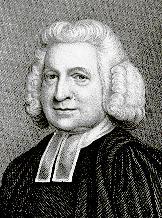
Charles Wesley

1707 - 1788 Topics: Processional Hymns; Processional Hymns Paraphraser of "Praise the Lord Who Reigns Above" in The Worshiping Church Charles Wesley, M.A. was the great hymn-writer of the Wesley family, perhaps, taking quantity and quality into consideration, the great hymn-writer of all ages. Charles Wesley was the youngest son and 18th child of Samuel and Susanna Wesley, and was born at Epworth Rectory, Dec. 18, 1707. In 1716 he went to Westminster School, being provided with a home and board by his elder brother Samuel, then usher at the school, until 1721, when he was elected King's Scholar, and as such received his board and education free. In 1726 Charles Wesley was elected to a Westminster studentship at Christ Church, Oxford, where he took his degree in 1729, and became a college tutor. In the early part of the same year his religious impressions were much deepened, and he became one of the first band of "Oxford Methodists." In 1735 he went with his brother John to Georgia, as secretary to General Oglethorpe, having before he set out received Deacon's and Priest's Orders on two successive Sundays. His stay in Georgia was very short; he returned to England in 1736, and in 1737 came under the influence of Count Zinzendorf and the Moravians, especially of that remarkable man who had so large a share in moulding John Wesley's career, Peter Bonier, and also of a Mr. Bray, a brazier in Little Britain. On Whitsunday, 1737, [sic. 1738] he "found rest to his soul," and in 1738 he became curate to his friend, Mr. Stonehouse, Vicar of Islington, but the opposition of the churchwardens was so great that the Vicar consented that he "should preach in his church no more." Henceforth his work was identified with that of his brother John, and he became an indefatigable itinerant and field preacher. On April 8, 1749, he married Miss Sarah Gwynne. His marriage, unlike that of his brother John, was a most happy one; his wife was accustomed to accompany him on his evangelistic journeys, which were as frequent as ever until the year 1756," when he ceased to itinerate, and mainly devoted himself to the care of the Societies in London and Bristol. Bristol was his headquarters until 1771, when he removed with his family to London, and, besides attending to the Societies, devoted himself much, as he had done in his youth, to the spiritual care of prisoners in Newgate. He had long been troubled about the relations of Methodism to the Church of England, and strongly disapproved of his brother John's "ordinations." Wesley-like, he expressed his disapproval in the most outspoken fashion, but, as in the case of Samuel at an earlier period, the differences between the brothers never led to a breach of friendship. He died in London, March 29, 1788, and was buried in Marylebone churchyard. His brother John was deeply grieved because he would not consent to be interred in the burial-ground of the City Road Chapel, where he had prepared a grave for himself, but Charles said, "I have lived, and I die, in the Communion of the Church of England, and I will be buried in the yard of my parish church." Eight clergymen of the Church of England bore his pall. He had a large family, four of whom survived him; three sons, who all became distinguished in the musical world, and one daughter, who inherited some of her father's poetical genius. The widow and orphans were treated with the greatest kindness and generosity by John Wesley. As a hymn-writer Charles Wesley was unique. He is said to have written no less than 6500 hymns, and though, of course, in so vast a number some are of unequal merit, it is perfectly marvellous how many there are which rise to the highest degree of excellence. His feelings on every occasion of importance, whether private or public, found their best expression in a hymn. His own conversion, his own marriage, the earthquake panic, the rumours of an invasion from France, the defeat of Prince Charles Edward at Culloden, the Gordon riots, every Festival of the Christian Church, every doctrine of the Christian Faith, striking scenes in Scripture history, striking scenes which came within his own view, the deaths of friends as they passed away, one by one, before him, all furnished occasions for the exercise of his divine gift. Nor must we forget his hymns for little children, a branch of sacred poetry in which the mantle of Dr. Watts seems to have fallen upon him. It would be simply impossible within our space to enumerate even those of the hymns which have become really classical. The saying that a really good hymn is as rare an appearance as that of a comet is falsified by the work of Charles Wesley; for hymns, which are really good in every respect, flowed from his pen in quick succession, and death alone stopped the course of the perennial stream. It has been the common practice, however for a hundred years or more to ascribe all translations from the German to John Wesley, as he only of the two brothers knew that language; and to assign to Charles Wesley all the original hymns except such as are traceable to John Wesley through his Journals and other works. The list of 482 original hymns by John and Charles Wesley listed in this Dictionary of Hymnology have formed an important part of Methodist hymnody and show the enormous influence of the Wesleys on the English hymnody of the nineteenth century. -- Excerpts from John Julian, Dictionary of Hymnology (1907) ================== Charles Wesley, the son of Samuel Wesley, was born at Epworth, Dec. 18, 1707. He was educated at Westminster School and afterwards at Christ Church, Oxford, where he graduated M.A. In 1735, he took Orders and immediately proceeded with his brother John to Georgia, both being employed as missionaries of the S.P.G. He returned to England in 1736. For many years he engaged with his brother in preaching the Gospel. He died March 29, 1788. To Charles Wesley has been justly assigned the appellation of the "Bard of Methodism." His prominence in hymn writing may be judged from the fact that in the "Wesleyan Hymn Book," 623 of the 770 hymns were written by him; and he published more than thirty poetical works, written either by himself alone, or in conjunction with his brother. The number of his separate hymns is at least five thousand. --Annotations of the Hymnal, Charles Hutchins, M.A., 1872.

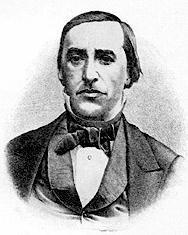
George Duffield

1818 - 1888 Topics: Processional Hymns; Processional Hymns Author of "Stand Up, Stand Up for Jesus" in The Worshiping Church Duffield, George, Jr., D.D., son of the Rev. Dr. Duffield, a Presbyterian Minister, was born at Carlisle, Pennsylvania, Sept. 12, 1818, and graduated at Yale College, and at the Union Theological Seminary, New York. From 1840 to 1847 he was a Presbyterian Pastor at Brooklyn; 1847 to 1852, at Bloomfield, New Jersey; 1852 to 1861, at Philadelphia; 1861 to 1865, at Adrian, Michigan; 1865 to 1869, at Galesburg, Illinois; 1869, at Saginaw City, Michigan; and from 1869 at Ann Arbor and Lansing, Michigan. His hymns include;— 1. Blessed Saviour, Thee I love. Jesus only. One of four hymns contributed by him to Darius E. Jones's Temple Melodies, 1851. It is in 6 stanzas of 6 lines. In Dr. Hatfield's Church Hymnbook it is given in 3 stanzas. The remaining three hymns of the same date are:— 2. Parted for some anxious days. Family Hymn. 3. Praise to our heavenly Father, God. Family Union. 4. Slowly in sadness and in tears. Burial. 5. Stand up, stand up for Jesus. Soldiers of the Cross. The origin of this hymn is given in Lyra Sac. Americana, 1868, p. 298, as follows:— "I caught its inspiration from the dying words of that noble young clergyman, Rev. Dudley Atkins Tyng, rector of the Epiphany Church, Philadelphia, who died about 1854. His last words were, ‘Tell them to stand up for Jesus: now let us sing a hymn.' As he had been much persecuted in those pro-slavery days for his persistent course in pleading the cause of the oppressed, it was thought that these words had a peculiar significance in his mind; as if he had said, ‘Stand up for Jesus in the person of the downtrodden slave.' (Luke v. 18.)" Dr. Duffield gave it, in 1858, in manuscript to his Sunday School Superintendent, who published it on a small handbill for the children. In 1858 it was included in The Psalmist, in 6 stanzas of 8 lines. It was repeated in several collections and in Lyra Sac. Amer., 1868, from whence it passed, sometimes in an abbreviated form, into many English collections. [Rev. F. M. Bird, M.A.] - John Julian, Dictionary of Hymnology (1907) See also in: Hymn Writers of the Church

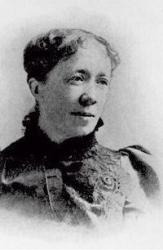
Mary A. Lathbury

1841 - 1913 Topics: Processionals and Recessionals General Author of "Break Thou The Bread Of Life" in American Lutheran Hymnal Lathbury, Mary Ann, was born in Manchester, Ontario County, New York, Aug. 10, 1841. Miss Lathbury writes somewhat extensively for the American religious periodical press, and is well and favourably known (see the Century Magazine, Jan., 1885, p. 342). Of her hymns which have come into common use we have:— 1. Break Thou the bread of life. Communion with God. A "Study Song" for the Chautauqua Literary and Scientific Circle, written in the summer of 1880. It is in Horder's (Eng.) Congregational Hymns, 1884. 2. Day is dying in the west. Evening. "Written at the request of the Rev. John H. Vincent, D.D., in the summer of 1880. It was a "Vesper Song," and has been frequently used in the responsive services of the Chautauqua Literary and Scientific Circle." It is in the Laudes Domini, N. Y., 1884. For these details we are indebted to S. W. Duffield's English Hymns, &c, N. Y., 1886. --John Julian, Dictionary of Hymnology (1907) ================== Lathbury, Mary A., p. 640, i. Another hymn by this writer is, "Lift up, lift up thy voice with singing." [Praise to Christ), in Sankey's Sacred Songs & Solos, 1878. --John Julian, Dictionary of Hymnology, Appendix, Part II (1907)

Benjamin Schmolck

1672 - 1737 Topics: Processionals Author of "Open Now Thy Gates of Beauty" in The Hymnbook Schmolck, Benjamin, son of Martin Schmolck, or Schmolcke, Lutheran pastor at Brauchitschdorf (now Chrόstnik) near Liegnitz in Silesia (now Poland) was born at Brauchitschdorf, Dec. 21, 1672. He entered the Gymnasium at Lauban in 1688, and spent five years there. After his return home he preached for his father a sermon which so struck the patron of the living that he made Benjamin an allowance for three years to enable him to study theology. He matriculated, at Michaelmas, 1693, at the University of Leipzig, where he came under the influence of J. Olearius, J. B. Carpzov, and others, and throughout his life retained the character of their teaching, viz. a warm and living practical Christianity, but Churchly in tone and not Pietistic. In the autumn of 1697, after completing his studies at Leipzig (during his last year there he supported himself mainly by the proceeds of occasional poems written for wealthy citizens, for which he was also, crowned as a poet), he returned to Brauchitzchdorf to help his father, and, in 1701, was ordained as his assistant. On Feb. 12, 1702, he married Anna Rosina, daughter of Christoph Rehwald, merchant in Lauban and in the end of the same year was appointed diaconus of the Friedenskirche at Schweidnitz in Silesia. As the result of the Counter-Reformation in Silesia, the churches in the principality of Schweidnitz had been taken from the Lutherans, and for the whole district the Peace of Westphalia (1648) allowed only one church (and that only of timber and clay, without tower or bells), which the Lutherans had to build at Schweidnitz, outside the walls of the town; and the three clergy attached to this church had to minister to a population scattered over some thirty-six villages, and were moreover hampered by many restrictions, e.g. being unable to communicate a sick person without a permit from the local Roman Catholic priest. Here Schmolck remained till the close of his life, becoming in 1708 archidiaconus, in 1712 senior, and in 1714 pastor primarius and inspector. Probably as the result of his exhausting labours he had a stroke of paralysis on Laetare (Mid-Lent) Sunday, 1730, which for a time laid him aside altogether, and after which he never recovered the use of his right hand. For five years more he was still able to officiate, preaching for the last time on a Fastday in 1735. But two more strokes of paralysis followed, and then cataract came on, relieved for a time by a successful operation, but returning again incurably. For the last months of his life he was confined to bed, till the message of release came to him, on the anniversary of his wedding, Feb. 12, 1737. (Koch, v. 463; Bode, p. 144; Goedeke's Grundriss, vol. iii., 1887, p. 306; sketch prefixed to Ledderhose's edition of Schmolck's Geistliche Lieder, Halle, 1857, &c.) Schmolck was well known in his own district as a popular and useful preacher, a diligent pastor, and a man of wonderful tact and discretion. It was however his devotional books, and the original hymns therein contained, that brought him into wider popularity, and carried his name and fame all over Germany. Long lists of his works and of the various editions through which many of them passed are given by Koch, Bode and Goedehe. It is rather difficult to trace the hymns, as they are copied from one book of his into another, &c. Schmolck was the most popular hymnwriter of his time, and was hailed as the "Silesian Rist," as the "second Gerhardt," &c. Nor was he altogether unworthy of such praise. It is true that he did not possess the soaring genius of Gerhardt. Nor had he even Gerhardt's concise, simple style, but instead was too fond of high-sounding expressions, of plays upon words, of far-fetched but often recurring contrasts, and in general of straining after effect, especially in the pieces written in his later years. In fact he wrote a great deal too much, and latterly without proper attention to concentration or to proportion. Besides Cantatas, occasional pieces for weddings, funerals, &c, he is the author of some 900 hymns, properly so called. These were written for all sorts of occasions, and range over the whole field of churchly, family, and individual life. Naturally they are not all alike good; and those in his first three collections are decidedly the best. A deep and genuine personal religion, and a fervent love to the Saviour, inspire his best hymns; and as they are not simply thought out but felt, they come from the heart to the heart. The best of them are also written in a clear, flowing, forcible, natural, popular style, and abound in sententious sayings, easily to be remembered. Even of these many are, however, more suited for family use than for public worship. Nevertheless they very soon came into extensive use, not only in Silesia, but all over Germany. A number of Schmolck's hymns [that] have passed into English are:— i. Der beste Freund ist in dem Himmel. Love of Jesus. First published in his Heilige Flammen (ed. 1709, p. 100), in 6 stanzas of 6 lines, entitled "The best Friend." The translation in common use is:— A faithful friend is waiting yonder. This is a good translation, omitting stanza v., as No. 293, in Kennedy, 1863. ii. Die Woche geht zum Ende. Saturday Evening. In his Andächtige Hertze, 1714, p. 116, in 10 stanzas of 8 lines, entitled "Evening Hymn," and appointed for Evening Prayer on Saturday. In the Berlin Geistliche Lieder, ed. 1863, No. 1158. Translated as:— The week draws near its ending. This is a good translation of stanzas i., vi., vii., x., marked as by "A. G.," as No. 81 in the Dalston Hospital Hymn Book 1848. Other trs. are: (1) “Though now the week is ending," by H. J. Buckoll, 1842, p. 107. (2) “The week at length is over," by Miss Manington, 1863, p. 137. iii. Gott du hist selbst die Liehe. Holy Matrimony. Translated as:— O God, "Who all providest. This is a good translation, omitting stanza iii., by J. M. Sloan, as No. 312 in J. H. Wilson's Service of Praise, 1865. iv. Halleluja! Jesus lebt. Easter. In his Bochim und Elim, 1731, p. 67, in 5 stanzas of 6 lines, entitled "Hallelujah! at the grave of Jesus." In the Berlin Geistliche Lieder, ed. 1863, No. 296. Tr. as:— Hallelujah! Lo, He wakes. By E. Cronenwett, omitting st. iv., as No. 79 in the Ohio Lutheran Hymnal 1880. Another translation is: "Hallelujah! Jesus lives! Life, immortal life, He gives." This is a full and good translation, by Miss Warner, 1858, p. 486, repeated in the Treasury of Sacred Song, Kirkwall, n.d. v. Heute mir und Morgen dir. Funeral Hymn. In his Schmuck und Asche, 1717, p. 252, in 6 stanzas of 6 lines, entitled "Daily Dying". The tr. in common use is:— Today mine, tomorrow thine. This is a good and full translation, by Miss Warner, in her Hymns of the Church Militant, 1858, p. 260. vi. Je grösser Kreuz, je näher Himmel. Cross and Consolation. In his Andächtige Hertz, 1714, p. 273, in 9 stanzas of 6 lines, entitled "Hymn of Cross and Consolation." By its sententiousness and its manifold illustrations of the power of the Cross it has been a favourite with many. Translated as:— 1. Greater the Cross, the nearer heaven. 2. The more the cross, the nearer heaven. Another translation is: "The heavier the cross, the nearer heaven," by J. D. Burns, in the Family Treasury, 1859, p. 160. vii. Jesus soil die Losung sein. New Year. The translation in common use is:— Jesus shall the watchword he. Another translation is: "Jesu's name shall be our watchword," by J. Kelly, in the Family Treasury, 1868, p. 689. viii. Licht vom Licht, erleuchte mich. Sunday Morning. Translated as:— Light of Light, enlighten me. This is a very good tr. omitting stanza vii., by Miss Winkworth, in her Lyra Germanica, 2nd Ser., 1858, p. 66, and thence in her Chorale Book for England, 1863, No. 17. Other translations are: (1) "Light of Light! illumine me," by H. J. Buckoll, 1842, p. 6. (2) "O thou blessed Light of Light," by Miss Dunn, 1857, p. 74. ix. Meinen Jesum lass ich nicht, Ach was wollt ich hessres haben. Love to Christ. Translated as:— I'll with Jesus never part. This is a translation of st. i., ii., iv., as stanzas iii.-v. of No. 378 in the Moravian Hymn Book, 1789. In the ed. of 1886, No. 452 (see p. 614, i.), the part from Schmolck begins, "He is mine and I am His" (the translation of stanza ii.). Another tr. is: "I'll not leave Jesus—-never, never," by Miss Warner, 1858, p. 509. x. Mein Gott, ich weiss wohl dass ich sterbe. For the Dying. Translated as:— My God! I know that I must die, My mortal. Other trs. are: (1) "That I shall die full well 1 know," by Dr. H. Mills, 1845 (1856, p. 232). (2) "My God! I know full well that I must die," by Miss Warner, 1858, p. 344. (3) "My God, I know that I must die; I know," by G. Moultrie, in his Espousals of S. Dorothea, 1870. xi. Mein Jesus lebt! was soil ich sterben. Easter. Translated as:— My Saviour lives; I shall not perish. xii. 0 wie fröhlich, o wie selig. Eternal Life. Translated as:— Oh how joyous, oh how blessed. Another tr. is: "Oh, how blest beyond our telling." xiii. Schmückt das Fest mit Maien. Whitsuntide. Translated as:— Come, deck our feast today. xiv. Thut mir auf die schöne Pforte. Sunday. Translated as:— 1. Open now thy gates of beauty. This is a good tr., omitting stanza iii., vii., by Miss Winkworth, in her Chorale Book for England, 1863, No. 15. 2. Open wide the gates of beauty. This is a translation of stanzas i., ii., iv., vi.-vii., by H. L. Hastings, dated 1885, as No. 1076, in his Songs of Pilgrimage, 1886. Another tr. is: "Throw the glorious gates wide open," by Miss Manington, 1863, p. 146. xv. Weine nicht, Gott lebet noch. Cross and Consolation. Tr. as:— "Weep not,-—Jesus lives on high. Another tr. is: "Weep not, for God, our God, doth live," by Dr. R. Maguire, 1883, p. 59. xvi. Willkommen, Held im Streite. Easter. The translation in common use is:— Welcome Thou victor in the strife. This is a good translation omitting st. ii.—iv., by Miss Winkworth, in her Lyra Germanica, 1st Ser., 1855, p. 91. Hymns not in English common use:-- xvii. Ach wenn ich dich, mein Gott, nur habe. Love to God. Founded on Ps. lxxiii. 25, 26. Translated as "My God, if I possess but Thee," by G. Moultrie, in his Espousals of S. Dorothea, 1870. xviii. An Gott will ich gedenken. Remembering God's Love and Care. In his Heilige Flammen (ed. 1707, p. 59; ed. 1709, p. 131), in 6 stanzas of 8 lines, and Burg's Gesang-Buch, Breslau, 1746, No. 112. Translated as "My God will I remember," by J. Kelly, in the Family Treasury, 1868. xix. Der Sabbath ist vergangen. Sunday Evening. Tr. as "The Sabbath now is over," by Dr. H. Mills, 1856, p. 226. xx. Du angenehmer Tag. Sunday. In his Lustige Sabbath, 1712, p. 1, in 8 stanzas of 6 lines. Tr. as “Thou ever welcome day," by J. Kelly, in the Family Treasury, 1868, p. 688. xxi. Endlich, endlich, muss es doch. Cross and Consolation. Translated as "Yes, at last, our God shall make," in the Christian Examiner, Boston, U.S., Sept., 1860, p. 251. xxii. Gedenke mein, mein Gott, gedenke mein. For the Dying. Translated as "Remember me, my God! remember me," by Miss Borthwick, in Hymns from the Land of Luther 1854, p. 9. xxiii. Geh, müder Leib, zu deiner Euh. Evening. Translated as "Go, wearied body, to thy rest," by J. Kelly, in the Family Treasury, 1868. In his Lustige Sabbath, 1712, p. 35, in 10 stanzas of 6 lines, and Burg’s Gesang-Buch, Breslau, 1746, No. 403. Translated as "King, to Jews and Gentiles given," by Dr. H. Mills, 1845. xxiv. Gott der Juden,Gott der Heiden. Epiphany. Translated as “King, to Jews and Gentiles given,” by Dr. H. Mills, 1845. xxv. Gott lebt, wie kann ich traurig sein. Trust in God. Translated as "God lives! Can I despair," by Miss Warner, 1869, p. 44. xxvi. Gott mit uns, Immanuel. New Year. Translated as "God with us! Immanuel, Open with the year before us," by Dr. R. P. Dunn, in Sacred Lyrics from the German, Philadelphia, U.S., 1859, p. 166. xxvii. Hier ist Immanuel! New Year. Translated as "Here is Immanuel!" by Miss Manington, 1864, p. 24. xxviii. Hilf, Heifer, hilf! ich muss verzagen. Cross and Consolation. Translated as "Help, Saviour, help, I sink, I die,” in the Monthly Packet, vol. xviii., 1859, p. 664. xix. Ich habe Lust zu scheiden. For the Dying. Tr. as "Weary, waiting to depart," by Mrs. Findlater, in Hymns from the Land of Luther, 1855, p 130. xxx. Ich sterbe täglich, und mein Leben. For the Dying. Translated as "Both life and death are kept by Thee" (st. iv.), by J. Kelly, in the Family Treasury, 1868, p. 689. xxxi. Mein Gott, du hast mich eingeladen. Sunday. Translated as "My God, Thou hast the invite given," by Miss Manington, 1863, p. 150. xxxii. Mein Gott! du wohnst in einem Lichte. Holy Scripture. Translated as "In glory bright, O God, Thou dwellest," by Dr. H. Mills, 1845. xxxiii. Mein Gott, ich klopf an deine Pforte. Supplication. Tr.Translated as "given as "Mein Gott, mein Erstes und mein Alles." Translated as "My God! the Source of all my blessing," in the British Herald, August, 1866, p. 312; repeated in Reid's Praise Book, 1872. xxxv. Mein Gott, weil ich in meinem Leben. The ChristiaWho, Lord, has any good whatever," by Dr. H. Mills, 1845, p. 91. xxxiv. Mein Gott, mein Alles Uber Alles. Trust in God. Sometimes n Life. Translated as "Most High! with reverence to fear Thee," by Dr. H. Mills, 1845, p. 114.). xxxvi. Nun hab ich überwunden; Zu guter Nacht, o Welt. For the Dying. Translated as "Now soon I shall have conquer'd," by Miss Manington, 1863, p. 87. xxxvii. Seht welch ein Mensch ist das. Passiontide. The translations are (1) "See, what a man is this! How tearful is His glance," by J. Kelly, in the British Messenger, Feb., 1S68; repeated in the Family Treasury, 1868, p. 691. (2) "See what a man is this, O glances," by Miss Warner, 1869, p. 32. xxxviii. Sei getreu bis in den Tod. Christian Faithfulness. Translated as "Be thou faithful unto death! Let not troubles nor distresses," by R. Massie, in the Day of Rest, 1878, vol. ix. p. 219. xxxix. Theures Wort aus Gottes Munde. Holy Scripture. Translated as "Word by God the Father spoken," by Miss Manington, 1863. xl. Was Gott thut das ist wohlgethan! Er giebt und nimmt auch wieder. On the Death of a Child. The trs. are (1) "What God does is well done, "Who takes what He gave," by W. Graham, in his The Jordan and the Rhine, London, 1854, p. 251. (2) "Whatever God doth is well done, He gives, &c," by J. Kelly, in the Family Treasury, 1868, p. 688. xli. Wer will mich von der Liebe scheiden. Faith. Translated as "Who can my soul from Jesus sever," by Miss Manington, 1863, p. 39. [Rev. James Mearns, M.A.] --Excerpts from John Julian, Dictionary of Hymnology (1907)

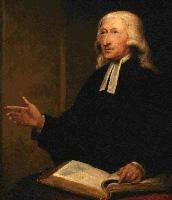
John Wesley

1703 - 1791 Topics: Processionals Alterer (st. 1, lines 1, 2) of "Before Jehovah's awful throne" in Trinity Hymnal John Wesley, the son of Samuel, and brother of Charles Wesley, was born at Epworth, June 17, 1703. He was educated at the Charterhouse, London, and at Christ Church, Oxford. He became a Fellow of Lincoln College, Oxford, and graduated M.A. in 1726. At Oxford, he was one of the small band consisting of George Whitefield, Hames Hervey, Charles Wesley, and a few others, who were even then known for their piety; they were deridingly called "Methodists." After his ordination he went, in 1735, on a mission to Georgia. The mission was not successful, and he returned to England in 1738. From that time, his life was one of great labour, preaching the Gospel, and publishing his commentaries and other theological works. He died in London, in 1791, in his eighty-eighth year. His prose works are very numerous, but he did not write many useful hymns. It is to him, however, and not to his brother Charles, that we are indebted for the translations from the German. --Annotations of the Hymnal, Charles Hutchins, M.A., 1872 ====================== John Wesley, M.A., was born at Epworth Rectory in 1703, and, like the rest of the family, received his early education from his mother. He narrowly escaped perishing in the fire which destroyed the rectory house in 1709, and his deliverance made a life-long impression upon him. In 1714 he was nominated on the foundation of Charterhouse by his father's patron, the Duke of Buckingham, and remained at that school until 1720, when he went up, with a scholarship, from Charterhouse to Christ Church, Oxford. Having taken his degree, he received Holy Orders from the Bishop of Oxford (Dr. Potter) in 1725. In 1726 he was elected Fellow of Lincoln College, and remained at Oxford until 1727, when he returned into Lincolnshire to assist his father as curate at Epworth and Wroot. In 1729 he was summoned back to Oxford by his firm friend, Dr. Morley, Rector of Lincoln, to assist in the College tuition. There he found already established the little band of "Oxford Methodists" who immediately placed themselves under his direction. In 1735 he went, as a Missionary of the Society for the Propagation of the Gospel, to Georgia, where a new colony had been founded under the governorship of General Oglethorpe. On his voyage out he was deeply impressed with the piety and Christian courage of some German fellow travellers, Moravians. During his short ministry in Georgia he met with many discouragements, and returned home saddened and dissatisfied both with himself and his work; but in London he again fell in with the Moravians, especially with Peter Bohler; and one memorable night (May 24, 1738) he went to a meeting in Aldersgate Street, where some one was reading Luther's preface to the Epistle to the Romans. There, "About a quarter before nine, while he was describing the change which God works in the heart through faith in Christ, I felt my heart strangely warmed. I felt I did trust in Christ, Christ alone, for salvation; and an assurance was given me, that He had taken away my sins, even mine, and saved me from the law of sin and death." From that moment his future course was sealed; and for more than half a century he laboured, through evil report and good report, to spread what he believed to be the everlasting Gospel, travelling more miles, preaching more sermons, publishing more books of a practical sort, and making more converts than any man of his day, or perhaps of any day, and dying at last, March 2, 1791, in harness, at the patriarchal age of 88. The popular conception of the division of labour between the two brothers in the Revival, is that John was the preacher, and Charles the hymnwriter. But this is not strictly accurate. On the one hand Charles was also a great preacher, second only to his brother and George Whitefield in the effects which he produced. On the other hand, John by no means relegated to Charles the exclusive task of supplying the people with their hymns. John Wesley was not the sort of man to depute any part of his work entirely to another: and this part was, in his opinion, one of vital importance. With that wonderful instinct for gauging the popular mind, which was one element in his success, he saw at once that hymns might be utilized, not only for raising the devotion, but also for instructing, and establishing the faith of his disciples. He intended the hymns to be not merely a constituent part of public worship, but also a kind of creed in verse. They were to be "a body of experimental and practical divinity." "In what other publication," he asks in his Preface to the Wesleyan Hymn Book, 1780 (Preface, Oct. 20,1779), "have you so distinct and full an account of Scriptural Christianity; such a declaration of the heights and depths of religion, speculative and practical; so strong cautions against the most plausible errors, particularly those now most prevalent; and so clear directions for making your calling and election sure; for perfecting holiness in the fear of God?" The part which he actually took in writing the hymns, it is not easy to ascertain; but it is certain that more than thirty translations from the German, French and Spanish (chiefly from the German) were exclusively his; and there are some original hymns, admittedly his composition, which are not unworthy to stand by the side of his brother's. His translations from the German especially have had a wide circulation. Although somewhat free as translations they embody the fire and energy of the originals. It has been the common practice, however for a hundred years or more to ascribe all translations from the German to John Wesley, as he only of the two brothers knew that language; and to assign to Charles Wesley all the original hymns except such as are traceable to John Wesley through his Journals and other works. The list of 482 original hymns by John and Charles Wesley listed in this Dictionary of Hymnology have formed an important part of Methodist hymnody and show the enormous influence of the Wesleys on the English hymnody of the nineteenth century. -- Excerpts from John Julian, Dictionary of Hymnology (1907) =================== See also in: Hymn Writers of the Church

Frank M. Davis

1839 - 1896 Topics: Processionals Author of "Lead Me, Savior" in The New National Baptist Hymnal (21st Century Edition) Frank Marion Davis USA 1839-1896. Born at Marcellus, NY, he became a teacher and professor of voice, a choirmaster and a good singer. He traveled extensively, living in Marcellus, NY, Vicksburg, MS, Baltimore, MD, Cincinnati, OH, Burr Oak and Findley, MI. He compiled and published several song books: “New Pearls of Song” (1877), “Notes of Praise” (1890), “Crown of gold” (1892), “Always welcome” (1881), “Songs of love and praise #5” (1898), “Notes of praise”, and “Brightest glory”. He never married. John Perry

Edmond Budry

1854 - 1932 Person Name: Edmond L. Budry, 1854-1932 Topics: Processionals Author of "Thine Is the Glory" in African Methodist Episcopal Church Hymnal

John Chandler

1806 - 1876 Person Name: John Chandler, 1806-1876 Topics: Processionals Translator of "On Jordan's bank" in The Book of Praise John Chandler, one of the most successful translators of hymns, was born at Witley in Surrey, June 16, 1806. He was educated at Corpus Christi College, Oxford, B.A. 1827, M.A. 1830. Ordained deacon in 1831 and priest in 1832, he succeeded his father as the patron and vicar of Whitley, in 1837. His first volume, entitled The Hymns of the Primitive Church, now first Collected, Translated and Arranged, 1837, contained 100 hymns, for the most part ancient, with a few additions from the Paris Breviary of 1736. Four years later, he republished this volume under the title of hymns of the Church, mostly primitive, collected, translated and arranged for public use, 1841. Other publications include a Life of William of Wykeham, 1842, and Horae sacrae: prayers and meditations from the writings of the divines of the Anglican Church, 1854, as well as numerous sermons and tracts. Chandler died at Putney on July 1, 1876. --The Hymnal 1940 Companion =============== Chandler, John, M.A.,one of the earliest and most successful of modern translators of Latin hymns, son of the Rev. John F. Chandler, was born at Witley, Godalming, Surrey, June 16, 1806, and educated at Corpus Christi College, Oxford, where he graduated in 1827. He took Holy Orders in 1831, and became Vicar of Witley in 1837. He died at Putney, July 1, 1876. Besides numerous Sermons and Tracts, his prose works include Life of William of Wykeham, 1842; and Horae Sacrae; Prayers and Meditations from the writings of the Divines of the Anglican Church, with an Introduction, 1844. His translations, he says, arose out of his desire to see the ancient prayers of the Anglican Liturgy accompanied by hymns of a corresponding date of composition, and his inability to find these hymns until he says, "My attention was a short time ago directed to some translations [by Isaac Williams] which appeared from time to time in the British Magazine, very beautifully executed, of some hymns extracted from the Parisian Breviary,with originals annexed. Some, indeed, of the Sapphic and Alcaic and other Horatian metres, seem to be of little value; but the rest, of the peculiar hymn-metre, Dimeter Iambics, appear ancient, simple, striking, and devotional—in a word in every way likely to answer our purpose. So I got a copy of the Parisian Breviary [1736], and one or two other old books of Latin Hymns, especially one compiled by Georgius Cassander, printed at Cologne, in the year 1556, and regularly applied myself to the work of selection and translation. The result is the collection I now lay before the public." Preface, Hymns of the Primitive Church, viii., ix. This collection is:— (1) The Hymns of the Primitive Church, now first Collected, Translated, and Arranged, by the Rev. J. Chandler. London, John W. Parker, 1837. These translations were accompanied by the Latin texts. The trsanslations rearranged, with additional translations, original hymns by Chandler and a few taken from other sources, were republished as (2) The Hymns of the Church, mostly Primitive, Collected, Translated, and Arranged/or Public Use, by the Rev. J. Chandler, M.A. London, John W. Parker, 1841. From these works from 30 to 40 translations have come gradually into common use, some of which hold a foremost place in modern hymnals, "Alleluia, best and sweetest;" "Christ is our Corner Stone;" "On Jordan's bank the Baptist's cry;" "Jesus, our Hope, our hearts' Desire;" "Now, my soul, thy voice upraising;" "Once more the solemn season calls;" and, "O Jesu, Lord of heavenly grace;" being those which are most widely used. Although Chandler's translations are somewhat free, and, in a few instances, doctrinal difficulties are either evaded or softened down, yet their popularity is unquestionably greater than the translations of several others whose renderings are more massive in style and more literal in execution. --John Julian, Dictionary of Hymnology (1907)

Frederick C. Maker

1844 - 1927 Person Name: F. C. Maker Topics: Processionals and Recessionals Lent Composer of "MAKER" in American Lutheran Hymnal Frederick C. Maker (b. Bristol, England, August 6, 1844; d. January 1, 1927) received his early musical training as a chorister at Bristol Cathedral, England. He pursued a career as organist and choirmaster—most of it spent in Methodist and Congregational churches in Bristol. His longest tenure was at Redland Park Congregational Church, where he was organist from 1882-1910. Maker also conducted the Bristol Free Church Choir Association and was a long-time visiting professor of music at Clifton College. He wrote hymn tunes, anthems, and a cantata, Moses in the Bulrushes. Bert Polman

Thomas Haweis

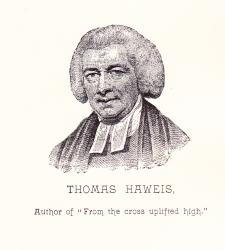
1734 - 1820 Person Name: Thomas Haweis, 1734-1820 Topics: Processionals Comoser of "RICHMOND" in The Book of Praise Thomas Haweis (b. Redruth, Cornwall, England, 1734; d. Bath, England, 1820) Initially apprenticed to a surgeon and pharmacist, Haweis decided to study for the ministry at Oxford and was ordained in the Church of England in 1757. He served as curate of St. Mary Magdalen Church, Oxford, but was removed by the bishop from that position because of his Methodist leanings. He also was an assistant to Martin Madan at Locke Hospital, London. In 1764 he became rector of All Saints Church in Aldwinkle, Northamptonshire, and later served as administrator at Trevecca College, Wales, a school founded by the Countess of Huntingdon, whom Haweis served as chaplain. After completing advanced studies at Cambridge, he published a Bible commentary and a volume on church history. Haweis was strongly interested in missions and helped to found the London Mission Society. His hymn texts and tunes were published in Carmino Christo, or Hymns to the Savior (1792, expanded 1808). Bert Polman ============================ Haweis, Thomas, LL.B., M.D., born at Truro, Cornwall, 1732. After practising for a time as a Physician, he entered Christ's College, Cambridge, where he graduated. Taking Holy Orders, he became Assistant Preacher to M. Madan at the Lock Hospital, London, and subsequently Rector of All Saints, Aldwincle, Northamptonshire. He was also Chaplain to Lady Huntingdon, and for several years officiated at her Chapel in Bath. He died at Bath, Feb. 11, 1820. He published several prose works, including A History of the Church, A Translation of the New Testament, and A Commentary on the Holy Bible. His hymns, a few of which are of more than ordinary merit, were published in his Carmina Christo; or, Hymns to the Saviour. Designed for the Use and Comfort of Those who worship the Lamb that was slain. Bath, S. Hayward, 1792 (139 hymns), enlarged. London, 1808 (256 hymns). In 1794, or sometime after, but before the enlarged edition was published, two hymns "For the Fast-day, Feb. 28, 1794," were added to the first edition. These were, "Big with events, another year," and "Still o'er the deep the cannon's roar." The most popular and widely used of his hymns are, "Behold the Lamb of God, Who bore," &c.; "Enthroned on high, Almighty Lord"; and “O Thou from Whom all goodness flows." The rest, all being from Carmina Christo, first edition 1792, are:— 1. Dark was the night and cold the ground. Gethsemane. 2. From the cross uplifted high. Christ in Glory. 3. Great Spirit, by Whose mighty power. Whitsuntide. 4. Submissive to Thy will, my God. Resignation. 5. The happy morn is come. Easter. 6. Thou Lamb of God, that on the tree. Good Friday. The hymn, "Thy Head, the crown of thorns that wears," in Stryker & Main's Church Praise Book, N. Y., 1882, begins with st. ii. of this hymn. 7. To Thee, my God and Saviour, My heart, &c. Praise for Redemption. --John Julian, Dictionary of Hymnology (1907)

Pages


Export as CSV
It looks like you are using an ad-blocker. Ad revenue helps keep us running. Please consider white-listing Hymnary.org or getting Hymnary Pro to eliminate ads entirely and help support Hymnary.org.