You help make Hymnary.org possible. More than 10 million people from 200+ countries found hymns, liturgical resources and encouragement on Hymnary.org in 2025, including you. Every visit affirms the global impact of this ministry.

If Hymnary has been meaningful to you this year, would you take a moment today to help sustain it? A gift of any size—paired with a note of encouragement if you wish—directly supports the server costs, research work and curation that keep this resource freely available to the world.

Give securely online today, or mail a check to:
Hymnary.org
Calvin University
3201 Burton Street SE
Grand Rapids, MI 49546

Thank you for your partnership, and may the hope of Advent fill your heart.

Person Results

Topics:seventeenth+sunday+after+trinity
In:people

Planning worship? Check out our sister site, ZeteoSearch.org, for 20+ additional resources related to your search.
Showing 51 - 60 of 80Results Per Page: 102050

John Marckant

Person Name: J. Marckant Topics: The Church Year Seventeenth Sunday after Trinity; The Church Year Seventeenth Sunday after Trinity Author of "O Lord, turn not Thy face away " in The Lutheran Hymnary Marckant, John, fl. 1562; one of contributors to the Sternhold & Hopkins metrical psalter of 1562; inducted vicar of Clacton-Magna 1559; Vicar of Shopland, Essex 1563-8. LOC Name Authority Files ================== 16th Century Marckant was Incumbent of Clacton Magna (1559) & Shopland (1563-68), England. He wrote only few small pieces: a political poem on Lord Wentworth (1558-59); a New Year’s gift entitled With Speed Return to God; and Verses to Divers Good Purposes (circa 1580). He also contributed four entries to the metrical version of the Psalms known as the Old Version. Sources: Hughes, pp. 141-46 Julian, p. 863 http://www.hymntime.com/tch/bio/m/a/r/c/marckant_j.htm ================ http://en.wikipedia.org/wiki/John_Marckant

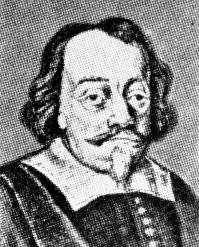
Valentin Thilo

1607 - 1662 Topics: Seventeenth Sunday after Trinity Sunday Author of "O Menneske, bereder " in Salmebog for Lutherske Kristne i Amerika Thilo, Valentin, son of Valentin Thiel or Thilo [born Jan. 2, 1579, at Zinten, became diaconus of the Altstadt Church in 1603, and died of the pestilence at Königsberg in 1620], diaconus of the Altstadt Church in Königsberg, was born at Königsberg, April 19, 1607. He matriculated in 1624 at the University of Königsberg as a student of theology, but devoted himself more especially to the study of rhetoric. When the Professor of Rhetoric, Samuel Fuchs, retired in 1632, he recommended Thilo as his successor. The post was, at Thilo's desire, kept open for two years, during which he pursued his studies at the University of Leyden. On returning to Königsberg, he graduated M.A. there on April 20, 1634, and was thereafter installed as Professor of Rhetoric. During his 28 years’ tenure of office he was five times elected as dean of the Philosophical Faculty, and twice as Rector of the University. He died at Königsberg, July 27,1662. (Koch, iii 202; K. Goedeke's Grundriss, vol. iii., 1887, p. 135, &c.) Thilo was a great friend of Heinrich Albert and of Simon Dach, and was with them a member of the Königsberg Poetical Union. He was the author of two text books on Rhetoric, published in 1635 and 1647. Some of his separately printed occasional poems are noted by Goedeke as above. His hymns were almost all written for various Festivals of the Christian Year. They are as a rule short and vigorous, and are somewhat akin to those of Dach. They appeared principally in the Preussische Fest-Lieder, Elbing, 1642-44 [Berlin Library], and in the New Preussisches vollständiges Gesang-Buch, Königsberg, 1650 [Hamburg Library]. A list of their first lines is printed in the Altpreussische Monats-schrift, Königsberg, 1889, p. 308, where evidence is given to show that they are by the younger Thilo, and not, as has sometimes been said, by the father. The only hymn by Thilo translated into English is:— Mit Ernst, o Menschenkinder. Advent. This is a fine hymn founded on St. Luke iii. 4, 5, and was first published in pt. i., Elbing, 1642, of the Preussische Fest-Lieder, as No. 8, in 4 stanzas of 8 lines, entitled "On the Fourth Sunday of Advent. Parate viam Domino," and marked as by "Valentinus Thilo." Lauxmann, in Koch, viii. 8, considers st. iii. the finest, and thinks that it may have been suggested by the remembrance of his beloved sister (wife of Pastor Kuhn, of the Rossgart Church in Königsberg), who died of the pestilence on Aug. 16, 1639, and as a picture of her character. Translated as:— 1. 0 sons of men, your spirit. This is a good translation of st. i.-iii., by A. T. Russell, as No. 35 in his Psalms & Hymns 1851. 2. Ye sons of men, in earnest. This is a good translation of the original form, by Miss Winkworth, as No. 84 in her Chorale Book for England, 1863. It is repeated, omitting st. iii., in the Ohio Lutheran Hymnal 1880, No. 121. [Rev. James Mearns, M.A.] -- Excerpts from John Julian, Dictionary of Hymnology (1907)

Johannes Tauler

1300 - 1361 Person Name: Tauler Topics: Seventeenth Sunday after Trinity Sunday Author of "Hvorhen skal jeg dog fly" in Salmebog for Lutherske Kristne i Amerika Tauler, Johannes, was born at Strassburg about 1300, and seems to have been the son of Nikolus Tauler or Taweler, of Finkweiler, who in 1304 was a member of the Strassburg Town Council (Mitglied des Raths). About the year 1318 he entered the Dominican convent at Strassburg. He studied for eight years at Strassburg, where the famous Meister Eckhart (d. 1327) was Dominican Professor of Theology from 1312 to 1320. He then went to Cologne to undergo a further training, in theory and practical work, extending over four years. Thereafter he returned to Strassburg where he soon came into note as an eloquent and practical preacher. When much of Germany was laid under interdict by Pope John XXII., because of resenting his interference with the election of the German Emperor in 1324, the Dominicans at Strassburg still continued to preach, to celebrate mass, and to administer to the people the consolations of the Church, even though Strassburg was under the Papal bann. After the Diet of Frankfurt in 1338 the strife between Emperor and Pope (now Benedict XII., Pope since 1334) became more pronounced. Up to 1339 the Dominicans at Strassburg still continued to sing mass, but were then compiled to cease doing so by command of the superiors of their Order. As the Strassburg magistracy still remained faithful to the Emperor, they resented this submission, and accordingly closed the Dominican convent in 1339, and it stood empty lor three years and a half. About the beginning of 1339 we find Tauler in Basel, where he remained for some years, in close connection with Heinrich of Nördlingen and others of the so-called "Friends of God" in that city and neighbourhood. About 1346 he was again in Strassburg, aud he spent most of the remainder of his life there and at Cologne. He died at Strassburg on June 16, 1361.

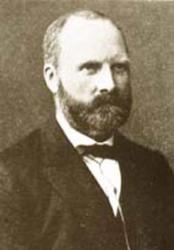
Joseph Anstice

1808 - 1836 Topics: Seventeenth Sunday after Trinity Author of "Lord in Thy Kingdom there shall be" in Evangelical Lutheran hymnal Anstice, Joseph , M.A., son of William Anstice of Madeley, Shropshire, born 1808, and educated at Enmore, near Bridgwater, Westminster, and Ch. Church, Oxford, where he gained two English prizes and graduated as a double-first. Subsequently, at the ago of 22, he became Professor of Classical Literature at King's College, London; died at Torquay, Feb. 29, 1836, aged 28. His works include Richard Coeur de Lion, a prize poem, 1828; The Influence of the Roman Conquest upon Literature and the Arts in Rome (Oxford prize Essay); Selections from the Choice Poetry of the Greek Dramatic Writers, translated into English Verse, 1832, &c. His hymns were printed a few months after his death, as:— Hymns by the late Joseph Anstice, M.A., formerly Student of Christ Church, Oxford, and Professor of Classical Literature, King’s College, London, Bridgwater, 1836, and thus introduced:— "As none of the following Hymns had the advantage of being corrected and prepared for the press by their lamented Author, his family have not considered themselves at liberty to bring them before the public; but, having reason to believe that a large circle of surviving friends will be gratified by possessing a memorial of the manner in which some of his leisure hours were employed, and of the subjects which chiefly occupied his thoughts, during the last few months of his life, they have consented to their being printed for private distribution.—-Bridgwater, June, 1836." This work contains 52 hymns on various subjects, together with a poem "To my Hymn Book." The circumstances under which they were written are thus detailed by Mrs. Anstice in a communication to the Rev. Josiah Miller, author of Singers and Songs of the Church:— "The hymns were all dictated to his wife during the last few weeks of his life, and were composed just at the period of the day (the afternoon) when he felt the oppression of his illness—all his brighter morning hours being given to pupils up to the very day of his death."-—S. & S., p. 495. A few of the hymns are of a joyful character, but the circumstances under which they were written account for the prevailing tone of sadness by which they are chiefly characterized. About one half of these hymns were included by Mrs. Yonge in her Child's Christian Year, 1841. Being thus brought before the public, many soon came into common use. Those in most extensive use are: "Father, by Thy love and power;" "In all things like “Thy brethren, Thou;" "Lord of the harvest, once again;" and, "O Lord, how happy should we be." -- John Julian, Dictionary of Hymnology (1907)

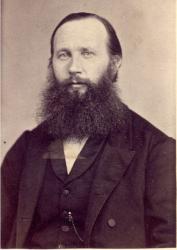
Elias Blix

1836 - 1902 Person Name: Blix Topics: Hymns for the Church Year Seventeenth Sunday after Trinity Sunday; Seventeenth Sunday after Trinity Sunday High Mass Author of "Gud gjerer Godt paa kviledagen" in M. B. Landstads Kirkesalmebog og "Nokre Salmar" ved Professor Dr. E. Blix, samt følgende tillæg

Wilhelm Andreas Wexels

1797 - 1866 Person Name: Wexels Topics: Seventeenth Sunday after Trinity Sunday Author of "O se, hvor lifligt det dog er" in Salmebog for Lutherske Kristne i Amerika Wexels, Wilhelm Andreas. (Copenhagen, Denmark, March 29, 1797--May 14, 1866, Oslo, Norway). Lutheran. After studies in Copenhagen and Christiana (Oslo), became catechist and curate of Our Savior's Lutheran Church in Christiana. Preached against the inroads of rationalism, emphasizing the need for spiritual revival. Church historians claim that his ministry was the turning point in the Church of Norway. Failed in his attempt to give Norway a hymnal, but many of his hymns survived. --J. Irving Erickson, DNAH Archives

Johann D. Meyer

1636 - 1696 Person Name: Johann David Meier Topics: Seventeenth Sunday after Trinity Composer of "RUDOLSTADT (Wer weiss wie nahe mir mein Ende)" in Evangelical Lutheran hymnal

Thomas Morley

1845 - 1891 Person Name: Thomas Morley, 1845-1891 Topics: Seventeenth Sunday after Trinity Composer of "MORLEY" in Evangelical Lutheran hymnal Thomas Morley; b. Oxford, England, 1845; d. St. John, New Brunswick, 1891 Evangelical Lutheran Hymnal, 1908

Christian A. Bernstein

1672 - 1712 Person Name: Krist. Bernstein Topics: Seventeenth Sunday after Trinity Sunday Author of "I Herrens Udvalgte, som Hellighed øve" in Salmebog for Lutherske Kristne i Amerika Bernstein, Christian Andreas, was born at Domnitz, near Halle, where his father, Daniel Bernstein, was pastor. After completing his studies at Halle, he was appointed, in 1695, by A. H. Francke, a tutor in the Padagogium there; was then ordained as assistant to his father (probably at the end of 1696); and died at Domnitz, Oct. 18,1699 (Koch, iv. 365, Allg. Deutsche Biographie ii. 484). From extracts from the Kirchenbuch of Domnitz, kindly sent by Pastor Tauer, it appears that Bernstein was baptized there, July 12, 1672, and thus was probably born July 9. He signed the book as assistant to his father on March 5, 1697. The funeral sermon, Oct. 20, 1699, was preached at his request by Francke, from Isaiah lxi. The statement by his father (who survived till Feb. 27, 1712), that Christian died at the age of 27 years, 3 months, and 2 days, and in the 3rd month and 2nd day of his age, and 3rd year, 14th week of his ministry, seems hardly reconcilable with the other facts. In Freylinghausen's Gesang-Buch., 1704-5, six of his hymns were included, four of which have been translated into English:— i. Ihr Kinder des Höchsten! wie steht's urn die Liebe. [Brotherly Love.] 1704, as above, No. 386, in 9 stanzas. Previously in G. Arnold's Göttliche Sophia, Leipzig, 1700, pt. ii. p. 309, as No. i. of the "Some hitherto unknown hymns." Translated as:—" We in one covenant are joined," of stanza v. by J. Swertner, as No. 384 in the Moravian Hymn Book, 1789. ii. Mein Vater! zeuge mich, dein Kind, nach deinem Bilde. [Names and Offices of Christ.] 1704, as above, No. 62, in 14 stanzas. The translations are:— (1) "My Father! form Thy Child according to Thine Image," by J. C. Jacobi, 1722, p. 125 (1732, p. 12). (2) "Father, make me Thy child," No. 546 in pt. i. of the Moravian Hymn Book, 1754. iii. Schönster aller Schönen. [Love to Christ.] First published in the Geistreiches Gesang-Buch, Halle, 1697, p. 246, in 8 stanzas. Translated as:—"Fairest of all beauties," No. 681 in pt. i. of the Moravian Hymn Book, 1754. iv. Zuletzt gents wohl dem der gerecht auf Erden. [Cross & Consolation.] 1704, as above, No. 440, in 7 stanzas. The translations are:— "At last he's well, who thro' the Blood of Jesus" No. 693, in pt. 1 of the Moravian Hymn Book, 1754. Altered 1789, and changed in metre, 1801, beginning "At last he's blest." (2) "At last all shall be well with those, His own," by Miss Borthwick, in Hymns from the Land of Luther, 1858 (1862, p. 225; 1884, p. 172). [Rev. James Mearns, M. A.] -- John Julian, Dictionary of Hymnology (1907) ========================= Bernstein, Christian Andreas, p. 135, ii. In Spurgeon's Our Own Hymn Book, and others, "O patient, spotless One" is an altered form of a part of the Moravian Hymn Book translation of "Mein Vater," noted on p. 135, ii. (2). Another cento beginning with the same first line is in the Lady Huntingdon Hymn Book, 1764, and later editions. --John Julian, Dictionary of Hymnology, Appendix, Part II (1907)

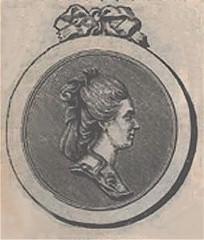
Birgitte K. Boye

1742 - 1824 Person Name: Birg. Boye Topics: Seventeenth Sunday after Trinity Sunday Translator of "Forsøm dog ei din Salighed" in Salmebog for Lutherske Kristne i Amerika Birgitte was born on March 7, 1742, in Gen­tofte, Den­mark. She was the daughter of Jens Jo­han­sen. Boye mar­ried a su­preme court judge in Co­pen­ha­gen, Den­mark. She found time to study German, French and English and translated hymns into Danish from these languages. As a hym­nist, she was in­volved with Guld­bergs og Har­boes Psalm­e­bog (Ove Guld­berg’s and Lud­vig Har­boe’s Psalt­er), to which she con­trib­ut­ed 146 hymns. She al­so pro­duced "na­tion­al dra­ma­tic writ­ing." She died on Oc­to­ber 17, 1824. Sources: Julian, p. 1001 & Stulken, p. 145

Pages


Export as CSV
It looks like you are using an ad-blocker. Ad revenue helps keep us running. Please consider white-listing Hymnary.org or getting Hymnary Pro to eliminate ads entirely and help support Hymnary.org.