You help make Hymnary.org possible. More than 10 million people from 200+ countries found hymns, liturgical resources and encouragement on Hymnary.org in 2025, including you. Every visit affirms the global impact of this ministry.

If Hymnary has been meaningful to you this year, would you take a moment today to help sustain it? A gift of any size—paired with a note of encouragement if you wish—directly supports the server costs, research work and curation that keep this resource freely available to the world.

Give securely online today, or mail a check to:
Hymnary.org
Calvin University
3201 Burton Street SE
Grand Rapids, MI 49546

Thank you for your partnership, and may the hope of Advent fill your heart.

Person Results

Topics:twelfth+sunday+after+trinity
In:person

Planning worship? Check out our sister site, ZeteoSearch.org, for 20+ additional resources related to your search.
Showing 51 - 60 of 69Results Per Page: 102050

Johannes Tauler

1300 - 1361 Person Name: Tauler Topics: Twelfth Sunday after Trinity Sunday For Evening Author of "Hvorhen skal jeg dog fly" in M. B. Landstads Kirkesalmebog og "Nokre Salmar" ved Professor Dr. E. Blix, samt følgende tillæg Tauler, Johannes, was born at Strassburg about 1300, and seems to have been the son of Nikolus Tauler or Taweler, of Finkweiler, who in 1304 was a member of the Strassburg Town Council (Mitglied des Raths). About the year 1318 he entered the Dominican convent at Strassburg. He studied for eight years at Strassburg, where the famous Meister Eckhart (d. 1327) was Dominican Professor of Theology from 1312 to 1320. He then went to Cologne to undergo a further training, in theory and practical work, extending over four years. Thereafter he returned to Strassburg where he soon came into note as an eloquent and practical preacher. When much of Germany was laid under interdict by Pope John XXII., because of resenting his interference with the election of the German Emperor in 1324, the Dominicans at Strassburg still continued to preach, to celebrate mass, and to administer to the people the consolations of the Church, even though Strassburg was under the Papal bann. After the Diet of Frankfurt in 1338 the strife between Emperor and Pope (now Benedict XII., Pope since 1334) became more pronounced. Up to 1339 the Dominicans at Strassburg still continued to sing mass, but were then compiled to cease doing so by command of the superiors of their Order. As the Strassburg magistracy still remained faithful to the Emperor, they resented this submission, and accordingly closed the Dominican convent in 1339, and it stood empty lor three years and a half. About the beginning of 1339 we find Tauler in Basel, where he remained for some years, in close connection with Heinrich of Nördlingen and others of the so-called "Friends of God" in that city and neighbourhood. About 1346 he was again in Strassburg, aud he spent most of the remainder of his life there and at Cologne. He died at Strassburg on June 16, 1361.

E. Cronenwett

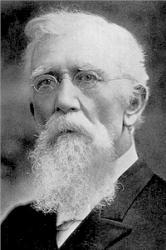
1841 - 1931 Person Name: Rev. Emanuel Cronenwett, D. D. Topics: Twelfth Sunday after Trinity Translator of "What God does, ever well is done! " in Evangelical Lutheran hymnal Cronenwett, Emmanuel, a Lutheran Pastor at Butler, Pennsylvania, U.S.A., contributed to the Evangelical Lutheran Hymnal, Published by Order of the Evangelical Lutheran Joint Synod of Ohio and other States, 1880, in addition to 20 translations from the German, the following original hymns, some of which rank with the best in the collection:— 1. A holy state is wedded life. Domestic Worship. 2. Faith is wisdom from on high. Faith. 3. Heavenly Father, Jesus taught us. Prayer. 4. Lord, Thine omniscience I adore. Omniscience. 5. O Triune God, Thy blessing great. Domestic Worship. 6. Of omniscient grace I sing. Omniscience. 7. Of Zion's honour angels sing. Ordination. 8. The precepts of the word are pure. Holy Scripture. 9. The Spirit's fruits are peace and love. Fruits of the Spirit. 10. 'Tis a marvel in our eyes. Foundation Stone laying of a Church. 11. To Thee, our fathers' God, we bow. Domestic Worship. 12. Unto Caesar let us render. National Thanksgiving. 13. We have a sure, prophetic word. Holy Scripture. --John Julian, Dictionary of Hymnology (1907)

Elias Blix

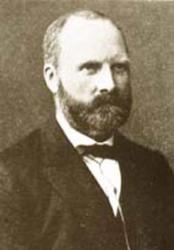
1836 - 1902 Person Name: Blix Topics: Hymns for the Church Year Twelfth Sunday after Trinity Sunday; Twelfth Sunday after Trinity Sunday High Mass Author of "Lat deg upp, du bundne Munn" in M. B. Landstads Kirkesalmebog og "Nokre Salmar" ved Professor Dr. E. Blix, samt følgende tillæg

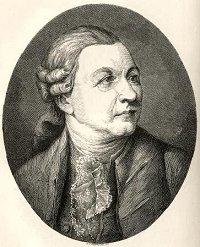
Friedrich Gottlieb Klopstock

1724 - 1803 Person Name: Freiderich Gottlieb Klopstock Topics: Twelfth Sunday after Trinity Author of "Lord, take Thou the veil away" in Evangelical Lutheran hymnal Klopstock, Friedrich Gottlieb, the eldest of the 17 children of Gottlob Heinrich Klopstock (then advocate and commissionsrath at Quedlinburg, and after 1735 amtmann at Friedeburg, on the Saale, near Halle), was born at Quedlinburg, July 2, 1724. From 1739 to 1745 he attended the famous school at Schulpforte, near Naumburg (where he conceived the first idea of his Messias); then he entered the University of Jena, in the autumn of 1745, as a student of theology, and the University of Leipzig at Easter, 1746. At Leipzig he made acquaintance with J. A. Cramer (q.v.); and became one of the contributors to the Bremer Beiträge, in which the first three books of his Messias appeared. In 1748 he became tutor in the house of a merchant named Weiss at Langensalza; and in 1750 accepted an invitation to visit Zurich (the literary capital of Switzerland), where his Messias had been received with great enthusiasm. He was then, in the spring of 1751, invited by the Danish prime minister, Count von Bernstorff, to take up his residence at the Court of King Frederick V., at Copenhagen, in order to be able to finish his Messias free from the cares of a profession; and was, in 1763, appointed Legationsrath. After the Count ceased, in the end of 1770, to be prime minister, Klopstock retired to Hamburg, in 1771, on a pension. The rest of his life was passed mainly at Hamburg, except about a year spent at Carlsruhe, at the Court of the Margave Carl Friedrich of Baden, who appointed him Hofrath. He d. at Hamburg, March 14, 1803, and was buried with civic honours on the 22nd, under a lime-tree in the churchyard at Ottensen (Koch, vi. 322; Allg. Deuteche Biog., xvi, 291, &c). Klopstock ranks among the classic poets of Germany. In his Oden (collected at Hamburg, 1771; enlarged, Leipzig, 1798; finally enlarged, Leipzig, 1804) he is seen at his best; his earlier compositions of this class being the finest modern examples for perfection of form, lyric grace, majesty, and purity of rhythm. His most famous work is his Messias, which on its first appearance created an enthusiasm such as had not been awakened by any German work for centuries. It was suggested by Milton's Paradise Lost, but Milton's calm majesty, firmness of touch, and unity of action were all foreign to Klopstock's nature—his genius was lyric rather than epic. With all its defects of style and construction, it is still a noble work, and could only have been written by a true poet and a sincere Christian; though to us its interest perhaps consists as much in its historical importance and results as in its intrinsic merits. (Books 1-3 written in prose at Jena, and then in hexameter verse at Leipzig, and first pub. in the Neue Beyträge, Bremen, 1748. Books 1-3 revised, and 4, 5 added at Halle, 1751; 6-10 added in the Copenhagen ed., 1755; 11-15, Copenhagen, 1768; 16-20, Halle, 1773. Finally revised ed. in 4 vols., Leipzig, 1800.) In his hymns Klopstock is not seen at his best. He seems to have had little apprecia¬tion of the requirements which the writer of hymns for use in public worship has to meet. His hymns are emotional and subjective, little suited to congregational tunes, and not sufficiently simple in style. In his first collection (1) Geistliche Lieder, Copenhagen, 1758, he included a number of indifferent recasts of earlier German hymns; his second collection (2) Geistliche Lieder, Copenhagen, 1769, consists entirely of original compositions. The only one of his hymns which is still much used in Germany is "Auferstehn, ja auferstehn, wirst du" (q.v.). The others which have passed into English common use are:— i. Deine heilige Geburt. Supplication. In his Geistliche Lieder, 1758, p. 44, in 141, repeated in Knapp's Evangelischer Lieder-Schatz, 1837, No. 468. Translated as "Saviour! by Thy holy birth," by Dr. W. L. Alexander, in 2 stanzas of 8 lines. It was written about 1830, but 1st published in the 2nd ed., 1858, of his Selection of Hymns, No. 339, entitled "Christ's aid invoked." ii. Herr, du wollst sie vollbereiten. Holy Communion. In his Geistliche Lieder, 1758, p. 135, arranged for antiphonal singing by choir and congregation. The form translated into English is "Herr, du wollst uns vorbereiten," being the first two stanzas for choir altered as No. 246 in the Württemberg Gesang-Buch, 1842, in 2 stanzas of 12 lines. Translated as "Grant us, Lord! due preparation," by L. Heyl, in the Ohio Lutheran Hymnal, 1880. Another tr. is, "O God, do Thou Thy folk prepare," by Dr. G. Walker, 1860, p. 64. iii. Nicht nur streiten, überwinden. Christian Warfare. 1st pub. in the G. B. für St. Petri Kopenhagen, 1760, No, 639; repeated in his Geistliche Lieder, 1769, p. 23, in 5 stanzas of 8 lines, entitled "The Victory of the Faithful." In the Berlin Geistliche Leidersegen, ed. 1863. Translated as “Labour ever, late and early," a full but rather free tr. by Dr. Kennedy, in his Hymnologia Christiana, 1863. iv, Zeige dich uns ohne Hülle. Sunday. In his Geistliche Lieder, 1769, p. 88, in 4 stanzas of 8 lines, entitled “Preparation for Divine Service." Included in the Berlin Geistliche Leidersegen, ed. 1863. It is the only hymn by Klopstock much used in English. Translated as "Lord, remove the veil away," a good and full tr. by Miss Borthwick,in Hymns from the Land of Luther, 3rd Ser., 1858, p. 47 (1884, p. 168). Included in full in Kennedy, 1863; Eng. Presbyterian Psalms & Hymns, 1867; Temple Hymn Book, 1867; Dale's English Hymn Book, 1875, and others. It is abridged in W. F. Stevenson's Hymns for Church & Home, 1873, Laudes Domini, N. Y., 1884, and others. Hymns not in English common use:-- v. Ach wie hat mein Herz gerungen. Strength in Weakness. 1769, p. 101, in 10 stanzas, Translated as “Ah me, what woes this heart have wrung," by J. Sheppard, in his Foreign Sacred Lyre , 1857, p. 68. vi. Du wollst erhoren Gott, ihr Flehn. For the Dying . 1758, p. 73, in 11 stanzas. The form translation is the recast (probably by J. S. Diterich), as No. 120, in the Berlin Gesang-Buch 1765, beginning "Dein sind wir Gott! in Ewigkeit." Translated as "We're Thine, O God, for evermore," by Dr. H. Mills, 1845 (1856, p. 241). vii. Selig sind des Himmels Erben. For the Dying; or, At Funerals. 1758, p. 15, in 4 pts., arranged for choir and congregation, in all 10 stanzas. Founded on Rev. xiv. 13. Sung at the funeral of J. C. Lavater, January 4, 1801. Translated as "Blessed are the heirs of heaven," by G. Moultrie, in his Hymns & Lyrics, 1867, p. 337. viii. Starke, die zu dieser Zeit. For the Dying , 1758, p. 1, in 3 stanzas. Translated as "Strengthen, Lord, the weary soul," by G. Moultrie, in his Hymns & Lyrics , 1867, p. 355, marked as an "orison for the departing spirit." ix. Um Erden wandeln Monde. The Lord's Prayer. In his Oden, vol. ii., Leipzig, 1798, p. 119, marked as written in 1789, and entitled "Psalm." It is an ode of 58 lines, embodying and amplifying the Lord's Prayer. Sung at his own funeral. Translated as, (1) "Moons round their planets roll," by J. Sheppard, 1857, p. 46. (2) "Round their planets roll the moons," by Miss Winkworth, 1869, p. 332. x. Wenn ich einst von jenem Schlummer. Morning. 1769, p. 57, in 3 stanzas. In the Württemberg Gesang-Buch, 1842, No. 562. The translations are, (1) "When I rise again to life," by W. Nind, in his Odes of Klopstock, 1848, p. 307. (2) "When I wake from out that slumber," in A. Baskerville's Poetry of Germany, 1854, p. 39, repeated in the Schaff-Gilman Library of Religious Poetry, ed. 1883, p. 282. (3) "Father, let no day to come" (the text used begins with stanza ii. altered to "Gieb dass keiner meiner Tage"), by J. Sheppard, 1857, p. 88. (4) "Since I one day from yonder sleeping," by Miss Warner, 1869, p. 40. xi. Zitternd freu ich mich. The Vision of God. First published in the Nordische Aufselier ed. by J. A. Cramer, vol. ii. (Kopenhagen, 1760). In his Oden, Hamburg, 1771, p. 25, in 90 lines, and marked as written in 1759. Translated as, (1) "With trembling I rejoice," by W. Nind, 1848, p. 130. (2) "I joy, but tremblingly," by J. Sheppard, 1857, p. 24. (3) "Trembling I rejoice," by Miss Winkworth, 1869, p. 329. Besides the above a considerable number of Klopstock's Oden are translated by J. Sheppard in his Foreign Sacred Lyre, 1857. A full selection from the Oden appeared as Odes of Klopstock from 1747 to 1780. Translated from the German by William Nind , London, W. Pickering, 1848. [Rev. James Mearns, M.A.] --John Julian, Dictionary of Hymnology (1907)

Gottfried Wilhelm Sacer

1635 - 1699 Person Name: G. W. Sacer Topics: Twelfth Sunday after Trinity Sunday For Evening Author of "Den Idræt Gud er tækkelig" in M. B. Landstads Kirkesalmebog og "Nokre Salmar" ved Professor Dr. E. Blix, samt følgende tillæg Sacer, Gottfried Wilhelm, son of Andreas Sacer, senior burgomaster of Naumburg, in Saxony, was born atNaumburg, July 11, 1635. He entered the University of Jena in 1653, and remained there for four years as a student of law. He was thereafter for two years secretary to Geheimrath von Platen, in Berlin; and then tutor, first to a son of the Swedish Regierungsrath von Pohlen, and then to the sons of the Saxon Landhauptmann von Bünau. In 1665 he entered the military service under Herr von Mollison, commandant at Lüneberg, at first as regimental secretary, and afterwards as ensign. Soon tiring of this he went to Kiel in 1667, in order to graduate LL.D., but before doing so undertook a tour in Holland and Denmark with some young noblemen from Holstein. In 1670 he settled down as advocate at the appeal and chancery courts in Brunswick (graduating LL.D. at Kiel in 1671), and in 1683 removed to Wolfenbüttel as Kammer-und Amts-advocat, receiving the title of Kammer-Consulent in 1690. He died at Wolfenbüttel, Sept. 8 [18], 1699. (Weizel, iii. p. i.; Koch, iii. 398, iv. 562, &c.) Sacer began early to write poetry, was admitted by Rist, in 1660, as one of his poetical order of Elbe Swans, and in hisNützliche Erinnerungen wegen der teutschen Poeterey, Altenstettin, 1661 [Wolfenbüttel Library], already described himself as " Kayserlicher Poët," i.e. as having been crowned as a poet by the Emperor of Austria. His hymns are among the best of the period immediately succeeding Gerhardt. They have a considerable measure of poetic glow, and sometimes of dramatic force, and are Scriptural and good in style. His earliest hymns seem to have appeared in hisBluttriefende, siegende und triumphirende Jesus, 1661, but no copy of this work is now known. Many are included in pt. ii. 1665, of the Stralsund Gesang-Buch (Ander Theil des erneuerten Gesang-Buchs), and in the other hymn-books of the period. They were collected and published by his son-in-law as his Geistliche, liebliche Lieder, at Gotha, 1714. Those of Sacer's hymns which have passed into English are:— i. Durch Trauera und durch Plagen. New Year. Included in 1665 as above, pt. ii. p. 35, in 7 stanzas of 8 lines; repeated 1714, p. 3, entitled "On the New Year." It is also in the Berlin Geistliche Lieder ed. 1863, No. 191. The translation in common use is:— Through many changeful morrows. This is a good tr. by Dr. F. W. Gotch, in the Baptist Magazine, Jan. 1857, p. 19, repeated in the 1880 Supplement to the Baptist Psalms & Hymns. ii. Gott fähret auf gen Himmel. Ascension. Founded on Ps. xlvii. 6-7. Included in 1665, as above, pt. ii. p. 147, in 7 st. of 8 1., and repeated 1714, p. 27, entitled "On the Ascension of Christ." It is also in the Berlin Geistliche Lieder, ed. 1863, No. 336. In the Württemberg Gesang-Buch, 1842, it begins, "Der Herr faint auf." The translations in common use are:— 1. Lo! God to heaven ascendeth. This is a good tr., omitting st. vi., by Miss Cox, in her Sacred Hymns from the German, 1841, p. 39 (Hymns from the German, 1864, p. 63). Repeated, abridged, in Alford's Psalms & Hymns, 1844, and his Year of Praise, 1867; in Dale's English Hymn Book, 1874, &c. 2. While up to Heaven God goeth. A spirited version, omitting st. vi., by W. J. Blew, printed as a leaflet for choir use in 1846, and included in his Church Hymn & Tune Book, 1852 ; in Rice's Selection from Blew, 1870, No. 67, and in Lyra Messianica, 1864, p. 3fr2. Other hymns by Sacer are:— iii. Gott, der du aller Himmel Heer. For those at Sea. Included in J. Crülger's Erneuerte Gesangbüchlein ...von Peter Sohren , Frankfurt am Main, 1670, No. 878, in 10 st., and repeated, 1714, p. 75, in 11 St., entitled “Hymn for Seafarers." Recently in Knapp's Evangelischer Lieder-Schatz 1837 and 1865. Translated as, "Thou who hast stretched the heaven's blue sky." In L. Rehfuess's Church at Sea, 1868, p. 34. iv. Lass mich nicht in Irrthum fallen. Christ for all. Included, 1714, as above, p. 53, in 10 st. of 8 1., founded on Ps. li. 13, and repeated in the Hannover Gesang-Buch, 1740, No. 848. Tr. as "Lord, forbid that e'er such error." By Dr. J. Guthrie, 1869, p. 117. v. 0 dass ich könnte Thränen gnug vergiessen. Passiontide. Included in 1665 as above, pt. ii. p. 60, in 16 st. of 4 1., and repeated, 1714, p. 20, entitled "Contemplation of the piteous death of Jesus Christ." In the Berlin Gesang-Buch, 1829, st. xiv.-xvi. altered and beginning, “Mein Herr und Heiland, lass mirs gehn zu Herzen," are included as No. 189. This form is tr. as, “Lord, touch my heart with that great Consummation," by N. L. Frothingham, 1870, p. 143. vi. So hab' ich obgesieget. Funeral of a Child. Included in 1665 as above, pt. ii. p. 665, in 13 st. of 8 1., st. i.-xii. being given as spoken by the child in Paradise, and xiii. as the answer of the bereaved parents. Re¬peated,in 1714, p. 91, entitled "Comfort from the de¬parted to those left behind," the 13th stanza being entitled “Farewell of the sorrowing ones." Recently as No. 855 in the Evangelischer Lieder-Schatz, 1851. Translated as (1) "Lo! now the victory's gain'd me," by Miss Cox, 1841, p. 77. In her edition of 1864, p. 87, it is altered and begins, "My race is now completed." (2) "Then I have conquer'd; then at last," by Miss Winkworth, 1855, p. 243. (3) "My course is run; in glory," by Dr. J. Guthrie, 1869, p. 105. [Rev. James Mearns, M.A.] --John Julian, Dictionary of Hymnology (1907)

Wilhelm Andreas Wexels

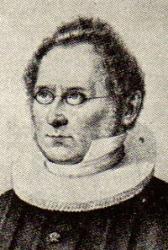
1797 - 1866 Person Name: Wexels Topics: Twelfth Sunday after Trinity Sunday For Evening Translator of "Hvorhen skal jeg dog fly" in M. B. Landstads Kirkesalmebog og "Nokre Salmar" ved Professor Dr. E. Blix, samt følgende tillæg Wexels, Wilhelm Andreas. (Copenhagen, Denmark, March 29, 1797--May 14, 1866, Oslo, Norway). Lutheran. After studies in Copenhagen and Christiana (Oslo), became catechist and curate of Our Savior's Lutheran Church in Christiana. Preached against the inroads of rationalism, emphasizing the need for spiritual revival. Church historians claim that his ministry was the turning point in the Church of Norway. Failed in his attempt to give Norway a hymnal, but many of his hymns survived. --J. Irving Erickson, DNAH Archives

Johann D. Meyer

1636 - 1696 Person Name: J. D. Meier Topics: The Church Year Twelfth Sunday after Trinity; The Church Year Twelfth Sunday after Trinity Composer of "[O would, my God, that I could praise Thee]" in The Lutheran Hymnary

Hans Chr. Sthen

1544 - 1610 Person Name: Hans Sthen Topics: Twelfth Sunday after Trinity Sunday Translator (attributed to) of "Min største Hjertens Glæde" in Salmebog for Lutherske Kristne i Amerika

C. J. Boye

1791 - 1853 Person Name: Caspar Boye Topics: Twelfth Sunday after Trinity Sunday Author of "Bliv hos os, Mester, Dagen helder!" in Salmebog for Lutherske Kristne i Amerika Caspar Johannes Boye was born in Kongsberg, Norway in 1791. He studied both law and theology at the University of Copenhagen, became a teacher and later served as rector in Søllerød, Helsingørand and Copenhagen. He died in 1853. See also in: Wikipedia

Christian Möck

1737 - 1818 Person Name: Chr. Möck, d. 1818 Topics: The Church Year Twelfth Sunday after Trinity; The Church Year Twelfth Sunday after Trinity Arranger of "[O would, my God, that I could praise Thee]" in The Lutheran Hymnary Christian Möck; b. 1737, Thaun, Germany; d. 1818 , Ansbach Germany Evangelical Lutheran Hymnal, 1908

Pages


Export as CSV
It looks like you are using an ad-blocker. Ad revenue helps keep us running. Please consider white-listing Hymnary.org or getting Hymnary Pro to eliminate ads entirely and help support Hymnary.org.