You help make Hymnary.org possible. More than 10 million people from 200+ countries found hymns, liturgical resources and encouragement on Hymnary.org in 2025, including you. Every visit affirms the global impact of this ministry.

If Hymnary has been meaningful to you this year, would you take a moment today to help sustain it? A gift of any size—paired with a note of encouragement if you wish—directly supports the server costs, research work and curation that keep this resource freely available to the world.

Give securely online today, or mail a check to:
Hymnary.org
Calvin University
3201 Burton Street SE
Grand Rapids, MI 49546

Thank you for your partnership, and may the hope of Advent fill your heart.

Person Results

Tune Identifier:"^boylston_mason$"
In:people

Planning worship? Check out our sister site, ZeteoSearch.org, for 20+ additional resources related to your search.
Showing 51 - 60 of 85Results Per Page: 102050

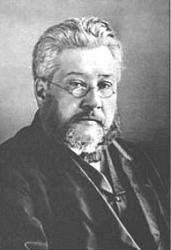
C. H. Spurgeon

1834 - 1892 Person Name: Charles H. Spurgeon Author of "The Holy Ghost Is Here" in The Cyber Hymnal Spurgeon, Charles Haddon, the world-famous preacher, was born June 19, 1834, at Kelvedon, in Essex, where his father was Congregational minister. He was educated at Colchester, and at an Agricultural College at Maidstone, after which he was for a few years usher in schools at Newmarket and Cambridge. In 1851 he became minister of a small Baptist church at Waterbeach, near Cambridge, and soon attained great popularity. In 1854 he removed to New Park Street, London, the place where Drs. Gill and Rippon had formerly ministered, and ere long the thronging of people to hear him led, first, to the temporary occupation of Exeter Hall, and of the Surrey Music Hall, and then to the erection of the great Metropolitan Tabernacle, where he still ministers. Mr. Spurgeon is chiefly known as a preacher and as the author of many vols. of sermons, expositions, and other homiletical literature; but he is also a hymn writer, and the compiler of a well-known hymn book. This book was prepared, in 1866, primarily for the use of the congregation at the Tabernacle. Hence its title Our Own Hymnbook, a collection of Psalms & Hymns for public, social, and private worship. It contains 220 versions of the Psalms, and 910 hymns. Of Mr. Spurgeon's contributions noted below, only one, "Sweetly the holy hymn," can be regarded as possessing any particular merit. The others do not rise above respectable mediocrity. His psalm-versions and hymns, all dated 1866, are:— 1. Amidst us our Beloved stands. Holy Communion. 2. Behold, O Lord, my days are made. Ps. xxxix. 3. Blessed is the man that feareth. Ps. cxii. 4. Here, O ye faithful, see. Holy Baptism. 5. I will exalt Thee, Lord of hosts. Ps. xxx. 6. Jesus, poorest of the poor. Ps. xli. 7. Lord, I would dwell with Thee. Ps. xv. 8. Lord, make my conversation chaste. Ps. lxviii. 9. Lord, Thy church without a pastor. Election of a Minister. 10. Make haste, O Lord, my soul to bless. Ps. lxx. 11. O God, be Thou no longer still. Ps. lxxxiii. 12. O God, Thou hast cast off Thy saints. Ps. lx. 13. Our ears have heard, O glorious God. Ps. xliv. 14. Praise the Lord with exultation, My whole heart, &c. Ps. cxi. 15. Risen Lord, Thou hast received. Election of a Minister. 16. Sweetly the holy hymn. Prayer Meetings. 17. The foes of Zion quake for fright. Ps. liii. 18. The Holy Ghost is here. Prayer. 19. The Kings of earth are in the hands. Ps. lxxxii. 20. Thy strength, 0 Lord, makes glad our King. Ps. xxi. In addition to these Mr. Spurgeon re-wrote or added to the hymns of others, as "Come ye who bow to sovereign grace"; "Great King of Zion, now"; "O God, before whose radiant throne"; and "Woe's me that I in Mesech am"; and composed two Graces for before, and two for after Meat. [Rev. W. R. Stevenson, M.A.] -- John Julian, Dictionary of Hymnology (1907)

Mrs. C. B. Palmer

Author of "Here in Our Father's House" in Our Hymns of Praise

Ilyas Saleh

1839 - 1885 Person Name: الياس بن موسى بن سمعان صالح Author of "لاسمك ينبغي التسبيح في صهيون" in بهجة الضمير في نظم المزامير (Psalter) إلياس بن موسى بن سمعان صالح المعروف بإلياس صالح اللاذقي Syrian poet, writer, and historian.

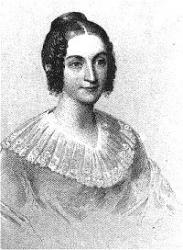
L. H. Sigourney

1791 - 1865 Person Name: Lydia H. Sigourney Author of "Blest Comforter divine" in The Seventh-Day Adventist Hymn and Tune Book Sigourney, Lydia, née Huntley. This distinguished name stood at the head of the female poets of America a generation ago, and is still well remembered. Born in Norwich, Connecticut, in 1791, she conducted a school in the same town from 1809 to 1814, when she removed to Hartford, where she was married to Charles Sigourney in 1819. Most of her subsequent life was spent at Hartford, and she died there, June 10, 1865. Her first publication was Moral Pieces in Prose and Verse, 1815. This was followed by 58 additional works. A thorough exploration of these, or of such of them are poetical, would be necessary to trace her hymns with accuracy. They, however, are more numerous than important. Many have been used in the older collections; some are still in use, but few are extensively and none are universally so. The principal hymnbooks in which they appeared were the Congregational Village Hymns, 1824; Kipley's Selection, 1829; and the Connecticut Psalms & Hymns, 1845; the Baptist Additional Hymns by Winchell, 1832; and Linsley and Davis's Select Hymns, 1836; and the Universalist's Hymns for Christian Devotion, by Adams & Chapin, 1846. Her best known hymns chronologically arranged are:— 1. When adverse winds and waves arise. In Affliction. A graceful lyric, possibly inspired by Sir R. Grant's " When gathering clouds around I view." 2. Blest Comforter divine. Whitsuntide. This is one of four hymns by Mrs. Sigourney, which appeared in Nettleton's Village Hymns, 1824, under the signature of "H." It is sometimes altered to "Thou Comforter divine." Her best hymn. 3. We mourn for those who toil. Death and Burial. This poem on "Mistaken Grief" appeared in Cheever's Common Place Book, 1831 4. Choose ye His Cross to bear. Holy Baptism. This was given in Ripley's Selection, 1829-31. 5. Saviour, Thy law we love. Holy Baptism. In Winchell's Additional Hymns, 1832. 6. Onward, onward, men of heaven. Missions. This missionary hymn appeared in three different books in 1833, including the Christian Lyre Supplement, &c. 7. Labourers of Christ, arise. Home Missions. This was contributed, with nine others, by Mrs. Sigourney, to Linsley & Davis's Select Hymns, 1836. This is one of the most widely used of her hymns. 8. Pastor, thou art from us taken. Burial of a Minister. Sung at the funeral of the Rev. G. F. Davis, D.D., circa 1836. 9. Go to thy rest, my [fair] child. Death of a Child. From a Selection from her poems published in London in 1841. 10. Not for the summer hour alone. Holy Matrimony. In the same Selection as No. 9. 11. Where wilt thou put thy trust? Leaning upon God. In the Connecticut Cong. Psalms & Hymns, 1845. 12. Lord, may the spirit of this feast. Holy Communion. In the same as No. 11. 13. We praise Thee if one rescued soul. Temperance Anniversary. In Adams and Chapin's Hymns for Christian Devotion, 1846. In addition to these hymns there are several others in the collections named above. As, however, they are not repeated in modern hymnbooks they are omitted from this list. We would add that two hymns, not noted above, "Little raindrops feed the rill" (Power of little things), and "There was a noble ark," are in common use in Great Britain; and that a selection of her pieces is given in the Lyra Sacra Americana, London, 1868. [Rev. F. M. Bird, M.A.] -- Excerpts from John Julian, Dictionary of Hymnology (1907) ================== Sigourney, Lydia, p. 1057, ii. Additional hymns are: 1. We thank Thee, Father, for the day. Sunday. This in Stryker's Church Songs, 1889, is dated 1850. 2. When the parting bosom bleeds. For Use at Sea. From Adams and Chapin's Hymns for Christian Devotion, 1846. 3. Prayer is the dew of faith. Prayer. 4. We praise Thee, Lord, if but one soul. An altered form of her hymn on Temperance (No. 13). --John Julian, Dictionary of Hymnology, Appendix, Part II (1907)

G. Weiler

Author of "Hör', Jesu, unser Fleh'n" in Liederperlen

Shududi, As'ad

1826 - 1906 Person Name: اسعد الشدودي Author of "الشكر للفادي" in كتاب الترانيم الروحية للكنائس الإنجيلية Asaad Ibrahim alShdudi, 1826-1906 A Lebanese-born Mathematician, who studied and later worked at the American University of Beirut. أسعد إبراهيم الشدودي

Dorothy F. Poulton

Author of "Here in Our Father's House" in Our Hymns of Praise

Walter Rauschenbusch

1861 - 1918 Person Name: W. R. Translator of "Nicht all' der Thiere Blut" in Evangeliums-Lieder 1 und 2 (Gospel Hymns)

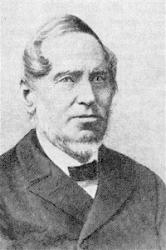
Samuel Francis Smith

1808 - 1895 Person Name: S. F. Smith Author of "Down to the sacred wave" in The Christian Church Hymnal Smith, Samuel Francis, D.D., was born in Boston, U.S.A., Oct. 21, 1808, and graduated in arts at Harvard, and in theology at Andover. He entered the Baptist ministry in 1832, and became the same year editor of the Baptist Missionary Magazine. He also contributed to the Encyclopaedia Americana. From 1834 to 1842 he was pastor at Waterville, Maine, and Professor of Modern Languages in Waterville College. In 1842 he removed to Newton, Massachusetts, where he remained until 1854, when he became the editor of the publications of the Baptist Missionary Union. With Baron Stow he prepared the Baptist collection known as The Psalmist, published in 1843, to which he contributed several hymns. The Psalmist is the most creditable and influential of the American Baptist collections to the present day. Dr. Smith also published Lyric Gems, 1854, Rock of Ages, 1870, &c. A large number of his hymns are in use in America, and several have passed into some of the English collections. Taking his hymns in common use in alphabetical order, we have the following:— 1. And now the solemn deed is done. Ordination. Given in The Psalmist, 1843, No. 954. In Dr. Hatfield's Church Hymn Book, N. Y., 1872, it is altered to "The solemn service now is done." 2. As flows the rapid river. Life Passing Away. In Christian Psalmody, 1833, No. 33; the Hymns for the Vestry and Fireside, Boston, 1841; and The Psalmist, 1843, No. 1059. Found in a few English hymn-books, and in Lyra Sacra Americana, 1868. 3. Auspicious morning, hail. American National Anniversary. Written for July 4th, 1841, and published in The Psalmist, 1843, No. 1007. 4. Beyond where Cedron's waters flow. Gethsemane. In L. Bacon's Appendix, 1833; the Psalmist, 1843, No. 220, and later collections. 5. Blest is the hour when cares depart. Divine Worship. In The Psalmist, 1843, No. 947, and others. 6. Constrained by love we follow where. Holy Baptism. Appeared in the Baptist edition of the Plymouth Hymn Book, 1857. 7. Down to the sacred wave. Holy Baptism. Contributed to Winchell's Additional Hymns added to his Collection of 1817, in 1832, No. 510; repeated in The Psalmist, 1843, No. 818, and in several collections. Also in Lyra Sacra Americana, 1868. 8. Hail! ye days of solemn meeting. Public Worship. An altered form of No. 26 below, in Spurgeon's Our Own Hymn Book, 1866, as an "American Hymn, 1840." 9. How blest the hour when first we gave. Holy Baptism. Appeared in the Baptist edition of thePlymouth Hymn Book, 1857, No. 1468. 10. How calmly wakes the hallowed morn. Holy Baptism. Given in The Psalmist, 1843, No. 810, in later collections, and in Lyra Sacra Americana, 1868. 11. Jesus, Thou hast freely saved us. Salvation. In Winchell's Additional Hymns, 1832, No. 503, and others. 12. Meekly in Jordan's Holy Stream. Holy Baptism. Contributed to The Psalmist, 1843, No. 808. 13. My country, 'tis of thee. National Hymn. "Written in 1832, and first sung at a children's Fourth of July celebration in Park Street church, Boston." Included in The Psalmist, 1843, No. 1000, and found in a large number of American hymn-books, but not in use in Great Britain. It is one of the most popular of Dr. Smith's compositions. Text, with note in Lyra Sacra Americana, 1868. 14. 0 not my own these verdant hills. Bought with a Price. Appeared in Nason's Congregational Hymn Book, 1857, and given inLaudes Domini, 1884. 15. Onward speed thy conquering flight. Missions. Appeared in The Psalmist, 1843, No. 892, and is found in several modern collections in Great Britain and America. Also in Lyra Sac. Americana, 1868. 16. Planted in Christ, the living Vine. Christian Fellowship; or, For Unity. Given in The Psalmist, 1843, No. 929, inLyra Sacra Americana, 1868, and several hymn-books. Of the hymns contributed by Dr. Smith to The Psalmist this is the best, and one of the most popular. 17. Remember thy Creator. Youthful Piety Enforced. In Christian Psalmody, 1832, No. 32; the Hymns for the Vestry and Fireside, 1841; The Psalmist, 1843, No. 778; Lyra Sac. Americana, 1868, and other collections. 18. Sister, thou wast mild and lovely. Death and Burial. Written on the death of Miss J. M. C. of Mount Vernon School, Boston, July 13,1833, and published in The Psalmist, 1843, No. 1096. 19. Softly fades the twilight ray. Sunday Evening. Written in 1832, and included in The Psalmist, 1843, No. 56. Also in Lyra Sacra Americana, and several hymn-books. 20. Spirit of holiness, descend. Whitsuntide. Appeared in the Hymns for the Vestry and Fireside, 1841, No. 295, and again in The Psalmist, 1843, No. 384. In the Unitarian Hymns for the Church of Christ, Boston, 1853. St. ii., iii., iv. were given as "Spirit of God, Thy churches wait." This form of the text and the original are both in modern hymn-books. 21. Spirit of peace and holiness. Institution of a Minister. Appeared in The Psalmist, 1843, No. 953, and Hatfield's Church Hymn Book, 1872. 22. The morning light is breaking. Missions. Written in 1832, and included in Hastings's Spiritual Songs, 1832-33, No. 253; and The Psalmist, 1843, No. 912. This hymn is very popular and has been translated into several languages. Dr. Smith says of it that “it has been a great favourite at missionary gatherings, and I have myself heard it sung in five or six different languages in Europe and Asia. It is a favourite with the Burmans, Karens, and Telegus in Asia, from whose lips I have heard it repeatedly.” 23. The Prince of Salvation in triumph is riding. Missions. Given in Hastings and Mason's Spiritual Songs, 1832-33, No. 274; The Psalmist, 1843, and later collections. 24. Tis done, the [important] solemn act is done. Ordination. Appeared in The Psalmist 1843, No. 951, and later hymn-books. 25. Today the Saviour calls. Invitation. First sketch by Dr. Smith, the revised text, as in Hastings and Mason's Spiritual Songs, No. 176, and The Psalmist, No. 453, by Dr. T. Hastings (p. 495, i. 19). 26. Welcome, days of solemn meeting. Special Devotional Services. Written in 1834, and given in Dr. Hatfield's Church Hymn Book, 1872. See No. 8. 27. When shall we meet again ? Parting. This is a cento. The first stanza is from Alaric A. Watts's Poetical Sketches, &c, 1822, p. 158 ; and st. ii.-iv. are by Dr. Smith. In this form it was published in L. Bacon's Supplement to Dwight, 1833, No. 489. It is in several American hymn-books; and also the English Baptist Psalms & Hymns, 1858, &c. 28. When the harvest is past and the summer is gone. Close of Worship. Contributed to Hastings and Mason's Spiritual Songs, 1831, No. 244; and repeated in the Fuller and Jeter Supplement to The Psalmist, 1847, No. 22, and later collections. 29. When thy mortal life is fled. The Judgment. Contributed to Winchell's Additional Hymns, 1832, No. 379, and repeated in The Psalmist, 1843, No. 455, and later hymn-books. Also in Lyra Sacra Americana, 1868. 30. While in this sacred rite of Thine. Holy Baptism. Appeared in The Psalmist, 1843, No. 803: Lyra Sacra Americana, 1868, &c. 31. With willing hearts we tread. Holy Baptism. In The Psalmist, 1843, No. 798; and again in the Baptist Praise Book, 1871. 32. Yes, my native land, I love thee. A Missionary's Farewell. Contributed to Winchell's Additional Hymns, 1832, No. 445, and found in later collections. Also in Lyra Sacra Americana, 1868. [Rev. F. M. Bird, M.A.] --John Julian, Dictionary of Hymnology (1907)

William John Hall

1793 - 1861 Person Name: W. J. Hall Author of "Blest are the pure in heart" in The Presbyterian Book of Praise Hall, William John, M.A., was born in London, Dec. 31, 1793, and graduated at Corpus Christi College, Cambridge. Taking Holy Orders, he held several important appointments, including a Minor Canonry in St. Paul's Cathedral, London, 1826; Priest in Ordinary of H.M. Chapel Royal, St. James's, 1829, and the Vicarage of Tottenham, Middlesex, 1851. He died at Tottenham, Dec. 16, 1861. He published various Sermons, a volume of Prayers for the Use of Families; and a valuable treatise on Purgatory and Prayers for the Dead. He is known to hymnology as the editor of Psalms and Hymns adapted to the Services of the Church of England, London, 1836, commonly known as the Mitre Hymn-book, from the impression of a Mitre on the cover. He was assisted in this work by E. Osier (q.v.) and others, who supplied original compositions. Many of the hymns were previously printed in the Christian Remembrancer, of which he was sometime the editor, and then the editor and sole proprietor. The Mitre Hymn-Book, issued in 1836, with a dedication to Bishop Blomfield, attained to a circulation of four million copies. It introduced numerous hymns to modern collections, and had a marked influence on the hymnody of the Church of England. In this Dictionary all notes on hymns specially connected with the Mitre Hymn-book are from Mr. Hall's manuscript, and distinguished as "h. mss." His son, the Rev. William John Hall, M.A. (born March 17, 1830, and educated at Merchant Taylors School, and at Trinity College, Cambridge; Minor Canon in St. Paul's Cathedral, London, and Rector of St. Clement's, Eastcheap, with St. Martin-Orgar, London), is the editor of the New Mitre Hymnal, Adapted to the Services of the Church of England, London, 1875. (Preface, Advent, 1874.) -- John Julian, Dictionary of Hymnology (1907)

Pages


Export as CSV
It looks like you are using an ad-blocker. Ad revenue helps keep us running. Please consider white-listing Hymnary.org or getting Hymnary Pro to eliminate ads entirely and help support Hymnary.org.