

 My Starred Hymns
 My FlexScores
 My Hymnals
 My Purchased Files
Planning worship?
Check out our sister site, ZeteoSearch.org,
for 20+ additional resources related to your search.
- |
User Links
Person Results
Cecil Frances Alexander
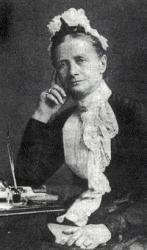
1818 - 1895 Person Name: Cecil Frances Alexander, 1823-1895 Topics: The Christian Life Discipleship and Consecration; God: His Attributes, Works and Word The Lord Jesus Christ - His Life and Example; The Church The Gospel Call; Hymns for the Young Courage, Conflict, and Victory; The Church The Sacraments - Baptism Author of "Jesus calls us; o'er the tumult" in The Book of Praise As a small girl, Cecil Frances Humphries (b. Redcross, County Wicklow, Ireland, 1818; Londonderry, Ireland, 1895) wrote poetry in her school's journal. In 1850 she married Rev. William Alexander, who later became the Anglican primate (chief bishop) of Ireland. She showed her concern for disadvantaged people by traveling many miles each day to visit the sick and the poor, providing food, warm clothes, and medical supplies. She and her sister also founded a school for the deaf. Alexander was strongly influenced by the Oxford Movement and by John Keble's Christian Year. Her first book of poetry, Verses for Seasons, was a "Christian Year" for children. She wrote hymns based on the Apostles' Creed, baptism, the Lord's Supper, the Ten Commandments, and prayer, writing in simple language for children. Her more than four hundred hymn texts were published in Verses from the Holy Scripture (1846), Hymns for Little Children (1848), and Hymns Descriptive and Devotional ( 1858).
Bert Polman
==================
Alexander, Cecil Frances, née Humphreys, second daughter of the late Major John Humphreys, Miltown House, co. Tyrone, Ireland, b. 1823, and married in 1850 to the Rt. Rev. W. Alexander, D.D., Bishop of Derry and Raphoe. Mrs. Alexander's hymns and poems number nearly 400. They are mostly for children, and were published in her Verses for Holy Seasons, with Preface by Dr. Hook, 1846; Poems on Subjects in the Old Testament, pt. i. 1854, pt. ii. 1857; Narrative Hymns for Village Schools, 1853; Hymns for Little Children, 1848; Hymns Descriptive and Devotional, 1858; The Legend of the Golden Prayers 1859; Moral Songs, N.B.; The Lord of the Forest and his Vassals, an Allegory, &c.; or contributed to the Lyra Anglicana, the S.P.C.K. Psalms and Hymns, Hymns Ancient & Modern, and other collections. Some of the narrative hymns are rather heavy, and not a few of the descriptive are dull, but a large number remain which have won their way to the hearts of the young, and found a home there. Such hymns as "In Nazareth in olden time," "All things bright and beautiful," "Once in Royal David's city," "There is a green hill far away," "Jesus calls us o'er the tumult," "The roseate hues of early dawn," and others that might be named, are deservedly popular and are in most extensive use. Mrs. Alexander has also written hymns of a more elaborate character; but it is as a writer for children that she has excelled.
- John Julian, Dictionary of Hymnology (1907)
===============
Alexander, Cecil F., née Humphreys, p. 38, ii. Additional hymns to those already noted in this Dictionary are in common use:—
1. Christ has ascended up again. (1853.) Ascension.
2. His are the thousand sparkling rills. (1875.) Seven Words on the Cross (Fifth Word).
3. How good is the Almighty God. (1S48.) God, the Father.
4. In [a] the rich man's garden. (1853.) Easter Eve.
5. It was early in the morning. (1853.) Easter Day.
6. So be it, Lord; the prayers are prayed. (1848.) Trust in God.
7. Saw you never in the twilight? (1853.) Epiphany.
8. Still bright and blue doth Jordan flow. (1853.) Baptism of Our Lord.
9. The angels stand around Thy throne. (1848.) Submission to the Will of God.
10. The saints of God are holy men. (1848.) Communion of Saints.
11. There is one Way and only one. (1875.) SS. Philip and James.
12. Up in heaven, up in heaven. (1848.) Ascension.
13. We are little Christian children. (1848.) Holy Trinity.
14. We were washed in holy water. (1848.) Holy Baptism.
15. When of old the Jewish mothers. (1853.) Christ's Invitation to Children.
16. Within the Churchyard side by side. (1848.) Burial.
Of the above hymns those dated 1848 are from Mrs. Alexander's Hymns for Little Children; those dated 1853, from Narrative Hymns, and those dated 1875 from the 1875 edition of Hymns Ancient & Modern.
Several new hymns by Mrs. Alexander are included in the 1891 Draft Appendix to the Irish Church Hymnal.
--John Julian, Dictionary of Hymnology, Appendix, Part II (1907)
=============
Alexander, Cecil F. , p. 38, ii. Mrs. Alexander died at Londonderry, Oct. 12, 1895. A number of her later hymns are in her Poems, 1896, which were edited by Archbishop Alexander.
--John Julian, Dictionary of Hymnology, New Supplement (1907)
See also in:Hymn Writers of the Church
Cecil Frances Alexander
William Hunter
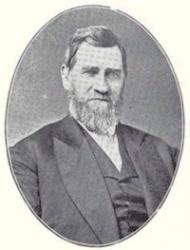
1811 - 1877 Person Name: Rev. Wm. Hunter Topics: The Christian Life Conflict, Work and Growth Author of "The Great Physician" in Westminster Sabbath School Hymnal, a collection of hymns and tunes for use in sabbath-schools and social meetings Hunter, William, D.D, son of John Hunter, was born near Ballymoney, County Antrim, Ireland, May 26, 1811. He removed to America in 1817, and entered Madison College in 1830. For some time he edited the Conference Journal, and the Christian Advocate. In 1855 he was appointed Professor of Hebrew in Alleghany College: and subsequently Minister of the Methodist Episcopal Church, at Alliance, Stark Country, Ohio. He died in 1877. He edited Minstrel of Zion, 1845; Select Melodies, 1851; and Songs of Devotion, 1859. His hymns, over 125 in all, appeared in these works. Some of these have been translated into various Indian languages. The best known are :—
1. A home in heaven; what a joyful thought. Heaven a Home. From his Minstrel of Zion, 1845, into the Methodist Scholar's Hymn Book, London, 1870, &c.
2. Joyfully, joyfully onward I [we] move. Pressing towards Heaven. This hymn is usually dated 1843. It was given in his Minstrel of Zion, 1845, and Select Melodies, 1851, and his Songs of Devotion, 1859. It has attained to great popularity. Two forms of the hymn are current, the original, where the second stanza begins "Friends fondly cherished, have passed on before"; and the altered form, where it reads: “Teachers and Scholars have passed on before." Both texts are given in W. F. Stevenson's Hymns for Church & Home, 1873, Nos. 79, 80, c.
3. The [My] heavenly home is bright and fair. Pressing towards Heaven. From his Minstrel of Zion, 1845, into the Cottage Melodies, New York, 1859, and later collections.
4. The Great Physician now is near. Christ the Physician. From his Songs of Devotion, 1859
5. Who shall forbid our grateful[chastened]woe? This hymn, written in 1843, was published in his Minstrel of Zion, 1845, and in his Songs of Devotion, 1859. [ Rev. F. M. Bird, M.A.]
--John Julian, Dictionary of Hymnology (1907)
William Hunter
Michael Haydn
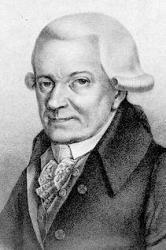
1737 - 1806 Person Name: J. Michael Haydn, 1737-1806 Topics: Work, Christian Composer of "SALVATORI" in Psalter Hymnal (Blue) Johann Michael Haydn Austria 1737-1806. Born at Rohrau, Austria, the son of a wheelwright and town mayor (a very religious man who also played the harp and was a great influence on his sons' religious thinking), and the younger brother of Franz Joseph Haydn, he became a choirboy in his youth at the Cathedral of St. Stephen in Vienna, as did his brother, Joseph, an exceptional singer. For that reason boys both were taken into the church choir. Michael was a brighter student than Joseph, but was expelled from music school when his voice broke at age 17. The brothers remained close all their lives, and Joseph regarded Michael's religious works superior to his own. Michael played harpsichord, violin, and organ, earning a precarious living as a freelance musician in his early years. In 1757 he became kapellmeister to Archbishop, Sigismund of Grosswardein, in Hungary, and in 1762 concertmaster to Archbishop, Hieronymous of Salzburg, where he remained the rest of his life (over 40 years), also assuming the duties of organist at the Church of St. Peter in Salzburg, presided over by the Benedictines. He also taught violin at the court. He married the court singer, Maria Magdalena Lipp in 1768, daughter of the cathedral choir-master, who was a very pious women, and had such an affect on her husband, trending his inertia and slothfulness into wonderful activity. They had one daughter, Aloysia Josepha, in 1770, but she died within a year. He succeeded Wolfgang Amadeus Mozart, an intimate friend, as cathedral organist in 1781. He also taught music to Carl Maria von Weber. His musical reputation was not recognized fully until after World War II. He was a prolific composer of music, considered better than his well-known brother at composing religious works. He produced some 43 symphonies,12 concertos, 21 serenades, 6 quintets, 19 quartets, 10 trio sonatas, 4 due sonatas, 2 solo sonatas, 19 keyboard compositions, 3 ballets, 15 collections of minuets (English and German dances), 15 marches and miscellaneous secular music. He is best known for his religious works (well over 400 pieces), which include 47 antiphons, 5 cantatas, 65 canticles, 130 graduals, 16 hymns, 47 masses, 7 motets, 65 offertories, 7 oratorios, 19 Psalms settings, 2 requiems, and 42 other compositions. He also composed 253 secular vocals of various types. He did not like seeing his works in print, and kept most in manuscript form. He never compiled or cataloged his works, but others did it later, after his death. Lothar Perger catalogued his orchestral works in 1807 and Nikolaus Lang did a biographical sketch in 1808. In 1815 Anton Maria Klafsky cataloged his sacred music. More complete cataloging has been done in the 1980s and 1990s by Charles H Sherman and T Donley Thomas. Several of Michael Haydn's works influenced Mozart. Haydn died at Salzburg, Austria.
John Perry
Michael Haydn
James G. Deck
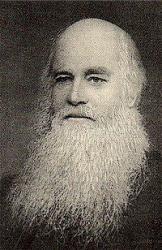
1802 - 1884 Person Name: James George Deck Topics: The Christian Life Conflict, Work and Growth Author of "O Lamb of God" in Westminster Sabbath School Hymnal, a collection of hymns and tunes for use in sabbath-schools and social meetings Deck, James George, eldest son of John Deck, of Bury St. Edmunds, was born in 1802 and educated for the army, and became an officer in the Indian service. Retiring from the army, and having joined the Plymouth Brethren, he undertook, in 1843, the charge of a congregation of that body, at Wellington, Somerset. In 1852 be went abroad and settled in New Zealand. His hymns were published in Hymns for the Poor of the Flock, 1837-1838; Psalms and Hymns, &c, London, Walther (containing those in the former collection), 1842; the Wellington Hymn Book, 1857; Hymns and Spiritual Songs, 1860. Of his hymns now in use outside his own denomination, the greater part appeared in the 1837-1838 book, and are found in his brother-in-law's (Dr. Walker's) Cheltenham Psalms & Hymns, 1855. His compositions are marked by directness of aim, simplicity of language, and great earnestness. The rhythm is good, and an expressive tenderness pervades many of them. Although dealing mainly with the "Second Advent," there are several on other subjects which are of more than average merit. In a collected form they were published in his Hymns and Sacred Poems, Melbourne, H. Seelenmeyer, 1876. The more important of his hymns are annotated under their respective first lines. Of the rest we have:—
i. From Hymns for the Poor of the Flock, 1838.
1. Behold yon bright and countless throng. All Saints. Repeated in Maurice's Choral Hymnbook, 1861.
2. How long, O Lord our Saviour. Second Advent desired. In the Parish Hymnbook., 1803 and 1875, this is altered to "How long, O Lord, Beloved."
3. Jesus, spotless Lamb of God. Good Friday.
4. Lord Jesus, are we [we are] one with Thee? One with Christ. In Walker's Psalms and Hymns, 1855-1880, and several American hymn-books.
5. Lord, we are Thine, our God Thou art. One with Christ. Originally in 4 st. of 8 1., it appeared, in a re-written form in 3 st. in Walker's Psalms and Hymns, 1855, as " Lord, we are Thine, in Thee we live."
6. 0 happy day when first we felt. The Day of Peace.
7. 0 Jesus Christ, the Saviour. Jesus All in All. In Walker's Psalms and Hymns, it begins: "0 Jesus Christ, our Saviour."
8. 0 Jesus, gracious Saviour." The Advocate.
9. 0 Lord, when we the path retrace. Christ our Example.
10. 0 Lord, who now art seated. Christ in glory.
11. Saviour, haste; our souls are waiting. Second Advent desired. This is given in Walker's Psalms and Hymns, in a rewritten form as "Saviour, hasten Thine appearing."
12. Soon shall our Master come. Waiting for Christ.
13. There is a place of endless joy. Heaven.
14. We're not of the world that fadeth away. Christ's Sheep.
15. When along life's thorny road. Passiontide.
ii. From Appendix, to the 1841 edition of the Hymns for the Poor of the Flock.
16. Lamb of God, our souls adore Thee. Praise to Christ. Sometimes it begins with st. ii.," Lamb of God, Thy Father's bosom."
17. Lamb of God, Thou now art seated. 2nd Part. of No. 10.
iii. From Psalms and Hymns, in Two Parts, Lond., D. Waither, 1842.
18. Again we meet in Jesus' name. Divine Worship.
19. Great Captain of Salvation. Burial. In the Irish Church Hymnal, and other collections.
20. Jesus, Thy name indeed is sweet. Hope of the Resurrection.
21. O blessed Jesus, Lamb of God. Praise to Jesus.
22. 0 Lamb of God, still keep me [us]. Christ's Presence desired. This hymn is somewhat popular in America.
23. 0 Lord, in nothing would I boast. Christ All in All.
24. Oft we, alas! forget the love. Holy Communion.
25. The veil is rent! lo, Jesus stands [our souls draw near]. The Intercessor.
26. We bless our Saviour's name. Thanksgiving for Forgiveness.
iv. From Psalms and Hymns for Public and Social Worship (Dr. Walker's Collection), 1855.
27. Father, to seek Thy face. Public Worship.
28. Jesus, [I] we rest in [on] Thee. Joy in Forgiveness.
29. 0 Lord, 'tis joy to look above. Joy in the service of Christ.
30. Thou hast stood here, Lord Jesus. Burial.
31. 'Twas Thy love, 0 God, that knew us. Praise to God.
32. When first o'erwhelm ed with sin and shame. Peace with God.
All these hymns, except No. 1, are given in Dr. Walker's Collection, 1855-1880, and most of them are also found in other collections.
-- John Julian, Dictionary of Hymnology (1907)
======================
Deck, James George, p. 285, ii. He died circa 1884. His hymn, noted on p. 286, No. 28, "Jesus [I] we rest in [on] Thee," should be dated 1842. Additional hymns in common use are:—(1) "Lord Jesus, when I think of Thee," 1856 (Jesus, All and in All); (2) "The day of glory, bearing," 1838 (Passiontide).
--John Julian, Dictionary of Hymnology, Appendix, Part II (1907)
====================
Deck, J. G., pp. 285, ii.; 1559, ii. Miss M. O. Deck, of Motueka, Nelson, New Zealand, informs us that her father, Mr. J. G. Deck, died at the village of Motueka, near Nelson, N.Z., on the 14th of August, 1884.
--John Julian, Dictionary of Hymnology, New Supplement (1907)
====================
James Deck wrote of his youth, "I hoped there were no God," yet his mother's training pursued after him. "She read to me of Jesus, Of all his grace and love." After his conversion, the study of scripture revealed the doctrinal error of his Anglican upbringing. Forsaking all, he set his heart to follow God "at any cost." Later, his son testified this determination was "a trust never disappointed."
- Psalms and Hymns and Spiritual Songs (2018)
James G. Deck
Lida Shivers Leech
1873 - 1962 Topics: Junior Songs Christian Work Author of "The Sunshine Song" in Life Songs Born: July 12, 1873, Mayville, New Jersey.
Died: March 4, 1962, Long Beach, California.
Leech spent her childhood in Cape May Court House, New Jersey, and attended Columbia University and Temple University. She played the organ at Bethany Methodist Church in Camden, New Jersey, served as accompanist at evangelical services, and wrote some 500 hymn tunes in her lifetime.
Sources--
Emurian, pp. 112-3
Reynolds, p. 336
Lyrics--
God’s Way Is Best
I Have Redeemed Thee
I’ll Go Anywhere
No Fault in Him
Some Day He’ll Make It Plain
Thine for Service
Trust Me, Try Me, Prove Me © 1928
When the Veil is Lifted
--www.hymntime.com/tch
Lida Shivers Leech
William C. Poole
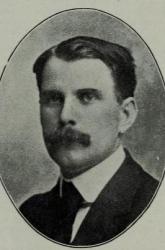
1875 - 1949 Person Name: W. C. Poole Topics: Christian Warfare; Missionary; Personal Work; Service; Work Author of "The Call of the Christ" in Life and Service Hymns William C. Poole was born and raised on a farm in Maryland. His parents belonged to the Methodist church. He graduated from Washington College and became a Methodist minister in Wilmington, Delaware area. He was pastor of McCabe Memorial, Richardson Park and other churches. In 1913 he was superintendent of the Anti-Saloon League of Delaware. He wrote about five hundred hymns. The writing was done as recreation and a diversion from his pastoral work. His goal in writing as well as in being a minister was to help people.
Dianne Shapiro, from "The Singers and Their Songs: sketches of living gospel hymn writers" by Charles Hutchinson Gabriel (Chicago: The Rodeheaver Company, 1916)
William C. Poole
Asa Hull
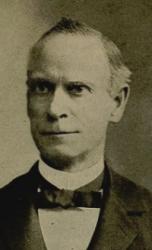
1828 - 1907 Topics: Christian Work Composer of "[Glorious things of thee are spoken]" in Gospel Praise Book. Asa Hull USA 1828-1907. Born in Keene, NY, he became a music publisher in New York City. He married Emma F Atherton, and they had a daughter, Harriett. He wrote many tunes and authored temperance rallying songs. He published 33 works, of which 21 were songbooks, between 1863-1895. He died in Philadelphia, PA.
John Perry
Asa Hull
William Moore
1790 - 1850 Person Name: William Moore, fl. 1830 Topics: The Gospel in the Christian Life Healing and Comfort; Forgiveness; Jesus Christ Friend; Presence of Jesus Christ; Jesus Christ Redemptive work; Jesus Christ Savior Composer of "HOLY MANNA" in One Lord, One Faith, One Baptism William B Moore USA 1790-1850. He was born, possibly in TN. He was a composer, having contributed tunes to” Wyeth’s Repository” (1810) and known for his tunebook “Columbian Harmony” (1825) in TN. He also composed and arranged several tunes in William Walker’s “Southern Harmony” (1835).
John Perry
William Moore
J. B. Herbert
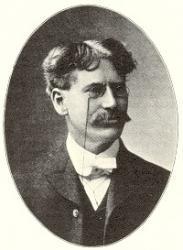
1852 - 1927 Topics: Afflictions Deliverance from; Afflictions Many and sore; Aspirations For Church Privileges; Christ Grace and Love of; Christ Preciousness of; Christ The Savior; Christians Believers; Christians Death of; Christians Duties of; Consecration and Dedication; Death Of Saints; Deliverance from death; Deliverance from trouble; Faith Confession of; Faith Walking by; God Hearer of Prayer; God Loving and Merciful; Lord's Supper; Love To God; The Meek; Mercy of God Celebrated; Offeratories; Praise For Work of Redemption; Praise Of the Lord; Prayer Answers to; Prayer God Hears; The Sabbath; Salvation Thanksgiving for; Thanksgiving Declared; Thanksgiving In Public Worship; Vows; Worship Only as God Appoints; Zeal True Composer of "[I love the Lord, because my voice ]" in Bible Songs
J. B. Herbert
Mrs. Harry Coghill
1836 - 1907 Person Name: Anna L. Coghill Topics: Junior Songs Christian Work Author of "Work, for the Night is Coming" in Life Songs Coghill, Annie Louisa, née Walker, daughter of Robert Walker, was born at Kiddermore, Staffordshire, in 1836, and married Harry Coghill in 1884. During a residence for some time in Canada several of her poetical pieces were printed in the Canadian newspapers. These were gathered together and published c. 1859 in her Leaves from the Backwoods. In addition to novels, plays for children, and magazine work, she edited the Autobiography and Letters of her cousin, Mrs. Oliphant, in 1898. Her popular hymn,"Work, for the night is coming," p. 317, ii., was written in Canada in 1854, and published in a Canadian newspaper, from which it passed, without any acknowledgement of the authorship, into Ira D. Sankey's Sacred Songs and Solos. Authorized text in her Oak and Maple, 1890, p. 17.
--John Julian, Dictionary of Hymnology, New Supplement (1907)
======================
[See also: http://biographi.ca/en/bio.php?id_nbr=7126]
Mrs. Harry Coghill
Pages




