You help make Hymnary.org possible. More than 10 million people from 200+ countries found hymns, liturgical resources and encouragement on Hymnary.org in 2025, including you. Every visit affirms the global impact of this ministry.

If Hymnary has been meaningful to you this year, would you take a moment today to help sustain it? A gift of any size—paired with a note of encouragement if you wish—directly supports the server costs, research work and curation that keep this resource freely available to the world.

Give securely online today, or mail a check to:
Hymnary.org
Calvin University
3201 Burton Street SE
Grand Rapids, MI 49546

Thank you for your partnership, and may the hope of Advent fill your heart.

Person Results

Topics:consecration+of+churches
In:people

Planning worship? Check out our sister site, ZeteoSearch.org, for 20+ additional resources related to your search.
Showing 61 - 70 of 306Results Per Page: 102050

George Hews

1806 - 1873 Person Name: George Hews, 1806-1873 Topics: God | The Lord Jesus Christ - His Sufferings and Death; The Church of God | The Sacraments - The Lord's Supper; The Life in Christ | Consecration and Discipleship; The Gospel Call Composer of "HOLLEY" in The Hymnary of the United Church of Canada Born: January 6, 1806, Weston, Massachusetts. Died: July 6, 1873, Boston, Massachusetts.

Claude Goudimel

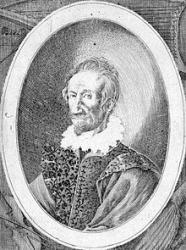
1514 - 1572 Person Name: Claude Goudimel, ca. 1505-1572 Topics: Antiphonal Psalms; Biblical Names and Places Aaron; Biblical Names and Places Israel; Church Year Easter; Church Year Passion/Palm Sunday; Elements of Worship Call to Worship; Elements of Worship Lord's Supper; Elements of Worship Praise and Adoration; Freedom; God's Triumph; God's Goodness; God's House; God's House; God's Name; God's People (flock, sheep); Mercy; Occasional Services Dedication / Consecration / Anniversary; Prayer; Processions; Salvation; Temple; Unity and Fellowship; Worship; Year A, B, C, Easter, Resurrection of the Lord; Year A, B, C, Lent, Liturgy of the Palms; Year C, Easter, 2nd Sunday Harmonizer of "RENDEZ À DIEU (GENEVAN 98/118)" in Psalms for All Seasons The music of Claude Goudimel (b. Besançon, France, c. 1505; d. Lyons, France, 1572) was first published in Paris, and by 1551 he was composing harmonizations for some Genevan psalm tunes-initially for use by both Roman Catholics and Protestants. He became a Calvinist in 1557 while living in the Huguenot community in Metz. When the complete Genevan Psalter with its unison melodies was published in 1562, Goudimel began to compose various polyphonic settings of all the Genevan tunes. He actually composed three complete harmonizations of the Genevan Psalter, usually with the tune in the tenor part: simple hymn-style settings (1564), slightly more complicated harmonizations (1565), and quite elaborate, motet-like settings (1565-1566). The various Goudimel settings became popular throughout Calvinist Europe, both for domestic singing and later for use as organ harmonizations in church. Goudimel was one of the victims of the St. Bartholomew's Day massacre of Huguenots, which oc­curred throughout France. Bert Polman

St. Ambrose

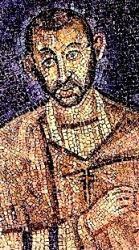
340 - 397 Person Name: Ambrose of Milan Topics: The Church at Worship Opening and Morning Hymns; liturgical Opening Hymns; Consecration; God Glory; God Light; Holy Spirit Illumination; Jesus Christ Images of; Jesus Christ Light; Light; Morning; Opening Hymns; Service Music Gathering, Call to Worship, Greeting; Trinity; Christmas Day 2 Year A; Christmas Day 2 Year A; Epiphany 3 Year A; Epiphany 5 Year A; Epiphany 6 Year A; Easter 1 Year A; Christmas Day 2 Year B; Christmas 2 Year B; Proper 22 Year B; Epiphany Year C; Epiphany Last/Transfig. Year C; Easter 6 Year C Author of "O Splendour of God's Glory Bright" in Voices United Ambrose (b. Treves, Germany, 340; d. Milan, Italy, 397), one of the great Latin church fathers, is remembered best for his preaching, his struggle against the Arian heresy, and his introduction of metrical and antiphonal singing into the Western church. Ambrose was trained in legal studies and distinguished himself in a civic career, becoming a consul in Northern Italy. When the bishop of Milan, an Arian, died in 374, the people demanded that Ambrose, who was not ordained or even baptized, become the bishop. He was promptly baptized and ordained, and he remained bishop of Milan until his death. Ambrose successfully resisted the Arian heresy and the attempts of the Roman emperors to dominate the church. His most famous convert and disciple was Augustine. Of the many hymns sometimes attributed to Ambrose, only a handful are thought to be authentic. Bert Polman ===================== Ambrosius (St. Ambrose), second son and third child of Ambrosius, Prefect of the Gauls, was born at Lyons, Aries, or Treves--probably the last--in 340 A.D. On the death of his father in 353 his mother removed to Rome with her three children. Ambrose went through the usual course of education, attaining considerable proficiency in Greek; and then entered the profession which his elder brother Satyrus had chosen, that of the law. In this he so distinguished himself that, after practising in the court of Probus, the Praetorian Prefect of Italy, he was, in 374, appointed Consular of Liguria and Aemilia. This office necessitated his residence in Milan. Not many months after, Auxentius, bishop of Milan, who had joined the Arian party, died; and much was felt to depend upon the person appointed as his successor. The church in which the election was held was so filled with excited people that the Consular found it necessary to take steps fur preserving the peace, and himself exhorted them to peace and order: when a voice suddenly exclaimed, "Ambrose is Bishop," and the cry was taken up on all sides. He was compelled to accept the post, though still only a catechumen; was forthwith baptized, and in a week more consecrated Bishop, Dec. 7, 374. The death of the Emperor Valentinian I., in 375, brought him into collision with Justina, Valentinian's second wife, an adherent of the Arian party: Ambrose was supported by Gratian, the elder son of Valentinian, and by Theodosius, whom Gratian in 379 associated with himself in the empire. Gratian was assassinated in 383 by a partisau of Maximus, and Ambrose was sent to treat with the usurper, a piece of diplomacy in which he was fairly successful. He found himself, however, left to carry on the contest with the Arians and the Empress almost alone. He and the faithful gallantly defended the churches which the heretics attempted to seize. Justina was foiled: and the advance of Maximus on Milan led to her flight, and eventually to her death in 388. It was in this year, or more probably the year before (387), that Ambrose received into the Church by baptism his great scholar Augustine, once a Manichaean heretic. Theodosius was now virtually head of the Roman empire, his colleague Valentinian II., Justina's son, being a youth of only 17. In the early part of 390 the news of a riot at Thessalonica, brought to him at Milan, caused him to give a hasty order for a general massacre at that city, and his command was but too faithfully obeyed. On his presenting himself a few days after at the door of the principal church in Milan, he was met by Ambrose, who refused him entrance till he should have done penance for his crime. It was not till Christmas, eight months after, that the Emperor declared his penitence, and was received into communion again by the Bishop. Valentinian was murdered by Arbogastes, a Frank general, in 392; and the murderer and his puppet emperor Eugenius were defeated by Theodosius in 394. But the fatigues of the campaign told on the Emperor, and he died the following year. Ambrose preached his funeral sermon, as he had done that of Valentinian. The loss of these two friends and supporters was a severe blow to Ambrose; two unquiet years passed, and then, worn with labours and anxieties, he himself rested from his labours on Easter Eve, 397. It was the 4th of April, and on that day the great Bishop of Milan is remembered by the Western Church, but Rome commemorates his consecration only, Dec. 7th. Great he was indeed, as a scholar, an organiser, a statesman; still greater as a theologian, the earnest and brilliant defender of the Catholic faith against the Arians of the West, just as Athanasius (whose name, one cannot but remark, is the same as his in meaning) was its champion against those of the East. We are now mainly concerned with him as musician and poet, "the father of Church song" as he is called by Grimm. He introduced from the East the practice of antiphonal chanting, and began the task, which St. Gregory completed, of systematizing the music of the Church. As a writer of sacred poetry he is remarkable for depth and severity. He does not warm with his subject, like Adam of St. Victor, or St. Bernard. "We feel," says Abp. Trench, "as though there were a certain coldness in his hymns, an aloofness of the author from his subject. "A large number of hymns has been attributed to his pen; Daniel gives no fewer than 92 called Ambrosian. Of these the great majority (including one on himself) cannot possibly be his; there is more or less doubt about the rest. The authorities on the subject are the Benedictine ed. of his works, the Psalterium, or Hymnary, of Cardinal Thomasius, and the Thesaurus Hymnologicus of Daniel. The Benedictine editors give 12 hymns as assignable to him, as follows:—1. Aeterna Christi munera. 2. Aeterne rerum Conditor. 3. Consors Paterni luminii. 4. Deus Creator omnium. 5. Fit porta Christi pervia, 6. Illuminans Altissimus. 7. Jam surgit hora tertia. 8. 0 Lux Beata Trinitas. 9. Orabo mente Dominum. 10. Somno refectis artubus. 11. Splendor Paternae gloriae. 12. Veni Redemptor gentium. Histories of these hymns, together with details of translations into English, are given in this work, and may be found under their respective first lines. The Bollandists and Daniel are inclined to attribute to St. Ambrose a hymn, Grates tibi Jesu novas, on the finding of the relics of SS. Gervasius and Protasius. These, we know, were discovered by him in 386, and it is by no means unlikely that the bishop should have commemorated in verse an event which he announces by letter to his sister Marcellina with so much satisfaction, not to say exultation.A beautiful tradition makes the Te Deum laudamus to have been composed under inspiration, and recited alternately, by SS. Ambrose and Augustine immediately after the baptism of the latter in 387. But the story rests upon a passage which there is every reason to consider spurious, in the Chronicon of Dacius, Bishop of Milan in 550. There is no hint of such an occurrence in the Confessions of St. Augustine, nor in Paulinue's life of St. Ambrose, nor in any authentic writing of St. Ambrose himself. The hymn is essentially a compilation, and there is much reason to believe, with Merati, that it originated in the 5th century, in the monastery of St. Honoratus at Lerins. [Te Deum.] -- John Julian, Dictionary of Hymnology (1907) Also known as: Ambrotio, Ambrosio de Milán Ambrosius Mediolanensis Ambrosius Saint, Bp. of Milan Ambrosius von Mailand Aurelio Ambrogio, Saint, Bishop of Milan Aurelius Ambrosius, Saint, Bishop of Milan Milan, d. 397

Marianne Farningham

1834 - 1909 Person Name: Marianne Farningham (Miss M. Hearne), 1834-1909 Topics: Children Consecrated to Christ; The Church and the Kingdom of God Evangelism; Consecration To Christ; Service Of Christ Author of "Just as I am, Thine own to be" in Methodist Hymn and Tune Book Pseudonym, real name Marianne Hearn. =========================================== Hearn, Marianne, known to the public only by her nom deplume of Marianne Farningham, was born at Farningham, in Kent, Dec. 17, 1834. She resided for short periods at Bristol and Gravesend, and since 1865 at Northampton. Miss Farningham is a member of the Baptist denomination. Her literary work has been done chiefly in connection with the Christian World newspaper, on the staff of which she has been from its first publication. She is also editor of the Sunday School Times. Most of her contributions to the Christian World have been republished in book form, and include:— (1) Lays and Lyrics of the Blessed Life, 1861. (2) Poems, 1865. (3) Morning and Evening Hymns for the Week, 1870. (4) Songs of Sunshine, 1878. From these works the following hymns have passed into common use:— 1. Father Who givest us now the New Year. Old and New Year. From her Songs of Sunshine, 1878. 2. Hail the children's festal day. Sunday School Anniversaries. Appeared in the Sunday School Times, 1875. 3. Let the children come, Christ said. Christ's invitation of children. In G. Barrett's Book of Praise for Children, 1881. It was written in 1877. 4. When mysterious whispers are floating about. Death anticipated. Appeared in the Christian World, in the Autumn of 1864; and again in her work, Poems, 1865. In I. D. Sankey's Sacred Songs & Solos, it is entitled "Waiting and Watching for me" (the refrain of each stanza), and is altered to "When my final farewell lo the world I have said." This is the most popular of Miss Hearn's hymns. [Rev. W. R. Stevenson, M.A.] -- John Julian, Dictionary of Hymnology =============== Hearn, Marianne [Farningham], pp. 502, ii.; 1587, ii. Miss Hearn published in 1903 Harvest Gleanings and Gathered Fragments. Other hymns by her in common use include:— 1. Anywhere with Jesus. [Follow Christ] In her Lays and Lyrics, 1860, p. 163. 2. Christ, we children sing to Thee. [Praise to Jesus.] Written for C. Bonners Garland of New Sunday School Music, 1881 (1886, No. 2). 3. He smiled as He stretched out Hit hand in glad welcome. [God's Call.] In the Baptist Junior Hymnal, 1906, No. 175. 4. Just as I am, Thine own to be. [Follow Christ.] Contributed to the Voice of Praise, 1887, No. 348. Suggested by Miss Elliott's better-known hymn. 5. Little feet are passing. [The Way to Heaven.] In her Poems, 1866, p. 271. 6. Sing, for the world rejoiceth. [Spring.] Contributed to the Voice of Praise, 1887, No. 470. We may note that "Father! abide with us," p. 365, ii., is by her, from Lays and Lyrics, 1860, p. 143. [Rev. James Mearns, M.A.] --John Julian, Dictionary of Hymnology (1907)

Daniel Richardson

Topics: Anniversaries; Assurance; Church Year Lent; Church Year Transfiguration; Conflict; Courage; Darkness; Elements of Worship Call to Worship; Elements of Worship Confession (Individual); Elements of Worship Gathering; Elements of Worship Prayer for Illumination; Enemies; Freedom from Fear; God Dependence on; God as Refuge; God as Shelter; God's Armor; God's Love; God's Presence; God's Protection; God's Strength; Hope; Joy; Judgment; Lament Individual; Mercy; Occasional Services Dedication / Consecration / Anniversary; Occasional Services Funerals; Occasional Services Ordination and/or Installation; Peace; People of God / Church Suffering; Prayer; Temptation And Trial; Truth; Year A, Ordinary Time after Epiphany, 3rd Sunday; Year C, Lent, 2nd Sunday Author of "Psalm 27 (A Responsorial Setting)" in Psalms for All Seasons

Fintan O'Carroll

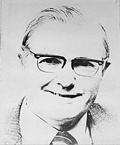
1922 - 1981 Topics: Antiphonal Psalms; Biblical Names and Places Aaron; Biblical Names and Places Israel; Church Year Easter; Church Year Passion/Palm Sunday; Elements of Worship Call to Worship; Elements of Worship Lord's Supper; Elements of Worship Praise and Adoration; Freedom; God's Triumph; God's Goodness; God's House; God's House; God's Name; God's People (flock, sheep); Mercy; Occasional Services Dedication / Consecration / Anniversary; Prayer; Processions; Salvation; Temple; Unity and Fellowship; Worship; Year A, B, C, Easter, Resurrection of the Lord; Year A, B, C, Lent, Liturgy of the Palms; Year C, Easter, 2nd Sunday Composer of "[Alleluia, alleluia]" in Psalms for All Seasons Fintan O’Carroll was born on 31st July 1922 in Wexford, and spent most of his life in Waterford. On completion of his secondary school studies Fintan took up a position as a Clerk in C.I.E., the national railway. He won first prize in a traditional music competition, aged 12, playing violin, and went on to study violin at home, taking lessons as and when the opportunity arose. While working at C.I.E. Fintan undertook a correspondence course in Music from Trinity College, Dublin. His heart was in music, and he left C.I.E. in 1967 after 27 years service, whereupon he completed his degree at Trinity to gain his B.Mus. along with the Prout Prize for the most outstanding student of the year. All the time Fintan had taken a keen interest in composition, particularly sacred music. Fintan became a fulltime teacher at the Presentation Convent Secondary School in Waterford, a job which payed about half the salary in C.I.E. at the time. He supplemented his income by taking 52 private pupils, conducting 2 brass bands, and led the orchestra in every musical show that offered. Some of the many musical organizations that owe a debt of musical gratitude to Fintan, whether it be as leader, violinist, conductor, organist, composer, or founder include Waterford Orchestral Players; Waterford Festival of Light Opera Orchestra; St Saviours Church, Bridge Street; the Franciscan Friary; the Church of SS Josephs and Benildus; St Patrick’s; Waterford Cathedral; St Patrick’s Brass Band; HFC Brass Band, New Ross; Mount Sion Silver Band. It is particularly with the brass bands that we are interested and it is fair to say that Fintan brought a sense of musicality and musicianship to these bands which helped greatly in the development of their players and the achievement of competition successes at all levels. Many musicians have commented later in their life that it was the love of music instilled in them by Fintan that carried them through their own musical lives. One of the proudest moments of Fintan’s musical career must have been when his Mass of the Immaculate Conception was chosen for the occasion of the visit of Pope John Paul II to Limerick in 1979. He took part in the Offertory Procession on this momentous occasion. Fintan died in July 1981 and was survived by his wife Josephine, a fine contralto voice, and whom he credits with much of his own success. They had six children: Fiona, Deirdre, Fergus, Declan, Kevin, Aoileann, and Cian, many of which play a very active role in the musical life of Waterford and beyond. --www.mountsionsilverband.org/history/

John Bacchus Dykes

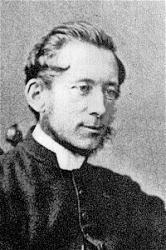
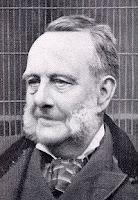
1823 - 1876 Person Name: John B. Dykes Topics: Consecration of a Church Composer of "HOSANNA" in The Hymnal of the Protestant Episcopal Church in the United States of America 1940 As a young child John Bacchus Dykes (b. Kingston-upon-Hull' England, 1823; d. Ticehurst, Sussex, England, 1876) took violin and piano lessons. At the age of ten he became the organist of St. John's in Hull, where his grandfather was vicar. After receiving a classics degree from St. Catherine College, Cambridge, England, he was ordained in the Church of England in 1847. In 1849 he became the precentor and choir director at Durham Cathedral, where he introduced reforms in the choir by insisting on consistent attendance, increasing rehearsals, and initiating music festivals. He served the parish of St. Oswald in Durham from 1862 until the year of his death. To the chagrin of his bishop, Dykes favored the high church practices associated with the Oxford Movement (choir robes, incense, and the like). A number of his three hundred hymn tunes are still respected as durable examples of Victorian hymnody. Most of his tunes were first published in Chope's Congregational Hymn and Tune Book (1857) and in early editions of the famous British hymnal, Hymns Ancient and Modern. Bert Polman

Joseph Haydn

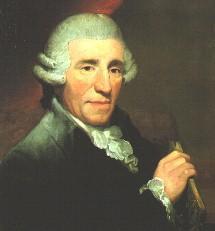
1732 - 1809 Person Name: Franz Joseph Haydn Topics: Consecration of a Church Composer of "AUSTRIA" in The Hymnal of the Protestant Episcopal Church in the United States of America 1940 Franz Joseph Haydn (b. Rohrau, Austria, 1732; d. Vienna, Austria, 1809) Haydn's life was relatively uneventful, but his artistic legacy was truly astounding. He began his musical career as a choirboy in St. Stephen's Cathedral, Vienna, spent some years in that city making a precarious living as a music teacher and composer, and then served as music director for the Esterhazy family from 1761 to 1790. Haydn became a most productive and widely respected composer of symphonies, chamber music, and piano sonatas. In his retirement years he took two extended tours to England, which resulted in his "London" symphonies and (because of G. F. Handel's influence) in oratorios. Haydn's church music includes six great Masses and a few original hymn tunes. Hymnal editors have also arranged hymn tunes from various themes in Haydn's music. Bert Polman

Richard Redhead

1820 - 1901 Person Name: R. Redhead, 1820-1901 Topics: Consecration Of Life; Business and Religion; Christian At work; The Church and the Kingdom of God Morning; Consecration To Christ; Daily Toil; Duty; Faithfulness To Daily Duty; Yoke, Christ's easy ; Work, Christian; Toil, daily; Toil, daily Christian ; Joy Of Service; Service Of Christ; Morning Hymns for ; Prayer Morning Arranger of "LAUDS" in Methodist Hymn and Tune Book Richard Redhead (b. Harrow, Middlesex, England, 1820; d. Hellingley, Sussex, England, 1901) was a chorister at Magdalen College, Oxford. At age nineteen he was invited to become organist at Margaret Chapel (later All Saints Church), London. Greatly influencing the musical tradition of the church, he remained in that position for twenty-five years as organist and an excellent trainer of the boys' choirs. Redhead and the church's rector, Frederick Oakeley, were strongly committed to the Oxford Movement, which favored the introduction of Roman elements into Anglican worship. Together they produced the first Anglican plainsong psalter, Laudes Diurnae (1843). Redhead spent the latter part of his career as organist at St. Mary Magdalene Church in Paddington (1864-1894). Bert Polman

Carl P. Daw Jr.

b. 1944 Person Name: Carl P. Daw, Jr., b. 1944 Topics: Biblical Names and Places Jacob; Biblical Names and Places Jacob; Blessing; Church Year Lent; Church Year Transfiguration; Desiring God; Discipleship; Doubt; Elements of Worship Baptism; Elements of Worship Gathering; Elements of Worship Lord's Supper; Elements of Worship Praise and Adoration; Fear; God Desire for; God Trust in; God as Refuge; God as Shield; God's Armor; God's Deeds; God's Face; God's House; God's Love; God's Name; God's People (flock, sheep); God's Promise of Redemption; God's Strength; God's Way; Grace; Hymns of Praise; Jesus Christ Incarnation; Joy; Longing for God; Occasional Services Christian Marriage; Occasional Services Dedication / Consecration / Anniversary; Occasional Services Funerals; Occasional Services Ordination and/or Installation; Pain; Peace; People of God / Church Citizens of Heaven; Prayer; Rest; Songs of Zion; Sorrow; Suffering; Temple; Temptation And Trial; The Fall; The Incarnation; Trust; Unity and Fellowship; Year A, B, C, Presentation of the Lord, February 2; Year B, Ordinary Time after Pentecost, August 21-27; Year C, Ordinary Time after Pentecost, October 23-29 Author (st. 3 and 4) of "How Lovely Is Thy Dwelling Place" in Psalms for All Seasons Carl P. Daw, Jr. (b. Louisville, KY, 1944) is the son of a Baptist minister. He holds a PhD degree in English (University of Virginia) and taught English from 1970-1979 at the College of William and Mary, Williamsburg, Virginia. As an Episcopal priest (MDiv, 1981, University of the South, Sewanee, Tennesee) he served several congregations in Virginia, Connecticut and Pennsylvania. From 1996-2009 he served as the Executive Director of The Hymn Society in the United States and Canada. Carl Daw began to write hymns as a consultant member of the Text committee for The Hymnal 1982, and his many texts often appeared first in several small collections, including A Year of Grace: Hymns for the Church Year (1990); To Sing God’s Praise (1992), New Psalms and Hymns and Spiritual Songs (1996), Gathered for Worship (2006). Other publications include A Hymntune Psalter (2 volumes, 1988-1989) and Breaking the Word: Essays on the Liturgical Dimensions of Preaching (1994, for which he served as editor and contributed two essays. In 2002 a collection of 25 of his hymns in Japanese was published by the United Church of Christ in Japan. He wrote Glory to God: A Companion (2016) for the 2013 hymnal of the Presbyterian Church (U.S.A.). Emily Brink

Pages


Export as CSV
It looks like you are using an ad-blocker. Ad revenue helps keep us running. Please consider white-listing Hymnary.org or getting Hymnary Pro to eliminate ads entirely and help support Hymnary.org.