

 My Starred Hymns
 My FlexScores
 My Hymnals
 My Purchased Files
Planning worship?
Check out our sister site, ZeteoSearch.org,
for 20+ additional resources related to your search.
- |
User Links
Person Results
George F. LeJeune
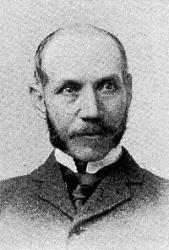
1841 - 1904 Person Name: George F. C. Le Jeune Topics: Constancy Composer of "LOVE DIVINE" in Book of Worship with Hymns and Tunes George Fitz-Curwood Le Jeune, 1841-1904
Born: June 18, 1841, London, England.
Died: April 11, 1904, Staten Island, New York.
Buried: Moravian Cemetery, Staten Island, New York.
Le Jeune studied music under Joseph Barnby and George Macfarren in London. In 1863, he moved to Montréal, Canada, where he continued his studies with George Carter. He later moved to America, playing the organ in churches in Hartford, Connecticut, and Philadelphia, Pennsylvania. He became the organist at St. John’s Chapel of Trinity Parish, New York City, in 1876, and also directed the choir there.
Sources:
Hughes, p. 471
--www.hymntime.com/tch
George F. LeJeune
Purd E. Deitz
b. 1897 Topics: Constancy Author of "We Would Be Building" in The New Century Hymnal Born: October 22, 1897, York, Pennsylvania.
Died: After 1968.
Son of Harry William and Ada Gertrude Gilbert Dietz, Purd sang as a boy in the choir at St. James Episcopal Church in York, and later in York’s St. James Episcopal Church. At college, he belonged to both the college choir and glee club. He was educated at Ursinus College, Collegeville, Pennsylvania (AB 1918, DD 1937); Central Theological Seminary, Dayton, Ohio; and the University of Edinburgh (a year of graduate study around 1940).
Ordained in 1921, Dietz married Thisbe Elizabeth Schultz that same year. He served at the Fourth Reformed Church in Dayton, Ohio, for four years, and for 13 years at Trinity Church, Philadelphia, Pennsylvania. He then became professor of practical theology at Eden Seminary, St. Louis, Missouri. He served on the committee that compiled the Evangelical and Reformed Church’s Book of Worship, and was president of the denomination’s Board of National Missions (elected the board’s executive secretary in 1949).
--www.hymntime.com/tch/
Purd E. Deitz
Benjamin Cleveland
1733 - 1811 Topics: Constancy Author of ""Nearer to thee"" in Laudes Domini Cleveland, Benjamin. Probably a Baptist, but known only by his Hymns on Different Spiritual Subjects, in Two Parts, whereof the 4th ed. appeared in Norwich, Connecticut, 1792. He is the author of:—
0 could I find from day to day. [Longing for Christ.] This was preserved from oblivion by the Hartford Selection 1799, and is now in general use as altered and abridged to 4 stanzas by Nettleton, in his Village Hymns, 1824, No. 145. What is supposed to be the original text of the first four stanzas is found in Dr. Hatfield's Church Hymn Book, 1872, No. 876. [Rev. F. M. Bird, M.A.]
--John Julian, Dictionary of Hymnology (1907)
============================
Cleveland, Benjamin. (Windham, Connecticut, August 30, 1733--March 9, 1811, Horton [now Wolfville], Nova Scotia). Baptist. Son of Benjamin Cleveland. The name is sometimes spelled "Cleavland" or "Cleaveland" in family records. He was a layman and a Baptist deacon; little else is known of his life except that of his twelve children, one, Nathan Cleveland, became a Baptist minister. He published in 1792 his Hymns on Different Subjects. In Two Parts in Norwich, Connecticut. His hymn, "O could I find from day to day," was widely reprinted through most of the nineteenth century. In his 1792 collection, it had six stanzas. Joshua Smith reprinted it in 1797, and it was altered for the Hartford Selection of 1799. Asahel Nettleton abridged it to four stanzas and altered it for his Village Hymns in 1824. It was in this form that it was widely sung; it was reprinted in the same for in Edwin Francis Hatfield's Church Hymn Book, 1872. the original first four stanzas treat the desire to "find from day to day a nearness to my God" throughout the course of life, ending in stanza 4 "Thus, till my last expiring breath, Thy goodness I'll adore . . ."
--Thomas W. Hunt, DNAH Archives
Benjamin Cleveland
George T. Coster
1835 - 1912 Topics: Constancy Author of "March On, O Soul, with Strength!" in The Hymnbook Coster, George Thomas, was born in 1835 at Chatham, Kent; studied for the Congregational Ministry at New College, London; ordained in 1859 at Newport, Essex, and has since held pastorates at Barnstaple, Hull, South Norwood, and Whitby. He has published (besides many sermons and tracts) Pastors and People, 1869; Allegories, 1878; Lorrin and other Poems, 1859; the Rhyme of St. Peter's Fall, 1871, and Poems and Hymns, 1882. He has also contributed several poems on Scripture characters (a line in which he excels) to The Poet's Bible, and edited, in 1869 Temperance Melodies and Religious Hymns. Of his hymns the following are in common use:—
1. Dost thou bow beneath the burthen. Fellowship with God. This is an imitation of Dr. Neale's "Art thou weary." It is No. 1112 in the 1880 Supplement to the Baptist Psalms and Hymns.
2. From north and south and east and west. Missions.
3. Lord of the sea! afar from land. Sabbath at Sea. Nos. 2 and 3 are in Horder's Congregational Hymns, 1884. [Rev. W. Garrett Horder]
--John Julian, Dictionary of Hymnology (1907)
===============
Coster, G. T., p. 263, i. The following hymns by Mr. Coster have been written and have come into common use since 1892:—
1. Going to the Father. [The Man of Sorrows.] Written in 1899, and published in his Hessle Hymns, 1901, No. 13, in 5 stanzas of 8 lines.
2. Lord God Almighty, in Thy hand. [Praise.] Written in 1897, and published in his Hessle Hymns, 1901, No. 3, in 7 stanzas of 4 lines, and entitled "We praise Thy power."
3. Lord of the gracious sunshine. [Temperance.] Written at the request of the Rev. W. G. Horder for his Hymns Supplemental on Oct. 51893. It is in extensive use in Great Britain and America. In the author'sHessle Hymns, 1901, No. 30, and entitled "A National Foe."
4. March on, 0 Soul, with strength. [Christian Battle Song.] Written in Bedford Park, London, Aug. 3, 1897, and printed in The Evangelical Magazine, Feb., 1898. In the Hessle Hymns, 1901, No. 29, in 6 stanzas of 6 lines, and headed "Battle Song." It is in common use in America, including The Pilgrim Hymnal, 1904, and others.
5. O Friend Divine! with Thee apart. [Fellowship with Christ.] First published in the Evangelical Magazine, Sept., 1900; also in his Hessle Hymns, 1901 No. 25, in 6 stanzas of 4 lines. Included in The Pilgrim Hymnal, 1904.
6. Skill and beauty from Thee live. [Opening of a Sale of Work.] First published in his Hymns and Poems, 1882, and again in his Hessle Hymns, 1901, No. 33, in 3 stanzas of 4 lines.
7. Thou Whose great baptismal hour. [Holy Baptism.] Written in 1892, at the request of W. G. Horder, for the Baptist edition of his Worship Song, and given therein 1895, No. 697; also in the Baptist Church Hymnal, 1900, No. 504, and the author's Hessle Hymns, 1901, No. 19.
8. We join with all in every place. [Holy Communion.] Written in 1891, and first published in Border's Hymns Supplemental, 1894, and the Hessle Hymns, 1901, No. 20, in 3 stanzas of 6 lines, and entitled “United Communion Service."
In addition to the above the following hymns are appearing in forthcoming collections:—
9. Comrades' names are on our banner. [National Hymn] Written at Scarborough, July, 1901, and printed in The Examiner (the weekly organ of the Congregational Churches), May 8, 1902; also in the author's When the Stars Appear, 1903, p. 11, in 6 stanzas of 6 lines, and entitled "Names on Our Banner."
10. King of the City Splendid. [National Hymn) Written at Bedford Park, London, Aug. 18, 1897, and printed in The Independent (Congregational weekly), Jan. 27, 1898. In his Hessle Hymns, 1901, No. 40, in 10 stanzas of 6 lines, and entitled "Prayer for our Cities."
Concerning the three hymns noted on p. 263, i., the author says :—
1. Dost thou bow beneath the burden! "It was
written in 1879, and first printed in the Evangelical Magazine, May, 1879." In the Hessle Hymns, 1901, No. 22.
2. From north and south, and east and west. "Originally written in 1864, and first printed in the Evangelical Magazine. In later collections it haft been considerably altered" In its varying forms it is the most widely known of the author's hymns. Authorised text in Hessle Hymns, 1901, No. 26.
3. Lord of the Sea, afar from land. "Written in 1874, and printed in The Christian World magazine, 1879." Included in Hessle Hymns, 1901, No. 31.
Since 1890 Mr. Coster has held the pastorates of Stroud and of Hessle, near Hull. He retired from the active ministry in 1902. His later poetical works include Collected Poems, 1890; Gloria Christi, 189G; Hessle Hymns, 1901; When the Stars appear, 1903; and Beams of Christ's Glory, 1904. In these works Mr. Coster has maintained his reputation as a writer of hymns.
--John Julian, Dictionary of Hymnology, New Supplement (1907)
George T. Coster
Joachim Segger
Topics: Constancy Composer (descant) of "FAITHFULNESS" in Voices United b. Germany, immigrated to Canada; organist, pianist, educator
Joachim Segger
Verolga Nix
1933 - 2014 Topics: Constancy Arranger of "[Over my head I hear music in the air]" in The New Century Hymnal Verolga Nix (Apr. 6, 1933-Dec. 9, 2014) Born in Cleveland, Verolga moved with her family at an early age to Philadelphia. She studied for two years at New England Conservatory of Music and then earned a music degree from Oberlin Conservatory of Music in 1955. She was awarded an honorary doctorate of humane letters from Bennett College in 2000. After retiring from twenty years as a full-time music teacher in Philadelphia public schools she served as minister of music at several churches in Philadelphia, trained and conducted many choirs and served as a seminar leader nationwide. She was a member of Broadcast Music, Inc. (BMI), National Association of Negro Musicians and the Hymn Society in U.S. and Canada. In 1980 the United Methodist Church asked her to co-edit with J. Jefferson Cleveland the supplemental hymnal Songs of Zion. She published nearly 200 original songs an arrangements.
(further details in The Philadelphia Tribune, Dec.19, 2014 obituary).
Mary Louise VanDyke
Verolga Nix
William Mitchell
1793 - 1867 Topics: Constancy Author of ""Shall we forget"" in Laudes Domini Mitchell, William, born at Chester, Connecticut, Dec. 19, 1793, educated at Yale College. entered the Congregational Ministry in 1825, and d. at Corpus Christi, Texas, Aug. 1, 1867. To Pt. i. of Joshua Leavitt's Christian Lyre, 1830-1, he contributed “Servants of the Living God" (Christian Warfare); and to Pt. ii. "Jesus, Thy love shall we forget" (The Love of Christ).
--John Julian, Dictionary of Hymnology, New Supplement (1907)
William Mitchell
Lauchlan MacLean Watt
1867 - 1957 Person Name: Rev. Lauchlan MacLean Watt Topics: Constancy Author of "I bind my heart this tide" in The Hymnal
Lauchlan MacLean Watt
Leonard Swain
1821 - 1869 Person Name: Rev. Leonard Swain (1821-1869) Topics: Constancy Author of "Weigh not thy Life" in Many Voices; or, Carmina Sanctorum, Evangelistic Edition with Tunes Swain, Leonard, D.D., was born at Concord, New Haven, Feb. 26, 1821, and educated at Dartmouth College and Andover. In 1847 he became a Congregational minister at Nashua, New Haven; and in 1852 of Central Church, Providence, Rhode Island. He died July 14, 1869. His hymns, "My soul, it is thy God" (The Christian Race), and "My soul, weigh not thy life" (The Good Fight of Faith), appeared anonymously in The Sabbath Hymn Book, 1858, and their authorship has only recently been determined. The second hymn is the more widely used of the two. [Rev. F. M. Bird, M.A.]
-- John Julian, Dictionary of Hymnology (1907)
Leonard Swain
Pages




