You help make Hymnary.org possible. More than 10 million people from 200+ countries found hymns, liturgical resources and encouragement on Hymnary.org in 2025, including you. Every visit affirms the global impact of this ministry.

If Hymnary has been meaningful to you this year, would you take a moment today to help sustain it? A gift of any size—paired with a note of encouragement if you wish—directly supports the server costs, research work and curation that keep this resource freely available to the world.

Give securely online today, or mail a check to:
Hymnary.org
Calvin University
3201 Burton Street SE
Grand Rapids, MI 49546

Thank you for your partnership, and may the hope of Advent fill your heart.

Person Results

Topics:dedication+of+churches
In:person

Planning worship? Check out our sister site, ZeteoSearch.org, for 20+ additional resources related to your search.
Showing 91 - 100 of 547Results Per Page: 102050

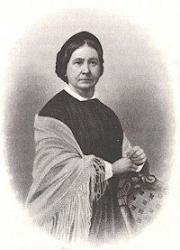
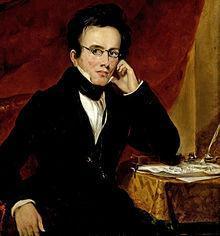
Phoebe Palmer

1807 - 1874 Person Name: Palmer Topics: Dedication of Churches and Laying of Corner Stones Author of "Dedication" in The Hymn Book of the African Methodist Episcopal Church Palmer, Phoebe, an American Methodist, b. 1807, and d. in 1874, wrote "Blessed Bible! how I love thee" (Holy Scriptures), and “O! when shall I sweep through the gates" (Heaven Anticipated). The latter is in I. D. Sankey's Sacred Songs and Solos, 1878. --John Julian, Dictionary of Hymnology, Appendix, Part II (1907)

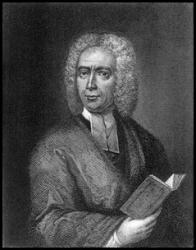
Isaac Watts

1674 - 1748 Person Name: Rev. Isaac Watts (1674-1748) Topics: Dedication of Church Author of "Prayer of Dedication" in Many Voices; or, Carmina Sanctorum, Evangelistic Edition with Tunes Isaac Watts was the son of a schoolmaster, and was born in Southampton, July 17, 1674. He is said to have shown remarkable precocity in childhood, beginning the study of Latin, in his fourth year, and writing respectable verses at the age of seven. At the age of sixteen, he went to London to study in the Academy of the Rev. Thomas Rowe, an Independent minister. In 1698, he became assistant minister of the Independent Church, Berry St., London. In 1702, he became pastor. In 1712, he accepted an invitation to visit Sir Thomas Abney, at his residence of Abney Park, and at Sir Thomas' pressing request, made it his home for the remainder of his life. It was a residence most favourable for his health, and for the prosecution of his literary labours. He did not retire from ministerial duties, but preached as often as his delicate health would permit. The number of Watts' publications is very large. His collected works, first published in 1720, embrace sermons, treatises, poems and hymns. His "Horae Lyricae" was published in December, 1705. His "Hymns" appeared in July, 1707. The first hymn he is said to have composed for religious worship, is "Behold the glories of the Lamb," written at the age of twenty. It is as a writer of psalms and hymns that he is everywhere known. Some of his hymns were written to be sung after his sermons, giving expression to the meaning of the text upon which he had preached. Montgomery calls Watts "the greatest name among hymn-writers," and the honour can hardly be disputed. His published hymns number more than eight hundred. Watts died November 25, 1748, and was buried at Bunhill Fields. A monumental statue was erected in Southampton, his native place, and there is also a monument to his memory in the South Choir of Westminster Abbey. "Happy," says the great contemporary champion of Anglican orthodoxy, "will be that reader whose mind is disposed, by his verses or his prose, to imitate him in all but his non-conformity, to copy his benevolence to men, and his reverence to God." ("Memorials of Westminster Abbey," p. 325.) --Annotations of the Hymnal, Charles Hutchins, M.A., 1872. ================================= Watts, Isaac, D.D. The father of Dr. Watts was a respected Nonconformist, and at the birth of the child, and during its infancy, twice suffered imprisonment for his religious convictions. In his later years he kept a flourishing boarding school at Southampton. Isaac, the eldest of his nine children, was born in that town July 17, 1674. His taste for verse showed itself in early childhood. He was taught Greek, Latin, and Hebrew by Mr. Pinhorn, rector of All Saints, and headmaster of the Grammar School, in Southampton. The splendid promise of the boy induced a physician of the town and other friends to offer him an education at one of the Universities for eventual ordination in the Church of England: but this he refused; and entered a Nonconformist Academy at Stoke Newington in 1690, under the care of Mr. Thomas Rowe, the pastor of the Independent congregation at Girdlers' Hall. Of this congregation he became a member in 1693. Leaving the Academy at the age of twenty, he spent two years at home; and it was then that the bulk of the Hymns and Spiritual Songs (published 1707-9) were written, and sung from manuscripts in the Southampton Chapel. The hymn "Behold the glories of the Lamb" is said to have been the first he composed, and written as an attempt to raise the standard of praise. In answer to requests, others succeeded. The hymn "There is a land of pure delight" is said to have been suggested by the view across Southampton Water. The next six years of Watts's life were again spent at Stoke Newington, in the post of tutor to the son of an eminent Puritan, Sir John Hartopp; and to the intense study of these years must be traced the accumulation of the theological and philosophical materials which he published subsequently, and also the life-long enfeeblement of his constitution. Watts preached his first sermon when he was twenty-four years old. In the next three years he preached frequently; and in 1702 was ordained pastor of the eminent Independent congregation in Mark Lane, over which Caryl and Dr. John Owen had presided, and which numbered Mrs. Bendish, Cromwell's granddaughter, Charles Fleetwood, Charles Desborough, Sir John Hartopp, Lady Haversham, and other distinguished Independents among its members. In this year he removed to the house of Mr. Hollis in the Minories. His health began to fail in the following year, and Mr. Samuel Price was appointed as his assistant in the ministry. In 1712 a fever shattered his constitution, and Mr. Price was then appointed co-pastor of the congregation which had in the meantime removed to a new chapel in Bury Street. It was at this period that he became the guest of Sir Thomas Abney, under whose roof, and after his death (1722) that of his widow, he remained for the rest of his suffering life; residing for the longer portion of these thirty-six years principally at the beautiful country seat of Theobalds in Herts, and for the last thirteen years at Stoke Newington. His degree of D.D. was bestowed on him in 1728, unsolicited, by the University of Edinburgh. His infirmities increased on him up to the peaceful close of his sufferings, Nov. 25, 1748. He was buried in the Puritan restingplace at Bunhill Fields, but a monument was erected to him in Westminster Abbey. His learning and piety, gentleness and largeness of heart have earned him the title of the Melanchthon of his day. Among his friends, churchmen like Bishop Gibson are ranked with Nonconformists such as Doddridge. His theological as well as philosophical fame was considerable. His Speculations on the Human Nature of the Logos, as a contribution to the great controversy on the Holy Trinity, brought on him a charge of Arian opinions. His work on The Improvement of the Mind, published in 1741, is eulogised by Johnson. His Logic was still a valued textbook at Oxford within living memory. The World to Come, published in 1745, was once a favourite devotional work, parts of it being translated into several languages. His Catechisms, Scripture History (1732), as well as The Divine and Moral Songs (1715), were the most popular text-books for religious education fifty years ago. The Hymns and Spiritual Songs were published in 1707-9, though written earlier. The Horae Lyricae, which contains hymns interspersed among the poems, appeared in 1706-9. Some hymns were also appended at the close of the several Sermons preached in London, published in 1721-24. The Psalms were published in 1719. The earliest life of Watts is that by his friend Dr. Gibbons. Johnson has included him in his Lives of the Poets; and Southey has echoed Johnson's warm eulogy. The most interesting modern life is Isaac Watts: his Life and Writings, by E. Paxton Hood. [Rev. H. Leigh Bennett, M.A.] A large mass of Dr. Watts's hymns and paraphrases of the Psalms have no personal history beyond the date of their publication. These we have grouped together here and shall preface the list with the books from which they are taken. (l) Horae Lyricae. Poems chiefly of the Lyric kind. In Three Books Sacred: i.To Devotion and Piety; ii. To Virtue, Honour, and Friendship; iii. To the Memory of the Dead. By I. Watts, 1706. Second edition, 1709. (2) Hymns and Spiritual Songs. In Three Books: i. Collected from the Scriptures; ii. Composed on Divine Subjects; iii. Prepared for the Lord's Supper. By I. Watts, 1707. This contained in Bk i. 78 hymns; Bk. ii. 110; Bk. iii. 22, and 12 doxologies. In the 2nd edition published in 1709, Bk. i. was increased to 150; Bk. ii. to 170; Bk. iii. to 25 and 15 doxologies. (3) Divine and Moral Songs for the Use of Children. By I. Watts, London, 1715. (4) The Psalms of David Imitated in the Language of the New Testament, And apply'd to the Christian State and Worship. By I. Watts. London: Printed by J. Clark, at the Bible and Crown in the Poultry, &c, 1719. (5) Sermons with hymns appended thereto, vol. i., 1721; ii., 1723; iii. 1727. In the 5th ed. of the Sermons the three volumes, in duodecimo, were reduced to two, in octavo. (6) Reliquiae Juveniles: Miscellaneous Thoughts in Prose and Verse, on Natural, Moral, and Divine Subjects; Written chiefly in Younger Years. By I. Watts, D.D., London, 1734. (7) Remnants of Time. London, 1736. 454 Hymns and Versions of the Psalms, in addition to the centos are all in common use at the present time. --Excerpts from John Julian, Dictionary of Hymnology (1907) ================================== Watts, I. , p. 1241, ii. Nearly 100 hymns, additional to those already annotated, are given in some minor hymn-books. --John Julian, Dictionary of Hymnology, Appendix, Part II (1907) ================= Watts, I. , p. 1236, i. At the time of the publication of this Dictionary in 1892, every copy of the 1707 edition of Watts's Hymns and Spiritual Songs was supposed to have perished, and all notes thereon were based upon references which were found in magazines and old collections of hymns and versions of the Psalms. Recently three copies have been recovered, and by a careful examination of one of these we have been able to give some of the results in the revision of pp. 1-1597, and the rest we now subjoin. i. Hymns in the 1709 ed. of Hymns and Spiritual Songs which previously appeared in the 1707 edition of the same book, but are not so noted in the 1st ed. of this Dictionary:— On pp. 1237, L-1239, ii., Nos. 18, 33, 42, 43, 47, 48, 60, 56, 58, 59, 63, 75, 82, 83, 84, 85, 93, 96, 99, 102, 104, 105, 113, 115, 116, 123, 124, 134, 137, 139, 146, 147, 148, 149, 162, 166, 174, 180, 181, 182, 188, 190, 192, 193, 194, 195, 197, 200, 202. ii. Versions of the Psalms in his Psalms of David, 1719, which previously appeared in his Hymns and Spiritual Songs, 1707:— On pp. 1239, U.-1241, i., Nos. 241, 288, 304, 313, 314, 317, 410, 441. iii. Additional not noted in the revision:— 1. My soul, how lovely is the place; p. 1240, ii. 332. This version of Ps. lxiv. first appeared in the 1707 edition of Hymns & Spiritual Songs, as "Ye saints, how lovely is the place." 2. Shine, mighty God, on Britain shine; p. 1055, ii. In the 1707 edition of Hymns & Spiritual Songs, Bk. i., No. 35, and again in his Psalms of David, 1719. 3. Sing to the Lord with [cheerful] joyful voice, p. 1059, ii. This version of Ps. c. is No. 43 in the Hymns & Spiritual Songs, 1707, Bk. i., from which it passed into the Ps. of David, 1719. A careful collation of the earliest editions of Watts's Horae Lyricae shows that Nos. 1, 7, 9, 10, 11, 12, 14, 16, p. 1237, i., are in the 1706 ed., and that the rest were added in 1709. Of the remaining hymns, Nos. 91 appeared in his Sermons, vol. ii., 1723, and No. 196 in Sermons, vol. i., 1721. No. 199 was added after Watts's death. It must be noted also that the original title of what is usually known as Divine and Moral Songs was Divine Songs only. --John Julian, Dictionary of Hymnology, New Supplement (1907) =========== See also in: Hymn Writers of the Church

W. O. Perkins

1831 - 1902 Person Name: William O. Perkins Topics: Dedication of Church Composer of "GUERNSEY" in The Psalter William Oscar Perkins DMus USA 1831-1902. Born at Stockbridge, VT, older brother of Henry, and the son of musical parents (both singers) he was trained musically, primarly by his father. He attended the Kimball Union Academy, Meriden, NH, then studied music in Boston, MA, London, England, and Milan, Italy. He settled in Boston, MA, and founded a music academy, where he taught music. He published a number of hymnals in Boston, then moved to New York City. He was awarded an honorary doctorate of music degree in 1879 by Hamilton College. He wrote 19 books (1861-1897), including a history of the war in South Africa (1900). He published 33 hymnals 1859-1882). In 1870 he published ”The Chorister”, his 400-page music collection for choirs, schools, and conventions. He was an author, composer, editor, compiler, and originator. He died at Boston, MA. John Perry

Marty Haugen

b. 1950 Person Name: Marty Haugen, 1950- Topics: Dedication of Church Buildgin Author of "Here in this place new light is streaming" in Together in Song Marty Haugen (b. 1950), is a prolific liturgical composer with many songs included in hymnals across the liturgical spectrum of North American hymnals and beyond, with many songs translated into different languages. He was raised in the American Lutheran Church, received a BA in psychology from Luther College, yet found his first position as a church musician in a Roman Catholic parish at a time when the Roman Catholic Church was undergoing profound liturgical and musical changes after Vatican II. Finding a vocation in that parish to provide accessible songs for worship, he continued to compose and to study, receiving an MA in pastoral studies at the University of St. Thomas in St. Paul Minnesota. A number of liturgical settings were prepared for the Evangelical Lutheran Church in America and more than 400 of his compositions are available from several publishers, especially GIA Publications, who also produced some 30 recordings of his songs. He is composer-in-residence at Mayflower Community Congregational Church in Minneapolis and continues to compose and travel to speak and teach at worship events around the world. Emily Brink

Christopher Wordsworth

1807 - 1885 Topics: Church Anniversaries and Dedications; Church Worship and Prayer; Opening of Worship; The Holy Trinity Author (st. 1-2) of "O Day of Radiant Gladness" in The New Century Hymnal Christopher Wordsworth--nephew of the great lake-poet, William Wordsworth--was born in 1807. He was educated at Winchester, and at Trinity College, Cambridge, where he graduated B.A., with high honours, in 1830; M.A. in 1833; D.D. in 1839. He was elected Fellow of his College in 1830, and public orator of the University in 1836; received Priest's Orders in 1835; head master of Harrow School in 1836; Canon of Westminster Abbey in 1844; Hulsean Lecturer at Cambridge in 1847-48; Vicar of Stanford-in-the-Vale, Berks, in 1850; Archdeacon of Westminster, in 1865; Bishop of Lincoln, in 1868. His writings are numerous, and some of them very valuable. Most of his works are in prose. His "Holy Year; or, Hymns for Sundays, Holidays, and other occasions throughout the Year," was published in [1862], and contains 127 hymns. --Annotations of the Hymnal, Charles Hutchins, M.A., 1872. =================== Wordsworth, Christopher, D.D., was born at Lambeth (of which parish his father was then the rector), Oct. 30, 1807, and was the youngest son of Christopher Wordsworth, afterwards Master of Trinity College, Cambridge, and Priscilla (née Lloyd) his wife. He was educated at Winchester, where he distinguished himself both as a scholar and as an athlete. In 1826 he matriculated at Trinity College, Cambridge, where his career was an extraordinarily brilliant one. He swept off an unprecedented number of College and University prizes, and in 1830 graduated as Senior Classic in the Classical Tripos, and 14th Senior Optime in the Mathematical, won the First Chancellor's Medal for classical studies, and was elected Fellow of Trinity. He was engaged as classical lecturer in college for some time, and in 1836 was chosen Public Orator for the University. In the same year he was elected Head Master of Harrow School, and in 1838 he married Susan Hatley Freere. During his head-mastership the numbers at Harrow fell off, but he began a great moral reform in the school, and many of his pupils regarded him with enthusiastic admiration. In 1844 he was appointed by Sir Robert Peel to a Canonry at Westminster; and in 1848-49 he was Hulsean lecturer at Cambridge. In 1850 he took the small chapter living of Stanford-in-the-Vale cum Goosey, in Berkshire, and for the next nineteen years he passed his time as an exemplary parish priest in this retired spot, with the exception of his four months' statutable residence each year at Westminster. In 1869 he was elevated to the bishopric of Lincoln, which he held for more than fifteen years, resigning it a few months before his death, which took place on March 20th, 1885. As bearing upon his poetical character, it may be noted that he was the nephew of the poet-laureate, William Wordsworth, whom he constantly visited at Rydal up to the time of the poet's death in 1850, and with whom he kept up a regular and lengthy correspondence. Christopher Wordsworth was a very voluminous writer, his principal works being:— (1) Athens and Attica, 1836; (2) Pompeian Inscriptions, 1837; (3) Greece Pictorial and Descriptive, 1839; (4) King Edward VIth's Latin Grammar, 1841; (5) Bentley's Correspondence, 1842; (6) Theophilus Anglicanus, 1843; (7) Memoirs of William Wordsworth, 1851; (8) Hippolytus, 1853; (9) Notes at Paris, 1854; (10) A Commentary on the whole Bible, 1856-1870; (11) The Holy Year, 1862; (12) Church History, 1881-1883; many volumes of Sermons, and an enormous amount of Pamphlets, Addresses, Letters, Speeches, on almost every subject in which the interests of the church were concerned, and also on subjects connected with classical literature. Of his many works, however, the only one which claims notice from the hynmologist's point of view is The Holy Year, which contains hymns, not only for every season of the Church's year, but also for every phase of that season, as indicated in the Book of Common Prayer. Dr. Wordsworth, like the Wesleys, looked upon hymns as a valuable means of stamping permanently upon the memory the great doctrines of the Christian Church. He held it to be "the first duty of a hymn-writer to teach sound doctrine, and thus to save souls." He thought that the materials for English Church hymns should be sought (1) in the Holy Scriptures, (2) in the writings of Christian Antiquity, and (3) in the Poetry of the Ancient Church. Hence he imposed upon himself the strictest limitations in his own compositions. He did not select a subject which seemed to him most adapted for poetical treatment, but felt himself bound to treat impartially every subject, and branch of a subject, that is brought before us in the Church's services, whether of a poetical nature or not. The natural result is that his hymns are of very unequal merit; whether his subject inspired him with poetical thoughts or not, he was bound to deal with it; hence while some of his hymns (such as "Hark! the sound of holy voices," &c, “See the Conqueror mounts in triumph," &c, "O, day of rest and gladness") are of a high order of excellence, others are prosaic. He was particularly anxious to avoid obscurity, and thus many of his hymns are simple to the verge of baldness. But this extreme simplicity was always intentional, and to those who can read between the lines there are many traces of the "ars celans artem." It is somewhat remarkable that though in citing examples of early hymnwriters he almost always refers to those of the Western Church, his own hymns more nearly resemble those of the Eastern, as may be seen by comparing The Holy Year with Dr. Mason Neale's Hymns of the Eastern Church translated, with Notes, &c. The reason of this perhaps half-unconscious resemblance is not far to seek. Christopher Wordsworth, like the Greek hymnwriters, drew his inspiration from Holy Scripture, and he loved, as they did, to interpret Holy Scripture mystically. He thought that ”the dangers to which the Faith of England (especially in regard to the Old Testament) was exposed, arose from the abandonment of the ancient Christian, Apostolic and Patristic system of interpretation of the Old Testament for the frigid and servile modern exegesis of the literalists, who see nothing in the Old Testament but a common history, and who read it (as St. Paul says the Jews do) ‘with a veil on their heart, which veil' (he adds) 'is done away in Christ.'" In the same spirit, he sought and found Christ everywhere in the New Testament. The Gospel History was only the history of what "Jesus began to do and to teach" on earth; the Acts of the Apostles and all the Epistles were the history of what he continued to do and to teach from Heaven; and the Apocalypse (perhaps his favourite book) was "the seal and colophon of all." Naturally he presents this theory, a theory most susceptible of poetical treatment, in his hymns even more prominently than in his other writings. The Greek writers took, more or less, the same view; hence the resemblance between his hymns and those of the Eastern Church. [Rev. J. H. Overton, D.D.] During the time that Bishop Wordsworth was Canon of Westminster, and Vicar of Stanford-in-the-Vale cum Goosey, he published his collection of hymns as:— The Holy Year; or Hymns for Sundays and Holy-days, And other Occasions. London, Rivingtons, 1862. This work contained an extended Preface; a Calendar of Hymns; 117 Original Compositions; and a Supplement of 82 hymns from other sources. In the 3rd edition, 1863, the Supplement was omitted, and the Original hymns were increased to 127. Several of these hymns are annotated under their respective first lines, the rest in common use are:— From The Holy Year, first edition, 1862:— 1. Five pebbles from the brook. Temptation. Stanza ix. added in 1863. 2. Giver of law is God's [Thy] dear Son. Circumcision. Doxology added in 1863. 3. Gracious Spirit, Holy Ghost. Quinquagesima. 4. Holy, holy, holy, Lord, God of Hosts, Eternal King. Holy Trinity. 5. Holy of Holies! awful name. Epistle 5th Sunday in Lent. 6. How blest are hearts which Christ the Lord. Holy Matrimony. In 1863 in two parts, Pt. ii. being "Bless these Thy servants, gracious Lord." 7. How blessed is the force of prayer. St. Peter. In 1863, in two parts, Pt. i. being "Behold! at hand is Herod's doom." 8. How wondrous and mysterious are. Holy Baptism. In the 1863 ed. it is divided into four parts:— Pt. ii. "In Jordan Thou didst sanctify"; Pt. iii. "Thee, risen in triumph from the grave"; Pt. iv." Baptized in Christ we put on Christ." The cento, "By Water and the Holy Ghost," is also from this hymn. 9. In sorrow and distress. Ash Wednesday. 10. In Thy glorious Resurrection . Easter. In the 1863 ed. it begins, "Lord, Thy glorious Resurrection," and the doxology was added. 11. Lord, may we never, save to One. Against False Worship. Stanza viii. was added in 1863. 12. Lord not with [by] poor and paltry gifts. Offertory. 13. Lord, Who didst the Prophets teach. 2nd Sunday in Advent, or, Holy Scripture. The doxology was added in 1863. 14. Man fell from grace by carnal appetite. Gospel 1st S. in Lent. 15. Mankind in Adam fell. Good Friday. In the 1863 ed. it is divided into three parts: Pt. ii. being "We fell by Adam's sin;" and Pt. iii. "Thy Cross a Trophy is." 16. Not bound by chains, nor pent in cells. The Gifts of the Holy Ghost. This hymn is preceded by a special note on the Holy Spirit and His gifts. 17. Not gifts of prophecy can save. Self Discipline, or, 8th Sunday after Trinity. 18. 0 Jerusalem beloved, joyful morn has dawned on Thee. Purification of Blessed Virgin Mary, or, The Presentation. In the 1863 edition it is divided into two parts, Pt. ii. Being “Light the Gentile world to lighten, and thy glory Israel." 19. 0 Saviour, Who at Nain's gate. The Raising of the Widow's Son. 20. 0 Son of God, the Eternal Word. The Queen's Accession. 21. Once all the nations were as one. Babel and Sion a Contrast. 22. Sing, 0 sing this blessed morn. Christmas. In the 1863 edition a doxology was added, and the hymn was divided into two parts, Pt. ii. being, "God comes down that man may rise." 23. The banner of the Cross. Missions. In the 1863 ed. it is in three parts, Pt. ii., "Now for the Lord our God"; Pt. iii. "The earth from East to West." 24. The Galilean Fishers toil. Collect 4th Sunday in Advent. From this "0 Lord, when storms around us howl" is taken. 25. Thou bidd'st us visit in distress. The Promise of the Comforter, or, Sunday before Ascension. In the 1863 edition it is in two parts, Pt. ii. being “At Thy first birth, Thou, Lord, didst wait." 26. Thou hast a Temple founded. The Christian Temple; or, Epistle 11th Sunday after Trinity. 27. To-day, 0 Lord, the Holy James. St. James. In the 1863 ed. in two parts, Pt. ii. being "God in His word does not display." 28. Today with bright effulgence shine. Conversion of St. Paul. In the 1863 ed. it begins "Today in Thine Apostle shine," and is in two parts, Pt. ii being "From East to West, from North to South." 29. Upon the sixth day of the week. Easter Eve. Stanzas x., xi. of the 1863 text were added then, and the hymn was given in two parts, Pt. ii. being "By tasting the forbidden fruit." 30. We hear the tolling bell. Burial. The doxology was added in 1863, and the hymn was divided, Pt. ii. being "0 gracious Lord, to Thee." The cento "We see the open grave" is from this hymn. 31. When from the City of our God. The Good Samaritan. From this is taken “What beams of grace and mercy, Lord." 32. When Thou, 0 Lord, didst send the Twelve. SS. Simon and Jude. In the 1863 ed. stanza x. is new, and Pt. ii. begins, "Zeal, swollen with passion's cloudy smoke." ii. From the Holy Year, 3rd ed., 1863. 33. Heavenly Father, send Thy blessing. For Schools. In extensive use. 34. Holy, holy, holy Lord, Maker of this worldly frame. Septuagesima. Based on the Epistle and Gospel of the week. 35. Lo He comes! Whom every nation. Advent. This is headed "The First Advent of Christ, coming to save." 36. 0 fear not though before thee lies. Communion of the Sick. Pt. ii. begins, "The Resurrection and the Life." 37. On every new-born babe of earth. Churching of Women. Pt. ii. begins, "Bright angels of the King of kings." 38. Peace to this house! O Thou Whose way. Visitation of the Sick. Pt. ii. "0 Conqueror by suffering; Pt. iii. "Restore us to Thine house of prayer." 39. The day is gently sinking to a close. Evening. A beautiful hymn. 40. We all, 0 God, unrighteous are. The Lord our Righteousness. Sometimes "We all, O Lord, unrighteous are." Based upon the Epistle of the Sunday next before Advent. Pt. ii. begins "Behold the day, the glorious day." In addition to many of the hymns in the 1863 edition of The Holy Year being divided into parts, the texts of most of them were revised by the author, and are authorized. -- John Julian, Dictionary of Hymnology (1907) ================ Wordsworth, Bp. C. (Lincoln) , p. 1294, i. Of his hymns, noted on p. 1294, i., ii., we find that No. 39 appeared in his Holy Year in 1864; and Nos. 34, 35, and 40 in 1862. The first edition in which the longer hymns were divided into parts was that of 1868. With regard to the date of Bp. Wordsworth's death, we find this reference thereto in his Biography: "He expired soon after midnight on Friday, March 20, or perhaps, it might be said, early on the Saturday morning." This gives the date of his death as March 21, 1885. --John Julian, Dictionary of Hymnology, New Supplement (1907) =========================== See also in: Hymn Writers of the Church

Augustus Toplady

1740 - 1778 Person Name: Augustus Montague Toplady, 1740-78 Topics: The Church of Jesus Christ Bereavement and Funerals; Living the Christian Life Confession and Repentance; Living the Christian Life Commitment and Dedication to Service; Living the Christian Life Comfort, Strength and Security Author of "Rock of ages" in Complete Mission Praise Toplady, Augustus Montague, the author of "Rock of Ages," was born at Farnham, Surrey, November 4, 1740. His father was an officer in the British army. His mother was a woman of remarkable piety. He prepared for the university at Westminster School, and subsequently was graduated at Trinity College, Dublin. While on a visit in Ireland in his sixteenth year he was awakened and converted at a service held in a barn in Codymain. The text was Ephesians ii. 13: "But now, in Christ Jesus, ye who sometimes were far off are made nigh by the blood of Christ." The preacher was an illiterate but warm-hearted layman named Morris. Concerning this experience Toplady wrote: "Strange that I, who had so long sat under the means of grace in England, should be brought nigh unto God in an obscure part of Ireland, amidst a handful of God's people met together in a barn, and under the ministry of one who could hardly spell his name. Surely this is the Lord's doing, and it is marvelous." In 1758, through the influence of sermons preached by Dr. Manton on the seventeenth chapter of John, he became an extreme Calvinist in his theology, which brought him later into conflict with Mr. Wesley and the Methodists. He was ordained to the ministry in the Church of England in 1762, and in 1768 he became vicar of Broadhembury, a small living in Devonshire, which he held until his death. The last two or three years of his life he passed in London, where he preached in a chapel on Orange Street. His last sickness was of such a character that he was able to make a repeated and emphatic dying testimony. A short time before his death he asked his physician what he thought. The reply was that his pulse showed that his heart was beating weaker every day. Toplady replied with a smile: "Why, that is a good sign that my death is fast approaching; and, blessed be God, I can add that my heart beats stronger and stronger every day for glory." To another friend he said: "O, my dear sir, I cannot tell you the comforts I feel in my soul; they are past expression. . . . My prayers are all converted into praise." He died of consumption August 11, 1778. His volume of Psalms and Hymns for Public and Private Worship was published in 1776. Of the four hundred and nineteen hymns which it contained, several were his own productions. If on a quiet sea 446 Rock of ages, cleft for me 279 Hymn Writers of the Church, 1915 by Charles S. Nutter =============================================== Toplady, Augustus Montague, M.A. The life of Toplady has been repeatedly and fully written, the last, a somewhat discursive and slackly put together book, yet matterful, by W. Winters (1872). Summarily, these data may be here given: he was born at Farnham, in Surrey, on November 4, 1740. His father, Richard Toplady, was a Major in the British array, and was killed at the siege of Carthagena (1741) soon after the birth of his son. His widowed mother placed him at the renowned Westminster school, London. By-and-by circumstances led her to Ireland, and young Augustus was entered at Trinity College, Dublin, where he completed his academical training, ultimately graduating M.A. He also received his "new birth" in Ireland under remarkable conditions, as he himself tells us with oddly mixed humility and lofty self-estimate, as "a favourite of heaven," common to his school:— "Strange that I who had so long sat under the means of grace in England should be brought right unto God in an obscure part of Ireland, midst a handful of people met together in a barn, and by the ministry of one who could hardly spell his own name. Surely it was the Lord's doing and is marvellous. The excellency of such power must be of God and cannot be of man. The regenerating spirit breathes not only on whom but likewise, when and where and as He listeth." Toplady received orders in the Church of England on June 6, 1762, and after some time was appointed to Broadhembury. His Psalms and Hymns of 1776 bears that he was then “B.A." and Vicar of Broadhembury. Shortly thereafter be is found in London as minister of the Chapel of the French Calvinists in Leicester Fields. He was a strong and partizan Calvinist, and not well-informed theologically outside of Calvinism. We willingly and with sense of relief leave unstirred the small thick dust of oblivion that has gathered on his controversial writings, especially his scurrilous language to John Wesley because of his Arminianism, as we do John Wesley's deplorable misunderstanding and misrepresentation of Calvinism. Throughout Toplady lacked the breadth of the divine Master's watchword "Forbid him not, for he that is not against us is for us" (St. Luke ix. 50). He was impulsive, rash-spoken, reckless in misjudgment; but a flame of genuine devoutness burned in the fragile lamp of his overtasked and wasted body. He died on August 11, 1778. The last edition of his works is in 6 vols., 8 vo., 1825. An accurate reproduction of most of his genuine hymns was one of the reprints of Daniel Sedgwick, 1860. His name occurs and recurs in contemporary memoirs and ecclesiastical histories, e.g., in Tyerman's Life of John Wesley. The reader will find in their places annotations on the several hymns of Toplady, and specially on his "Rock of Ages,” a song of grace that has given him a deeper and more inward place in millions of human hearts from generation to generation than almost any other hymnologist of our country, not excepting Charles Wesley. Besides the "Rock of Ages" must be named, for power, intensity, and higher afflatus and nicer workmanship, "Object of my first desire,” and "Deathless principle arise." It is to be regretted that the latter has not been more widely accepted. It is strong, firm, stirring, and masterful. Regarded critically, it must be stated that the affectionateness with which Toplady is named, and the glow and passion of his faith and life, and yearning after holiness, have led to an over-exaltation of him as a hymnwriter. Many of his hymns have been widely used, and especially in America, and in the Evangelical hymnbooks of the Church of England. Year by year, however, the number in use is becoming less. The reason is soon found. He is no poet or inspired singer. He climbs no heights. He sounds no depths. He has mere vanishing gleams of imaginative light. His greatness is the greatness of goodness. He is a fervent preacher, not a bard. [Rev. A. B. Grosart, D.D., LL.D.] Toplady's hymns and poetical pieces were published in his:— (1) Poems on Sacred Subjects wherein The Fundamental Doctrines of Christianity, with many other interesting Points, are occasionally introduced. . . Dublin: Printed by S. Powell, in Crane-lane, MDCCLIX.; (2) his Psalms & Hymns for Public and Private Worship, 1776; (3) in The Gospel Magazine, 1771-1776; and (4) in Hymns and Sacred Poems on a variety of Divine Subjects, &c. D. Sedgwick's reprint, 1860. His Works, with a Memoir by W. Row, were published in 6 volumes, in 1794. Walter How was also the editor of the 2nd and some later editions of the Psalms & Hymns. He was a most careless editor, and attributed several hymns by C. Wesley and others to Toplady. The following additional hymns in common use together with centos indicated in the sub-lines, are from:— i. His Poems on Sacred Subjects, 1759. 1. Can my heaven-born soul submit? All for Christ. 2. Come from on high, my King and God. Holiness desired. (1.) 0 might this worthless heart of mine. 3. Earnest of future bliss. The Witness of the Spirit. 4. From Thy supreme tribunal, Lord. Christ's Righteousness a Refuge. (1.) The spotless Saviour lived for me. 5. Great God, Whom heaven, and earth, and sea. For Peace. 6. I saw, and lo! a countless throng. Saints' Days. Revised form in the Gospel Magazine, 1774, p. 449. 7. Immovable our hope remains. Divine Faithfulness. 8. Jesus, God of love, attend. Divine Worship. Pt. ii. is "Prayer can mercy's door unlock." 9. Jesus, Thy power I fain would feel. Lent. 10. Lord, I feel a carnal mind. Mind of Christ desired. 11. My yielding heart dissolves as wax. On behalf of Arians, &c. (1.) 0 Jesus, manifest Thy grace. 12. Not to myself I owe. Praise for Conversion, (1.) Not to ourselves we owe. (2.) The Father's grace and love. 13. 0 that my heart was right with Thee. Dedication to God desired. 14. 0 Thou that hearest the prayer of faith. Christ the Propitiation. 15. 0 Thou Who didst Thy glory leave. Thanksgiving for Redemption. 16. 0 when wilt Thou my Saviour be. Trust in Jesus. (1.) Jesus, the sinner's Rest Thou art. 17. Redeemer, whither should I flee? Safety in the Cross. 18. Remember, Lord, that Jesus bled. Pardon. 19. Surely Christ thy griefs hath borne. Redemption. Revised text in Gospel Magazine, 1774, p. 548. (1.) Weary sinner, keep thine eyes. (2.) Weeping soul, no longer mourn. ii. From the Gospel Magazine. 20. Compared with Christ, in all besides. Christ All in All. Feb. 1772. 21. Eternal Hallelujahs Be to the Father given. Holy Trinity, Dec. 1774. 22. From whence this fear and unbelief. Reviving Faith, Feb. 1772. 23. How vast the benefits divine. Redemption. Dec. 1774. From this "Not for the works which we have done" is taken. 24. Whom have I in heaven but Thee? Christ All and in All, Feb. 1772. From this "If my Lord Himself reveal" is taken. 25. Jesus, immutably the same. Jesus, the True Vine. June, 1771. All these hymns, together with "O precious blood, 0 glorious death" (Death of Christ), are in D. Sedgwick's reprint of Toplady's Hymns, &c, 1860. We have met with several other hymns to which Toplady's name is appended, but for this we can find no authority whatever. -- Excerpts from John Julian, Dictionary of Hymnology (1907)

Christopher Walker

b. 1947 Person Name: Christopher Walker Topics: Antiphonal Psalms; Biblical Names and Places Aaron; Biblical Names and Places Israel; Church Year Easter; Church Year Passion/Palm Sunday; Elements of Worship Call to Worship; Elements of Worship Lord's Supper; Elements of Worship Praise and Adoration; Freedom; God's Triumph; God's Goodness; God's House; God's House; God's Name; God's People (flock, sheep); Mercy; Occasional Services Dedication / Consecration / Anniversary; Prayer; Processions; Salvation; Temple; Unity and Fellowship; Worship; Year A, B, C, Easter, Resurrection of the Lord; Year A, B, C, Lent, Liturgy of the Palms; Year C, Easter, 2nd Sunday Composer of "[Alleluia, alleluia]" in Psalms for All Seasons

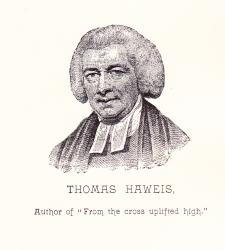
Thomas Haweis

1734 - 1820 Topics: Dedication Services Of a Church Composer of "RICHMOND" in The Hymnbook Thomas Haweis (b. Redruth, Cornwall, England, 1734; d. Bath, England, 1820) Initially apprenticed to a surgeon and pharmacist, Haweis decided to study for the ministry at Oxford and was ordained in the Church of England in 1757. He served as curate of St. Mary Magdalen Church, Oxford, but was removed by the bishop from that position because of his Methodist leanings. He also was an assistant to Martin Madan at Locke Hospital, London. In 1764 he became rector of All Saints Church in Aldwinkle, Northamptonshire, and later served as administrator at Trevecca College, Wales, a school founded by the Countess of Huntingdon, whom Haweis served as chaplain. After completing advanced studies at Cambridge, he published a Bible commentary and a volume on church history. Haweis was strongly interested in missions and helped to found the London Mission Society. His hymn texts and tunes were published in Carmino Christo, or Hymns to the Savior (1792, expanded 1808). Bert Polman ============================ Haweis, Thomas, LL.B., M.D., born at Truro, Cornwall, 1732. After practising for a time as a Physician, he entered Christ's College, Cambridge, where he graduated. Taking Holy Orders, he became Assistant Preacher to M. Madan at the Lock Hospital, London, and subsequently Rector of All Saints, Aldwincle, Northamptonshire. He was also Chaplain to Lady Huntingdon, and for several years officiated at her Chapel in Bath. He died at Bath, Feb. 11, 1820. He published several prose works, including A History of the Church, A Translation of the New Testament, and A Commentary on the Holy Bible. His hymns, a few of which are of more than ordinary merit, were published in his Carmina Christo; or, Hymns to the Saviour. Designed for the Use and Comfort of Those who worship the Lamb that was slain. Bath, S. Hayward, 1792 (139 hymns), enlarged. London, 1808 (256 hymns). In 1794, or sometime after, but before the enlarged edition was published, two hymns "For the Fast-day, Feb. 28, 1794," were added to the first edition. These were, "Big with events, another year," and "Still o'er the deep the cannon's roar." The most popular and widely used of his hymns are, "Behold the Lamb of God, Who bore," &c.; "Enthroned on high, Almighty Lord"; and “O Thou from Whom all goodness flows." The rest, all being from Carmina Christo, first edition 1792, are:— 1. Dark was the night and cold the ground. Gethsemane. 2. From the cross uplifted high. Christ in Glory. 3. Great Spirit, by Whose mighty power. Whitsuntide. 4. Submissive to Thy will, my God. Resignation. 5. The happy morn is come. Easter. 6. Thou Lamb of God, that on the tree. Good Friday. The hymn, "Thy Head, the crown of thorns that wears," in Stryker & Main's Church Praise Book, N. Y., 1882, begins with st. ii. of this hymn. 7. To Thee, my God and Saviour, My heart, &c. Praise for Redemption. --John Julian, Dictionary of Hymnology (1907)

George Ratcliffe Woodward

1848 - 1934 Person Name: George R. Woodward Topics: Church Anniversaries and Dedications; Church Worship and Prayer; Opening of Worship; The Holy Trinity Harmonizer of "ES FLOG EIN KLEINS WALDVÖGELEIN" in The New Century Hymnal Educated at Caius College in Cambridge, England, George R. Woodward (b. Birkenhead, Cheshire, England, 1848; d. Highgate, London, England, 1934) was ordained in the Church of England in 1874. He served in six parishes in London, Norfolk, and Suffolk. He was a gifted linguist and translator of a large number of hymns from Greek, Latin, and German. But Woodward's theory of translation was a rigid one–he held that the translation ought to reproduce the meter and rhyme scheme of the original as well as its contents. This practice did not always produce singable hymns; his translations are therefore used more often today as valuable resources than as congregational hymns. With Charles Wood he published three series of The Cowley Carol Book (1901, 1902, 1919), two editions of Songs of Syon (1904, 1910), An Italian Carol Book (1920), and the Cambridge Carol Book

John Goss

1800 - 1880 Person Name: John Goss, 1800-80 Topics: The Church of Jesus Christ Outreach of the Church - Evangelism and Mission; Living the Christian Life Commitment and Dedication to Service; Living the Christian Life Spiritual Warfare Composer of "ARMAGEDDON" in Complete Mission Praise John Goss (b. Fareham, Hampshire, England, 1800; d. London, England, 1880). As a boy Goss was a chorister at the Chapel Royal and later sang in the opera chorus of the Covent Garden Theater. He was a professor of music at the Royal Academy of Music (1827-1874) and organist of St. Paul Cathedral, London (1838-1872); in both positions he exerted significant influence on the reform of British cathedral music. Goss published Parochial Psalmody (1826) and Chants, Ancient and Modern (1841); he edited William Mercer's Church Psalter and Hymn Book (1854). With James Turle he published a two-volume collection of anthems and Anglican service music (1854). Bert Polman

Pages


Export as CSV
It looks like you are using an ad-blocker. Ad revenue helps keep us running. Please consider white-listing Hymnary.org or getting Hymnary Pro to eliminate ads entirely and help support Hymnary.org.