You help make Hymnary.org possible. More than 10 million people from 200+ countries found hymns, liturgical resources and encouragement on Hymnary.org in 2025, including you. Every visit affirms the global impact of this ministry.

If Hymnary has been meaningful to you this year, would you take a moment today to help sustain it? A gift of any size—paired with a note of encouragement if you wish—directly supports the server costs, research work and curation that keep this resource freely available to the world.

Give securely online today, or mail a check to:
Hymnary.org
Calvin University
3201 Burton Street SE
Grand Rapids, MI 49546

Thank you for your partnership, and may the hope of Advent fill your heart.

Person Results

Topics:epiphany+2
In:person

Planning worship? Check out our sister site, ZeteoSearch.org, for 20+ additional resources related to your search.
Showing 91 - 100 of 396Results Per Page: 102050

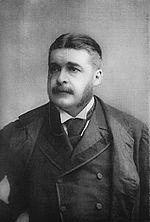
Arthur Sullivan

1842 - 1900 Person Name: A. Sullivan (1842-1900) Topics: God's Church Mission and Ministry; Epiphany 4, Revelation The New Temple; Pentecost 2 The People of God; Pentecost 3 The Life of the Baptized; Pentecost 4 The Freedom God Gives; Pentecost 5 The Church's Mission to All; Pentecost 12 The Witnessing Community Composer of "LUX EOI" in Hymns for Today's Church (2nd ed.) Arthur Seymour Sullivan (b Lambeth, London. England. 1842; d. Westminster, London, 1900) was born of an Italian mother and an Irish father who was an army band­master and a professor of music. Sullivan entered the Chapel Royal as a chorister in 1854. He was elected as the first Mendelssohn scholar in 1856, when he began his studies at the Royal Academy of Music in London. He also studied at the Leipzig Conservatory (1858-1861) and in 1866 was appointed professor of composition at the Royal Academy of Music. Early in his career Sullivan composed oratorios and music for some Shakespeare plays. However, he is best known for writing the music for lyrics by William S. Gilbert, which produced popular operettas such as H.M.S. Pinafore (1878), The Pirates of Penzance (1879), The Mikado (1884), and Yeomen of the Guard (1888). These operettas satirized the court and everyday life in Victorian times. Although he com­posed some anthems, in the area of church music Sullivan is best remembered for his hymn tunes, written between 1867 and 1874 and published in The Hymnary (1872) and Church Hymns (1874), both of which he edited. He contributed hymns to A Hymnal Chiefly from The Book of Praise (1867) and to the Presbyterian collection Psalms and Hymns for Divine Worship (1867). A complete collection of his hymns and arrangements was published posthumously as Hymn Tunes by Arthur Sullivan (1902). Sullivan steadfastly refused to grant permission to those who wished to make hymn tunes from the popular melodies in his operettas. Bert Polman

Jane Borthwick

1813 - 1897 Topics: Advent 2 Epistle; Advent 3 Collect; Epiphany Epistle; Tuesday in Whitsun Week Collect; Sunday Next Before Advent Epistle; St. Andrew Epistle; The Ember Days Epistle; Brotherhood; Church Unity; Epiphany; Evangelism; Peace International; Truth Author of "Hasten the time appointed" in Magnify the Lord Miss Jane Borthwick, the translator of this hymn and many others, is of Scottish family. Her sister (Mrs. Eric Findlater) and herself edited "Hymns from the Land of Luther" (1854). She also wrote "Thoughts for Thoughtful Hours (1859), and has contributed numerous poetical pieces to the "Family Treasury," under the signature "H.L.L." --Annotations of the Hymnal, Charles Hutchins, M.A. 1872. ================================= Borthwick, Jane, daughter of James Borthwick, manager of the North British Insurance Office, Edinburgh, was born April 9, 1813, at Edinburgh, where she still resides. Along with her sister Sarah (b. Nov. 26, 1823; wife of the Rev. Eric John Findlater, of Lochearnhead, Perthshire, who died May 2, 1886) she translated from the German Hymns from the Land of Luther, 1st Series, 1854; 2nd, 1855; 3rd, 1858; 4th, 1862. A complete edition was published in 1862, by W. P. Kennedy, Edinburgh, of which a reprint was issued by Nelson & Sons, 1884. These translations, which represent relatively a larger proportion of hymns for the Christian Life, and a smaller for the Christian Year than one finds in Miss Winkworth, have attained a success as translations, and an acceptance in hymnals only second to Miss Winkworth's. Since Kennedy's Hymnologia Christiana, 1863, in England, and the Andover Sabbath Hymn Book, 1858, in America, made several selections therefrom, hardly a hymnal in England or America has appeared without containing some of these translations. Miss Borthwick has kindly enabled us throughout this Dictionary to distinguish between the 61 translations by herself and the 53 by her sister. Among the most popular of Miss Borthwick's may be named "Jesus still lead on," and "How blessed from the bonds of sin;" and of Mrs. Findlater's "God calling yet!" and "Rejoice, all ye believers." Under the signature of H. L. L. Miss Borthwick has also written various prose works, and has contributed many translations and original poems to the Family Treasury, a number of which were collected and published in 1857, as Thoughts for Thoughtful Hours (3rd edition, enlarged, 1867). She also contributed several translations to Dr. Pagenstecher's Collection, 1864, five of which are included in the new edition of the Hymns from the Land of Luther, 1884, pp. 256-264. Of her original hymns the best known are “Come, labour on” and "Rest, weary soul.” In 1875 she published a selection of poems translated from Meta Heusser-Schweizer, under the title of Alpine Lyrics, which were incorporated in the 1884 edition of the Hymns from the Land of Luther. She died in 1897. [Rev. James Mearns, M.A.] -- John Julian, Dictionary of Hymnology (1907) ======================== Borthwick, Jane, p. 163, ii. Other hymns from Miss Borthwick's Thoughtful Hours, 1859, are in common use:— 1. And is the time approaching. Missions. 2. I do not doubt Thy wise and holy will. Faith. 3. Lord, Thou knowest all the weakness. Confidence. 4. Rejoice, my fellow pilgrim. The New Year. 5. Times are changing, days are flying. New Year. Nos. 2-5 as given in Kennedy, 1863, are mostly altered from the originals. --John Julian, Dictionary of Hymnology, Appendix, Part II (1907) ============= Works: Hymns from the Land of Luther

Erik Routley

1917 - 1982 Person Name: E. R. Routley (1917-1982) Topics: God, Saviour Growing, Teaching, Serving; Christmas 1 The Incarnation; Christmas 2 The Wise Men; Epiphany 5, Revelation The Wisdom of God Arranger of "NEUMARK" in Hymns for Today's Church (2nd ed.)

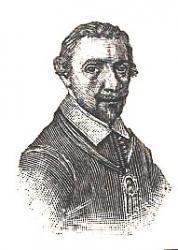
Johann Schop

1590 - 1667 Topics: The Christian Year Epiphany; Christian Year Epiphany; Glory; Jesus Christ Presence; Light; Morning; Peace (Inner, Calmness, Serenity; Praise; Satan/Demonic Forces/Devil; Advent 3 Year A; Christmas Eve Year A; Christmas Day 2 Year A; Christmas 1 Year A; Christmas 2 Year A; Epiphany 3 Year A; Christmas Eve Year B; Christmas 2 Year B; Christmas Eve Year C Composer of "ERMUNTRE DICH" in Voices United Johann Schop Germany 1590-1667. Born at lower Saxony, Germany, he became a Lutheran composer and violinist, much admired for his virtuoso and technical ability. In 1614 Duke Friedrich Ulrich made him a probationary musician in the Hofkapelle at Wolfenbuttel. He performed playing various instruments, but excelled as a violinist. He was engaged permanently in 1615, but the same year he responded to a summons to join the flourishing musical establishment of King Christian IV of Denmark in Copenhagen. There he met English viol player, William Brade, who had earlier been in service to Hamburg, Germany (and may have taught Schop there). Schops compositions for the violin set impressive demands for that area at that time. He also played other instruments, including the violi, lute, cornet, trombon, trumpet, zinke, and violin (virtuoso). In 1619 Schop and Brade left Copenhagen to escape the plague. He then went to Iburg, where he worked at the courtof the Osnabruck bishop, Philipp Sigismund. Schop had such a reputation that he soon acquired a post as Kapellmeister at an establishment in Hamburg and was the first member of the council music. In 1621 he was its director and the leading municipal violinist in that city, which offered him a substantial income for his participation in the church music program. He also was organist at the Jacobikirche. In 1634 he again traveled to Copenhagen with Heinrich Schutz and Heinrich Albert for the wedding of Crown Prince Christian. He won a violin contest there. Few German violinists were of his caliber musically. He returned to Hamburg, and the Danish king tried several times to woo him back to Denmark, but he stayed in Hamburg, becoming a director of music. He published books of violin music in 4 to 6 parts. He wrote two books of well-loved dance pieces and sacred concertos. He co-founded a school of song writing there in Hamburg with Thomas Selle. Many of his tunes were writtten for fellow townsmen and friend Johann Rist. Some of his music was performed at the Peace of Westphalia celebrations. Some of his tunes were used by chants in a cantata. Schop was married (wife’s name not found) and they had two sons, Johann II, and Albert, who also became musicians. He died in Hamburg. John Perry

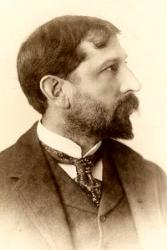
Robert Bridges

1844 - 1930 Topics: Easter 2 Epistle; Monday in Whitsun Week Gospel; Presentation of Christ/Purification Gospel; St. Philip and St. James Gospel; St. Matthew Epistle; Epiphany; Morning Translator of "O Splendor of God's glory bright" in Magnify the Lord Robert S. Bridges (b. Walmer, Kent, England, 1844; d. Boar's Hill, Abingdon, Berkshire, England, 1930) In a modern listing of important poets Bridges' name is often omitted, but in his generation he was consid­ered a great poet and fine scholar. He studied medicine and practiced as a physician until 1881, when he moved to the village of Yattendon. He had already written some poetry, but after 1881 his literary career became a full-time occupation, and in 1913 he was awarded the position of poet laureate in England. Bridges published The Yattendon Hymnal (1899), a collection of one hundred hymns (forty-four written or translated by him with settings mainly from the Genevan psalter, arranged for unaccompanied singing. In addition to volumes of poetry, Bridges also published A Practical Discourse on Some Principles of Hymn-Singing (1899) and About Hymns (1911). Bert Polman =================== Bridges, Robert Seymour, M.A., son of J. J. Bridges, of Walmer, Kent, was b. Oct. 23, 1844, and educated at Eton and at Corpus Christi College, Oxford (B.A. 1867, M.A. 1874). He took his M.A. in 1874, but retired from practice in 1882, and now (1906) resides at Yattendon, Berks. He is the author of many poems and plays. He edition and contributed to the Yattendon Hymnal, 1899 (originally printed at the Oxford Univ. Press in parts—Nos. 1-25, 1895; 26-50, 1897; 51-75, 1898; 76-100, 1899). [Rev. James Mearns, M.A.] --John Julian, Dictionary of Hymnology, New Supplement (1907)

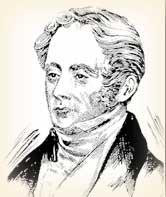
Robert Grant

1779 - 1838 Topics: Epiphany 4 Collect; Sexagesima Collect; Lent 2 Collect; Trinity 1 Collect; Trinity 5 Old Testament; Trinity 15 Collect; Trinity 20 Collect; The Rogation Days Epistle; God Creator; God Faithfulness of; God Glory of; God In nature; God Power of; Providence; Sacramental Worldview Author of "O worship the King, all glorious above!" in Magnify the Lord Robert Grant (b. Bengal, India, 1779; d. Dalpoorie, India, 1838) was influenced in writing this text by William Kethe’s paraphrase of Psalm 104 in the Anglo-Genevan Psalter (1561). Grant’s text was first published in Edward Bickersteth’s Christian Psalmody (1833) with several unauthorized alterations. In 1835 his original six-stanza text was published in Henry Elliott’s Psalm and Hymns (The original stanza 3 was omitted in Lift Up Your Hearts). Of Scottish ancestry, Grant was born in India, where his father was a director of the East India Company. He attended Magdalen College, Cambridge, and was called to the bar in 1807. He had a distinguished public career a Governor of Bombay and as a member of the British Parliament, where he sponsored a bill to remove civil restrictions on Jews. Grant was knighted in 1834. His hymn texts were published in the Christian Observer (1806-1815), in Elliot’s Psalms and Hymns (1835), and posthumously by his brother as Sacred Poems (1839). Bert Polman ======================== Grant, Sir Robert, second son of Mr. Charles Grant, sometime Member of Parliament for Inverness, and a Director of the East India Company, was born in 1785, and educated at Cambridge, where he graduated in 1806. Called to the English Bar in 1807, he became Member of Parliament for Inverness in 1826; a Privy Councillor in 1831; and Governor of Bombay, 1834. He died at Dapoorie, in Western India, July 9, 1838. As a hymnwriter of great merit he is well and favourably known. His hymns, "O worship the King"; "Saviour, when in dust to Thee"; and "When gathering clouds around I view," are widely used in all English-speaking countries. Some of those which are less known are marked by the same graceful versification and deep and tender feeling. The best of his hymns were contributed to the Christian Observer, 1806-1815, under the signature of "E—y, D. R."; and to Elliott's Psalms & Hymns, Brighton, 1835. In the Psalms & Hymns those which were taken from the Christian Observer were rewritten by the author. The year following his death his brother, Lord Glenelg, gathered 12 of his hymns and poems together, and published them as:— Sacred Poems. By the late Eight Hon. Sir Robert Grant. London, Saunders & Otley, Conduit Street, 1839. It was reprinted in 1844 and in 1868. This volume is accompanied by a short "Notice," dated "London, Juno 18, 1839." ===================== Grant, Sir R., p. 450, i. Other hymns are:— 1. From Olivet's sequester'd scats. Palm Sunday. 2. How deep the joy, Almighty Lord. Ps. lxxxiv. 3. Wherefore do the nations wage. Ps. ii. These are all from his posthumous sacred Poems, 1839. --John Julian, Dictionary of Hymnology, Appendix, Part II (1907)

James Edmeston

1791 - 1867 Topics: Epiphany 3 Collect; Sexagesima Collect; Sexagesima Old Testament; Lent 2 Collect; Lent 5 (Passion Sunday) Collect; Trinity Sunday Collect; Trinity 4 Collect; Trinity 5 Collect; Trinity 15 Collect; Trinity 16 Collect; Trinity 20 Collect; God Father; God Guide and Leader; Lent; Pilgrimage; Christian Walk Author of "Lead us, heav'nly Father, lead us" in Magnify the Lord Edmeston, James, born Sept. 10, 1791. His maternal grandfather was the Rev. Samuel Brewer, who for 50 years was the pastor of an Independent congregation at Stepney. Educated as an architect and surveyor, in 1816 he entered upon his profession on his own account, and continued to practice it until his death on Jan. 7, 1867. The late Sir G. Gilbert Scott was his pupil. Although an Independent by descent he joined the Established Church at a comparatively early age, and subsequently held various offices, including that of churchwarden, in the Church of St. Barnabas, Homerton. His hymns number nearly 2000. The best known are “Lead us, Heavenly Father, lead us” and "Saviour, breathe an evening blessing." Many of his hymns were written for children, and from their simplicity are admirably adapted to the purpose. For many years he contributed hymns of various degrees of merit to the Evangelical Magazine, His published works are:— (1) The Search, and other Poems, 1817. (2) Sacred Lyrics, 1820, a volume of 31 hymns and one poem. This was followed by a second Series, 1821, with 35; and a third Series, 1822, with 27 pieces respectively. (3) The Cottage Minstrel; or, Hymns for the Assistance of Cottagers in their Domestic Worship, 1821. This was published at the suggestion of a member of the Home Missionary Society, and contains fifty hymns. (4) One Hundred Hymns for Sunday Schools, and for Particular Occasions, 1821. (5) Missionary Hymns, 1822. (6) Patmos, a Fragment, and Other Poems, 1824. (7) The Woman of Shunam, and Other Poems, 1829. (8) Fifty Original Hymns, 1833. (9) Hymns for the Chamber of Sickness, 1844. (10) Closet Hymns and Poems, 1844. (11) Infant Breathings, being Hymns for the Young, 1846. (12) Sacred Poetry, 1847. In addition to those of his hymns which have attained to an extensive circulation, as those named above, and are annotated in this work under their respective first lines, there are also the following in common use in Great Britain and America:— 1. Along my earthly way. Anxiety. In his Sacred Lyrics, third set, 1822, in 8 stanzas of 4 lines. It is given in several collections, but usually in an abbreviated form, and generally somewhat altered. 2. Dark river of death that is [art] flowing. Death Anticipated. Given in his Sacred Lyrics, 3rd set, 1822, p. 39, in 9 stanzas of 4 lines. It is usually given in an abbreviated form, and sometimes as, "Dark river of death that art flowing." 3. Come, sacred peace, delightful guest. Peace. Appeared in his Closet Hymns, &c, 1844, in 4 stanzas of 4 lines. 4. Eternal God, before thy throne, Three nations. National Fast. 5. For Thee we pray and wait. Second Advent. 6. God intrusts to all. Parable of the Talents. This is No. 13 of his Infant Breathings, 1846, in 5 stanzas of 4 lines. It is a simple application of the parable to the life of a child. It is widely used. 7. God is here; how sweet the sound. Omnipresence. Given as No. 9 in his Sacred Lyrics, 1st set, 1820, in 6 stanzas of 4 lines. In the Baptist Hymnal, 1879, No. 45. St. i.-iii. are from this text, and iv. and v. are from another source. 8. How sweet the light of Sabbath eve. Sunday Evening. No. 10 in theCottage Minstrel, 1821, slightly altered. 9. Is there a time when moments flow. Sunday Evening. No. 5 of his Sacred Lyrics, 1st set, 1820, in 7 stanzas of 4 lines. 10. Little travellers Zionward. Burial of Children. No. 25 of his Infant Breathings, &c, 1846, in 3 stanzas of 8 lines. In the Leeds Hymn Book, 1853, it begins with stanza ii., "Who are they whose little feet?" 11. May we, Lord, rejoicing say. National Thanksgiving. Dated 1849 by the author in Spurgeon's Our Own Hymnbook, No. 1008. 12. Music, bring thy sweetest treasures. Holy Trinity. Dated 1837 by the author in Spurgeon's Our Own Hymnbook, No. 167. It is in his Sacred Poetry, 1847. 13. Roll on, thou mighty ocean. Departure of Missionaries. In his Missionary Hymns, 1822, in 4 stanzas of 4 lines. It is in common use in America. 14. Sweet is the light of Sabbath eve. Sunday Evening. In 5 stanzas of 41., from the Cottage Minstrel, 1821, where it is given as No. 10, and entitled "The Cottager's Reflections upon the Sabbath Evening." 15. The light of Sabbath eve. Sunday Evening. In 5 stanzas of 4 lines, as No. 11 in the Cottage Minstrel, 1821, p. 14, and headed, "Solemn Questions for the Sabbath Evening." 16. Wake, harp of Zion, wake again. Missions to the Jews. Dated 1846 by the author in Spurgeon's Our Own Hymnbook. It is in his Sacred Poetry, 1847. 17. When shall the voice of singing? In his Missionary Hymns, 1822. It is in a few American collections. 18. When the worn spirit wants repose. Sunday. No. 18, of his Sacred Lyrics, 1st set, 1820, in 4 stanzas of 4 lines. It is somewhat popular, and is given in several collections in Great Britain and America, as the Baptist Psalms & Hymns, 1858-80; the Church Praise Book, N. Y., 1881, &c. 19. Why should I, in vain repining? Consolation. No. 14 in the 1st set of his Sacred Lyrics, 1820, in 4 stanzas of 4 lines. -- John Julian, Dictionary of Hymnology (1907) ========================= Edmeston, James, p. 321, ii. Other hymns are:— 1. O Thou Whose mercy guides my way. Resignation. In his Sacred Lyrics, 1st set, 1820, p. 24, in 3 stanzas of 4 lines, and again in his Hymns for the Chamber of Sickness, 1844. 2. Parting soul, the flood awaits thee. Death anticipated. In his Sacred Lyrics, 1st set, 1820, p. 18, in 3 stanza of 8 lines, and based upon the passage in the Pilgrim's Progress:—"Now I further saw that betwixt them and the gate was a river, but there was no bridge to go over, and the river was very deep." 3. 'Tis sweet upon our pilgrimage. Praise. In hi3 Closet Hymns and Poems, 1846, in 3 stanzas of 4 lines, and headed "An Ebenezer Raided." 4. Welcome, brethren, enter in. Reception of Church Officers. Miller says, in his Singers and Songs, 1869, p. 420:—"This is No. 1 of five hymns supplied by Mr. Edmeston, at the request of a friend, for insertion in a provincial hymn-book, on the subject of admitting members," but he does not give the name of the book, neither have we identified It. The hymn, as given in the New Congregational Hymn Book, 1859, No. 840, is in 5 stanzas of 4 lines, of which Millet says stanza iii. is by another hand. --John Julian, Dictionary of Hymnology, Appendix, Part II (1907)

John Francis Wade

1711 - 1786 Person Name: J. F. Wade Topics: Advent 2 Gospel; Epiphany 6 Gospel; Advent; Eschaton; Jesus King Composer of "ST. THOMAS (Wade)" in Magnify the Lord John Francis Wade (b. England, c. 1711; d. Douay, France, 1786) is now generally recognized as both author and composer of the hymn "Adeste fideles," originally written in Latin in four stanzas. The earliest manuscript signed by Wade is dated about 1743. By the early nineteenth century, however, four additional stanzas had been added by other writers. A Roman Catholic, Wade apparently moved to France because of discrimination against Roman Catholics in eighteenth-century England—especially so after the Jacobite Rebellion of 1745. He taught music at an English college in Douay and hand copied and sold chant music for use in the chapels of wealthy families. Wade's copied manuscripts were published as Cantus Diversi pro Dominicis et Festis per annum (1751). Bert Polman

J. R. Peacey

1896 - 1971 Topics: Epiphany 2 Year C Author of "Filled with the Spirit's Power" in Voices United

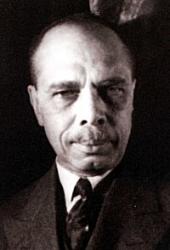
James Weldon Johnson

1871 - 1938 Person Name: James Johnson Topics: Epiphany 2 Old Testament Author of "Lift ev'ry voice and sing Till earth and heaven ring" in Magnify the Lord James Weldon Johnson MA PhD USA 1871-1938. Born at Jacksonville, FL, he attended Clark University, Atlanta, GA, and also spent three months in the backwoods of Georgia., taking in the culture there. While in school he published a paper, ”The daily American newspaper”, which ran for a year until terminated for lack of funding. He graduated in 1894. He then taught at the largest school in Jacksonville, FL, eventually becoming principal and adding 9th & 10th grades there. While there he began preparing for the FL bar exam, taking it in 1897. In 1904 he became treasurer of the Colored Republican Club, becoming its president the following year. He became an author, activist, educator, lawyer, and diplomat. A musician from youth, he collaborated with his brother, Rosamond, also a musician, and Bob Cole to write Broadway songs, and they achieved some success. They also wrote an opera, “Tolosa”, satirizing the U.S. annexation of the Pacific islands. He became a writer and Civil Rights activist. He did the editorial page of the New York Age, an African-American newspaper. In 1916 he became active in the NAACP, and in 1917 he added many chapters to its southern membership. He was its executive secretary (essentially its operating officer) from 1920-1930. He was involved in the campaign to pass the Dyer Anti-lynching Bill. He wrote poems, novels, and anthologies, and collected poems and spirituals from black culture. He wrote the lyrics to the Negro National Anthem, “Lift every voice and sing”, in honor of Booker T Washington, who visited his school and heard the poem recited by 500 school children in his presence, paying tribute to Abraham Lincoln’s birthday. He participated in Theodore Roosevelt’s successful presidential campaign, and was rewarded by receiving an appointment as U.S. Consul to Venezuela (1906-1909), and later to Nicaragua (1909-1913). He married activist,Grace Elizabeth Nail during this period. They had collaborated on a screenwriting project. They had no children. In 1930, after years leading the NAACP, he became professor of creative literature and writing at Fisk University ( a historically black university), Nashville, TN, where he lectured on a wide range of issues. In 1934 he was the first African-American professor hired at New York University, where he taught several classes in literature and culture. He published four works: “Autobiography of an Ex-colored man” (1920) “The book of American negro poetry” (1922/1931), “God’s trombones” (1927), and “Along this way” (1933). In 1938 he supported efforts by Ignatz Waghalter, a Polish-Jewish composer who had escaped the Nazis in Germany, to establish a classical orchestra of African-American musicians. He perished at Wiscasset, ME, while on vacation when the car his wife was driving was hit by a train. She was severely injured, but recovered. More than 2000 people attended his funeral. Several universities named buildings or departments in his honor, as is a community library in St. Petersburg, FL. In 1988 a U.S, postage stamp was printed in his honor. John Perry

Pages


Export as CSV
It looks like you are using an ad-blocker. Ad revenue helps keep us running. Please consider white-listing Hymnary.org or getting Hymnary Pro to eliminate ads entirely and help support Hymnary.org.