

 My Starred Hymns
 My Hymnals
 My Purchased Files
Planning worship?
Check out our sister site, ZeteoSearch.org,
for 20+ additional resources related to your search.
- |
User Links
Search Results


Guide Me
Author: William Williams; Peter Williams Meter: 8.7.8.7.4.7 Appears in 1,896 hymnals First Line: Guide me, O Thou great Jehovah Lyrics: 1 Guide me, O my great Redeemer,
pilgrim through this barren land;
I am weak, but you are mighty;
hold me with your powerful hand.
Bread of heaven, bread of heaven,
feed me now and evermore,
feed me now and evermore.
2 Open now the crystal fountain,
where the healing waters flow.
Let the fire and cloudy pillar
lead me all my journey through.
Strong Deliverer, strong Deliverer,
ever be my strength and shield,
ever be my strength and shield.
3 When I tread the verge of Jordan,
bid my anxious fears subside.
Death of death, and hell's Destruction,
land me safe on Canaan's side.
Songs of praises, songs of praises
I will ever sing to you,
I will ever sing to you.
Psalter Hymnal, (Gray) Topics: Choir; Pilgrimage, Christian Text Sources: Welsh
Guide Me
On the Mountain's Top Appearing
Author: Thomas Kelly Meter: 8.7.8.7.4.7 Appears in 606 hymnals
On the Mountain's Top Appearing
Glory Be to God the Father
Author: Horatius Bonar Meter: 8.7.8.7.4.7 Appears in 213 hymnals First Line: Glory be to God the Father! Glory be to God the Son!
Glory Be to God the Father


BRYN CALFARIA
Meter: 8.7.8.7.4.7 Appears in 123 hymnals Composer and/or Arranger: William Owen, 1814-1893 Tune Key: g minor Incipit: 55123 33234 54322 Used With Text: Look, Ye Saints, the Sight Is Glorious
BRYN CALFARIA

CWM RHONDDA
Meter: 8.7.8.7.4.7 Appears in 355 hymnals Composer and/or Arranger: John Hughes Tune Key: G Major Incipit: 56511 71232 31643 Used With Text: Guide me, O thou great Redeemer
CWM RHONDDA


Herre, oss enhvar välsigna
Author: John Fawcett Hymnal: Lutherförbundets Sångbok #S68 (1913) Meter: 8.7.8.7.4.7 Lyrics: 1 Herre, oss enhvar välsigna,
Hjärtat fyll med fröjd och frid.
Låt enhvar din kärlek äga,
Nåden prisa högt alltid,
Vederkvick oss, vederkvick oss
Uti detta ökenland.
2 Vi hembära pris och ära
För din frälsnings glada bud,
Må den många frukter b¨ra
Hos din här utvalda brud.
Må din ande, må din ande
alltid vara dina när.
3 Och när hembud vi få höra
Kalla oss att lämna här;
Änglar oss på vingar föra
För att evigt vara där.
Må vi redo, må vi redo
Vara då att resa hem.
Topics: Ordet och Gudstjänsten; The Word and the Worship Languages: Swedish Tune Title: SICILIAN MARINERS' HYMN
Herre, oss enhvar välsigna
Kom, o syndare, du arme
Author: Joseph Hart Hymnal: Lutherförbundets Sångbok #S69 (1913) Meter: 8.7.8.7.4.7 Lyrics: 1 Kom, o syndare, du arme,
Full of krankhet, så och nöd;
Jesus redo är att frälsa
Dig ifrån en evig död.
Han år måktig, han år nådig;
Tvifla ej, då själf han bjöd!
2 Kom, du fattige, välkommen,
Gläds, att sådan nåd dig bjuds!
"Utan penningar, för intet"
Lifvets bröd dig står till buds.
Hvarje nåd vill Jesus gifva,
Han, som är ditt lif, din Gud.
3 Låt ej lagens dom dig hindra
Eller din ovärdighet!
All den värdighet han fordrar
Är, att du din ringhet vet
Och att honom du behöfver:
Han, som är ditt lif, din Gud.
4 Kom, betungade och trötte,
Du, som fallets prägel bär!
Dröjer du, tills du "blir bättre,"
Då du aldrig komma lär.
Syndare vill Jesus frälsa:
Kom, så full af synd du är!
5 Kämpande i örtagården
se din Frälsare, och hör
Från det blodbestänkta korset
Honom ropa, förr'n han dör:
"Det fuldkomnadt är!" ditt hjärta,
Syndare, ej tvifla bör!
6 Hör, din Gud, som mänska blifvit,
Prisar kraften af sitt blod;
Lita då därpå fullkomlight,
Tag ej annan tröst för god:
Ingen utan Jesus Kristus
Kan ge tröstlöst hjärta mod! Topics: Väckelse och Inbjudning; Invitation Languages: Swedish Tune Title: JESUS, LÅT DIN RÄDDA DUFVA
Kom, o syndare, du arme
Dismission
Hymnal: A Selection of Psalms and Hymns #CCCXIII (1790) Meter: 8.7.8.7.4.7 First Line: Lord dismiss us with a blessing Lyrics: 1 Lord dismiss us with a blessing,
Fill our hearts with joy and peace,
Let us each thy love possessing,
Triumph in redeeming grace;
O refresh us!
Trav'ling through this wilderness.
2 Thanks we give and adoration,
For thy gospel's joyful sound,
May the fruit of thy salvation,
In our hearts and lives abound:
May thy presence,
With us ever more be found.
3 So whene'er the signal's given,
Us from earth to call away,
Borne on Angel's wings to Heaven,
Glad to leave our cumb'rous clay,
May we ready,
Rise and reign in endless day. Languages: English
Dismission


Godfrey Thring
1823 - 1903 Person Name: G. Thring Meter: 8.7.8.7.4.7 Recaster (v. 3) of "Lord, dismiss us with thy blessing" in The Hymnal Godfrey Thring (b. Alford, Somersetshire, England, 1823; d. Shamley Green, Guilford, Surrey, England, 1903) was born in the parsonage of Alford, where his father was rector. Educated at Balliol College, Oxford, England, he was ordained a priest in the Church of England in 1847. After serving in several other parishes, Thring returned to Alford and Hornblotten in 1858 to succeed his father as rector, a position he retained until his own retirement in 1893. He was also associated with Wells Cathedral (1867-1893). After 1861 Thring wrote many hymns and published several hymnals, including Hymns Congregational (1866), Hymns and Sacred Lyrics (1874), and the respected A Church of England Hymn Book Adapted to the Daily Services of the Church Throughout the Year (1880), which was enlarged as The Church of England Hymn Book (1882).
Bert Polman
================
Thring, Godfrey, B.A., son of the Rev. J. G. D. Thring, of Alford, Somerset, was born at Alford, March 25, 1823, and educated at Shrewsbury School, and at Balliol College, Oxford, B.A. in 1845. On taking Holy Orders he was curate of Stratfield-Turgis, 1846-50; of Strathfieldsaye, 1850-53; and of other parishes to 1858, when he became rector of Alford-with-Hornblotton, Somerset. R.D. 1867-76. In 1876 he was preferred as prebend of East Harptree in Wells cathedral. Prebendary Thring's poetical works are:— Hymns Congregational and Others, 1866; Hymns and Verses, 1866; and Hymns and Sacred Lyrics, 1874. In 1880 he published A Church of England Hymnbook Adapted to the Daily Services of the Church throughout the Year; and in 1882, a revised and much improved edition of the same as The Church of England Hymn Book, &c.
A great many of Prebendary Thring's hymns are annotated under their respective first lines; the rest in common use include:—
1. Beneath the Church's hallowed shade. Consecration of a Burial Ground. Written in 1870. This is one of four hymns set to music by Dr. Dykes, and first published by Novello & Co., 1873. It was also included (but without music) in the author's Hymns & Sacred Lyrics, 1874, p. 170, and in his Collection, 1882.
2. Blessed Saviour, Thou hast taught us. Quinquagesima. Written in 1866, and first published in the author's Hymns Congregational and Others, 1866. It was republished in his Hymns & Sacred Lyrics, 1874; and his Collection, 1882. It is based upon the Epistle for Quinquagesima.
3. Blot out our sins of old. Lent. Written in 1862, and first published in Hymns Congregational and Others
Godfrey Thring
Henry Francis Lyte
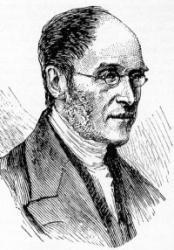
1793 - 1847 Person Name: Henry F. Lyte Meter: 8.7.8.7.4.7 Author of "Praise, my soul, the king of heaven" in The Hymnal Lyte, Henry Francis, M.A., son of Captain Thomas Lyte, was born at Ednam, near Kelso, June 1, 1793, and educated at Portora (the Royal School of Enniskillen), and at Trinity College, Dublin, of which he was a Scholar, and where he graduated in 1814. During his University course he distinguished himself by gaining the English prize poem on three occasions. At one time he had intended studying Medicine; but this he abandoned for Theology, and took Holy Orders in 1815, his first curacy being in the neighbourhood of Wexford. In 1817, he removed to Marazion, in Cornwall. There, in 1818, he underwent a great spiritual change, which shaped and influenced the whole of his after life, the immediate cause being the illness and death of a brother clergyman. Lyte says of him:—
"He died happy under the belief that though he had deeply erred, there was One whose death and sufferings would atone for his delinquencies, and be accepted for all that he had incurred;"
and concerning himself he adds:—
"I was greatly affected by the whole matter, and brought to look at life and its issue with a different eye than before; and I began to study my Bible, and preach in another manner than I had previously done."
From Marazion he removed, in 1819, to Lymington, where he composed his Tales on the Lord's Prayer in verse (pub. in 1826); and in 1823 he was appointed Perpetual Curate of Lower Brixham, Devon. That appointment he held until his death, on Nov. 20, 1847. His Poems of Henry Vaughan, with a Memoir, were published in 1846.
His own Poetical works were:—
(1) Poems chiefly Religious 1833; 2nd ed. enlarged, 1845. (2) The Spirit of the Psalms, 1834, written in the first instance for use in his own Church at Lower Brixham, and enlarged in 1836; (3) Miscellaneous Poems (posthumously) in 1868. This last is a reprint of the 1845 ed. of his Poems, with "Abide with me" added. (4) Remains, 1850.
Lyte's Poems have been somewhat freely drawn upon by hymnal compilers; but by far the larger portion of his hymns found in modern collections are from his Spirit of the Psalms. In America his hymns are very popular. In many instances, however, through mistaking Miss Auber's (q. v.) Spirit of the Psalms, 1829, for his, he is credited with more than is his due. The Andover Sabbath Hymn Book, 1858, is specially at fault in this respect. The best known and most widely used of his compositions are "Abide with me, fast falls the eventide;” “Far from my heavenly home;" "God of mercy, God of grace;" "Pleasant are Thy courts above;" "Praise, my soul, the King of heaven;" and "There is a safe and secret place." These and several others are annotated under their respective first lines: the rest in common use are:—
i. From his Poems chiefly Religious, 1833 and 1845.
1. Above me hangs the silent sky. For Use at Sea.
2. Again, 0 Lord, I ope mine eyes. Morning.
3. Hail to another Year. New Year.
4. How good, how faithful, Lord, art Thou. Divine care of Men.
5. In tears and trials we must sow (1845). Sorrow followed by Joy.
6. My [our] rest is in heaven, my [our] rest is not here. Heaven our Home.
7. 0 Lord, how infinite Thy love. The Love of God in Christ.
8. Omniscient God, Thine eye divine. The Holy Ghost Omniscient.
9. The leaves around me falling. Autumn.
10. The Lord hath builded for Himself. The Universe the Temple of God.
11. Vain were all our toil and labour. Success is of God.
12. When at Thy footstool, Lord, I bend. Lent.
13. When earthly joys glide swift away. Ps. cii.
14. Wilt Thou return to me, O Lord. Lent.
15. With joy we hail the sacred day. Sunday.
ii. From his Spirit of the Psalms, 1834.
16. Be merciful to us, O God. Ps. lvii.
17. Blest is the man who knows the Lord. Ps. cxii.
18. Blest is the man whose spirit shares. Ps. xli.
19. From depths of woe to God I cry. Ps. cxxxx.
20. Gently, gently lay Thy rod. Ps. vi.
21. Glorious Shepherd of the sheep. Ps. xxiii.
22. Glory and praise to Jehovah on high. Ps. xxix.
23. God in His Church is known. Ps. lxxvi.
24. God is our Refuge, tried and proved. Ps. xlvi.
25. Great Source of my being. Ps. lxxiii.
26. Hear, O Lord, our supplication. Ps. lxiv.
27. How blest the man who fears the Lord. Ps.cxxviii.
28. Humble, Lord, my haughty spirit. Ps. cxxxi.
29. In this wide, weary world of care. Ps. cxxxii.
30. In vain the powers of darkness try. Ps.lii.
31. Jehovah speaks, let man be awed. Ps. xlix.
32. Judge me, O Lord, and try my heart. Ps. xxvi.
33. Judge me, O Lord, to Thee I fly. Ps. xliii.
34. Lord, I have sinned, but O forgive. Ps. xli.
35. Lord, my God, in Thee I trust. Ps. vii.
36. Lord of the realms above, Our Prophet, &c. Ps.xlv.
37. Lone amidst the dead and dying. Ps. lxii.
38. Lord God of my salvation. Ps. lxxxviii.
39. Lord, I look to Thee for all. Ps. xxxi.
40. Lord, I would stand with thoughtful eye. Ps. lxix.
41. Lord, my God, in Thee I trust. Ps. vii.
42. My God, my King, Thy praise I sing. Ps. cviii.
43. My God, what monuments I see. Ps. xxxvi.
44. My spirit on [to] Thy care. Ps. xxxi.
45. My trust is in the Lord. Ps. xi.
46. Not unto us, Almighty Lord [God]. Ps. cxv.
47. O God of glory, God of grace. Ps. xc.
48. O God of love, how blest are they. Ps. xxxvii.
49. O God of love, my God Thou art. Ps. lxiii.
50. O God of truth and grace. Ps. xviii.
51. O had I, my Saviour, the wings of a dove. Ps. lv.
52. O how blest the congregation. Ps. lxxxix.
53. O how safe and [how] happy he. Ps. xci.
54. O plead my cause, my Saviour plead. Ps. xxxv.
55. O praise the Lord, 'tis sweet to raise. Ps. cxlvii.
56. O praise the Lord; ye nations, pour. Ps. cxvii.
57. O praise ye the Lord With heart, &c. Ps. cxlix.
58. O that the Lord's salvation. Ps. xiv.
59. O Thou Whom thoughtless men condemn. Ps. xxxvi.
60. Of every earthly stay bereft. Ps. lxxiv.
61. Our hearts shall praise Thee, God of love. Ps. cxxxviii.
62. Pilgrims here on earth and strangers. Ps. xvi.
63. Praise for Thee, Lord, in Zion waits. Ps. lxv.
64. Praise to God on high be given. Ps. cxxxiv.
65. Praise ye the Lord, His servants, raise. Ps. cxiii.
66. Redeem'd from guilt, redeem'd from fears. Ps. cxvi.
67. Save me by Thy glorious name. Ps. liv.
68. Shout, ye people, clap your hands. Ps. xlvii.
69. Sing to the Lord our might. Ps. lxxxi.
70. Strangers and pilgrims here below. Ps. cix.
71. Sweet is the solemn voice that calls. Ps. cxxii.
72. The Church of God below. Ps. lxxxvii.
73. The Lord is King, let earth be glad. Ps. xcvii.
74. The Lord is on His throne. Ps. xciii.
75. The Lord is our Refuge, the Lord is our Guide. Ps. xlvii.
76. The mercies of my God and King. Ps. lxxxix.
77. The Lord Who died on earth for men. Ps. xxi.
78. Tis a pleasant thing to fee. Ps. cxxxiii.
79. Thy promise, Lord, is perfect peace. Ps. iii.
80. Unto Thee I lift mine [my] eyes. Ps. cxxiii.
81. Whom shall [should] we love like Thee? Ps. xviii.
Lyte's versions of the Psalms are criticised where their sadness, tenderness and beauty are set forth. His hymns in the Poems are characterized by the same features, and rarely swell out into joy and gladness.
--John Julian, Dictionary of Hymnology (1907)
==================
Lyte, Henry Francis, p. 706, i. Additional versions of Psalms are in common use:--
1. Lord, a thousand foes surround us. Psalms lix.
2. Praise, Lord, for Thee in Zion waits. Psalms lxv.
3. The Christian like his Lord of old. Psalms cxl.
4. The Lord of all my Shepherd is. Psalms xxiii.
5. The Lord of heaven to earth is come. Psalms xcviii.
6. Thy mercy, Lord, the sinner's hope. Psalms xxxvi.
7. To Thee, O Lord, in deep distress. Psalms cxlii. Sometimes given as "To God I turned in wild distress."
8. Uphold me, Lord, too prone to stray. Psalms i.
9. When Jesus to our [my] rescue came. Psalms cxxvi. These versions appeared in the 1st edition of Lyte's Spirit of the Psalms, 1834. It must be noted that the texts of the 1834, the 1836, and the 3rd ed., 1858, vary considerably, but Lyte was not responsible for the alterations and omissions in the last, which was edited by another hand for use at St. Mark's, Torquay.
Lyte's version of Psalms xxix., "Glory and praise to Jehovah on high" (p. 706, ii., 22), first appeared in his Poems, 1st ed., 1833, p. 25. Read also No. 39 as "Lord, I look for all to Thee."
--John Julian, Dictionary of Hymnology, Appendix, Part II (1907)
Henry Francis Lyte
William Williams
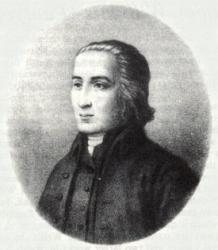
1717 - 1791 Meter: 8.7.8.7.4.7 Author of "O'er the gloomy hills of darkness" in The Hymnal William Williams, called the "Watts of Wales," was born in 1717, at Cefn-y-coed, near Llandovery, Carmarthenshire. He originally studied medicine, but abandoned it for theology. He was ordained Deacon in the Church of England, but was refused Priest's Orders, and subsequently attached himself to the Calvinistic Methodists. For half a century he travelled in Wales, preaching the Gospel. He died in 1791. Williams composed his hymns chiefly in the Welsh language; they are still largely used by various religious bodies in the principality. Many of his hymns have appeared in English, and have been collected and published by Sedgwick. His two principal poetical works are "Hosannah to the Son of David," and "Gloria in Excelsis."
--Annotations of the Hymnal, Charles Hutchins, M.A. 1872.
=====================
Williams, William, of Pantycelyn, was the Sweet Singer of Wales. He was born at Cefn-y-Coed, in the Parish of Llanfair-y-bryn, near Llandovery, in 1717. He was ordained a deacon of the Established Church in 1740, by Dr. Claget, Bishop of St. Davids, and for three years he served the Curacies of Llan-wrtyd and Llanddewi-Abergwesyn. He never received Priest's Orders. He became early acquainted with the revivalist Daniel Rowlands, and for thirty-five years he preached once a month at Llanllian and Caio and Llansawel, besides the preaching journeys he took in North and South Wales. He was held in great esteem as a preacher. In 1744 his first book of hymns appeared under the title of Halleluiah, and soon ran through three editions. In1762, he published another book under the title of Y Môr o Wydr, which soon went through five editions. His son John published an excellent edition of his hymns in the year 181lines In addition to his Welsh hymns Williams also published several in English as:—
(1.) Hosannah to the Son of David; or, Hymns of Praise to God, For our glorious Redemption by Christ. Some few translated from the Welsh Hymn-Book, but mostly composed on new Subjects. By William Williams. Bristol: Printed by John Grabham, in Narrow-Wine Street, 1759. This contains 51 hymns of which 11 are translated from his Welsh hymns. This little book was reprinted by D. Sedgwick in 1859.
(2.) Gloria in Excelsis: or, Hymns of Praise to God and the Lamb. By W. Williams . . . Carmarthen. Printed for the Author by John Ross, removed to Priory Street, near the Church, M.DCC.LXXI. This contains 70 hymns, not including parts.
From these volumes the following hymns are in common use:—
i. From the Hosannah, 1759:—
1. Jesus, my Saviour is enough. Jesus, All in All.
2. My God, my God, Who art my all. Communion with God desired.
3. The enormous load of human guilt. God's love unspeakable.
ii. From the Gloria in Excelsis, 1772.
4. Awake, my soul, and rise. Passiontide.
5. Beneath Thy Cross I lay me down. Passiontide.
6. Hark! the voice of my Beloved. The Voice of Jesus.
7. Jesus, lead us with Thy power. Divine Guidance Desired. Sometimes given as "Father, lead us with Thy power."
8. Jesus, Whose Almighty sceptre. Jesus as King.
9. Saviour, look on Thy beloved. The Help of Jesus desired.
10. White and ruddy is my Beloved. Beauties of Jesus.
Williams is most widely known through his two hymns, "Guide me, O Thou great Jehovah," and "O'er those gloomy hills of darkness." Williams died at Pantycelyn, Jan. 11, 1791. [Rev. W. Glanffrwd Thomas]
-- John Julian, Dictionary of Hymnology (1907)
=================
See also in:
Hymn Writers of the Church
William Williams


Small Church Music
Meter: 8.7.8.7.4.7 Editors: Harry E. Fosdick Description:
History
The SmallChurchMusic site was launched in 2006, growing out of the requests from those struggling
to provide suitable music for their services and meetings. Rev. Clyde McLennan was ordained in mid
1960’s and was a pastor in many small Australian country areas, and therefore was acutely aware of
this music problem. Having also been trained as a Pipe Organist, recordings on site (which are a subset
of the smallchurchmusic.com site) are all actually played by Clyde, and also include piano and piano
with organ versions.
About the Recordings All recordings are in MP3 format.
Churches all around the world use the recordings, with downloads averaging over 60,000 per
month.
The recordings normally have an introduction, several verses and a slowdown on the last verse.
Users are encouraged to use software: Audacity (http://www.audacityteam.org) or Song Surgeon (http://songsurgeon.com) to adjust the MP3 number of verses, tempo and pitch to suit their local needs.
Mobile App
We have partnered with the developer of the popular NetTracks mobile app to offer the Small Church Music collection as a convenient mobile app. Experience the beloved Small Church Music collection through this iOS app featuring nearly 10,000 high-quality hymn recordings that can be organized into custom setlists and downloaded for offline use—ideal for worship services without musicians, congregational practice, and personal devotion. The app requires a small fee to cover maintenance costs. Please note: While Hymnary.org hosts this music collection, technical support for the app is provided exclusively by the app developer, not by Hymnary.org staff.
LicensingCopyright notice: Rev. Clyde McLennan, performer in this collection, has assigned his performer rights in this collection to Hymnary.org. Non-commercial use of these recordings is permitted. For permission to use them for any other purposes, please contact manager@hymnary.org.
Home/Music(smallchurchmusic.com)
List SongsAlphabetically
List Songsby Meter
List Songs byTune Name
About
Small Church Music
Christian Classics Ethereal Hymnary
Publication Date: 2007 Publisher: Grand Rapids, MI: Christian Classics Ethereal Library Meter: 8.7.8.7.4.7
Christian Classics Ethereal Hymnary
The Methodist Hymn-Book with Tunes
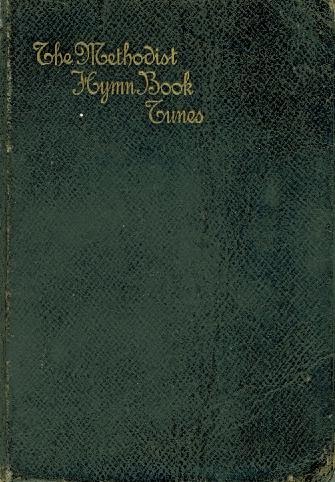
Publication Date: 1933 Publisher: Methodist Conference Office Meter: 8.7.8.7.4.7 Publication Place: London
The Methodist Hymn-Book with Tunes




