You help make Hymnary.org possible. More than 10 million people from 200+ countries found hymns, liturgical resources and encouragement on Hymnary.org in 2025, including you. Every visit affirms the global impact of this ministry.

If Hymnary has been meaningful to you this year, would you take a moment today to help sustain it? A gift of any size—paired with a note of encouragement if you wish—directly supports the server costs, research work and curation that keep this resource freely available to the world.

Give securely online today, or mail a check to:
Hymnary.org
Calvin University
3201 Burton Street SE
Grand Rapids, MI 49546

Thank you for your partnership, and may the hope of Advent fill your heart.

Search Results

Text Identifier:"^blest_is_the_man_whose_softening_heart$"

Planning worship? Check out our sister site, ZeteoSearch.org, for 20+ additional resources related to your search.

Texts

text icon
Text authorities
Page scans

Blest is the man whose soft'ning heart

Author: Anna L. Barbauld Appears in 158 hymnals Used With Tune: CRÜGER

Tunes

tune icon
Tune authorities
Page scansAudio

MAITLAND

Appears in 743 hymnals Composer and/or Arranger: George N. Allen Incipit: 34551 32161 65513 Used With Text: Blest is the man, whose softening heart
Page scansAudio

ST. AGNES

Appears in 1,192 hymnals Composer and/or Arranger: Dykes Incipit: 33323 47155 53225 Used With Text: Blest is the man, whose softening heart
Page scansAudio

CRÜGER

Appears in 78 hymnals Composer and/or Arranger: Johann Crüger Incipit: 56543 23311 25356 Used With Text: Blest is the man whose soft'ning heart

Instances

instance icon
Published text-tune combinations (hymns) from specific hymnals
TextPage scan

Blest is the man whose softening heart

Hymnal: The Book of Worship #224 (1867) Meter: 8.6.8.6 Lyrics: 1 Blest is the man whose softening heart Feels all another's pain; To whom the supplicating eye Was never raised in vain,-- 2 Whose breast expands with generous warmth, A stranger's woes to feel; And bleeds in pity o'er the wound He wants the power to heal. 3 He spreads his kind, supporting arms To every child of grief: His secret bounty largely flows, And brings unmasked relief. 4 To gentle offices of love His feet are never slow: He views, through mercy's melting eye, A brother in a foe. 5 Peace from the bosom of his God The Saviour's grace shall give; And when he kneels before the throne, His trembling soul shall live. Topics: Charity Languages: English
Page scan

Blest is the man whose softening heart

Hymnal: Church Psalmody #H662 (1831) Languages: English
Page scan

Blest is the man whose softening heart

Hymnal: Psalms and Hymns, for Christian Use and Worship #H305 (1845)

People

person icon
Authors, composers, editors, etc.

Mrs. Barbauld

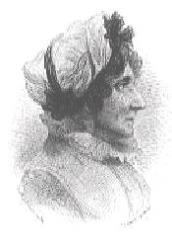
1743 - 1825 Author of "Blest is the man, whose softening heart" in New Manual of Praise Barbauld, Anna Laetitia, née Aikin, daughter of the Rev. John Ailrin, D.D., a dissenting minister, was b. at Kibworth-Harcourt, Leicestershire, June 20, 1743. In 1753 Dr. Aikin became classical tutor at a dissenting academy at Warrington. During her residence there she contributed five hymns to Dr. W. Enfield's Hymns for Public Worship, &c, Warrington, 1772. In the following year these were included in her Poems, Lond., J. Johnson, 1773. In May, 1774, Miss Aikin was married to the Rev. Rochemont Barbauld, a descendant of a French Protestant family, and a dissenting minister. For some years Mr. Barbauld conducted, in addition to his pastoral work, a boarding school at Palgrave, Suffolk. From this he retired in 1785. In 1786 he undertook the charge of a small congregation at Hampstead, and from thence he passed to the dissenting chapel (formerly Dr. Price's) at Newington Green, in 1802. He d. Nov. 11, 1808. Mrs. Barbauld continued to reside in the neighbourhood until her death, March 9, 1825. In the latter part of the same year her niece published The Works of Anna Laetitia Barbauld, with Memoir, by Lucy Aikin, 2 vols., Lond., Longman, 1825. As a writer of hymns Mrs. Barbauld was eminently successful. Their use, however, with the exception of five contributed to Dr. W. Enfield's collection, is almost exclusively confined to the Unitarian hymnals of Great Britain and America. Including these hymnals, the whole of her hymns are still in common use. These hymns appeared thus:— i. In Dr. W. Enfield's Hymns, &c., 1772. 1. Again the Lord of life and light. Easter. 2. Awake, my soul, lift up thine eyes. Conflict. 3. Behold, where breathing love divine. Christian Charity. 4. Jehovah reigns, let every nation hear. God's Dominion. A part of this was given in Collyer's Sel., 1812, No. 586, as:— 5. This earthly globe, the creature of a day. 6. Praise to God, Immortal praise. Harvest. ii. Poems, 1773 (Preface dated Dec. 1, 1772). The whole of the above, and also:— 7. God of my life and author of my days. To God the Father. This is an “Address to the Deity," in 80 1. It is given in Martineau's Collection, 1840 and 1873. From it the following centos were given in Collyer's Selection> 1812:— 8. God, our kind Master, merciful as just. 9. If friendless in the vale of tears I stray. iii. Poems revised 1792. 10. Come, said [says] Jesus' sacred voice. Invitation. 11. How blest the sacred tie that binds. Christian Fellowship. 12. Lo where a crowd of pilgrims toil. Pilgrimage of Life. From this is taken:— 13. Our country is Immanuel's ground [land]. iv. Leisure Hour Improved (Ironbridge), 1809. 14. Sweet is the scene when virtue dies. Death. v. Supplement to the Unitarian Coll. of Kippis, Bees, and others, 1807. 15. When as returns the solemn day. Sunday. 16. Sleep, sleep to day, tormenting cares. Sunday. 17. How may earth and heaven unite. Worship. vi. Works, with Memoir, 1825. In vol. i. most of the above are reprinted, and the following are added :— 18. Joy to the followers of the Lord. Joy. (c. 1820.) 19. Pure spirit, O where art thou now. Bereavement. This is dated 1808. 20. Salt of the earth, ye virtuous few. Salt of the Earth. 21. When life as opening buds is sweet. Death. This is dated " November, 1814." The more important of these hymns are annotated in this Dictionary under their first lines. Mrs. Barbauld's Hymns in Prose for Children, originally published in 1781, were long popular and have been translated into French, Italian, Spanish, and other languages. -- John Julian, Dictionary of Hymnology (1907) =================== Barbauld, Anna L., p. 113, ii. No. 18 on p. 114, i.,should be dated circa 1820. Another hymn in common use from Mrs. Barbauld's Works, &c, 1825, is, "O Father! though the anxious fear" (E. Taylor, p. 1117, in error). --John Julian, Dictionary of Hymnology, Appendix, Part II (1907) See also in: Hymn Writers of the Church

John Bacchus Dykes

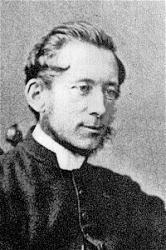
1823 - 1876 Person Name: Dykes Composer of "ST. AGNES" in New Manual of Praise As a young child John Bacchus Dykes (b. Kingston-upon-Hull' England, 1823; d. Ticehurst, Sussex, England, 1876) took violin and piano lessons. At the age of ten he became the organist of St. John's in Hull, where his grandfather was vicar. After receiving a classics degree from St. Catherine College, Cambridge, England, he was ordained in the Church of England in 1847. In 1849 he became the precentor and choir director at Durham Cathedral, where he introduced reforms in the choir by insisting on consistent attendance, increasing rehearsals, and initiating music festivals. He served the parish of St. Oswald in Durham from 1862 until the year of his death. To the chagrin of his bishop, Dykes favored the high church practices associated with the Oxford Movement (choir robes, incense, and the like). A number of his three hundred hymn tunes are still respected as durable examples of Victorian hymnody. Most of his tunes were first published in Chope's Congregational Hymn and Tune Book (1857) and in early editions of the famous British hymnal, Hymns Ancient and Modern. Bert Polman

George Nelson Allen

1812 - 1877 Person Name: George N. Allen Composer of "MAITLAND" in The Otterbein Hymnal George Nelson Allen (1812-1871), studied at Western Reserve Academy in Hudson, Oh OH and with Lowell Mason in Boston. Allen gave a strong musical foundation to Oberlin College in its earliest years; in addition to being Professor of Music he also served as Professor of Geology and Natural History, Secretary and Treasurer. In 1835 he compiled The Oberlin Social and Sabbath Hymn Book, in which appeared his most well known tune MAITLAND (also known as CROSS AND CROWN or WESTERN MELODY) with the text "Must Jesus bear the cross alone?". This was adapted by Thomas A. Dorsey in 1938 for his hymn "Precious Lord, take my hand". hand." He composed anthems and wrote some additional music for Isaac Woodbury's Oratorio "Absalom." He compiled a small 3" x 4" hymnal that every student should keep in his pocket that went through several printings. Mary Louise VanDyke
It looks like you are using an ad-blocker. Ad revenue helps keep us running. Please consider white-listing Hymnary.org or getting Hymnary Pro to eliminate ads entirely and help support Hymnary.org.