You help make Hymnary.org possible. More than 10 million people from 200+ countries found hymns, liturgical resources and encouragement on Hymnary.org in 2025, including you. Every visit affirms the global impact of this ministry.

If Hymnary has been meaningful to you this year, would you take a moment today to help sustain it? A gift of any size—paired with a note of encouragement if you wish—directly supports the server costs, research work and curation that keep this resource freely available to the world.

Give securely online today, or mail a check to:
Hymnary.org
Calvin University
3201 Burton Street SE
Grand Rapids, MI 49546

Thank you for your partnership, and may the hope of Advent fill your heart.

Search Results

Text Identifier:"^break_day_of_god_o_break_sweet_light_of_$"

Planning worship? Check out our sister site, ZeteoSearch.org, for 20+ additional resources related to your search.

Texts

text icon
Text authorities

Break, day of God, oh break

Author: Henry Burton, 1840-1930 Appears in 6 hymnals Used With Tune: DARWALL

Tunes

tune icon
Tune authorities
Audio

DARWALL

Appears in 540 hymnals Composer and/or Arranger: John Darwall, 1731-1789 Incipit: 13153 17654 32231 Used With Text: Break, day of God, oh break
Audio

BURTON

Meter: 6.6.6.6.8.8 Appears in 2 hymnals Composer and/or Arranger: J. T. Lightwood, 1856-1944 Tune Key: D Major Incipit: 32155 17765 43222 Used With Text: Break, day of God, O break
Page scansAudio

CHRISTCHURCH

Appears in 114 hymnals Composer and/or Arranger: Charles Steggall (1826-1905) Incipit: 13512 51655 43235 Used With Text: Break, day of God, oh break

Instances

instance icon
Published text-tune combinations (hymns) from specific hymnals
TextAudio

Break, Day of God, Oh Break

Author: Henry Burton Hymnal: The Cyber Hymnal #616 Meter: 6.6.6.6.8.8 Lyrics: 1. Break, day of God, Oh break, Sweet light of heavenly skies! I all for Thee forsake, And from my dead self rise; O Lamb of God, whose love is light, Shine on my soul, and all is bright. 2. Break, day of God, Oh break! The night has lingered long; Our hearts with sighing wake, We weep for sin and wrong: O bright and morning star, draw near; O Sun of Righteousness, appear. 3. Break, day of God, Oh break! The earth with strife is worn; The hills with thunder shake, Hearts of the people mourn; Break, day of God, sweet day of peace, And bid the shout of warriors cease! 4. Break, day of God, Oh break, Like to the days above! Let purity awake, And faith, and hope, and love: But lo! we see the brightening sky; The golden morn is drawing nigh. Languages: English Tune Title: BERTHA

Break, day of God, O break

Author: Henry Burton, 1840-1930 Hymnal: The Methodist Hymn-Book with Tunes #253a (1933) Meter: 6.6.6.6.8.8 Topics: The Lord Jesus Christ His Kingdom, Present and Future; National and Social Service World Peace and Brotherhood Languages: English Tune Title: BURTON

Break, day of God, O break

Author: Henry Burton, 1850-1930 Hymnal: The Methodist Hymn-Book with Tunes #253b (1933) Meter: 6.6.6.6.8.8 Topics: The Lord Jesus Christ His Kingdom, Present and Future; National and Social Service World Peace and Brotherhood Languages: English Tune Title: ARNCLIFFE

People

person icon
Authors, composers, editors, etc.

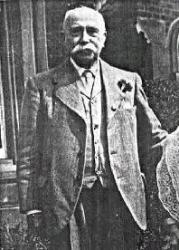
Henry Burton

1840 - 1930 Person Name: Henry Burton, 1840-1930 Author of "Break, day of God, oh break" in The Methodist Hymnal Rv Alfred Henry Burton DD United Kingdom 1840-1930. Born at Swannington, Leicestershire, he emigrated with family to America and became a student at Beloit College, WI, graduating with honours. After a pastorate in the Methodist Episcopal Church at Monroe, WI, he returned to England and entered the Wesleyan Ministry in 1865. He married Ellen Pearse. He then ministered mostly in Lanca-shire and London. Published works include ”Gleanings in the gospels:, “Wayside songs”, “St. Luke in Expositor's Bible”. John Perry ===================== Burton, H. In I. D. Sankey's Sacred Songs and Solos, 1878, the hymns, "Come, for the feast is spread," (The Gospel Invitation), and "Look away to Jesus" (Looking unto Jesus) are attributed to the "Rev. H. Burton” --John Julian, Dictionary of Hymnology, Appendix, Part II (1907) ===================== Burton, Henry, D.D., p. 1555, i., born at Swannington, Leicestershire, in 1840. His parents having emigrated to America, he became a student at Beloit College, and graduated in honours. After labouring as a minister of the Methodist Episcopal Church for a time he returned to England, entered the Wesleyan Ministry in 1865, and has since laboured chiefly in Lanca¬shire and London. His published works include Gleanings in the Gospels, Wayside Songs, 1886, St. Luke in the Expositor's Bible, &c. His hymns in common use, in addition to those named on p. 1555, i., include:— 1. Break, day of God, 0 break. [Second Advent.] Written at Blundell Sauds, near Liverpool, on Christmas Eve, 1900, and included in The Methodist Hymn Book, 1904. "The opening stanza was composed on the Railway Bridge where I lingered on my way home" (Author's MS!.). 2. In the secret of His presence. [Peace in Christ.] Written at Acton, London, published in his Wayside Songs, 1886, and included in the Epworth Hymnal, U.S.A. 3. 0 King of Kings, 0 Lord of hosts. [National Hymn.] Dr. Burton's history of this hymn is: "In the late Queen's Jubilee year, 1887, I composed an Ode which was set to music by Sir J. Stainer, and sung at a Jubilee Festival in the Royal Albert Hall, London. As the Ode could not be sung at any other time, Sir J. Stainer requested me to compose a hymn to which the same music should be set [and of a national character]. This led me to write the hymn" Author's MS.). It is No. 975 in The Methodist Hymn Book, 1904. 4. Have you had a kindness shown? Pass it on. [Kind Deeds.] "This is based on a little incident in the life of my brother-in-law, the Rev. Mark Guy Pearse. When a boy returning home from a Moravian school in Holland, the steward of the boat on which he sailed from Bristol to Hayle showed him marked attention and kindness, because Mr. Pearse's father, years before, had proved a great friend to his mother. And so he was simply 'passing on' the kindness." (Author's MS.). The hymn was written at Acton on April 8, 1885, and first printed in The Christian Advocate, N.Y., 1886, and again in Wayside Songs, 1886, p. 81. The first stanza has been adopted as a motto by the "International Sunshine Society," of New York. --John Julian, Dictionary of Hymnology, New Supplement (1907) ========================== See also in: Hymn Writers of the Church

John Darwall

1732 - 1789 Person Name: John Darwall, 1731-1789 Composer of "DARWALL" in The Methodist Hymnal John Darwall (b. Haughton, Staffordshire, England, 1731; d. Walsall, Staffordshire, England, 1789) The son of a pastor, he attended Manchester Grammar School and Brasenose College, Oxford, England (1752-1756). He became the curate and later the vicar of St. Matthew's Parish Church in Walsall, where he remained until his death. Darwall was a poet and amateur musician. He composed a soprano tune and bass line for each of the 150 psalm versifications in the Tate and Brady New Version of the Psalms of David (l696). In an organ dedication speech in 1773 Darwall advocated singing the "Psalm tunes in quicker time than common [in order that] six verses might be sung in the same space of time that four generally are." Bert Polman

James T. Lightwood

1856 - 1944 Person Name: J. T. Lightwood, 1856-1944 Composer of "BURTON" in The Methodist Hymn-Book with Tunes Born: 1856, Leeds, England. Died: 1944, Lytham, Lancashire, England. Son of Wesleyan minister Edward Lightwood, James was born and baptized while his father was on the Leeds Brunswick Circuit. He attended Kingswood School (1866-72), earned a BA from London University, and became Headmaster of Pembroke House, a private school in Lytham. He went on to serve for three years as a member of the Board of Improvement Commissioners in Lytham, on the Lytham Council for six years, and as Chairman of the Streets Committee for four years. His resolution to bring gas into Fairhaven was eventually carried by one vote. Apart from music, his other great love was cycling. He began cycling in 1874 on a "boneshaker." By 1885, he was a member of the Cyclists Touring Club (CTC), and soon gained prominence. He was Chief Consul for Lancashire, and a member of the Council of the CTC from 1887. Honorary life membership came in 1907 in recognition of his services to the club, and in particular with publication of the club’s route books and other writings. Music was his great love, though, and hymnody in particular. He was an accomplished organist, and after two years as deputy organist at the Drive Wesleyan Church, St. Annes, he was appointed Honorary Organist and Choirmaster in 1894. When the pressure of work due to his appointment as editor of the new Methodist publication The Choir and organizing the newly formed Music Department of the Methodist Publishing House, the trustees at Drive Church made him a grant of £20 to assist him in his research in hymnology. While advising Methodism on musical matters, he found the unique 1761 Snetzler organ for the New Room at Bristol. Lightwood’s works include: Hymn Tunes and Their Story (London: Charles H. Kelly, 1905) Charles Dickens and Music, 1912 Samuel Wesley, Musician: The Story of His Life Cyclists’ Touring Club: The Romance of 50 Years Cycling, 1928 The Music of the Methodist Hymn-Book (London: The Epworth Press, 1935) http://www.hymntime.com/tch/bio/l/i/g/lightwood_jt.htm
It looks like you are using an ad-blocker. Ad revenue helps keep us running. Please consider white-listing Hymnary.org or getting Hymnary Pro to eliminate ads entirely and help support Hymnary.org.