You help make Hymnary.org possible. More than 10 million people from 200+ countries found hymns, liturgical resources and encouragement on Hymnary.org in 2025, including you. Every visit affirms the global impact of this ministry.

If Hymnary has been meaningful to you this year, would you take a moment today to help sustain it? A gift of any size—paired with a note of encouragement if you wish—directly supports the server costs, research work and curation that keep this resource freely available to the world.

Give securely online today, or mail a check to:
Hymnary.org
Calvin University
3201 Burton Street SE
Grand Rapids, MI 49546

Thank you for your partnership, and may the hope of Advent fill your heart.

Search Results

Text Identifier:"^great_god_of_wonders_all_thy_ways$"

Planning worship? Check out our sister site, ZeteoSearch.org, for 20+ additional resources related to your search.

Texts

text icon
Text authorities
TextPage scansAudio

Who is a pardoning God like thee

Author: Samuel Davies, 1723-1761 Meter: 8.8.8.8.8.8 Appears in 113 hymnals First Line: Great God of wonders, all thy ways Lyrics: 1 Great God of wonders, all thy ways are matchless, God-like and divine; but the fair glories of thy grace more God-like and unrivaled shine: Refrain: Who is a pardoning God like thee, or who has grace so rich and free? 2 Such dire offences to forgive, such guilty rebel souls to spare; this is thy grand prerogative, and none shall in the honour share: [Refrain] 3 In wonder lost, with trembling joy, we take the pardon of our God, pardon for sins of deepest dye, a pardon sealed with Jesus' blood: [Refrain] 4 O may this glorious matchless love, this God-like miracle of grace, teach mortal tongues, like those above, to raise this song of lofty praise: [Refrain] Topics: Proper 10 Year B; Third Sunday Before Advent Year C Scripture: Ephesians 1:7 Used With Tune: VATER UNSER

Tunes

tune icon
Tune authorities
Page scansAudio

CAREY (SURREY)

Meter: 8.8.8.8.8.8 Appears in 136 hymnals Composer and/or Arranger: Henry Carey Tune Key: F Major or modal Incipit: 54361 71432 33256 Used With Text: Great God of wonders
Page scansAudio

PATER OMNIUM

Meter: 8.8.8.8.8.8 Appears in 93 hymnals Composer and/or Arranger: Henry J. E. Holmes Tune Key: F Major Incipit: 12354 21234 36511 Used With Text: Great God of wonders! all thy ways
Page scansAudio

VATER UNSER

Meter: 8.8.8.8.8.8 Appears in 206 hymnals Composer and/or Arranger: J. S. Bach Tune Sources: Schumann's Geistliche Lieder (1539), melody in; J.S. Bach (Cantata 102)( most of the harmony from) Tune Key: c minor Incipit: 55345 32155 47534 Used With Text: Great God of Wonders!

Instances

instance icon
Published text-tune combinations (hymns) from specific hymnals
Text

Great God of Wonders!

Author: Samuel Davies Hymnal: The New Church Hymnal #261 (1976) First Line: Great God of wonders! All Thy ways Refrain First Line: Who is a pard'ning God like Thee? Lyrics: 1 Great God of wonders! All Thy waysAre matchless, Godlike and divine;But the fair glories of Thy graceMore Godlike and unrivaled shine,More Godlike and unrivaled shine.Refrain:Who is a pard'ning God like Thee?Or who has grace so rich and free?Or who has grace so rich and free?2 In wonder lost, with trembling joyWe take the pardon of our God:Pardon for crimes of deepest dye,A pardon bought with Jesus' blood,A pardon bought with Jesus' blood. [Refrain]3 O may this strange, this matchless grace,This God-like miracle of love,Fill the whole earth with grateful praise,And all th'angelic choirs above,And all th'angelic choirs above. [Refrain] Topics: The Christian Life Praise; Grace & Mercy Languages: English Tune Title: [Great God of wonders! All Thy ways]
Page scan

Great God of Wonders!

Author: Samuel Davies, 1723-1761 Hymnal: Great Hymns of the Faith #12 (1968) First Line: Great God of wonders! all Thy ways Refrain First Line: Who is a pard'ning God like Thee? Topics: Hymns of Worship General; Grace; Salvation Languages: English Tune Title: [Great God of wonders! all Thy ways]

Great God of wonders! All thy ways

Author: Samuel Davies Hymnal: Hymns and Psalms #38 (1983) Languages: English Tune Title: SOVEREIGNTY

People

person icon
Authors, composers, editors, etc.

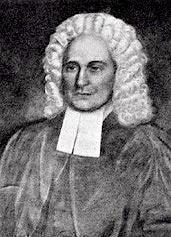
Samuel Davies

1723 - 1761 Person Name: Samuel Davies, 1734-1761 Author of "Great God of Wonders!" in Rejoice in the Lord Davies, Samuel., M.A., born near Summit Ridge, Newcastle, Delaware, America, Nov. 3, 1723, and educated under the Rev. Samuel Blair, of Chester County, Pennsylvania, through the pecuniary assistance of the Rev. William Robinson, a Presbyterian Minister of New Brunswick. In 1745 he was licensed by the Presbytery of Newcastle as a probationer for the ministry, and undertook duty in Virginia, in 1747. After visiting England in 1753, on behalf of the New Jersey College, and having received the degree of M.A., he was appointed President of New Jersey Presbyterian College, Princeton, in succession to Jonathan Edwards. He died Feb. 4, 1761, at the early age of 37. His manuscripts were entrusted to Dr. T. Gibbons, who published therefrom 5 volumes of Sermons. In 1851 the Sermons were republished in 3 volumes, including a Memoir by the Rev. A. Barnes. His hymns, 10 in all, were given by Dr. Gibbons in his Hymns adapted to Divine Worship, 1769. As a hymnwriter he followed the lines laid down by Watts, and his verses are solid, but somewhat dry and heavy. Those of his hymns which are still retained in common use are:— 1. Eternal Spirit, Source of Light. Influences of the Holy Spirit implored. From Dr. Gibbons's Hymns, &c, 1769, Book. ii., No. 29, this passed into several of the older collections. In later works it is more frequently found in the American hymnals than those of Great Britain. It is in 4 stanzas of 6 lines, as in Dr. Hatfield's Church Hymnbook, N. Y., 1872, and the Leeds Hymnbook, 1853. 2. Great God of wonders, all Thy ways. The Pardoning God. This is one of the most, if not the most, popular of the author's hymns both in Great Britain and America. It has appeared in more than one hundred hymnbooks in England alone, sometimes in full (5 stanzas of 6 lines), and at other times abbreviated, as in Spurgeon's 0ur Own Hymn Book 1866; the Baptist Hymnal, 1879, &c. Its 1st publication was in Dr. Gibbons's Hymns, &c, 1769, Book i., No. 59. 3. How great, how terrible that God. The Judgment. In Gibbons, No. 37 of Book. i., in 7 stanzas of 4 lines. 4. Jesus, how precious is Thy name. Jesus the Prophet, Priest, and King. Is No. 31 of Bk. ii. in Gibbons, in 6 stanzas of 6 lines. It was very popular with the older compilers, as Ash and Evans, Rippon, Bickersteth, and others in Great Britain, and also in America; but in modern collections it is rarely found. It is worthy of notice. 5. Lord, I am Thine, entirely Thine. Holy Communion. In Gibbons this is No. 28 of Book. ii., in 7 stanzas of 4 lines. It is very popular in America, but unknown to most English hymnals. In all editions of Rippon's Selections 1787-1844, it is given in 2 stanzas as "Lord, am I Thine, entirely Thine?" The hymn, "While to Thy table I repair," in the Andover Sabbath Hymnbook , 1858, is compiled from this hymn. 6. What strange perplexities arise. Self-Examination. This hymn is equal to No. 5 in American popularity, and exceeds it in Great Britain. In Dr. Hatfield's Church Hymnbook, N.Y., 1872, it is abbreviated and slightly altered. Full text in 6 stanzas of 4 lines is in Spurgeon's Our Own Hymn Book , 1866. It was first published in Gibbons' Hymns, &c, 1769. 7. While o'er our guilty land, 0 Lord. Fast Day. This hymn, besides appearing in its original form in some collections, and with abbreviations in others, is also the source of "On Thee, our Guardian God, we call," stanza iv. of the original given in a few American collections; and of the same arrangement of stanzas, "On Thee we call, 0 Lord, our God," in the Andover Sabbath Hymn Book, 1858, and others. The original in Gibbons is Book i., No. 56, in 8 stanzas of 4 lines. The remaining hymns by Davies have failed to attain a position in the hymnbooks either of Great Britain or America. [Rev. F. M. Bird, M.A.] -- John Julian, Dictionary of Hymnology (1907)

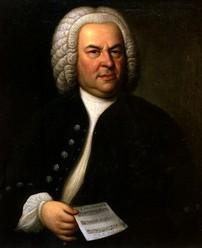
Johann Sebastian Bach

1685 - 1750 Person Name: J. S. Bach Harmonizer of "VATER UNSER" in Rejoice in the Lord Johann Sebastian Bach was born at Eisenach into a musical family and in a town steeped in Reformation history, he received early musical training from his father and older brother, and elementary education in the classical school Luther had earlier attended. Throughout his life he made extraordinary efforts to learn from other musicians. At 15 he walked to Lüneburg to work as a chorister and study at the convent school of St. Michael. From there he walked 30 miles to Hamburg to hear Johann Reinken, and 60 miles to Celle to become familiar with French composition and performance traditions. Once he obtained a month's leave from his job to hear Buxtehude, but stayed nearly four months. He arranged compositions from Vivaldi and other Italian masters. His own compositions spanned almost every musical form then known (Opera was the notable exception). In his own time, Bach was highly regarded as organist and teacher, his compositions being circulated as models of contrapuntal technique. Four of his children achieved careers as composers; Haydn, Mozart, Beethoven, Mendelssohn, Schumann, Brahms, and Chopin are only a few of the best known of the musicians that confessed a major debt to Bach's work in their own musical development. Mendelssohn began re-introducing Bach's music into the concert repertoire, where it has come to attract admiration and even veneration for its own sake. After 20 years of successful work in several posts, Bach became cantor of the Thomas-schule in Leipzig, and remained there for the remaining 27 years of his life, concentrating on church music for the Lutheran service: over 200 cantatas, four passion settings, a Mass, and hundreds of chorale settings, harmonizations, preludes, and arrangements. He edited the tunes for Schemelli's Musicalisches Gesangbuch, contributing 16 original tunes. His choral harmonizations remain a staple for studies of composition and harmony. Additional melodies from his works have been adapted as hymn tunes. --John Julian, Dictionary of Hymnology (1907)

Henri F. Hemy

1818 - 1888 Person Name: Henri Hemy, 1818-1888 Composer of "ST. CATHERINE" in The Book of Praise Henri F. Hemy, born in the United Kingdom. Hemy spent time at sea as a young man, emigrating to Australia in 1850 with his family. Unable to make a decent living in Melbourne, he returned to Newcastle England. He was organist at St. Andrews Roman Catholic Church in Newcastle, later teaching professor of music at Tynemouth and at St. Cuthbert's College in Durham. He was pianist to Lord Ravensworth, Music Director of Ushaw College, and his orchestra played at fashionable venues in the region. He sang baritone as well. He composed waltzes, polkas, quadrilles, and galops. 3 music works: Easy Hymn Tunes for Catholic Schools; Royal Modern Tutor for Pianoforte; Crown of Jesus. He was active in local politics and published a manifesto in the daily newspaper. He lost a ward election. He also painted artwork. He set most of Longfellow's works to music. John Perry
It looks like you are using an ad-blocker. Ad revenue helps keep us running. Please consider white-listing Hymnary.org or getting Hymnary Pro to eliminate ads entirely and help support Hymnary.org.