You help make Hymnary.org possible. More than 10 million people from 200+ countries found hymns, liturgical resources and encouragement on Hymnary.org in 2025, including you. Every visit affirms the global impact of this ministry.

If Hymnary has been meaningful to you this year, would you take a moment today to help sustain it? A gift of any size—paired with a note of encouragement if you wish—directly supports the server costs, research work and curation that keep this resource freely available to the world.

Give securely online today, or mail a check to:
Hymnary.org
Calvin University
3201 Burton Street SE
Grand Rapids, MI 49546

Thank you for your partnership, and may the hope of Advent fill your heart.

Search Results

Text Identifier:"^how_sure_the_scriptures_are$"

Planning worship? Check out our sister site, ZeteoSearch.org, for 20+ additional resources related to your search.

Texts

text icon
Text authorities

How sure the Scriptures are!

Author: Christopher Idle Meter: 6.6.6.6.4.4.4.4 Appears in 7 hymnals Topics: The Bible Authority and Sufficiency Scripture: Hebrews 2:7-13 Used With Tune: DARWALL'S 148TH

Tunes

tune icon
Tune authorities
Audio

DARWALL'S 148

Meter: 6.6.6.6.8.8 Appears in 542 hymnals Composer and/or Arranger: John Darwall Tune Key: C Major Incipit: 13153 17654 32231 Used With Text: How Sure the Scriptures Are!
Audio

CROFT'S 136th

Meter: 6.6.6.6.8.8 Appears in 105 hymnals Composer and/or Arranger: W. Croft (1678-1727) Tune Key: C Major Incipit: 51715 65345 32113 Used With Text: How sure the Scriptures are!
Audio

RHOSYMEDRE

Meter: 6.6.6.6.4.4.8 Appears in 98 hymnals Composer and/or Arranger: John D. Edwards Tune Key: G Major Incipit: 51122 31443 21511 Used With Text: How Sure the Scriptures Are!

Instances

instance icon
Published text-tune combinations (hymns) from specific hymnals
Text

How Sure the Scriptures Are!

Author: Christopher Idle Hymnal: Singing the New Testament #216 (2008) Meter: 6.6.6.6.8.8 Lyrics: 1 How sure the Scriptures are! God's vital, urgent word, as true as steel, and far more sharp than any sword: so deep and fine, at his control they pierce where soul and spirit join. 2 They test each human thought, refining like a fire; they measure what we ought to do and to desire: for God know all - exposed it lies before his eyes to whom we call. 3 Let those who hear his voice confronting them today, reject the tempting choice of doubting or delay: for God speaks still - his word is clear, so let us hear and do his will! Topics: Will of God Scripture: Hebrews 4:12-13 Languages: English Tune Title: DARWALL'S 148
Text

How Sure the Scriptures Are!

Author: Christopher Idle Hymnal: The Worshiping Church #312 (1990) Meter: 6.6.6.6.4.4.8 First Line: How sure the Scriptures are Lyrics: 1 How sure the Scriptures are! God's vital, urgent word, as true as steel, and far more sharp than any sword: so deep and fine, at his control they pierce where soul and spirit join. 2 They test each human thought, refining like a fire; they measure what we ought to do and to desire: For God know all--exposed it lies before his eyes to whom we call. 3 Let those who hear his voice confronting them today, reject the tempting choice of doubting or delay: For God speaks still--his word is clear, so let us hear and do his will! Topics: Assurance; God Judge; Judgment; Holy Scriptures Scripture: Psalm 119:89 Languages: English Tune Title: DARWALL

How Sure the Scriptures Are!

Author: Christopher Idle Hymnal: Psalms, Hymns, and Spiritual Songs #274 (2012) Meter: 6.6.6.6.4.4.8 Languages: English Tune Title: RHOSYMEDRE

People

person icon
Authors, composers, editors, etc.

William Croft

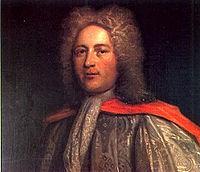
1678 - 1727 Person Name: W. Croft (1678-1727) Composer of "CROFT'S 136th" in Hymns for Today's Church (2nd ed.) William Croft, Mus. Doc. was born in the year 1677 and received his musical education in the Chapel Royal, under Dr. Blow. In 1700 he was admitted a Gentleman Extraordinary of the Chapel Boyd; and in 1707, upon the decease of Jeremiah Clarke, he was appointed joint organist with his mentor, Dr. Blow. In 1709 he was elected organist of Westminster Abbey. This amiable man and excellent musician died in 1727, in the fiftieth year of his age. A very large number of Dr. Croft's compositions remain still in manuscript. Cathedral chants of the XVI, XVII & XVIII centuries, ed. by Edward F. Rimbault, London: D. Almaine & Co., 1844

Christopher M. Idle

b. 1938 Person Name: Christopher Idle Author of "How Sure the Scriptures Are!" in The Worshiping Church Christopher Martin Idle (b. Bromley, Kent, England, 1938) was educated at Elthan College, St. Peter's College, Oxford, and Clifton Theological College in Bristol, and was ordained in the Church of England. He served churches in Barrow-in-­Furness, Cumbria; London; and Oakley, Suffolk; and recently returned to London, where he is involved in various hymnal projects. A prolific author of articles on the Christian's public responsibilities, Idle has also published The Lion Book of Favorite Hymns (1980) and at least one hundred of his own hymns and biblical paraphrases. Some of his texts first appeared in hymnals published by the Jubilate Group, with which he is associated. He was also editor of Anglican Praise (1987). In 1998 Hope Publishing released Light Upon the River, a collection of 279 of his psalm and hymn texts, along with suggested tunes, scripture references, and commentary. Bert Polman

John Darwall

1732 - 1789 Composer of "DARWALL" in The Worshiping Church John Darwall (b. Haughton, Staffordshire, England, 1731; d. Walsall, Staffordshire, England, 1789) The son of a pastor, he attended Manchester Grammar School and Brasenose College, Oxford, England (1752-1756). He became the curate and later the vicar of St. Matthew's Parish Church in Walsall, where he remained until his death. Darwall was a poet and amateur musician. He composed a soprano tune and bass line for each of the 150 psalm versifications in the Tate and Brady New Version of the Psalms of David (l696). In an organ dedication speech in 1773 Darwall advocated singing the "Psalm tunes in quicker time than common [in order that] six verses might be sung in the same space of time that four generally are." Bert Polman
It looks like you are using an ad-blocker. Ad revenue helps keep us running. Please consider white-listing Hymnary.org or getting Hymnary Pro to eliminate ads entirely and help support Hymnary.org.