You help make Hymnary.org possible. More than 10 million people from 200+ countries found hymns, liturgical resources and encouragement on Hymnary.org in 2025, including you. Every visit affirms the global impact of this ministry.

If Hymnary has been meaningful to you this year, would you take a moment today to help sustain it? A gift of any size—paired with a note of encouragement if you wish—directly supports the server costs, research work and curation that keep this resource freely available to the world.

Give securely online today, or mail a check to:
Hymnary.org
Calvin University
3201 Burton Street SE
Grand Rapids, MI 49546

Thank you for your partnership, and may the hope of Advent fill your heart.

Search Results

Text Identifier:"^let_me_be_thine_forever$"

Planning worship? Check out our sister site, ZeteoSearch.org, for 20+ additional resources related to your search.

Texts

text icon
Text authorities
TextPage scans

Let me be Thine forever

Author: Dr. N. Selnecker; Unknown Appears in 56 hymnals Lyrics: 1 Let me be Thine forever, Thou faithful God and Lord; Let me forsake Thee never nor wander from Thy Word. Lord, do not let me waver, but give me steadfastness, and for such grace forever Thy holy Name I'll bless. 2 Lord Jesus, my Salvation, My Light, my Life divine, My only Consolation, O make me wholly Thine! For Thou hast dearly bought me With blood and bitter pain; Let me, since Thou hast sought me, Eternal life obtain. 3 And Thou, O Holy Spirit, My Comforter and Guide, Grant that in Jesus' merit I always may confide, Him to the end, confessing Whom I have known by faith. Give me Thy constant blessing, And grant a Christian death. Topics: The Means Of Grace Used With Tune: [Let me be Thine forever]

Tunes

tune icon
Tune authorities
Page scansAudio

LOB GOTT GETROST MIT SINGEN

Meter: 7.6.7.6.7.6.7.6 Appears in 44 hymnals Tune Sources: Musika Teutsch, Nürnberg, 1532; The Lutheran Hymnal, 1941 (Setting) Tune Key: G Major Incipit: 11712 75232 1655 Used With Text: Let Me Be Thine Forever
Page scansAudio

HERZLICH THUT MICH VERLANGEN

Meter: 7.6.7.6 D Appears in 594 hymnals Composer and/or Arranger: Hans Leo Hassler Tune Key: a minor Incipit: 51765 45233 221 Used With Text: Let Me Be Thine Forever
Page scansAudio

TESCHNER

Appears in 656 hymnals Composer and/or Arranger: Melchoir Teschner Incipit: 15567 11321 17151 Used With Text: Let me be Thine forever

Instances

instance icon
Published text-tune combinations (hymns) from specific hymnals
TextPage scan

Let me be Thine forever

Author: Dr. N. Selnecker; Unknown Hymnal: Hymns of the Evangelical Lutheran Church #20 (1886) Lyrics: 1 Let me be Thine forever, Thou faithful God and Lord; Let me forsake Thee never nor wander from Thy Word. Lord, do not let me waver, but give me steadfastness, and for such grace forever Thy holy Name I'll bless. 2 Lord Jesus, my Salvation, My Light, my Life divine, My only Consolation, O make me wholly Thine! For Thou hast dearly bought me With blood and bitter pain; Let me, since Thou hast sought me, Eternal life obtain. 3 And Thou, O Holy Spirit, My Comforter and Guide, Grant that in Jesus' merit I always may confide, Him to the end, confessing Whom I have known by faith. Give me Thy constant blessing, And grant a Christian death. Topics: The Means Of Grace Languages: English Tune Title: [Let me be Thine forever]
TextPage scan

Let Me Be Thine Forever

Author: Nikolaus Selnecker; Unknown; Matthias Loy Hymnal: The Lutheran Hymnal #334 (1941) Meter: 7.6.7.6 D Lyrics: 1 Let me be Thine forever, Thou faithful God and Lord; Let me forsake Thee never Nor wander from Thy Word. Lord, do not let me waver, But give me steadfastness, And for such grace forever Thy holy name I'll bless. 2 Lord Jesus, my Salvation, My Light, my Life divine, My only Consolation, Oh, make me wholly Thine! For Thou hast dearly bought me With blood and bitter pain. Let me, since Thou hast sought me, Eternal life obtain. 3 And Thou, O Holy Spirit, My Comforter and Guide, Grant that in Jesus' merit I always may confide, Him to the end confessing Whom I have known by faith. Give me Thy constant blessing And grant a Christian death. Amen. Topics: Confirmation Scripture: Romans 6:16 Languages: English Tune Title: ICH DANK' DIR, LIEBER HERRE
TextPage scan

Let Me Be Thine Forever

Author: N. Selnecker, 1532-92 ; M. Loy, 1828-1915 Hymnal: Evangelical Lutheran Hymnary #427 (1996) Meter: 7.6.7.6.7.6.7.6 Lyrics: 1 Let me be Thine forever, Thou faithful God and Lord; Let me forsake Thee never Nor wander from Thy Word. Lord, do not let me waver, But give me steadfastness, And for such grace forever Thy holy name I'll bless. 2 Lord Jesus, my Salvation, My Light, my Life divine, My only Consolation, Oh, make me wholly Thine, For Thou hast dearly bought me With blood and bitter pain. Let me, since Thou hast sought me, Eternal life obtain. 3 And Thou, O Holy Spirit, My Comforter and Guide, Grant that in Jesus' merit I always may confide, Him to the end confessing Whom I have known by faith. Give me Thy constant blessing And grant a Christian death. Topics: Discipleship: Following Christ; Trinity 5 Languages: English Tune Title: LOB GOTT GETROST MIT SINGEN

People

person icon
Authors, composers, editors, etc.

Anonymous

Person Name: Unknown Author (st. 2 & 3) of "Let me be Thine forever" in Hymns of the Evangelical Lutheran Church In some hymnals, the editors noted that a hymn's author is unknown to them, and so this artificial "person" entry is used to reflect that fact. Obviously, the hymns attributed to "Author Unknown" "Unknown" or "Anonymous" could have been written by many people over a span of many centuries.

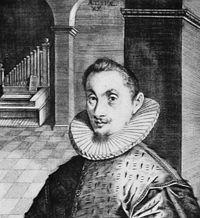
Hans Leo Hassler

1564 - 1612 Person Name: H. L. Hassler Composer of "[Let me be Thine forever]" in The Lutheran Hymnary Hans Leo Hassler Germany 1564-1612. Born at Nuremberg, Germany, he came from a family of famous musicians and received early education from his father. He then studied in Venice, Italy, with Andrea Gabrieli, uncle of Giovanni Gabrieli, his friend, with whom he composed a wedding motet. The uncle taught him to play the organ. He learned the polychoral style and took it back to Germany after Andrea Gabrieli's death. He served as organist and composer for Octavian Fugger, the princely art patron of Augsburg (1585-1601). He was a prolific composer but found his influence limited, as he was Protestant in a still heavily Catholic region. In 1602 he became director of town music and organist in the Frauenkirche in Nuremberg until 1608. He married Cordula Claus in 1604. He was finally court musician for the Elector of Saxony in Dresden, Germany, evenually becoming Kapellmeister (1608-1612). A Lutheran, he composed both for Roman Catholic liturgy and for Lutheran churches. He produced two volumns of motets, a famous collection of court songs, and a volume of simpler hymn settings. He published both secular and religious music, managing to compose much for the Catholic church that was also usable in Lutheran settings. He was also a consultant to organ builders. In 1596 he, with 53 other organists, had the opportunity to examine a new instrument with 59 stops at the Schlosskirche, Groningen. He was recognized for his expertise in organ design and often was called on to examine new instruments. He entered the world of mechanical instrument construction, developing a clockwork organ that was later sold to Emperor Rudolf II. He died of tuberculosis in Frankfurt, Germany. John Perry

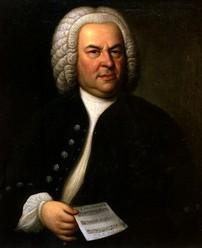
Johann Sebastian Bach

1685 - 1750 Person Name: Johann Sebastian Bach (1685-1750) Harmonizer of "PASSION CHORALE (MEIN G'MÜTH IST MIR VERWIRRET)" in The Summit Choirbook Johann Sebastian Bach was born at Eisenach into a musical family and in a town steeped in Reformation history, he received early musical training from his father and older brother, and elementary education in the classical school Luther had earlier attended. Throughout his life he made extraordinary efforts to learn from other musicians. At 15 he walked to Lüneburg to work as a chorister and study at the convent school of St. Michael. From there he walked 30 miles to Hamburg to hear Johann Reinken, and 60 miles to Celle to become familiar with French composition and performance traditions. Once he obtained a month's leave from his job to hear Buxtehude, but stayed nearly four months. He arranged compositions from Vivaldi and other Italian masters. His own compositions spanned almost every musical form then known (Opera was the notable exception). In his own time, Bach was highly regarded as organist and teacher, his compositions being circulated as models of contrapuntal technique. Four of his children achieved careers as composers; Haydn, Mozart, Beethoven, Mendelssohn, Schumann, Brahms, and Chopin are only a few of the best known of the musicians that confessed a major debt to Bach's work in their own musical development. Mendelssohn began re-introducing Bach's music into the concert repertoire, where it has come to attract admiration and even veneration for its own sake. After 20 years of successful work in several posts, Bach became cantor of the Thomas-schule in Leipzig, and remained there for the remaining 27 years of his life, concentrating on church music for the Lutheran service: over 200 cantatas, four passion settings, a Mass, and hundreds of chorale settings, harmonizations, preludes, and arrangements. He edited the tunes for Schemelli's Musicalisches Gesangbuch, contributing 16 original tunes. His choral harmonizations remain a staple for studies of composition and harmony. Additional melodies from his works have been adapted as hymn tunes. --John Julian, Dictionary of Hymnology (1907)
It looks like you are using an ad-blocker. Ad revenue helps keep us running. Please consider white-listing Hymnary.org or getting Hymnary Pro to eliminate ads entirely and help support Hymnary.org.