

 My Starred Hymns
 My FlexScores
 My Hymnals
 My Purchased Files
Planning worship?
Check out our sister site, ZeteoSearch.org,
for 20+ additional resources related to your search.
- |
User Links
Search Results

O holy Father, God most dear
Author: G. A. Tomlinson, 1906- Meter: 8.8.8.8.8.8 Appears in 4 hymnals Topics: Church Body of Christ; Jesus Christ Word; Maundy Thursday; Sacraments and Ordinances Communion; Trinity Scripture: Matthew 26:26-29 Used With Tune: SUSSEX CAROL
O holy Father, God most dear


SUSSEX CAROL
Meter: 8.8.8.8.8.8 Appears in 86 hymnals Composer and/or Arranger: Ralph Vaughan Williams, 1872-1958 Tune Key: F Major or modal Incipit: 55345 32127 11234 Used With Text: O holy Father, God most dear
SUSSEX CAROL

O holy Father, God most dear
Author: G. A. Tomlinson, 1906- Hymnal: The Book of Praise #529 (1997) Meter: 8.8.8.8.8.8 Topics: Church Body of Christ; Jesus Christ Word; Maundy Thursday; Sacraments and Ordinances Communion; Trinity Scripture: Matthew 26:26-29 Languages: English Tune Title: SUSSEX CAROL
O holy Father, God most dear
O holy Father, God most dear
Author: George A. Tomlinson (b. 1906) Hymnal: Hymns for Celebration #12 (1974) Meter: 8.8.8.8.8.8 Topics: Holy Communion At the Offertory Languages: English Tune Title: RYBURN
O holy Father, God most dear
O holy Father, God most dear
Author: G. A. Tomlinson, b.1906 Hymnal: The Book of Praise #351 (1972) Meter: 8.8.8.8.8.8 Topics: The Church The Sacraments - The Lord's Supper Languages: English Tune Title: SUSSEX CAROL
O holy Father, God most dear


Ralph Vaughan Williams
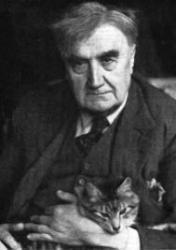
1872 - 1958 Person Name: R. Vaughan Williams, 1872 - 1958 Harmonizer of "SUSSEX CAROL" in The Book of Praise Through his composing, conducting, collecting, editing, and teaching, Ralph Vaughan Williams (b. Down Ampney, Gloucestershire, England, October 12, 1872; d. Westminster, London, England, August 26, 1958) became the chief figure in the realm of English music and church music in the first half of the twentieth century. His education included instruction at the Royal College of Music in London and Trinity College, Cambridge, as well as additional studies in Berlin and Paris. During World War I he served in the army medical corps in France. Vaughan Williams taught music at the Royal College of Music (1920-1940), conducted the Bach Choir in London (1920-1927), and directed the Leith Hill Music Festival in Dorking (1905-1953). A major influence in his life was the English folk song. A knowledgeable collector of folk songs, he was also a member of the Folksong Society and a supporter of the English Folk Dance Society. Vaughan Williams wrote various articles and books, including National Music (1935), and composed numerous arrangements of folk songs; many of his compositions show the impact of folk rhythms and melodic modes. His original compositions cover nearly all musical genres, from orchestral symphonies and concertos to choral works, from songs to operas, and from chamber music to music for films. Vaughan Williams's church music includes anthems; choral-orchestral works, such as Magnificat (1932), Dona Nobis Pacem (1936), and Hodie (1953); and hymn tune settings for organ. But most important to the history of hymnody, he was music editor of the most influential British hymnal at the beginning of the twentieth century, The English Hymnal (1906), and coeditor (with Martin Shaw) of Songs of Praise (1925, 1931) and the Oxford Book of Carols (1928).
Bert Polman
Ralph Vaughan Williams
Norman Cocker
1889 - 1953 Person Name: Norman Cocker (1889-1953) Composer of "RYBURN" in Hymns for Celebration
Norman Cocker
G. A. Tomlinson
1906 - 1985 Person Name: G. A. Tomlinson, b.1906 Author of "O holy Father, God most dear" in The Book of Praise
G. A. Tomlinson




