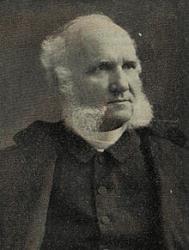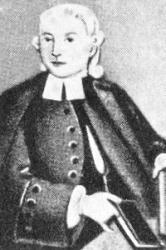
1699 - 1769 Person Name: P. F. Hiller, 1699-1769 Author of "O Son of God, We Wait for Thee" in Evangelical Lutheran Hymnary Hiller, Philipp Friedrich, son of Johann Jakob Hiller, pastor at Mühlhausen on the the Enz, Württemberg, was born at Mühlhausen, Jan. 6, 1699. He was educated at the clergy training schools at Denkendorf (under J. A. Bengel) and Maulbronn, and the University of Tübingen (M.A. 1720). His first clerical appointment was as assistant at Brettach, near Neckarsulm, 1724-27. He afterwards held similar posts at Hessigheim and elsewhere, and was also, from 1729-31, a private tutor at Nürnberg. He was then, on St. Bartholomew's Day, 1732, instituted as pastor of Neckargröningen, on the Neckar, near Marbach. In 1736 he became pastor of his native place, and in 1748 pastor at Steinheim, near Heidenheim. In his third year of residence at Steinheim he lost his voice, and had to employ an assistant to preach. He died at Steinheim, April 24, 1769. (Koch, v. 107-126; Allgemeine Deutsche Biographie, xii. 425-426, &c.) Of Hiller’s hymns the best appeared in:—
(1) Arndt's Paradiss-Gartlein…..in teutsche Lieder, Nürnberg, N.D. [the copy in Berlin has a frontispiece dated 1730]. This was written during the time he was tutor at Nürnberg. P. Gerhardt had founded the fine hymn "O Jesu Christ, mein schönstes Licht,"
(q.v.) on one of the prayers in the volume of devotions which Johann Arndt had published, 1612, under the title of Paradies-Gärtlein; and Gerhardt's example led Hiller to think of turning the whole of these prayers into hymns. The book is in four parts, and contains 301 hymns, 297 being founded on Arndt and four original. (2) Geistliches Liederkästlein, Stuttgart, 1762, and a second series, Stuttgart, 1767. Each series contains 366 short hymns, one for each day of the year. A complete reprint of these and the other hymns of Hiller (1075 in all) wased. by C. C. E. Ehmann in 1844 (2nd ed. 1858).
Hiller is the most productive and most important of the earlier hymnwriters of Württemberg; and is the poetical exponent of the practical theology of his friend J. A. Bengel. The hymns of his Paradiss-Gärtlein, while clear and Scriptural, are decidedly spun out (see No. xii. below). His Liederkästlein, contains the hymns of his riper years, and reveals a depth of spiritual wisdom, an almost proverbial conciseness, an adaptation to console and direct in the most diverse events of life, and the most varied experiences of the soul, a suitability as a manual for daily devotion, and a simple popularity of style that speedily endeared it to the pious in Southern Germany. It has passed through many editions in Germany, while colonists (especially from Württemberg) have carried it from thence wherever they went. It is said, e.g., that when a German colony in the Caucasus was attacked by a hostile Circassian tribe some fifty years ago the parents cut up their copies of the Liederkästlein and divided the leaves among their children as they were being torn from them into slavery.
The use of Hiller's hymns in Germany has principally been in the hymnbooks of Württemberg, and, through J. J. Bambach's Haus Gesang-Buch, 1735, in Hannover.
The following have passed into English:—
I. Hymns in English common use:
i. Herr über Leben und der Tod. Cross and Consolation. 1730, pt. iii. p. 332, founded on Arndt's Prayer, 26 (28) of Class iii. The part translated is stanzas viii.-xiv., "Herr, meine Burg, Herr Zebaoth," which is founded on the fourth part of the third section of Arndt's Prayer. The text is in Ehmann's Hiller, Nos. 885, 886. Translated as:—
0 God of Hosts! 0 mighty Lord, a translation of stanzas viii., xiii., xiv., signed "F. C. C.," as No. 162 in Dr. Pagenstecher's Collection, 1864.
ii. Mein Gott in deine Hände. For the Dying. Liederkästlein, pt. ii., 1767, for August 3, in 9 stanzas of 4 lines, founded on Ps. xxxi. 6. In Ehmann, No. 986, and in Knapp's Evangelischer Lieder-Schatz, 1837 and 1865. Translated as:—
My God, to Thee I now commend, a good translation of stanzas i., iii., iv., vi., viii., ix., by Miss Winkworth, in her Lyra Germanica, 1st Ser., 1855, p. 245. In her 2nd ed., 1856, she substituted a translation of st. vii. for that of stanza vi. The text of 1856 is in her Chorale Book for England, 1863, No. 194, and in the Ohio Evangelical Lutheran Hymnal, 1880; and the text of 1855 in the Pennsylvania Lutheran Church Book, 1868.
Another translation is: "My God, within Thy hand," by Miss Warner, 1858, p. 480.
iii. Mein Hers, du mustt im Himmel sein. Eternal Life. Liederkästlein, p. ii., 1767, for Jan. 26, in 4 stanzas of 7 lines, founded on St. Matt. vi. 21. In Ehmann, No. 639, and Knapp's Evangelischer Lieder-Schatz, 1837. Translated as :—
Aspire, my heart, on high to live, in full, by Dr. H. Mills, in his Horae Germanicae, 1845 (1856, p. 86), repeated, omitting stanzas iv., as No. 220 in the American Lutheran General Synod's Collection, 1850-52.
iv. Wir warten dein, o Gottes Sehn. Second Advent. Liederkästlein, pt. ii., 1767, for Jan. 24, in 4 stanzas of 8 lines, founded on 1 Thess. i. 9, 10. In Ehmann, No. 1041, and the Württemberg Gesang-Buch, 1842, No. 640. Translated as:-—
We wait for Thee, all glorious One, a good and full translation by J. D. Burns, in the Family Treasury, 1859, pt. ii. p. 111, and his Remains, 1869, p. 264. Included in the Christian Hymn Book, Cincinnati, 1865, and in H. L. Hastings's Songs of Pilgrimage, 1886.
Another translation is: "We wait for Thee, O Son of God," in the British Herald, April, 1866, p. 252, and Reid's Praise Book, 1872. This follows the altered form in C. B. Garve's Christliche Gesänge, 1825.
II. Hymns not in English common use:
v. Abgrund wesentlicher Liebe. Love of God. 1730, pt. ii. p. 25, founded on Prayer 4 in Class II. of Arndt, which is "Thanksgiving for the Love of God, and prayer for it." Translated as, "Thou fathomless Abyss of Love," by Miss Winkworth, 1869, p. 281.
vi. Angenehmes Krankenbette. For the Sick. Liederkästlein, 1762, p. 338, for Dec. 3, in 3 stanzas, founded on St. Luke v. 18. Translated as, "Bed of Sickness! thou art sweet," by Miss Winkworth, 1869, p. 283.
vii. Betet an, verlorne Sünder. Lent. Liederkästlein, 1762, p. 43, for Feb. 18, in 3 stanzas, founded on St. Matt, xviii. 14. Translated as, "Sinners, pray! for mercy pleading," by Dr. H. Mills, 1856, p. 50.
viii. Das Lamm, am Kreuzesstamme. For the Dying. Liederkästlein, pt. ii., 1767, for Feb. 12, in 8 stanzas, founded on Acts vii. 59. In the Württemberg Gesang-Buch, 1842, No. 609, altered to “Der Hirt, am Kreuz gestorben." This form is translated as, "The Shepherd by His passion," by J. D. Burns, in the Family Treasury, 1859, pt. ii. p. 61, and his Remains, 1869, p. 266.
ix. Die Liebe darf wohl weinen. Burial of the Dead. Liederkästlein, 1762, p. 286, for Oct. 12, in 7 stanzas, founded on l Thess. iv. 13. Translated as, "Love over the departed," by J. D. Burns in his Remains, 1869, p. 253.
x. Die Welt kommt einst zusammen. Second Advent. Liederkästlein, pt. ii., 1767, for Jan. 2, in 5 stanzas, founded on 2 Cor. v. 10. Translated as, "The world shall yet be cited," by J. D. Burns in the Family Treasury, 1859, pt. ii. P. 111, and his Remains, 1869, p. 263.
xi. Herr, meine Leibeshütte. For the Dying. Liederkästlein, pt. ii., 1767, for Feb. 18, in 8 stanzas, founded on 2 Peter, i. 14. The translations are: (l) "Lord, my house of clay," by Miss Warner, 1858, p. 605. (2) "My fleshly house is sinking now," by Dr. G. Walker, 1860, p. 102.
xii. Mein Jesus sitzt zur rechten Hand. Ascensiontide. 1730, pt iii. p. 408, as stanzas 118-125 of the hymn on Arndt's prayer 27 (29) in Class III. This prayer is a long paraphrase of the Apostles' Creed. Translated as, "Our Jesus now at God's right hand," by Dr. H. Mills, 1845 (1856, p. 330).
xiii. Singet Gott, denn Gott ist liebe. The Love of God. Liederkästlein, 1762, p. 51, for Feb. 20, in 3 stanzas, founded on 1 John iv. 16. The translations are: (1) "God is love—-then sing His praises," by Dr. H. Mills, 1845 (1856, p. 16). (2) "God is love, sing loud before Him," by J. D. Burns in his Remains, 1869, p. 231.
xiv. Singt doch unserm König. Ascensiontide. Liederkästlein, 1762, p. 328, for Nov. 23, in 3 stanzas, founded on Ps. xcvi. 10. Translated as, “Laud your King and Saviour," by J. Sheppard in bis Foreign Sacred Lyre. 1857, p. 94.
xv. Untheilbare Dreifaltigkeit. Trinity Sunday. 1730, pt. ii. p. 226, founded on Arndt’s prayer 25 in Class II., entitled “Thanksgiving for the revelation of the Holy Trinity." The translation is from the recast of st. vi.-xii. made by J. S. Diterich for the Berlin Gesang-Buch, 1765, No. 51, and beginning "Lob, Ehre, Preis und Dank sel dir." Translated as, "Love, honour, thanks, to Thee we raise," by Dr. H. Mills, 1845 (1856, p. 110).
xvi. Was freut mich noch wenn du's nicht bist. Joy in God. Liederkästlein, 1762, for June 20, in 2 stanzas, founded on Ps. xliii. 4. Translated as, "What earthly joy can fill my heart," by R. Massie in the British Herald, Nov. 1865, p. 175.
xvii. Wer ausharrt bis ans Ende. Cross and Consolation. Liederkästlein, pt. ii., 1767, for May 19, in 4 stanzas, founded on St. Matt. xxiv. 13. Translated as,"He who to death maintaineth," by J. D. Burns in his Remains, 1869, p. 261.
xviii. Wer kann dein Thun begreifen. God's Power. Liederkästlein, 1762, p. 18, for Jan. 18, in 3 stanzas, founded on Is. xlv. 7. Translated as, "Who, Lord, Thy deeds can measure," by Dr. H. Mills, 1845 (1856, p. 15). [Rev. James Mearns, M.A.]
--John Julian, Dictionary of Hymnology (1907)
===============================
Hiller, Philipp F., p. 524, ii. His hymn "Gottes Sohn, in Fleisch gekleidet" (Christmas), from his Liederkastlein, 1762, is translation by Dr. Loy, in the Ohio Lutheran Hymnal, 1880, as "God in human flesh appearing."
--John Julian, Dictionary of Hymnology, Appendix, Part II (1907)
Philipp Friedrich Hiller


 My Starred Hymns
 My FlexScores
 My Hymnals
 My Purchased Files