

 My Starred Hymns
 My FlexScores
 My Hymnals
 My Purchased Files
Planning worship?
Check out our sister site, ZeteoSearch.org,
for 20+ additional resources related to your search.
- |
User Links
Person Results
Anonymous
Person Name: Unknown Topics: For Younger Children General Author of "Praise him, praise him" in The Beacon Song and Service book In some hymnals, the editors noted that a hymn's author is unknown to them, and so this artificial "person" entry is used to reflect that fact. Obviously, the hymns attributed to "Author Unknown" "Unknown" or "Anonymous" could have been written by many people over a span of many centuries.
Anonymous
Henry J. Gauntlett
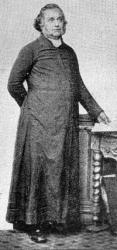
1805 - 1876 Topics: For Younger Children Thanksgiving Composer of "ST. ALPHEGE" in The Beacon Song and Service book Henry J. Gauntlett (b. Wellington, Shropshire, July 9, 1805; d. London, England, February 21, 1876) When he was nine years old, Henry John Gauntlett (b. Wellington, Shropshire, England, 1805; d. Kensington, London, England, 1876) became organist at his father's church in Olney, Buckinghamshire. At his father's insistence he studied law, practicing it until 1844, after which he chose to devote the rest of his life to music. He was an organist in various churches in the London area and became an important figure in the history of British pipe organs. A designer of organs for William Hill's company, Gauntlett extended the organ pedal range and in 1851 took out a patent on electric action for organs. Felix Mendelssohn chose him to play the organ part at the first performance of Elijah in Birmingham, England, in 1846. Gauntlett is said to have composed some ten thousand hymn tunes, most of which have been forgotten. Also a supporter of the use of plainchant in the church, Gauntlett published the Gregorian Hymnal of Matins and Evensong (1844).
Bert Polman
Henry J. Gauntlett
Matthias Claudius
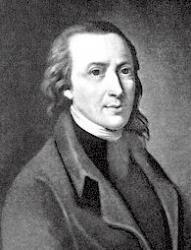
1740 - 1815 Topics: For Younger Children Thanksgiving Author of "We plough the fields, and scatter" in The Beacon Song and Service book Claudius, Matthias, son of Matthias Claudius, Lutheran pastor at Reinfeld in Holstein (near Lübeck), was born at Reinfeld, Aug. 15, 1740. An ancestor, who died as a Lutheran pastor in 1586, had Latinized his name, Claus Paulsen, to Claudius Pauli, and his descendants had adopted Claudius as their surname. Claudius entered the University of Jena, in 1759, as a student of theology, but being troubled with an affection of the chest, and finding little attraction in the Rationalism of Jena, he turned his attention to law and languages. After a short visit to Copenhagen, as private secretary to a Danish count, he joined in 1768 the staff of the Hamburg News Agency (Adress-Comptoirnachrichten). Removing to Wandsbeck, near Hamburg, he undertook in 1771 the editing of the literary portion of the Wandsbecker Bote, and contributed a number of his poems to the Göttingen Musen-Almanach. In 1776 he was appointed one of the Commissioners of Agriculture and Manufactures of Hesse-Darmstadt, and in 1777 editor of the official Hesse-Darmstadt newspaper, which he conducted in the same spirit as his Wandsbeck Bote. At Darmstadt he became acquainted with Goethe (then living near by at Frankfurt), and with a circle of freethinking philosophers. During a severe illness in 1777, he realised, however, the spiritual emptiness of the life at Darmstadt; the buried seeds sown in his youth sprang up; and he once more became in faith as a little child. Renouncing position and income, he returned to Wandsbeck to re-edit the Bote, which he conducted in a distinctively Christian spirit. In 1788 he was appointed by the Crown Prince of Denmark auditor of the Scheswig-Holstein Bank at Altona, but continued to reside at Wandsbeck till 1813, when he was forced by the war to flee, and was unable to return till May, 1814. The next year he removed to the house of his eldest daughter in Hamburg, and died there Jan. 21, 1815 (Koch, vi. 417-429; Allg. Deutsche Biographie, iv. 279-281). His fugitive pieces appeared in two parts as Asmus omnia sua secum portans; oder sammtliche Werke des Wandsbecker Bothen, Wandsbeck and Hamburg, 1774 (pt. iii. 1777, iv. 1782, v. 1789, vi. 1797, vii. 1802, viii. 1812). While much of his poetry was distinctively Christian in its spirit, and many of his pieces might rank as popular sacred songs, yet he wrote no hymns designed for use in Church. Three pieces have, however, passed into the German hymn-books, all of which have been translated into English, viz.:—
i. Das Grab ist leer, das Grab ist leer. [Easter.] First published in pt. viii., 1812, as above, p. 121, in 10 stanzas. Translated as "The grave is empty now, its prey," by Dr. H. Mills, 1859, printed in Schaff’s Christ in Song, 1870.
ii. Der Mond ist aufgegangen. [Evening.] His finest hymn, conceived in a child-like, popular spirit—a companion to the more famous hymn, "Nun ruhen alle Walder " (q. v.). According to tradition it was composed during his residence at Darmstadt, 1762, while walking on the so-called Schnempelweg, a footpath leading by the river-side up to the Odenwald. First published in J. H. Voss's Musen-Almanach, Hamburg, 1770, p. 184, and then in pt. iv., 1782, as above, p. 57, in 7 stanzas of 6 lines. Included as No. 452 in the Oldenburg Gesang-Buch, 1791, as No. 570 in the Württemberg Gesang-Buch, 1842, and No. 509 in the Unverfälschter Liedersegen, 1851. The only translation in common use is:—
The silent moon is risen, good and full, as No. 322, in the Ohio Lutheran Hymnal, 1880.
Other translations are:—
(1) "The fair moon hath ascended," in the British Magazine, Nov. 1837, p. 518. (2) "The moon on high Is beaming,",by H. J. Buckoll, 1842, p. 105. (3) "The moon hath risen on high," by Miss Winkworth, 1855, p. 229 (1876, p. 231). (4) "The moon up heaven is going," by J. D. Bums, in Family Treasury, 1860, p. 92, repeated in his Memoir, 1869, p. 269. (5) “The moon is upwards climbing," by Miss Manington, 1863, p. 124. (6) "The moon is up in splendour," by E. Massie, 1866,
E. 115. (7) "The moon hath risen clear," in Alice Lucas's Trs.from German Poets, 1876, p. 12. (8) "The moon is up and beaming," in Mrs. A. W. Johns's Original Poems and Translations, 1882, p. 61.
iii. Im Anfang war's auf Erden. [Harvest.] First published in pt. iv., 1782, as above, p. 42, in 17 stanzas of 4 lines, and chorus (see also G. W. Fink's Musikalischer Hausschatz der Deutschen, Altona, 1860, No. 77). It occurs in a sketch entitled, Paid Erdmann's Fest. The neighbours are represented as coming to Paul's house and there singing this so-called “Peasants' Song," the last four stanzas of which specially relate to the occasion; the stanzas being sung as a solo, and all joining in the chorus. It can hardly be called a hymn, though it has passed into a few German hymnals principally for use in school. Beginning, "Auf! Lasset Gott uns loben," 10 stanzas were included as No. 482 in the Oldenburg G. B., 1791. In T. Fliedner's Liederbuch, Kaiserswerth, 1842, No. 95 begins with stanza vii., "Was nah ist und was feme." The form most popular is that beginning with stanza iii., "Wir pflügen und wir streuen," as in Dr. Wichern's Unsere Lieder, Hamburg, 1844, No. 55, and other collections.
Translations in common use:—
1. We plough the fields and scatter, by Miss J. M. Campbell, contributed to the Rev. C. S. Bere's Garland of Songs, Lond., 1861, p. 61 (later eds. p. 27). A free rendering in 3 stanzas of 8 lines, with chorus, entitled, "Thanksgiving for the Harvest." Since its reception into the Appendix to Hymns Ancient & Modern, 1868 (No. 360, ed. 1875, No. 383), it has passed into numerous hymnals in Great Britain, and America. In Thring's Collection, 1882, No. 609, st. iv., "Our souls, Blest Saviour, gather," is an original stanza by Rev. H. Downton, added to supply some distinctly Christian expressions to the hymn, and first published in the Record newspaper in 1875.
2. We plough the fertile meadows. Of this translation there are two forms greatly differing, both ascribed to Dr. S. F. Smith, but whether either form is really by him we have failed to ascertain. What seems to be the original form, in 6 stanzas of 4 lines and chorus, is found in the Methodist Free Church Sunday School Hymns; Curwen's New Child's Own Hymn Book &c. The other form, in 3 stanzas of 8 lines and chorus, is in Allon's Supplemental Hymns; New Congregational Hymn Book, &c.
3. We plough the ground, we sow the seed, in 4 stanzas of 8 lines with chorus, without name of translation, is No. 215 in G. S. Jellicoe's Collection, 1867. [Rev. James Mearns, M.A.]
--Excerpts from John Julian, Dictionary of Hymnology (1907)
Matthias Claudius
Martin Luther
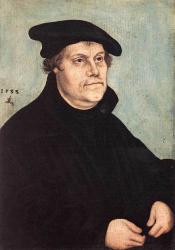
1483 - 1546 Person Name: Martin Luther, 1483-1546 Topics: For Younger Children Christmas Atrributed to of "Away in a manger" in The Beacon Song and Service book Luther, Martin, born at Eisleben, Nov. 10, 1483; entered the University of Erfurt, 1501 (B.A. 1502, M.A.. 1503); became an Augustinian monk, 1505; ordained priest, 1507; appointed Professor at the University of Wittenberg, 1508, and in 1512 D.D.; published his 95 Theses, 1517; and burnt the Papal Bull which had condemned them, 1520; attended the Diet of Worms, 1521; translated the Bible into German, 1521-34; and died at Eisleben, Feb. 18, 1546. The details of his life and of his work as a reformer are accessible to English readers in a great variety of forms. Luther had a huge influence on German hymnody.
i. Hymn Books.
1. Ellich cristlich lider Lobgesang un Psalm. Wittenberg, 1524. [Hamburg Library.] This contains 8 German hymns, of which 4 are by Luther.
2. Eyn Enchiridion oder Handbuchlein. Erfurt, 1524 [Goslar Library], with 25 German hymns, of which 18 are by Luther.
3. Geystliche Gesangk Buchleyn. Wittenberg, 1524 [Munich Library], with 32 German hymns, of which 24 are by Luther.
4. Geistliche Lieder auffs new gebessert. Wittenberg. J. Klug, 1529. No copy of this book is now known, but there was one in 1788 in the possession of G. E. Waldau, pastor at Nürnberg, and from his description it is evident that the first part of the Rostock Gesang-Buch, 1531, is a reprint of it. The Rostock Gesang-Buch, 1531, was reprinted by C. M. Wiechmann-Kadow at Schwerin in 1858. The 1529 evidently contained 50 German hymns, of which 29 (including the Litany) were by Luther.
5. Geistliche Lieder auffs new gebessert. Erfurt. A. Rauscher, 1531 [Helmstädt, now Wolfenbüttel Library], a reprint of No. 4.
6. Geistliche Lieder. Wittenberg. J. Klug, 1535 [Munich Library. Titlepage lost], with 52 German hymns, of which 29 are by Luther.
7. Geistliche Lieder auffs new gebessert. Leipzig. V. Schumann, 1539 [Wernigerode Library], with 68 German hymns, of which 29 are by Luther.
8. Geistliche Lieder. Wittenberg. J. Klug, 1543 [Hamburg Library], with 61 German hymns, of which 35 are by Luther.
9. Geystliche Lieder. Leipzig. V. Babst, 1545 [Gottingen Library]. This contains Luther's finally revised text, but adds no new hymns by himself. In pt. i. are 61 German hymns, in pt. ii. 40, of which 35 in all are by Luther.
For these books Luther wrote three prefaces, first published respectively in Nos. 3, 4, 9. A fourth is found in his Christliche Geseng, Lateinisch und Deudsch, zum Begrebnis, Wittenberg, J. Klug, 1542. These four prefaces are reprinted in Wackernagel’s Bibliographie, 1855, pp. 543-583, and in the various editions of Luther's Hymns. Among modern editions of Luther's Geistliche Lieder may be mentioned the following:—
Carl von Winterfeld, 1840; Dr. C. E. P. Wackernagel, 1848; Q. C. H. Stip, 1854; Wilhelm Schircks, 1854; Dr. Danneil, 1883; Dr. Karl Gerok, 1883; Dr. A. F. W. Fischer, 1883; A. Frommel, 1883; Karl Goedeke, 1883, &c. In The Hymns of Martin Luther. Set to their original melodies. With an English version. New York, 1883, ed. by Dr. Leonard Woolsey Bacon and Nathan H. Allen, there are the four prefaces, and English versions of all Luther's hymns, principally taken more or less altered, from the versions by A. T. Russell, R. Massie and Miss Winkworth [repub. in London, 1884]. Complete translations of Luther's hymns have been published by Dr. John Anderson, 1846 (2nd ed. 1847), Dr. John Hunt, 1853, Richard Massie, 1854, and Dr. G. Macdonald in the Sunday Magazine, 1867, and his Exotics, 1876. The other versions are given in detail in the notes on the individual hymns.
ii. Classified List of Luther's Hymns. Of Luther's hymns no classification can be quite perfect, e.g. No. 3 (see below) takes hardly anything from the Latin, and No. 18 hardly anything from the Psalm. No. 29 is partly based on earlier hymns (see p. 225, i.). No. 30 is partly based on St. Mark i. 9-11, and xvi., 15, 16 (see p. 226, ii.). No. 35 is partly based on St. Luke ii. 10-16. The following arrangement, however, will answer all practical purposes.
A. Translations from the Latin.
i. From Latin Hymns:
1. Christum wir sollen loben schon. A solis ortus cardine
2. Der du bist drei in Einigkeit. O Lux beata Trinitas.
3. Jesus Christus unser Heiland, Der von. Jesus Christus nostra salus
4. Komm Gott Schopfer, heiliger Geist. Veni Creator Spiritus, Mentes.
5. Nun komm der Beidenheiland. Veni Redemptor gentium
6. Was flirchst du Feind Herodes sehr. A solis ortus cardine
ii. From Latin Antiphons, &c.:
7. Herr Gott dich loben wir. Te Deum laudamus.
8. Verleih uns Frieden gnädiglich. Dapacem, Domine
9. Wir glauben all an einen Gott.
iii. Partly from the Latin, the translated stanzas being adopted from Pre-Reformation Versions:
10. Komm, heiliger Geist, Herre Gott.
11. Mitten wir im Leben sind. Media vita in morte sumus.
B. Hymns revised and enlarged from Pre-Reformation popular hymns.
12. Gelobet seist du Jesus Christ.
13. Gott der Vater wohn uns bei.
14. Gott sei gelobet und gebenedeiet.
15. Nun bitten wir den heiligen Geist.
C. Psalm versions.
16. Ach Gott vom Himmel, sieh darein.
17. Aus tiefer Noth schrei ich zu dir.
18. Ein' feste Burg ist unser Gott.
19. Es spricht der Unweisen Mund wohl.
20. Es wollt uns Gott genädig sein.
21. War Gott nicht mit uns diese Zeit.
22. Wohl dem, der in Gotten Furcht steht.
D. Paraphrases of other portions of Holy Scripture.
23. Diess sind die heilgen zehn Gebot.
24. Jesaia dem Propheten das geschah.
25. Mensch willt du leben seliglich.
26. Mit Fried und Freud ich fahr dahin.
27. Sie ist mir lieb die werthe Magd.
28. Vater unser im Himmelreich.
E. Hymns mainly Original.
29. Christ lag in Todesbanden.
30. Christ unser Herr zum Jordan kam.
31. Ein neues Lied wir heben an.
32. Erhalt uns Herr bei deinem Wort.
33. Jesus Christus unser Heiland, Der den,
34. Nun freut euch lieben Christengemein.
35. Vom Himmel hoch da komm ich her.
36. Vom Himmel kam der Engel Schaar.
In addition to these —
37. Fur alien Freuden auf Erden.
38. Kyrie eleison.
In the Blätter fur Hymnologie, 1883, Dr. Daniel arranges Luther's hymns according to what he thinks their adaptation to modern German common use as follows:—
i. Hymns which ought to be included in every good Evangelical hymn-book: Nos. 7-18, 20, 22, 28, 29, 30, 32, 34, 35, 36, 38.
ii. Hymns the reception of which into a hymn-book might be contested: Nos. 2, 3, 4, 19, 21, 22, 23, 24, 25, 33.
iii. Hymns not suited for a hymn-book: Nos. 1, 5, 6, 27, 31, 37.
[Rev. James Mearns, M.A.]
--John Julian, Dictionary of Hymnology (1907)
Martin Luther
Jan Struther
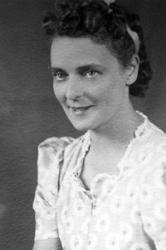
1901 - 1953 Person Name: Jan Struther, 1901- Topics: For Younger Children General Author of "Daisies are our silver" in The Beacon Song and Service book Jan Struther, given name: Joyce Torrens-Graham [sic Joyce Anstruther] (b. Westminster, London, England, 1901; d. New York, NY, 1953) wrote many poems and essays under the pen name of Jan Struther (derived from her mother's maiden name, Eva Anstruther). In addition to her pen name, Struther also had the married names of Mrs. Anthony Maxtone Graham and, from a second marriage, Mrs. Adolf Kurt Placzek. During World War II she moved with her children to New York City and remained there until her death. In England she is best known for her novel Mrs. Miniver (1940), which consists of sketches of British family life before World War II. Immensely popular, the book was later made into a movie. Struther also wrote comic and serious poetry, essays, and short stories, published in Betsinda Dances and Other Poems (1931), Try Anything Twice (1938), The Glass Blower (1941), and, posthumously, The Children's Bells (1957). Songs of Praise (1931) included twelve of her hymn texts.
Bert Polman
Jan Struther
Jane M. Campbell
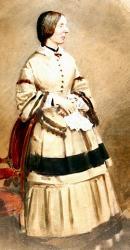
1817 - 1878 Topics: For Younger Children Thanksgiving Translator of "We plough the fields, and scatter" in The Beacon Song and Service book Campbell, Jane Montgomery, daughter of the Rev. A. Montgomery Campbell, born in London, 1817, died at Bovey Tracey, Nov. 15, 1878. Miss Campbell contributed in 1861, a number of translations from the German to the Rev. C. S. Bere's Garland of Songs; or, an English Liederkranz, 1862; and also to his Children’s Choral Book, 1869. The best known and most widely used of these translations is a portion of "Im Anfang war's auf Erden," as the harvest hymn, "We plough the fields and scatter.” Miss Campbell also published A Handbook for Singers, Lond., Society for Promoting Christian Knowledge, n.d. This small work contains the musical exercises which she taught in her father's parish school.
--John Julian, Dictionary of Hymnology (1907)
Jane M. Campbell
Cecil Frances Alexander
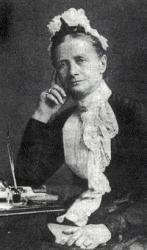
1818 - 1895 Person Name: Cecil Francis Alexander Topics: For Younger Children General Author of "Each little flower that opens" in The Beacon Song and Service book As a small girl, Cecil Frances Humphries (b. Redcross, County Wicklow, Ireland, 1818; Londonderry, Ireland, 1895) wrote poetry in her school's journal. In 1850 she married Rev. William Alexander, who later became the Anglican primate (chief bishop) of Ireland. She showed her concern for disadvantaged people by traveling many miles each day to visit the sick and the poor, providing food, warm clothes, and medical supplies. She and her sister also founded a school for the deaf. Alexander was strongly influenced by the Oxford Movement and by John Keble's Christian Year. Her first book of poetry, Verses for Seasons, was a "Christian Year" for children. She wrote hymns based on the Apostles' Creed, baptism, the Lord's Supper, the Ten Commandments, and prayer, writing in simple language for children. Her more than four hundred hymn texts were published in Verses from the Holy Scripture (1846), Hymns for Little Children (1848), and Hymns Descriptive and Devotional ( 1858).
Bert Polman
==================
Alexander, Cecil Frances, née Humphreys, second daughter of the late Major John Humphreys, Miltown House, co. Tyrone, Ireland, b. 1823, and married in 1850 to the Rt. Rev. W. Alexander, D.D., Bishop of Derry and Raphoe. Mrs. Alexander's hymns and poems number nearly 400. They are mostly for children, and were published in her Verses for Holy Seasons, with Preface by Dr. Hook, 1846; Poems on Subjects in the Old Testament, pt. i. 1854, pt. ii. 1857; Narrative Hymns for Village Schools, 1853; Hymns for Little Children, 1848; Hymns Descriptive and Devotional, 1858; The Legend of the Golden Prayers 1859; Moral Songs, N.B.; The Lord of the Forest and his Vassals, an Allegory, &c.; or contributed to the Lyra Anglicana, the S.P.C.K. Psalms and Hymns, Hymns Ancient & Modern, and other collections. Some of the narrative hymns are rather heavy, and not a few of the descriptive are dull, but a large number remain which have won their way to the hearts of the young, and found a home there. Such hymns as "In Nazareth in olden time," "All things bright and beautiful," "Once in Royal David's city," "There is a green hill far away," "Jesus calls us o'er the tumult," "The roseate hues of early dawn," and others that might be named, are deservedly popular and are in most extensive use. Mrs. Alexander has also written hymns of a more elaborate character; but it is as a writer for children that she has excelled.
- John Julian, Dictionary of Hymnology (1907)
===============
Alexander, Cecil F., née Humphreys, p. 38, ii. Additional hymns to those already noted in this Dictionary are in common use:—
1. Christ has ascended up again. (1853.) Ascension.
2. His are the thousand sparkling rills. (1875.) Seven Words on the Cross (Fifth Word).
3. How good is the Almighty God. (1S48.) God, the Father.
4. In [a] the rich man's garden. (1853.) Easter Eve.
5. It was early in the morning. (1853.) Easter Day.
6. So be it, Lord; the prayers are prayed. (1848.) Trust in God.
7. Saw you never in the twilight? (1853.) Epiphany.
8. Still bright and blue doth Jordan flow. (1853.) Baptism of Our Lord.
9. The angels stand around Thy throne. (1848.) Submission to the Will of God.
10. The saints of God are holy men. (1848.) Communion of Saints.
11. There is one Way and only one. (1875.) SS. Philip and James.
12. Up in heaven, up in heaven. (1848.) Ascension.
13. We are little Christian children. (1848.) Holy Trinity.
14. We were washed in holy water. (1848.) Holy Baptism.
15. When of old the Jewish mothers. (1853.) Christ's Invitation to Children.
16. Within the Churchyard side by side. (1848.) Burial.
Of the above hymns those dated 1848 are from Mrs. Alexander's Hymns for Little Children; those dated 1853, from Narrative Hymns, and those dated 1875 from the 1875 edition of Hymns Ancient & Modern.
Several new hymns by Mrs. Alexander are included in the 1891 Draft Appendix to the Irish Church Hymnal.
--John Julian, Dictionary of Hymnology, Appendix, Part II (1907)
=============
Alexander, Cecil F. , p. 38, ii. Mrs. Alexander died at Londonderry, Oct. 12, 1895. A number of her later hymns are in her Poems, 1896, which were edited by Archbishop Alexander.
--John Julian, Dictionary of Hymnology, New Supplement (1907)
See also in:Hymn Writers of the Church
Cecil Frances Alexander
William Henry Monk
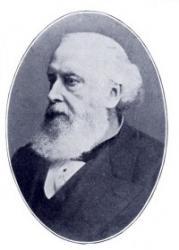
1823 - 1889 Person Name: William H. Monk Topics: For Younger Children General Composer of "ST. ETHELWALD" in The Beacon Song and Service book William H. Monk (b. Brompton, London, England, 1823; d. London, 1889) is best known for his music editing of Hymns Ancient and Modern (1861, 1868; 1875, and 1889 editions). He also adapted music from plainsong and added accompaniments for Introits for Use Throughout the Year, a book issued with that famous hymnal. Beginning in his teenage years, Monk held a number of musical positions. He became choirmaster at King's College in London in 1847 and was organist and choirmaster at St. Matthias, Stoke Newington, from 1852 to 1889, where he was influenced by the Oxford Movement. At St. Matthias, Monk also began daily choral services with the choir leading the congregation in music chosen according to the church year, including psalms chanted to plainsong. He composed over fifty hymn tunes and edited The Scottish Hymnal (1872 edition) and Wordsworth's Hymns for the Holy Year (1862) as well as the periodical Parish Choir (1840-1851).
Bert Polman
William Henry Monk
Johann Sebastian Bach
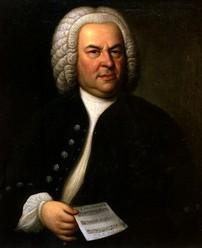
1685 - 1750 Person Name: Johann Sebastian Bach, 1685-1750 Topics: For Younger Children Service Music Composer of "DIE ZEIT" in The Beacon Song and Service book Johann Sebastian Bach was born at Eisenach into a musical family and in a town steeped in Reformation history, he received early musical training from his father and older brother, and elementary education in the classical school Luther had earlier attended.
Throughout his life he made extraordinary efforts to learn from other musicians. At 15 he walked to Lüneburg to work as a chorister and study at the convent school of St. Michael. From there he walked 30 miles to Hamburg to hear Johann Reinken, and 60 miles to Celle to become familiar with French composition and performance traditions. Once he obtained a month's leave from his job to hear Buxtehude, but stayed nearly four months. He arranged compositions from Vivaldi and other Italian masters. His own compositions spanned almost every musical form then known (Opera was the notable exception).
In his own time, Bach was highly regarded as organist and teacher, his compositions being circulated as models of contrapuntal technique. Four of his children achieved careers as composers; Haydn, Mozart, Beethoven, Mendelssohn, Schumann, Brahms, and Chopin are only a few of the best known of the musicians that confessed a major debt to Bach's work in their own musical development. Mendelssohn began re-introducing Bach's music into the concert repertoire, where it has come to attract admiration and even veneration for its own sake.
After 20 years of successful work in several posts, Bach became cantor of the Thomas-schule in Leipzig, and remained there for the remaining 27 years of his life, concentrating on church music for the Lutheran service: over 200 cantatas, four passion settings, a Mass, and hundreds of chorale settings, harmonizations, preludes, and arrangements. He edited the tunes for Schemelli's Musicalisches Gesangbuch, contributing 16 original tunes. His choral harmonizations remain a staple for studies of composition and harmony. Additional melodies from his works have been adapted as hymn tunes.
--John Julian, Dictionary of Hymnology (1907)
Johann Sebastian Bach
Henry Van Dyke
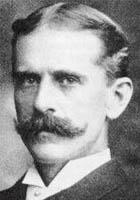
1852 - 1933 Person Name: Henry van Dyke, 1852-1933 Topics: For Younger Children General Author of "Every morning seems to say" in The Beacon Song and Service book
See biography and works at CCEL
Henry Van Dyke
Pages




