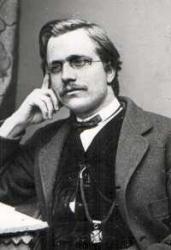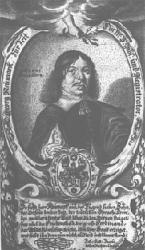
1621 - 1681 Person Name: Georg Christian Neumark Topics: Trust and Guidance Author of "If You But Trust in God to Guide You" in Moravian Book of Worship Georg Neumark (b. Langensalza, Thuringia, Germany, 1621; d. Weimar, Germany, 1681) lived during the time of the Thirty Years' War, when social and economic conditions were deplorable. He had personal trials as well. On his way to Königsberg to study at the university, traveling in the comparative safety of a group of merchants, he was robbed of nearly all his possessions. During the next two years he spent much of his time looking for employment. He finally secured a tutoring position in Kiel. When he had saved enough money, he returned to the University of Königsberg and studied there for five years. In Königsberg he again lost all his belongings, this time in a fire. Despite his personal suffering Neumark wrote many hymns in which he expressed his absolute trust in God. In 1651 he settled in Weimar, Thuringia, where he became court poet and archivist to Duke Johann Ernst and librarian and registrar of the city. Neumark wrote thirty-four hymns, of which "If You But Trust in God to Guide You" has become a classic.
Bert Polman
==============
Neumark, Georg, son of Michael Neumark, clothier at Langensalza, in Thuringia (after 1623 at Miihlhausen in Thuringia), was born at Langensalza, March 16, 1621; and educated at the Gymnasium at Schleueingen, and at the Gymnasium at Gotha. He received his certificate of dimission from the latter in Sept. 1641 (not 1640). He left Gotha in the autumn of 1641 along with a number of merchants who were going to the Michaelmas Fair at Leipzig. He then joined a similar party who were going from Leipzig to Lübeck; his intention being to proceed to Königsberg and matriculate at the University there. After passing through Magdeburg they were plundered by a band of highwaymen on the Gardelegen Heath, who robbed Neumark of all he had with him, save his prayer-book and a little money sewed up in the clothes he was wearing. He returned to Magdeburg, but could obtain no employment there, nor in Lüneburg, nor in Winsen, nor in Hamburg, to which in succession the friends he made passed him on. In the beginning of December he went to Kiel, where he found a friend in the person of Nicolaus Becker, a native of Thuringia, and then chief pastor at Kiel. Day after day passed by without an opening, till about the end of the month the tutor in the family of the Judge Stephan Henning fell into disgrace and took sudden flight from Kiel. By Becker's recommendation Neumark received the vacant position, and this sudden end of his anxieties was the occasion of the writing of his hymn as noted below. In Henning's house the time passed happily till he had saved enough to proceed to Königsberg, where he matriculated June 21, 1643, as a student of law. He remained five years, studying also poetry under Dach, and maintaining himself as a family tutor. During this time (in 1046) he again lost all his property, and this time by fire. In 1648 he left Königsberg, was for a short time at Warsaw, and spent 1649-50 at Thorn. He was then in Danzig, and in Sept. 1651 we find him in Hamburg. In the end of 1651 he returned to Thuringia, and bronght himself under the notice of Duke Wilhelm II. of Sachse-Weimar, the chief or president of the Fruit-bearing Society, the principal German literary union of the 17th century. The Duke, apparently in 1652, appointed him court poet, librarian and registrar of the administration at Weimar; and finally secretary of the Ducal Archives. In Sept. 1653 he was admitted as a member of the Fruit-bearing Society, of which he became secretary in 1656, and of which he wrote a history (Der Neu-Sprossende Teutsche Palmbaum, Nürnberg and Weimar, 1668); and, in 1679, became also a member of the Pegnitz Order. In 1681 he became blind, but was permitted to retain his emoluments till his death, at Weimar, July 18, 1681. [K. Goedeke's Grundriss, vol. iii., 1887, p. 74; Allgemeine Deutsche Biographie. xxiii. 539; Weimarisches Jahrbuch, vol. iii., 1855, p. 176, &c. The dates given by the different authorities vary exceedingly, and are quite irreconcilable. In the registers at Schleusingen Neumark is last mentioned in 1636, and then as in the Third Form. Dr. von Bamberg, director of the Gymnasium at Gotha, informs me that Neumark's name appears in the matriculation book there under January 31, 1641; and as one of the "newly entered" scholars.]
A long list of Neumark's poetical works is given by Goedeke. A large proportion of his secular poems are pastorals, or else occasional poems written to order at Weimar; and in all there is little freshness, or happiness in expression, or glow of feeling. As a musician, and as a hymn-writer, he is of more importance. His hymns appeared in his (1) Poetisch-und Musikalisches Lustwäldchen, Hamburg, 1652; the enlarged edition, entitled (2) Fortgepfiantzter Musikalizch-Poetischer Lustwald, Jena, 1657; and (3) Unterschiedliche, so wol gottseliger Andacht; als auch zu christlichen Tugenden aufmuntemde Lieder, Weimar, 1675. Of the 34 hymns in these three works a few are found in the German hymn-books of the 17th century, and three or four still survive. The best of Neumark's hymns are those of Trust in God, and patient waiting for His help under trial and suffering; and one of these may be fairly called classical and imperishable.
It is:—
Wer nur den lieben Gott lässt walten. Trust in God. First published in his Fortgepflantzter musikalisch-poetischer Lustwald, Jena, 1657, p. 26, in 7 stanzas of 6 lines, entitled “A hymn of consolation. That God will care for and preserve His own in His own time. After the saying 'Cast thy burden upon the Lord, and He shall sustain thee'“(Ps. lv. 22). This, his finest hymn, was written in 1641, at Kiel, when after unsuccessful attempts to procure employment he became a tutor in the family of the judge Stephan Henning. Of this appointment Neumark, in his Thrünendes Haus-Kreuiz, Weimar, 1681, speaks thus:-—
"Which good fortune coming suddenly, and as if fallen from heaven, greatly rejoiced me, and on that very day I composed to the honour of my beloved Lord the here and there well-known hymn 'Wer nur den lieben Gott lässt walten'; and had certainly cause enough to thank the Divine compassion for such unlooked for grace shown to me," &c.
As the date of its composition is thus December, 1641, or at latest Jan. 1642, it is certainly strange that it was not published in his Lustwäldchen, Hamburg, 1652. In that volume he does give, at p. 32, a piece entitled, "a hymn of consolation, when, in 1646, through a dreadful fire I came to my last farthing." The apocryphal story, according to which the hymn was written at Hamburg, about 1653 (see Miller's Singers and Songs, 1869, p. 91), has not been traced earlier than 1744. The hymn speedily became popular, and passed into hymn-books all over Germany (Leipzig Vorrath, 1673, No. 1169), and still holds its place as in the Berlin Geistliche Lieder, ed. 1863, No. 73.
Lauxmann, in Koch, viii. 386-390, relates that it was the favourite hymn of Magdalena Sibylla (d. 1687), wife of the Elector Johann Georg II. of Saxony; was sung, by his command, at the funeral, in 1740, of King Friedrich Wilhelm I. of Prussia; was sung, or rather played, by the first band of missionaries from Herrmannsburg as they set sail from Brunshausen on the Elbe (near Stade) on Oct. 28, 1853, &c.
The beautiful melody by Neumark was probably composed in 1641 along with the hymn, and was published with it in 1657. On it J. S. Bach composed a cantata. It is well known in England through its use by Mendelssohn in his St. Paul ("To Thee, 0 Lord, I yield my spirit"), and from its introduction into Hymns Ancient & Modern (as Bremen), and many other collections.
Translations in common use:--
1. Who leaves th' Almighty God to reign. A full but free translation by Sir John Bowring in his Hymns, 1825, No. 58. His translations of stanzas ii., iv.-vi. beginning "How vain are sighs! how vain regret," are included in Curtis's Union Collection, 1827.
2. Who all his will to God resigneth. A good and full translation by A. T. Kussell, as No. 236 in his Psalms & Hymns, 1851. His translations of st. v.-vii. beginning "Say not, I am of God forsaken," are in Dr. Pagenstecher's Collection, 1864.
3. Leave God to order all thy ways. A full and good translation by Miss Winkworth, in her Lyra Germanica, 1st Ser. 1855, p. 152. This is given in full in M. W. Stryker's Christian Chorals, 1885, and, omitting st. vi., in W. F. Stevenson's Hymns for Church and Home, 1873, and the Baptist Hymnal, 1879. Further abridged forms are in the Baptist Psalms & Hymns, 1858; Harrow School Hymn Book, l866; Holy Song, 1869, and others. In the Pennsylvania Lutheran Church Book, 1868; and the American Presbyterian Hymnal, 1874, st. v., vi. are omitted, and the rest altered to 6 stanzas, beginning "My God, I leave to Thee my ways."
4. Him who the blessed God trusts ever. A good and full translation by Dr.John Ker in the Juvenile Missionary Magazine, of the United Presbyterian Church, 1857. It was revised, and st. iii., v., vi. omitted, for the Ibrox Hymnal, 1871, where it begins: "He who,” &c.
5. If thou but suffer God to guide thee. A full and good translation by Miss Winkworth (based on her Lyra Germanica version and set to the original melody), as No. 134 in her Chorale Book for England, 1863. Repeated in full in the Baptist Psalmist, 1878, and in America in the Ohio Lutheran Hymnal, 1880. It is found, in various abridged forms, in J. Robinson's Collection, 1869; Horder's Congregational Hymns , 1884; the Evangelical Hymnal, N. Y., 1880, and others.
6. He, who the living God hath chosen. A translation of st. i., ii., vii. by Miss Borthwick, as No. 237 in Dr. Pagenstecher's Collection, 1864.
7. He who doth glad submission render. A good translation omitting st. vi., by J. M. Sloan, as No. 284 in J. H. Wilson's Service of Praise, 1865, repeated, omitting the translations of st. ii., vii., in Flett's Collection, Paisley, 1871.
Other translations are:—
(1) "He that confides in his Creator." By J. C. Jacobi, 1720, p. 13 (1722, p. 36; 1732, p. 61). Repeated in the Moravian Hymn Book, 1754, and later eds. (1886, No. 183). (2) "0 Christian! let the Lord direct." By Miss Knight in her Trs. from the German in Prose and Verse, 1812, p. 85. (3) "To let God rule who's but contented." By H. W. Dulcken in his Book of German Song, 1856, p. 274. (4) "He who the rule to God hath yielded." By J. D. Burns in the Family Treasury, 1859, p. 309, and his Memoir & Remains, 1869, p. 240. (5) "Who trusts in God's all-wise direction." By R. Massie, in the British Herald, Aug. 1865, p. 120, and Reid's Praise Book, 1872. (6) "Who yields his will to God's good pleasure. In the British Herald, April, 1866, p. 244, and in Reid's Praise Book, 1872. (7) "He who commits his way to God." In the Family Treasury, 1878, p. 49. [Rev. James Mearns, M.A.]
--John Julian, Dictionary of Hymnology (1907)
See also in:
Hymn Writers of the Church
Georg Neumark


 My Starred Hymns
 My FlexScores
 My Hymnals
 My Purchased Files