

 My Starred Hymns
 My Hymnals
 My Purchased Files
Planning worship?
Check out our sister site, ZeteoSearch.org,
for 20+ additional resources related to your search.
- |
User Links
Search Results


AMEN SJUNGE HVARJE TUNGA
Meter: 8.7.8.7.7.7 Appears in 37 hymnals Composer and/or Arranger: Andreas Peter Berggren, 1801-1880 Tune Key: C Major Incipit: 53223 44317 62543 Used With Text: One There Is above All Others
AMEN SJUNGE HVARJE TUNGA

One There Is Above All Others
Author: John Newton Meter: 8.7.8.7.7.7 Appears in 692 hymnals Topics: Christ's Passion and Cross - Lent; Prayer; Fellowship with Christ Used With Tune: AMEN, JESUS HAN SKAL RAADE
One There Is Above All Others


Through the Day Thy Love Has Spared Us
Author: Thomas Kelly Meter: 8.7.8.7.7.7 Appears in 257 hymnals Lyrics: 1 Through the day Thy love has spared us,
Now we lay us down to rest;
Through the silent watches guard us,
Let no foe our peace molest;
Jesus, Thou our Guardian be;
Sweet it is to trust in Thee.
2 Pilgrims here on earth, and strangers,
Dwelling in the midst of foes,
Us and ours preserve from dangers;
In Thine arms may we repose;
And, when life's brief day is past,
Rest with Thee in heaven at last.
Amen. Topics: Occasional Evening; Evening; Heaven Yearning for Used With Tune: AMEN SJUNGE HVARJE TUNGA
Through the Day Thy Love Has Spared Us


Open now thy gates of beauty
Meter: 8.7.8.7.7.7 Appears in 151 hymnals Lyrics: 1 Open now thy gates of beauty,
Zion, let me enter there,
Where my soul, in joyful duty,
Waits for Him who answers prayer;
O how blessed is this place,
Filled with solace, light, and grace.
2 Lord, my God, I come before Thee,
Do not hide Thy face from me;
Where we find Thee and adore Thee
There a heaven on earth must be.
To my heart, oh enter Thou,
Let it be Thy temple now.
3 Here Thy praise is gladly chanted,
Here Thy seed is duly sown:
Let my soul, where it is planted,
Bring forth precious sheaves alone,
So that all I hear may be
Fruitful unto life in me.
4 Thou my faith increase and quicken,
Let me keep Thy gift divine;
Howsoe'er temptations thicken,
May Thy Word forever shine
As my guiding star through life,
As my comfort in my strife.
5 Speak, O God, and I will hear Thee;
Let Thy will be done indeed;
May I undisturbed draw near Thee
While Thou dost Thy people feed;
Here the living waters flow,
Here is balm for all our woe. Topics: Worship Opening; Faith Increase of, prayed for Used With Tune: OPEN NOW THY GATES OF BEAUTY
Open now thy gates of beauty

One there is above all others
Author: John Newton Hymnal: Common Service Book of the Lutheran Church #389a (1917) Lyrics: 1 One there is above all others,
Well deserves the name of Friend;
His is love beyond a brother’s,
Costly, free, and knows no end:
They who once His kindness prove
Find it everlasting love!
2 Which of all our friends to save us,
Could or would have shed their blood?
But this Saviour died to have us
Reconciled in Him to God:
This was boundless love indeed;
Jesus is a Friend in need.
3 When He lived on earth abasèd,
"Friend of sinners" was His name;
Now, above all glory raisèd,
He rejoices in the same:
Still He calls them brethren, friends,
And to all their wants attends.
4 O for grace our hearts to soften!
Teach us, Lord, at length to love.
We, alas! forget too often,
What a Friend we have above:
But, when home our souls are brought,
We will love Thee as we ought.
Amen. Topics: The Christian Life Cross and Comfort Languages: English Tune Title: AMEN, JESUS HAN SKAL RAADE
One there is above all others
Open Now Thy Gates of Beauty
Author: B. Schmolck, 1672-1737; C. Winkworth, 1827-78 Hymnal: Evangelical Lutheran Hymnary #30 (1996) Meter: 8.7.8.7.7.7 Lyrics: 1 Open now Thy gates of beauty;
Zion, let me enter there,
Where my soul in joyful duty
Waits for Him who answers prayer.
Oh, how blessed is this place,
Filled with solace, light, and grace!
2 Lord, my God, I come before Thee;
Do not hide Thy face from me.
Where we find Thee and adore Thee
There a heav'n on earth must be.
To my heart, O enter Thou;
Let it be Thy temple now.
3 Here Thy praise is gladly chanted;
Here Thy seed is duly sown.
Let my soul, where it is planted,
Bring forth precious sheaves alone,
So that all I hear may be
Fruitful unto life in me.
4 Thou my faith increase and quicken,
Let me keep Thy gift divine;
Howsoe'er temptations thicken,
May Thy word forever shine
As my guiding star through life,
As my comfort in the strife.
5 Speak, O God, and I will hear Thee,
Let Thy will be done indeed;
May I undisturbed draw near Thee
While Thou dost Thy people feed;
Here of living waters flow,
Here is balm for all our woe.
Topics: Invocation Languages: English Tune Title: AMEN, JESUS HAN SKAL RAADE
Open Now Thy Gates of Beauty
Open now Thy gates of beauty
Author: Catherine Winkworth; Benjamin Schmolck Hymnal: The Hymnal of the Evangelical Mission Covenant Church of America #50 (1950) Languages: English Tune Title: AMEN, JESUS HAN SKAL RAADE
Open now Thy gates of beauty


John Newton
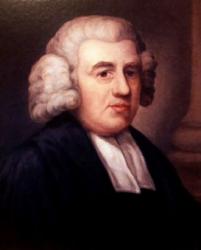
1725 - 1807 Author of "One there is above all others" in Common Service Book of the Lutheran Church John Newton (b. London, England, 1725; d. London, 1807) was born into a Christian home, but his godly mother died when he was seven, and he joined his father at sea when he was eleven. His licentious and tumultuous sailing life included a flogging for attempted desertion from the Royal Navy and captivity by a slave trader in West Africa. After his escape he himself became the captain of a slave ship. Several factors contributed to Newton's conversion: a near-drowning in 1748, the piety of his friend Mary Catlett, (whom he married in 1750), and his reading of Thomas à Kempis' Imitation of Christ. In 1754 he gave up the slave trade and, in association with William Wilberforce, eventually became an ardent abolitionist. After becoming a tide-surveyor in Liverpool, England, Newton came under the influence of George Whitefield and John and Charles Wesley and began to study for the ministry. He was ordained in the Church of England and served in Olney (1764-1780) and St. Mary Woolnoth, London (1780-1807). His legacy to the Christian church includes his hymns as well as his collaboration with William Cowper (PHH 434) in publishing Olney Hymns (1779), to which Newton contributed 280 hymns, including “Amazing Grace.”
Bert Polman
==================
Newton, John, who was born in London, July 24, 1725, and died there Dec. 21, 1807, occupied an unique position among the founders of the Evangelical School, due as much to the romance of his young life and the striking history of his conversion, as to his force of character. His mother, a pious Dissenter, stored his childish mind with Scripture, but died when he was seven years old. At the age of eleven, after two years' schooling, during which he learned the rudiments of Latin, he went to sea with his father. His life at sea teems with wonderful escapes, vivid dreams, and sailor recklessness. He grew into an abandoned and godless sailor. The religious fits of his boyhood changed into settled infidelity, through the study of Shaftesbury and the instruction of one of his comrades. Disappointing repeatedly the plans of his father, he was flogged as a deserter from the navy, and for fifteen months lived, half-starved and ill-treated, in abject degradation under a slave-dealer in Africa. The one restraining influence of his life was his faithful love for his future wife, Mary Catlett, formed when he was seventeen, and she only in her fourteenth year. A chance reading of Thomas à Kempis sowed the seed of his conversion; which quickened under the awful contemplations of a night spent in steering a water-logged vessel in the face of apparent death (1748). He was then twenty-three. The six following years, during which he commanded a slave ship, matured his Christian belief. Nine years more, spent chiefly at Liverpool, in intercourse with Whitefield, Wesley, and Nonconformists, in the study of Hebrew and Greek, in exercises of devotion and occasional preaching among the Dissenters, elapsed before his ordination to the curacy of Olney, Bucks (1764).
The Olney period was the most fruitful of his life. His zeal in pastoral visiting, preaching and prayer-meetings was unwearied. He formed his lifelong friendship with Cowper, and became the spiritual father of Scott the commentator. At Olney his best works—-Omicron's Letters (1774); Olney Hymns (1779); Cardiphonia, written from Olney, though published 1781—were composed. As rector of St. Mary Woolnoth, London, in the centre of the Evangelical movement (1780-1807) his zeal was as ardent as before. In 1805, when no longer able to read his text, his reply when pressed to discontinue preaching, was, "What, shall the old African blasphemer stop while he can speak!" The story of his sins and his conversion, published by himself, and the subject of lifelong allusion, was the base of his influence; but it would have been little but for the vigour of his mind (shown even in Africa by his reading Euclid drawing its figures on the sand), his warm heart, candour, tolerance, and piety. These qualities gained him the friendship of Hannah More, Cecil, Wilberforce, and others; and his renown as a guide in experimental religion made him the centre of a host of inquirers, with whom he maintained patient, loving, and generally judicious correspondence, of which a monument remains in the often beautiful letters of Cardiphonia. As a hymnwriter, Montgomery says that he was distanced by Cowper. But Lord Selborne's contrast of the "manliness" of Newton and the "tenderness" of Cowper is far juster. A comparison of the hymns of both in The Book of Praise will show no great inequality between them. Amid much that is bald, tame, and matter-of-fact, his rich acquaintance with Scripture, knowledge of the heart, directness and force, and a certain sailor imagination, tell strongly. The one splendid hymn of praise, "Glorious things of thee are spoken," in the Olney collection, is his. "One there is above all others" has a depth of realizing love, sustained excellence of expression, and ease of development. "How sweet the name of Jesus sounds" is in Scriptural richness superior, and in structure, cadence, and almost tenderness, equal to Cowper's "Oh! for a closer walk with God." The most characteristic hymns are those which depict in the language of intense humiliation his mourning for the abiding sins of his regenerate life, and the sense of the withdrawal of God's face, coincident with the never-failing conviction of acceptance in The Beloved. The feeling may be seen in the speeches, writings, and diaries of his whole life. [Rev. H. Leigh Bennett, M.A.]
A large number of Newton's hymns have some personal history connected with them, or were associated with circumstances of importance. These are annotated under their respective first lines. Of the rest, the known history of which is confined to the fact that they appeared in the Olney Hymns, 1779, the following are in common use:—
1. Be still, my heart, these anxious cares. Conflict.
2. Begone, unbelief, my Saviour is near. Trust.
3. By the poor widow's oil and meal. Providence.
4. Chief Shepherd of Thy chosen sheep. On behalf of Ministers.
5. Darkness overspreads us here. Hope.
6. Does the Gospel-word proclaim. Rest in Christ.
7. Fix my heart and eyes on Thine. True Happiness.
8. From Egypt lately freed. The Pilgrim's Song.
9. He Who on earth as man was Known. Christ the Rock.
10. How blest are they to whom the Lord. Gospel Privileges.
11. How blest the righteous are. Death of the Righteous.
12. How lost was my [our] condition. Christ the Physician.
13. How tedious and tasteless the hours. Fellowship with Christ.
14. How welcome to the saints [soul] when pressed. Sunday.
15. Hungry, and faint, and poor. Before Sermon.
16. In mercy, not in wrath, rebuke. Pleading for Mercy.
17. In themselves, as weak as worms. Power of Prayer.
18. Incarnate God, the soul that knows. The Believer's Safety.
19. Jesus, Who bought us with His blood. The God of Israel. "Teach us, 0 Lord, aright to plead," is from this hymn.
20. Joy is a [the] fruit that will not grow. Joy.
21. Let hearts and tongues unite. Close of the Year. From this "Now, through another year," is taken.
22. Let us adore the grace that seeks. New Year.
23. Mary to her [the] Saviour's tomb. Easter.
24. Mercy, 0 Thou Son of David. Blind Bartimeus.
25. My harp untun'd and laid aside. Hoping for a Revival. From this "While I to grief my soul gave way" is taken.
26. Nay, I cannot let thee go. Prayer. Sometimes, "Lord, I cannot let Thee go."
27. Now may He Who from the dead. After Sermon.
28. 0 happy they who know the Lord, With whom He deigns to dwell. Gospel Privilege.
29. O Lord, how vile am I. Lent.
30. On man in His own Image made. Adam.
31. 0 speak that gracious word again. Peace through Pardon.
32. Our Lord, Who knows full well. The Importunate Widow. Sometimes altered to "Jesus, Who knows full well," and again, "The Lord, Who truly knows."
33. Physician of my sin-sick soul. Lent.
34. Pleasing spring again is here. Spring.
35. Poor, weak, and worthless, though I am. Jesus the Friend.
36. Prepare a thankful song. Praise to Jesus.
37. Refreshed by the bread and wine. Holy Communion. Sometimes given as "Refreshed by sacred bread and wine."
38. Rejoice, believer, in the Lord. Sometimes “Let us rejoice in Christ the Lord." Perseverance.
39. Salvation, what a glorious plan. Salvation.
40. Saviour, shine and cheer my soul. Trust in Jesus. The cento "Once I thought my mountain strong," is from this hymn.
41. Saviour, visit Thy plantation. Prayer for the Church.
42. See another year [week] is gone. Uncertainty of Life.
43. See the corn again in ear. Harvest.
44. Sinner, art thou still secure? Preparation for the Future.
45. Sinners, hear the [thy] Saviour's call. Invitation.
46. Sovereign grace has power alone. The two Malefactors.
47. Stop, poor sinner, stop and think. Caution and Alarm.
48. Sweeter sounds than music knows. Christmas.
49. Sweet was the time when first I felt. Joy in Believing.
50. Ten thousand talents once I owed. Forgiveness and Peace.
51. The grass and flowers, which clothe the field. Hay-time.
52. The peace which God alone reveals. Close of Service.
53. Thy promise, Lord, and Thy command. Before Sermon.
54. Time, by moments, steals away. The New Year.
55. To Thee our wants are known. Close of Divine Service.
56. We seek a rest beyond the skies. Heaven anticipated.
57. When any turn from Zion's way. Jesus only.
58. When Israel, by divine command. God, the Guide and Sustainer of Life.
59. With Israel's God who can compare? After Sermon.
60. Yes, since God Himself has said it. Confidence.
61. Zion, the city of our God. Journeying Zionward.
-- John Julian, Dictionary of Hymnology (1907)
=================
Newton, J., p. 803, i. Another hymn in common use from the Olney Hymns, 1779, is "Let me dwell on Golgotha" (Holy Communion).
--John Julian, Dictionary of Hymnology, Appendix, Part II (1907)
-----
John Newton was born in London, July 24, 1725. His mother died when he was seven years old. In his eleventh year he accompanied his father, a sea captain, on a voyage. For several years his life was one of dissipation and crime. He was disgraced while in the navy. Afterwards he engaged in the slave trade. Returning to England in 1748, the vessel was nearly wrecked in a storm. This peril forced solemn reflection upon him, and from that time he was a changed man. It was six years, however, before he relinquished the slave trade, which was not then regarded as an unlawful occupation. But in 1754, he gave up sea-faring life, and holding some favourable civil position, began also religious work. In 1764, in his thirty-ninth year, he entered upon a regular ministry as the Curate of Olney. In this position he had intimate intercourse with Cowper, and with him produced the "Olney Hymns." In 1779, Newton became Rector of S. Mary Woolnoth, in London, in which position he became more widely known. It was here he died, Dec. 21, 1807, His published works are quite numerous, consisting of sermons, letters, devotional aids, and hymns. He calls his hymns "The fruit and expression of his own experience."
--Annotations of the Hymnal, Charles Hutchins, M.A. 1872
See also in:
Hymn Writers of the Church
=======================
John Newton
Thomas Kelly
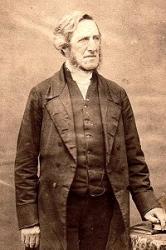
1769 - 1855 Person Name: T. Kelly Author of "Through the day Thy love hath spared us" in The Lutheran Hymnary Kelly, Thomas, B.A., son of Thomas Kelly, a Judge of the Irish Court of Common Pleas, was born in Dublin, July 13, 1769, and educated at Trinity College, Dublin. He was designed for the Bar, and entered the Temple, London, with that intention; but having undergone a very marked spiritual change he took Holy Orders in 1792. His earnest evangelical preaching in Dublin led Archbishop Fowler to inhibit him and his companion preacher, Rowland Hill, from preaching in the city. For some time he preached in two unconsecrated buildings in Dublin, Plunket Street, and the Bethesda, and then, having seceded from the Established Church, he erected places of worship at Athy, Portarlington, Wexford, &c, in which he conducted divine worship and preached. He died May 14, 1854. Miller, in his Singers & Songs of the Church, 1869, p. 338 (from which some of the foregoing details are taken), says:—
"Mr. Kelly was a man of great and varied learning, skilled in the Oriental tongues, and an excellent Bible critic. He was possessed also of musical talent, and composed and published a work that was received witli favour, consisting of music adapted to every form of metre in his hymn-book. Naturally of an amiable disposition and thorough in his Christian piety, Mr. Kelly became the friend of good men, and the advocate of every worthy, benevolent, and religious cause. He was admired alike for his zeal and his humility; and his liberality found ample scope in Ireland, especially during the year of famine."
Kelly's hymns, 765 in all, were composed and published over a period of 51 years, as follows:—
(1) A Collection of Psalms and Hymns extracted from Various Authors, by Thomas Kelly, A.B., Dublin, 1802. This work contains 247 hymns by various authors, and an Appendix of 33 original hymns by Kelly.
(2) Hymns on Various Passages of Scripture, Dublin, 1804. Of this work several editions were published: 1st, 1804; 2nd, 1806; 3rd, 1809; 4th, 1812. This last edition was published in two divisions, one as Hymns on Various Passages of Scripture, and the second as Hymns adapted for Social Worship. In 1815 Kelly issued Hymns by Thomas Kelly, not before Published. The 5th edition, 1820, included the two divisions of 1812, and the new hymns of 1815, as one work. To the later editions of 1820, 1826, 1836, 1840, 1846, and 1853, new hymns were added, until the last published by M. Moses, of Dublin, 1853, contained the total of 765.
As a hymn-writer Kelly was most successful. As a rule his strength appears in hymns of Praise and in metres not generally adopted by the older hymn writers. His "Come, see the place where Jesus lay" (from "He's gone, see where His body lay"),"From Egypt lately come"; “Look, ye saints, the sight is glorious"; "On the mountain's top appearing"; "The Head that once was crowned with thorns"; "Through the day Thy love has spared us"; and “We sing the praise of Him Who died," rank with the first hymns in the English language. Several of his hymns of great merit still remain unknown through so many modern editors being apparently adverse to original investigation. In addition to the hymns named and others, which are annotated under their respective first lines, the following are also in common use:—
i. From the Psalms and Hymns, 1802:—
1. Grant us, Lord, Thy gracious presence. Commencement of Divine Worship.
2. Jesus, Immortal King, go on [display]. Missions.
3. Saviour, through the desert lead us. Divine Guidance Desired.
4. The day of rest once more [again] comes round. Sunday.
5. We've no abiding city here. Seeking Heaven.
ii. From the Hymns on Varous Passages of Scripture, first edition, 1804 :—
6. Boundless glory, Lord, be thine. Praise for the Gospel.
7. By whom shall Jacob now arise? Epiphany.
8. Glory, glory to our King. Praise to Christ as King.
9. How pleasant is the sound of praise. Praise for Redemption.
10. How sweet to leave the world awhile. In Retirement, or For a Retreat.
11. Inform I long had bowed the knee. Jesus, the Saviour, or Praise for Salvation.
12. It is finished! sinners, hear it. Good Friday.
13. Jesus, the Shepherd of the sheep. The Good Shepherd.
14. Let reason vainly boast her power. Death.
15. Poor and afflicted, Lord, are Thine. Affliction.
16. Praise we Him to Whose kind favour. Close of Service.
11. Spared a little longer. Safety in God.
18. Stricken, smitten, and afflicted. Passiontide.
ii. From the Hymns, &c, second edition, 1806:—
19. Far from us be grief and sadness. Joy of Believers.
20. Give us room that we may dwell. Missions.
21. Glory, glory everlasting. Praise of Jesus.
22. God has.turned my grief to gladness. Joy after Sorrow.
23. Happy they who trust in Jesus. Peace in Jesus.
24. Hark, the notes of angels singing. Angels praising Jesus.
25. Hark! 'tis a martial sound. Christian Life a Warfare.
26. I hear a sound [voice] that comes from far. The Gospel Message.
27. Jesus is gone up on high. Divine Worship.
28. Now [O] may the Gospel's conquering power. Home Missions. In the 1853 edition of the Hymns it begins “O may the Gospel's conqu'ring force."
29. O Zion, when I think on thee. Desiring Heaven.
30. Praise the Saviour, ye who know Him. Praise of Jesus.
31. See from Zion's sacred mountain. The Fountain of Life.
32. The atoning work is done. Jesus the High Priest.
33. Zion is Jehovah's dwelling. The Church of God.
34. Zion stands by hills surrounded. The Safety of the Church.
35. Zion's King shall reign victorious. Missions.
iv. From the Hymns, &c, 3rd edition, 1809:—
36. Behold the Temple of the Lord. The Church a Spiritual Temple.
37. Blessed Fountain, full of grace. Fountain for Sin.
38. Brethren, come, our Saviour bids us. Holy Communion.
39. Fly, ye seasons, fly still faster. Second Advent Desired.
40. God of Israel, we adore Thee. Evening.
41. Gracious Lord, my heart is fixed. Trust and Peace.
42. Hark, a voice! it comes from heaven. Death.
43. Hark, that shout of rapt'rous joy. Second Advent.
44. If our warfare be laborious. Labour and Rest .
45. Lo, He comes, let all adore Him. Missions.
46. Nothing know we of the season. Time of Second Advent uncertain.
47. O had I the wings of a dove. Holiness and Heaven desired.
48. O where is now that glowing love. Despondency.
49. Our Father sits on yonder throne. God the Father.
50. Ours is a rich and royal Feast. Holy Communion.
51. Shepherd of the chosen number. Safety in the
Good Shepherd.
52. We're bound for yonder land. Life, a Voyage.
53. Welcome sight! the Lord descending. The Advent.
54. What is life? 'tis but a vapour. Death anticipated.
55. Who is this that comes from Edom? Ascension.
56. Why those fears ? Behold 'tis Jesus. Stilling the Sea.
57. Without blood is no remission. Passiontide.
58. Yes, we trust the day is breaking. Missions.
v. FromHymns: Not before Published, 1815:—
59. Behold the Lamb with glory crowned. Exaltation of Christ.
60. God is love, His word has said it. God is Love.
61. God of our salvation, hear us. Opening or Close of Divine Worship.
62. In Thy Name, O Lord, assembling. Commencement of Divine Worship.
63. Keep us, Lord, O [and] keep us ever. Divine Worship.
64. Let sinners saved give thanks, and sing. Praise for Salvation.
65. Praise the Lord Who died to save us. Passiontide.
66. Salvation is of God alone. God the Author of Salvation.
67. Saviour, come, Thy [saints] friends await Thee [are waiting] . Second Advent desired.
68. Sweet were the sounds that reached our ears. Divine Mercy.
69. We'll sing of the Shepherd that died. The Lost Sheep.
70. When we cannot see our way. Trust and Peace.
71. Who is this that calms the ocean? Stilling the Sea.
vi. From the Hymns on F. Passages of Scripture, &c, eds. 1820 and 1826 :-—
72. Grace is the sweetest sound. Divine Grace.
73. Now let a great effectual door. Missions.
74. Now may the mighty arm awake. Missions.
75. Now may the Spirit from above. Home Missions.
76. Sing, sing His lofty praise. Praise of Jesus.
77. Sound, 6ound the truth abroad. Missions.
78. Speed Thy servants, Saviour, speed them. Departure of Missionaries.
vii. From the Hymns on Various Passages, &c, 1836:—
79. Come, O Lord, the heavens rending. Prayer for Blessings.
80. The night is far spent, the day is at hand. The Second Advent.
viii. From the Hymns on Various Passages, &c, circa 1845:—
81. Joyful be the hours today. Sunday.
82. Lord, behold us few and weak. Opening of Divine Service.
83. Meet Thy people, Saviour, meet us. Meetings for Prayer.
84. Saviour, send a blessing to us. Prayer for Blessings.
85. Sing of Jesus, sing for ever. Praise of Jesus.
ix. From the Hymns on Various Passages, &c, 1853:—
86. Precious volume, what thou doest. Holy Scripture.
87. Unfold to us, O Lord, unfold. Divine aid to reading Holy Scripture.
All these hymns, together with those annotated under their respective first lines are in the 1853 edition of Kelly's Hymns published in Dublin by M. Moses, and in London by Simpkin, Marshall & Co. Kelly's musical editions are issued by the same publishers.
-- John Julian, Dictionary of Hymnology (1907)
==================
Kelly, Thomas, p. 615, i. Other hymns in common use are:
1. Behold the Man! How glorious He. (1809.) Good Friday.
2. Jesus the [Thou] Shepherd of the Sheep. (1804.) Good Shepherd.
3. Saved ourselves by Jesu's blood. (1802.) For a Revival.
4. Saviour, 'tis to [unto] Thee. (1853*.) Lent.
5. See the vineyard lately planted. (1806.) Missions. Sometimes given as "See, O Lord, the vineyard planted."
6. Sing aloud to God our strength. (1809.) Praise to the Father.
7. Sing, sing His lofty praise. (1820.) Praise to Jesus. Sometimes as "Hail our eternal King" (p. 615, No. 76).
8. Sing of Him Who bore our guilt. (1853*.) Praise to Jesus.
9. Sing we praise to God above, God our Saviour, &c. (1815.) Praise for Divine Mercy.
10. Sing we praise to God above, Sing we praise, &c. (1853*.) Praise.
11. Sons of Zion, raise your songs. (1820-26) The Exalted Saviour.
12. The Lord Himself will keep. (1809.) From “We're bound for yonder land" (sec p. 615, No. 52.)
13. The God [Lord] of glory dwells on high. (1809.) Humility and Love of Christ.
14. The people of the Lord Are on their way, &c. (1820.) Life a Pilgrimage.
15. Thus saith God of His Anointed. (1809.) Missions.
16. 'Tis to us no cause of sorrow. (1815.) Resignation.
17. To the Ark away, or perish. (1815.) Safety in Jesus only.
18. To our Lord a throne is given. (1838.) Christ the King.
19. Trust ye in the Lord for ever. (1853*.) Trust in God.
20. We'll sing in spite of scorn. (1806.) Christmas. From this "The long-expected morn" is taken.
21. What tongue can tell, what fancy paint. (1806.) Saints in Glory
22. What were Sinai's awful wonders. (1809.) Advent.
23. Whence those sounds symphonious? (1815.) Christmas.
24. While in the [this] world we still [yet] remain. (1806.) Communion of Saints.
25. Yes, 'tis a rough and thorny road. (1809.) Resignation. Sometimes given as "Though rough and thorny be the way."
The dates given above are those of the various editions of Kelly's Hymns. The date 1853* indicates that the hymn is in the 1853 ed. of the Hymns, but had also appeared in a previous edition which we have not seen.
--John Julian, Dictionary of Hymnology, Appendix, Part II (1907)
Thomas Kelly
Benjamin Schmolck
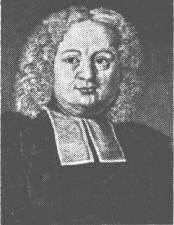
1672 - 1737 Person Name: B. Schmolck, 1672-1737 Author of "Open Now Thy Gates of Beauty" in Evangelical Lutheran Hymnary Schmolck, Benjamin, son of Martin Schmolck, or Schmolcke, Lutheran pastor at Brauchitschdorf (now Chrόstnik) near Liegnitz in Silesia (now Poland) was born at Brauchitschdorf, Dec. 21, 1672. He entered the Gymnasium at Lauban in 1688, and spent five years there. After his return home he preached for his father a sermon which so struck the patron of the living that he made Benjamin an allowance for three years to enable him to study theology. He matriculated, at Michaelmas, 1693, at the University of Leipzig, where he came under the influence of J. Olearius, J. B. Carpzov, and others, and throughout his life retained the character of their teaching, viz. a warm and living practical Christianity, but Churchly in tone and not Pietistic. In the autumn of 1697, after completing his studies at Leipzig (during his last year there he supported himself mainly by the proceeds of occasional poems written for wealthy citizens, for which he was also, crowned as a poet), he returned to Brauchitzchdorf to help his father, and, in 1701, was ordained as his assistant.
On Feb. 12, 1702, he married Anna Rosina, daughter of Christoph Rehwald, merchant in Lauban and in the end of the same year was appointed diaconus of the Friedenskirche at Schweidnitz in Silesia. As the result of the Counter-Reformation in Silesia, the churches in the principality of Schweidnitz had been taken from the Lutherans, and for the whole district the Peace of Westphalia (1648) allowed only one church (and that only of timber and clay, without tower or bells), which the Lutherans had to build at Schweidnitz, outside the walls of the town; and the three clergy attached to this church had to minister to a population scattered over some thirty-six villages, and were moreover hampered by many restrictions, e.g. being unable to communicate a sick person without a permit from the local Roman Catholic priest. Here Schmolck remained till the close of his life, becoming in 1708 archidiaconus, in 1712 senior, and in 1714 pastor primarius and inspector. Probably as the result of his exhausting labours he had a stroke of paralysis on Laetare (Mid-Lent) Sunday, 1730, which for a time laid him aside altogether, and after which he never recovered the use of his right hand. For five years more he was still able to officiate, preaching for the last time on a Fastday in 1735. But two more strokes of paralysis followed, and then cataract came on, relieved for a time by a successful operation, but returning again incurably. For the last months of his life he was confined to bed, till the message of release came to him, on the anniversary of his wedding, Feb. 12, 1737. (Koch, v. 463; Bode, p. 144; Goedeke's Grundriss, vol. iii., 1887, p. 306; sketch prefixed to Ledderhose's edition of Schmolck's Geistliche Lieder, Halle, 1857, &c.)
Schmolck was well known in his own district as a popular and useful preacher, a diligent pastor, and a man of wonderful tact and discretion. It was however his devotional books, and the original hymns therein contained, that brought him into wider popularity, and carried his name and fame all over Germany. Long lists of his works and of the various editions through which many of them passed are given by Koch, Bode and Goedehe. It is rather difficult to trace the hymns, as they are copied from one book of his into another, &c. Schmolck was the most popular hymnwriter of his time, and was hailed as the "Silesian Rist," as the "second Gerhardt," &c. Nor was he altogether unworthy of such praise. It is true that he did not possess the soaring genius of Gerhardt. Nor had he even Gerhardt's concise, simple style, but instead was too fond of high-sounding expressions, of plays upon words, of far-fetched but often recurring contrasts, and in general of straining after effect, especially in the pieces written in his later years. In fact he wrote a great deal too much, and latterly without proper attention to concentration or to proportion. Besides Cantatas, occasional pieces for weddings, funerals, &c, he is the author of some 900 hymns, properly so called. These were written for all sorts of occasions, and range over the whole field of churchly, family, and individual life. Naturally they are not all alike good; and those in his first three collections are decidedly the best. A deep and genuine personal religion, and a fervent love to the Saviour, inspire his best hymns; and as they are not simply thought out but felt, they come from the heart to the heart. The best of them are also written in a clear, flowing, forcible, natural, popular style, and abound in sententious sayings, easily to be remembered. Even of these many are, however, more suited for family use than for public worship. Nevertheless they very soon came into extensive use, not only in Silesia, but all over Germany.
A number of Schmolck's hymns [that] have passed into English are:—
i. Der beste Freund ist in dem Himmel. Love of Jesus. First published in his Heilige Flammen (ed. 1709, p. 100), in 6 stanzas of 6 lines, entitled "The best Friend." The translation in common use is:—
A faithful friend is waiting yonder. This is a good translation, omitting stanza v., as No. 293, in Kennedy, 1863.
ii. Die Woche geht zum Ende. Saturday Evening. In his Andächtige Hertze, 1714, p. 116, in 10 stanzas of 8 lines, entitled "Evening Hymn," and appointed for Evening Prayer on Saturday. In the Berlin Geistliche Lieder, ed. 1863, No. 1158. Translated as:—
The week draws near its ending. This is a good translation of stanzas i., vi., vii., x., marked as by "A. G.," as No. 81 in the Dalston Hospital Hymn Book 1848.
Other trs. are: (1) “Though now the week is ending," by H. J. Buckoll, 1842, p. 107. (2) “The week at length is over," by Miss Manington, 1863, p. 137.
iii. Gott du hist selbst die Liehe. Holy Matrimony. Translated as:—
O God, "Who all providest. This is a good translation, omitting stanza iii., by J. M. Sloan, as No. 312 in J. H. Wilson's Service of Praise, 1865.
iv. Halleluja! Jesus lebt. Easter. In his Bochim und Elim, 1731, p. 67, in 5 stanzas of 6 lines, entitled "Hallelujah! at the grave of Jesus." In the Berlin Geistliche Lieder, ed. 1863, No. 296. Tr. as:—
Hallelujah! Lo, He wakes. By E. Cronenwett, omitting st. iv., as No. 79 in the Ohio Lutheran Hymnal 1880.
Another translation is: "Hallelujah! Jesus lives! Life, immortal life, He gives." This is a full and good translation, by Miss Warner, 1858, p. 486, repeated in the Treasury of Sacred Song, Kirkwall, n.d.
v. Heute mir und Morgen dir. Funeral Hymn. In his Schmuck und Asche, 1717, p. 252, in 6 stanzas of 6 lines, entitled "Daily Dying". The tr. in common use is:—
Today mine, tomorrow thine. This is a good and full translation, by Miss Warner, in her Hymns of the Church Militant, 1858, p. 260.
vi. Je grösser Kreuz, je näher Himmel. Cross and Consolation. In his Andächtige Hertz, 1714, p. 273, in 9 stanzas of 6 lines, entitled "Hymn of Cross and Consolation." By its sententiousness and its manifold illustrations of the power of the Cross it has been a favourite with many. Translated as:—
1. Greater the Cross, the nearer heaven.
2. The more the cross, the nearer heaven. Another translation is: "The heavier the cross, the nearer heaven," by J. D. Burns, in the Family Treasury, 1859, p. 160.
vii. Jesus soil die Losung sein. New Year. The translation in common use is:—
Jesus shall the watchword he. Another translation is: "Jesu's name shall be our watchword," by J. Kelly, in the Family Treasury, 1868, p. 689.
viii. Licht vom Licht, erleuchte mich. Sunday Morning. Translated as:—
Light of Light, enlighten me. This is a very good tr. omitting stanza vii., by Miss Winkworth, in her Lyra Germanica, 2nd Ser., 1858, p. 66, and thence in her Chorale Book for England, 1863, No. 17. Other translations are: (1) "Light of Light! illumine me," by H. J. Buckoll, 1842, p. 6. (2) "O thou blessed Light of Light," by Miss Dunn, 1857, p. 74.
ix. Meinen Jesum lass ich nicht, Ach was wollt ich hessres haben. Love to Christ. Translated as:—
I'll with Jesus never part. This is a translation of st. i., ii., iv., as stanzas iii.-v. of No. 378 in the Moravian Hymn Book, 1789. In the ed. of 1886, No. 452 (see p. 614, i.), the part from Schmolck begins, "He is mine and I am His" (the translation of stanza ii.).
Another tr. is: "I'll not leave Jesus—-never, never," by Miss Warner, 1858, p. 509.
x. Mein Gott, ich weiss wohl dass ich sterbe. For the Dying. Translated as:—
My God! I know that I must die, My mortal. Other trs. are: (1) "That I shall die full well 1 know," by Dr. H. Mills, 1845 (1856, p. 232). (2) "My God! I know full well that I must die," by Miss Warner, 1858, p. 344. (3) "My God, I know that I must die; I know," by G. Moultrie, in his Espousals of S. Dorothea, 1870.
xi. Mein Jesus lebt! was soil ich sterben. Easter. Translated as:—
My Saviour lives; I shall not perish.
xii. 0 wie fröhlich, o wie selig. Eternal Life. Translated as:—
Oh how joyous, oh how blessed. Another tr. is: "Oh, how blest beyond our telling."
xiii. Schmückt das Fest mit Maien. Whitsuntide. Translated as:—
Come, deck our feast today.
xiv. Thut mir auf die schöne Pforte. Sunday. Translated as:—
1. Open now thy gates of beauty. This is a good tr., omitting stanza iii., vii., by Miss Winkworth, in her Chorale Book for England, 1863, No. 15.
2. Open wide the gates of beauty. This is a translation of stanzas i., ii., iv., vi.-vii., by H. L. Hastings, dated 1885, as No. 1076, in his Songs of Pilgrimage, 1886.
Another tr. is: "Throw the glorious gates wide open," by Miss Manington, 1863, p. 146.
xv. Weine nicht, Gott lebet noch. Cross and Consolation. Tr. as:— "Weep not,-—Jesus lives on high. Another tr. is: "Weep not, for God, our God, doth live," by Dr. R. Maguire, 1883, p. 59.
xvi. Willkommen, Held im Streite. Easter. The translation in common use is:—
Welcome Thou victor in the strife. This is a good translation omitting st. ii.—iv., by Miss Winkworth, in her Lyra Germanica, 1st Ser., 1855, p. 91.
Hymns not in English common use:--
xvii. Ach wenn ich dich, mein Gott, nur habe. Love to God. Founded on Ps. lxxiii. 25, 26. Translated as "My God, if I possess but Thee," by G. Moultrie, in his Espousals of S. Dorothea, 1870.
xviii. An Gott will ich gedenken. Remembering God's Love and Care. In his Heilige Flammen (ed. 1707, p. 59; ed. 1709, p. 131), in 6 stanzas of 8 lines, and Burg's Gesang-Buch, Breslau, 1746, No. 112. Translated as "My God will I remember," by J. Kelly, in the Family Treasury, 1868.
xix. Der Sabbath ist vergangen. Sunday Evening. Tr. as "The Sabbath now is over," by Dr. H. Mills, 1856, p. 226.
xx. Du angenehmer Tag. Sunday. In his Lustige Sabbath, 1712, p. 1, in 8 stanzas of 6 lines. Tr. as “Thou ever welcome day," by J. Kelly, in the Family Treasury, 1868, p. 688.
xxi. Endlich, endlich, muss es doch. Cross and Consolation. Translated as "Yes, at last, our God shall make," in the Christian Examiner, Boston, U.S., Sept., 1860, p. 251.
xxii. Gedenke mein, mein Gott, gedenke mein. For the Dying. Translated as "Remember me, my God! remember me," by Miss Borthwick, in Hymns from the Land of Luther 1854, p. 9.
xxiii. Geh, müder Leib, zu deiner Euh. Evening. Translated as "Go, wearied body, to thy rest," by J. Kelly, in the Family Treasury, 1868. In his Lustige Sabbath, 1712, p. 35, in 10 stanzas of 6 lines, and Burg’s Gesang-Buch, Breslau, 1746, No. 403. Translated as "King, to Jews and Gentiles given," by Dr. H. Mills, 1845.
xxiv. Gott der Juden,Gott der Heiden. Epiphany. Translated as “King, to Jews and Gentiles given,” by Dr. H. Mills, 1845.
xxv. Gott lebt, wie kann ich traurig sein. Trust in God. Translated as "God lives! Can I despair," by Miss Warner, 1869, p. 44.
xxvi. Gott mit uns, Immanuel. New Year. Translated as "God with us! Immanuel, Open with the year before us," by Dr. R. P. Dunn, in Sacred Lyrics from the German, Philadelphia, U.S., 1859, p. 166.
xxvii. Hier ist Immanuel! New Year. Translated as "Here is Immanuel!" by Miss Manington, 1864, p. 24.
xxviii. Hilf, Heifer, hilf! ich muss verzagen. Cross and Consolation. Translated as "Help, Saviour, help, I sink, I die,” in the Monthly Packet, vol. xviii., 1859, p. 664.
xix. Ich habe Lust zu scheiden. For the Dying. Tr. as "Weary, waiting to depart," by Mrs. Findlater, in Hymns from the Land of Luther, 1855, p 130.
xxx. Ich sterbe täglich, und mein Leben. For the Dying. Translated as "Both life and death are kept by Thee" (st. iv.), by J. Kelly, in the Family Treasury, 1868, p. 689.
xxxi. Mein Gott, du hast mich eingeladen. Sunday. Translated as "My God, Thou hast the invite given," by Miss Manington, 1863, p. 150.
xxxii. Mein Gott! du wohnst in einem Lichte. Holy Scripture. Translated as "In glory bright, O God, Thou dwellest," by Dr. H. Mills, 1845.
xxxiii. Mein Gott, ich klopf an deine Pforte. Supplication. Tr.Translated as "given as "Mein Gott, mein Erstes und mein Alles." Translated as "My God! the Source of all my blessing," in the British Herald, August, 1866, p. 312; repeated in Reid's Praise Book, 1872.
xxxv. Mein Gott, weil ich in meinem Leben. The ChristiaWho, Lord, has any good whatever," by Dr. H. Mills, 1845, p. 91.
xxxiv. Mein Gott, mein Alles Uber Alles. Trust in God. Sometimes n Life. Translated as "Most High! with reverence to fear Thee," by Dr. H. Mills, 1845, p. 114.).
xxxvi. Nun hab ich überwunden; Zu guter Nacht, o Welt. For the Dying. Translated as "Now soon I shall have conquer'd," by Miss Manington, 1863, p. 87.
xxxvii. Seht welch ein Mensch ist das. Passiontide. The translations are (1) "See, what a man is this! How tearful is His glance," by J. Kelly, in the British Messenger, Feb., 1S68; repeated in the Family Treasury, 1868, p. 691. (2) "See what a man is this, O glances," by Miss Warner, 1869, p. 32.
xxxviii. Sei getreu bis in den Tod. Christian Faithfulness. Translated as "Be thou faithful unto death! Let not troubles nor distresses," by R. Massie, in the Day of Rest, 1878, vol. ix. p. 219.
xxxix. Theures Wort aus Gottes Munde. Holy Scripture. Translated as "Word by God the Father spoken," by Miss Manington, 1863.
xl. Was Gott thut das ist wohlgethan! Er giebt und nimmt auch wieder. On the Death of a Child. The trs. are (1) "What God does is well done, "Who takes what He gave," by W. Graham, in his The Jordan and the Rhine, London, 1854, p. 251. (2) "Whatever God doth is well done, He gives, &c," by J. Kelly, in the Family Treasury, 1868, p. 688.
xli. Wer will mich von der Liebe scheiden. Faith. Translated as "Who can my soul from Jesus sever," by Miss Manington, 1863, p. 39. [Rev. James Mearns, M.A.]
--Excerpts from John Julian, Dictionary of Hymnology (1907)
Benjamin Schmolck


Christian Classics Ethereal Hymnary
Publication Date: 2007 Publisher: Grand Rapids, MI: Christian Classics Ethereal Library
Christian Classics Ethereal Hymnary
Small Church Music
Editors: John Newton Description:
History
The SmallChurchMusic site was launched in 2006, growing out of the requests from those struggling
to provide suitable music for their services and meetings. Rev. Clyde McLennan was ordained in mid
1960’s and was a pastor in many small Australian country areas, and therefore was acutely aware of
this music problem. Having also been trained as a Pipe Organist, recordings on site (which are a subset
of the smallchurchmusic.com site) are all actually played by Clyde, and also include piano and piano
with organ versions.
About the Recordings All recordings are in MP3 format.
Churches all around the world use the recordings, with downloads averaging over 60,000 per
month.
The recordings normally have an introduction, several verses and a slowdown on the last verse.
Users are encouraged to use software: Audacity (http://www.audacityteam.org) or Song Surgeon (http://songsurgeon.com) to adjust the MP3 number of verses, tempo and pitch to suit their local needs.
Mobile App
We have partnered with the developer of the popular NetTracks mobile app to offer the Small Church Music collection as a convenient mobile app. Experience the beloved Small Church Music collection through this iOS app featuring nearly 10,000 high-quality hymn recordings that can be organized into custom setlists and downloaded for offline use—ideal for worship services without musicians, congregational practice, and personal devotion. The app requires a small fee to cover maintenance costs. Please note: While Hymnary.org hosts this music collection, technical support for the app is provided exclusively by the app developer, not by Hymnary.org staff.
LicensingCopyright notice: Rev. Clyde McLennan, performer in this collection, has assigned his performer rights in this collection to Hymnary.org. Non-commercial use of these recordings is permitted. For permission to use them for any other purposes, please contact manager@hymnary.org.
Home/Music(smallchurchmusic.com)
List SongsAlphabetically
List Songsby Meter
List Songs byTune Name
About
Small Church Music




