You help make Hymnary.org possible. More than 10 million people from 200+ countries found hymns, liturgical resources and encouragement on Hymnary.org in 2025, including you. Every visit affirms the global impact of this ministry.

If Hymnary has been meaningful to you this year, would you take a moment today to help sustain it? A gift of any size—paired with a note of encouragement if you wish—directly supports the server costs, research work and curation that keep this resource freely available to the world.

Give securely online today, or mail a check to:
Hymnary.org
Calvin University
3201 Burton Street SE
Grand Rapids, MI 49546

Thank you for your partnership, and may the hope of Advent fill your heart.

Search Results

Tune Identifier:"^armenia_pond$"

Planning worship? Check out our sister site, ZeteoSearch.org, for 20+ additional resources related to your search.

Tunes

tune icon
Tune authorities
Audio

ARMENIA

Meter: 8.6.8.6 Appears in 58 hymnals Composer and/or Arranger: Sylvanus B. Pond; Austin C. Lovelace Tune Key: A Flat Major Incipit: 11712 22123 2321 Used With Text: All Praise to Our Redeeming Lord

Texts

text icon
Text authorities
Page scans

Let Zion's watchman all awake

Author: Philip Doddridge Appears in 274 hymnals Topics: Church The Ministry Used With Tune: ARMENIA
FlexScoreFlexPresent

O for a Heart to Praise My God

Author: Charles Wesley Appears in 1,194 hymnals Topics: Christian Life; Devotion Scripture: Psalm 9:1 Used With Tune: ARMENIA
Page scans

Lord, when we bend before Thy throne

Author: Joseph D. Carlyle Appears in 331 hymnals Used With Tune: ARMENIA

Instances

instance icon
Published text-tune combinations (hymns) from specific hymnals
TextPage scan

All Praise to Our Redeeming Lord

Author: Charles Wesley Hymnal: Praise for the Lord (Expanded Edition) #18 (1997) Meter: 8.6.8.6 Lyrics: 1 All praise to our redeeming Lord, Who joins us by His grace, And bids us, each to each restored, Together seek His face. 2 The gift which He on one bestows, We all delight to prove, The grace through every vessel flows In purest streams of love. 3 He bids us build each other up; And, gathered into one, To our high calling's glorious hope, We hand in hand go on. 4 We all partake the joy of one; The common peace we feel: A peace to worldly minds unknown, A joy unspeakable. 5 And if our fellowship below In Jesus be so sweet, What height of rapture shall we know When round His throne we meet! Topics: Love brotherly; Unity & Peace Scripture: Ephesians 4:15-16 Languages: English Tune Title: ARMENIA
Page scan

How precious is the book divine

Author: John Fawcett Hymnal: The Epworth Hymnal #89 (1885) Languages: English Tune Title: ARMENIA
Page scan

How precious is the book divine

Author: John Fawcett Hymnal: The Chapel Hymnal #106 (1899) Languages: English Tune Title: ARMENIA

People

person icon
Authors, composers, editors, etc.

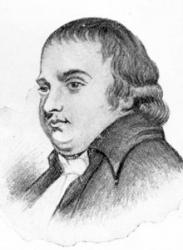
Joseph Swain

1761 - 1796 Person Name: Rev. Joseph Swain (1761-1796) Author of "How sweet, how heavenly is the sight" in Carmina Sanctorum, a selection of hymns and songs of praise with tunes Swain, Joseph, was born at Birmingham in 1761, and after being apprenticed to an engraver, removed to London. After a time he became a decided Christian, and being of an emotional poetic temperament, began to give expression to his new thoughts and feelings in hymns. In 1783 he was baptized by the Rev. Dr. Rippon, and in 1791 became minister of a Baptist congregation in East Street, Walworth. After a short but popular and very useful ministry, he died April 16, 1796 Swain published the following:— (1) A Collection of Poems on Several Occasions, London, 1781; (2) Redemption, a Poem in five Books, London, 1789; (3) Experimental Essays on Divine Subjects, London, 1791; (4) Walworth Hymns, by J. Swain, Pastor of the Baptist Church Meeting there, London, 1792, 129 hymns; with a Supplement, 1794, 192 hymns; (5) A Pocket Companion and Directory, London, 1794. In addition to a limited number of Swain's hymns, annotated under their respective first lines, the following, from his Walworth Hymns1792, and the 2nd ed., 1796, are also in common use:— 1. Brethren, while we sojourn here. Mutual Encouragement. 2. Children of the King of grace. Holy Baptism. 3. Christ the Lord will come again. Second Advent. 4. Come, ye souls, by sin afflicted. The Yoke of Christ. 5. How sweet, how heavenly is the sight. Communion of Saints. 6. In expectation sweet. Second Advent. 7. Lift up your heads, ye gates. Ascension. 8. Love is the sweetest bud that blows. A Flower an Emblem of Christ. 9. 0 how the thought that I shall know. Heaven Anticipated. Sometimes it begins with st. ii., "For ever to behold Him shine". 10. On earth the song begins. Heaven Anticipated. 11. On the wings of faith upspringing. Passiontide. 12. Pilgrims we are to Canaan bound. Pilgrimage of Life. 13. Praise ye the Lord, the eternal King. Divinity of Christ. 14. Praise your Redeemer, praise His Name. Praise for Redemption. 15. 'Tis heaven begun below. Heaven Anticipated. 16. What is it for a saint to die? Death and Burial. 17. What must [will] it be to dwell above? Heaven Anticipated. 18. When firm I [we] stand on Zion's hill. Confidence. Sometimes as "I stand on Zion's mount," in American collections. 19. Who can forbear to sing? Praise of Jesus. From his Redemption, a Poem in Five Books, 1791, the following hymns are also in common use:-- 20. 0 Thou in whose presence my soul takes delight. In Affliction. 21. Ye daughters of Zion, declare, have you see? Comfort in Affliction. Of these hymns the most widely known are Nos. 1, 5, 6, and 20. We may add that several of Swain's hymns appeared in The Theological Miscellany, 1784-1789. [Rev. W. R. Stevenson, M.A.] -- John Julian, Dictionary of Hymnology (1907)

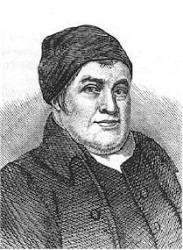
John Fawcett

1740 - 1817 Author of "How precious is the book divine" in The Chapel Hymnal An orphan at the age of twelve, John Fawcett (b. Lidget Green, Yorkshire, England, 1740; d. Hebden Bridge, Yorkshire, 1817) became apprenticed to a tailor and was largely self-educated. He was converted by the preaching of George Whitefield at the age of sixteen and began preaching soon thereafter. In 1765 Fawcett was called to a small, poor, Baptist country church in Wainsgate, Yorkshire. Seven years later he received a call from the large and influential Carter's Lane Church in London, England. Fawcett accepted the call and preached his farewell sermon. The day of departure came, and his family's belongings were loaded on carts, but the distraught congregation begged him to stay. In Singers and Songs of the Church (1869), Josiah Miller tells the story associated with this text: This favorite hymn is said to have been written in 1772, to commemorate the determination of its author to remain with his attached people at Wainsgate. The farewell sermon was preached, the wagons were loaded, when love and tears prevailed, and Dr. Fawcett sacrificed the attraction of a London pulpit to the affection of his poor but devoted flock. Fawcett continued to serve in Wainsgate and in the nearby village of Hebden Bridge for the remainder of his active ministry. Bert Polman =============== Fawcett, John, D.D., was born Jan. 6, 1739 or 1740, at Lidget Green, near Bradford, Yorks. Converted at the age of sixteen under the ministry of G. Whitefield, he at first joined the Methodists, but three years later united with the Baptist Church at Bradford. Having begun to preach he was, in 1765, ordained Baptist minister at Wainsgate, near Hebden Bridge, Yorks. In 1772 he was invited to London, to succeed the celebrated Dr. J. Gill, as pastor of Carter's Lane; the invitation had been formally accepted, the farewell sermon at Wainsgate had been preached and the wagons loaded with his goods for removal, when the love and tears of his attached people prevailed and he decided to remain. In 1777 a new chapel was built for him at Hebden Bridge, and about the same time he opened a school at Brearley Hall, his place of residence. In 1793 he was invited to become President of the Baptist Academy at Bristol, but declined. In 1811 he received from America the degree of D.D., and died in 1817, at the age of 78. Dr. Fawcett was the author of a number of prose works on Practical Religion, several of which attained a large circulation. His poetical publications are:— (1) Poetic Essays, 1767; (2) The Christian's Humble Plea, a Poem, in answer to Dr. Priestley against the Divinity of our Lord Jesus Christ, 1772; (3) Three hymns, in the Gospel Magazine, 1777; (4) The Death of Eumenio, a Divine Poem, 1779; (5) Another poem, suggested by the decease of a friend, The Reign of Death, 1780; and (6) Hymns adapted to the circumstances of Public Worship and Private Devotion, Leeds, G. Wright & Son. 1782. They are 166 in number, and were mostly composed to be sung after sermons by the author. Whilst not attaining a high degree of excellence as poetry, they are "eminently spiritual and practical," and a number of them are found in all the Baptist and Congregational hymn-books that have appeared during the last 100 years. The best known of these are, “Infinite excellence is Thine;" "How precious is the Book divine;" "Thus far my God hath led me on;" "Religion is the chief concern;" "Blest be the tie that binds;" “I my Ebenezer raise;" and "Praise to Thee, Thou great Creator." These hymns, together with others by Fawcett, are annotated under their respective first lines. [Rev. W. R. Stevenson, M.A.] In addition the following hymns, also by Fawcett, but of less importance, are in common use: 1. Behold the sin-atoning Lamb. Passiontide. No. 60 of his Hymns, 1782, in 7 stanzas of 4 lines. In several hymnals in Great Britain and America. 2. I my Ebenezer raise. Birthday. No. 102 of his Hymns, in 10 stanzas of 4 lines. Usually given in an abbreviated form. 3. Infinite excellence is Thine. Jesus the Desire of Nations. No. 42 of his Hymns, in 12 stanzas of 4 lines. In several hymn-books in Great Britain and America in an abridged form. 4. Jesus, the heavenly Lover, gave. Redemption in Christ. No. 10 of his Hymns, &c., 1782, in 7 stanzas of 4 lines, and headed, "The marriage between Christ and the Soul." In Snepp's Songs of Grace & Glory, 1872, it reads, “Jesus, the heavenly Bridegroom, gave," and stanza v. is omitted. 5. Lord, hast Thou made me know Thy ways? Perseverance. No. 122 of his Hymns, &c., 1782, in 8 stanza of 4 lines. In the Baptist Hymnal, 1879, No. 451, stanzas iv.-vii. are omitted. 6. 0 God, my Helper, ever near. New Year. No. 108 of his Hymns, &c., 1782, in 6 stanzas of 4 lines. The New Congregational Hymn Book, 1859-69 omits st. vi. 7. 0, my soul, what means this sadness? Sorrow turned to Joy. No. 111 of his Hymns, &c., 1782, in 5 stanzas of 6 lines, and based upon the words, "Why art Thou cast down, O my soul?" &c. It is in common use in America, and usually with the omission of stanza ii. as in Dr. Hatfield's Church Hymn Book, 1872. 8. Sinners, the voice of God regard. Invitation to Repentance. No. 63 of his Hymns, &c., 1782, in 7 stanzas of 4 lines on Isaiah lv. 7, "Let the wicked forsake his way," &c. It is in common use in America, but usually in an abbreviated form. 9. Thy presence, gracious God, afford. Before Sermon. No 165 in his Hymns, &c., in 4 stanzas of 4 lines, and a chorus of two lines. In Dr. Hatfield's Church Hymnbook, 1872, No. 126, the chorus is omitted. Fawcett has another hymn on the same subject (No. 79) and beginning, "Thy blessing, gracious God, afford," but this is not in common use. 10. Thy way, 0 God, is in the sea. Imperfect Knowledge of God. No. 66 in his Hymns, &c., 1782, in 7 stanzas of 4 lines on 1 Corinthians xiii. 9, "We know in part," &c. It is in several American collections, usually abbreviated, and sometimes as, "Thy way, O Lord, is in the sea." In this form it is in The Sabbath Hymn Book, 1858, &c. 11. With humble heart and tongue. Prayer for Guidance in Youth. No. 86 in his Hymns, &c., 1782, in 7 stanzas of 4 lines on Psalms cxix. 9. "Wherewith shall a young man cleanse his way." It is No. 954 in the Baptist Psalms and Hymns, 1858-80. About 20 of Fawcett's hymns are thus still in common use. Two hymns which have been ascribed to him from time to time, but concerning which there are some doubts, are fully annotated under their respective first lines. These are," Humble souls that seek salvation," and "Lord, dismiss us with Thy blessing." -- John Julian, Dictionary of Hymnology (1907)

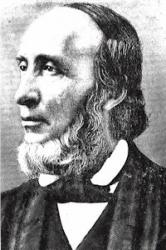
Edmund H. Sears

1810 - 1876 Person Name: Rev. E. H. Sears (1810-1876) Author of "Calm on the listening ear of night" in Hymns of the Ages Edmund Hamilton Sears was born in Berkshire [County], Massachusetts, in 1810; graduated at Union College, Schenectady, in 1834, and at the Theological School of Harvard University, in 1837. He became pastor of the Unitarian Society in Wayland, Mass., in 1838; removed to Lancaster in 1840; but on account of ill health was obliged to retire from the active duties of the ministry in 1847; since then, residing in Wayland, he devoted himself to literature. He has published several works. --Annotations of the Hymnal, Charles Hutchins, M.A., 1872 ======================= Sears, Edmund Hamilton, D.D., son of Joseph Sears, was born at Sandisfield, Berkshire County, Massachusetts, April 6, 1810, and educated at Union College, Schenectady, N.Y., where he graduated in 1834; and at the Theological School at Cambridge. In 1838 he became pastor of the First Church (Unitarian) at Wayland, Massachusetts; then at Lancaster in the same State, in 1840; again at Wayland, in 1847; and finally at Weston, Massachusetts, in 1865. He died at Weston, Jan. 14, 1876. He published:— (1) Regeneration, 1854; (2) Pictures of the Olden Time, 1857; (3) Athanasia, or Foregleams of Immortality, 1858, enlarged ed., 1872; (4) The Fourth Gospel the Heart of Christ; (5) Sermons and Songs of the Christian Life, 1875, in which his hymns are collected. Also co-editor of the Monthly Religious Magazine. Of his hymns the following are in common use:— 1. Calm on the listening ear of night. Christmas. This hymn was first published in its original form, in the Boston Observer, 1834; afterwards, in the Christian Register, in 1835; subsequently it was emended by the author, and, as thus emended, was reprinted entire in the Monthly Magazine, vol. xxxv. Its use is extensive. 2. It came upon the midnight clear. Christmas. "Rev. Dr. Morison writes to us, Sears's second Christmas hymn was sent to me as editor of the Christian Register, I think, in December, 1849. I was very much delighted with it, and before it came out in the Register, read it at a Christmas celebration of Dr. Lunt's Sunday School in Quincy. I always feel that, however poor my Christmas sermon may be, the reading and singing of this hymn are enough to make up for all deficiences.'" 3. Ho, ye that rest beneath the rock. Charitable Meetings on behalf of Children. Appeared in Longfellow and Johnson's Hymns of the Spirit, Boston, 1864, in 2 stanzas of 8 lines. Dr. Sears's two Christmas hymns rank with the best on that holy season in the English language. Although a member of the Unitarian body, his views were rather Swedenborgian than Unitarian. He held always to the absolute Divinity of Christ. [Rev. F. M. Bird, M.A.] --Excerpts from John Julian, Dictionary of Hymnology (1907)

Hymnals

hymnal icon
Published hymn books and other collections

Small Church Music

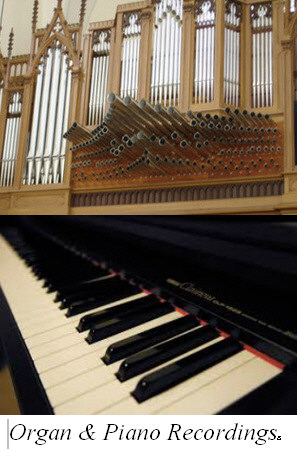
Editors: Charles Wesley Description: History The SmallChurchMusic site was launched in 2006, growing out of the requests from those struggling to provide suitable music for their services and meetings. Rev. Clyde McLennan was ordained in mid 1960’s and was a pastor in many small Australian country areas, and therefore was acutely aware of this music problem. Having also been trained as a Pipe Organist, recordings on site (which are a subset of the smallchurchmusic.com site) are all actually played by Clyde, and also include piano and piano with organ versions. About the Recordings All recordings are in MP3 format. Churches all around the world use the recordings, with downloads averaging over 60,000 per month. The recordings normally have an introduction, several verses and a slowdown on the last verse. Users are encouraged to use software: Audacity (http://www.audacityteam.org) or Song Surgeon (http://songsurgeon.com) to adjust the MP3 number of verses, tempo and pitch to suit their local needs. Mobile App We have partnered with the developer of the popular NetTracks mobile app to offer the Small Church Music collection as a convenient mobile app. Experience the beloved Small Church Music collection through this iOS app featuring nearly 10,000 high-quality hymn recordings that can be organized into custom setlists and downloaded for offline use—ideal for worship services without musicians, congregational practice, and personal devotion. The app requires a small fee to cover maintenance costs. Please note: While Hymnary.org hosts this music collection, technical support for the app is provided exclusively by the app developer, not by Hymnary.org staff. LicensingCopyright notice: Rev. Clyde McLennan, performer in this collection, has assigned his performer rights in this collection to Hymnary.org. Non-commercial use of these recordings is permitted. For permission to use them for any other purposes, please contact manager@hymnary.org. Home/Music(smallchurchmusic.com) List SongsAlphabetically List Songsby Meter List Songs byTune Name About  
Page scans

New Hymn and Tune Book

Publication Date: 1889 Publisher: A.M.E. Z. Book Concern Publication Place: New York
It looks like you are using an ad-blocker. Ad revenue helps keep us running. Please consider white-listing Hymnary.org or getting Hymnary Pro to eliminate ads entirely and help support Hymnary.org.