You help make Hymnary.org possible. More than 10 million people from 200+ countries found hymns, liturgical resources and encouragement on Hymnary.org in 2025, including you. Every visit affirms the global impact of this ministry.

If Hymnary has been meaningful to you this year, would you take a moment today to help sustain it? A gift of any size—paired with a note of encouragement if you wish—directly supports the server costs, research work and curation that keep this resource freely available to the world.

Give securely online today, or mail a check to:
Hymnary.org
Calvin University
3201 Burton Street SE
Grand Rapids, MI 49546

Thank you for your partnership, and may the hope of Advent fill your heart.

Search Results

Tune Identifier:"^ellers_hopkins$"

Planning worship? Check out our sister site, ZeteoSearch.org, for 20+ additional resources related to your search.

Tunes

tune icon
Tune authorities
FlexScoreAudio

ELLERS

Meter: 10.10.10.10 Appears in 677 hymnals Composer and/or Arranger: Edward J. Hopkins Tune Key: G Major Incipit: 55651 17123 11213 Used With Text: Search Me, O God

Texts

text icon
Text authorities
TextFlexScoreFlexPresent

Search Me, O God

Author: J. Edwin Orr Meter: 10.10.10.10 Appears in 124 hymnals First Line: Search me, O God, and know my heart today Lyrics: 1 Search me, O God, wnd know my heart today; try me, O Savior, know my thoughts, I pray. See if there be some wicked way in me; cleanse me from every sin and set me free. 2 I praise thee, Lord, for cleansing me from sin; fulfill thy Word and make me pure within. Fill me with fire where once I burned with shame; grant my desire to magnify thy name. 3 Lord, take my life, and make it wholly thine; fill my poor heart with thy great love divine. Take all my will, my passion, self, and pride; I now surrender, Lord--in me abide. 4 O Holy Spirit, revival comes from thee; send a revival--start the work in me. Thy Word declares thou wilt supply our need; for blessings now, O Lord, I humbly plead. Topics: Cleansing; Confession; Dedications of Life; Holy Spirit renewing; Sin; Surrender Scripture: Psalm 51:12 Used With Tune: ELLERS
Page scansFlexScoreFlexPresent

Saviour, again to thy dear name we raise

Author: John Ellerton Meter: 10.10.10.10 Appears in 875 hymnals Topics: Close of Service; Peace Spiritual; Times of Worship Used With Tune: ELLERS
Page scans

Father, Again in Jesus' Name We Meet

Author: Lady Whitmore Appears in 132 hymnals Used With Tune: ELLERS

Instances

instance icon
Published text-tune combinations (hymns) from specific hymnals
TextPage scan

Saviour, Again to Thy Dear Name we Raise

Author: John Ellerton Hymnal: Lutherförbundets Sångbok #E163 (1913) Meter: 10.10.10.10 Lyrics: 1 Saviour, again to Thy dear Name we raise With one accord our parting hymn of praise; Once more we bless Thee ere our worship cease, Then, lowly bending, wait Thy word of peace. 2 Grant us Thy peace upon our homeward way; With Thee began, with Thee shall end the day; Guard Thou the lips from sin, the hearts from shame, That in this house have called upon Thy Name. 3 Grant us Thy peace, Lord, thro' the coming night, Turn Thou for us its darkness into light; From harm and danger keep Thy children free, For dark and light are both alike to Thee. 4 Grant us Thy peace throughout our earthly life, Our balm in sorrow, and our stay in strife; Then, when Thy voice shall bid our conflict cease, Call us, O Lord, to Thine eternal peace. Topics: Church; Closing Languages: English Tune Title: ELLERS
Page scan

Father, Again in Jesus' Name We Meet

Author: Lucy E. G. Whitmore Hymnal: The Friends' Hymnal, a Collection of Hymns and Tunes for the Public Worship of the Society #a1 (1908) Languages: English Tune Title: ELLERS
Page scan

Saviour, Again to Thy Dear Name

Author: John Ellerton Hymnal: The Friends' Hymnal, a Collection of Hymns and Tunes for the Public Worship of the Society #a16 (1908) First Line: Saviour, again to Thy dear name we raise Languages: English Tune Title: ELLERS

People

person icon
Authors, composers, editors, etc.

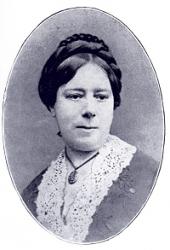
John Ellerton

1826 - 1893 Author of "Savior, Again to Your Dear Name We Raise" in Psalter Hymnal (Gray) John Ellerton (b. London, England, 1826; d. Torquay, Devonshire, England, 1893) Educated at King William's College on the Isle of Man and at Trinity College, Cambridge, England, he was ordained in the Church of England in 1851. He served six parishes, spending the longest time in Crewe Green (1860-1872), a church of steelworkers and farmers. Ellerton wrote and translated about eighty hymns, many of which are still sung today. He helped to compile Church Hymns and wrote its handbook, Notes and Illustrations to Church Hymns (1882). Some of his other hymn texts were published in The London Mission Hymn Book (1884). Bert Polman ========================= Ellerton, John, M.A., son of George Ellerton, was born in London, Dec. 16, 1826, and educated at Trinity College, Cambridge (B.A. 1849; M.A. 1854). Taking Holy Orders he was successively Curate of Easebourne, Sussex, 1850; Brighton, and Lecturer of St. Peter's, Brighton, 1852; Vicar of Crewe Green, and Chaplain to Lord Crewe, 1860; Rector of Hinstock, 1872; of Barnes, 1876; and of White Roding, 1886. Mr. Ellerton's prose writings include The Holiest Manhood, 1882; Our Infirmities, 1883, &c. It is, however, as a hymnologist, editor, hymnwriter, and translator, that he is most widely known. As editor he published: Hymns for Schools and Bible Classes, Brighton, 1859. He was also co-editor with Bishop How and others of the Society for Promoting Christian Knowledge Church Hymns, 1871. His Notes and Illustrations of Church Hymns, their authors and translators, were published in the folio edition of 1881. The notes on the hymns which are special to the collection, and many of which were contributed thereto, are full, accurate, and of special value. Those on the older hymns are too general for accuracy. They are written in a popular form, which necessarily precludes extended research, fulness, and exactness of detail. The result is acceptable to the general public, but disappointing to the hymnological expert. Mr. Ellerton's original hymns number about fifty, and his translations from the Latin ten or more. Nearly every one of these are in common use and include:— 1. Before the day draws near its ending. Afternoon. Written April 22, 1880, for a Festival of Choirs at Nantwich, and first published in the Nantwich Festival Book, 1880. In 1883 it passed into the Westminster Abbey Hymn Book. 2. Behold us, Lord, a little space. General for Weekdays. Written in 1870 for a mid-day service in a City Church, and published in Church Hymns in 1871. It has passed into several collections. 3. Come forth, 0 Christian brothers. Processional for Choral Festival. Written for a Festival of Parochial Choirs held at Chester, May, 1870, and 1st printed in the Service-book of the same. In 1871 it passed into Church Hymns. 4. Father, Name of love and fear. Confirmation. Written in 1871 for a Confirmation in the North of England, and published in Church Hymns, 1871, and other collections. 5. God, Creator and Preserver. In Time of Scarcity. Written for and first published in The Hymnary, 1870; and again in the revised edition, 1872, and other hymnbooks. 6. Hail to the Lord Who comes. Presentation of Christ in the Temple. Written Oct. 6, 1880, for Mrs. Brock's Children's Hymn Book, and published therein, 1881. 7. In the Name which earth and heaven. Foundation of a Church. Written for and first published in Church Hymns, 1871, and repeated in several collections. The hymn sung at the re-opening of the Nave of Chester Cathedral, January 25, 1872, was compiled by Mr. Ellerton from this hymn, and his "Lift the strain of high thanksgiving.” 8 King Messiah, long expected. The Circumcision. Written Jan. 14, 1871, and first published in Church Hymns, 1871. It has passed into other collections. 9. King of Saints, to Whom the number. St. Bartholomew. Written for and first published in Church Hymns., 1871. It is very popular, and has been repeated in many hymnals. 10. Mary at the Master's feet. Catechizing. Written for and first published in Church Hymns, 1871. 11. O Father, all-creating. Holy Matrimony. Written Jan. 29, 1876, at the request of the Duke of Westminster, for the marriage of his daughter to the Marquess of Ormonde. It was published in Thring's Collection, 1880 and 1882. 12 O! how fair the morning broke. Septuagesima. Written March 13, 1880, for Mrs. Brock's Children's Hymn Book, and included therein, 1881. 13. O Lord of life and death, welcome. In Time of Pestilence. Written for and first published in Church Hymns, 1871. 14. O shining city of our God. Concerning the Hereafter. First published in the Rev. R. Brown-Borthwick's Sixteen Hymns with Tunes, &c, 1870; and again in Church Hymns, 1871. 15. O Son of God, our Captain of Salvation. St. Barnabas. Written April 5, 1871, and first published in Church Hymns, 1871; and again in Hymns Ancient & Modern, 1875, Thring's Collection, 1882, and others. 16. O Thou in Whom Thy saints repose. Consecration of a Burial Ground. Written for the consecration of an addition to the Parish Churchyard of Tarporley, Cheshire, 1870, and published in Church Hymns, 1871. 17. O Thou Whose bounty fills the earth. Flower Services. Written for a Flower Service at St. Luke's Church, Chelsea, June 6, 1880, and published in Mrs. Brock's Children's Hymn Book, 1881. 18. Praise to our God, Whose bounteous hand. National Thanksgiving. Written in 1870 for Church Hymns, but first published in the Rev. R. Brown-Borthwick's Select Hymns, &c., 1871, and then in Church Hymns later the same year. 19. The day Thou gavest, Lord, is ended. The darkness, &c. Evening. Written in 1870 for A Liturgy for Missionary Meetings (Frome, Hodges), and revised for Church Hymns, 1871. The revised form has passed into other collections. 20. The Lord be with us when we bend. Close of Afternoon Service. Written [in 1870] at the request of a friend for use at the close of Service on Sunday afternoons when (as in summer) strictly Evening hymns would be unsuitable. It was published in Church Hymns, 1871, Thring's Collection, 1882, and others. 21. This day the Lord's disciples met. Whitsuntide. "Originally written in 1855 for a class of children, as a hymn of 8 verses of 5 lines each, beginning, 'The Fiftieth day was come at last.’ It was abridged, revised, and compressed into C.M. for Mrs. Brock's Children's Hymn Book, 1880," and published therein, 1881. 22. Thou in Whose Name the two or three. Wednesday. Appeared in the Parish Magazine, May, 1871, as a hymn for Wednesday. After revision it was included in Church Hymns, 1871, and repeated in other collections. 23. Thou Who sentest Thine Apostles. SS. Simon and Jude. Written in June, 1874, for the revised edition of Hymns Ancient & Modern, and published in the same in 1875. 24. We sing the glorious conquest. Conversion of St. Paul. Written Feb. 28, 1871, for and published later the same year in Church Hymns. It was repeated in Hymns Ancient & Modern, 1875. 25. When the day of toil is done. Eternal Best. Written in Jan., 1870, and first published in the Rev. R. Brown-Borthwick's Sixteen Hymns with Tunes, &c. 1870, Church Hymns, 1871, and subsequently in several Scottish hymn-books. The tune "Preston," in Church Hymns was written for this hymn. To these hymns must be added those which are annotated under their respective first lines, and the translations from the Latin. The grandest of his original compositions is, "Throned upon the awful tree," and the most beautiful and tender, "Saviour, again to Thy dear Name we raise"; and of his translations, "Sing Alleluia forth in duteous praise," and "Welcome, happy morning, age to age shall say," are the most successful and popular. The subjects of Mr. Ellerton's hymns, and the circumstances under which they were written, had much to do with the concentration of thought and terseness of expression by which they are characterized. The words which he uses are usually short and simple; the thought is clear and well stated; the rhythm is good and stately. Ordinary facts in sacred history and in daily life are lifted above the commonplace rhymes with which they are usually associated, thereby rendering the hymns bearable to the cultured, and instructive to the devout. His antitheses are frequent and terse, almost too much so for devotional verse, and are in danger of interrupting the tranquil flow of devotion. His sympathy with nature, especially in her sadder moods, is great; he loves the fading light and the peace of eve, and lingers in the shadows. Unlike many writers who set forth their illustrations in detail, and then tie to them the moral which they are to teach, he weaves his moral into his metaphor, and pleases the imagination and refreshes the spirit together. Now and again he falls into the weakness of ringing changes on words; but taken as a whole his verse is elevated in tone, devotional in spirit, and elegant in diction. -- John Julian, Dictionary of Hymnology (1907) ===================== Ellerton, John, p. 326, i. Other hymns are:— 1. O Father, bless the children. Holy Baptism. Written in 1886, and published in his Hymns, &c, 1888, in 4 stanzas of 8 lines. Also in the 1889 Suppl. Hymns to Hymns Ancient & Modern. 2. O Thou Who givest food to all. Temperance. Written Aug. 30, 1882, and printed in the Church of England Temperance Chronicle, Sept. 1882. Also in his Hymns, &c, 1888. 3. Praise our God for all the wonders. St. Nicholas's Day. Dated in his Hymns, 1888, "December 1882." It was written for the Dedication Festival of St. Nicholas's Church, Brighton, and first printed as a leaflet in 1882. 4. Praise our God, Whose open hand. Bad Harvest. Written as a hymn for the bad harvest of 1881, and printed in the Guardian in August of that year. Also in his Hymns, &c, 1888. 5. Praise to the Heavenly Wisdom. St. Matthias's Day. Dated in his Hymns, &c, 1888, "January, 1888." Also in the 1889 Suppl. Hymns to Hymns Ancient & Modern. 6. Shine Thou upon us, Lord. For a Teachers' Meeting. Contributed to the 1889 Suppl. Hymns to Hymns Ancient & Modern. 7. Thou Who wearied by the well. Temperance. Written for the Opening of a Workmen's Coffee Tavern, and dated in his Hymns, &c, 1888, "September 23, 1882." It was printed in the Church of England Temperance Chronicle the same year. 8. Throned upon the awful Tree. Good Friday. Written in 1875, and published in the 1875 ed. of Hymns Ancient & Modern. It has passed into many collections, and is one of the finest of Mr. Ellerton's productions. Mr. Ellerton's original and translated hymns to the number of 76 were collected, and published by Skeffington & Son in 1888, as Hymns, Original and Translated. By John Ellerton, Rector of White Roding. --John Julian, Dictionary of Hymnology, Appendix, Part II (1907) =================== Ellerton, J., pp. 326, ii.; 1561, ii. He was appointed Hon. Canon of St. Albans in 1892. and died June 15, 1893. His Life and Works, by H. Housman, was published in 1896. --John Julian, Dictionary of Hymnology, New Supplement (1907)

J. Edwin Orr

1912 - 1987 Author of "Search Me, O God" in The Worshiping Church Rv James Edwin Orr MA ThD EdD PhD United Kingdom/USA. Born at Belfast, Northern Ireland, son of a jeweler with both British and American citizenship (so his children did as well), he studied at the College of Technology, Belfast, Ireland. After spending some years as a baker, he began evangelizing in Britian and in Europe. In 1937 he married Ivy Carol Carlson, and they had a daughter: Eileen. After their marriage, the Orrs evangelized in Australia (1939), China, Canada, South America, and the U.S. In 1939 he enrolled at Northwest University, and in 1940 was ordained into the Baptist Christian ministry at Newark, NJ. He received a MA from Northwest University in 1941 and a ThD from Northern Baptist Seminary in 1943. During WWII he served as a chaplain in the U.S. Air Force in the Pacific region. During these years he also wrote several accounts of his preaching tours. After the war he continued his studies and took his PhD at Oxford University in 1948, with his thesis on the second evangelical awakening in Britain. In 1949 he and his wife made the U.S. their permanent base and continued to travel the world promoting church revival and renewal. They evangelized in 150 countries on several continents. In 1966 he became a professor at the School of World Missions, Fuller Theological Seminary, Pasadena, CA. In 1971 he received his EdD degree from UCLA. He remained at Fuller until 1981., and as professor emeritus thereafter. He also received honorary degrees from an Indian seminary and the university of South Africa. Billy Graham wrote: “Dr J Edwn Orr, in my opinion, is one of the greatest authorities on the history of religious revivals in the Protestant world.” From 1951 on he was influential in Campus Crusade for Christ, and was one of its five original board members. He authored 40+ works, mostly on revival work. He also wrote a few hymn lyrics. He was a Fellow of the Royal Geographical Society, the American Geographical Society, the Royal Historical Society, and the Royal Society of Literature. He died at Ridgecrest, NC. Burial: Camarillo, CA. John Perry

Catherine Winkworth

1827 - 1878 Person Name: Cath­er­ine Wink­worth Translator (from German) of "We Praise Thee, Lord, with Earliest Morning Ray" in The Cyber Hymnal Catherine Winkworth (b. Holborn, London, England, 1827; d. Monnetier, Savoy, France, 1878) is well known for her English translations of German hymns; her translations were polished and yet remained close to the original. Educated initially by her mother, she lived with relatives in Dresden, Germany, in 1845, where she acquired her knowledge of German and interest in German hymnody. After residing near Manchester until 1862, she moved to Clifton, near Bristol. A pioneer in promoting women's rights, Winkworth put much of her energy into the encouragement of higher education for women. She translated a large number of German hymn texts from hymnals owned by a friend, Baron Bunsen. Though often altered, these translations continue to be used in many modern hymnals. Her work was published in two series of Lyra Germanica (1855, 1858) and in The Chorale Book for England (1863), which included the appropriate German tune with each text as provided by Sterndale Bennett and Otto Goldschmidt. Winkworth also translated biographies of German Christians who promoted ministries to the poor and sick and compiled a handbook of biographies of German hymn authors, Christian Singers of Germany (1869). Bert Polman ======================== Winkworth, Catherine, daughter of Henry Winkworth, of Alderley Edge, Cheshire, was born in London, Sep. 13, 1829. Most of her early life was spent in the neighbourhood of Manchester. Subsequently she removed with the family to Clifton, near Bristol. She died suddenly of heart disease, at Monnetier, in Savoy, in July, 1878. Miss Winkworth published:— Translations from the German of the Life of Pastor Fliedner, the Founder of the Sisterhood of Protestant Deaconesses at Kaiserworth, 1861; and of the Life of Amelia Sieveking, 1863. Her sympathy with practical efforts for the benefit of women, and with a pure devotional life, as seen in these translations, received from her the most practical illustration possible in the deep and active interest which she took in educational work in connection with the Clifton Association for the Higher Education of Women, and kindred societies there and elsewhere. Our interest, however, is mainly centred in her hymnological work as embodied in her:— (1) Lyra Germanica, 1st Ser., 1855. (2) Lyra Germanica, 2nd Ser., 1858. (3) The Chorale Book for England (containing translations from the German, together with music), 1863; and (4) her charming biographical work, the Christian Singers of Germany, 1869. In a sympathetic article on Miss Winkworth in the Inquirer of July 20, 1878, Dr. Martineau says:— "The translations contained in these volumes are invariably faithful, and for the most part both terse and delicate; and an admirable art is applied to the management of complex and difficult versification. They have not quite the fire of John Wesley's versions of Moravian hymns, or the wonderful fusion and reproduction of thought which may be found in Coleridge. But if less flowing they are more conscientious than either, and attain a result as poetical as severe exactitude admits, being only a little short of ‘native music'" Dr. Percival, then Principal of Clifton College, also wrote concerning her (in the Bristol Times and Mirror), in July, 1878:— "She was a person of remarkable intellectual and social gifts, and very unusual attainments; but what specially distinguished her was her combination of rare ability and great knowledge with a certain tender and sympathetic refinement which constitutes the special charm of the true womanly character." Dr. Martineau (as above) says her religious life afforded "a happy example of the piety which the Church of England discipline may implant.....The fast hold she retained of her discipleship of Christ was no example of ‘feminine simplicity,' carrying on the childish mind into maturer years, but the clear allegiance of a firm mind, familiar with the pretensions of non-Christian schools, well able to test them, and undiverted by them from her first love." Miss Winkworth, although not the earliest of modern translators from the German into English, is certainly the foremost in rank and popularity. Her translations are the most widely used of any from that language, and have had more to do with the modern revival of the English use of German hymns than the versions of any other writer. -- John Julian, Dictionary of Hymnology (1907) ============================ See also in: Hymn Writers of the Church

Hymnals

hymnal icon
Published hymn books and other collections

Christian Classics Ethereal Hymnary

Publication Date: 2007 Publisher: Grand Rapids, MI: Christian Classics Ethereal Library

Small Church Music

Editors: William H. Burleigh Description: History The SmallChurchMusic site was launched in 2006, growing out of the requests from those struggling to provide suitable music for their services and meetings. Rev. Clyde McLennan was ordained in mid 1960’s and was a pastor in many small Australian country areas, and therefore was acutely aware of this music problem. Having also been trained as a Pipe Organist, recordings on site (which are a subset of the smallchurchmusic.com site) are all actually played by Clyde, and also include piano and piano with organ versions. About the Recordings All recordings are in MP3 format. Churches all around the world use the recordings, with downloads averaging over 60,000 per month. The recordings normally have an introduction, several verses and a slowdown on the last verse. Users are encouraged to use software: Audacity (http://www.audacityteam.org) or Song Surgeon (http://songsurgeon.com) to adjust the MP3 number of verses, tempo and pitch to suit their local needs. Mobile App We have partnered with the developer of the popular NetTracks mobile app to offer the Small Church Music collection as a convenient mobile app. Experience the beloved Small Church Music collection through this iOS app featuring nearly 10,000 high-quality hymn recordings that can be organized into custom setlists and downloaded for offline use—ideal for worship services without musicians, congregational practice, and personal devotion. The app requires a small fee to cover maintenance costs. Please note: While Hymnary.org hosts this music collection, technical support for the app is provided exclusively by the app developer, not by Hymnary.org staff. LicensingCopyright notice: Rev. Clyde McLennan, performer in this collection, has assigned his performer rights in this collection to Hymnary.org. Non-commercial use of these recordings is permitted. For permission to use them for any other purposes, please contact manager@hymnary.org. Home/Music(smallchurchmusic.com) List SongsAlphabetically List Songsby Meter List Songs byTune Name About  

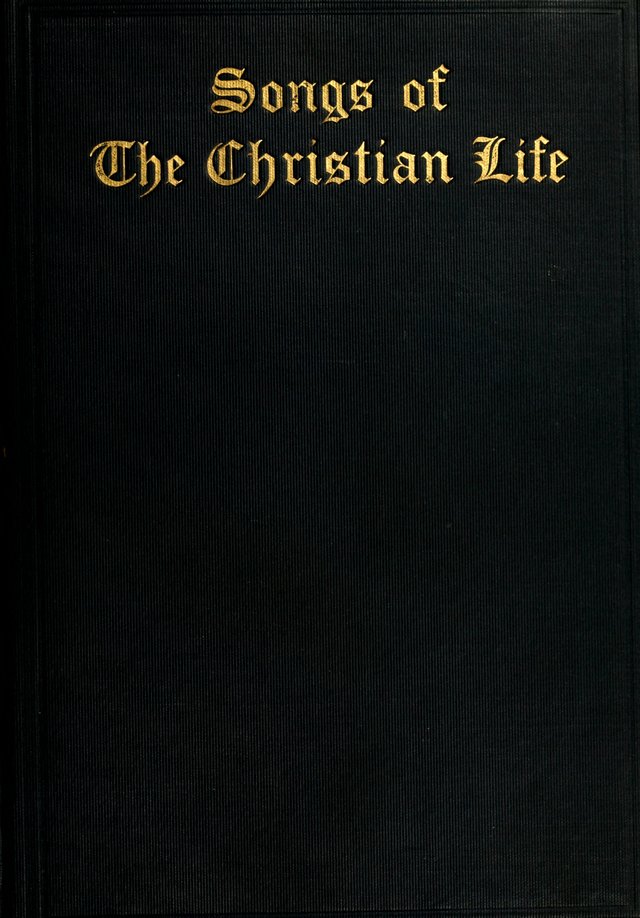
Songs of the Christian Life

Publication Date: 1912 Publisher: Charles C. Merrill Company Publication Place: New York
It looks like you are using an ad-blocker. Ad revenue helps keep us running. Please consider white-listing Hymnary.org or getting Hymnary Pro to eliminate ads entirely and help support Hymnary.org.