

 My Starred Hymns
 My Hymnals
 My Purchased Files
Planning worship?
Check out our sister site, ZeteoSearch.org,
for 20+ additional resources related to your search.
- |
User Links
Search Results


ERMUNTRE DICH
Meter: 8.7.8.7.8.8.7.7 Appears in 80 hymnals Composer and/or Arranger: Johann Schop; J. S. Bach Tune Key: E Flat Major Incipit: 11234 55453 43232 Used With Text: Break Forth, O Beauteous Heavenly Light
ERMUNTRE DICH

Break Forth, O Beauteous Heavenly Light
Author: Johann Rist, 1607-67 Meter: 8.7.8.7.8.8.7.7 Appears in 64 hymnals First Line: Break forth, O beauteous heav'nly light Scripture: Isaiah 9:2-7 Used With Tune: ERMUNTRE DICH Text Sources: Lutheran Hymnal (Australia), 1973 (Tr.)
Break Forth, O Beauteous Heavenly Light

God is our refuge in distress
Meter: 8.8.8.8.8.8 Appears in 70 hymnals Used With Tune: DARMSTADT
God is our refuge in distress
O Love, Who formedst me to wear
Appears in 57 hymnals Topics: General Hymns Used With Tune: SPIRES
O Love, Who formedst me to wear


Ermuntre dich, mein schwacher Geist
Author: Johann Rist Hymnal: Evangelisches Kirchengesangbuch #24 (1969) Languages: German Tune Title: [Ermuntre dich, mein schwacher Geist]
Ermuntre dich, mein schwacher Geist
Arise, My Soul, Sing Joyfully
Author: J. Rist, 1607-67 Hymnal: Evangelical Lutheran Hymnary #118 (1996) Meter: 8.7.8.7.8.8.7.7 Topics: Nativity of our Lord Languages: English Tune Title: ERMUNTRE DICH
Arise, My Soul, Sing Joyfully
Break forth, O beauteous
Author: Johann Rist; John Troutbeck; Fred Pratt Green Hymnal: Hymnal #203 (1992) First Line: Break forth, O beauteous heav'nly light Languages: English Tune Title: ERMUNTRE DICH
Break forth, O beauteous


Johann Rist
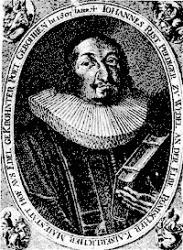
1607 - 1667 Author of "Break forth, O beauteous heavenly light" in The Mennonite Hymnal Rist, Johann, son of Kaspar Rist, pastor at Ottensen, near Hamburg, was born at Ottensen, March 8, 1607, and from his birth was dedicated to the ministry. After passing through the Johanneum at Hamburg and the Gymnasium Illustre at Bremen, he matriculated, in his 21st year, at the University of Rinteln, and there, under Josua Stegmann (q. v.), he received an impulse to hymn-writing. On leaving Rinteln he acted as tutor to the sons of a Hamburg merchant, accompanying them to the University of Rostock, where he himself studied Hebrew, Mathematics and also Medicine.
During his residence at Rostock the terrors, of the Thirty Years War almost emptied the University, and Rist himself also lay there for weeks ill of the pestilence. After his recovery he seems to have spent some time at Hamburg, and then, about Michaelmas, 1633, became tutor in the house of the lawyer (Landschreiber) Heinrich Sager, at Heide, in Holstein. There he betrothed himself to Elizabeth, sister of the Judge Franz Stapfel, whose influence seems to have had a good deal to do with Rist's appointment as pastor at Wedel. In the spring of 1635 he married and settled at Wedel (on the Elbe, a few miles below Hamburg), where, spite of various offers of preferment, he remained till his death, on Aug. 31, 1667. (Johann Rist und seine Zeit, by Dr. T. Hansen, Halle, 1872; K. Goedeke's Grundriss, vol. iii., 1887, p. 79; Koch, iii., 212; Bode, p. 135, &c. The statements of the various authorities regarding the period 1624-1635 vary greatly and irreconcilably.)
During the Thirty Years War Rist had much to endure from famine, plundering, and pestilence. Otherwise he led a patriarchal and happy life at Wedel, close to the congenial society of Hamburg, and as years went on more and more esteemed and honoured by his contemporaries. The Emperor Ferdinand III. crowned him as a poet in 1644, and in 1653 raised him to the nobility, while nearer home Duke Christian of Mecklenburg appointed him Kirchenrath and Consistorialrath. Among other literary honours he was received in 1645 as a member of the Pegnitz Order, and in 1647 as a member of the Fruitbearing Society, the great German literary union of the 17th century; while in 1660 he himself became the founder and head of the Elbe Swan Order, which however did not survive his death.
Rist was an earnest pastor and a true patriot. He of course took the side, and that with all his might, of the Protestants, but he longed as few did for the union of the scattered elements of the body politic in Germany. He was a voluminous and many-sided writer (see the full bibliographies in Hansen and Goedeke as above). His secular works are of great interest to the student of the history of the times, and his occasional poems on marriages, &c, to the genealogist and local historian. Perhaps the most interesting to the general reader are the Friede wünschende Teutschland, 1647, and the Friedejauchzende Teutschland, 1653, two plays in which there are vivid pictures of the times, especially of the condition of the lower classes during the Thirty Years War. These plays, with selections from his other secular poems and from his hymns, are included in his Dichtungen, Leipzig, 1885, edited by Goedeke and E. Goetze. Hansen gives analyses of the secular works, with a few extracts from them; and in his second part gives a full selection from the hymns, often however greatly abridged.
As a hymn-writer Rist takes high rank. He wrote some 680 hymns, intended to cover the whole ground of Theology, and to be used by all ranks and classes, and on all the occasions of life. Naturally enough they are not of equal merit, and many are poor and bombastic. Rist meant them rather for private use than for public worship, and during his lifetime they were never used in the church at Wedel. But they were eagerly caught up, set to melodies by the best musicians of the day, and speedily passed into congregational use all over Germany, while even the Roman Catholics read them with delight. Over 200 may be said to have been in common use in Germany, and a large number still hold their place. Unfortunately many are very long. But speaking of Rist's better productions, we may say that their noble and classical style, their objective Christian faith, their scriptualness, their power to console, to encourage, and to strengthen in trust upon God's Fatherly love, and their fervent love to the Saviour (especially seen in the best of his hymns for Advent, and for the Holy Communion), sufficiently justify the esteem in which they were, and are, held in Germany. The best known of Rist's hymns appeared in the following collections:—
(1) Himlischs Lieder. This contains 50 hymns. The Erste Zehen is dated Lüneburg, 1641, the 2-6 Zehen are dated 1642 [Royal Library, Berlin]. In the later editions Rist made various alterations, and also expanded the titles of the hymns, these changes being almost all for the worse. (2) Neüer himlischer Lieder sonderbahres Buch, Lüneburg, 1651 [Wernigerode Library]. 50 hymns. (3) Sabbahtische Seelenlust, Lüneburg, 1651 [British Museum and Göttingen]. With 58 hymns on the Gospels for Sundays, &c. (4) Frommer und gottseliger Christen alltägliche Haussmusik, Lüneburg, 1654 [Brit. Mus. and Göttingen], with 70 hymns. (5) Neüe musikalische Fest-Andachten, Lüneburg, 1655 [Wernigerode]. With 52 hymns on the Sunday Gospels. (6) Neüe musikalische Katechismus Andachten, Lüneburg, 1656 [British Museum and Wernigerode]. With 50 hymns.
Seven of Rist's hymns are separately noted under their German first lines.
The others which have passed into English are:--
i. Du Lebensbrod, Herr Jesu Christ. Holy Communion. In his Haussmusik, 1654, No. 7, p. 32, in 8 stanzas of 8 lines, entitled "A devotional hymn, which may be sung when the people are about to take their place at the Holy Communion of the Lord." Founded on Ps. xxiii. Included as No. 473 in the Berlin Geistliche Lieder, ed. 1863. Translated as:—
Lord Jesu Christ, the living bread. A good translaton of stanzas i., ii., iii., v., by A. T. Russell, as No. 159 in his Psalms & Hymns, 1851.
ii. Ehr und Dank sei dir gesungen. On the Angels. In his Fest-Andachten, 1655, No. 46, p. 304, in 9 stanzas of 10 lines, entitled "Another hymn of Praise and Thanksgiving on the same Gospel [S. Matt, xviii.] for St. Michael's Day. In which the great God who created the Angels, and appointed them for our service, is from the heart adored and praised." Included in Burg's Gesang-Buch, Breslau, 1746, No. 219, and in Bunsen's Versuch, 1833, No. 233. The translations in common use are:—
1. Praise and thanks to Thee be sung. By Miss Winkworth, omitting st. iii.—vi., in her Lyra Germanica, 1st Ser., 1855, p. 205, repeated in her Chorale Book for England, 1863, No. 85.
2. Glory, praise, to Thee be sung. A translation of st. i. as No. 1224, in the Moravian Hymn Book, 1886.
iii. Ermuntre dich, mein schwacher Geist. Christmas. Founded on Isaiah ix. 2-7. First published in the Erstes Zehen of his Himlische Lieder, 1641, No. 1, p. 1, in 12 stanzas of 8 lines, entitled "A hymn of praise on the joyful Birth and Incarnation of our Lord and Saviour Jesus Christ." Included in Crüger's Praxis, 1656, No. 87, and recently, omitting st. viii., as No. 32 in the Unverfälschter Liedersegen 1851.
The translations in common use are:—
1. Be cheerful, thou my spirit faint. A translation of st. i. by J. Gambold, as No. 138 in pt. i. of the Moravian Hymn Book, 1754; repeated as st. i. of No. 437, altered to "Arise my spirit, leap with joy," and with his trs. of st. ii., iv., ix. added. In the edition of 1789, No. 46 (1886, No. 41), it begins, "Arise, my spirit, bless the day.”
2. O Jesu! welcome, gracious Name! This is a translation of st. ii., vi., xii., by A. T. Russell, as No. 55 in his Psalms & Hymns., 1851.
Another translation is "My languid spirit, upward spring." By N. L. Frothingham, 1870, p. 179.
iv. Gott sei gelobet, der allein. Joy in God. In his Neüer Himlischer Lieder 1651, p. 126, No. 9, in 13 stanzas of 7 lines, entitled “A joyful hymn of Thanksgiving to God, that He permits us to enjoy our daily bread in health, peace and prosperity, with a humble prayer that He would graciously preserve us in the same." Included in Olearius's Singe-Kunst, 1671, No. 322, and recently in Knapp's Evangelischer Lieder-Schatz 1850, No. 1696 (1865, No. 1766). The tr. in common use is:—
Now God be praised, and God alone . By Miss Winkworth, omitting st. iii., vi., viii., ix., in her Christian Singers, 1869, p. 192. Repeated, abridged, in Statham's Collection, Edinburgh, 1869, No. 63 (1870, No. 110).
v. Jesu, der du meine Seele. Lent. In the Erstes Zehen of his Himlische Lieder, 1641, p. 35, No. 7, in 12 stanzas of 8 lines, entitled "A heartfelt hymn of penitence to his most beloved Lord Jesus, for the forgiveness of his many and manifold sins." Founded on prayer viii. in Class in. of J. Arndt's Paradiesgärtlein, 1612. In the Unverfälschter Liedersegen, 1851, No. 382.
The translations in common use are:—-
1. Thou hast cancell'd my transgression. A translation of st. vi., viii., as No. 1022, in the Supplement of 1808 to the Moravian Hymn Book, 1801 (1886, No. 107).
2. Jesu! Who in sorrow dying. A free translation of st. i., iii. lines 1-4, v. 11. 5-8, xii., by A. T. Russell, as No. 78 in his Psalms & Hymns, 1851.
vi. 0 Jesu, meine Wonne. Holy Communion. This beautiful hymn appears in Rist's Hauss-musik, 1654, No. 9, p. 42, in 14 stanzas of 4 lines, entitled "The heartfelt Thanksgiving of a pious Christian when he has partaken of the Holy Communion." In the Unverfälschter Liedersegen, 1851, No. 285.
The translation in common use is:—
0 Sun of my salvation. A good tr. of st. i., iii., v., vi., by A. T. Russell, as No, 160 in his Psalms & Hymns, 1851.
Another translation is:—
“0 Christ, my joy, my soul's delight." By Dr. G. Walker, 1860, p. 65.
vii. Werde licht, du Stadt der Heiden. Epiphany. In his Fest-Andachten , 1655, p. 82, No. 13, in 15 stanzas of 6 lines, entitled "Another festival hymn of the day of the Manifestation of Christ, in which the glorious, godlike, and eternal Light, which has graciously arisen on us poor heathen in thick darkness, is devotedly contemplated." In the Unverfälschter Liedersegen, 1851, No. 82. Translated as:—
1. All ye Gentile lands awake. A good tr. of st. i.-iv., vi., vii., xiv. xv., by Miss Winkworth, in her Lyra Germanica, 1st Ser., 1855, p. 30. Repeated, abridged, in Schaffs Christ in Song, 1869 aud 1870, and in Flett's Collection, Paisley, 1871.
2. Rise, O Salem, rise and shine. A good translation of stanzas i., iii., vii., xiv., xv., based on her Lyra Germanica version but altered in metre, by Miss Winkworth, in her Chorale Book for England, 1863, No. 38. Repeated in J. L. Porter's Collection, 1876, and the Pennsylvania Lutheran Ch. Book, 1868.
viii. Wie wohl hast du gelabet. Holy Communion. In his Neüer Himlischer Lieder, 1651, p. 78, in 9 stanzas of 12 lines, entitled "A hymn of heartfelt Praise and Thanksgiving after the reception of the Holy Communion." In the Unverfälschter Liedersegen, 1851, No. 291. The translation in common use is:—
O Living Bread from Heaven. A good tr., omitting st. iv., by Miss Winkworth, in her Lyra Germanica 2nd Ser., 1858, p. 103; repeated in her Chorale Book for England, 1863, No. 94, omitting the trsanslations of iii., v., vi. Her translations of st. i.-iii., ix. were included, slightly altered, in the Pennsylvania Lutheran Ch. Book, 1868. The following have also been tr. into English:—
ix. Heut ist das rechte Jubelfest. Whitsuntide. In his Fest-Andachten, 1655, p. 216, No. 33, in 12 stanzas, founded on the Gospel for Whitsunday (St. John xiv.). In Olearius's Singe-Kunst, 1671, No. 704, and Porst's Gesang-Buch, ed. 1855, No. 173. The text translation is that in Bunsen's Allgemeine Gesang-Buch, 1846, No. 114, where it begins with st. v., "Heut hat der grosse Himmeleherr." Translated as "This day sent forth His heralds bold." By Miss Cox, in the Churchman's Shilling Magazine, June 1867.
x. Ich will den Herren loben. Praise and Thanksgiving. Founded on Ps. xxxiv. In his Neüer Himlischer Lieder, 1651, p. 132 (No. 10 in pt. ii.), in 12 st. of 8 1. This form is in Burg's Gesang-Buch, Breslau, 174G, No. 1201. In his Haussmusik, 1654, p. 348, No. 64, Rist rewrote it to 6 stanzas of 12 lines, and of this form st. iv.-vi., beginning "Man lobt dich in der Stille, ed. 1863, No. 1018. The translation from this last text is "To Thee all praise ascendeth." In the British Herald, May 1866, p. 265, repeated in Reid's Praise Book, 1872. [Rev. James Mearns, M.A.]
--John Julian, Dictionary of Hymnology (1907)
Johann Rist
Fred Pratt Green
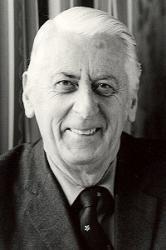
1903 - 2000 Translator (Sts. 2, 3) of "Break forth, O beauteous" in Hymnal The name of the Rev. F. Pratt Green is one of the best-known of the contemporary school of hymnwriters in the British Isles. His name and writings appear in practically every new hymnal and "hymn supplement" wherever English is spoken and sung. And now they are appearing in American hymnals, poetry magazines, and anthologies.
Mr. Green was born in Liverpool, England, in 1903. Ordained in the British Methodist ministry, he has been pastor and district superintendent in Brighton and York, and now served in Norwich. There he continued to write new hymns "that fill the gap between the hymns of the first part of this century and the 'far-out' compositions that have crowded into some churches in the last decade or more."
--Seven New Hymns of Hope , 1971. Used by permission.
Fred Pratt Green
Norman Johnson
1928 - 1983 Person Name: Norman E. Johnson Author (st. 2) of "Break Forth, O Beauteous Heavenly Light" in Psalter Hymnal (Gray)
Norman Johnson


Christian Classics Ethereal Hymnary
Publication Date: 2007 Publisher: Grand Rapids, MI: Christian Classics Ethereal Library
Christian Classics Ethereal Hymnary
Small Church Music
Editors: Johann Rist Description:
History
The SmallChurchMusic site was launched in 2006, growing out of the requests from those struggling
to provide suitable music for their services and meetings. Rev. Clyde McLennan was ordained in mid
1960’s and was a pastor in many small Australian country areas, and therefore was acutely aware of
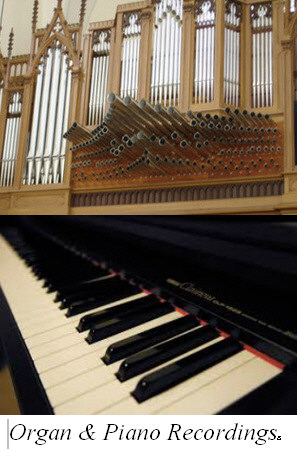
this music problem. Having also been trained as a Pipe Organist, recordings on site (which are a subset
of the smallchurchmusic.com site) are all actually played by Clyde, and also include piano and piano
with organ versions.
About the Recordings All recordings are in MP3 format.
Churches all around the world use the recordings, with downloads averaging over 60,000 per
month.
The recordings normally have an introduction, several verses and a slowdown on the last verse.
Users are encouraged to use software: Audacity (http://www.audacityteam.org) or Song Surgeon (http://songsurgeon.com) to adjust the MP3 number of verses, tempo and pitch to suit their local needs.
Mobile App
We have partnered with the developer of the popular NetTracks mobile app to offer the Small Church Music collection as a convenient mobile app. Experience the beloved Small Church Music collection through this iOS app featuring nearly 10,000 high-quality hymn recordings that can be organized into custom setlists and downloaded for offline use—ideal for worship services without musicians, congregational practice, and personal devotion. The app requires a small fee to cover maintenance costs. Please note: While Hymnary.org hosts this music collection, technical support for the app is provided exclusively by the app developer, not by Hymnary.org staff.
LicensingCopyright notice: Rev. Clyde McLennan, performer in this collection, has assigned his performer rights in this collection to Hymnary.org. Non-commercial use of these recordings is permitted. For permission to use them for any other purposes, please contact manager@hymnary.org.
Home/Music(smallchurchmusic.com)
List SongsAlphabetically
List Songsby Meter
List Songs byTune Name
About
Small Church Music




