You help make Hymnary.org possible. More than 10 million people from 200+ countries found hymns, liturgical resources and encouragement on Hymnary.org in 2025, including you. Every visit affirms the global impact of this ministry.

If Hymnary has been meaningful to you this year, would you take a moment today to help sustain it? A gift of any size—paired with a note of encouragement if you wish—directly supports the server costs, research work and curation that keep this resource freely available to the world.

Give securely online today, or mail a check to:
Hymnary.org
Calvin University
3201 Burton Street SE
Grand Rapids, MI 49546

Thank you for your partnership, and may the hope of Advent fill your heart.

Search Results

Tune Identifier:"^o_dass_ich_tausend_zungen_baumgartner$"

Planning worship? Check out our sister site, ZeteoSearch.org, for 20+ additional resources related to your search.

Tunes

tune icon
Tune authorities
Page scans

[Wir kommen uns in dir zu baden]

Appears in 9 hymnals Tune Sources: Deutsch Volksweise Incipit: 53451 31721 51332 Used With Text: An den Gesang

Texts

text icon
Text authorities
FlexScore

I Know That My Redeemer Liveth

Author: Jessie Brown Pounds (1861-1921); Joseph Overholt Meter: 9.8.9.8 with refrain Appears in 128 hymnals Refrain First Line: I know, I know that Jesus lives Topics: Book Four: Occasional Selections, Gospel Songs and Hymns; Christian Life Assurance, Faith Used With Tune: O DASS ICH TAUSEND ZUNGEN HÄTTE
Page scans

An den Gesang

Appears in 2 hymnals First Line: Wir kommen uns in dir zu baden Used With Tune: [Wir kommen uns in dir zu baden]
Page scans

O daß ich tausend Zungen hätte

Appears in 97 hymnals Used With Tune: [O daß ich tausend Zungen hätte]

Instances

instance icon
Published text-tune combinations (hymns) from specific hymnals

O That a Thousand Tongues I'd Treasure

Author: Johann Mentzer (1658-1734); John J. Overholt Hymnal: The Christian Hymnary #989 (1972) Meter: 9.8.9.8.8.8 Topics: Book Four: Occasional Selections, Gospel Songs and Hymns; Services, Occasions Praise, Supplication Hymns Scripture: Psalm 126:1-2 Languages: English; German Tune Title: O DASS ICH TAUSEND ZUNGEN HÄTTE
Page scan

O daß ich tausend Zungen hätte

Hymnal: Sänger-Bote #51 (1900) Languages: German Tune Title: [O daß ich tausend Zungen hätte]
Page scan

O daß ich tausend Zungen hätte

Hymnal: Sänger-Bote #51 (1920) Languages: German Tune Title: [O daß ich tausend Zungen hätte]

People

person icon
Authors, composers, editors, etc.

Jessie Brown Pounds

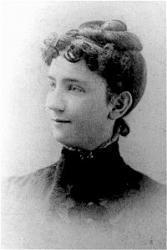
1861 - 1921 Person Name: Jessie Brown Pounds (1861-1921) Author of "I Know That My Redeemer Liveth" in The Christian Hymnary Jessie Brown Pounds was born in Hiram, Ohio, a suburb of Cleveland on 31 August 1861. She was not in good health when she was a child so she was taught at home. She began to write verses for the Cleveland newspapers and religious weeklies when she was fifteen. After an editor of a collection of her verses noted that some of them would be well suited for church or Sunday School hymns, J. H. Fillmore wrote to her asking her to write some hymns for a book he was publishing. She then regularly wrote hymns for Fillmore Brothers. She worked as an editor with Standard Publishing Company in Cincinnati from 1885 to 1896, when she married Rev. John E. Pounds, who at that time was a pastor of the Central Christian Church in Indianapolis. A memorable phrase would come to her, she would write it down in her notebook. Maybe a couple months later she would write out the entire hymn. She is the author of nine books, about fifty librettos for cantatas and operettas and of nearly four hundred hymns. Her hymn "Beautiful Isle of Somewhere" was sung at President McKinley's funeral. Dianne Shapiro, from "The Singers and Their Songs: sketches of living gospel hymn writers" by Charles Hutchinson Gabriel (Chicago: The Rodeheaver Company, 1916)

John J. Overholt

1918 - 2000 Author of "O God, to Thee I Lift My Joyful Voice" in The Christian Hymnary John J. Overholt was born to an Amish family of limited means in the state of Ohio in 1918. As a child he was soon introduced to his father's personal collection of gospel songs and hymns, which was to have a marked influence on his later life. With his twin brother Joe, he early was exposed to the Amish-Mennonite tradition hymn-singing and praising worship. An early career in Christian service led to a two-year period of relief work in the country of Poland following World War II. During that interim he began to gather many European songs and hymns as a personal hobby, not realizing that these selections would become invaluable to The Christian Hymnary which was begun in 1960 and completed twelve years later in 1972, with a compilation of 1000 songs, hymns and chorales. (The largest Menn. hymnal). A second hymnal was begun simultaneously in the German language entitled Erweckungs Lieder Nr.1 which was brought to completion in 1986. This hymnal has a total of 200 selections with a small addendum of English hymns. Mr. Overholt married in 1965 to an accomplished soprano Vera Marie Sommers, who was not to be outdone by her husband's creativity and compiled a hymnal of 156 selections entitled Be Glad and Sing, directed to children and youth and first printed in 1986. During this later career of hymn publishing, Mr. Overholt also found time for Gospel team work throughout Europe. At this writing he is preparing for a 5th consecutive tour which he arranges and guides. The countries visited will be Belgium, Switzerland, France, Germany, Poland, USSR and Romania. Mr. Overholt was called to the Christian ministry in 1957 and resides at Sarasota, Florida where he is co-minister of a Beachy Amish-Mennonite Church. Five children were born to this family and all enjoy worship in song. --Letter from Hannah Joanna Overholt to Mary Louise VanDyke, 10 October 1990, DNAH Archives. Photo enclosed.

Johann Mentzer

1658 - 1734 Person Name: Johann Mentzer (1658-1734) Author of "O That a Thousand Tongues I'd Treasure" in The Christian Hymnary Mentzer, Johann, was born July 27, 1658, at Jahmen, near Rothenburg, in Silesia, and became a student of theology at Wittenberg, In 1691 he was appointed pastor at Merzdorf; in 1693 at Hauswalde, near Bischofswerda; and in 1696 at Kemnitz, near Bernstadt, Saxony. He died at Kemnitz, Feb. 24, 1734 (G. F. Otto's Lexicon . . . Oberlausizischer Schriftsteller, ii., 581; ms. from Pastor Richter of Kemnitz, &c). He was a great friend of J. C. Schwedler, of Henrietta Catherine von Gersdorf, and of N. L. von Zinzendorf, all hymnwriters, and all his near neighbours. He was himself greatly tried in the furnace of affliction. He wrote a large number of hymns, over 30 of which appeared in the various hymnbooks of his time. Many of them, especially those of Praise and Thanksgiving, and those of Cross and Consolation, are of high merit, though sometimes exaggerated and not very refined in their imagery, and are full of ardent love to Christ, Scriptural, poetical, and also popular in style. The only one in English common use is:— 0 dass ich tausend Zungen hatte. Praise and Thanksgiving. His best hymn. First published as No. 496, in Freylinghausen's Gesang-Buch, 1704, in 15 st. of 6 1., and repeated in many later collections as the Unverfälschter Liedersegen, 1851, No. 719. Lauxmann, in Koch viii. 350, says this hymn was written in 1704 after his house was burned down. In reply to enquiries addressed to Kemnitz, pastor Richter informs me that the parsonage house there was built in the years 1696 and 1697, and has never been burned down. In 1697 a farmhouse near was destroyed by lightning, and possibly Mentzer may have been living there at the time; or at any rate this may have suggested the hymn and the story. Lauxmann speaks of the hymn as having been a great favourite of Caroline Perthes of Hamburg, and of J. C. Schlipalius of Dresden, and relates various incidents regarding its blessed and comforting effects. The translations in common use are:— 1. Oh that I had a thousand voices! A mouth. A full translation by Dr. H. Mills, in his Horae Germanica, 1845 (1856, p. 189); repeated, abridged, in the American Lutheran General Synod's Collection, 1850-52, the Ohio Lutheran Hymnal, 1880, &c. 2. Oh be unceasing praise ascending. A good translation of st. i., vii., viii., by A. T. Russell, as No. 203, in his Psalms & Hymns, 1851. 3. Oh would I had a thousand tongues. A good translation, omitting stanzas ix., x., xiii., by Miss Winkworth, in her Lyra Germanica, 1st Ser., 1855, p. 170; and repeated, abridged, in the Methodist New Congregational Hymn Book, 1863. 4. 0 would, my God, that I could praise Thee. A good translation, in the original metre, by Miss Winkworth, in her Chorale Book for England, 1863, No. 5, being of stanzas i., iii.—v, xiv., xv. This was repeated in the Evangelical Hymnal, N. Y., 1830. A filtered form, beginning with st. iii., "0 all ye powers that God implanted” is in Dr. Knight's Collection, Dundee, 1871 and 1874. 5. I praise Thee, 0 my God and Father. By Miss Winkworth, in her Chorale Book for England, 1863, No. 6. This is of st. vi.-viii., xi., xii., and fol¬lows the text of Bunsen's Versuch, 1833, No. 846, this stanza beginning there, "Lob sei dir, treuer Gott und Vater." Her translation is repeated in Dr. Thomas's Augustine Hymn Book, 1866. Other translations are:— (1) "0 that a thousand tongues were granted," by N. L. Frothingham, 1810, p. 155. (2) "0 that a thousand tongues were mine, And each," by Dr. Alexander Mair in the Family Treasury, 1872, p. 462. Other hymns by Mentzer, translated into English but not in common use are:— ii. Du gehest in den Garten beten. Passiontide. First published in the Löbau Gesang-Buch, 1725, as No. 370, in 12 stanzas of 6 lines, marked as by Mentzer and entitled "The true school of prayer of Jesus, praying on the Mount of Olives, Matt. xxvi. 36-46." In the Berlin Geistliche Lieder, ed. 1863, No. 223, beginning "Du gehst zum Garten urn zu beten," and wrongly ascribed to B. Schmolck. Translated as "Into the garden shade to pray," by J. Kelly, in the Family Treasury, 1868, p. 691. iii. Wer das Kleinod will erlangen. Christian Warfare. A call to spiritual energy, founded on 1 Cor. ix. 24, 25. Included as No. 783 in the Neuvermehrtes Geistreiches Gesang-Buch Berlin, 1711, in 6 stanzas of 8 lines; and previously in Schlechtiger's Gesang-Buch, Berlin, 1704. In the Berlin Geistliche Lieder, ed. 1863, No. 679. Translated as "Who would make the prize his own." By Miss Winkworth, 1858, p. 167. [Rev. James Mearns, M.A.] -- John Julian, Dictionary of Hymnology (1907)
It looks like you are using an ad-blocker. Ad revenue helps keep us running. Please consider white-listing Hymnary.org or getting Hymnary Pro to eliminate ads entirely and help support Hymnary.org.