You help make Hymnary.org possible. More than 10 million people from 200+ countries found hymns, liturgical resources and encouragement on Hymnary.org in 2025, including you. Every visit affirms the global impact of this ministry.

If Hymnary has been meaningful to you this year, would you take a moment today to help sustain it? A gift of any size—paired with a note of encouragement if you wish—directly supports the server costs, research work and curation that keep this resource freely available to the world.

Give securely online today, or mail a check to:
Hymnary.org
Calvin University
3201 Burton Street SE
Grand Rapids, MI 49546

Thank you for your partnership, and may the hope of Advent fill your heart.

Search Results

Tune Identifier:"^over_the_hill_the_sun_is_setti_mckinney$"

Planning worship? Check out our sister site, ZeteoSearch.org, for 20+ additional resources related to your search.

Tunes

tune icon
Tune authorities

[O'er the hill the sun is setting]

Appears in 2 hymnals Composer and/or Arranger: B. B. McKinney Incipit: 34536 54332 34346 Used With Text: Nearer Home

Texts

text icon
Text authorities

Nearer Home

Author: Alice Cary Appears in 93 hymnals First Line: O'er the hills the sun is setting Refrain First Line: Nearer home, nearer home Used With Tune: [O'er the hills the sun is setting]

Instances

instance icon
Published text-tune combinations (hymns) from specific hymnals
Text

Nearer Home

Author: Alice Cary Hymnal: Pilot Hymns #285 (1934) First Line: O'er the hill the sun is setting Refrain First Line: Nearer home, nearer home Lyrics: 1 O'er the hill the sun is setting, And the eve is drawing on, Slowly drops the gentle twilight, For another day is gone, Gone for aye, its race is over, Soon the dark’ning shades will come, Still 'tis sweet to know at evening, We are one day nearer home. Still 'tis sweet to know at evening, We are one day nearer home. Chorus: Nearer home, nearer home, Oh, ‘tis always sweet to know We are one day nearer home, Nearer home; nearer home, Oh, ‘tis always sweet to know at even, We are one day nearer home. 2 One day nearer, sings the sailor, As he glides the waters o'er, While the light is softly dying, On his distant native shore, Thus the Christian, on life's ocean, As his lightboat cuts the foam, In the evening cries with rapture, I am one day nearer home. In the evening cries with rapture, I am one day nearer home. [Chorus] 3 Nearer home, yes, one day nearer, To our home beyond the sky, To the green fields and the fountains, In our Father’s home on high, For the heav’ns are growing brighter, And the lamps hang in the dome, And our hearts are growing lighter, For we're one day nearer home. [Chorus] Coda: Father, be near when my feet Are slipping o’er the brink, For it may be I am nearer home, Nearer now than I think. Languages: English Tune Title: [O'er the hill the sun is setting]

Nearer Home

Author: Alice Cary Hymnal: The American Hymnal #506 (1933) First Line: O'er the hills the sun is setting Refrain First Line: Nearer home, nearer home Languages: English Tune Title: [O'er the hills the sun is setting]

People

person icon
Authors, composers, editors, etc.

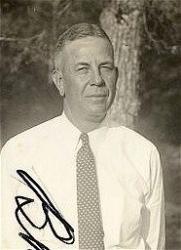
B. B. McKinney

1886 - 1952 Composer of "[O'er the hill the sun is setting]" in Pilot Hymns Pseudonyms-- Martha Annis (his mother’s maiden name was Martha Annis Heflin) Otto Nellen Gene Routh (his wife’s maiden name was Leila Irene Routh) ----- Son of James Calvin McKinney and Martha Annis Heflin McKinney, B . B. attended Mount Lebanon Academy, Louisiana; Louisiana College, Pineville, Louisiana; the Southwestern Baptist Seminary in Fort Worth, Texas; the Siegel-Myers Correspondence School of Music, Chicago, Illinois (BM.1922); and the Bush Conservatory of Music, Chicago. Oklahoma Baptist University awarded him an honorary MusD degree in 1942. McKinney served as music editor at the Robert H. Coleman company in Dallas, Texas (1918–35). In 1919, after several months in the army, McKinney returned to Fort Worth, where Isham E. Reynolds asked him to join the faculty of the School of Sacred Music at Southwestern Baptist Theological Seminary. He taught at the seminary until 1932, then pastored in at the Travis Avenue Baptist Church in Fort Worth (1931–35). In 1935, McKinney became music editor for the Baptist Sunday School Board in Nashville, Tennessee. McKinney wrote words and music for about 150 songs, and music for 115 more. --© Cyber Hymnal™ (www.hymntime.com/tch)

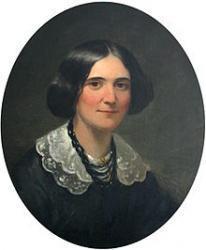
Alice Cary

1820 - 1872 Author of "Nearer Home" in Pilot Hymns Alice Cary (1820-1871) was born and raised in Mount Healthy in Hamilton County, Ohio. Her family had come from Lyme, New Hampshire when her grandfather was given land in return for his service in the Continental Army. She had been nationally recognized as an interpreter of pioneer traditions. Her short story collections depict Mount Healthy as it was transformed from an isolated rural village to a Cincinnati suburb. She and her sister Phoebe wrote for local religious periodicals before Alice moved to New York City. John Greenleaf Whitier praised Alice's stories as "simple, natural, truthful [with] a keen sense of humor and pathos of the comedy and tragedy of life in the country." Her hymn "Along the mountain track of life" was published in H.W.Beecher's Plymouth Collection, 1856. Her hymn titled "Nearer Home" was published in W.A.Ogden's Crown of Life (Toledo, OH: Whitney, 1875). Mary Louise VanDyke ====================================== Cary, Alice, the elder of two gifted sisters, was born near Cincinnati, Ohio, 1820, removed to New York in 1852, and died there Feb. 12, 1871. The story of the two sisters—of their courageous move from a rural, western home, their life in the metropolis, their mutual affection, and inability to live apart—has attracted much admiring and sympathetic interest. As poets they were of nearly equal merit. Besides some prose works, Alice published a volume of Poems in 1850. Her hymns are:— 1. Earth with its dark and dreadful ills. Death anticipated. This fine lyric is given in Hymns and Songs of Praise, N. Y., 1874, and dated 1870. 2. Along the mountain track of life. Lent. The authorship of this hymn, although sometimes attributed to Alice Cary, is uncertain. It appeared anonymously in H. W. Beecher's Plymouth Collection, 1855, No. 438. It would seem from its tone and the refrain, "Nearer to Thee," to have been suggested by Mrs. Adams's "Nearer, my God, to Thee," which appeared in 1841. In addition to these there are the following hymns by her in the Lyra Sacra Americana, 1868:— 3. Bow, angels, from your glorious state. Peace desired. 4. I cannot plainly see the way. Providence. 5. Leave me, dear ones, to my slumber. Death anticipated. 6. Light waits for us in heaven. Heaven. 7. A crown of glory bright. His Fadeless Crown. In the Methodist Sunday School Hymn Book (London), 1879. [Rev. F. M. Bird, M.A.] --John Julian, Dictionary of Hymnology (1907) ====================== Cary, Alice, p. 214, i. From her Ballads, Lyrics and Hymns, N.Y., 1866, the following are in Horder's Worship Song, 1905:— 1. O day to sweet religious thought. Sunday. 2. Our days are few and full of strife. Trust in God. The original begins, "Fall, storms of winter, as you may." 3. To Him Who is the Life of life. God and Nature. --John Julian, Dictionary of Hymnology, New Supplement (1907)
It looks like you are using an ad-blocker. Ad revenue helps keep us running. Please consider white-listing Hymnary.org or getting Hymnary Pro to eliminate ads entirely and help support Hymnary.org.