You help make Hymnary.org possible. More than 10 million people from 200+ countries found hymns, liturgical resources and encouragement on Hymnary.org in 2025, including you. Every visit affirms the global impact of this ministry.

If Hymnary has been meaningful to you this year, would you take a moment today to help sustain it? A gift of any size—paired with a note of encouragement if you wish—directly supports the server costs, research work and curation that keep this resource freely available to the world.

Give securely online today, or mail a check to:
Hymnary.org
Calvin University
3201 Burton Street SE
Grand Rapids, MI 49546

Thank you for your partnership, and may the hope of Advent fill your heart.

Search Results

Tune Identifier:"^st_fulbert_gauntlett$"

Planning worship? Check out our sister site, ZeteoSearch.org, for 20+ additional resources related to your search.

Tunes

tune icon
Tune authorities
Audio

ST FULBERT

Meter: 8.6.8.6 Appears in 150 hymnals Composer and/or Arranger: Henry John Gauntlett (1805-1876) Tune Key: E Flat Major Incipit: 55126 54353 56171 Used With Text: Ye choirs of new Jerusalem

Texts

text icon
Text authorities

Ye Choirs Of New Jerusalem

Author: Robert Campbell, 1814-1868; Fulbert of Chartres, d. 1028 Meter: 8.6.8.6 Appears in 67 hymnals Used With Tune: ST FULBERT
Page scans

Jerusalem, my happy home

Author: F. B. P. Appears in 858 hymnals Used With Tune: ST. FULBERT, or ST. LEOFRED

O God of truth, whose living word

Author: Thomas Hughes Appears in 82 hymnals Used With Tune: ST. FULBERT

Instances

instance icon
Published text-tune combinations (hymns) from specific hymnals
TextPage scan

Ye choirs of new Jerusalem

Author: St Fulbert of Chartres, d. 1028; Robert Campbell, 1814-68 Hymnal: The New English Hymnal #124 (1986) Meter: 8.6.8.6 Lyrics: 1 Ye choirs of new Jerusalem, Your sweetest notes employ, The Paschal victory to hymn In strains of holy joy. 2 How Judah's Lion burst his chains, And crushed the serpent's head; And brought with him, from death's domains, The long-imprisoned dead. 3 From hell's devouring jaws the prey Alone our Leader bore; His ransomed hosts pursue their way Where he hath gone before. 4 Triumphant in his glory now His sceptre ruleth all, Earth, heaven, and hell before him bow, And at his footstool fall. 5 While joyful thus his praise we sing, His mercy we implore, Into his palace bright to bring And keep us evermore. 6 All glory to the Father be, All glory to the Son, All glory, Holy Ghost, to thee, While endless ages run. Alleluya! Amen. Topics: The Christian Year Eastertide Languages: English Tune Title: ST FULBERT
Page scan

Ye choirs of new Jerusalem

Author: St. Fulbert of Chartres; R. Campbell Hymnal: The English Hymnal #139 (1906) Languages: English Tune Title: ST. FULBERT

Ye choirs of new Jerusalem

Author: St. Fulbert of Chartres; R. Campbell Hymnal: The English Hymnal #139 (1933) Languages: English Tune Title: ST. FULBERT

People

person icon
Authors, composers, editors, etc.

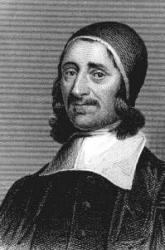
Richard Baxter

1615 - 1691 Person Name: Richard Baxter, 1615-91 Author of "Lord, It Belongs Not to My Care" in Lutheran Service Book Baxter, Richard. Only s. of Richard Baxter, yeoman, Eaton Constantine, Shropshire, b. at Rowton, Shropshire, Nov. 12,1615. He was educated at Wroxeter School, and for a time held the Mastership of the Dudley Grammar School. On taking Holy Orders, he became, in 1640, Ourate of Kidderminster. Subsequently he was for some time chaplain to one of Cromwell's regiments. Through weakness he had to take an enforced rest, during which he wrote his Saints’ Everlasting Rest. On regaining his health he returned to Kidderminster, where he remained until 1660, when he removed to London. At the Restoration he became chaplain to Charles II and was offered the bishopric of Hereford, which he refused. On the passing of the Act of Uniformity, he retired from active duty as a Minister of the Church of England. In or about 1673 he took out a licence as a Nonconformist Minister and commenced lecturing in London. He d. Dec. 8, 1691. His prose works are very numerous. His poetical are :— (1) Poetical Fragments: Heart Imployment with God and Itself; The Concordant Discord of a Broken-healed Heart, tendon, Printed by T. Snowdon for B. Simmons, at the 3 Golden Cocks, &c, 1681 (2nd ed. 1689; 3rd ed. 1699). It consists of accounts of his religious experiences in verse, and is dated "London, at the Door of Eternity; Rich. Baxter, Aug. 1, 1681." (2) Additions to the Poetical Fragments of Rich. Baxter, written for himself, and Communicated to such as are more for serious Verse than smooth, London, Printed for B. Simmons at the Three Golden Cocks at the Westend of St. Pauls, 1683. (3) A Paraphrase on the Psalms, With other Hymns Left fitted for the Press, pub. the year following his death (1692). [Early English Hymnody, x., and English Psalters, 6 xii.] The Poetical Fragments were republished by Pickering, Lond., 1821. From this work his well-known hymn, " Now [Lord] it belongs not to my care," is taken (see "My whole, though broken, heart, O Lord.") -John Julian, Dictionary of Hymnology (1907) See also in: Hymn Writers of the Church

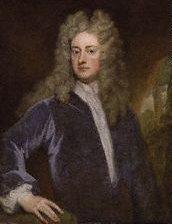
Joseph Addison

1672 - 1719 Author of "When all Thy mercies, O my God" in Common Service Book of the Lutheran Church Addison, Joseph, born at Milston, near Amesbury, Wiltshire, May 1, 1672, was the son of the Rev. Lancelot Addison, sometime Dean of Lichfield, and author of Devotional Poems, &c, 1699. Addison was educated at the Charterhouse, and at Magdalen College, Oxford, graduating B.A. 1691 and M.A. 1693. Although intended for the Church, he gave himself to the study of law and politics, and soon attained, through powerful influence, to some important posts. He was successively a Commissioner of Appeals, an Under Secretary of State, Secretary to the Lord Lieutenant of Ireland, and Chief Secretary for Ireland. He married, in 1716, the Dowager Countess of Warwick, and died at Holland House, Kensington, June 17, 1719. Addison is most widely known through his contributions to The Spectator, The Toiler, The Guardian, and The Freeholder. To the first of these he contributed his hymns. His Cato, a tragedy, is well known and highly esteemed. Addison's claims to the authorship of the hymns usually ascribed to him, or to certain of them, have been called in question on two occasions. The first was the publication, by Captain Thompson, of certain of those hymns in his edition of the Works of Andrew Marvell, 1776, as the undoubted compositions of Marvell; and the second, a claim in the Athenaeum, July 10th, 1880, on behalf of the Rev. Richard Richmond. Fully to elucidate the subject it will be necessary, therefore, to give a chronological history of the hymns as they appeared in the Spectator from time to time. i. The History of the Hymns in The Spectator. This, as furnished in successive numbers of the Spectator is :— 1. The first of these hymns appeared in the Spectator of Saturday, July 26, 1712, No. 441, in 4 stanzas of 6 lines. The article in which it appeared was on Divine Providence, signed “C." The hymn itself, "The Lord my pasture shall prepare," was introduced with these words:— "David has very beautifully represented this steady reliance on God Almighty in his twenty-third psalm, which is a kind of pastoral hymn, and filled with those allusions which are usual in that kind of writing As the poetry is very exquisite, I shall present my readers with the following translation of it." (Orig. Broadsheet, Brit. Mus.) 2. The second hymn appeared in the Spectator on Saturday, Aug. 9, 1712, No. 453, in 13 st. of 4 1., and forms the conclusion of an essay on " Gratitude." It is also signed " C," and is thus introduced:— “I have already obliged the public with some pieces of divine poetry which have fallen into my hands, and as they have met with the reception which they deserve, I shall, from time to time, communicate any work of the same nature which has not appeared in print, and may be acceptable to my readers." (Orig. Broadsheet, British Museum) Then follows the hymn:—"When all Thy mercies, 0 my God." 3. The number of the Spectator for Tuesday, Aug. 19, 1712, No. 461, is composed of three parts. The first is an introductory paragraph by Addison, the second, an unsigned letter from Isaac Watts, together with a rendering by him of Ps. 114th; and the third, a letter from Steele. It is with the first two we have to deal. The opening paragraph by Addison is:— “For want of time to substitute something else in the Boom of them, I am at present obliged to publish Compliments above my Desert in the following Letters. It is no small Satisfaction, to have given Occasion to ingenious Men to employ their Thoughts upon sacred Subjects from the Approbation of such Pieces of Poetry as they have seen in my Saturday's papers. I shall never publish Verse on that Day but what is written by the same Hand; yet shall I not accompany those Writings with Eulogiums, but leave them to speak for themselves." (Orig. Broadsheet, British Museum

Anonymous

Author of "My God, I Love Thee" in The Cyber Hymnal In some hymnals, the editors noted that a hymn's author is unknown to them, and so this artificial "person" entry is used to reflect that fact. Obviously, the hymns attributed to "Author Unknown" "Unknown" or "Anonymous" could have been written by many people over a span of many centuries.

Hymnals

hymnal icon
Published hymn books and other collections

Christian Classics Ethereal Hymnary

Publication Date: 2007 Publisher: Grand Rapids, MI: Christian Classics Ethereal Library

Small Church Music

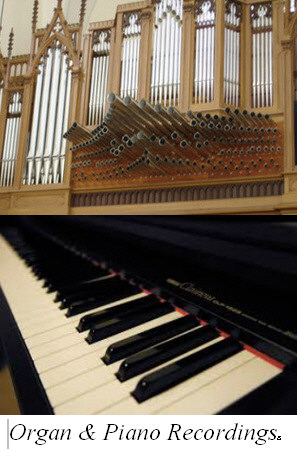
Editors: Horatius Bonar Description: History The SmallChurchMusic site was launched in 2006, growing out of the requests from those struggling to provide suitable music for their services and meetings. Rev. Clyde McLennan was ordained in mid 1960’s and was a pastor in many small Australian country areas, and therefore was acutely aware of this music problem. Having also been trained as a Pipe Organist, recordings on site (which are a subset of the smallchurchmusic.com site) are all actually played by Clyde, and also include piano and piano with organ versions. About the Recordings All recordings are in MP3 format. Churches all around the world use the recordings, with downloads averaging over 60,000 per month. The recordings normally have an introduction, several verses and a slowdown on the last verse. Users are encouraged to use software: Audacity (http://www.audacityteam.org) or Song Surgeon (http://songsurgeon.com) to adjust the MP3 number of verses, tempo and pitch to suit their local needs. Mobile App We have partnered with the developer of the popular NetTracks mobile app to offer the Small Church Music collection as a convenient mobile app. Experience the beloved Small Church Music collection through this iOS app featuring nearly 10,000 high-quality hymn recordings that can be organized into custom setlists and downloaded for offline use—ideal for worship services without musicians, congregational practice, and personal devotion. The app requires a small fee to cover maintenance costs. Please note: While Hymnary.org hosts this music collection, technical support for the app is provided exclusively by the app developer, not by Hymnary.org staff. LicensingCopyright notice: Rev. Clyde McLennan, performer in this collection, has assigned his performer rights in this collection to Hymnary.org. Non-commercial use of these recordings is permitted. For permission to use them for any other purposes, please contact manager@hymnary.org. Home/Music(smallchurchmusic.com) List SongsAlphabetically List Songsby Meter List Songs byTune Name About  
It looks like you are using an ad-blocker. Ad revenue helps keep us running. Please consider white-listing Hymnary.org or getting Hymnary Pro to eliminate ads entirely and help support Hymnary.org.