

 My Starred Hymns
 My Hymnals
 My Purchased Files
Planning worship?
Check out our sister site, ZeteoSearch.org,
for 20+ additional resources related to your search.
- |
User Links
Search Results


ST. GEORGE'S, WINDSOR
Meter: 7.7.7.7 D Appears in 713 hymnals Composer and/or Arranger: Sir G. J. Elvey Tune Key: G Major Incipit: 33531 23335 31233 Used With Text: Christ the Lord is risen to-day!
ST. GEORGE'S, WINDSOR


Come, ye thankful people, come
Author: Henry Alford Meter: 7.7.7.7 D Appears in 759 hymnals Lyrics:
Come, ye thankful people, come,
Raise the song of harvest-home:
All is safely gathered in,
Ere the winter storms begin;
God, our Maker, doth provide
For our wants to be supplied;
Come to God's own temple, come,
Raise the song of harvest-home.
All the world is God's own field,
Fruit unto his praise to yield;
Wheat and tares together sown,
Unto joy or sorrow grown:
First the blade, and then the ear,
Then the full corn shall appear:
Grant, O harvest Lord, that we
Wholesome grain and pure may be.
For the Lord our God shall come,
And shall take his harvest home;
From his field shall in that day
All offenses purge away;
Give his angels charge at last
In the fire the tares to cast,
But the fruitful ears to store
In his garner evermore.
Even so, Lord, quickly come
To thy final harvest-home;
Gather thou thy people in,
Free from sorrow, free from sin;
There, for ever purified,
In thy presence to abide:
Come, with all thine angels, come,
Raise the glorious harvest-home.
Amen.
Topics: Thanksgiving Day Used With Tune: ST. GEORGE'S, WINDSOR
Come, ye thankful people, come
Songs of Thankfulness and Praise
Author: Christopher Wordsworth Meter: 7.7.7.7 D Appears in 136 hymnals Lyrics: 1 Songs of thankfulness and praise,
Jesus, Lord, to you we raise,
once revealed, when heaven's star
brought the wise men from afar;
Branch of royal David's stem
in your birth at Bethlehem,
Word before the world began,
God revealed to us in man.
2 God revealed at Jordan's stream,
prophet, priest and king supreme,
once revealed in power divine
changing water into wine:
Cana's holy wedding guest
keeping to the last the best,
Word before the world began,
God revealed to us in man.
3 God revealed in valiant fight,
conquering the devil's might,
sins forgiven, sickness healed,
life restored and God revealed:
once revealed in gracious will
ever bringing good from ill,
Word before the world began,
God revealed to us in man.
4 Stars shall fall and heavens fade,
sun and moon shall dark be made;
Christ will then like lightning shine,
all will see the glorious sign:
all will then the trumpet hear,
all will see the Son appear,
Word before the world began,
God revealed to us in man. Topics: Jesus Christ Baptism; Jesus Christ Miracles; Biblical Places Jordan, Cana; Epiphany Season; Jesus Christ Baptism of; Jesus Christ Earthly Life and Ministry; Jesus Christ Incarnation; Jesus Christ Miracles; Jesus Christ Return (Coming in Glory); Jesus Christ Temptation; Satan Scripture: Matthew 24:29-31 Used With Tune: ST. GEORGE'S WINDSOR Text Sources: Rev. Hymns for Today's Church, 1982
Songs of Thankfulness and Praise
Hark! the song of jubilee
Author: James Montgomery, 1771-1856 Meter: 7.7.7.7 D Appears in 450 hymnals Topics: God: His Attributes, Works and Word The Lord Jesus Christ - His Coming in Power; Hymns for the Young Missions Used With Tune: ST. GEORGE'S, WINDSOR
Hark! the song of jubilee

Come, Ye Thankful People, Come
Author: Henry Alford, 1810-1871 Hymnal: The Chapbook #47 (1959) Languages: English Tune Title: ST. GEORGE'S WINDSOR (Elvey)
Come, Ye Thankful People, Come
Thou, O Lord, Art God Alone
Hymnal: Psalter Hymnal (Blue) #198 (1976) Meter: 7.7.7.7 D Topics: Hearer Of Prayer, God The; Israel; Jerusalem; Reformation Day; Brevity And Frailty Of Life; Compassion of God; Eternity, God'S; Mercy, God'S; Immutability, God'S Scripture: Psalm 102 Languages: English Tune Title: ST. GEORGE'S WINDSOR (ELVEY)
Thou, O Lord, Art God Alone
Thou, O Lord, Art God Alone
Hymnal: Psalter Hymnal (Red) #208 (1934) Meter: 7.7.7.7 D Lyrics: 1 Thou, O Lord, art God alone;
Everlasting is Thy throne;
Through the ages men shall sing
Praise to heaven's eternal King.
Thou, enthroned above the skies,
Wilt for Zion's help arise;
Let Thy grace to her appear,
For the promised time is near.
2 If with love compassionate
We, Thy servants, mourn her state,
Wilt not Thou, O gracious Lord,
Help in Zion's need afford?
Lord, Thy glory shall appear,
Kings and nations then shall fear;
And Thy Name shall be adored
When Thy Zion is restored.
3 This all ages shall record
For the glory of the Lord;
Thou dost hear the humble prayer,
For the helpless Thou dost care.
Thou eternal art, and great,
Heaven and earth Thou didst create,
Heaven and earth shall pass away,
Changeless Thou shalt live for aye.
4 As one lays a garment by,
Thou wilt change the starry sky
Like a vesture worn and old;
But Thy years shall ne'er be told.
Thou wilt make Thy servants' race
Ever live before Thy face,
And forever at Thy side
Children's children shall abide. Topics: Brevity And Frailty Of Life; Children; The Church on Earth; Communion with God; Compassion of God; Creation; Eternal Life; Eternity of God; God the Hearer of Prayer; Immutability of God; Israel in Captivity; Jerusalem; Love for the Church; Mercy of God; Reformation Day Scripture: Psalm 102 Languages: English Tune Title: ST. GEORGE'S, WINDSOR (ELVEY)
Thou, O Lord, Art God Alone


George J. Elvey
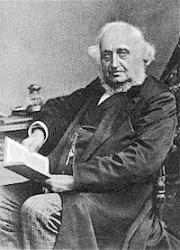
1816 - 1893 Person Name: George J. Elvey, 1816-1893 Composer of "ST. GEORGE'S WINDSOR (Elvey)" in The Chapbook George Job Elvey (b. Canterbury, England, 1816; d. Windlesham, Surrey, England, 1893) As a young boy, Elvey was a chorister in Canterbury Cathedral. Living and studying with his brother Stephen, he was educated at Oxford and at the Royal Academy of Music. At age nineteen Elvey became organist and master of the boys' choir at St. George Chapel, Windsor, where he remained until his retirement in 1882. He was frequently called upon to provide music for royal ceremonies such as Princess Louise's wedding in 1871 (after which he was knighted). Elvey also composed hymn tunes, anthems, oratorios, and service music.
Bert Polman
George J. Elvey
Henry Alford
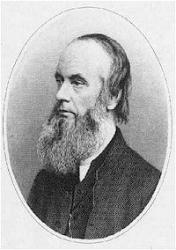
1810 - 1871 Person Name: Henry Alford, 1810-1871 Author of "Come, Ye Thankful People, Come" in The Chapbook Alford, Henry, D.D., son of the Rev. Henry Alford, Rector of Aston Sandford, b. at 25 Alfred Place, Bedford Row, London, Oct. 7, 1810, and educated at Trinity College, Cambridge, graduating in honours, in 1832. In 1833 he was ordained to the Curacy of Ampton. Subsequently he held the Vicarage of Wymeswold, 1835-1853,--the Incumbency of Quebec Chapel, London, 1853-1857; and the Deanery of Canterbury, 1857 to his death, which took. place at Canterbury, Jan. 12, 1871. In addition he held several important appointments, including that of a Fellow of Trinity, and the Hulsean Lectureship, 1841-2. His literary labours extended to every department of literature, but his noblest undertaking was his edition of the Greek Testament, the result of 20 years' labour. His hymnological and poetical works, given below, were numerous, and included the compiling of collections, the composition of original hymns, and translations from other languages. As a hymn-writer he added little to his literary reputation. The rhythm of his hymns is musical, but the poetry is neither striking, nor the thought original. They are evangelical in their teaching, but somewhat cold and conventional. They vary greatly in merit, the most popular being "Come, ye thankful people, come," "In token that thou shalt not fear," and "Forward be our watchword." His collections, the Psalms and Hymns of 1844, and the Year of Praise, 1867, have not achieved a marked success. His poetical and hymnological works include—
(1) Hymns in the Christian Observer and the Christian Guardian, 1830. (2) Poems and Poetical Fragments (no name), Cambridge, J. J. Deighton, 1833. (3) The School of the Heart, and other Poems, Cambridge, Pitt Press, 1835. (4) Hymns for the Sundays and Festivals throughout the Year, &c.,Lond., Longman ft Co., 1836. (5) Psalms and Hymns, adapted for the Sundays and Holidays throughout the year, &c, Lond., Rivington, 1844. (6) Poetical Works, 2 vols., Lond., Rivington, 1845. (7) Select Poetical Works, London, Rivington, 1851. (8) An American ed. of his Poems, Boston, Ticknor, Reed & Field, 1853(9) Passing away, and Life's Answer, poems in Macmillan's Magazine, 1863. (10) Evening Hexameters, in Good Words, 1864. (11) On Church Hymn Books, in the Contemporary Review, 1866. (12) Year of Praise, London, A. Strahan, 1867. (13) Poetical Works, 1868. (14) The Lord's Prayer, 1869. (15) Prose Hymns, 1844. (16) Abbot of Muchelnaye, 1841. (17) Hymns in British Magazine, 1832. (18) A translation of Cantemus cuncti, q.v.
-- John Julian, Dictionary of Hymnology (1907)
==================
Alford, Henry, p. 39, ii. The following additional hymns by Dean Alford are in common use:—
1. Herald in the wilderness. St. John Baptist. (1867.)
2. Let the Church of God rejoice. SS. Simon and Jude. (1844, but not in his Psalms & Hymns of that year.)
3. Not in anything we do. Sexagesima. (1867.)
4. O Thou at Whose divine command. Sexagesima. (1844.)
5. 0 why on death so bent? Lent. (1867.)
6. Of all the honours man may wear. St. Andrew's Day. (1867.)
7. Our year of grace is wearing to a close. Close of the Year. (1867.)
8. Saviour, Thy Father's promise send. Whit-sunday. (1844.)
9. Since we kept the Saviour's birth. 1st Sunday after Trinity. (1867.)
10. Thou that art the Father's Word. Epiphany. (1844.)
11. Thou who on that wondrous journey. Quinquagesima. (1867.)
12. Through Israel's coasts in times of old. 2nd Sunday after Epiphany. (1867.)
13. Thy blood, O Christ, hath made our peace. Circumcision . (1814.)
14. When in the Lord Jehovah's name. For Sunday Schools. (1844.)
All these hymns are in Dean Alford's Year of Praise, 1867, and the dates are those of their earliest publication, so far as we have been able to trace the same.
--Excerpts from John Julian, Dictionary of Hymnology, Appendix, Part II (1907)
Henry Alford
Charles Wesley
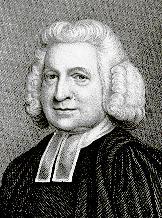
1707 - 1788 Person Name: Charles Wesley, 1707-1788 Author of "See how great a flame aspires" in Singing the Faith Charles Wesley, M.A. was the great hymn-writer of the Wesley family, perhaps, taking quantity and quality into consideration, the great hymn-writer of all ages. Charles Wesley was the youngest son and 18th child of Samuel and Susanna Wesley, and was born at Epworth Rectory, Dec. 18, 1707. In 1716 he went to Westminster School, being provided with a home and board by his elder brother Samuel, then usher at the school, until 1721, when he was elected King's Scholar, and as such received his board and education free. In 1726 Charles Wesley was elected to a Westminster studentship at Christ Church, Oxford, where he took his degree in 1729, and became a college tutor. In the early part of the same year his religious impressions were much deepened, and he became one of the first band of "Oxford Methodists."
In 1735 he went with his brother John to Georgia, as secretary to General Oglethorpe, having before he set out received Deacon's and Priest's Orders on two successive Sundays. His stay in Georgia was very short; he returned to England in 1736, and in 1737 came under the influence of Count Zinzendorf and the Moravians, especially of that remarkable man who had so large a share in moulding John Wesley's career, Peter Bonier, and also of a Mr. Bray, a brazier in Little Britain. On Whitsunday, 1737, [sic. 1738] he "found rest to his soul," and in 1738 he became curate to his friend, Mr. Stonehouse, Vicar of Islington, but the opposition of the churchwardens was so great that the Vicar consented that he "should preach in his church no more." Henceforth his work was identified with that of his brother John, and he became an indefatigable itinerant and field preacher. On April 8, 1749, he married Miss Sarah Gwynne. His marriage, unlike that of his brother John, was a most happy one; his wife was accustomed to accompany him on his evangelistic journeys, which were as frequent as ever until the year 1756," when he ceased to itinerate, and mainly devoted himself to the care of the Societies in London and Bristol. Bristol was his headquarters until 1771, when he removed with his family to London, and, besides attending to the Societies, devoted himself much, as he had done in his youth, to the spiritual care of prisoners in Newgate. He had long been troubled about the relations of Methodism to the Church of England, and strongly disapproved of his brother John's "ordinations." Wesley-like, he expressed his disapproval in the most outspoken fashion, but, as in the case of Samuel at an earlier period, the differences between the brothers never led to a breach of friendship. He died in London, March 29, 1788, and was buried in Marylebone churchyard. His brother John was deeply grieved because he would not consent to be interred in the burial-ground of the City Road Chapel, where he had prepared a grave for himself, but Charles said, "I have lived, and I die, in the Communion of the Church of England, and I will be buried in the yard of my parish church." Eight clergymen of the Church of England bore his pall. He had a large family, four of whom survived him; three sons, who all became distinguished in the musical world, and one daughter, who inherited some of her father's poetical genius. The widow and orphans were treated with the greatest kindness and generosity by John Wesley.
As a hymn-writer Charles Wesley was unique. He is said to have written no less than 6500 hymns, and though, of course, in so vast a number some are of unequal merit, it is perfectly marvellous how many there are which rise to the highest degree of excellence. His feelings on every occasion of importance, whether private or public, found their best expression in a hymn. His own conversion, his own marriage, the earthquake panic, the rumours of an invasion from France, the defeat of Prince Charles Edward at Culloden, the Gordon riots, every Festival of the Christian Church, every doctrine of the Christian Faith, striking scenes in Scripture history, striking scenes which came within his own view, the deaths of friends as they passed away, one by one, before him, all furnished occasions for the exercise of his divine gift. Nor must we forget his hymns for little children, a branch of sacred poetry in which the mantle of Dr. Watts seems to have fallen upon him. It would be simply impossible within our space to enumerate even those of the hymns which have become really classical. The saying that a really good hymn is as rare an appearance as that of a comet is falsified by the work of Charles Wesley; for hymns, which are really good in every respect, flowed from his pen in quick succession, and death alone stopped the course of the perennial stream.
It has been the common practice, however for a hundred years or more to ascribe all translations from the German to John Wesley, as he only of the two brothers knew that language; and to assign to Charles Wesley all the original hymns except such as are traceable to John Wesley through his Journals and other works.
The list of 482 original hymns by John and Charles Wesley listed in this Dictionary of Hymnology have formed an important part of Methodist hymnody and show the enormous influence of the Wesleys on the English hymnody of the nineteenth century.
-- Excerpts from John Julian, Dictionary of Hymnology (1907)
==================
Charles Wesley, the son of Samuel Wesley, was born at Epworth, Dec. 18, 1707. He was educated at Westminster School and afterwards at Christ Church, Oxford, where he graduated M.A. In 1735, he took Orders and immediately proceeded with his brother John to Georgia, both being employed as missionaries of the S.P.G. He returned to England in 1736. For many years he engaged with his brother in preaching the Gospel. He died March 29, 1788. To Charles Wesley has been justly assigned the appellation of the "Bard of Methodism." His prominence in hymn writing may be judged from the fact that in the "Wesleyan Hymn Book," 623 of the 770 hymns were written by him; and he published more than thirty poetical works, written either by himself alone, or in conjunction with his brother. The number of his separate hymns is at least five thousand.
--Annotations of the Hymnal, Charles Hutchins, M.A., 1872.
Charles Wesley


Small Church Music
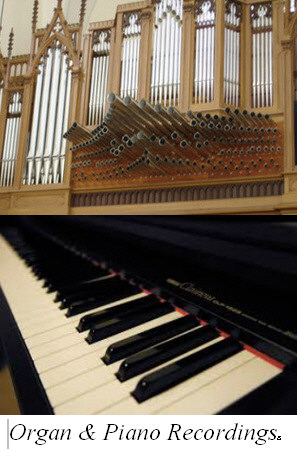
Editors: Charles Wesley Description:
History
The SmallChurchMusic site was launched in 2006, growing out of the requests from those struggling
to provide suitable music for their services and meetings. Rev. Clyde McLennan was ordained in mid
1960’s and was a pastor in many small Australian country areas, and therefore was acutely aware of
this music problem. Having also been trained as a Pipe Organist, recordings on site (which are a subset
of the smallchurchmusic.com site) are all actually played by Clyde, and also include piano and piano
with organ versions.
About the Recordings All recordings are in MP3 format.
Churches all around the world use the recordings, with downloads averaging over 60,000 per
month.
The recordings normally have an introduction, several verses and a slowdown on the last verse.
Users are encouraged to use software: Audacity (http://www.audacityteam.org) or Song Surgeon (http://songsurgeon.com) to adjust the MP3 number of verses, tempo and pitch to suit their local needs.
Mobile App
We have partnered with the developer of the popular NetTracks mobile app to offer the Small Church Music collection as a convenient mobile app. Experience the beloved Small Church Music collection through this iOS app featuring nearly 10,000 high-quality hymn recordings that can be organized into custom setlists and downloaded for offline use—ideal for worship services without musicians, congregational practice, and personal devotion. The app requires a small fee to cover maintenance costs. Please note: While Hymnary.org hosts this music collection, technical support for the app is provided exclusively by the app developer, not by Hymnary.org staff.
LicensingCopyright notice: Rev. Clyde McLennan, performer in this collection, has assigned his performer rights in this collection to Hymnary.org. Non-commercial use of these recordings is permitted. For permission to use them for any other purposes, please contact manager@hymnary.org.
Home/Music(smallchurchmusic.com)
List SongsAlphabetically
List Songsby Meter
List Songs byTune Name
About
Small Church Music
Christian Classics Ethereal Hymnary
Publication Date: 2007 Publisher: Grand Rapids, MI: Christian Classics Ethereal Library
Christian Classics Ethereal Hymnary




