You help make Hymnary.org possible. More than 10 million people from 200+ countries found hymns, liturgical resources and encouragement on Hymnary.org in 2025, including you. Every visit affirms the global impact of this ministry.

If Hymnary has been meaningful to you this year, would you take a moment today to help sustain it? A gift of any size—paired with a note of encouragement if you wish—directly supports the server costs, research work and curation that keep this resource freely available to the world.

Give securely online today, or mail a check to:
Hymnary.org
Calvin University
3201 Burton Street SE
Grand Rapids, MI 49546

Thank you for your partnership, and may the hope of Advent fill your heart.

Search Results

Tune Identifier:"^the_call_vaughan_williams$"

Planning worship? Check out our sister site, ZeteoSearch.org, for 20+ additional resources related to your search.

Tunes

tune icon
Tune authorities
FlexScoreAudio

THE CALL

Meter: 7.7.7.7 Appears in 50 hymnals Composer and/or Arranger: Ralph Vaughan Williams, 1872-1958 Tune Key: E Flat Major Incipit: 13556 45135 56457 Used With Text: Come, my Way, my Truth, my Life

Texts

text icon
Text authorities
TextPage scansFlexScoreFlexPresent

Come, My Way, My Truth, My Life

Author: George Herbert, 1593-1632 Meter: 7.7.7.7 Appears in 70 hymnals Lyrics: 1 Come, my Way, my Truth, my Life: Such a way as gives us breath; Such a truth as ends all strife; Such a life as killeth death. 2 Come, my Light, my Feast, my Strength: Such a light as shows a feast; Such a feast as mends in length; Such a strength as makes his guest. 3 Come, my Joy, my Love, my Heart: Such a joy as none can move; Such a love as none can part; Such a heart as joys in love. Topics: Seasons and Feasts Advent; Rites of the Church Marriage; Way, Truth & Life Scripture: John 14:6 Used With Tune: THE CALL
Audio

Up to You I Lift My Eyes

Author: Emma Turl Meter: 7.7.7.7 Appears in 4 hymnals Topics: Difficult Times; Lament Individual; Seeking God Scripture: Psalm 123 Used With Tune: THE CALL
TextPage scans

Every Night and Every Morn

Author: William Blake, 1757-1827 Meter: 7.7.7.7 Appears in 2 hymnals Lyrics: 1 Every night and every morn some to misery are born; every morn and every night some are born to sweet delight. 2 Joy and woe are woven fine, clothing for the soul divine: under every grief and pine runs a joy with silken twine. 3 It is right it should be so: we were made for joy and woe; and when this we rightly know, safely through the world we go. Topics: Transcending Mystery and Wonder The Celebration of Life; Paradox and Ambiguity; Rich and poor; Wisdom and Understanding Used With Tune: THE CALL

Instances

instance icon
Published text-tune combinations (hymns) from specific hymnals
TextAudio

Come, My Way, My Truth, My Life

Author: George Herbert Hymnal: The Cyber Hymnal #1041 Meter: 7.7.7.7 Lyrics: 1. Come, my way, my truth, my life: Such a way as gives us breath; Such a truth as ends all strife, Such a life as killeth death. 2. Come, my light, my feast, my strength: Such a light as shows a feast, Such a feast as mends in length, Such a strength as makes his guest. 3. Come, my joy, my love, my heart: Such a joy as none can move, Such a love as none can part, Such a heart as joys in love. Languages: English Tune Title: THE CALL

Come, my way, my truth, my life

Author: George Herbert (1593-1632) Hymnal: More Hymns and Spiritual Songs #3 (1971) Topics: General Languages: English Tune Title: THE CALL

Come, My Way, My Truth, My Life

Author: George Herbert, 1593-1632 Hymnal: Sing and Rejoice! #15 (1979) Topics: Call to Worship; Christian Experience; Communion Service - Love Feast; Discipleship; Faith; Joy; Love; Peace Languages: English Tune Title: [Come, my way, my truth, my life]

People

person icon
Authors, composers, editors, etc.

Ralph Vaughan Williams

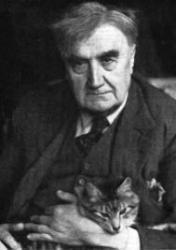
1872 - 1958 Composer of "THE CALL" in The Cyber Hymnal Through his composing, conducting, collecting, editing, and teaching, Ralph Vaughan Williams (b. Down Ampney, Gloucestershire, England, October 12, 1872; d. Westminster, London, England, August 26, 1958) became the chief figure in the realm of English music and church music in the first half of the twentieth century. His education included instruction at the Royal College of Music in London and Trinity College, Cambridge, as well as additional studies in Berlin and Paris. During World War I he served in the army medical corps in France. Vaughan Williams taught music at the Royal College of Music (1920-1940), conducted the Bach Choir in London (1920-1927), and directed the Leith Hill Music Festival in Dorking (1905-1953). A major influence in his life was the English folk song. A knowledgeable collector of folk songs, he was also a member of the Folksong Society and a supporter of the English Folk Dance Society. Vaughan Williams wrote various articles and books, including National Music (1935), and composed numerous arrange­ments of folk songs; many of his compositions show the impact of folk rhythms and melodic modes. His original compositions cover nearly all musical genres, from orchestral symphonies and concertos to choral works, from songs to operas, and from chamber music to music for films. Vaughan Williams's church music includes anthems; choral-orchestral works, such as Magnificat (1932), Dona Nobis Pacem (1936), and Hodie (1953); and hymn tune settings for organ. But most important to the history of hymnody, he was music editor of the most influential British hymnal at the beginning of the twentieth century, The English Hymnal (1906), and coeditor (with Martin Shaw) of Songs of Praise (1925, 1931) and the Oxford Book of Carols (1928). Bert Polman

George Herbert

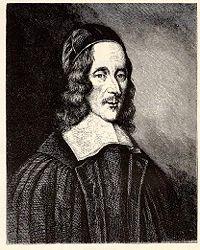
1593 - 1633 Person Name: George Herbert, 1593-1632 Author of "Come, My Way, My Truth, My Life" in Lutheran Book of Worship Herbert, George, M.A., the fifth son of Richard Herbert and Magdalen, the daughter of Sir Richard Newport, was born at his father's seat, Montgomery Castle, April 3, 1593. He was educated at Westminster School, and at Trinity College, Cambridge, graduating B.A. in 1611. On March 15, 1615, he became Major Fellow of the College, M.A. the same year, and in 1619 Orator for the University. Favoured by James I., intimate with Lord Bacon, Bishop Andrewes, and other men of influence, and encouraged in other ways, his hopes of Court preferment were somewhat bright until they were dispelled by the deaths of the Duke of Richmond, the Marquis of Hamilton, and then of King James himself. Retiring into Kent, he formed the resolution of taking Holy Orders. He was appointed by the Bishop of Lincoln to the Prebend of Lcighton Ecclesia and to the living of Leighton Bromswold, Hunts, July 15, 1626. He remained until 1629, when an attack of ague obliged him to remove to his brother's, house at Woodford, Essex. Not improving in health at Woodford, he removed to Dantsey, in Wiltshire, and then as Rector to Bemerton, to which he was inducted, April 26, 1630, where he died Feb. 1632. The entry in the register of Bemerton is "Mr. George Herbert, Esq., Parson of Foughleston and Bemerton, was buried 3 day of March 1632." His life, by Izaak Walton, is well known; another Memoir, by Barnabas Oley, is forgotten. Herbert's prose work, Priest to the Temple, appeared several years after his death: but The Temple, by which he is best known, he delivered to Nicholas Ferrar (q.v.), about three weeks before his death, and authorized him to publish it if he thought fit. This was done iu 1633. The work became popular, and the 13th edition was issued in 1709. It is meditative rather than hymnic in character, and was never intended for use in public worship. In 1697 a selection from The Temple appeared under the title Select Hymns Taken out of Mr. Herbert's Temple & turned into the Common Metre To Be Sung In The Tunes Ordinarily us'd in Churches. London, Parkhurst, 1697. In 1739, J. & C. Wesley made a much more successful attempt to introduce his hymns into public worship by inserting over 40 in a much-altered form in their Hymns & Sacred Poems. As some few of these came into their collection of Psalms & Hymns, 1741, revised 1743, they were long sung by the Methodists, but do not now form part of the Wesleyan Hymn Book. No further attempt seems to have been made to use the Temple poems as hymns until 1853, when some altered and revised by G. Rawson were given in the Leeds Hymn Book of that year. From that time onward more attention was paid to Herbert alike by Churchmen and Nonconformists, and some of his hymns are now widely accepted. Many editions of his works have been published, the most popular being that of the Rev. Robert Aris Wilmott, Lond., Geo. Routledge & Son, 1857; but Dr. Grosart's privately printed edition issued in his Fuller Worthies Library in 1874, in three volumes, is not only the most complete and correct, but included also his psalms not before reprinted, and several poems from a ms. in the Williams Library, and not before published. The Temple has also been pub¬lished in facsimile by Elliott Stock, 1876, with preface by Dr. Grosart; and in ordinary type, 1882, by Wells Gardner, with preface by J. A. Shorthouse. The quaintness of Herbert's lyrics and the peculiarity of several of their metres have been against their adoption for congregational purposes. The best known are: "Let all the world in every corner sing"; "My stock lies dead, and no increase"; "Throw away Thy rod"; "Sweet day, so cool, so calm"; and "Teach me, my God, and King." [William T. Brooke] --John Julian, Dictionary of Hymnology (1907)

Jaroslav J. Vajda

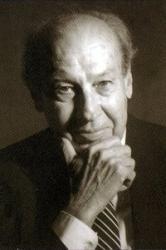
1919 - 2008 Person Name: Jaroslav J. Vajda, b. 1919 Author of "Holy Spirit, Gift of God" in Hymnal Supplement 98 Jaroslav J. Vajda (b. Lorain, Ohio, 1919; d. 2008) Born of Czechoslovakian parents, Vajda was educated at Concordia College in Fort Wayne, Indiana, and Concordia Theological Seminary in St. Louis, Missouri. Ordained as a Lutheran pastor in 1944, he served congregations in Pennsylvania and Indiana until 1963. He was editor of the periodicals The Lutheran Beacon (1959-1963) and This Day (1963-1971) and book editor and developer for Concordia Publishing House in St. Louis from 1971 until his retirement in 1986. Working mainly with hymn texts, Vajda served on several Lutheran commissions of worship. A writer of original poetry since his teens, he was the author of They Followed the King (1965) and Follow the King (1977). His translations from Slovak include Bloody Sonnets (1950), Slovak Christmas (1960), An Anthology of Slovak Literature (1977), and contributions to the Lutheran Worship Supplement (1969) and the Lutheran Book of Worship (1978). A collection of his hymn texts, carols, and hymn translations was issued as Now the Joyful Celebration (1987); its sequel is So Much to Sing About (1991). Vajda's hymns are included in many modern hymnals, and he was honored as a Fellow of the Hymn Society in the United States and Canada in 1988. Bert Polman

Hymnals

hymnal icon
Published hymn books and other collections

Small Church Music

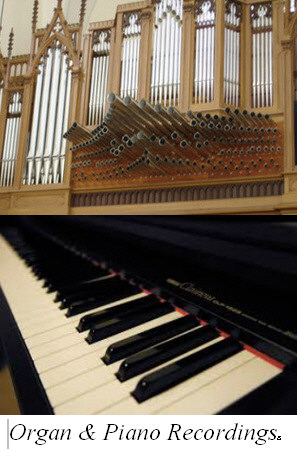
Editors: George Herbert Description: History The SmallChurchMusic site was launched in 2006, growing out of the requests from those struggling to provide suitable music for their services and meetings. Rev. Clyde McLennan was ordained in mid 1960’s and was a pastor in many small Australian country areas, and therefore was acutely aware of this music problem. Having also been trained as a Pipe Organist, recordings on site (which are a subset of the smallchurchmusic.com site) are all actually played by Clyde, and also include piano and piano with organ versions. About the Recordings All recordings are in MP3 format. Churches all around the world use the recordings, with downloads averaging over 60,000 per month. The recordings normally have an introduction, several verses and a slowdown on the last verse. Users are encouraged to use software: Audacity (http://www.audacityteam.org) or Song Surgeon (http://songsurgeon.com) to adjust the MP3 number of verses, tempo and pitch to suit their local needs. Mobile App We have partnered with the developer of the popular NetTracks mobile app to offer the Small Church Music collection as a convenient mobile app. Experience the beloved Small Church Music collection through this iOS app featuring nearly 10,000 high-quality hymn recordings that can be organized into custom setlists and downloaded for offline use—ideal for worship services without musicians, congregational practice, and personal devotion. The app requires a small fee to cover maintenance costs. Please note: While Hymnary.org hosts this music collection, technical support for the app is provided exclusively by the app developer, not by Hymnary.org staff. LicensingCopyright notice: Rev. Clyde McLennan, performer in this collection, has assigned his performer rights in this collection to Hymnary.org. Non-commercial use of these recordings is permitted. For permission to use them for any other purposes, please contact manager@hymnary.org. Home/Music(smallchurchmusic.com) List SongsAlphabetically List Songsby Meter List Songs byTune Name About  
It looks like you are using an ad-blocker. Ad revenue helps keep us running. Please consider white-listing Hymnary.org or getting Hymnary Pro to eliminate ads entirely and help support Hymnary.org.