Scripture References:
st. 1 = Rev. 21:3, John 3:16, John 15:9
st. 2 = Mal. 3:1
st. 3 = 2 Cor. 3:18, 2 Cor. 5:17, 2 Pet. 3:14
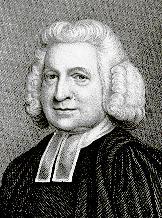
Considered by many to be among Charles Wesley's (PHH 267) finest texts, "Love Divine" was published in four stanzas in his Hymns for those that seek, and those that have Redemption in the Blood of Christ (1747). Many hymnals, including the Psalter Hymnal, omit the original second stanza, which contained the questionable line "take away our power of sinning." A verse from John Dryden's poem beginning with the words "Fairest isle, all isles excelling" used by Henry Purcell in his opera King Arthur were undoubtedly Wesley's inspiration for writing this text. In fact, "Love Divine" was set to a Purcell tune in John and Charles Wesley's Sacred Melody (1761).
Addressed to Christ, this text begins as a prayer for the indwelling of his love in our lives: "fix in us thy humble dwelling" and "let us all thy life receive" (st. 1-2). A tone of praise and adoration runs throughout the text. But the final stanza is clearly a prayer for sanctification, for consistently holy lives. Though this stanza was an outcome of the Specifically Wesleyan doctrine of perfection, it is our fervent Christian prayer that our sanctification will ultimately lead to glorification. As is customary in a Charles Wesley text, biblical allusions abound.
Liturgical Use:
As a sung prayer, probably towards the end of the service or, given its tone of praise, as a closing hymn; Advent.
--Psalter Hymnal Handbook
============================
Love Divine, all loves excelling. C. Wesley. [The Love of Christ.] First published in Hymns for those that Seek, and those that Have Redemption, 1747, No. 9, in 4 stanzas of 8 lines (Poetical Works, 1868-72, vol. iv. p. 219). In 1780 it was included, with the omission of stanza ii., in the Wesleyan Hymn Book, No. 374, and in this form it has passed into a large number of hymn-books in all English-speaking countries. It had previously appeared in full in M. Madan's Psalms & Hymns, 1760; A. M. Toplady's Psalms & Hymns, 1776, and other hymn-books of the Church of England. The two forms, the full and the abridged, have thus come into common use. Tested by its use it is found to rank with the best of its author's work. Mr. G. J. Stevenson has an interesting note thereon in his Methodist Hymn Book Notes, 1883, p. 266.
--John Julian, Dictionary of Hymnology (1907)
Hymnary Pro Subscribers
Access
an additional article
on the Canterbury Dictionary of Hymnology:
Hymnary Pro subscribers have full access to the Canterbury Dictionary of Hymnology.
Get Hymnary Pro


 My Starred Hymns
 My FlexScores
 My Hymnals
 My Purchased Files