You help make Hymnary.org possible. More than 10 million people from 200+ countries found hymns, liturgical resources and encouragement on Hymnary.org in 2025, including you. Every visit affirms the global impact of this ministry.

If Hymnary has been meaningful to you this year, would you take a moment today to help sustain it? A gift of any size—paired with a note of encouragement if you wish—directly supports the server costs, research work and curation that keep this resource freely available to the world.

Give securely online today, or mail a check to:
Hymnary.org
Calvin University
3201 Burton Street SE
Grand Rapids, MI 49546

Thank you for your partnership, and may the hope of Advent fill your heart.

Search Results

Tune Identifier:"^germany_beethoven_gardiner$"

Planning worship? Check out our sister site, ZeteoSearch.org, for 20+ additional resources related to your search.

Tunes

tune icon
Tune authorities
Page scansFlexScoreAudio

GERMANY

Meter: 8.8.8.8 Appears in 776 hymnals Tune Sources: William Gardiner's Sacred Melodies, 1815 Tune Key: B Flat Major Incipit: 51712 56711 17627 Used With Text: Take Up Thy Cross

Texts

text icon
Text authorities

Lord God of Morning and of Night

Author: Francis T. Palgrave Meter: 8.8.8.8 Appears in 78 hymnals Topics: The Presence of God; Morning Used With Tune: GERMANY
TextPage scans

Ye Christian heralds, go proclaim

Author: Mrs. Vokes Appears in 480 hymnals Lyrics: 1 "Ye Christian heralds, go proclaim Salvation in Immanuel's name; To distant climes the tidings bear, And plant the rose of Sharon there." 2 Go with His Word and Sacrament, And in His name spend and be spent; You bring Immanuel's saving grace Unto a lost and dying race. 3 From out the depths of open grave Their need cries loudly: Help, O save! Go then, and toil while yet 'tis day; He, who you serve, attends your way. Topics: The Catechism The Ministry Used With Tune: GERMANY (Walton) Text Sources: Altered, Ohio Synod Hymnal, 1880
TextFlexScoreFlexPresent

Jesus, Thy Blood and Righteousness

Author: John Wesley; Nikolaus Ludwig von Zinzendorf Meter: 8.8.8.8 Appears in 507 hymnals Lyrics: 1. Jesus, thy blood and righteousness, My beauty are, my glorious dress; Midst flaming worlds, in these arrayed, With joy shall I lift up my head. 2. The holy, meek, unspotted Lamb, Who from the Father's bosom came, Who died for me, e'en me t' atone, Now for my Lord and God I own. 3. Lord, I believe thy precious blood, Which at the mercy seat of God, Forever doth for sinners plead, For me, e'en for my soul was shed. 4. When from the dust of death I rise To claim my mansion in the skies, E’en then this shall be all my plea, Jesus hath lived, hath died for me. 5. Jesus, be endless praise to thee, Whose boundless mercy hath for me And all who trust thy hands hath made An everlasting ransom paid. 6. Ah! give to all, almighty Lord, With pow’r to speak thy gracious word, That all who to thy wounds will flee May find eternal life in thee. 7. Oh, let the dead now hear thy voice! Now bid thy banished ones rejoice; Their beauty this, their glorious dress, Jesus, thy blood and righteousness. Topics: Resurrection Scripture: 1 Peter 1:17-19 Used With Tune: GERMANY

Instances

instance icon
Published text-tune combinations (hymns) from specific hymnals
Page scan

Where Cross the Crowded Ways of Life

Author: Frank Mason North, 1850-1935 Hymnal: Hymnal and Liturgies of the Moravian Church #532 (1969) Meter: 8.8.8.8 Topics: The Life in Christ Community, Nation and World Languages: English Tune Title: GERMANY

Louvar eu quero o Salvador

Author: Sarah Poulton Kalley Hymnal: Hinário Luterano #207 (2016) Topics: Louvor e Gratidão Scripture: Mark 7:37 Languages: Portuguese Tune Title: WALTON (GERMANY)

Jesus, Thy Blood and Righteousness

Author: Nicholas von Zinzendorf; John Wesley Hymnal: The Sing! Hymnal #254 (2025) Topics: Atonement; Adoration of Jesus; Blood of Jesus; Redemption; Salvation; The Work of Christ Scripture: Isaiah 61:10 Languages: English Tune Title: GERMANY

People

person icon
Authors, composers, editors, etc.

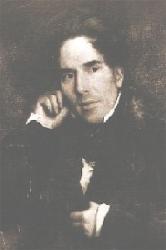
William Gardiner

1770 - 1853 Adapter of "GERMANY" in The Sing! Hymnal William Gardiner (b. Leicester, England, 1770; d. Leicester, 1853) The son of an English hosiery manufacturer, Gardiner took up his father's trade in addition to writing about music, composing, and editing. Having met Joseph Haydn and Ludwig van Beethoven on his business travels, Gardiner then proceeded to help popularize their compositions, especially Beethoven's, in England. He recorded his memories of various musicians in Music and Friends (3 volumes, 1838-1853). In the first two volumes of Sacred Melodies (1812, 1815), Gardiner turned melodies from composers such as Haydn, Mozart, and Beethoven into hymn tunes in an attempt to rejuvenate the singing of psalms. His work became an important model for American editors like Lowell Mason (see Mason's Boston Handel and Haydn Collection, 1822), and later hymnbook editors often turned to Gardiner as a source of tunes derived from classical music. Bert Polman

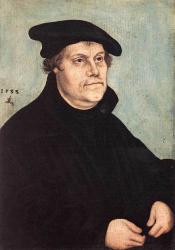
Martin Luther

1483 - 1546 Author of "Come, Holy Spirit, God and Lord!" in Common Service Book of the Lutheran Church Luther, Martin, born at Eisleben, Nov. 10, 1483; entered the University of Erfurt, 1501 (B.A. 1502, M.A.. 1503); became an Augustinian monk, 1505; ordained priest, 1507; appointed Professor at the University of Wittenberg, 1508, and in 1512 D.D.; published his 95 Theses, 1517; and burnt the Papal Bull which had condemned them, 1520; attended the Diet of Worms, 1521; translated the Bible into German, 1521-34; and died at Eisleben, Feb. 18, 1546. The details of his life and of his work as a reformer are accessible to English readers in a great variety of forms. Luther had a huge influence on German hymnody. i. Hymn Books. 1. Ellich cristlich lider Lobgesang un Psalm. Wittenberg, 1524. [Hamburg Library.] This contains 8 German hymns, of which 4 are by Luther. 2. Eyn Enchiridion oder Handbuchlein. Erfurt, 1524 [Goslar Library], with 25 German hymns, of which 18 are by Luther. 3. Geystliche Gesangk Buchleyn. Wittenberg, 1524 [Munich Library], with 32 German hymns, of which 24 are by Luther. 4. Geistliche Lieder auffs new gebessert. Wittenberg. J. Klug, 1529. No copy of this book is now known, but there was one in 1788 in the possession of G. E. Waldau, pastor at Nürnberg, and from his description it is evident that the first part of the Rostock Gesang-Buch, 1531, is a reprint of it. The Rostock Gesang-Buch, 1531, was reprinted by C. M. Wiechmann-Kadow at Schwerin in 1858. The 1529 evidently contained 50 German hymns, of which 29 (including the Litany) were by Luther. 5. Geistliche Lieder auffs new gebessert. Erfurt. A. Rauscher, 1531 [Helmstädt, now Wolfenbüttel Library], a reprint of No. 4. 6. Geistliche Lieder. Wittenberg. J. Klug, 1535 [Munich Library. Titlepage lost], with 52 German hymns, of which 29 are by Luther. 7. Geistliche Lieder auffs new gebessert. Leipzig. V. Schumann, 1539 [Wernigerode Library], with 68 German hymns, of which 29 are by Luther. 8. Geistliche Lieder. Wittenberg. J. Klug, 1543 [Hamburg Library], with 61 German hymns, of which 35 are by Luther. 9. Geystliche Lieder. Leipzig. V. Babst, 1545 [Gottingen Library]. This contains Luther's finally revised text, but adds no new hymns by himself. In pt. i. are 61 German hymns, in pt. ii. 40, of which 35 in all are by Luther. For these books Luther wrote three prefaces, first published respectively in Nos. 3, 4, 9. A fourth is found in his Christliche Geseng, Lateinisch und Deudsch, zum Begrebnis, Wittenberg, J. Klug, 1542. These four prefaces are reprinted in Wackernagel’s Bibliographie, 1855, pp. 543-583, and in the various editions of Luther's Hymns. Among modern editions of Luther's Geistliche Lieder may be mentioned the following:— Carl von Winterfeld, 1840; Dr. C. E. P. Wackernagel, 1848; Q. C. H. Stip, 1854; Wilhelm Schircks, 1854; Dr. Danneil, 1883; Dr. Karl Gerok, 1883; Dr. A. F. W. Fischer, 1883; A. Frommel, 1883; Karl Goedeke, 1883, &c. In The Hymns of Martin Luther. Set to their original melodies. With an English version. New York, 1883, ed. by Dr. Leonard Woolsey Bacon and Nathan H. Allen, there are the four prefaces, and English versions of all Luther's hymns, principally taken more or less altered, from the versions by A. T. Russell, R. Massie and Miss Winkworth [repub. in London, 1884]. Complete translations of Luther's hymns have been published by Dr. John Anderson, 1846 (2nd ed. 1847), Dr. John Hunt, 1853, Richard Massie, 1854, and Dr. G. Macdonald in the Sunday Magazine, 1867, and his Exotics, 1876. The other versions are given in detail in the notes on the individual hymns. ii. Classified List of Luther's Hymns. Of Luther's hymns no classification can be quite perfect, e.g. No. 3 (see below) takes hardly anything from the Latin, and No. 18 hardly anything from the Psalm. No. 29 is partly based on earlier hymns (see p. 225, i.). No. 30 is partly based on St. Mark i. 9-11, and xvi., 15, 16 (see p. 226, ii.). No. 35 is partly based on St. Luke ii. 10-16. The following arrangement, however, will answer all practical purposes. A. Translations from the Latin. i. From Latin Hymns: 1. Christum wir sollen loben schon. A solis ortus cardine 2. Der du bist drei in Einigkeit. O Lux beata Trinitas. 3. Jesus Christus unser Heiland, Der von. Jesus Christus nostra salus 4. Komm Gott Schopfer, heiliger Geist. Veni Creator Spiritus, Mentes. 5. Nun komm der Beidenheiland. Veni Redemptor gentium 6. Was flirchst du Feind Herodes sehr. A solis ortus cardine ii. From Latin Antiphons, &c.: 7. Herr Gott dich loben wir. Te Deum laudamus. 8. Verleih uns Frieden gnädiglich. Dapacem, Domine 9. Wir glauben all an einen Gott. iii. Partly from the Latin, the translated stanzas being adopted from Pre-Reformation Versions: 10. Komm, heiliger Geist, Herre Gott. 11. Mitten wir im Leben sind. Media vita in morte sumus. B. Hymns revised and enlarged from Pre-Reformation popular hymns. 12. Gelobet seist du Jesus Christ. 13. Gott der Vater wohn uns bei. 14. Gott sei gelobet und gebenedeiet. 15. Nun bitten wir den heiligen Geist. C. Psalm versions. 16. Ach Gott vom Himmel, sieh darein. 17. Aus tiefer Noth schrei ich zu dir. 18. Ein' feste Burg ist unser Gott. 19. Es spricht der Unweisen Mund wohl. 20. Es wollt uns Gott genädig sein. 21. War Gott nicht mit uns diese Zeit. 22. Wohl dem, der in Gotten Furcht steht. D. Paraphrases of other portions of Holy Scripture. 23. Diess sind die heilgen zehn Gebot. 24. Jesaia dem Propheten das geschah. 25. Mensch willt du leben seliglich. 26. Mit Fried und Freud ich fahr dahin. 27. Sie ist mir lieb die werthe Magd. 28. Vater unser im Himmelreich. E. Hymns mainly Original. 29. Christ lag in Todesbanden. 30. Christ unser Herr zum Jordan kam. 31. Ein neues Lied wir heben an. 32. Erhalt uns Herr bei deinem Wort. 33. Jesus Christus unser Heiland, Der den, 34. Nun freut euch lieben Christengemein. 35. Vom Himmel hoch da komm ich her. 36. Vom Himmel kam der Engel Schaar. In addition to these — 37. Fur alien Freuden auf Erden. 38. Kyrie eleison. In the Blätter fur Hymnologie, 1883, Dr. Daniel arranges Luther's hymns according to what he thinks their adaptation to modern German common use as follows:— i. Hymns which ought to be included in every good Evangelical hymn-book: Nos. 7-18, 20, 22, 28, 29, 30, 32, 34, 35, 36, 38. ii. Hymns the reception of which into a hymn-book might be contested: Nos. 2, 3, 4, 19, 21, 22, 23, 24, 25, 33. iii. Hymns not suited for a hymn-book: Nos. 1, 5, 6, 27, 31, 37. [Rev. James Mearns, M.A.] --John Julian, Dictionary of Hymnology (1907)

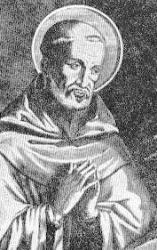
St. Bernard of Clairvaux

1090 - 1153 Person Name: Bernard of Clairvaux, d. 1153 Author of "Jesus, Thou Joy of loving hearts!" in Common Service Book of the Lutheran Church Bernard of Clairvaux, saint, abbot, and doctor, fills one of the most conspicuous positions in the history of the middle ages. His father, Tecelin, or Tesselin, a knight of great bravery, was the friend and vassal of the Duke of Burgundy. Bernard was born at his father's castle on the eminence of Les Fontaines, near Dijon, in Burgundy, in 1091. He was educated at Chatillon, where he was distinguished for his studious and meditative habits. The world, it would be thought, would have had overpowering attractions for a youth who, like Bernard, had all the advantages that high birth, great personal beauty, graceful manners, and irresistible influence could give, but, strengthened in the resolve by night visions of his mother (who had died in 1105), he chose a life of asceticism, and became a monk. In company with an uncle and two of his brothers, who had been won over by his entreaties, he entered the monastery of Citeaux, the first Cistercian foundation, in 1113. Two years later he was sent forth, at the head of twelve monks, from the rapidly increasing and overcrowded abbey, to found a daughter institution, which in spite of difficulties and privations which would have daunted less determined men, they succeeded in doing, in the Valley of Wormwood, about four miles from the Abbey of La Ferté—itself an earlier swarm from the same parent hive—on the Aube. On the death of Pope Honorius II., in 1130, the Sacred College was rent by factions, one of which elected Gregory of St. Angelo, who took the title of Innocent II., while another elected Peter Leonis, under that of Anacletua II. Innocent fled to France, and the question as to whom the allegiance of the King, Louie VI., and the French bishops was due was left by them for Bernard to decide. At a council held at Etampes, Bernard gave judgment in favour of Innocent. Throwing himself into the question with all the ardour of a vehement partisan, he won over both Henry I., the English king, and Lothair, the German emperor, to support the same cause, and then, in 1133, accompanied Innocent II., who was supported by Lothair and his army, to Italy and to Rome. When Lothair withdrew, Innocent retired to Pisa, and Bernard for awhile to his abbey of Clairvaux. It was not until after the death of Anacletus, the antipope, in January, 1138, and the resignation of his successor, the cardinal-priest Gregory, Victor II., that Innocent II., who had returned to Rome with Bernard, was universally acknowledged Pope, a result to which no one had so greatly contributed as the Abbot of Clairvaux. The influence of the latter now became paramount in the Church, as was proved at the Lateran Council of 1139, the largest council ever collected together, where the decrees in every line displayed the work of his master-hand. After having devoted four years to the service of the Pope, Bernard, early in 1135, returned to Clairvaux. In 1137 he was again at Rome, impetuous and determined as ever, denouncing the election of a Cluniac instead of a Clairvaux monk to the see of Langres in France, and in high controversy in consequence with Peter, the gentle Abbot of Cluny, and the Archbishop of Lyons. The question was settled by the deposition by the Pope of the Cluniac and the elevation of a Clairvaux monk (Godfrey, a kinsman of St. Bernard) into his place. In 1143, Bernard raised an almost similar question as to the election of St. William to the see of York, which was settled much after the same fashion, the deposition, after a time, if only for a time, of William, and the intrusion of another Clairvaux monk, Henry Murdac, or Murduch, into the archiepiccopal see. Meantime between these two dates—in 1140—the condemnation of Peter Abilaid and his tenets, in which matter Bernard appeared personally as prosecutor, took place at a council held at Sens. Abelard, condemned at Sens, appealed to Rome, and, resting awhile on his way thither, at Cluny, where Peter still presided as Abbot, died there in 1142. St. Bernard was next called upon to exercise his unrivalled powers of persuasion in a very different cause. Controversy over, he preached a crusade. The summer of 1146 was spent by him in traversing France to rouse the people to engage in the second crusade; the autumn with a like object in Germany. In both countries the effect of his appearance and eloquence was marvellous, almost miraculous. The population seemed to rise en masse, and take up the cross. In 1147 the expedition started, a vast horde, of which probably not a tenth ever reached Palestine. It proved a complete failure, and a miserable remnant shared the flight of their leaders, the Emperor Conrad, and Louis, King of France, and returned home, defeated and disgraced. The blame was thrown upon Bernard, and his apology for his part in the matter is extant. He was not, however, for long to bear up against reproach; he died in the 63rd year of his age, in 1153, weary of the world and glad to be at rest. With the works of St. Bernard, the best ed. of which was pub. by Mabillon at Paris in the early part of the 18th cent. (1719), we are not concerned here, except as regards his contributions, few and far between as they are, to the stores of Latin hymnology. There has been so much doubt thrown upon the authorship of the hymns which usually go by his name,—notably by his editor, Mabillon himself,—that it is impossible to claim any of them as having been certainly written by him; but Archbishop Trench, than whom we have no greater modern authority on such a point, is satisfied that the attribution of them all, except the "Cur mundus militat," to St. Bernard is correct. "If he did not write," the Archbishop says, "it is not easy to guess who could have written them; and indeed they bear profoundly the stamp of his mind, being only inferior in beauty to his prose." The hymns by which St. Bernard is best known as a writer of sacred poetry are: (1.) "Jesu duicis memoria," a long poem on the " Name of Jesus"—known as the "Jubilus of St. Bernard," and among mediaeval writers as the " Rosy Hymn." It is, perhaps, the best specimen of what Neale describes as the "subjective loveliness " of its author's compositions. (2.) "Salve mundi Salutore," an address to the various limbs of Christ on the cross. It consists of 350 lines, 50 lines being addressed to each. (3.) "Laetabundus, exultet fidelis chorus: Alleluia." This sequence was in use all over Europe. (4.) "Cum sit omnis homo foenum." (5.) " Ut jucundas cervus undas." A poem of 68 lines, and well known, is claimed for St. Bernard by Hommey in his Supplementum Patrum, Paris, 1686, p. 165, but on what Archbishop Trench, who quotes it at length, (Sac. Lat. Poetry, p. 242,) deems " grounds entirely insufficient." (6.) " Eheu, Eheu, mundi vita," or " Heu, Heu, mala mundi vita." A poem of nearly 400 lines, is sometimes claimed for St. Bernard, but according to Trench, “on no authority whatever." (7.) “O miranda vanitas." This is included in Mabillon's ed. of St. Bernard's Works. It is also attributed to him by Rambach, vol. i. p. 279. Many other hymns and sequences are attributed to St. Bernard. Trench speaks of a " general ascription to him of any poems of merit belonging to that period whereof the authorship was uncertain." Hymns, translated from, or founded on, St. Bernard's, will be found in almost every hymnal of the day, details of which, together with many others not in common use, will be found under the foregoing Latin first lines. -John Julian, Dictionary of Hymnology (1907) See also in: Hymn Writers of the Church

Hymnals

hymnal icon
Published hymn books and other collections

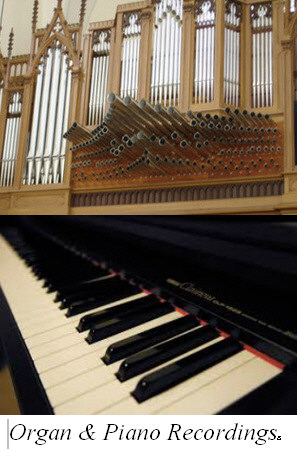
Small Church Music

Editors: Frank Mason North Description: History The SmallChurchMusic site was launched in 2006, growing out of the requests from those struggling to provide suitable music for their services and meetings. Rev. Clyde McLennan was ordained in mid 1960’s and was a pastor in many small Australian country areas, and therefore was acutely aware of this music problem. Having also been trained as a Pipe Organist, recordings on site (which are a subset of the smallchurchmusic.com site) are all actually played by Clyde, and also include piano and piano with organ versions. About the Recordings All recordings are in MP3 format. Churches all around the world use the recordings, with downloads averaging over 60,000 per month. The recordings normally have an introduction, several verses and a slowdown on the last verse. Users are encouraged to use software: Audacity (http://www.audacityteam.org) or Song Surgeon (http://songsurgeon.com) to adjust the MP3 number of verses, tempo and pitch to suit their local needs. Mobile App We have partnered with the developer of the popular NetTracks mobile app to offer the Small Church Music collection as a convenient mobile app. Experience the beloved Small Church Music collection through this iOS app featuring nearly 10,000 high-quality hymn recordings that can be organized into custom setlists and downloaded for offline use—ideal for worship services without musicians, congregational practice, and personal devotion. The app requires a small fee to cover maintenance costs. Please note: While Hymnary.org hosts this music collection, technical support for the app is provided exclusively by the app developer, not by Hymnary.org staff. LicensingCopyright notice: Rev. Clyde McLennan, performer in this collection, has assigned his performer rights in this collection to Hymnary.org. Non-commercial use of these recordings is permitted. For permission to use them for any other purposes, please contact manager@hymnary.org. Home/Music(smallchurchmusic.com) List SongsAlphabetically List Songsby Meter List Songs byTune Name About  

Christian Classics Ethereal Hymnary

Publication Date: 2007 Publisher: Grand Rapids, MI: Christian Classics Ethereal Library
It looks like you are using an ad-blocker. Ad revenue helps keep us running. Please consider white-listing Hymnary.org or getting Hymnary Pro to eliminate ads entirely and help support Hymnary.org.