Scripture References:
all st. = John 6:37
At the age of 32, Charlotte Elliott (b. Clapham, London, England, 1789; d. Brighton, East Sussex, England, 1871) suffered a serious illness that left her a semi-invalid for the rest of her life. Within a year she went through a spiritual crisis and confessed to the Swiss evangelist Henri A. Cesar Malan (PHH 288) that she did not know how to come to Christ. He answered, "Come to him just as you are." Thinking back on that experience twelve years later, in 1834, she wrote “Just as I Am" as a statement of her faith.
Hymn writing provided a way for Elliot to cope with her pain and depression – she wrote approximately 150 hymns, which were published in her Invalid's Hymn Book (several editions, 1834-1854), Hymns for a Week (1839), and Thoughts in Verse on Sacred Subjects (1869). Many of her hymns reflect her chronic pain and illness but also reveal that faith gave her perseverance and hope.
“Just as I Am" was first published in the 1836 edition of Invalid's Hymn Book with the subheading "Him that cometh unto me I will in no wise cast out" (John 6:37). She added a seventh stanza that same year, when the hymn was also published in her Hours of Sorrow Cheered and Comforted (1836). The Psalter Hymnal prints the four most common stanzas. Widely translated, this hymn has brought consolation to millions.
Liturgical Use:
Service of confession and forgiveness; in response to preaching; for the Lord's Supper; in evangelistic services as a hymn of invitation.
--Psalter Hymnal Handbook
==========================
Just as I am, without one plea. Charlotte Elliott. [The Lamb of God.] Written for and first published in the Invalid's Hymn Book, 1836, in 6 stanzas of 4 lines, and headed with the text, "Him that cometh unto Me, I will in no wise cast out." During the same year it also appeared in Miss Elliott's Hours of Sorrow Cheered and Comforted, with the additional stanza, "Just as I am, of that free love," &c. From this last work the hymn has been transferred to almost every Hymn published in English-speaking countries during the past fifty years. It has been translated into almost every European language, and into the languages of many distant lands. The testimony of Miss Elliott's brother (the Rev. H. V. Elliott, editor of Psalms and Hymns, 1835) to the great results arising from this one hymn, is very touching. He says:—
"In the course of a long ministry, I hope I have been permitted to see some fruit of my labours; but I feel far more has been done by a single hymn of my sister's."
The text of this hymn is usually given in full, and without alteration, as in Church Hymns, 1871, No. 408. It ranks with the finest hymns in the English language. Its success has given rise to many imitations, the best of which is R. S. Cook's "Just as thou art, without one trace." A Latin rendering, "Ut ego sum! nee alia ratione utens," by R. Bingham, is given in his Hymnologia Christiana Latina 1871, and a second by H. M. Macgill, in his Songs of the Christian Creed and Life, 1876, as, "Tibi, qualis sum, O Christe!"
--John Julian, Dictionary of Hymnology (1907)
===============
Just as I am, without one plea, p. 609, ii. In the Record, Oct. 15, 1897, Bp. H. C. G. Moule of Durham, then Principal of Ridley Hall, Cambridge, gave a most interesting account of Miss Elliott, and of the origin of this hymn. Dr. Moule, who is related to the family, derived his information from family sources. In an abbreviated form this is the beautiful story:—
"Ill-health still beset her. Besides its general trying influence on the spirits, it often caused her the peculiar pain of a seeming uselessness in her life while the circle round her was full of unresting serviceableness for God. Such a time of trial marked the year 1834, when she was forty-five years old, and was living in Westfield Lodge, Brighton. . . . Her brother, the Rev. H. V. Elliott Lp. 328, ii.] had not long before conceived the plan of St. Mary's Hall, at Brighton, a school designed to give, at nominal cost, a high education to the daughters of clergymen; a noble work which is to this day carried on with admirable ability and large success. ]n aid of St. Mary's Hall there was to be held a bazaar. . . . Westfield Lodge was all astir; every member of the large circle was occupied morning and night in the preparations, with the one exception of the ailing sister Charlotte—as full of eager interest as any of them, but physically fit for nothing. The night before the bazaar she was kept wakeful by distressing thoughts of her apparent uselessness; and these thoughts passed—by a transition easy to imagine—into a spiritual conflict, till she questioned the reality of her whole spiritual life, and wondered whether it were anything better after all than an illusion of the emotions, an illusion ready to be sorrowfully dispelled.
"The next day, the busy day of the bazaar . . . the troubles of the night came back upon her with such force that she felt they must be met and conquered in the grace of God. She gathered up in her soul the grand certainties, not of her emotions, but of her salvation: her Lord, His power, His promise. And taking pen and paper from the table she deliberately set down in writing, for her own comfort, 'the formulas of her faith' .... So in verse she restated to herself the Gospel of pardon, peace, and heaven. . . . There, then, always, not only at some past moment, but 'even now,' she was accepted in the Beloved, ‘Just as I am.'
"As the day wore on, her sister-in-law, Mrs. C. V. Elliott [p. 329, i.] . . . came in to see her and bring news of the work. She read the hymn, and asked (she well might) for a copy. So it first stole out from that quiet room into the world, where now for sixty years it has been sowing and reaping, till a multitude which only God can number have been blessed through its message."
Dr. Moule follows with a statement that the hymn was printed in the Invalid's Hymn Book, 1834. With a copy of that book before us we can positively say it is not there. Its earliest date of publication in that collection was the edition of 1836. The actual date, month and day of the bazaar we are unable to trace; neither have we seen, after an extended search, any printed form of the hymn of an earlier date than 1836.
--John Julian, Dictionary of Hymnology, New Supplement (1907)


 My Starred Hymns
 My Hymnals
 My Purchased Files


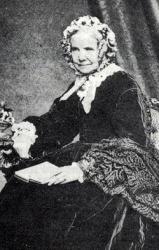 Elliott, Charlotte, daughter of Charles Elliott, of Clapham and Brighton, and granddaughter of the Rev. H. Venn, of Huddersfield, was born March 18, 1789. The first 32 years of her life were spent mostly at Clapham. In 1823 she removed to Brighton, and died there Sept. 22, 1871. To her acquaintance with Dr. C. Malan, of Geneva, is attributed much of the deep spiritual-mindedness which is so prominent in her hymns. Though weak and feeble in body, she possessed a strong imagination, and a well-cultured and intellectual mind. Her love of poetry and music was great, and is reflected in her verse. Her hymns number about 150, a large percentage of which are in common use. The finest and most widely known of these are, "Just as I am” and "My God… Go to person page >






