Log in to make the most of Hymnary.org collections.
Ah, holy Jesus, how hast thou offendedAuthor: Johann Heermann (1630); Translator: Robert Seymour Bridges (1897)Tune: HERZLIEBSTER JESU Published in 97 hymnals Printable scores: PDF, SibeliusAudio files: MIDI | ||
1 Ah, holy Jesus, how hast thou offended,
that we to judge thee have in hate pretended?
By foes derided, by thine own rejected,
O most afflicted!
2 Who was the guilty? Who brought this upon thee?
Alas, my treason, Jesus, hath undone thee!
'Twas I, Lord Jesus, I it was denied thee;
I crucified thee.
3 Lo, the Good Shepherd for the sheep is offered;
the slave hath sinned, and the Son hath suffered.
For our atonement, while we nothing heeded,
God interceded.
4 For me, kind Jesus, was thy incarnation,
thy mortal sorrow, and thy life's oblation;
thy death of anguish and thy bitter passion,
for my salvation.
5 Therefore, kind Jesus, since I cannot pay thee,
I do adore thee, and will ever pray thee,
think on thy pity and thy love unswerving,
not my deserving.
United Methodist Hymnal, 1989
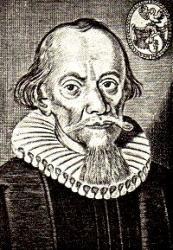
Heermann, Johann, son of Johannes Heermann, furrier at Baudten, near Wohlau, Silesia, was born at Baudten, Oct. 11,1585. He was the fifth but only surviving child of his parents, and during a severe illness in his childhood his mother vowed that if he recovered she would educate him for the ministry, even though she had to beg the necessary money. He passed through the schools at Wohlau; at Fraustadt (where he lived in the house of Valerius Herberger, q. v., who took a great interest in him); the St. Elizabeth gymnasium at Breslau; and the gymnasium at Brieg. At Easter, 1609, he accompanied two young noblemen (sons of Baron Wenzel von Rothkirch), to whom he had been tutor at Brieg, to the University of Strassburg; but an affection of the ey… Go to person page >| First Line: | Ah, holy Jesus, how hast thou offended |
| Author: | Johann Heermann (1630) |
| Translator: | Robert Seymour Bridges (1897) |
| Meter: | 11.11.11.5 |
| Source: | German |
Scripture References:
st. 1 = Isa. 53:3, John 1:11
st. 2 = Matt 26:21-22
st. 3 = John 3:16-17, John 10:14-15, Gal. 2:20
Using imagery from Isaiah 53 as well as from other Bible passages, the text sets forth the Christian doctrine of Christ's atonement: Christ died for the sin of the world in a substitutionary death on the cross. The most striking aspect of the text is its personalization: it was for my sin that Christ died! Thus a generic doctrine has become a deeply personal confession and profound meditation.
Johann Heermann (b. Raudten, Silesia, Austria, 1585; d. Lissa, Posen [now Poland], 1647 ) wrote this text during the misery of the Thirty Years' War (161848). The fifteen stanza German text ("Herzliebster Jesu, was hast du verbrochen") was published in Heermann's Devoti Musica Cordis in 1630 with the heading “The cause of the bitter offerings of Jesus Christ, and consolation from his love and grace. From Augustine.” Heermann based his text on the seventh meditation from Jean de Fecamp's Meditationes, a Latin work wrongly attributed by many scholars, including Heermann, to St. Augustine.
Heermann's own suffering and family tragedy led him to meditate on Christ's undeserved suffering. The only surviving child of a poor furrier and his wife, Heermann fulfilled his mother's vow at his birth that, if he lived, he would become a pastor. Initially a teacher, Heermann became a minister in the Lutheran Church in Koben in 1611 but had to stop preaching in 1634 due to a severe throat infection. He retired in 1638. Much of his ministry took place during the Thirty Years' War. At times he had to flee for his life and on several occasions lost all his possessions. Although Heermann wrote many of his hymns and poems during these devastating times, his personal faith and trust in God continued to be reflected in his lyrics. He is judged to be the finest hymn writer in the era between Martin Luther and Paul Gerhardt, one whose work marks a transition from the objective hymns of the Reformation to the more subjective hymns of the seventeenth century. His hymn texts were published in collections such as Devoti Musica Cordis, Hauss- und Hertz-Musica (1630, expanded in 1636, 1644), and Sontags- und Fest-evangelia (1636).
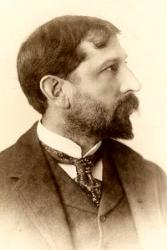
Based on both Latin and German sources, the rather free translation is by Robert S. Bridges (b. Walmer, Kent, England, 1844; d. Boar's Hill, Abingdon, Berkshire, England, 1930). That translation was first published in five stanzas in 1897 in Hymns in Four Parts, a hymn book reissued in 1899 as the famous Yattendon Hymnal. In a modern listing of important poets Bridges' name is often omitted, but in his generation he was considered a great poet and fine scholar. He studied medicine and practiced as a physician until 1881, when he moved to the village of Yattendon. He had already written some poetry, but after 1881 his literary career became a full-time occupation, and in 1913 he was awarded the position of poet laureate in England. Bridges published The Yattendon Hymnal (1899), a collection of one hundred hymns (forty-four written or translated by him with settings mainly from the Genevan psalter, arranged for unaccompanied singing. In addition to volumes of poetry, Bridges also published A Practical Discourse on Some Principles of Hymn-Singing (1899) and About Hymns (1911).
Liturgical Use:
Lent; Holy Week; Lord's Supper.
--Psalter Hymnal Handbook
This hymn was originally based on a Latin text, Meditationes, written by a medieval monk, Jean de Fecamp, in the eleventh century. Johann Heermann, writing during the Thirty Years' War (1618-1648), based his fifteen-stanza German text on de Fecamp's Latin text. The text reflects the great personal suffering Heermann endured during the ravages of the war. Robert S. Bridges, who was named England's poet laureate in 1913, paraphrased Heermann's text in five English stanzas in 1897.
Some hymnals omit the third stanza (“Lo, the Good Shepherd”), and many modernize the language. One change to the text that affects the meaning of the hymn is the replacement of the original third person “man” in the first and third stanzas with the first person “we,” which adds to the personal, convicting message of the text.
Christ's Passion is the main theme of the text. In the first two stanzas, the question is asked: why did Jesus suffer? The final, short line of the second stanza states the answer succinctly: “I crucified thee.” The third and fourth stanzas describe the sacrificial nature of Christ's death. The final stanza is an overflowing of gratitude in response to the great gift bestowed by the Good Shepherd.
This hymn is most frequently sung to the tune HERZLIEBSTER JESU, named for the opening words of the German text. The tune was written by Johann Crüger in 1640, based on the Genevan tune for Psalm 23 and a tune from Johann Hermann Schein's Cantional of 1627. J.S. Bach used this chorale in both the St. Matthew Passion and the St. John Passion. One interesting feature of the tune is the octave leap at the beginning of the last short phrase. This “explosion at the end … emphasizes all the five-syllable lines” (Paul Westermeyer, Hymnal Companion to Evangelical Lutheran Worship, 153). These short lines concisely summarize each stanza, so it is fitting that the tune also emphasizes them.
This hymn could be sung during Lent, Holy Week, or a Lord's Supper service. When sung for Lent or Holy Week, try pairing it with another contemplative hymn on the theme of Christ's Passion, such as “Go to Dark Gethsemane” or “When I Survey the Wondrous Cross” (among many others), which provide a similar opportunity for meditation upon the suffering Jesus bore for our sins. If “Ah, Holy Jesus” is sung for a Lord's Supper service, it could be sung before the sacrament, and a hymn such as “And Can It Be,” or “My Jesus, I Love Thee,” which expound on Christ's love and its meaning for believers, could be sung afterward.
This hymn should be sung at a tempo slow enough to allow the congregation to contemplate its meaning, but without dragging, since the first three long phrases may leave them out of breath. Subdued, simple accompaniment is appropriate. One interesting idea (from the Musician's Guide to Evangelical Lutheran Worship, #349) is to sing one or more verses accompanied only by a solo instrument.
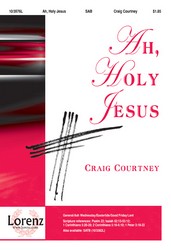
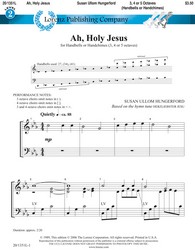
“Ah, Holy Jesus” would also be a good choice for a choral or instrumental prelude or anthem, giving the congregation an opportunity to sit and silently consider the work of Jesus on the cross. The handbell arrangement by Arnold Sherman has a rather dark mood to it, which might be appropriate in a Tennebrae service. Craig Courtney's choral arrangement would be a good choice for a smaller congregation. The choral parts are simple, and the accompaniment, for a pianist of late intermediate skill, effectively suits the mood of the text. Another setting, which requires a few more resources, is by Larry Shackley. The choral and organ accompaniment parts are more difficult than Courtney's arrangement. While the trumpet is an instrument more easily associated with the joyful celebration of Easter, Shackley's use of it here is suitably expressive, especially during the second verse.
Tiffany Shomsky Hymnary.org
PowerPoint | ![]() |
Piano/OrganMore Piano/Organ > | ![]() |
ChoralMore Choral > | ![]() |
InstrumentalMore Instrumental > | ![]() |
HandbellsMore Handbells > | ![]() |
| Instances (21) | First Line | Text Title | Refrain First Line | Authors | Composers | Meter | Scripture | Tune Title | Tune Key | Incipit | Languages | Publication Date | |||||
|---|---|---|---|---|---|---|---|---|---|---|---|---|---|---|---|---|---|
| Chalice Hymnal #210 | Ah, holy Jesus, how hast thou offended | Ah, Holy Jesus, How Hast Thou Offended | Robert Bridges; Johann Heermann | Johann Crüger | 11.11.11.5 | HERZLIEBSTER JESU | f minor | English | 1995 | ||||||||
| Church Hymnal, Fifth Edition #215 | Ah, holy Jesus, how hast thou offended | 2000 | |||||||||||||||
| Church Hymnary, Fourth Edition #381 | Ah, holy Jesus, how hast thou offended | Robert Bridges (1844-1930); Johann Heermann (1585-1647) | Johann Crüger; Johann Sebastian Bach (1685-1750) | 11.11.11.5 | HERZLIEBSTER JESU | g minor | English | 2005 | |||||||||
| Common Praise #196 | Ah, holy Jesus, how hast thou offended | Ah, Holy Jesus, How Hast Thou Offended | Robert Seymour Bridges (1844-1930); Johann H. Heermann (1585-1647) | Johann Cruger (1598-1662); Johann Sebastian Bach (1685-1750) | 11.11.11.5 | Isaiah 52:13 - 53:12; Zechariah 12:10 - 13:1; John 10:11-18; Isaiah 52:13 - 53:12; Zechariah 12:10 - 13:1; John 10:11-18 | HERZLIEBSTER JESU | g minor | 1998 | ||||||||
| Complete Anglican Hymns Old & New #5 | Ah, holy Jesus, how hast thou offended | Ah, holy Jesus, how hast thou offended | 2000 | ||||||||||||||
| Evangelical Lutheran Worship #349 | Ah, holy Jesus, how hast thou offended | Robert Bridges, 1844-1930; Johann Heermann, 1585-1647 | Johann Crüger | 11.11.11.5 | HERZLIEBSTER JESU | g minor | 2006 | ||||||||||
| Hymnal 1982: according to the use of the Episcopal Church #158 | Ah, holy Jesus, how hast thou offended | Johann Heermann, 1585-1647; Robert Seymour Bridges, 1844-1930 | Johann Cruger, 1598-1662 | 11.11.11.5 | HERZLIEBSTER JESU | c minor or modal | English | 1985 | |||||||||
| Hymns Old and New: New Anglican #8 | Ah, holy Jesus, how hast thou offended | 11.11.11.5 | 1996 | ||||||||||||||
| Lift Up Your Hearts: psalms, hymns, and spiritual songs #172 | Ah, holy Jesus, how have you offended | Ah, Holy Jesus, How Have You Offended | Johann Heermann; Robert Bridges | Johann Crüger | 11.11.11.5 | Ezra 9:13 | HERZLIEBSTER JESU | f minor | 2013 | ||||||||
| Presbyterian Hymnal #93 | Ah, holy Jesus, how have you offended | Ah, Holy Jesus | Johann Heermann; Robert Seymour Bridges | Johann Crüger | 11.11.11.5 | John 10:11 | HERZLIEBSTER JESU | g minor | English | 1990 | |||||||
| Psalter Hymnal (Gray) #386 | Ah, holy Jesus, how have you offended | Ah, Holy Jesus, How Have You Offended | Johann Heermann; Robert Seymour Bridges | Johann Crüger | 11.11.11.5 | Isaiah 53:3-6; 2 Corinthians 5:18-21; 2 Corinthians 5 | HERZLIEBSTER JESU | f minor | English | 1987 | |||||||
| Rejoice in the Lord #285 | Ah, holy Jesus, how hast thou offended | Ah, Holy Jesus, How Hast Thou Offended | Johann Heermann; Robert Bridges | Johann Crüger | 11.11.11.5 | John 10:11 | HERZLIEBSTER JESU | g minor | English | 1985 | |||||||
| Renew! #183 | Ah, holy Jesus, how have you offended | Ah, Holy Jesus | Robert Seymour Bridges; Johann Heermann | Johann Crüger | 11.11.11.5 | HERZLIBSTER JESU | f minor | English | 1995 | ||||||||
| Sing Glory: Hymns, Psalms and Songs for a New Century #378 | Ah, holy Jesus, how hast thou offended | 11.11.11.5 | 1999 | ||||||||||||||
| The Christian Life Hymnal #176 | Ah, holy Jesus, how hast Thou offended | Anon. | Herzliebster Jesu | 2006 | |||||||||||||
| The New Century Hymnal #218 | Ah, holy Jesus, how have you offended | Ah, Holy Jesus | Johann Heermann; Robert Bridges | Johann Crüger | 11.11.11.5 | John 18:15-17; John 1:11; Isaiah 53:3-5 | HERZLIEBSTER JESU | A Flat Major | 1995 | ||||||||
| The United Methodist Hymnal #289 | Ah, holy Jesus, how hast thou offended | Ah, Holy Jesus | Johann Heermann; Robert S. Bridges | Johann Crüger | 11.11.11.5 | HERZLIEBSTER JESU | f minor | English | 1989 | ||||||||
| The Worshiping Church #231 | Ah, holy Jesus, how have you offended | Ah, Holy Jesus | Johann Heermann; Robert Bridges | Johann Crüger | 11.11.11.5 | Hebrews 6:6; Galatians 2:20; John 1:11; John 5:16-17; Ezra 9:13; Matthew 26:70-75; Matthew 27:21-43; Mark 15:20 | HERZLIEBSTER JESU | f minor | English | 1990 | |||||||
| Trinity Hymnal #248 | Ah, holy Jesus, how hast thou offended | Ah, Holy Jesus, How Hast Thou Offended | Johann Heermann | Johann Crüger | 11.11.11.5 | Isaiah 53:4 | HERZLIEBSTER JESU | g minor | English | 1990 | |||||||
| Voices United: The Hymn and Worship Book of The United Church of Canada #138 | Ah, holy Jesus, how have you offended | Ah, Holy Jesus | Robert Seymour Bridges; Johann H. Heermann | Johann Crüger; Johann Sebastian Bach | 11.11.11.5 | HERZLIEBSTER JESU | g minor | English | 1996 | ||||||||
| Worship and Rejoice #262 | Ah, holy Jesus, how have you offended | Ah, Holy Jesus | Robert Bridges, 1844-1930; Johann Heermann, 1585-1647 | Johann Crüger, 1598-1662 | 11.11.11.5 | John 5:16-17; Matthew 26:70-75; 1 Peter 2:4-7; John 1:11-14; Isaiah 53:3-4; Hebrews 6:6; Mark 15:20; Ezra 9:13; Galatians 2:20; Matthew 27:39-43; John 19:37; Matthew 27:21-23 | HERZLIEBSTER JESU | f minor | 2001 |